
Silverfish Myths in McKinney and What Is Actually True
Silverfish do not bite, do not spread disease, and are not a sign that your house is dirty. Almost every one of the silverfish myths points McKinney homeowners at the wrong fix. The real story is duller and more useful: a silverfish is a moisture problem wearing a costume. Cut the humidity and the hidden starchy food, and the population starves.

- They do not bite people or pets and are not known to carry disease.
- They thrive where indoor humidity stays above about 75 percent (University of California).
- They are drawn by moisture and starchy material, not by dirt.
- They breed slowly and can live two to eight years, so a problem builds quietly over a year.
- Lasting control pairs a targeted interior treatment with cutting the humidity.




Silverfish identification and habits
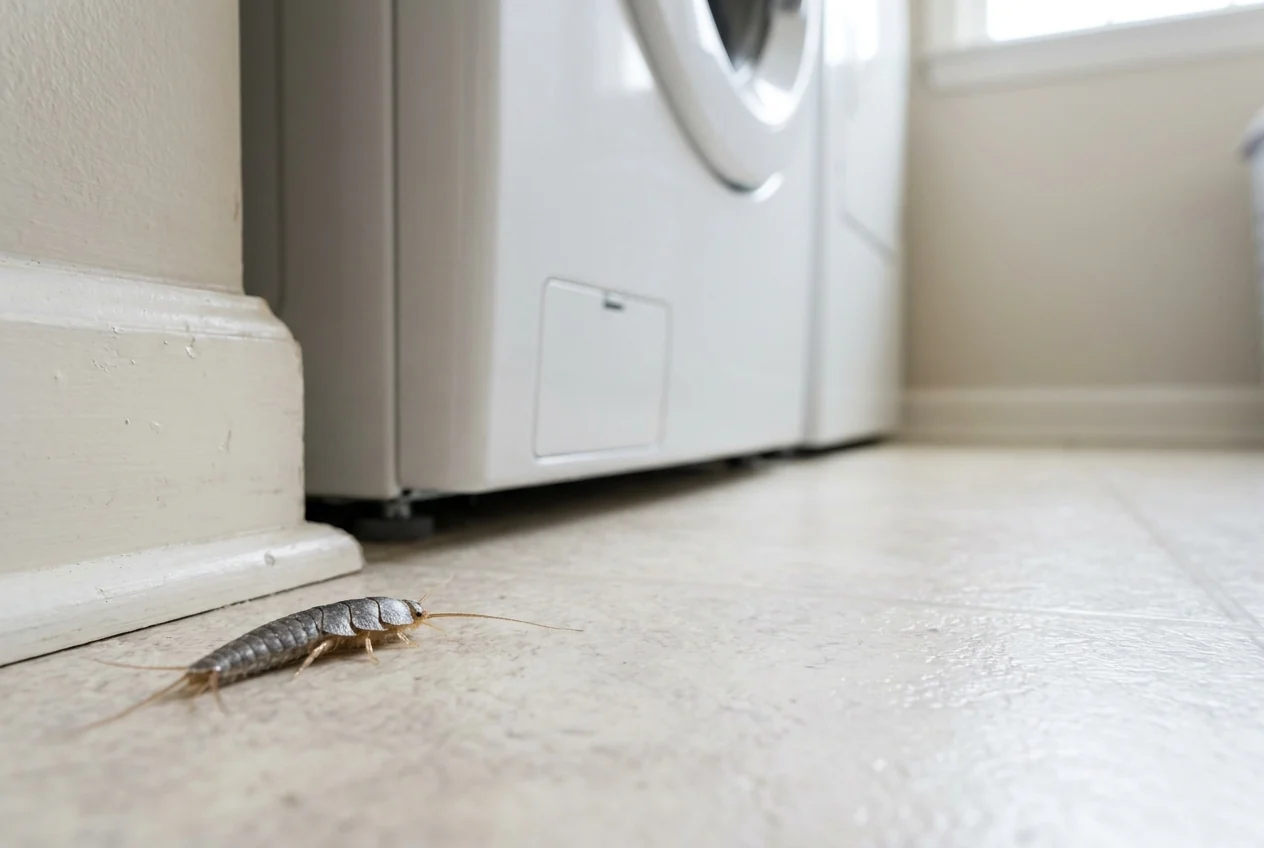
A silverfish is a wingless, silver-gray insect about half an inch long, shaped like a teardrop, with two long antennae up front and three bristle-like tails at the back. It moves in a fast, side-to-side wriggle, which is where the name comes from. In McKinney homes they surface in bathrooms, attics, laundry rooms, and under kitchen sinks, anywhere that stays damp.
 Source: University of California
According to the University of California’s pest management program, silverfish need that high humidity to survive. They also eat a wide range of material:
- What they eat. Starches and cellulose: paper, book bindings, cardboard, wallpaper paste, cereal, flour, and the dried glue that seals a box.
- Where they hide. Cracks, wall voids, attic insulation, and stacks of paper or cardboard that sit undisturbed for months.
- When they move. After dark. Silverfish are nocturnal, so a daytime sighting usually means the population is already established.
Do silverfish bite or carry disease?
No. Silverfish have weak mouthparts built for scraping starch, not skin, so they cannot bite a person and are not known to transmit disease. The cost is to property, not health: they chew holes in paper, book covers, wallpaper, and stored clothing, and their shed scales can add to household allergens for sensitive people.
Virginia Tech’s extension fact sheet on silverfish calls them harmless to humans: they do not bite, sting or transmit disease.
Do silverfish mean my house is dirty?
No. Silverfish follow moisture, not mess. A spotless McKinney home with a humid attic or a slow leak under a bathroom sink appeals to them more than a cluttered but bone-dry one. That is why they turn up in newer Stonebridge Ranch and Craig Ranch homes with tightly sealed, humid attic spaces just as often as in older houses.
Seeing one silverfish rarely means one silverfish. They hide by day and feed at night, so a single silverfish in a McKinney bathroom sink usually points to a larger group living in the wall void, attic, or subfloor nearby. The sink is a trap they fell into, not where they live.
Why do I keep finding silverfish in my McKinney bathroom?
Bathrooms give silverfish the two things they need: humidity and hidden cracks to shelter in. McKinney summers push indoor humidity up, and a running shower, a slow sink leak, or condensation around plumbing keeps the room damp enough for them. The one you spot in the tub fell in overnight and could not climb the smooth sides back out.
What do silverfish eat?
Silverfish eat almost any starch or carbohydrate, not just paper: flour, cereal, pet food, dried glue, and fabrics such as cotton and silk. A stack of cardboard in a humid garage feeds them as well as a bookshelf does, which is why decluttering alone rarely ends the problem.
Why do store-bought sprays fail on silverfish?
A surface spray kills the few silverfish it directly hits and leaves the rest deep in attic insulation and wall voids, where the mist never reaches. It also does nothing about the humidity that drew them in. A quick baseboard spray treats the symptom and ignores the source. Within weeks the population is back.
Is DIY Silverfish Control Ever Enough?
Yes, for a light problem or the odd silverfish, as long as you dry the room out. The University of California says light infestations can be managed by reducing water sources, and that insecticides will not work unless moisture, food and hiding places are removed too. For a bigger population, we apply insecticide dust to the attic and wall spaces.
How Pest Me Off treats a silverfish problem in McKinney
Pest Me Off treats silverfish where they live, not just where they turn up. Our silverfish control finds the moisture source first, then places treatments into the cracks, attic edges, and wall voids a surface spray misses, including a silica-based dust that holds its effect for months in dry, undisturbed spaces. That timeline matches how slowly silverfish breed.
Every silverfish visit includes a walk of the house to find the moisture source, treatment of the cracks, attic edges and wall voids where they hide, and a plain list of the moisture fixes that keep them from coming back. Silverfish are covered on every Pest Me Off quarterly plan, and the exact price is confirmed after a free look at the house.
The treatment only holds if the conditions change too. In McKinney and Collin County homes, the lasting fix pairs the interior work with plain moisture control: fix leaks, run a dehumidifier in damp rooms, improve attic ventilation, and store loose paper and dry food in sealed bins. Silverfish cannot hold a population in dry air. Same-day service is available for McKinney and the surrounding cities when you call before noon, with no-contract options.
How long does it take to get rid of silverfish?
Because silverfish breed slowly, a treated home usually sees numbers fall over weeks rather than overnight. The interior treatment starts cutting the population right away, and dropping the humidity stops new silverfish from maturing. Homes with a heavy attic population or an unresolved leak can take a second visit to fully clear.

Ryan has spent more than 16 years in pest control and wildlife management across McKinney and Collin County, from inspecting homes and treating infestations to sealing the entry points pests use to get in. He built Pest Me Off on that field experience, and every technician on the team is trained against it.
More about the Pest Me Off teamFinding silverfish in your bathroom, attic, or bookshelves? Same-day pest control in McKinney and the surrounding cities when you call before noon.
We treat the hidden attic and wall spaces where silverfish live, then help you cut the humidity that keeps them coming back. Free estimate. No-contract options.