
Brown Dog Ticks in Collin County, TX | Identification and Control
The brown dog tick (Rhipicephalus sanguineus) is the small, plain reddish brown tick that lives on dogs and, unlike every other tick here, inside the house. Ohio State University Extension says it is the only tick that can become established indoors in homes with dogs, and that it can complete a generation in about 60 days. That is why it turns up crawling up walls and curtains, and why the house has to be treated along with the dog.
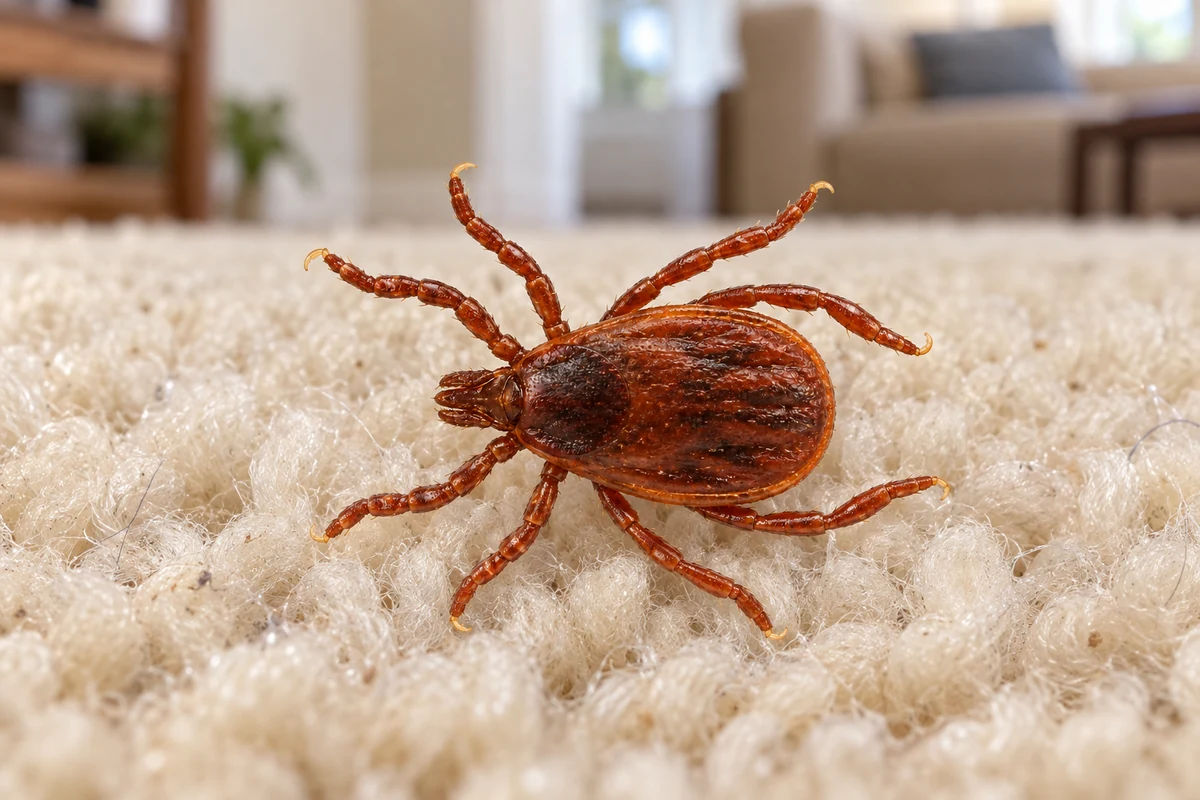
Ticks on the walls or in the dog bed? Our office sits where McKinney, Plano, Frisco and Allen meet, 5 to 10 minutes from most homes in those four cities. Call and we will find where they are hiding in the house.
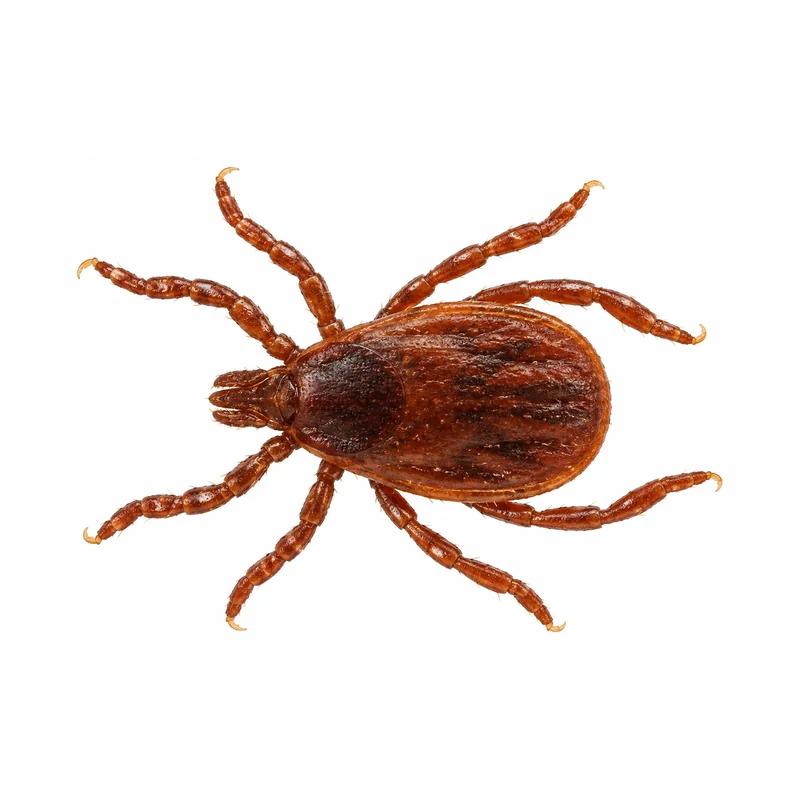
Brown Dog Tick
The brown dog tick is a hard tick that feeds on dogs at every stage of its life and hides in cracks near where the dog sleeps. Texas A&M AgriLife’s Tick App says it is found worldwide and lives mostly in and around homes, animal pens and kennels, seldom out in the wild.
Risk Assessment
Choose a row for the full detail- Color
- Plain reddish brown, with no markings on its back
- Diet
- Blood, almost always from dogs at every stage of its life
- Threat level
- Moderate for people, high for dogs
- Defining behavior
- Crawls up walls and curtains inside the house
- Habitat
- Homes, kennels and dog runs, in cracks near where the dog sleeps
- Eggs
- Up to 4,000 in one batch, then the female dies
- Size
- About 1/8 inch, swelling to about 1/2 inch once fed
What Does a Brown Dog Tick Look Like?
A small, flat, reddish brown tick with no markings at all, swelling into a bluish gray bean once it feeds
An unfed adult is flat, oval and reddish brown all over, with eight legs and no white, silver or cream markings on its back. Ohio State University Extension puts an unfed adult at about 1/8 of an inch, smaller than the American dog tick or the lone star tick, and says a fed female grows to about 1/2 inch and turns bluish gray.
Where it sits on the dog is a clue too. The same Ohio State fact sheet says adults usually attach on the dog’s ears and between its toes, while the young usually attach along the back. A dog carrying ticks of several sizes at once, tiny ones and full grown ones together, points to ticks breeding close by, often in the house itself.
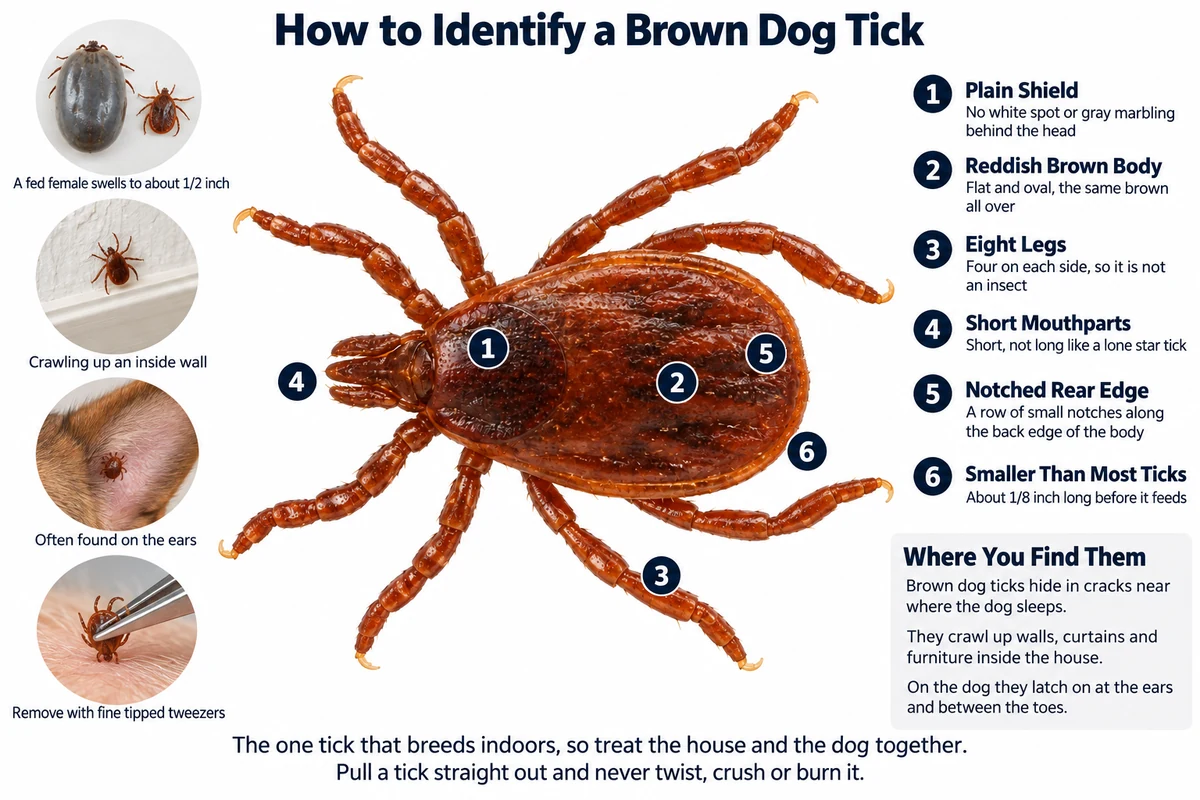
How to identify a brown dog tick by its plain unmarked back, its small size and the bluish gray bean shape of a fed female
- A plain reddish brown back with no spot, stripe or marbling
- Ticks crawling up walls, curtains or furniture inside the house
- Ticks on the dog’s ears and between its toes
- Tiny and full grown ticks on the same dog at the same time
- Ticks around the dog’s bed, crate or favorite resting spot
- Ticks keep coming back on a dog that rarely goes outdoors
Other Names for the Brown Dog Tick
The name comes from its color and its host. Purdue University’s public health entomology page on ticks says dogs are the main host for the young and the adults, and that it is the only tick in Indiana that can colonize homes and heated kennels, which fits its other name, kennel tick. In Spanish it is the garrapata marrón del perro.
One name causes confusion. Many people call any tick on a dog a dog tick, but the American dog tick is a different, larger tick with creamy gray marbling on its back that lives outdoors in tall grass and cannot settle into a home.
| Name | What it means |
|---|---|
| Kennel tick | After the kennels and homes it can infest. |
| Dog tick | The everyday short name, after its main host. |
| Garrapata marrón del perro | The Spanish name, the brown dog tick. |
| American dog tick | A different, marbled tick that lives outdoors. |
How to Tell a Brown Dog Tick from an American Dog or Lone Star Tick
All three turn up on Collin County dogs, and the right fix depends on which one it is. A brown dog tick can breed inside the house, while an American dog tick or a lone star tick comes in from the yard edges. The back of the tick tells them apart.
| Species | Size and Color | Key Feature | Where Found |
|---|---|---|---|
|
Brown Dog Tick
AKA: Kennel Tick
Rhipicephalus sanguineus
This species
|
About 1/8 inch unfed, about 1/2 inch and bluish gray once fed. Reddish brown. | No markings at all on its back. | On dogs and inside homes and kennels, in cracks near where the dog sleeps. |
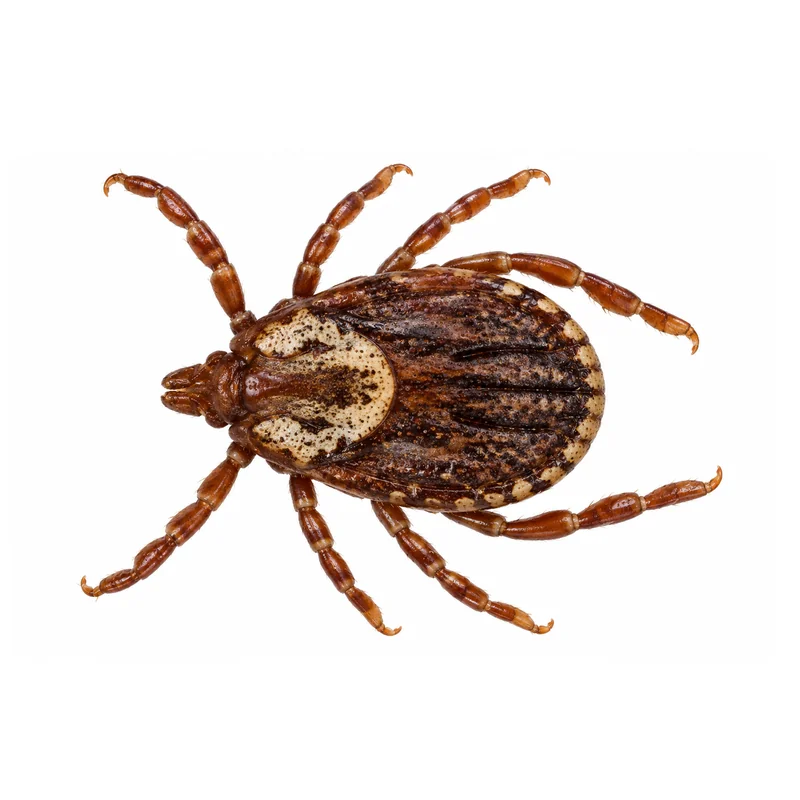
American Dog Tick
AKA: Wood Tick
Dermacentor variabilis
|
About 3/16 inch unfed, about 5/8 inch and gray once fed. Brown. | Creamy gray marbling on the shield behind the head. | Outdoors, in tall grass along fences, paths, fields and creeks. |
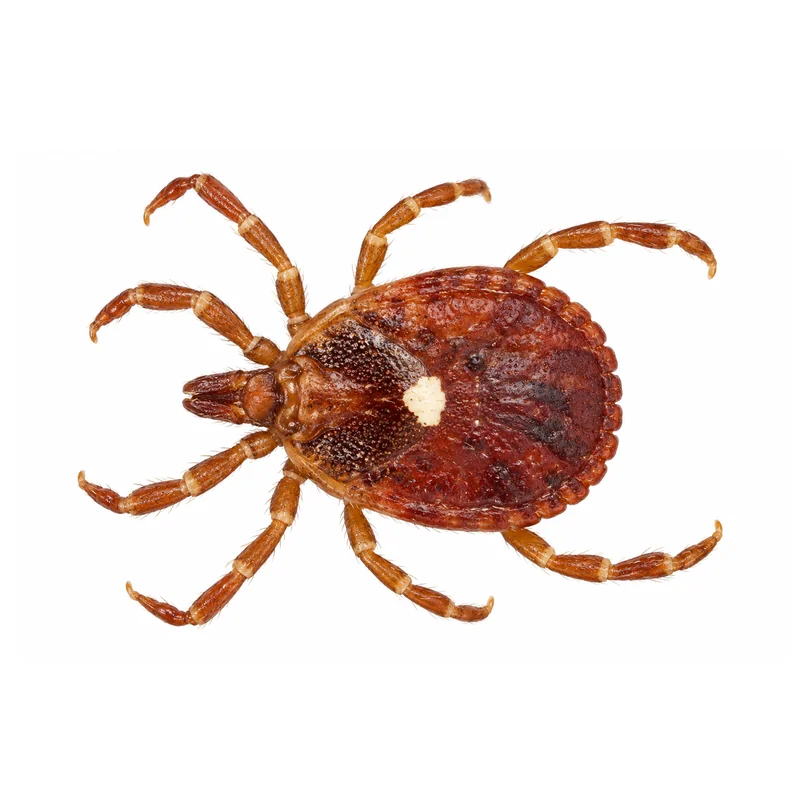
Lone Star Tick
AKA: Seed Tick (the young)
Amblyomma americanum
|
About 3/16 inch unfed, about 7/16 inch and round once fed. Brown. | The female has one silvery white spot on her back and long mouthparts. | Outdoors, in shady grass, brush and woods, and it bites people readily. |
Brown Dog Tick vs American Dog Tick
The Brown Dog Tick in Three Numbers
About 60 days
Ohio State University Extension says a brown dog tick can complete a generation in about 60 days when it is warm and a dog is close by, all of it inside the home.
Ohio State University Extension
Up to 4,000
Texas A&M AgriLife’s Tick App says a single brown dog tick female can lay up to 4,000 eggs, which is how a few ticks on one dog become many in one house.
Texas A&M AgriLife’s Tick App
Over 18 months
Texas A&M AgriLife’s Tick App says adult brown dog ticks have been reported to survive for over 18 months without a meal, so an empty house does not starve them out.
Texas A&M AgriLife’s Tick App
Are Brown Dog Ticks Dangerous?
They are more of a danger to the dog than to the family. Ohio State University Extension says brown dog ticks rarely feed on humans and that dogs are their preferred host. The bite itself is usually painless, so a tick is often found only once it has swollen. Because this tick breeds indoors, a home can end up with ticks on the walls, the furniture and the dog all at once, which puts far more of them within reach of the family.
Do Brown Dog Ticks Bite People?
Sometimes. The CDC’s guide to where ticks live says dogs are the main host at every stage but the tick may also bite humans or other mammals, and it lists Rocky Mountain spotted fever as the disease it spreads in the southwestern US and along the US and Mexico border. Ohio State says it is not known whether it spreads the disease elsewhere in the country. The CDC’s page on Rocky Mountain spotted fever lists fever, headache, rash, nausea, stomach pain and muscle pain, says it can be deadly if not treated early with doxycycline, and its symptoms page says signs begin 3 to 12 days after the bite of an infected tick.
Can a Brown Dog Tick Hurt My Dog?
Yes. Texas A&M AgriLife’s Tick App says the brown dog tick passes on canine ehrlichiosis and canine babesiosis to dogs, along with other germs, and Purdue University names canine ehrlichiosis as the dog disease it is known for. The CDC’s page on ticks and pets says signs of a tick disease in a pet may not appear for 7 to 21 days or longer after a bite, so watch for changes in the dog’s behavior or appetite and talk to your veterinarian.
When Brown Dog Ticks Need Fast Action
A Fever or Rash After a Tick Bite
Fever, headache or a rash in the 2 weeks after a bite can be Rocky Mountain spotted fever. Call your doctor that day and mention the tick.
A Dog Off Its Food After Ticks
A dog that turns tired, quiet or off its food in the weeks after ticks should see the veterinarian. Mention the ticks.
Ticks Crawling Up the Walls
Ticks on walls, curtains or furniture mean they are breeding in the house. The longer it waits, the more eggs are laid.
Ticks in the Dog’s Ears or Toes
A few ticks on the ears or between the toes is the early stage. Pull them off, call your vet, and have the house checked.
Why You Found a Brown Dog Tick in Your House
Because it can live there. The CDC’s page on ticks and pets says the brown dog tick is unique in that it can infest indoor spaces like homes and kennels, and Ohio State University Extension says it can complete its whole life cycle indoors. A female feeds on the dog, drops off, and lays her eggs nearby, and the young that hatch climb back onto the dog. No yard, woods or wildlife is needed.
It usually arrives on a dog. Purdue University says it has been carried into new areas again and again on infested dogs and that all its stages hide in cracks and crevices near where dogs bed down. A dog can pick up a few anywhere other dogs and their ticks have been. Purdue adds that infested homes and kennels see large numbers crawling up walls, curtains and furniture, the sign that sets this tick apart from every other one.
Where Are Brown Dog Ticks Found?
Wherever dogs live and sleep. Texas A&M AgriLife’s Tick App says it lives mostly in and around homes, animal pens and kennels in town and country alike, and is seldom found in the wild or in wooded areas. Ohio State University Extension says it does not thrive in woods but can turn up in grassy and bushy spots next to homes and kennels and along roadsides and footpaths. Indoors, Ohio State says ticks hide in cracks in the floor and walls, along baseboards, window frames and door frames, around wall molding and hangings and under carpet edges.
Brown Dog Tick Pressure Across Collin County
Flea and tick work for dog owners shows up in our service notes in Farmersville, McKinney and Allen, often covering the inside of the home as well as the lawn, with calls from Plano and Frisco. Our notes do not record which tick it was, so treat any plain reddish brown tick found indoors as a brown dog tick until you have looked at its back.
Because this tick lives with dogs rather than in the wild, a brand new home in Celina or Anna is as likely to have it as an older one in Princeton. What matters is a dog in the house and a few ticks riding in on it.
Texas A&M AgriLife’s Tick App says brown dog ticks are most active from late spring to early autumn but may be active all year in warm places. Inside a heated home they keep breeding through the winter, so an indoor problem never takes a month off.
Pattern from Texas A&M AgriLife’s Tick App, Ohio State’s note that this tick completes its life cycle indoors, and Pest Me Off flea and tick calls from spring into fall.
Why Brown Dog Ticks Keep Coming Back
How Pest Me Off Gets Rid of Brown Dog Ticks
Brown dog tick control is four steps, every job. The ticks on the dog are only the ones feeding today, so the work goes into the house and the yard where the rest are waiting.
Inspect and Identify
A free inspection of the dog’s bed and resting spots, the baseboards and door frames nearby, the garage and the yard. We confirm it is a tick and not fleas, and which tick, before anything is applied.
Treat Inside Where the Dog Rests
Our Parasite Purge treats the inside of the home along the baseboards, under furniture, across the carpet and around every pet resting spot, not a quick spot spray. Pets and kids can go back in once it dries, in 1 to 2 hours.
Treat the Yard and Time It With the Dog
On the same visit our Scorched Earth Barrier goes across shaded pet runs, fence lines, leaf litter and the soil under decks and shrubs, and we line the work up with the tick treatment your vet puts on the dog.
Come Back for the Late Hatch
On a recurring plan we come back about 30 days after the first visit, then keep the Scorched Earth Barrier going each quarter, the Defend step of our Remove, Install and Defend process.
& Other Companies
How to Get Rid of Brown Dog Ticks Yourself
Most DIY work is cleaning where the dog sleeps and finding ticks early. The CDC’s page on what to do after a tick bite says to remove an attached tick as soon as possible.
Why Some DIY Responses Fail for Brown Dog Ticks
Most DIY trouble comes from treating one place when the ticks live in three, the dog, the house and the yard spots it uses. Home remedies on an attached tick make things worse.
Treating Only the Dog
A tick treatment on the dog kills the ticks that bite it, but the eggs and young waiting in the cracks keep hatching. Ohio State says the dog and the home have to be treated at the same time.
Bug Bombs in the House
Ohio State says the ticks hide in cracks to molt and that the cracks, baseboards and frames must be treated. A fogger settles on open floors and tabletops and misses the cracks.
Smothering or Burning a Tick
The CDC says not to use petroleum jelly, nail polish or heat to make a tick let go, because it can force infected fluid into the skin. Never crush it with your fingers.
Common Brown Dog Tick Questions
What is a brown dog tick, and what does it look like?
Can brown dog ticks live in my house?
Why are ticks crawling up my walls?
Do brown dog ticks bite humans?
Are brown dog ticks dangerous to dogs?
My dog rarely goes outside, so how did we get ticks?
How long can brown dog ticks live without feeding?
How do I remove a brown dog tick?
What is the difference between a brown dog tick and an American dog tick?
Will treating my dog get rid of brown dog ticks?
How do I get rid of brown dog ticks?
Ticks Inside the House? We Treat the Home and the Yard Together.
We find where the ticks are hiding by the dog’s bed and along the baseboards, treat the inside and the yard, time the work with your dog’s vet treatment and come back for the late hatch. Flea and tick control across McKinney, Allen, Frisco, Plano, and all of Collin County.