
Mud Daubers in Collin County, TX | Identification and Control
Mud daubers, also called dirt daubers, are solitary wasps that build sealed mud tube nests on garage ceilings, eaves, porch soffits and covered patios across Collin County. They have no colony to defend and rarely sting, and the University of Florida Institute of Food and Agricultural Sciences Extension notes that common wasps such as hornets may carry 10 times the venom of the black and yellow mud dauber. The real problem is cosmetic: the tubes and the mud stains they leave, which draw new nests to the same spots every summer. Getting rid of them means cleaning the surface and cutting the spiders they hunt.
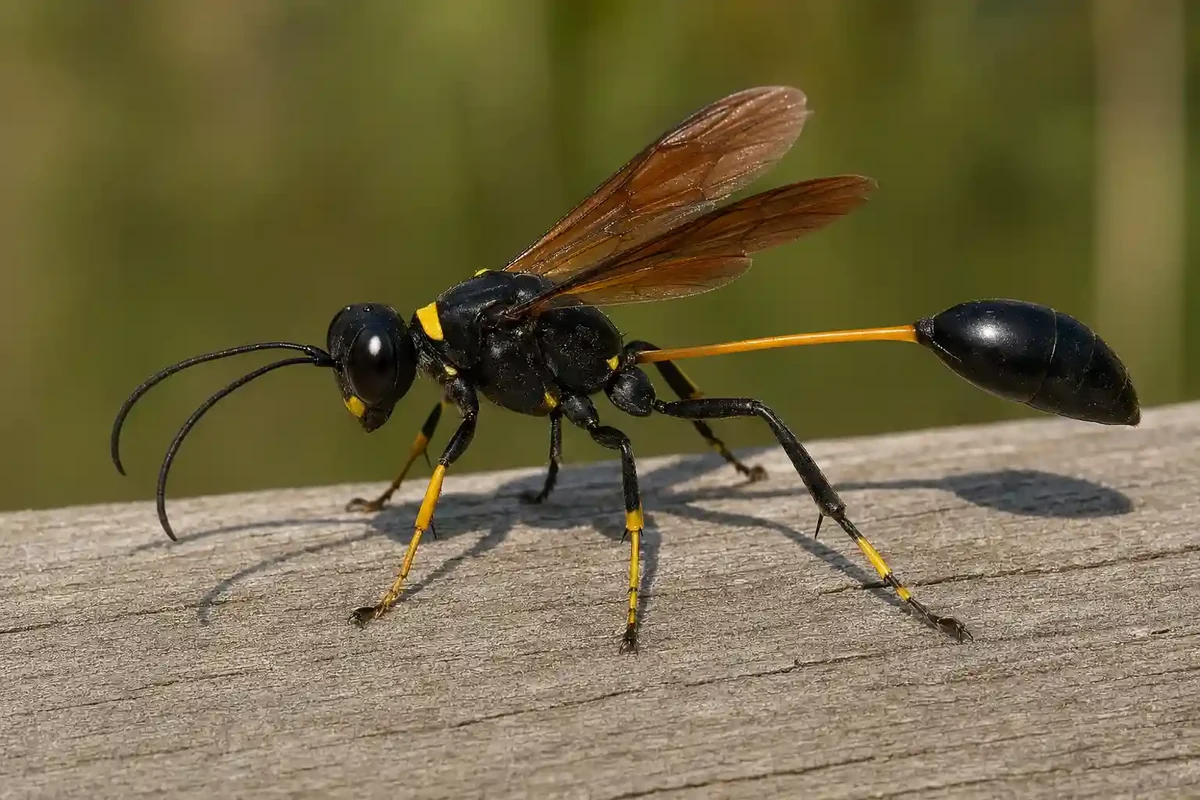
Found mud tubes on your house in Collin County? Pest Me Off’s office sits where McKinney, Plano, Frisco and Allen meet, 5 to 10 minutes from most homes in those four cities. Send us a photo or call, and we will tell you what built them.
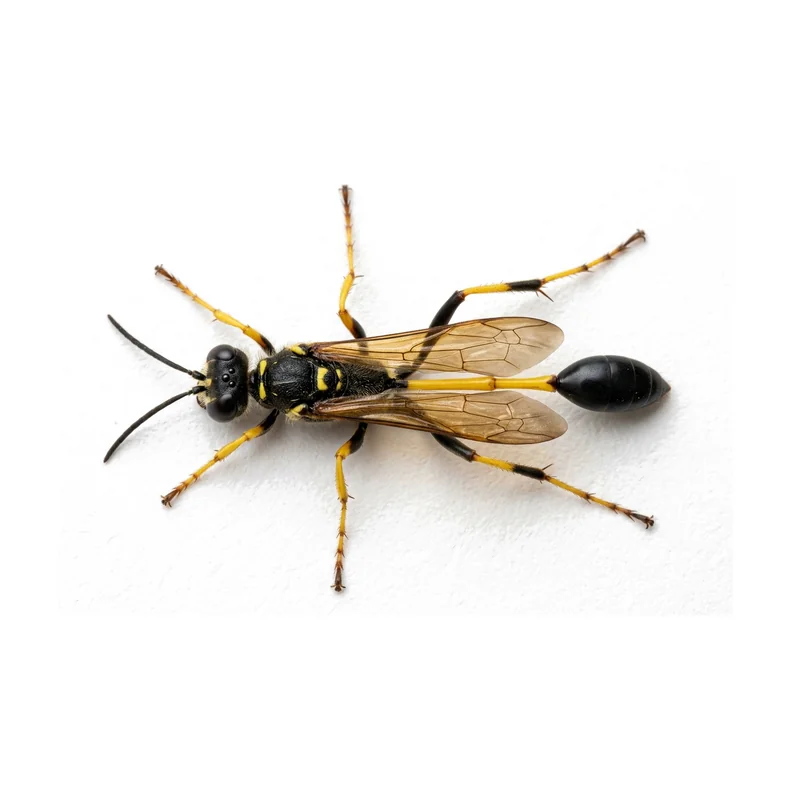
Mud Dauber
Two wasps share the name in Collin County, the yellow-and-black mud dauber and the blue mud dauber, and both use sealed mud tubes rather than paper nests.
Risk Assessment
Choose a row for the full detail- Color
- Black with yellow markings, or metallic blue-black
- Social life
- Solitary, with no colony, no queen and no defensive swarm
- Can sting
- Females only, and rarely
- Nest type
- Sealed mud tubes on sheltered outside surfaces
- Active season
- Late March through October, peak June through August
- Size, yellow-and-black
- 21 to 25 mm, females larger than males
- Size, blue
- 18 to 28 mm (0.7 to 1.1 in)
What a Mud Dauber Looks Like
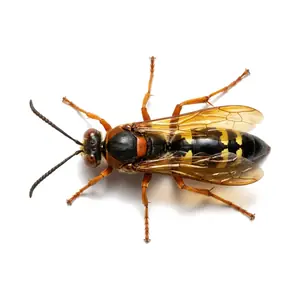
The yellow-and-black mud dauber (Sceliphron caementarium) is the one most people see building fresh tubes. It has bright yellow on the legs, midsection and first segment of the abdomen, and females measure 23 to 25 mm against about 21 mm for males, according to University of Florida Institute of Food and Agricultural Sciences Extension. The blue mud dauber (Chalybion californicum) is metallic blue-black with iridescent wings, and it takes over nests the yellow-and-black species built rather than making its own.
Both share the waist that separates them from every social wasp in Collin County. Paper wasps, yellowjackets and bald-faced hornets all have a visible waist, but a mud dauber’s is far thinner and longer. The nest settles the rest: sealed mud tubes with no guards is a mud dauber, an open paper comb with workers is a paper wasp, and workers entering a hole with no visible nest is a yellowjacket.
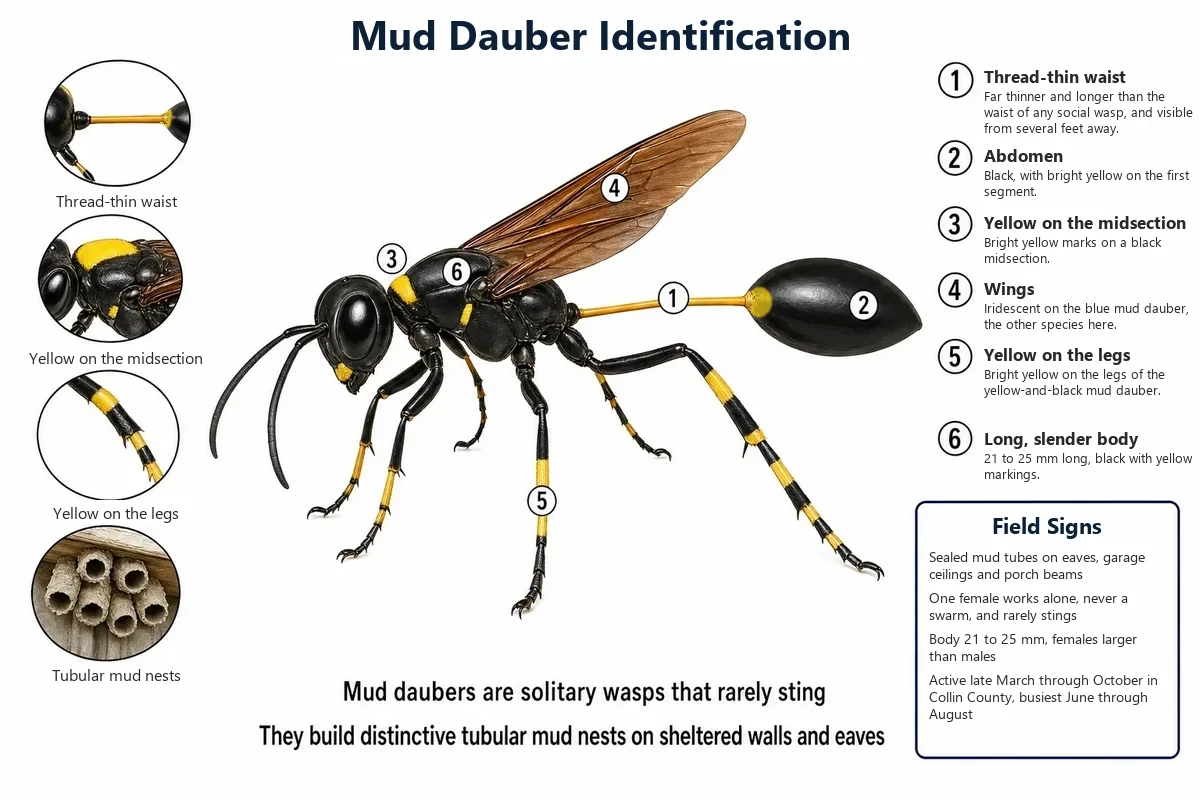
How to identify a mud dauber by its thread-thin waist, narrow abdomen and sealed mud tube nest
- A thread-thin waist between the midsection and the abdomen, thinner than any social wasp here and visible from several feet away
- A long, slender body, either yellow-and-black or metallic blue-black
- Sealed cylindrical mud tubes on a vertical or overhead sheltered surface, smoother than a paper nest, with no open cells
- One female working alone at the nest, never a swarm and never several wasps guarding it
- Round exit holes in older cells where adults have already chewed their way out
- Slow, steady flight near the nest, with no aggressive hovering or dive-bombing near people
Other Names for the Mud Dauber
Mud dauber, dirt dauber and mud wasp all mean the same insects: solitary wasps that stock sealed mud cells with paralyzed spiders as food for their young. Dirt dauber is the name most Collin County homeowners use, especially in the older neighborhoods of McKinney and Allen. The choice between the names is regional habit, not a difference between insects, so if you searched for any name in the table, this is your wasp.
Where Are Mud Daubers Found?
Both of these mud daubers, the yellow-and-black and the blue, are named as common species by Clemson University’s Home and Garden Information Center. On a home they nest only outdoors, on sheltered surfaces such as eaves, garage ceilings, porch beams, covered patios and outdoor light fixtures, never inside walls, attics or the ground.
Clemson’s center also names a third common species, the organ pipe mud dauber.
| Name | What it means |
|---|---|
| Dirt dauber | The everyday name across Collin County and the South for both species. |
| Mud wasp | A casual name for the same wasps, used interchangeably with the other two. |
| Dirt wasp | Another plain-speech version of dirt dauber. |
| Blue mud wasp | The blue mud dauber, the metallic blue-black species that raids old mud nests and hunts black widows. |
| Yellow-and-black mud dauber | The species that builds the tubes most people notice on garage ceilings and under eaves. |
How to Tell Mud Daubers from Other Collin County Wasps
A sealed mud nest rules out every social wasp at a glance, because no social colony builds sealed mud cells. The table compares the mud dauber with the three wasps it is most often confused with.
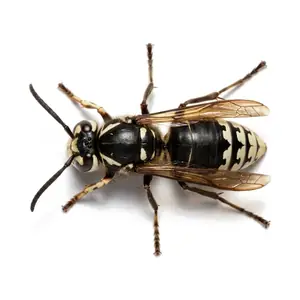
| Species | Size | Key Feature | Where Found |
|---|---|---|---|
|
Mud Dauber
AKA: Dirt Dauber, Mud Wasp
Sceliphron caementarium, Chalybion californicum
This species
|
21 to 25 mm for the yellow-and-black, 18 to 28 mm for the blue. Long and slender with a very narrow thread waist. Yellow-and-black or metallic blue-black. | Sealed mud tube nests with no workers guarding them. One female works alone. No colony and no alarm signal that calls in other wasps. | Eaves, garage ceilings, porch beams, covered patios, utility penetrations and outdoor light fixtures. Outdoors only. The blue species reuses old nests rather than building new ones. |
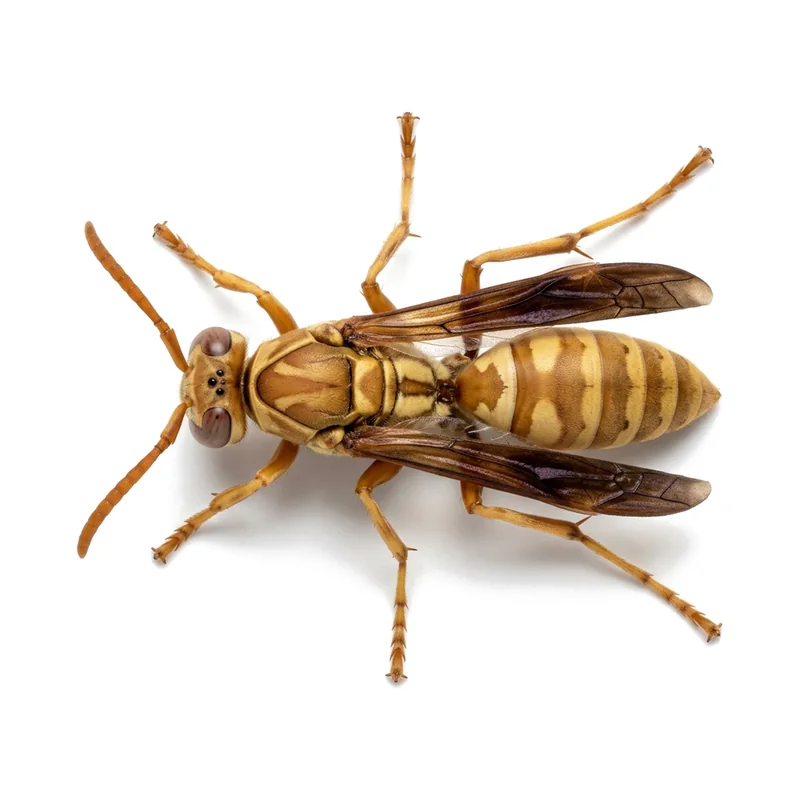
Paper Wasp
AKA: Umbrella Wasp, Red Wasp
Polistes spp.
|
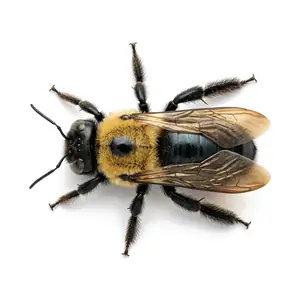
16 to 25 mm. Slender but without the extreme thread waist. Brownish-orange to reddish-brown with yellow markings. Long hind legs dangle in flight. | Open umbrella-shaped paper comb with visible six-sided cells. Workers stay on the nest and defend it when approached within about 18 inches. | Eaves, porch ceilings, door frames and window sills, always hung from a single central stalk and always open-faced. |
Potter Wasp
AKA: Mason Wasp
Eumenes fraternus
|
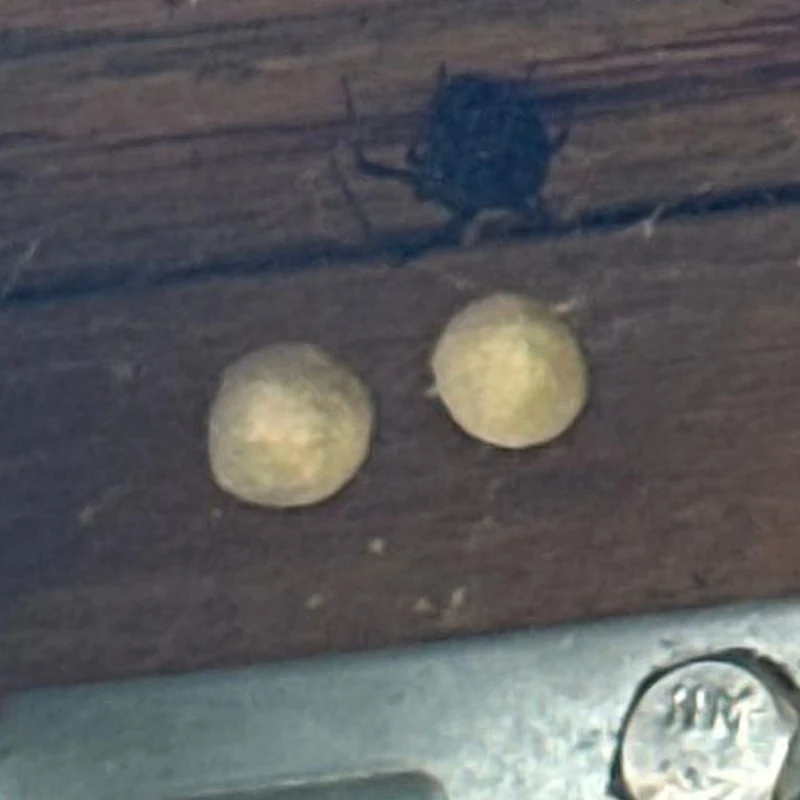
9 to 13 mm. Much smaller than either mud dauber. Black with pale yellow or white markings and a similar narrow waist on a far shorter body. | Builds single mud pots shaped like tiny jugs, one at a time, never a cluster of parallel tubes. Also solitary and not defensive. Stocks its pots with caterpillars, not spiders. | Twigs, plant stems, wood fences and sometimes outside walls. Far less common on houses than either mud dauber. |

Steel-Blue Cricket Hunter
AKA: Blue Wasp
Chlorion aerarium
|
15 to 25 mm. About the size of the blue mud dauber, with nearly the same metallic blue-black color. | Hunts crickets, not spiders, and never builds or uses mud tubes. No mud nest means no mud dauber. | Burrows in bare or thin soil. Seen over lawns and along flower bed edges rather than on walls near mud nests. |
Mud Dauber vs Paper Wasp
The Mud Dauber in Three Numbers
10 times
The University of Florida Institute of Food and Agricultural Sciences Extension notes that common wasps such as hornets may carry 10 times the venom of the black and yellow mud dauber, which uses its sting mainly to paralyze spiders.
University of Florida Institute of Food and Agricultural Sciences Extension
3 to 6 weeks
The University of Florida Institute of Food and Agricultural Sciences Extension says an adult mud dauber lives three to six weeks after it comes out.
University of Florida Institute of Food and Agricultural Sciences Extension
21 to 25 mm
The University of Florida Institute of Food and Agricultural Sciences Extension measures the black and yellow mud dauber at 21 to 25 mm long, with females at 23 to 25 mm and males about 21 mm.
University of Florida Institute of Food and Agricultural Sciences Extension
Are Mud Daubers Dangerous?
No. A mud dauber has no colony to protect and no alarm signal that calls in other wasps, so it does not defend its nest at a distance and does not chase anyone. Mud daubers rank among the least aggressive stingers found on homes.
A wall covered in tubes is not a sign of aggression either. It only means several independent females picked the same sheltered surface.
Do Mud Daubers Sting?
Yes, but rarely. Only females can sting, and they do it only when handled, pinned against skin, or disturbed right at an open cell. Walking past a nest, brushing a wall with tubes on it or working in a garage where they are building does not trigger a sting.
The sting is mild next to a social wasp’s: local pain and swelling that fades within a few hours for most people. The University of Florida Institute of Food and Agricultural Sciences Extension notes that common wasps such as hornets may carry 10 times the venom of the black and yellow mud dauber, which uses its sting mainly to paralyze spiders. Wash the spot and hold something cold on it. Anyone with a known wasp venom allergy should take the same care around mud daubers as around any wasp.
When Mud Dauber Nests Warrant Action
Tubes on High-Use Surfaces
Nests above garage doors, beside entry doors or across a garage ceiling are worth removing, because the tubes and their stains build up every season on the surfaces you see most.
A Few Nests in a Quiet Spot
A nest on a back fence post, a rarely used shed or a patio corner nobody sits in can stay. The blue mud dauber hunts black widows, so leaving isolated nests is a reasonable choice, and it is always yours.
What Draws Mud Daubers to a House
A mud dauber picks a nest site for four things: shelter from rain, warmth, spiders to hunt and wet mud within reach. Garages are the usual complaint because they offer overhead shelter near the door track, in upper wall corners and along any exposed beam. South-facing and west-facing surfaces are the warmest and driest in peak season, so attic vents, utility boxes and weep holes on those sides get chosen first. Irrigation that keeps soil wet along the foundation supplies the mud.
Mud Dauber Presence Across Collin County
Mud daubers nest on homes in McKinney, Allen, Frisco and Plano alike. What sets nest density is the property, not the city: the homes with the most tubes are the ones with the most spiders around them.
The blue mud dauber is a useful signal here. Seeing a shiny blue-black wasp going in and out of an old mud nest almost always means black widows are living nearby, in weep holes, garage corners or dense foundation plantings.
Mud daubers spend the winter as pupae sealed inside mud cells. Adults emerge in late March, and nest building peaks June through August, when spiders are most plentiful and warm, humid weather keeps mud workable. Activity slows through fall and stops after the first hard freeze.
Mud Dauber Biology Worth Knowing
How Pest Me Off Handles Mud Daubers
Our mud dauber service does two things: remove what is there and change what brings them back. You decide whether every nest goes or a few in quiet spots stay.
Inspect Every Surface and List the Nests
We walk the eaves, soffits, garage ceiling and corners, porch and patio ceilings, light fixtures, utility penetrations and fence headers. Active nests, sealed overwintering nests and empty tubes are noted separately, and so is any blue mud dauber, because it points to black widows nearby.
Remove Every Nest and Clean the Surface
Each nest comes off with a tool matched to the surface, with extra care on paint and on brick so nothing is gouged or stained. Then we clean the mud residue from every attachment point down to bare material.
Perimeter Spider Treatment
We treat foundation plantings, outside walls, eave lines and garage surfaces with a residual product that lowers the spider population. Fewer spiders in webs, weep holes and wall corners means less food for mud daubers to stock their cells with.
Surface Residual and Follow-Up
The cleaned attachment points, sheltered overhead surfaces and upper wall corners found in Step 1 get a residual that discourages new females from choosing them. A follow-up check comes mid-season, when new nesting peaks, so new tubes are handled before they pile up.
& Quick Fixes
How to Get Rid of Mud Daubers Yourself
Mud dauber pressure comes from site quality: shelter, spiders and wet mud near the foundation. Cutting any one of the three lowers nesting without any chemical at all.
Why Some DIY Responses Fail for Mud Daubers
Mud daubers look simple to deal with, with visible nests and no swarm, until the tubes are back three months later. Most failed attempts make one of the three mistakes below.
Spraying Liquid on Sealed Mud Tubes
Wasp spray beads off dried mud and never reaches the larva, egg or spiders sealed inside. Scraping the tube off is the only way to deal with sealed cells, and a dust put into any open or cracked cell does more than any liquid.
Scraping an Active Cell in the Heat of the Day
A female working inside an open cell will sting if the nest is disturbed, and warm sunny afternoons are when females are busiest. Work in the evening or early morning. A sealed cell with no wasp nearby is safe to scrape, and an open cell with movement inside is not.
Waiting Until Spring to Remove Old Nests
Leaving nests through winter lets next year’s adults finish developing on your house. By spring they have chewed out, so removal then still leaves residue and loses the chance to break the cycle.
Common Mud Dauber Questions
What is the wasp building mud tubes on my garage ceiling?
What is the difference between a mud dauber, dirt dauber and mud wasp?
Are mud daubers dangerous?
What is the shiny blue-black wasp I keep seeing near my mud nests?
Should I leave mud dauber nests alone because they kill spiders?
I found mud tubes inside my garage. Do I have an infestation?
Why do mud daubers keep coming back to the same spots on my garage ceiling?
How do I get rid of mud daubers without damaging my exterior?
Mud Tubes on Your Garage Ceiling or Outside Wall. We Remove Every Nest and Stop the Cycle.
We remove the nests completely, clean each attachment point down to bare surface, treat the spiders driving the pressure and put a deterrent on the spots they favor. If the blue mud dauber was hunting around your foundation, we deal with the black widows too. McKinney, Allen, Frisco, Plano, and all of Collin County.