
Bee Removal in McKinney TX
Serving McKinney, Plano, Frisco, Allen and across Collin County.
 One-time from$299
 Plans from$40/mo
 No-contract options
 Free inspection & estimate
 Finds the nest, not just the bees you see
 Same-day pest control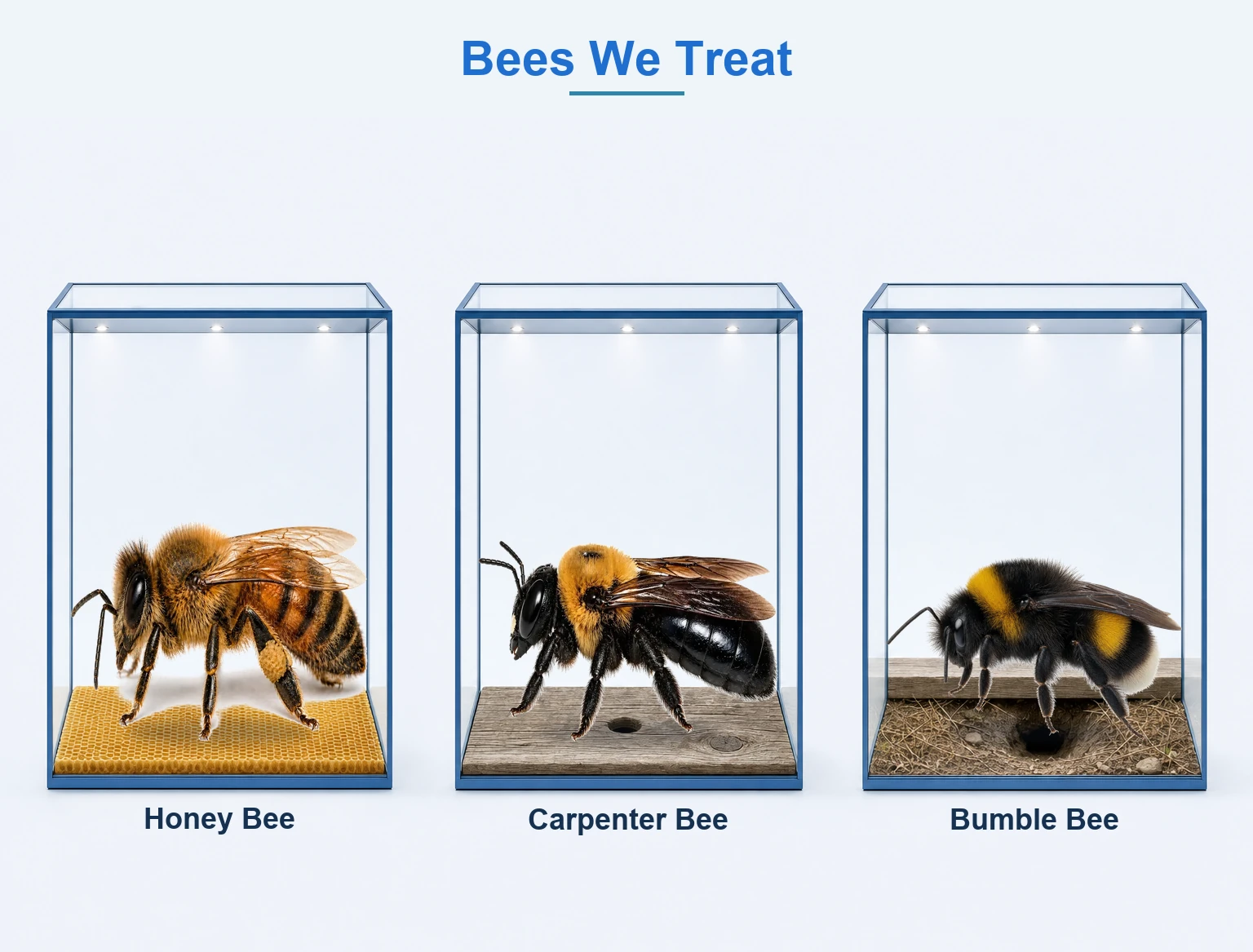



Why McKinney Homeowners Choose Pest Me Off for Bee Removal
Pest Me Off is a family-owned, Texas-licensed pest control company that has been handling bee removal for McKinney, Plano, Frisco and Allen homes since 2014.
Bees are beneficial, so we start by identifying the bee. For honey bees, we arrange live relocation through a registered beekeeper when the colony can be removed safely. Carpenter bees boring into your wood get treated right at the hole. Every visit is handled by a licensed applicator, never a subcontractor, and we seal the entry and nesting points so the next swarm or the next female does not move back in.
How our bee removal service works
Bees are beneficial, so the first job is identifying what you actually have. For a honey bee colony in your wall, we arrange live relocation through a registered beekeeper when the colony can be removed safely. Carpenter bees boring into your wood are treated right at the hole. A bumble bee nest is moved or left alone where it is safe to. The RID Method handles the whole job: Remove and Install both happen on the initial visit. That is our one-time Bee Removal service. Defend is the ongoing step, available on a recurring plan, for homes that keep drawing bees back year after year.
Remove or Relocate, Safely
We identify the bee first, because the right move depends on it. For a honey bee colony in your wall, we arrange live relocation through a registered beekeeper when the colony can be removed safely, and the wax comb is removed so honey never melts down inside the wall. Carpenter bees are treated right inside the round hole in the wood. A temporary honey bee swarm resting on a branch usually moves on within 24 to 48 hours on its own.
- Live relocation arranged through a registered beekeeper when safe
- We confirm honey bee, carpenter bee, or bumble bee before anything is applied
- Wax comb removed after any honey bee colony, so honey never melts into the wall
- Pets wait until the carpenter bee treatment dries
Install Scorched Earth Barrier
On the same visit, we Install the Scorched Earth Barrier and seal the entry and nesting points so the next bee does not move back in. Carpenter bee holes are dusted, then sealed once activity stops. Wall gaps, soffit seams, and meter boxes a honey bee swarm would target get closed. Then we point out the bare wood or open gap that invited bees in the first place.
- Scorched Earth Barrier around the foundation and entry points
- Carpenter bee holes sealed after treatment, once activity stops
- We flag the bare wood, wall gap, or open meter box that drew the bees
- Sealing happens once activity stops, never with bees still trapped inside
Defend Year-Round
Remove and Install handle the bees you have today. Defend keeps it that way. Quarterly visits keep the Scorched Earth Barrier live and re-check the wood and entry points each spring, when honey bee swarms are looking for a new home and carpenter bees are back on the wood. The one-time Bee Removal service handles R and I. Defend is the step you add when you want your home held.
- Quarterly re-treatment keeps the barrier live through peak spring bee season
- Re-service between visits when our tech decides it is needed
- Contract plans and no-contract options both available
- Quarterly plans start at $40/mo
Texas A&M Texas Apiary Inspection Service documents that honey bees are valuable pollinators and Africanized hybrids are confirmed in Collin County, so every established colony is identified and handled with care, with live relocation arranged through a registered beekeeper when the colony can be removed safely. We treat carpenter bees at the wood and seal the entry points on the same visit.



Real bee jobs we have handled
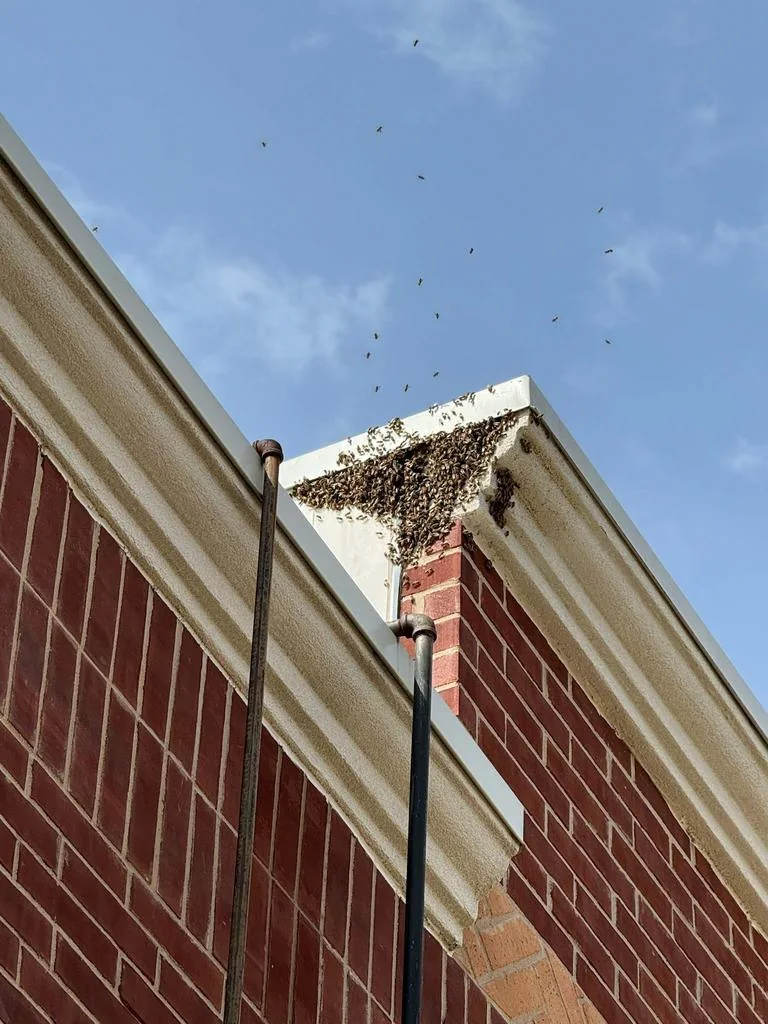
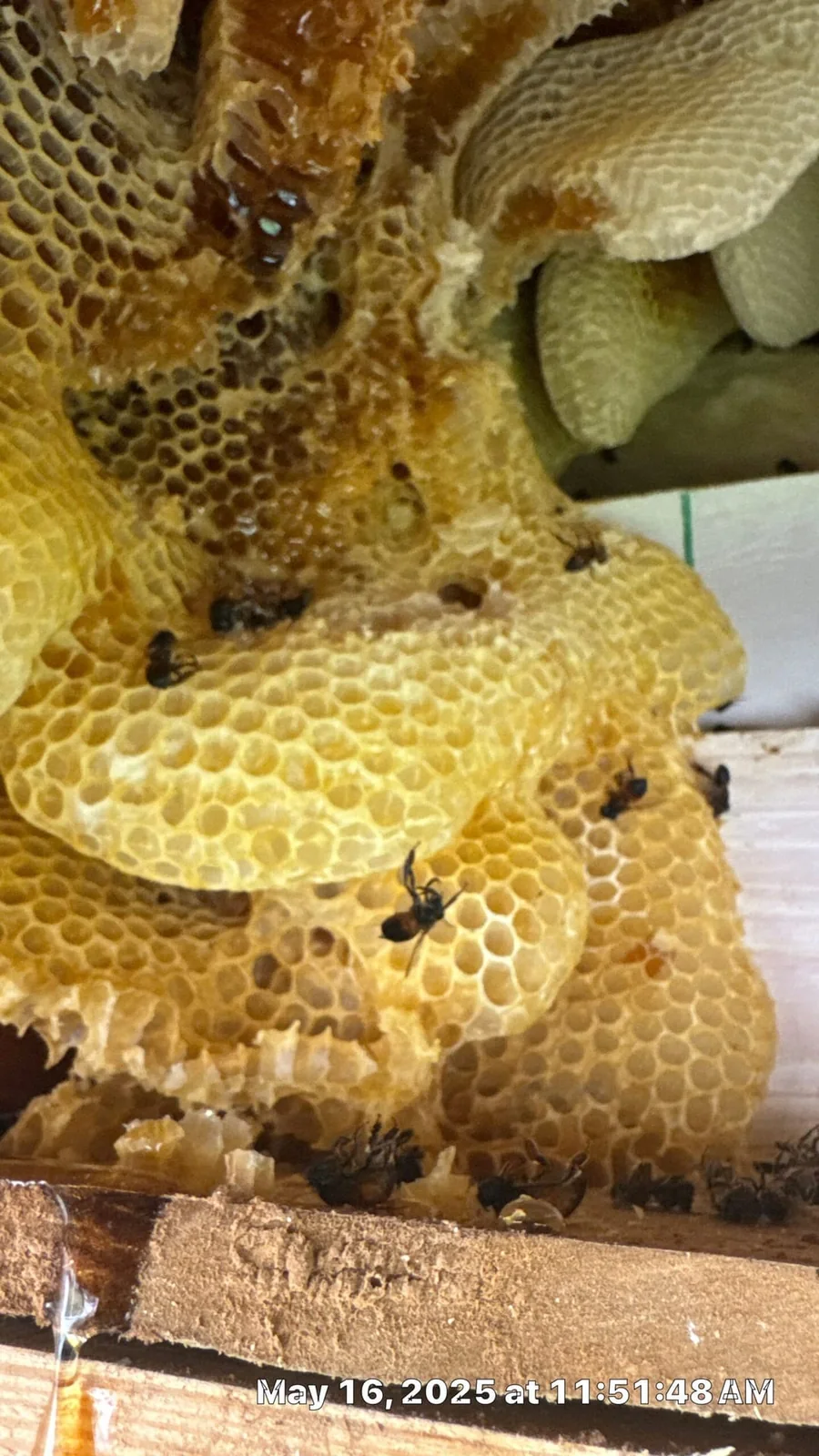
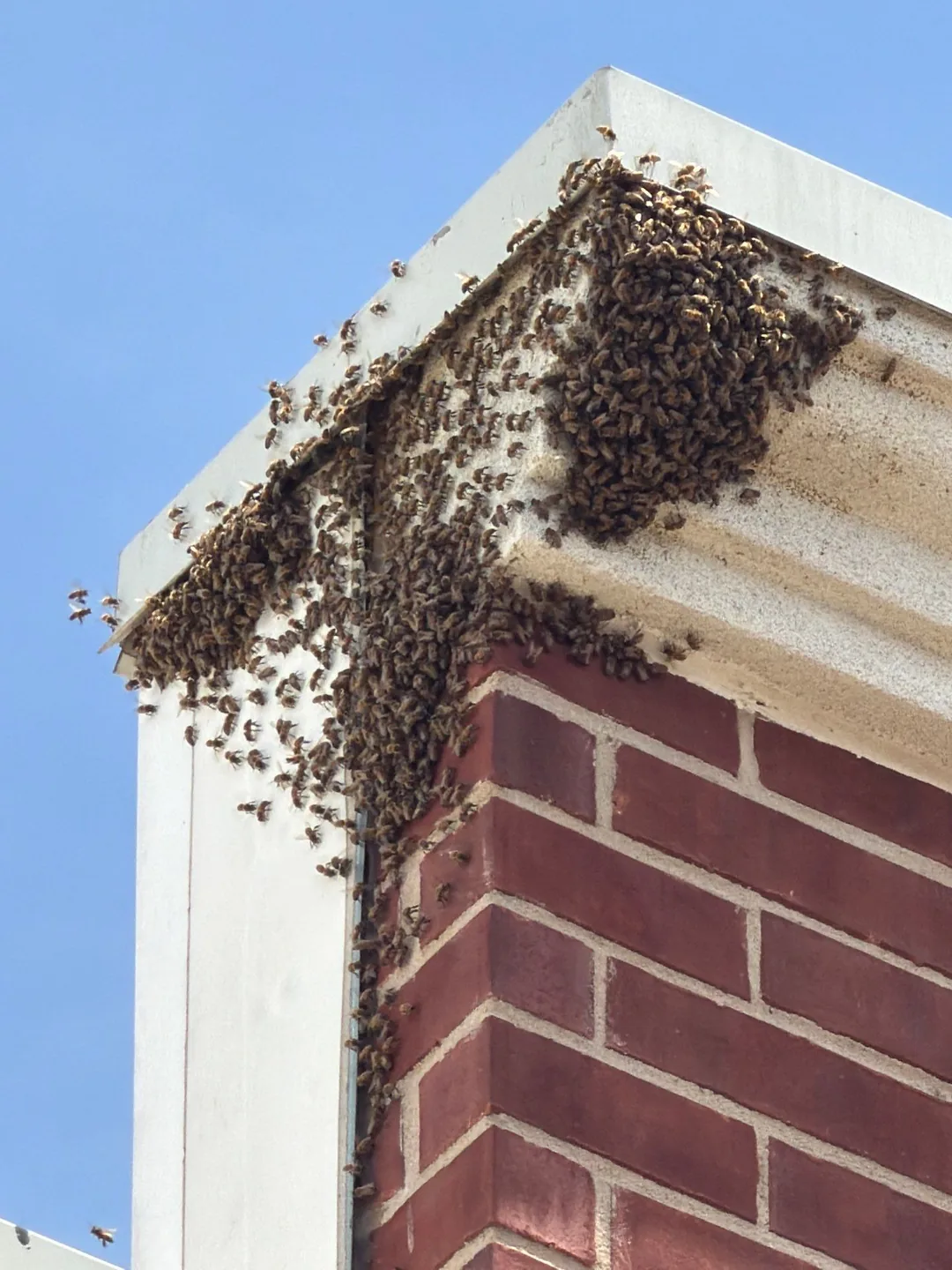
Not stock photos. A few recent bee calls across Collin County. Tap any photo to see it full size.
Pricing for Bee Removal
Three options, all built around the same approach: identify the bee, remove or relocate it safely, and seal the entry points. Pricing scales with the bee type, where the nest sits, and how hard the access is. Live honey bee relocation that needs a beekeeper cut-out or wall opening can vary, so the free inspection confirms your number before anything gets scheduled.
Our one-time removal when you want the problem gone right now.
No return visits included. Eligible recurring plans add re-service when our tech decides it is needed. Live honey bee relocation may be quoted on site.
- The bee identified, the colony removed or relocated, and entry points sealed, in one visit
- Pay once, no plan required
- We point out the bare wood or gap that drew them in

The plan most McKinney homeowners choose. Quarterly coverage for carpenter bees and wasps plus the common household pests.
- The full treatment repeated every quarter
- A protective barrier kept active around your home year-round
- Stops new pests drifting in from neighboring properties
- Re-service between visits when our tech decides it is needed

The same plan, month to month.
- The same quarterly treatment and year-round barrier
- No annual commitment
- Re-service on eligible plans when our tech decides it is needed
- Cancel any time without penalty
Want pricing detail for other pest services? See the full Pricing page.
Why DIY Bee Removal Fails in McKinney TX
A can of wasp spray and a ladder is how most bee jobs go wrong. Spraying a honey bee hive is dangerous to you and kills a beneficial colony, and even after that the wax comb and honey stay in the wall, melt in the summer heat, and draw in other pests. Carpenter bee holes you caulk over reopen by next spring. And the ladder itself is the most common way people end up stung. Here is what homeowners try, why it does not work, and what our team does differently.
| What homeowners try | Why it fails | What actually works |
|---|---|---|
|
Spray the honey bee hive in the wallWasp and hornet spray
|
|
Arrange live relocation and remove the comb
Through a registered beekeeper when the colony can be removed safely, with all wax and honey taken out so nothing melts into the wall. |
|
Caulk over the carpenter bee holes
|
|
Treat inside the hole first, then seal it
Dust placed into the tunnel, activity confirmed stopped, then every hole sealed. |
|
Knock the nest down off a ladder
|
|
Bee ID first, then the right plan
|



The Honey Bee in McKinney, Plano, Frisco & Allen
Honey bees are beneficial pollinators, so the first step is telling a temporary swarm from an established colony, and a honey bee from a carpenter bee or bumble bee. A swarm resting on a branch usually moves on within a day or two. A colony in your wall stays, builds wax comb, and stores honey. Carpenter bees drill round holes in bare wood. Bumble bees are fuzzy and nest low to the ground. We identify which you have before recommending anything.
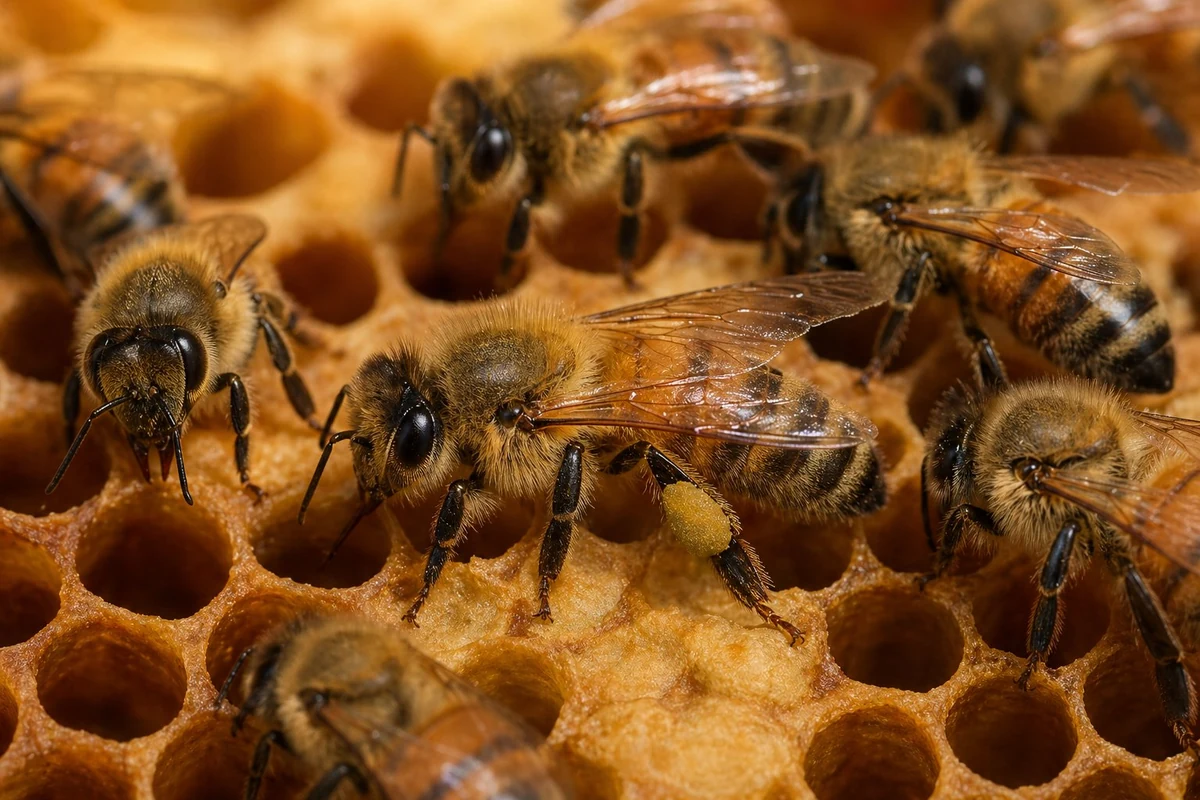 Beneficial pollinator · live relocation when safe
 20,000 to 80,000bees in a peak colony
 12 to 15 mmfuzzy, golden-brown body
 24 to 48 hrsa swarm usually moves on in
 Identify
Fuzzy, golden-brown body with banding, carrying pollen balls on the hind legs. The fuzz separates a honey bee from a shiny, hairless wasp at a glance.
 Where active
A swarm clusters on a branch, fence, or mailbox in transit. A colony uses a fixed gap into a wall void, soffit, chimney, or meter box.
When activeSwarms peak March through May. A colony in a wall is active every month of the year, since it does not die off in winter the way wasps do.
 Other bees
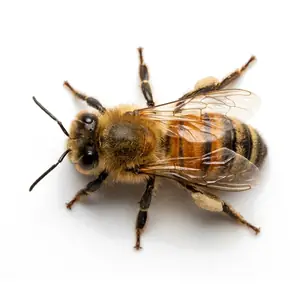
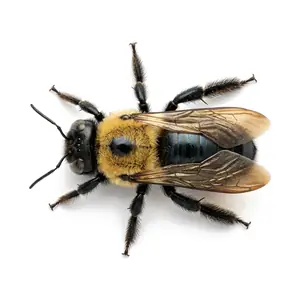
Carpenter bees have a shiny black abdomen and drill round holes in bare wood. Bumble bees are fully fuzzy and nest low to the ground.
 Damage risk
A wall colony left alone keeps storing honey. Kill it without removing the comb and the honey melts in summer heat, soaking drywall and drawing other pests.
Our approachConfirm the bee and swarm-versus-colony first. Arrange live relocation through a registered beekeeper when the colony can be removed safely, remove the comb, Install the Scorched Earth Barrier, and seal the entry.

How Dangerous Are the Bees in Your Yard?
Honey bees are defensive only right at the colony, and a single bee away from the nest almost never stings. The caution flag in Collin County is Africanized hybrids: identical at a glance, far more defensive when disturbed. Bees are pollinators first, so we arrange live relocation through a registered beekeeper when the colony can be removed safely.
The bee drilling perfectly round holes in your fence is not a honey bee at all: that is a carpenter bee, a different problem with its own playbook.
Bee Prevention in McKinney TX Homes
Bees are a yearly Texas reality, not a one-time problem. Our one-visit service handles the bees you have today. Keeping the next swarm and the next carpenter bee out takes a sealed home and painted wood, plus ongoing pressure where the pressure is high.
Honey bee swarms look for a new home hardest in spring, March through May, which is when an open wall gap turns into a wall full of comb. Carpenter bees are back on bare wood the same window. A honey bee colony already in your wall stays active all year, since bees do not die off in winter the way wasps do, so a sealed home matters every season.

Ongoing service keeps pressure on through spring bee season. Quarterly plans start at $40/mo, with re-service between visits when our tech decides it is needed. No-contract options are available too.
See plan options
A sealed home is what keeps swarms out. A honey bee swarm hunting for a new home only moves into a wall, soffit, chimney, or meter box if there is a gap to get in. Walk the exterior before spring and close any opening larger than a pencil tip: siding seams, soffit panels, weep holes, chimney flashing, and the lid gap on the water meter box. Across McKinney, Plano, Frisco, and Allen, the homes that get colonized are the ones with an open gap in March.

Painted wood is the longest-lasting fix for carpenter bees. Carpenter bees only drill into bare or weathered wood, so cedar fence rails, deck fascia, and pergola beams are the targets. A film-forming paint or sealed finish removes the surface they want. Our team keeps the Scorched Earth Barrier live, seals every treated hole, and tells you which bare wood to finish.

The honest math: a single Bee Removal visit handles the bees you have today. A quarterly plan handles that and re-checks the wood and entry points each spring, before the next swarm or the next female arrives. For homes near mature trees and greenbelts, recurring is the model that holds the line.
Bee Removal in McKinney, Allen, Frisco, and Plano
Bee pressure runs hardest in established neighborhoods with mature trees and in newer areas with plenty of bare cedar fencing and decks. We work daily across all 14 service cities.

Allen, TX
High pressureThe mature tree canopy through Twin Creeks and Cypress Meadows gives spring honey bee swarms plenty of places to cluster, and the cedar fencing and shaded soffits draw carpenter bees and wall colonies. Older lots near Watters Creek with established landscaping see steady spring pressure. We identify the bee first, then arrange live relocation through a registered beekeeper when the colony can be removed safely.
Allen pest control
Frisco, TX
High pressureMaster-planned neighborhoods like Stonebriar and Phillips Creek Ranch have miles of newer cedar fencing and pergolas, exactly the bare wood carpenter bees drill into each spring. Hollyhock backs onto wooded greenbelts where honey bee swarms stage before looking for a wall to move into. We treat carpenter bees at the wood and seal the holes once activity stops.
Frisco pest control
McKinney, TX
High pressureShaded, established lots across Stonebridge Ranch and Craig Ranch mix mature trees with plenty of cedar fencing and decks, drawing both honey bee swarms and carpenter bees. Painted Tree backs onto wooded buffers right at the property line. The historic downtown tree canopy keeps older McKinney homes under steady spring bee pressure, and we arrange live relocation through a registered beekeeper when the colony can be removed safely.
McKinney pest control
Plano, TX
High pressurePlano has the most mature tree canopy in our service area, so spring honey bee swarms have plenty of staging spots. Decades-old shade trees in Gleneagles and Willow Bend shade older fascia and trim where wall colonies and carpenter bees settle in. East Plano homes near Spring Creek back onto wooded corridors that keep the spring pressure high.
Plano pest control
Get a free bee removal estimate · response in 1 hour during business hours
Tell us where you are seeing the bees and whether it is a cluster on a branch, bees going in and out of a wall, or round holes in your wood. We confirm your free same-day visit within 1 hour during business hours (Mon-Fri 8am-5:30pm).
- Live honey bee relocation arranged when it can be done safely
- Pet friendly carpenter bee service, family back inside once it dries
- No-contract options alongside quarterly plans
- Same-day service when you call before noon
- Re-service between visits on eligible recurring plans, when our tech decides it is needed
Thanks! We got your request.
A Pest Me Off team member will confirm within 1 hour during business hours.
For immediate same-day help: (972) 866-4720
Bee Removal FAQ
Do you kill the bees, or can they be relocated?+
What is the difference between a swarm and a colony?+
How do I tell honey bees from carpenter bees?+
How do you handle bee removal around my dog and kids?+
What should I do if I get stung, and what about allergic reactions?+
Is killing bees bad for the environment and pollinators?+
Why does the comb have to come out of the wall?+
When is the best time of year for bee removal in Collin County?+
All Pest Control Services in McKinney and Collin County
 Ant Control
 Bed Bug Control
 Cockroach Control
 Mosquito Control
 Rodent Control
 Spider Control
 Wasp and Hornet Control
 Wildlife Removal
 Termite Treatment
Ready to get the bees handled right in McKinney?
What’s bugging you? Our team has handled bee removal across McKinney, Plano, Frisco, and Allen since 2014, arranging live honey bee relocation through a registered beekeeper whenever it can be done safely. 300+ five-star reviews. Best Pest Control McKinney 2025 and 2026. Same-day service when you call before noon. Texas TPCL #0937184. Open Mon-Fri 8am-5:30pm.