Yellow Garden Spiders in Collin County, TX | Identification and Control
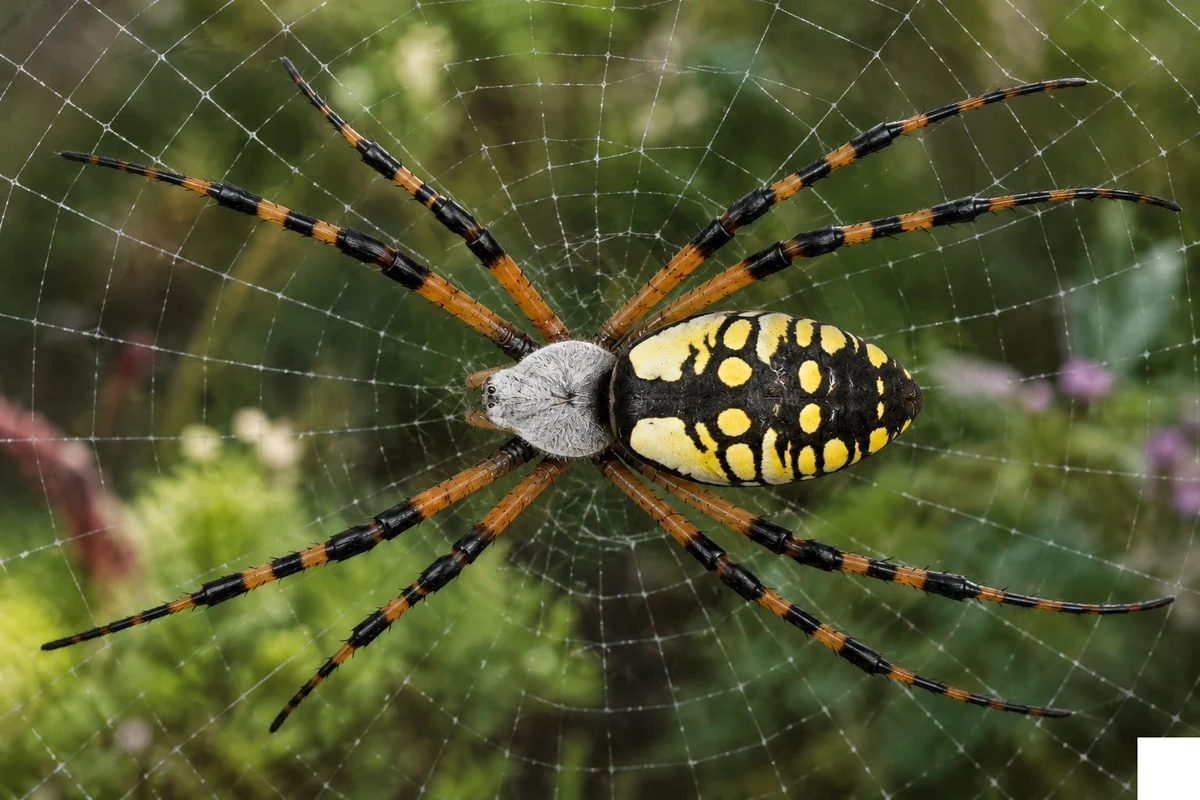
The yellow garden spider is the big black and yellow spider that sits head-down in a large orb web with a bold zigzag band of silk through the middle. The Missouri Department of Conservation puts that web at about 2 feet across. It shows up in Collin County gardens and on porches every August and is gone after the first hard freeze. It is a beneficial predator with minimal bite risk, so what matters is whether its web is somewhere you walk.
Found a big web across your porch in Collin County? Our office sits where McKinney, Plano, Frisco and Allen meet, 5 to 10 minutes from most homes in those four cities. Send us a photo or call, and we will tell you what the spider is.
Yellow Garden Spider
Texas A&M AgriLife on garden spider benefits confirms the species as a beneficial predator in yards and gardens. It looks dramatic and is almost never a treatment emergency.
Risk Assessment
Choose a row for the full detail- Prey
- Flies, mosquitoes, moths, grasshoppers, wasps and bees
- Threat level
- Low
- Web type
- Vertical orb web up to 2 feet wide with a zigzag band of silk
- Lifespan
- One season. Adult females die after the first hard freeze
- Active season
- Seen August through November in Collin County, peak August through October
- Body length
- Female 0.75 to 1.1 in (19 to 28 mm), male 0.2 to 0.35 in (5 to 9 mm)
- Legs (female)
- Longer than her body
What a Yellow Garden Spider Looks Like
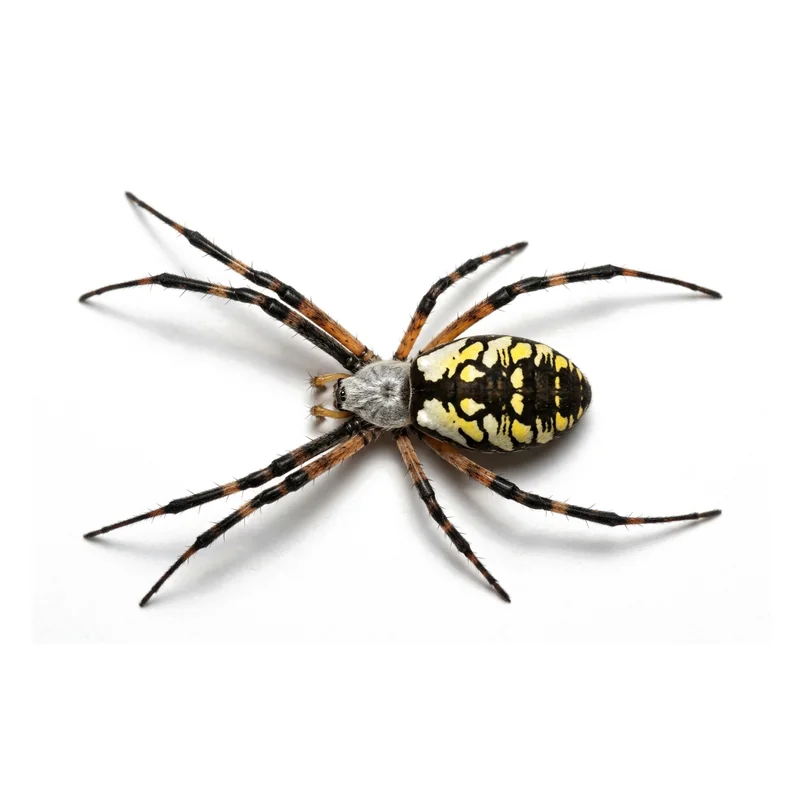
The adult female is one of the largest orb-weaving spiders in Collin County, 19 to 28 millimeters long in the body. Texas A&M AgriLife Extension puts the female’s body at more than 1 inch long, with legs even longer. Her abdomen is large and oval with a bold black and yellow pattern, and the front body section is covered in short silver-white hairs. The male is far smaller at 5 to 9 millimeters, duller in color and almost never the spider people call about.
The web is often seen before the spider. It is a vertical orb that the Missouri Department of Conservation puts at about 2 feet across, with a bold band of thicker silk running in a zigzag through the center. The female rests head-down in the middle with her eight legs held together in four pairs, forming an X. Texas A&M AgriLife on Argiope biology documents both the zigzag band and the X-pose.
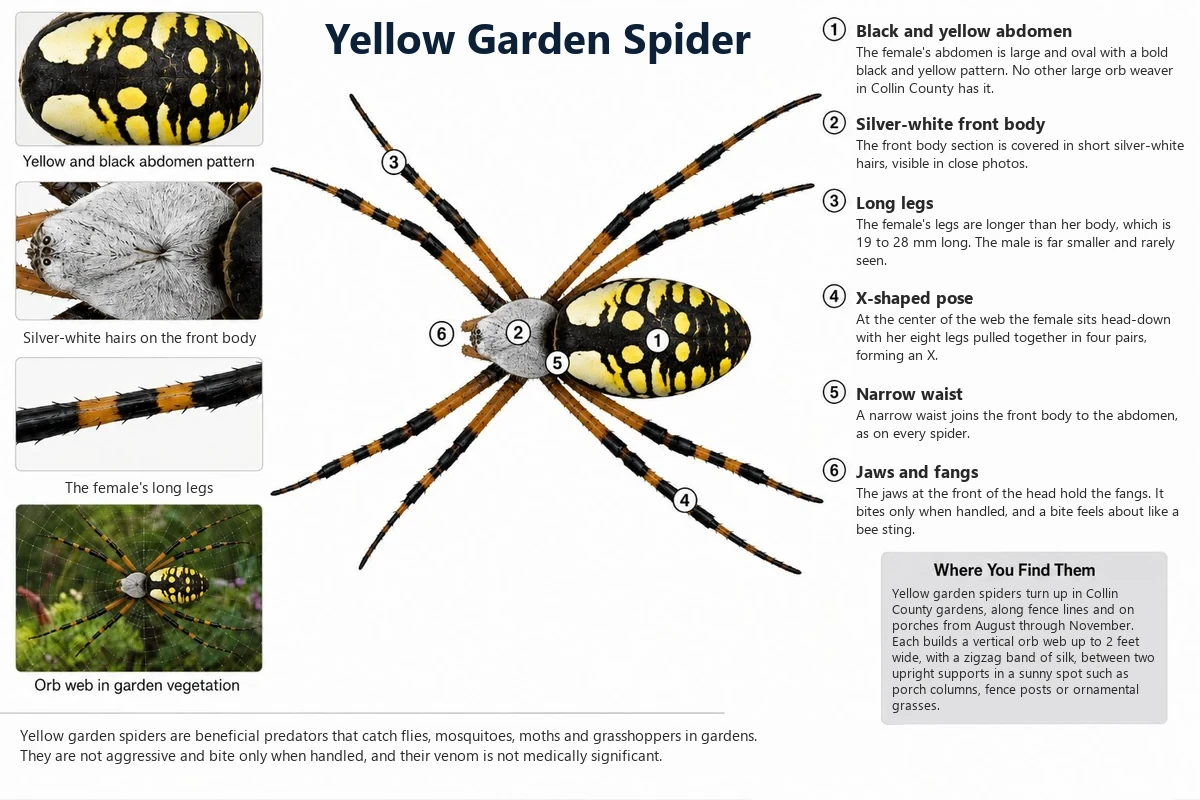
How to identify a yellow garden spider by its zigzag web band, its X-shaped pose and its black and yellow pattern
- Vertical orb web about two feet wide with a bold zigzag silk band running through the center
- Bold black and yellow abdomen. No other large orb weaver in Collin County has this pattern
- Female sits head-down at the center with her eight legs pulled into four pairs, forming an X
- Web anchored between two upright structures at eye or shoulder height in a sunny spot
- Silver-white hairs on the front body section, visible in close photos
- Papery brown egg sac hanging near the web from late summer through fall
- The web appears in exactly the same place day after day as the spider rebuilds it
Other Names for the Yellow Garden Spider
Why It Is Called the Writing Spider
The writing spider name comes from the zigzag band of denser silk through the center of the web, which early observers thought looked like handwriting. The zipper spider name comes from the same band seen as a zipper seam, and zigzag spider is the most literal name of all. Every name in the table means the same spider, Argiope aurantia, so if you searched for any of them, this is your spider.
Where Are Yellow Garden Spiders Found?
Yellow garden spiders are a common species throughout the eastern two-thirds of Texas, and Collin County sits inside that range. Here they turn up in gardens, along fence lines and on porches wherever they find two upright anchor points, sun and plenty of flying insects.
They are not rare visitors, and a yard that has one this year can expect one again next August.
| Name | What it means |
|---|---|
| Writing spider | Named for the zigzag silk band, which looked like script to early observers. |
| Zipper spider | The same zigzag band, seen as a zipper seam down the middle of the web. |
| Corn spider | An older farm name for the same spider. |
| Zigzag spider | The most literal name, for the zigzag band itself. |
| Garden spider | The short form of its name. Its close relative the banded garden spider is compared in the look-alike table below. |
| Black and yellow garden spider | A plain description of the female’s black and yellow abdomen. |
| Black and yellow argiope | The same description with its genus name, Argiope. |
| Yellow orb weaver | It builds a round orb web, so it is one of the orb weavers, and the yellow one. |
| Gold-Wespenspinne | Its German name, meaning golden wasp spider. |
How to Tell Yellow Garden Spider from Other Collin County Spiders
The color and the web make the yellow garden spider one of the easier identifications in Collin County. Most confusion comes from never having seen one before, not from a real likeness to anything dangerous. The worry worth settling is the black widow, which people assume when they see a large spider in an outdoor web.
| Species | Size | Key Feature | Where Found |
|---|---|---|---|
|
Yellow Garden Spider
AKA: Writing Spider, Zipper Spider, Corn Spider
Argiope aurantia
This species
|
Female body 0.75 to 1.1 in, legs longer still. Bold, large, immediately noticeable. Male is tiny (0.2 to 0.35 in) and rarely seen. | Bold black and yellow abdomen. Two-foot vertical orb web with a bold zigzag band through the center. Female sits head-down in an X-pose at the center. No other spider in Collin County builds this web. | Garden trellises, porch columns, fence lines, eave overhangs, ornamental grasses. Outdoors only. Prefers sunny spots between two upright anchor points at eye level. |
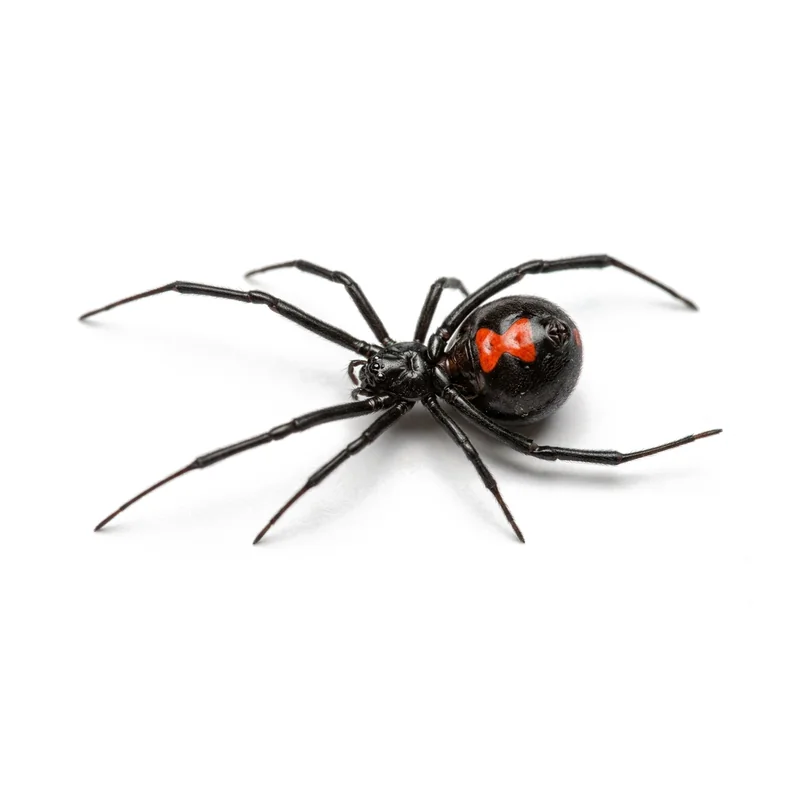
Black Widow
AKA: Southern Black Widow
Latrodectus mactans
|
0.5 to 0.6 in body. Smaller and more compact than a yellow garden spider. Shiny, smooth, jet black with no yellow on the back. | Glossy jet black with no yellow on the body. Red hourglass on the underside of the abdomen, not visible from above. Builds an irregular tangled web at ground level in corners and dark gaps, not a vertical orb in open garden space. Medically significant venom. | Ground-level corners, meter boxes, under wood piles, garage corners near the floor, weep holes. Low, protected, dark places. Not in open garden sunlight at eye level. |
|
Brown Orb Weaver
AKA: Barn Spider, Spotted Orb Weaver
Neoscona spp.
|
0.4 to 0.75 in body. Smaller than an adult female yellow garden spider. Mottled brown or tan body, sometimes with orange tones. | Mottled brown body with no yellow. Builds a similar vertical orb web but with no zigzag band, or only a faint trace. The female does not sit in an X-pose and hides in a silk retreat at the edge of the web by day. Covered on the Orb Weaver page. | Similar outdoor spots but also eaves, porches and structures after dark. Often active at night and hidden by day. Far less noticeable than the yellow garden spider. |
|
Banded Garden Spider
Argiope trifasciata
|
0.5 to 0.75 in female body. Smaller and less striking than the yellow garden spider. | Same genus as the yellow garden spider and builds the same zigzag-band orb web. Body color is more muted, with banded striped legs and a less distinct abdomen pattern, more cream and pale yellow than bold black and yellow. The difference is mainly color strength. | Similar outdoor garden habitat. Less common in Collin County than Argiope aurantia. Same low bite risk, same beneficial predator status and the same control considerations. |
Yellow Garden Spider vs Black Widow
The Yellow Garden Spider in Three Numbers
More than 1 in
Texas A&M AgriLife Extension puts the body of an adult female yellow garden spider at more than 1 inch long, with legs even longer, while the male is far smaller.
Texas A&M AgriLife Extension
400 to 1,000+
The University of Florida says one papery yellow garden spider egg sac can hold from 400 to over 1,000 eggs, and the young do not leave it until spring.
University of Florida
About 2 ft
The Missouri Department of Conservation says the circular web a female yellow garden spider builds can be about 2 feet in diameter, and only the females build one.
Missouri Department of Conservation
Are Yellow Garden Spiders Poisonous or Dangerous?
No. Yellow garden spider venom is not medically significant. It does not damage tissue, has no documented effects beyond the bite site, and has no medically serious outcome on record. It bites only when it cannot escape being handled, so a female sitting in her web poses no risk to anyone who is not trying to grab her.
The spider does not bite because someone is close or because it feels threatened. Orb weaver spider identification and risk from PestWorld covers the wider orb weaver group.
What Does a Yellow Garden Spider Bite Feel Like?
A yellow garden spider bite feels about like a bee sting, with minor swelling and itching at the spot that fade within a few hours without treatment. Seek care only if the redness keeps spreading or the swelling is unusual after 24 hours, or if the person bitten has a known venom allergy. Both are uncommon.
Are Yellow Garden Spiders Beneficial?
Yes. Texas A&M AgriLife Extension classes yellow garden spiders as beneficial garden predators and recommends a conservative, education-first approach. Each one cuts the flies, mosquitoes, moths and grasshoppers around its web, and most pest professionals do not treat it as a pest at all.
When Yellow Garden Spider Presence Is Worth Addressing
Most calls are not about bites. They come from people who walked into the web or found it blocking a door they use every day. The practical question is where the web is, not the venom.
Web Across a Doorway or Play Area
A web spanning a back door, a main walkway or a child’s play area at face height is worth moving even though the bite risk is low, because it startles children and adults alike. Take the web down and move the spider gently to a quieter corner.
Several Webs Around Busy Outdoor Spaces
One web in the garden is an asset. Six across the patio, pool area and outdoor dining space mean a large flying insect food source is drawing spiders in. Reducing those insects is the right lever to pull.
One Spider in the Garden Away From Foot Traffic
A yellow garden spider in a garden bed, along a fence line or in tall grass away from where people walk is cutting the insects in your yard. Treating it removes natural insect control for no practical benefit. Leave it, and it will be gone after the first freeze.
Large Dark Spider at Ground Level in a Corner
If the spider is at ground level in a dark corner with an irregular messy web rather than a large vertical orb, do not assume yellow garden spider. Check the web and the body color carefully. Ground-level corner webs are black widow territory and need a different response.
Where Yellow Garden Spiders Come From in Collin County
In a yard, the spider chooses a web site with two upright anchor points, sun and flying insect traffic. Porch columns, garden trellises, fence posts, eave overhangs, ornamental grasses and pool screen frames are the usual spots. Properties with established garden plantings, lower pesticide use and irrigated lawns have more of them than lawn-only properties. Homes next to greenbelts, creek lines and wooded preserves in McKinney, Allen, Frisco, Prosper and Celina see steady numbers because those areas produce so many flying insects. The spider is following the food.
Yellow Garden Spider Pressure Across Collin County
Calls cluster from late August through October, when the females are at full size. The phone usually rings when someone who has never seen the species walks into a two-foot web at eye level on the back porch. People who have seen one before tend to call only when the web is truly in the way.
Higher-pressure areas in McKinney and Allen include established neighborhoods like Twin Creeks and Stonebridge Ranch, where mature gardens, ornamental plantings and lower pesticide use keep habitat steady. Pool homes in Frisco and Plano with screen enclosures see steady numbers because the screen frame makes an ideal anchor. New construction bordering open prairie in Celina and Anna gets heavy flying insect pressure from nearby farmland, which feeds spiders along the fence lines.
Only the full-size females get noticed. Pest Me Off service records from 2024 to 2026 show calls about this spider peaking in three months, August through October, when the females are full size. The adults die after the first hard freeze in November, the egg sac carries the next generation through winter, and the young spend spring and early summer too small to notice until the growing females draw attention in late July.
Pattern from iNaturalist observation records and Pest Me Off service call data across Collin County, 2023 to 2026.
How Long Do Yellow Garden Spiders Live?
A yellow garden spider lives for one season. It starts as an egg in a sac laid in late summer or fall, hatches in spring, grows through spring and early summer, reaches full size by late July or August, and dies after the first hard freeze, usually in November in Collin County.
The species completes one generation a year here, so the spider you see in October is not the one you will see next August.
Yellow Garden Spider Biology That Explains Why It Returns
How Pest Me Off Handles Yellow Garden Spider Calls
Yellow garden spider calls follow the same order every time, and most end at step one. The rest involve a web in a genuinely bad spot, or a homeowner who wants no large spiders around the house at all, and both are workable.
Species ID and Homeowner Education
Confirm the species from the description or a photo: large, black and yellow, an orb web with a zigzag band, out in daylight in the garden or on the porch. Then explain what it is: a beneficial spider, gone after the first freeze, with no real bite risk and no interest in coming indoors. Nine out of ten calls close here.
Targeted Web Removal From High-Traffic Zones
When the web blocks a doorway, a play area or an outdoor dining space, take it down with a long-handled pole. Morning removal, when the spider is less active, works better than evening removal while she is rebuilding. Repeat if she returns to the same anchor points within 48 hours.
Perimeter Treatment to Reduce Flying Insect Prey
When webs return season after season, or several concentrate around one outdoor area, treating the wider exterior to reduce the flying insects is the lasting fix. Less prey at the web site means less reason for the spider to hold that spot. Pair it with switching off porch lights that pull in moths from August through October.
Direct Treatment When Warranted
When a homeowner has documented allergy concerns, when small children regularly use a busy web zone, or when living with the spider is genuinely not workable, a pyrethroid (a family of insecticides) spray applied at the web site is effective. Removing the egg sac in late fall stops the next season’s spider from starting in the same spot.
& Quick Fixes
How to Get Rid of Yellow Garden Spiders Yourself
Getting rid of a yellow garden spider yourself is mostly about making its favorite web sites less inviting. It picks spots for anchor points, sun and flying insect traffic, so change those and the web moves elsewhere.
Why Some DIY Approaches Fail for Yellow Garden Spiders
Most DIY attempts that fail make one of the four mistakes below. Each one goes after the spider or its web and leaves the light, the site or the season still working against you.
Removing the Web Without Addressing the Porch Light
A porch light gathering flying insects at the anchor points draws a replacement web within 24 to 48 hours. Turn off the light and the site becomes less attractive, and then the web removal sticks.
Misidentifying It as a Black Widow and Over-Treating
Some people describe a yellow garden spider as a huge black spider before they have seen it clearly. Confirm the identification before treating. A large vertical orb web in open garden space with a zigzag band, seen in daylight, is not a black widow.
Treating in Spring for a Fall Problem
The small spiders in spring and early summer are young ones still growing, not yet building the two-foot webs that bring the calls. Treating hard in spring does not prevent the late summer spiders. It only removes beneficial predators at the start of insect season.
Worrying When the Spider Is Busy at Night
Yellow garden spiders are naturally more active in the evening, when insect traffic peaks and cooler air suits web building. A spider respinning her web at dusk is doing exactly what the species does, and there is nothing to step in on.
Common Yellow Garden Spider Questions
What is the big black and yellow spider in my garden?
Is the writing spider the same as the yellow garden spider?
Is the yellow garden spider dangerous?
Are yellow garden spiders dangerous to dogs and cats?
What is the zigzag in the middle of the web?
How big do yellow garden spiders get?
What does the yellow garden spider eat?
When do yellow garden spiders appear in Collin County?
Is the yellow garden spider good for my garden?
Should I get rid of the writing spider in my garden?
What is the big papery brown ball near the web?
Will the yellow garden spider come back next year?
Why does the web keep coming back in the same spot?
How do I get rid of a yellow garden spider by my back door?
Writing Spider on Your Porch. We ID It, Relocate It, or Treat It.
Most yellow garden spider calls close with a two-minute conversation about what it is. When the web is actually in the way, blocking a door, a play area or your outdoor dining space, we remove it, relocate the spider and deal with what keeps drawing webs back to the same spots. McKinney, Allen, Frisco, Plano and all of Collin County.