
Black Carpet Beetles in Collin County, TX | Identification and Control
The black carpet beetle (Attagenus unicolor) is a shiny, black to dark brown oval beetle, 1/8 to 3/16 inch long, with none of the speckles of its spotted cousins. The University of Florida profile calls it the most common and most destructive of the 5 important carpet beetles in the United States. Its smooth, cigar-shaped young eat wool, fur and feathers, and also get into flour, cereals and stored grain.
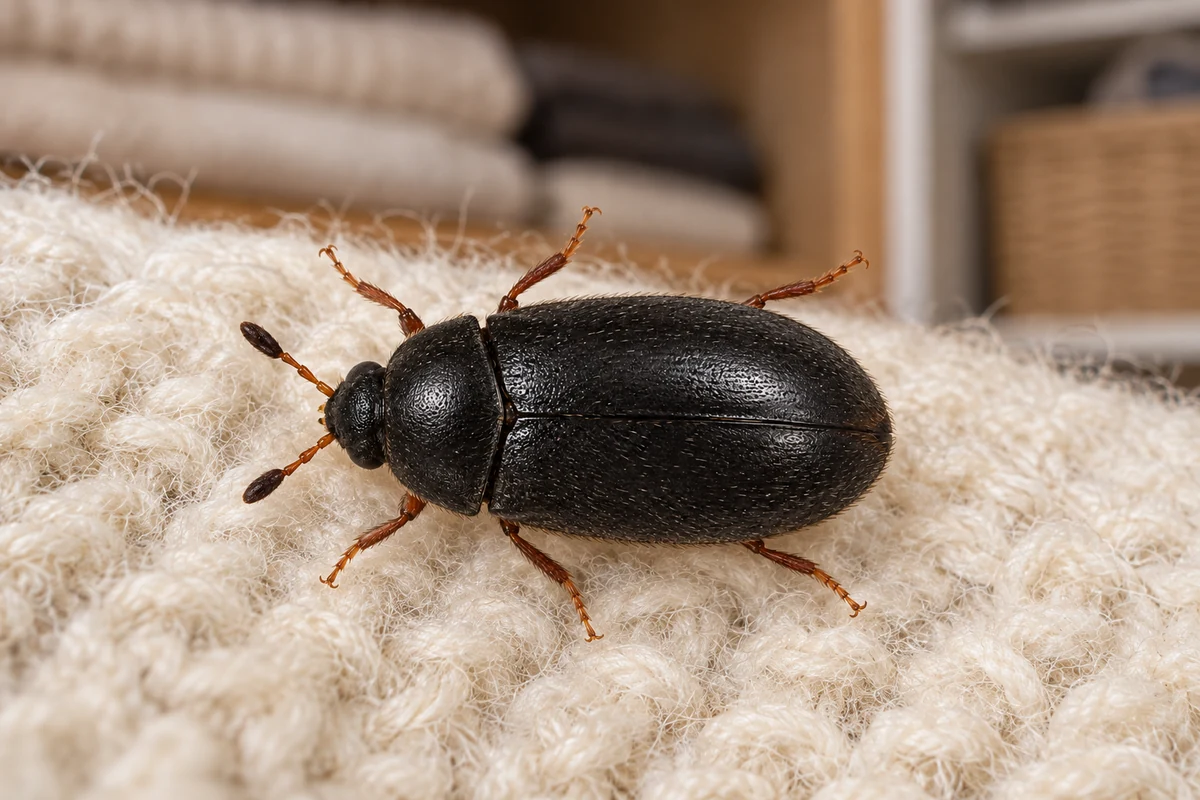
Small black beetles in the closet or bristly young in the flour? Our office sits where McKinney, Plano, Frisco and Allen meet, 5 to 10 minutes from most homes in those four cities. Call and we will find what the young beetles are feeding on.
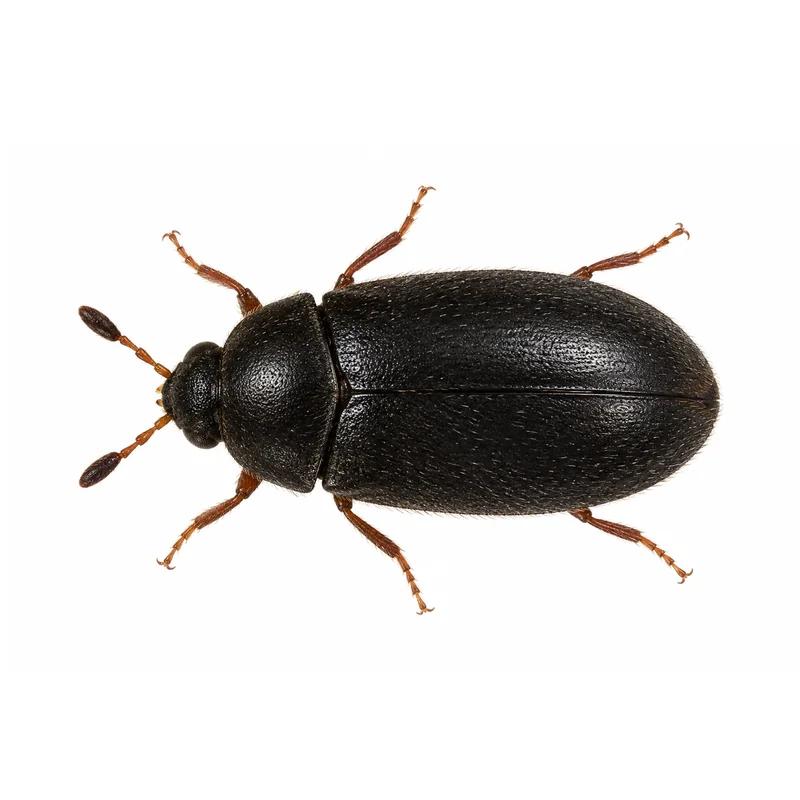
Black Carpet Beetle
The black carpet beetle is the plain, dark member of the carpet beetle family. The University of Florida profile of the black carpet beetle says its young damage anything made from animal hair or feathers, and can also get into cereals and grains, so it turns up in the pantry as well as the closet.
Risk Assessment
Choose a row for the full detail- Color
- Shiny black to dark brown, with no spots or pattern and brownish legs
- Diet
- Adults eat pollen and nectar, the young eat wool, fur, feathers, hair, and stored grains and cereals
- Threat level
- Low to people, moderate to wool, fur and stored food
- Where it hides
- Closets, rug edges, lint in floor vents, pantry shelves, and bird and rodent nests
- Adult lifespan
- 4 to 8 weeks
- Young to adult
- 166 to 330 days as a young beetle, then 8 to 14 days changing into an adult
- Size
- 1/8 to 3/16 inch long, oval, larger than the spotted carpet beetles
What Does a Black Carpet Beetle Look Like?
A plain, shiny dark oval beetle with smooth, cigar-shaped young that end in a long tail of hairs
The adult is an oval beetle, shiny black to dark brown, with brownish legs and no pattern at all. The University of California Pest Notes guide to carpet beetles puts it at 1/8 to 3/16 inch long and says both the adults and the young are distinctly different from the spotted carpet beetles. That plain dark shell is the quickest way to tell it from a varied or furniture carpet beetle.
The young look nothing like the fuzzy, striped young of the spotted kinds. The same guide describes them as shiny, smooth and hard, light brown to almost black, covered in short stiff hairs, tapering toward the rear and ending in a tuft of long hairs. The University of Florida profile calls them cigar-shaped and says their shed skins are often mistaken for live young.
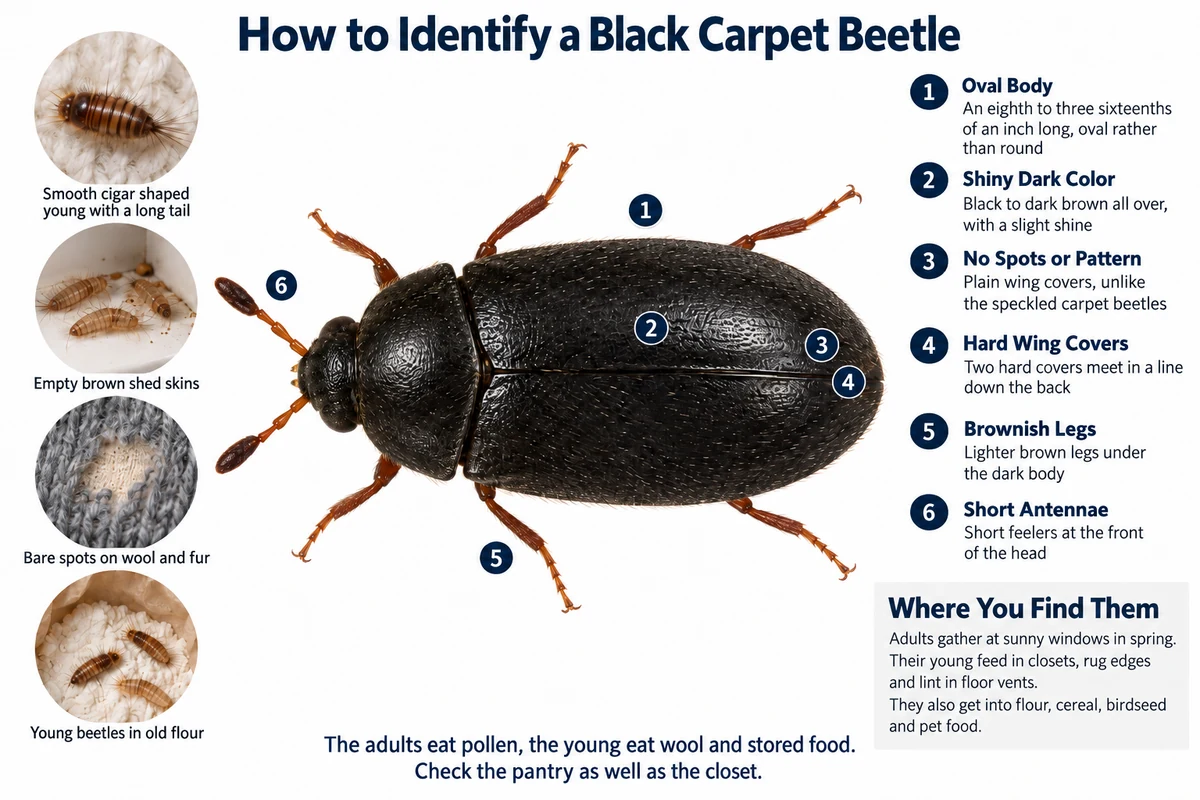
How to identify a black carpet beetle by its plain, shiny oval body, with the cigar-shaped young, shed skins and damage it leaves behind
- Small, shiny, plain dark oval beetles at windows and on sills in spring
- Smooth, shiny, cigar-shaped young with a long tail of hairs
- Brown shed skins in closets, on rugs or on pantry shelves
- Bare spots on wool or at the base of fur, with no webbing
- Young or shed skins inside flour, cereal, grain or birdseed
- Activity near lint and pet hair along baseboards and floor vents
Other Names for the Black Carpet Beetle
Most people just say carpet beetle, a name it shares with the varied carpet beetle and the furniture carpet beetle. The black in its name is what sets it apart, since the other two are spotted. Its scientific name is Attagenus unicolor, and unicolor means one color.
Older research papers call it Attagenus megatoma. Studies from the 1970s and 1980s listed in the University of Florida profile use that name for the same beetle, so you may see it in older books and articles.
| Name | What it means |
|---|---|
| Carpet beetle | The everyday name, shared with two cousins. |
| Black carpet beetle | Named for its plain, dark shell. |
| Escarabajo negro de alfombra | The Spanish name, black carpet beetle. |
| Attagenus unicolor | The scientific name, meaning one color. |
| Attagenus megatoma | An older scientific name in past studies. |
How to Tell a Black Carpet Beetle from Other Carpet Beetles and Pantry Beetles
The black carpet beetle gets mixed up with its spotted cousins at the window and with pantry beetles in the kitchen. Color, body shape and the look of the young tell them apart.
| Species | Size and Color | Key Feature | Where Found |
|---|---|---|---|
|
Black Carpet Beetle
AKA: Carpet Beetle
Attagenus unicolor
This species
|
1/8 to 3/16 inch long. Shiny black and dark brown with brownish legs. | Oval with no pattern. The young are smooth, shiny and cigar-shaped with a long tail tuft. | Wool, fur and feathers in closets and rugs, and flour, cereal and grain in the pantry. |
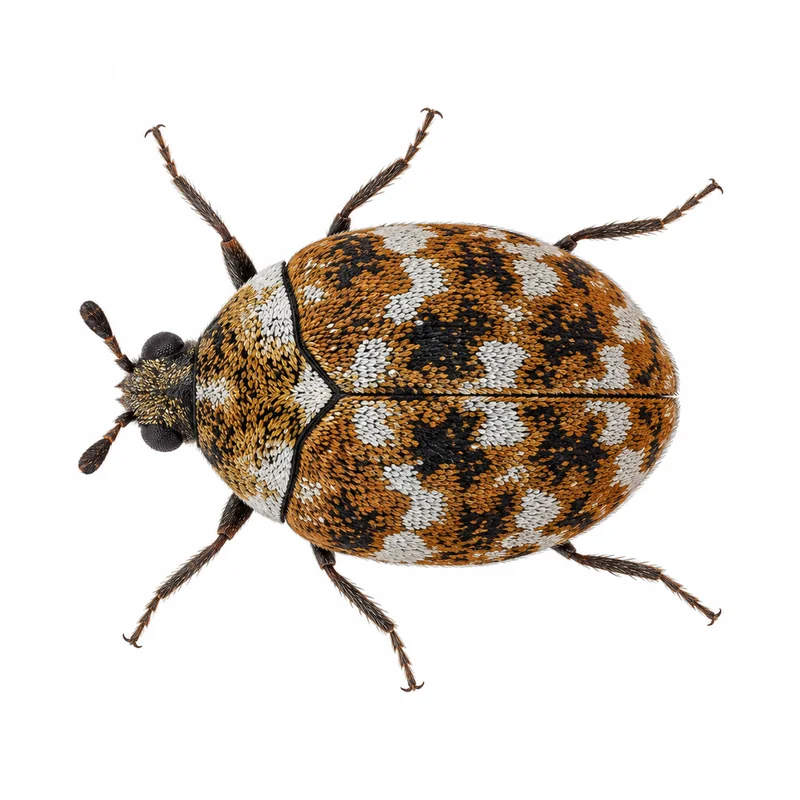
Varied Carpet Beetle
AKA: Carpet Beetle, Woolly Bear
Anthrenus verbasci
|
Smaller, about 1/10 inch. Black with patches of white, brown and dark yellow. | Round and speckled. The young are fuzzy, striped and broader at the rear. | Adults at windows in spring. Young in closets, rug edges, lint and attic nests. |
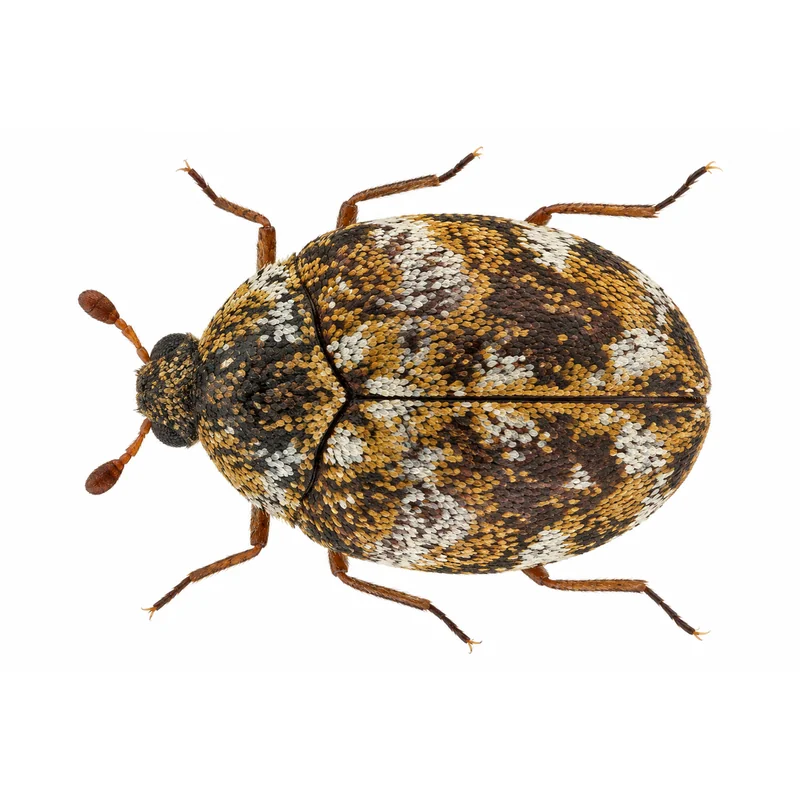
Furniture Carpet Beetle
AKA: Carpet Beetle
Anthrenus flavipes
|
A little larger and rounder than the varied. Mottled white, yellow and orange with black spots. | Round and mottled, with a white underside. Worn adults can look solid black. | The same wool, fur and feather items, and often inside upholstered furniture. |
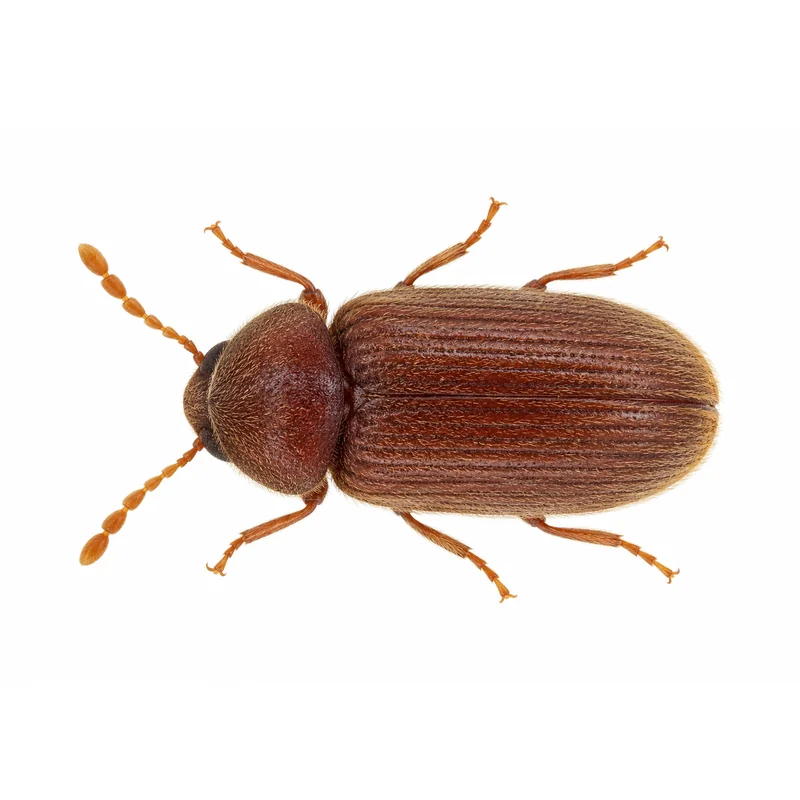
Drugstore Beetle
AKA: Pantry Beetle
Stegobium paniceum
|
About 1/8 inch. Uniformly light brown, never shiny black. | Cylindrical, with fine lengthwise grooves on its wing covers. Its young are small white grubs. | Inside pet food, cereals, spices and medicines in the pantry. |
Black Carpet Beetle vs Varied Carpet Beetle
The Black Carpet Beetle in Three Numbers
Top of 5
The University of Florida profile ranks the black carpet beetle the most common and most destructive of the 5 important carpet beetles in the United States.
University of Florida, black carpet beetle profile
166 to 330 days
The University of California Pest Notes guide gives the black carpet beetle’s young stage as 166 to 330 days of feeding before it changes into an adult.
University of California Pest Notes
About 90 eggs
The same University of California Pest Notes guide says a female black carpet beetle usually lays about 90 eggs, more than either of the other two common carpet beetles.
University of California Pest Notes
Do Black Carpet Beetles Bite?
No. Neither the adults nor the young bite or sting, and they carry no disease. The adults feed outdoors on pollen and nectar, and the young eat hair, feathers, wool and stored food, never living skin. The University of Florida profile does note that people in close contact with black carpet beetles may have allergic reactions to beetle fragments, shed skins or dust.
Can Black Carpet Beetles Cause a Rash?
They can in sensitive people, though it is not a bite. A 2021 report in Emerging Infectious Diseases described itchy bumps in homes in France caused by the hairs of young carpet beetles of a related genus, the one the varied carpet beetle belongs to. The report says those bumps mimic bites but are an allergic reaction to hairs stuck in the skin. It did not study the black carpet beetle, but its young are covered in stiff hairs too. Anyone with a rash that will not go away should see a doctor and mention the beetles.
Are Black Carpet Beetles Dangerous to Pets?
Not to the animal itself. They do not bite pets or live on them. The young feed on the hair your pets shed, and the University of Kentucky fact sheet on carpet beetles says some carpet beetles also get into pet food, seeds and cereals. So the real risk to a pet owner is a ruined bag of dry food or birdseed, not a sick dog or cat.
When Black Carpet Beetle Activity Needs Fast Action
Young Beetles in Flour or Cereal
Bristly young or shed skins inside a bag of flour, cereal, grain or birdseed mean they are breeding in your food. Throw it out sealed and check every shelf near it.
Bare Spots in Stored Wool or Fur
Grazed patches on a stored sweater, rug or blanket, or hair slipping from a fur, mean the young are feeding now. Bag the item and look at everything stored near it.
Shed Skins Along Baseboards or Vents
Brown shed skins along baseboards, in closets or near floor vents mean the young have been growing on lint and hair close by. Find and clean out that build-up.
A Few Beetles at the Window
A few dark adults on the windowsill in spring are not cause for alarm on their own. Check closets, rugs and the pantry for young before treating anything.
Why You Have Black Carpet Beetles in Your House
Black carpet beetles start outdoors and in nests. The adults feed on flower pollen and fly in through open windows and doors, and the California guide says people often carry carpet beetles in on cut flowers. The University of Florida profile adds that black carpet beetles favor bird and rodent nests, and that a nest in an attic or wall can send them into the house when the first cold weather arrives.
Indoors, they have more to eat than any other carpet beetle. Their young feed on wool, fur, feathers and the lint and pet hair that collects along baseboards and inside floor vents, and they also get into flour, cereal, grain and birdseed. The California guide notes that in dry climates the black carpet beetle is a bigger pest of stored food than of fabric. None of this means a dirty home. A clean house with an old bag of flour, a wool rug or a dog that sheds can feed them.
Where Black Carpet Beetles Live in Collin County Homes
The young feed in dark, undisturbed places. The University of Florida profile says they prefer the surface of wool and the base of furs, eating the nap and leaving the base threads, and they also invade containers of cereals, nuts and stored grain. Look in closets, chests and boxes of stored wool, under heavy furniture, along rug edges, in the lint inside floor vents, and on the back of pantry and garage shelves where old food sits.
Black Carpet Beetle Pressure Across Collin County
Our service notes record carpet beetles most often in McKinney, then in Frisco, The Colony and Allen, in houses and apartments alike. The notes do not always name the species, but when the beetles are plain and dark and the young are in the kitchen, it is the black carpet beetle we are looking for.
In Prosper and Plano we find carpet beetles in closets, kitchens and bedrooms. Entry points we see include a dryer vent cap with its screen missing and gaps where the air conditioning line enters the wall, and homes with an old nest in the attic give them the steadiest food.
The young feed indoors all year in a heated and cooled home. The adults come out in spring and early summer, April and May bring the most calls, and calls stay steady through late summer as kitchens and laundry rooms show activity.
Pattern from the University of California guide, which says carpet beetle adults usually appear in spring or early summer, and Pest Me Off carpet beetle calls, which climb each April and May.
Why Black Carpet Beetles Keep Coming Back
How Pest Me Off Gets Rid of Black Carpet Beetles
Black carpet beetle control is four steps, every job. The beetles you can see are a clue, not the problem, so the work goes into finding what the young are eating, in the closets and in the pantry.
Inspect and Identify
A free inspection of the closets, the attic vents, behind and under the furniture, any wool, fur or feather items, and the pantry. We confirm which carpet beetle it is and find the actual feeding spot.
Remove the Source
Infested items are bagged and treated, a bird nest in a vent is pulled, and a hidden build-up of hair and dust is cleaned out.
Treat the Edges
Our Scorched Earth Barrier goes along baseboards, closet corners and the routes the young beetles use, plus the outside entry points where adults get in each spring.
Screen and Defend
Attic, eave and dryer vents are screened so birds cannot nest there again. Homes with a lot of stored wool, pets or repeat nesting can add a quarterly plan that keeps the barrier active through the spring beetle season.
& Other Companies
How to Get Rid of Black Carpet Beetles Yourself
Most DIY black carpet beetle work is a search and a cleanup. The California guide says that if cleaning and sealing succeed, no insecticide is needed at all.
Why Some DIY Responses Fail for Black Carpet Beetles
Most DIY black carpet beetle trouble comes from treating the beetles you can see while the young keep eating in a place nobody has looked.
Spraying the Beetles at the Window
The adults eat pollen, not wool or flour. Killing them leaves the young feeding in the closet or the pantry, and the Kentucky fact sheet says sprays often cannot reach young inside fabric.
Mothballs in the Closet
The Florida profile says mothballs offer little protection against black carpet beetles. They also must never be scattered where children or pets can reach them, or used near food.
Cleaning Only the Closet
This is the carpet beetle that also lives in food. A spotless closet will not help while an old bag of flour or birdseed keeps feeding the next batch of young.
Common Black Carpet Beetle Questions
What is a black carpet beetle?
What do young black carpet beetles look like?
Do black carpet beetles bite?
Can black carpet beetles cause a rash?
Are black carpet beetles harmful to dogs and cats?
Why do I have black carpet beetles in my house?
Can black carpet beetles get into flour and cereal?
How can I tell a black carpet beetle from a varied carpet beetle?
Do mothballs kill black carpet beetles?
Does freezing kill black carpet beetles?
How do I get rid of black carpet beetles?
Black Beetles in the Closet or the Flour? We Find What They Are Eating.
We open the closets, check the pantry and the attic vents, and look under the furniture until we find the source, remove it, treat the edges and screen the vents. Carpet beetle control across McKinney, Allen, Frisco, Plano, and all of Collin County.