
Pavement Ants in Collin County, TX | Identification and Control
The pavement ant (Tetramorium immigrans) is the small dark ant most Collin County homeowners call the sugar ant. Its colony lives in the soil under driveways, sidewalks and the foundation slab, and its workers walk into kitchens through expansion joints to reach sweet and greasy food. University of Wisconsin-Madison Extension puts a large pavement ant colony at 3,000 to 4,000 ants. The sandy mound at a driveway crack is moved soil, not damaged concrete. The fix is bait the workers carry home to the queen.
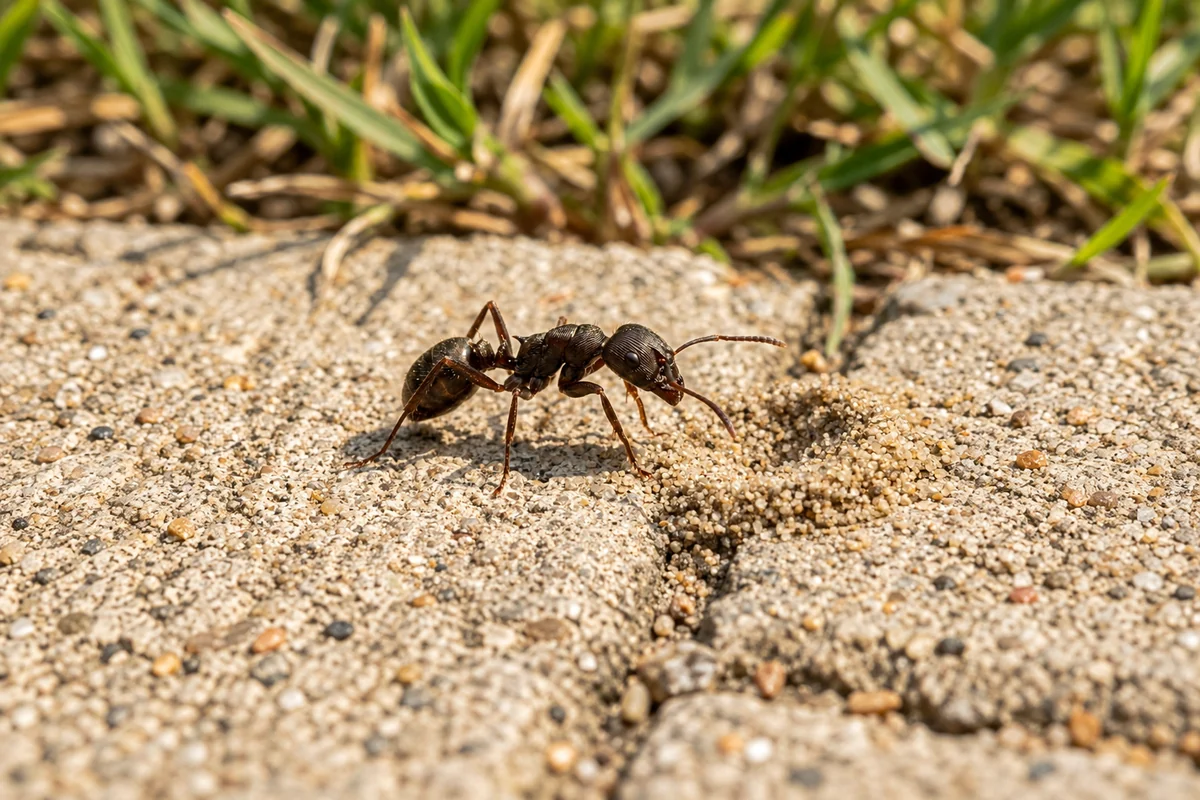
Ant trail in your kitchen in Collin County? Our office sits where McKinney, Plano, Frisco and Allen meet, 5 to 10 minutes from most homes in those four cities. Send us a photo or call, and we will tell you which ant it is.
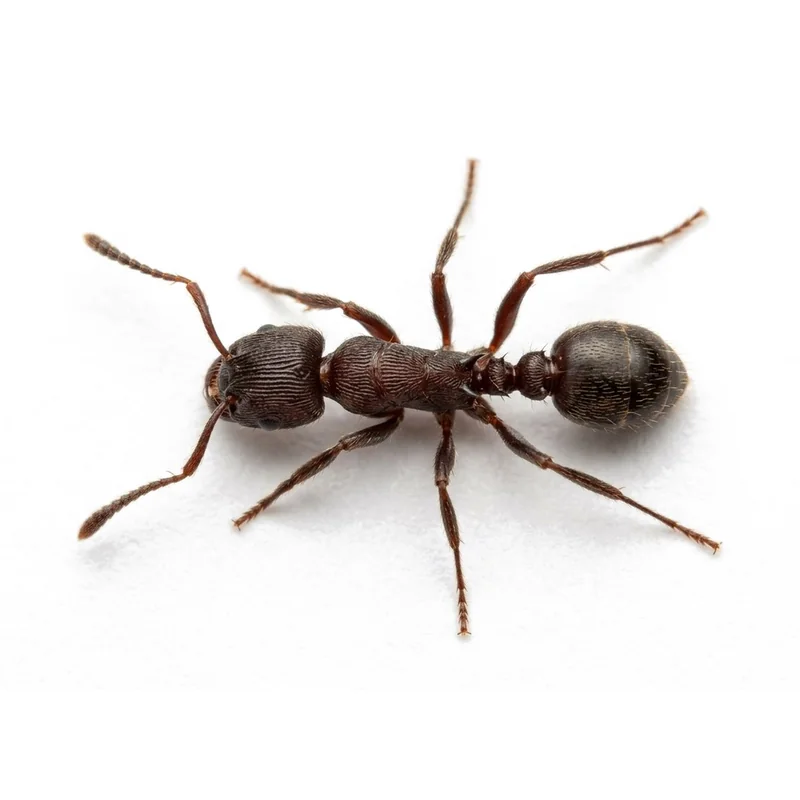
Pavement Ant
A low-risk ant that nests under concrete and is met most often as a trail across the kitchen counter.
Risk Assessment
Choose a row for the full detail- Color
- Uniform dark brown to black
- Colony size
- 3,000 to 4,000 ants in a large colony
- Colony structure
- One or more queens, and new colonies come only from swarm flights
- Diet
- Omnivorous, with sweets, proteins and greasy food
- Nesting site
- Soil under slabs, driveways and sidewalk cracks
- Active season
- March through October in Collin County, slower in winter
- Worker size
- 2.5 to 3 mm (0.10 to 0.12 inch), every worker the same size
Pavement Ant Identification
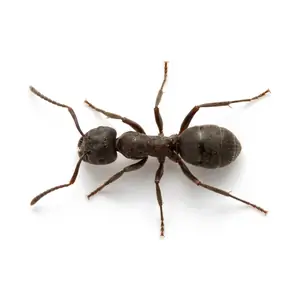
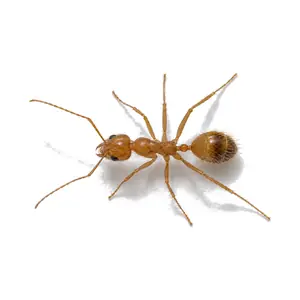
Pavement ant workers are 2.5 to 3 mm long, or 0.10 to 0.12 inch, according to Utah State University Extension. They are uniformly dark brown to black, and every worker in the colony is the same size, the opposite of a fire ant colony. The defining feature is a set of fine parallel grooves running along both the head and the midsection. Pavement ant identification guides list those grooves as the fastest confirmation. The waist has two nodes, a small pair of spines sits at the rear of the midsection, and the antennae have 12 segments ending in a 3-segment club. University of Minnesota Extension puts a pavement ant queen at 1/4 inch long, much bigger than the workers you see on the sidewalk (University of Minnesota Extension).
Workers move slowly and deliberately, following edges such as baseboards, grout lines, expansion joints and foundation seams rather than wandering across open floor. Outdoors, the surest sign is a small sandy cone pushed up through a driveway crack or sidewalk seam. That cone is the colony’s front door.
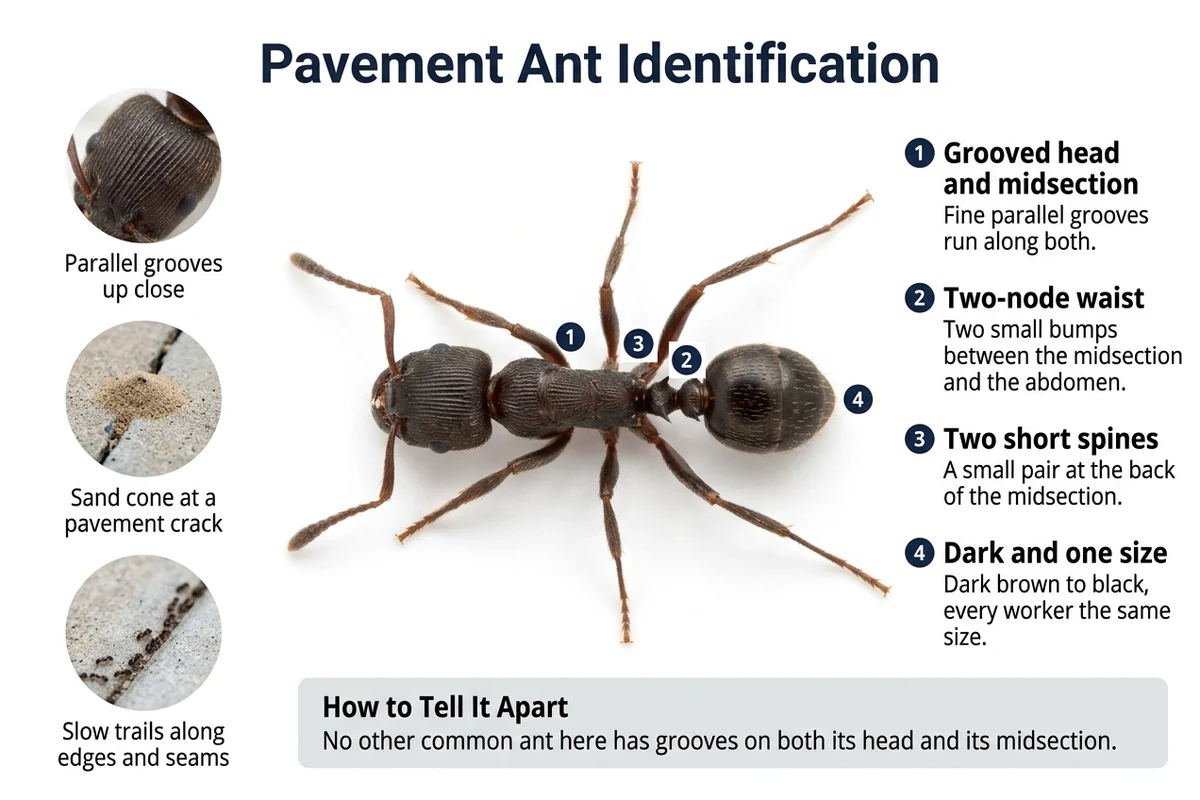
How to identify a pavement ant from above, by the grooves on its head and midsection, its two short spines and two-node waist
- Uniform dark brown to black, every worker the same small size
- Parallel grooves on both the head and the midsection, a combination no other common Collin County ant has
- Two-node waist with a small pair of spines at the rear of the midsection
- Slow, steady trails along edges and seams, not a scatter across open floor
- A small sandy cone at a driveway or sidewalk crack
- No smell when crushed, unlike the odorous house ant, which smells strongly of blue cheese
Other Names for the Pavement Ant
The official name comes from where the ant lives, in the soil under pavement. The nickname comes from what homeowners see, a precise line of small dark ants running straight to the sugar bowl, the honey jar or a spill of juice. Workers follow a scent trail with real accuracy, and that trail is what earns the name sugar ant.
Where Are Pavement Ants Found?
Pavement ants are found wherever concrete sits on soil, and that includes Texas. In Collin County they turn up under driveways, sidewalk slabs, patio seams and the edge of the foundation. The colony stays underground and only workers come up, so the first sign is usually a trail in the kitchen or a sandy cone at a crack.
| Name | What it means |
|---|---|
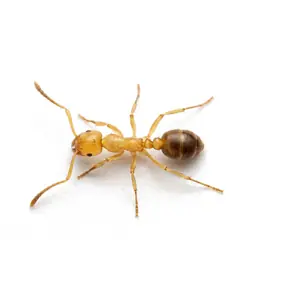
| Sugar ant | The most common name in Collin County, from the sweet-food trails. The odorous house ant gets the same nickname, so the field test below matters. |
| Sweet ant | The same idea, named for the same trails. |
| Slab ant | A description of where it nests, in the soil under a concrete slab. |
| Tetramorium caespitum | The older scientific name. The ant in Collin County is now classed as Tetramorium immigrans. |
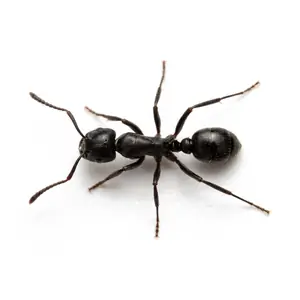
| Tiny black ant | How most people describe it before they know a name. The little black ant is a separate species, smaller and jet black. |
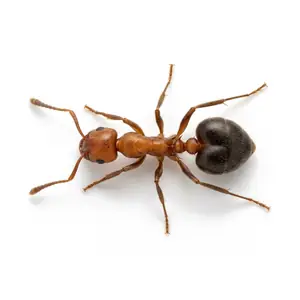
| Red pavement ant | Not a pavement ant, which is dark brown to black. A reddish ant in mixed sizes at a crack is more likely a fire ant. |
How to Tell Pavement Ants from Other Ants in Collin County
Three ants are regularly mistaken for pavement ants or share the sugar ant nickname. Size, the number of waist nodes and the smell of a crushed worker separate them without a microscope.
| Species | Size | Key Feature | Where Found |
|---|---|---|---|
|
Pavement Ant
AKA: Sugar Ant, Sweet Ant
Tetramorium immigrans
This species
|
2.5 to 3 mm, uniformly dark brown to black. All workers are the same size, with none of the size mix a fire ant colony shows. | Parallel grooves run lengthwise on the head and the midsection, visible under magnification. Two-node waist. No smell when crushed. | Soil under slabs, sidewalks and driveways. Workers push sandy soil up through cracks into small cones directly above the nest. |
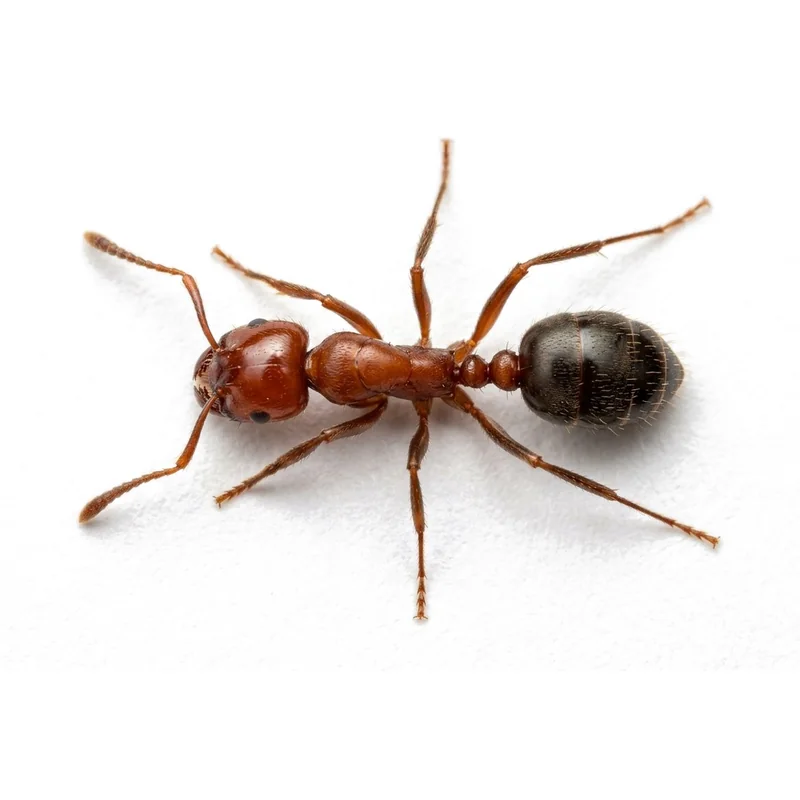
Fire Ant
AKA: Red Ant, Mound Ant
Solenopsis invicta
|
1.6 to 6 mm, reddish-brown with a darker rear section. Workers come in clearly mixed sizes in the same colony, the fastest contrast with the uniform pavement ant. | Reddish-brown head and midsection. Swarms and stings within seconds of a mound being disturbed. Two-node waist but no grooves on the midsection. | Dome mounds with no opening on top, entered through side tunnels. In lawns, foundation edges and irrigated beds, not under concrete slabs. |
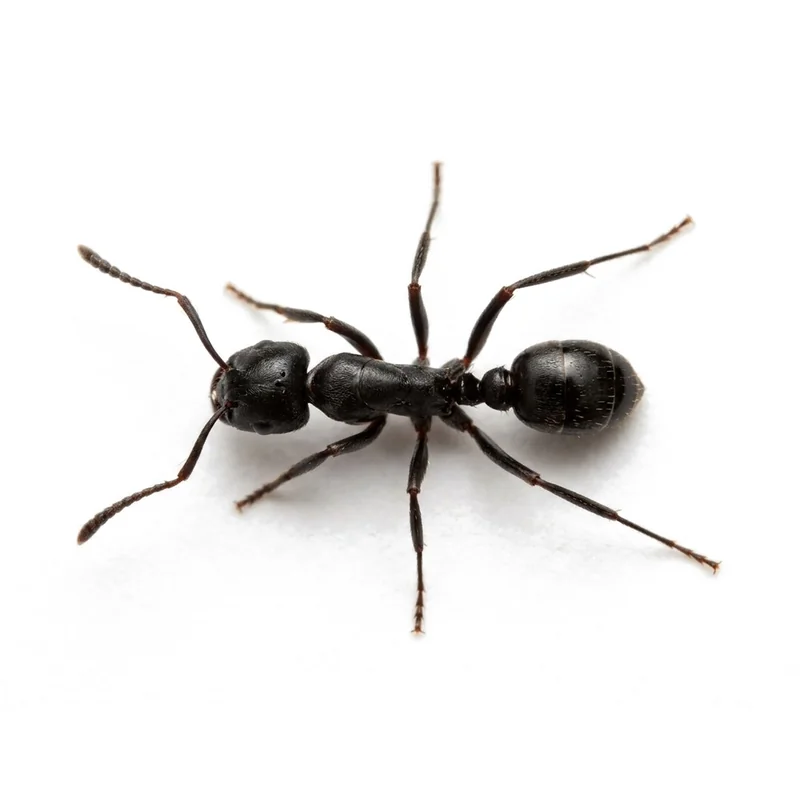
Little Black Ant
AKA: Black Ant, Tiny Black Ant
Monomorium minimum
|
1.5 to 2 mm, jet black and visibly smaller than a pavement ant. Uniform across the colony, and the small size is the quickest cue. | Smooth jet black body with no grooves on the head or midsection. Two-node waist, the same as a pavement ant, so the missing grooves are the key separator under magnification. | Soil, rotting wood and wall voids rather than under slabs. No sandy cone at a driveway crack, and its outdoor soil piles are smaller and less regular. |
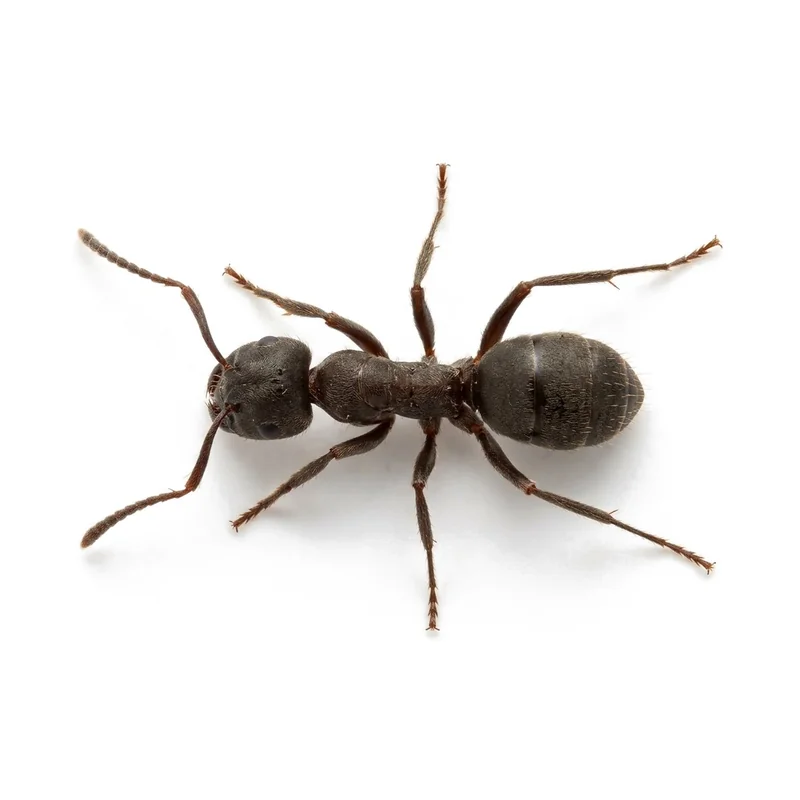
Odorous House Ant
AKA: Sugar Ant, Stink Ant
Tapinoma sessile
|
2.4 to 3.3 mm, dark brown to black and uniform. Nearly the same size as a pavement ant, so size alone cannot separate the two. | One-node waist, not two. Strong blue cheese smell when crushed. Splits into several new colonies, and repellent spray makes that worse. | Wall voids, under insulation and beneath flooring indoors, and mulch and debris outdoors. Its indoor trails start inside the wall, not at an outside crack. |
Pavement Ants vs Sugar Ants
The Pavement Ant in Three Numbers
1/4 inch
University of Minnesota Extension puts a pavement ant queen at 1/4 inch long, much bigger than the workers you see on the sidewalk.
University of Minnesota Extension
3,000 to 4,000
University of Wisconsin-Madison Extension puts a large pavement ant colony at 3,000 to 4,000 ants, living in the soil under a slab or driveway.
University of Wisconsin-Madison Extension
About 2 months
NC State Extension says a newly mated pavement ant queen’s eggs develop into her first generation of workers about 2 months after she starts a new colony.
NC State Extension
Are Pavement Ants Dangerous?
No. Pavement ants carry no disease, cause no allergic reaction specific to this species and pose no anaphylaxis risk. If a trail has crossed a food-prep surface or got into an open container, throw that food away, wash the surface with soap and water, and deal with the entry point at the expansion joint or foundation crack.
Do Pavement Ants Sting?
Pavement ants have a working stinger, but it is too weak to get through normal human skin. Stepping on them barefoot on concrete now and then gives a faint prickle at most. A sting with real pain is rare, and no medical care is needed after a pavement ant encounter.
When Pavement Ants Warrant Action
A Trail Across the Kitchen Counter
A trail running to food means a colony under the slab has found a way in. Cleaning will not end it, because the colony keeps sending scouts while the entry gap stays open.
A Sandy Cone at the Driveway, Nothing Indoors
A cone of sand at a driveway or sidewalk crack with no ants inside the house is soil the colony has moved. The concrete above it needs no repair.
Why You Found Pavement Ants in Your House
Pavement ants in the house are workers out looking for food from a colony under your slab or driveway, not a colony living inside. The colony itself never moves into the structure. Workers climb up through expansion joints, foundation cracks and gaps around pipes and conduit at the slab edge, find sweet or greasy food, and lay a scent trail back to it.
That is why trails come back after the kitchen is cleaned. Cleaning removes the reward but leaves the colony, and while the entry gap stays open, scouts will find the next crumb and lay a new trail. The fix is the colony and the gap, not the counter.
Where Pavement Ants Nest in Collin County
The colony lives in a cavity in the soil under driveways, sidewalk slabs, patio seams and the foundation edge, and University of Florida research on pavement ant nesting and foraging confirms those sub-slab colonies as the main nesting pattern. Mulch piled against the foundation holds the moisture and warmth that suit a nest at the slab edge. University of Minnesota Extension guidance on indoor ant trails classes the pavement ant as a food nuisance with no structural damage potential.
Pavement Ant Presence Across Collin County
Pavement ants follow concrete rather than any one neighborhood. Homes in McKinney, Allen, Frisco and Plano sit on slabs with driveways and sidewalks over soil, the exact setting a colony needs.
Where driveways run continuously from one property to the next, swarm queens from neighboring colonies are a constant source of new trails. Treating one house without a barrier at the foundation leaves the door open to the colony next door.
Pest Me Off service call records from 2023 to 2026 show two peak months, May and June, when kitchen trails are most common because workers range farthest from the nest, and three low months, December through February, though true dormancy is uncommon here. Activity builds from March, and the best time to treat is March through early May, before the peak and before new colonies grow large enough to run steady indoor trails.
Pattern from Pest Me Off service call records across Collin County, 2023 to 2026.
Pavement Ant Biology Worth Knowing
Penn State Extension research on pavement ant biology describes new colonies starting from swarm flights rather than by splitting, and that pattern is why this ant scores low on persistence. Colonies can grow to 3,000 to 4,000 ants, according to University of Wisconsin-Madison Extension, and a colony may have more than one queen.
How Pest Me Off Treats Pavement Ants
Ant-Nihilation is our ant program, and it rests on one rule: if the queen survives, the trail comes back. For pavement ants that means non-repellent bait, a product workers carry home because they cannot sense it as a threat, placed where the trail is busiest, plus our Scorched Earth Barrier along the foundation.
Inspect and Map Every Active Trail
Walk the kitchen and the outside of the house to find each trail, the expansion joint or crack it comes in through, and the sandy cone at the nest entrance outside. Each trail is followed from the food back to its entry before any product goes down.
Non-Repellent Bait on the Trail
Bait goes at the indoor pickup point and at the joint or crack where workers enter, and they carry it down to the colony. Under the Pest Me Off treatment protocol, trail activity usually stops within 7 to 14 days. No yard-wide spreading is needed for this species.
Scorched Earth Barrier at the Foundation and Joints
The Scorched Earth Barrier goes along the whole foundation, the expansion joints and the concrete seams where trails come in. It stops workers from neighboring colonies and closes the routes new indoor trails would use between visits.
Follow-Up Check and Spring Swarm Interception
A check at 14 days confirms the trails have stopped and finds any second entry point the first visit missed. Quarterly barrier service is timed to the April and May swarm season to stop new queens before they settle at a foundation crack.
& Quick Fixes
How to Get Rid of Pavement Ants Yourself
You can get rid of pavement ants yourself if the product reaches the colony. Find where the trail comes in, bait it there, then close the gaps before the next spring swarm.
Why DIY Pavement Ant Control Keeps Falling Short
Pavement ants are one of the easier ants to treat, so most DIY failures come down to the product chosen or where it was put. Each of these four leaves the queen untouched.
Spraying the Trail or the Crack
Most store ant sprays are repellents. They kill the workers they touch, and the rest route around the sprayed spot and come in through the next crack within hours. Spraying the driveway crack does the same from outside, and the colony refills the trail within a week.
Putting Bait Beside the Food
Bait stations set next to the food in the kitchen sit at the wrong end of the trail and are often ignored. Bait at the entry crack is in the workers’ path on the way home.
Treating Only the Inside
Caulking inside, spraying baseboards and setting traps all hit the visible trail and miss the colony under the slab, which keeps producing workers whatever happens indoors.
Moving the Bait Before It Works
The trail stays busy while workers carry bait home. Wiping up the bait, moving the station or spraying the trail in that window breaks the transfer and starts the clock again.
Common Pavement Ant Questions
What are pavement ants?
Why do people call pavement ants sugar ants?
Do pavement ants sting?
Do pavement ants damage my foundation or concrete?
What time of year are pavement ants most active in Collin County?
Why do sugar ant trails keep coming back after I clean my kitchen?
How do you find where pavement ants are entering the house?
Can I use over-the-counter spray on sugar ant trails?
Are pavement ants hard to get rid of?
How do I get rid of pavement ants?
Sugar Ants Coming Through Your Driveway Crack? We Find the Colony and Bait It at the Source.
We map the trail back to where it comes in, bait the colony under the slab, and run the Scorched Earth Barrier along the foundation and expansion joints. McKinney, Allen, Frisco, Plano, and all of Collin County.