
Roof Rat Exterminator in McKinney TX
Trapped at the roofline.
Serving McKinney, Plano, Frisco, Allen and across Collin County.
 FreeRoof rat inspection
 Mickey Plan from$50/mo
 No-contract options
 Same-day pest control
 Free inspection & estimate
 Traps set on the runs they use overhead



Why McKinney Homeowners Choose Pest Me Off for Roof Rat Control
Pest Me Off is a family-owned, Texas-licensed pest control company that has been pulling roof rats out of McKinney, Plano, Frisco and Allen attics since 2014. Roof rats are the rat behind most of the noises in the attic at night in Collin County. They climb to the roofline, slip in at a gap, and nest overhead.
Every home is treated by a licensed applicator, never a subcontractor. A spray cannot fix rats in the attic, so we do not sell you one. We confirm the species, set rat-sized traps on the runs they actually use overhead, lock bait inside tamper-resistant stations outside, and hand you a written map of every roofline gap we find. If your problem turns out to be mice or Norway rats instead, our full rodent control service covers all three.
How our roof rat control service works
The noises in your attic at night are not going to wander off on their own. Roof rats avoid anything new in their territory, which is why a store-bought trap can sit untouched in the attic for two weeks while the nest keeps growing in the insulation. The RID Method goes after the whole problem: confirm the species, trap and remove the rats on the exact runs they travel overhead, and shut down the roofline routes that brought them in. Remove and Install both start on the initial visit. That is our one-time E-Rat-ification rodent removal program, with return trips as needed to collect traps and check your attic. Defend is the ongoing step, available on the Mickey Plan, for homes that face the fall push every year.
Remove the Rats from the Attic
First we confirm you actually have roof rats, because the tail, the droppings, and the noises overhead all point to a different plan than mice or Norway rats. Then we Remove them. The inspection maps the active runs: the grease-stained rub marks on rafters, the droppings scattered through the insulation, and the routes between the nest and the food. Every rat-sized trap goes on a confirmed run, up in the attic, on the rafters, in the garage overhead storage, never out in open floor space. When our technician decides it is needed, we return in about 7 to 10 days to collect traps and check that the attic has gone quiet.
- Species confirmed first, so trap size and placement match the rat you actually have
- Attic runways, nesting spots, and every roofline entry point mapped
- Rat-sized traps set on confirmed runs overhead, where roof rats actually travel
- Return visit in about 7 to 10 days, when needed, to collect traps and check activity
Install Stations and Map Every Way In
On the same visit, we Install locked, tamper-resistant rodent bait stations along the exterior routes roof rats use to reach your house: fence-line corridors, the foundation corners under their climbing paths, and the pressure coming in from greenbelts and alleys. Every gap we find at the roofline, from a roof-to-siding joint to an unscreened attic vent, goes on a written entry point map, and we point out the tree branches and fence tops feeding the roof. Removing the animals without cutting the route in is a revolving door.
- Tamper-resistant stations anchored along the confirmed travel corridors
- Locked boxes only a rodent can enter, placed where pets and kids cannot reach
- A written entry point map documents every roofline gap we find
- Branches touching the roof, fence-top routes, and food draws all flagged
Defend Year-Round
Remove and Install end the infestation you have today. Defend keeps it that way. On the Mickey Plan, our recurring plan with rodent coverage built in, every visit includes the exterior stations checked and re-baited, fresh droppings or gnaw marks flagged early, and the fall push intercepted at the fence line before it ever reaches your attic.
- Exterior rodent stations checked and re-baited on every visit
- Fall pressure caught early, before the first hard freeze sends roof rats indoors
- Re-service between visits when our tech decides it is needed
- Mickey Plan from $50/mo, with no-contract options available
Texas A&M AgriLife Extension documents that roof rats nest above ground, enter structures at the roofline, and avoid new objects in their territory for days, which is why trap placement on established runways decides whether a rat job works. We map the runs during the inspection, set every trap and station on a confirmed route, then return to collect and verify.



Real Roof Rat Jobs We Have Handled
Not stock photos. Real roof rat calls across Collin County, with what we found and what we did.
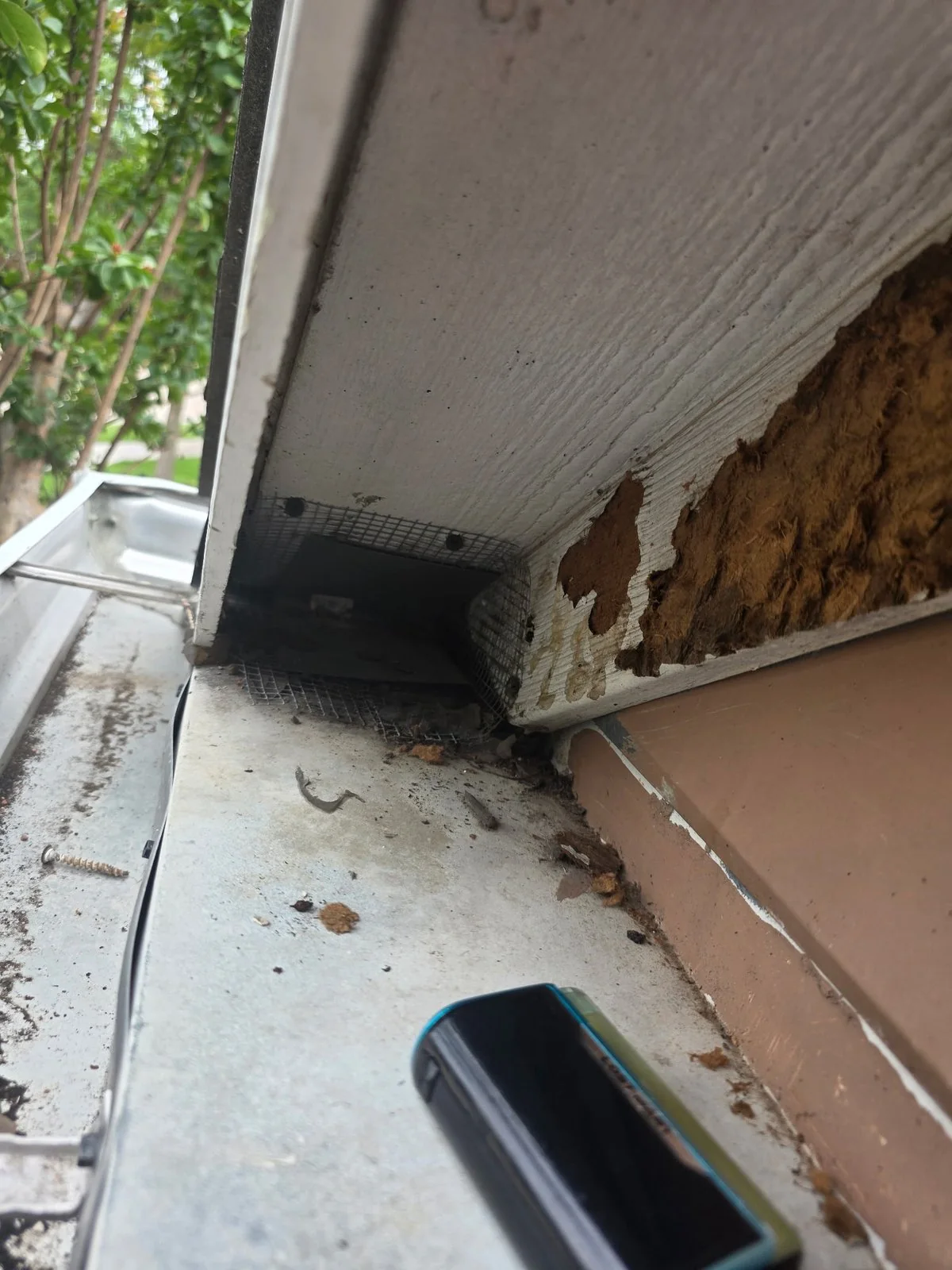
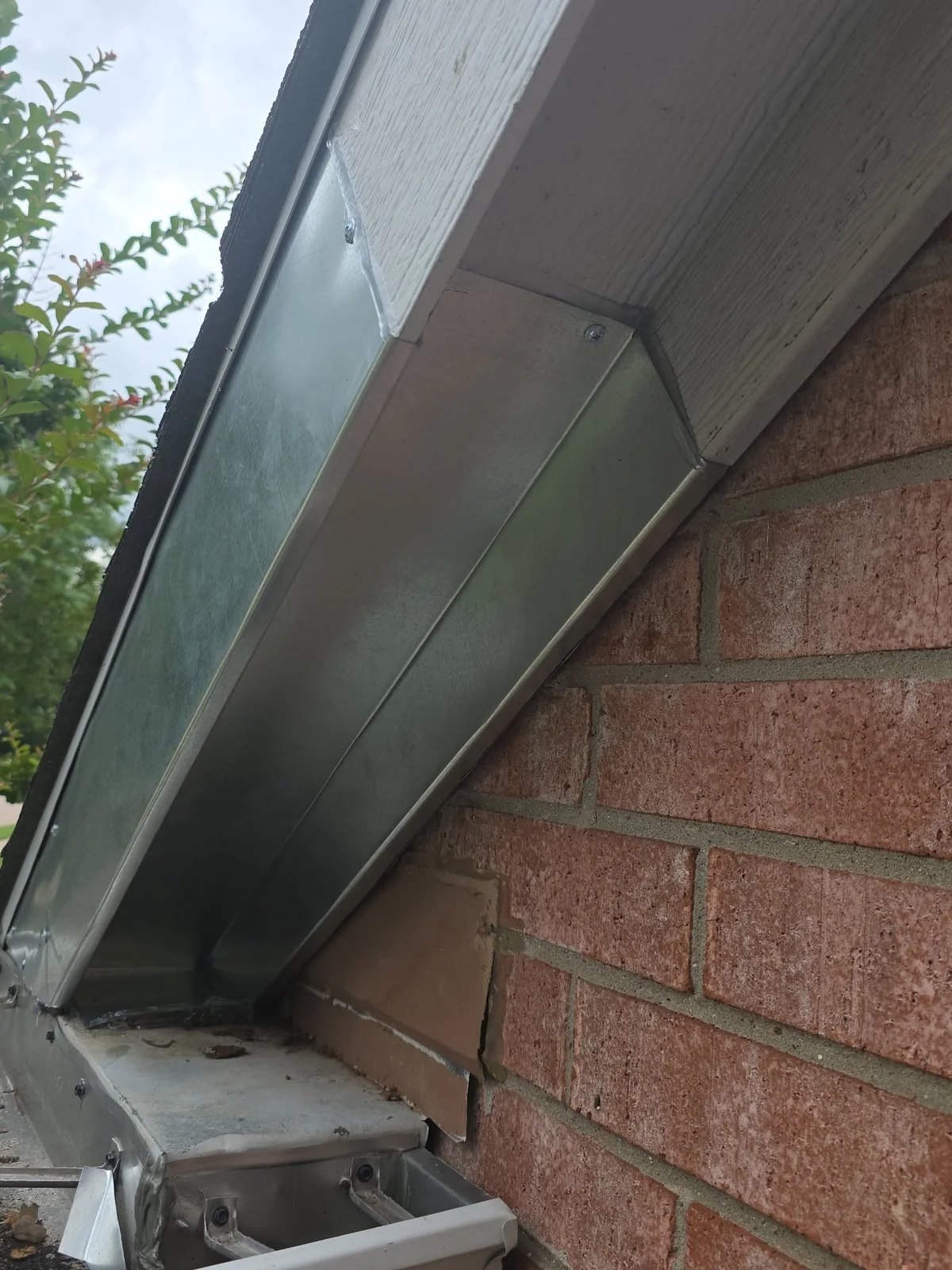
A Frisco roofline chewed open, then sealed with metal
On this Frisco job the rats were getting in right where the roof meets the wall. The before shot shows it: the trim chewed open, insulation pulled out, and droppings collecting on the ledge. A gap like this up at the roofline is an open door for roof rats, which climb and squeeze through openings the size of a quarter.
The after shot is the same corner once we were done. We packed the gap and capped it with metal flashing the rats cannot chew through, then backed it up with traps inside until the activity stopped. Sealing the climb-in point is what keeps them out. Trapping alone never does.
Same corner, before and after. Close the gap at the roofline and the rats have nowhere left to climb in.
Pricing for Roof Rat Control
Three options, all built on the same trapping program: confirm it is roof rats, remove the animals on the runs they actually travel, and keep the next wave off your roofline. Pricing scales with home size, how established the nest is, and the trap count it takes, which is why the free inspection confirms your number before anything gets scheduled.
Our one-time trap-out program that clears the roof rats you have now.
Priced to the job at your free inspection based on the rodent activity. Return trips as needed.
- Full trap-out plus return trips as needed to check the attic
- Entry points found and sealed where access allows
- Priced to the job at your free inspection, not a flat fee

The plan most McKinney homeowners choose. It is the only plan that covers mice and rats, plus the common household pests.
- The full treatment repeated every quarter
- A protective barrier kept active around your home year-round
- Stops new pests drifting in from neighboring properties
- Re-service between visits when our tech decides it is needed

The same plan, month to month.
- The same quarterly treatment and year-round barrier
- No annual commitment
- Re-service on eligible plans when our tech decides it is needed
- Cancel any time without penalty
Want pricing detail for other pest services? See the full Pricing page.
Why DIY Rat Control Fails in McKinney TX
Every hardware aisle sells a fix for rats in the attic. Every attic still scratching three weeks later proves the problem is not the product, it is where it went. Roof rats live overhead, avoid anything new on their routes for days, and may never touch your floor at all, so gear placed at ground level might as well not exist. Here is what homeowners try, why it does not work, and what our team does differently.
| What homeowners try | Why it fails | What actually works |
|---|---|---|
|
Set snap traps along the baseboardsplaced wherever a rat was spotted
|
Roof rats live and travel overhead.
They run the attic and the rafters and may never come down to floor level at all. They avoid anything new in their territory for 3 to 7 days, so a trap off their route just sits there, and a mouse-sized trap injures a rat without killing it, which teaches it to dodge every trap after that. |
Rat-sized traps up on the mapped runs.
We inspect first, confirm the species, and set rat-sized equipment in the attic on the rub-marked runways the rats already use, then return in 7 to 10 days to collect and confirm. |
|
Toss poison blocks into the atticloose bait blocks, pellet packs
|
Poisoned rats die where you cannot reach them.
They crawl into a wall void, leaving weeks of odor and a fly problem inside the house. Loose bait is a hazard to dogs, cats, and kids the moment it leaves the box, and a poisoned rat can harm whatever catches it, from the family dog to the owls that keep rodents down. It also does nothing about the roofline gaps, so new rats keep walking in. |
Trap indoors, lock the bait outdoors.
The rats inside get trapped and removed, not left to die in a wall. Exterior bait sits only inside locked, tamper-resistant stations anchored on confirmed routes, checked and re-baited by a licensed applicator. |
|
Foam the gap and call it doneexpanding foam, steel wool wads
|
Sealing rats inside forces them to gnaw out.
Sometimes straight through the drywall ceiling into a bedroom. Foam alone is chewable, and a roof rat goes through it in a night. The gap you found is rarely the only one, and the tree branch that carried them to the roof is still right there. |
Remove first, then seal, in that order.
We trap and remove until attic activity stops, document every roofline gap on a written map, then seal the openings with materials rats cannot chew through via our rodent proofing service, and trim the branches 3 to 4 feet off the roof so the bridge is gone too. |



How to Know You Have Roof Rats
A few quick tells separate roof rats from mice, squirrels, and Norway rats before we treat. Not sure what you are hearing overhead? Send us a photo or a description and we will confirm the species.

A roof rat is slender and dark grayish brown to nearly black, 6.5 to 8 inches of body with big ears and a tail even longer than its body, the fastest tell against a heavier, blunt-tailed Norway rat. Droppings run 3/8 to 1/2 inch with pointed ends, scattered through the attic insulation rather than piled in one corner.

Roof rats nest in attics by a wide margin, plus upper wall voids, soffit cavities, and garage overhead storage, often directly above a bedroom ceiling. They get in at the roofline, not the foundation: roof-to-siding gaps, unscreened attic vents, and soffit returns, with grease-stained rub marks along the rafters they travel.

Roof rats are nocturnal, which is why the scratching and scurrying start after dark and a single rat can sound like several moving through insulation. Squirrels make similar sounds but at dawn and dusk. They are exceptional climbers, reaching the roof on branches, fence tops, and utility lines, and can jump 4 feet from a branch to the shingles.
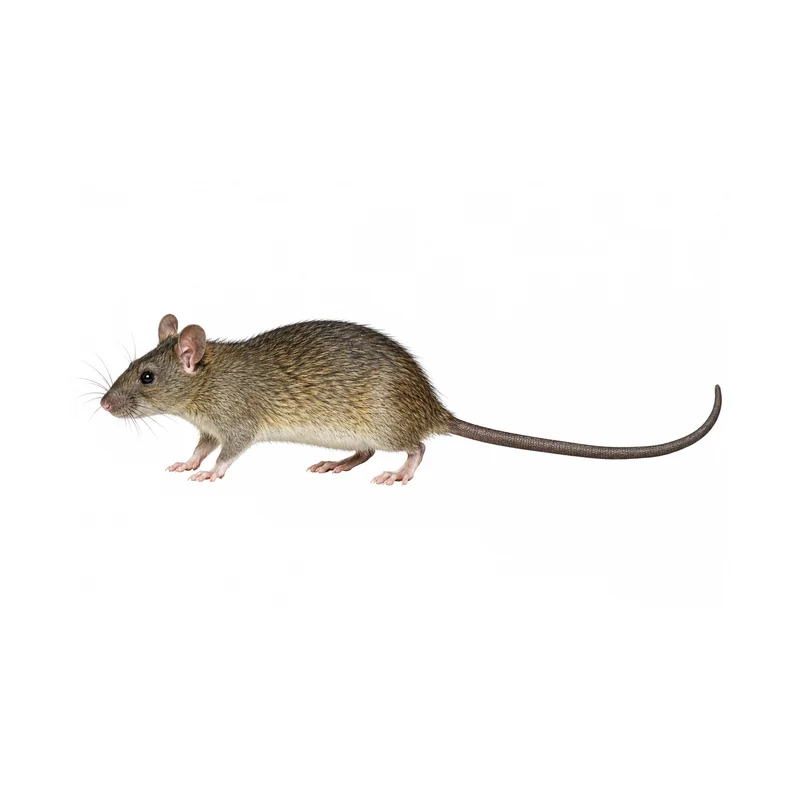
Lookalikes like Norway rats, house mice and squirrels, the health and property risks, and why they nest in your attic, in our roof rat pest library.
Full Roof Rat ID guideRoof Rat Prevention in McKinney TX Homes
Roof rat pressure in Collin County never really stops: mild winters mean they breed year-round, and every fall the first cold nights aim a new wave at warm attics. The E-Rat-ification program clears the rats you have today. Keeping the attic quiet takes the bridges cut, the food draws gone, and pressure that does not let up.

Ongoing service keeps exterior rodent stations live all year and catches new activity early. The Mickey Plan starts at $50/mo, with re-service between visits when our tech decides it is needed. No-contract options are available too.
See plan options
Roof rats do not hibernate. The first hard freeze, typically early to mid November in Collin County, kicks off the sharpest wave of attic break-in attempts of the year, and our call volume spikes one to two weeks after the first sustained cold snap. Rats that make it inside breed all winter in a heated attic, which is why stations that stay live year-round beat a single trap-out.

Cut the bridges to the roof and the pressure drops. Trim tree branches 3 to 4 feet back from the roofline, break the contact between wood fence tops and the house, and clear dense vegetation off the walls. A roof rat can travel a whole block on fences and utility lines without touching the ground and still jump the last 4 feet to your shingles, so the branch over the garage matters more than anything at ground level.

The honest math on roof rat control. A one-time E-Rat-ification program clears the roof rats you have today. The Mickey Plan keeps exterior stations checked and re-baited all year, so the wave pressing in from the greenbelt each fall gets stopped at the fence line instead of in your insulation. For homes under mature trees across McKinney, Plano, Frisco, and Allen, year-round pressure is the model that keeps the attic quiet.
Roof Rat Control in McKinney, Allen, Frisco, and Plano
Roof rat pressure tracks the tree canopy: the older the neighborhood and the closer the branches hang to the roof, the more attic calls we run. The mature-canopy streets of McKinney, Allen, Frisco, and Plano carry the heaviest load, and we work daily across all 14 service cities.

Allen, TX
High pressureThe greenbelt oak canopy threading behind Twin Creeks and Waterford Parks hands roof rats a covered highway from the creek corridors straight to rear fence lines and rooflines. Across Cypress Meadows, continuous wood fencing keeps the route open between yards. When an Allen homeowner reports scratching overhead at night, the inspection almost always finds a branch within jumping range of the roof.
Allen pest control
Frisco, TX
High pressureStonebriar’s mature trees carry roof rats to the older rooflines on the south side of town, where 20-year-old soffit joints and vent screens have started to give. Newer builds in Phillips Creek Ranch and Hollyhock see less canopy pressure, but fence-top routes from the greenbelts still deliver rats to garage rooflines every fall. We check the route in, not just the attic.
Frisco pest control
McKinney, TX
High pressureOur home base, and the heaviest roof rat territory we cover. Stonebridge Ranch and Eldorado Heights pair dense, mature canopy with continuous wood fencing, exactly the travel network roof rats run at night. Around Historic Downtown, homes built before 2000 carry soffit and roofline gaps that have never been screened. We trap the attic, map the gaps, and tell you exactly which branches need to come back.
McKinney pest control
Plano, TX
High pressurePlano’s older neighborhoods are prime roof rat country. Across East Plano, homes built in the 1970s and 80s have aged soffit joints and unscreened gable vents that roof rats use like a front door, and the mature trees around Willow Bend and Gleneagles keep the canopy route open year after year. The night noises over a Plano bedroom almost always trace back to one branch and one gap.
Plano pest control
Get a free roof rat inspection · response in 1 hour during business hours
Tell us what you are hearing at night, where you found droppings, and when it started. We confirm your free same-day visit within 1 hour during business hours (Mon-Fri 8am-5:30pm).
- Species confirmed and traps set on the runs they actually use on every call
- Locked, tamper-resistant stations, placed out of reach of pets and kids
- No-contract options alongside the Mickey Plan
- Same-day service when you call before noon
- Re-service between visits on eligible recurring plans, when our tech decides it is needed
Thanks! We got your request.
A Pest Me Off team member will confirm within 1 hour during business hours.
For immediate same-day help: (972) 866-4720
Roof Rat Control FAQ
What is scratching in my attic at night?+
How do roof rats get into my attic?+
How do I know it is roof rats and not mice or squirrels?+
Why is poison the wrong move for rats in the attic?+
Where do the traps and bait stations go if I have a dog and kids?+
Does trimming my trees really help keep roof rats out?+
How long does it take to get rid of roof rats?+
Will the roof rats come back after you remove them?+
All Pest Control Services in McKinney and Collin County
 Ant Control
 Bed Bug Control
 Cockroach Control
 Mosquito Control
 Rodent Control
 Spider Control
 Wasp and Hornet Control
 Wildlife Removal
 Termite Treatment
Ready for a quiet attic in McKinney?
Noises in the attic at night do not fix themselves. Our team has been trapping and removing roof rats across McKinney, Plano, Frisco, and Allen since 2014. 300+ five-star reviews. Best Pest Control McKinney 2025 and 2026. Same-day service when you call before noon. Texas TPCL #0937184. Open Mon-Fri 8am-5:30pm.