Home Pest Library Ants Pharaoh Ants
Pharaoh Ants (Tiny Yellow Ants)

Pharaoh Ants in Collin County, TX | Identification and Control

Last updated 2026

The Pharaoh Ant (Monomorium pharaonis), commonly called the tiny yellow ant or hospital ant by Collin County homeowners, is the most treatment-sensitive ant in the pest library. Workers are 1.5 to 2 mm, yellowish to light amber, and never stop trailing. The colony runs year-round inside temperature-controlled homes. Spray any repellent product near an active trail and the colony does not die. It splits. One colony becomes dozens, each relocating deeper into the structure before you see the result.

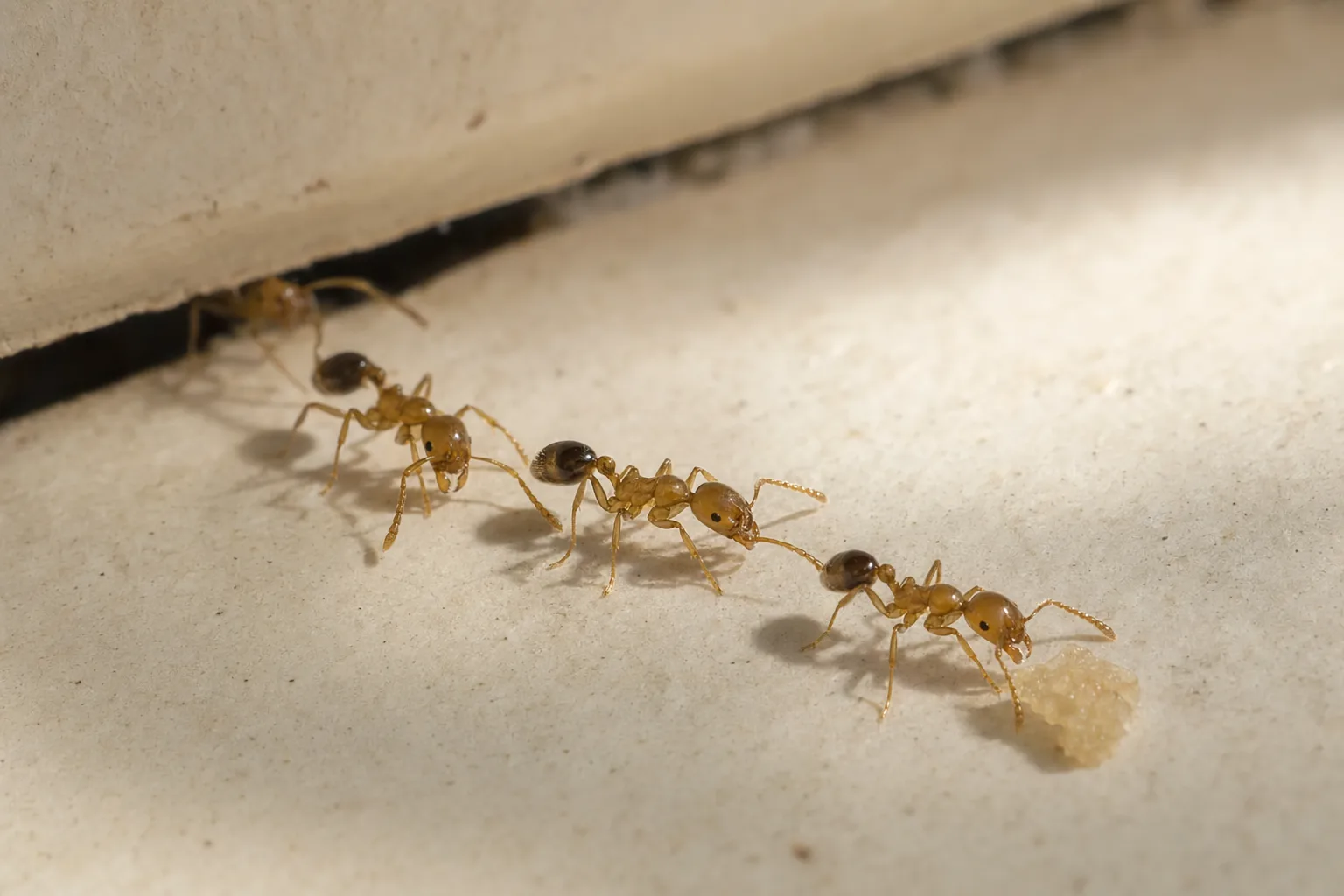
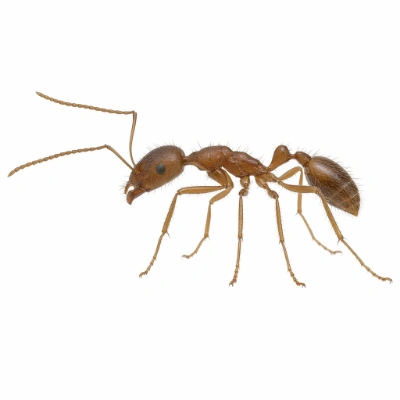
Pharaoh ant trail along a kitchen baseboard in Collin County Texas home
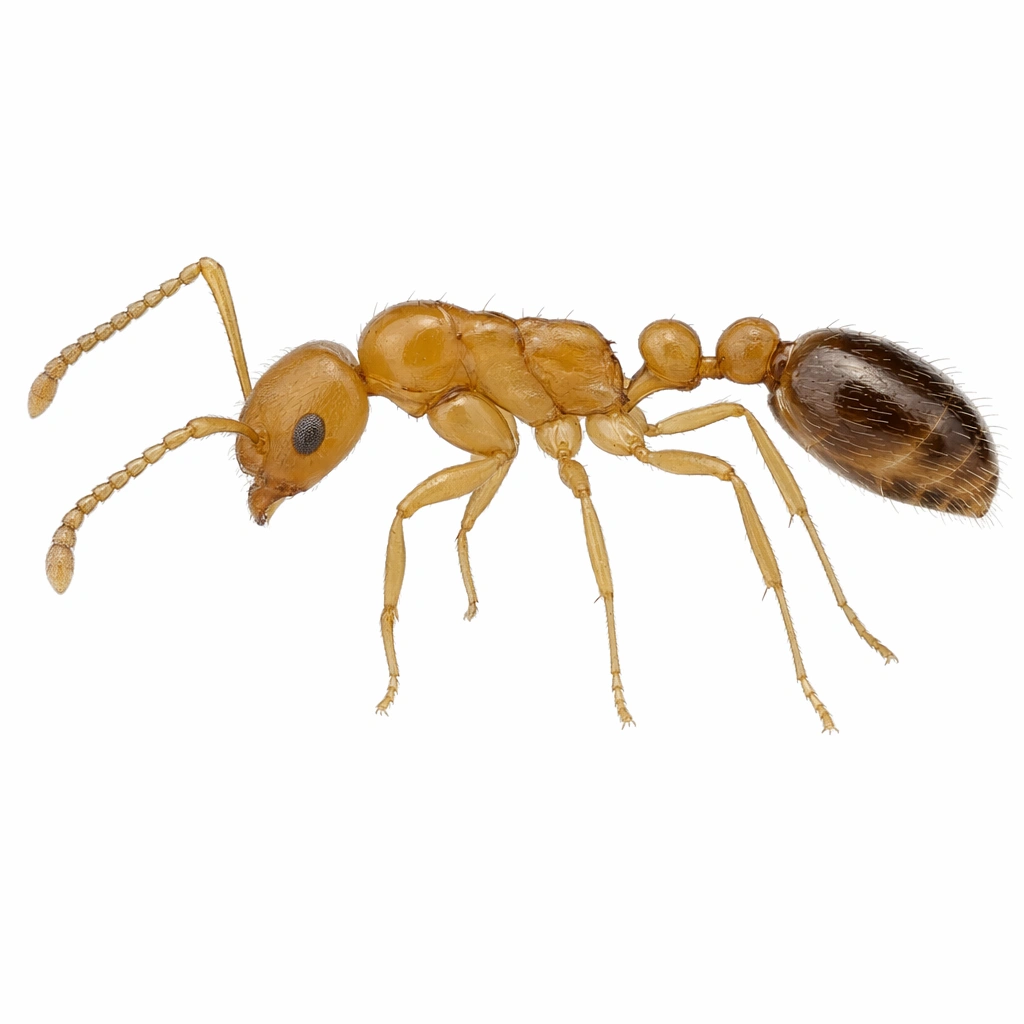
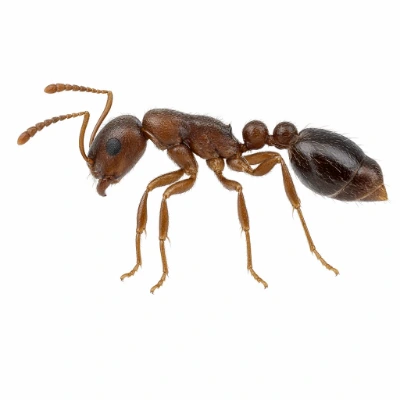
Pharaoh ant worker showing yellowish body and two-node waist
Pharaoh Ant
Monomorium pharaonis
AKA Tiny Yellow Ant · Hospital Ant
Worker size1.5 to 2 mm (smallest structural indoor ant)
Active seasonYear-round indoors; peak expansion March through October
Colony size10,000 to 300,000 workers across multiple nest locations
Queen structureMulti-queen (multiple-queen); extreme budding response to disturbance
Nesting siteDeep inside walls, insulation, cabinets, and around plumbing
StingFunctional but too weak to penetrate most human skin
ColorYellowish to light amber (not dark; key diagnostic)
DietBoth sweets AND proteins (bait must address both needs)

The indoor ant that punishes incorrect treatment harder than any other species. A multi-queen colony living deep in your walls, trailing year-round to food and water, and capable of turning one infestation into dozens when disturbed by any repellent product.

PEST ME OFF | PEST LIBRARY | PHARAOH ANT pestmeoff.com
North Texas Pest Calendar
Pharaoh Ant Activity in Collin County by Month

Pharaoh ants do not follow a seasonal pattern the way outdoor ant species do. A temperature-controlled home is their habitat year-round. Activity remains consistent in all twelve months, with trail expansion most visible in spring and fall when the colony is actively growing. No true dormancy period.

Jan
Active
Feb
Active
Mar
Peak
Apr
Peak
May
Peak
Jun
Active
Jul
Active
Aug
Active
Sep
Peak
Oct
Peak
Nov
Active
Dec
Active
Active
Peak Expansion

Pattern from Pest Me Off service call records across Collin County, 2023 to 2026.

Identification

What Pharaoh Ants Look Like

The yellowish color is the fastest diagnostic in Collin County

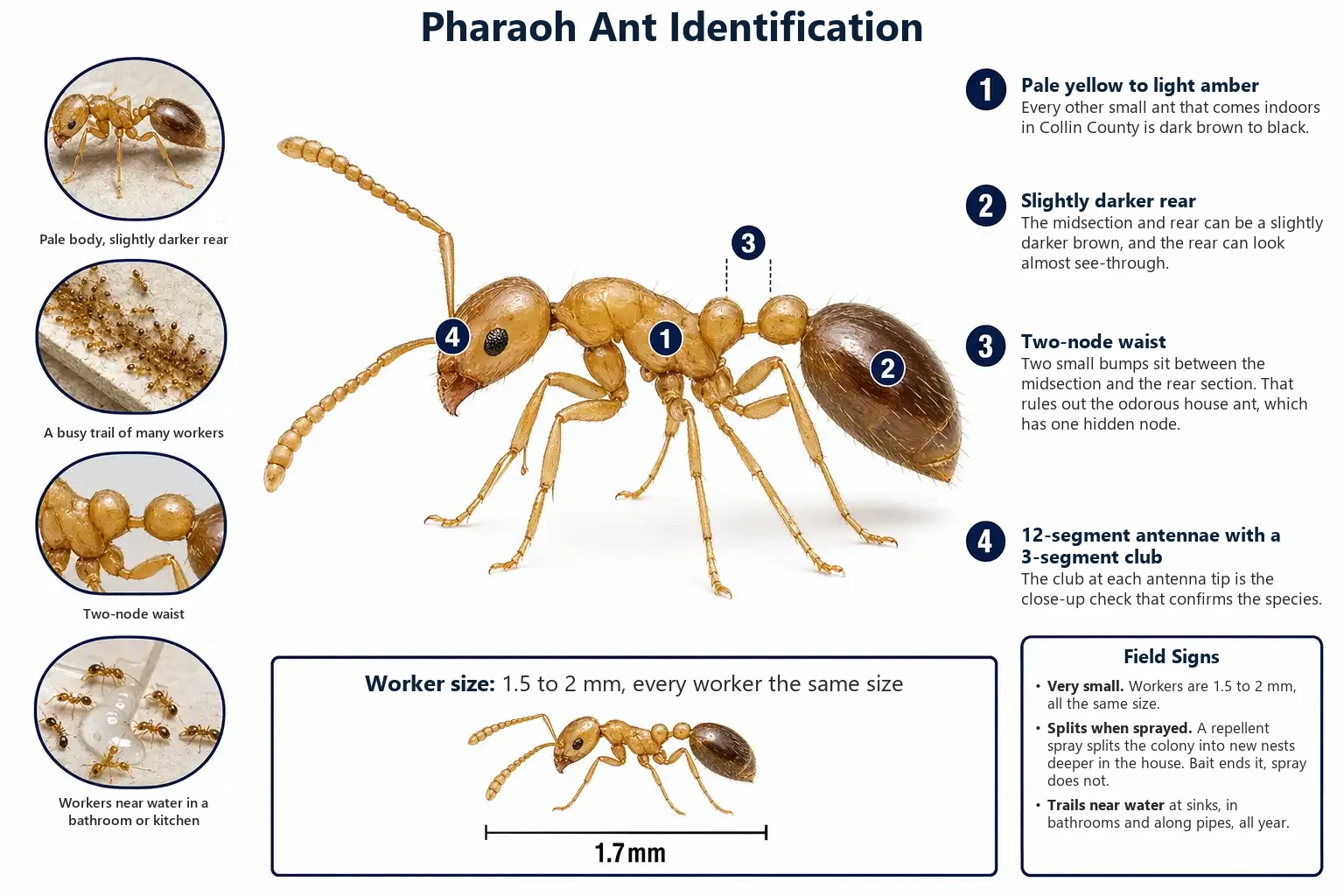
Pharaoh ant workers are 1.5 to 2 mm, making them one of the smallest ants you will encounter indoors. The diagnostic feature most homeowners notice first is color. Pharaoh ants are yellowish to light amber, sometimes almost transparent at the abdomen, with a slightly darker brown midsection and gaster. Every other small ant commonly found indoors in Collin County is dark brown to black. If the ant trailing across your kitchen counter is pale yellow or golden rather than dark, Pharaoh ant is the leading candidate. Pharaoh ant identification and behavior documentation consistently lists pale yellow color and sub-2 mm size as the primary field markers.

The waist has two distinct nodes, ruling out odorous house ants (which have one node hidden under the abdomen). Antennae have 12 segments with a 3-segment club. Workers are all the same size, unlike fire ants. Movement is deliberate and trail-oriented rather than erratic. Pharaoh ants trail along edges: baseboards, countertop edges, plumbing pipes, and grout lines near water sources. You are most likely to spot them in bathrooms and kitchens trailing toward moisture or food. Pharaoh ant structural and morphological identification reference documents the two-node waist and 12-segment antenna with 3-segment club as the primary microscopic confirmations.

Pharaoh ant identification diagram showing yellowish body, two-node waist, and 12-segment antennae

Pharaoh ant identification diagram with anatomical callouts

Dead GiveawaysFastest visual cues, no microscope required
  • Yellowish to light amber color: the tiny yellow ant name fits exactly; every other small indoor ant in Collin County is dark
  • 1.5 to 2 mm: at the edge of what is visible without bending down; almost too small to see clearly from standing height
  • Two-node waist (visible under close inspection as two bumps between midsection and abdomen)
  • All workers the same size (no large/small mix like fire ants)
  • Trailing near moisture: bathrooms, kitchen sinks, plumbing pipes, water heater areas
  • Year-round indoor activity with no winter slowdown
  • Multiple trails active simultaneously in different rooms of the same home
The Name

Why Collin County Homeowners Call Them Tiny Yellow Ants

The name “tiny yellow ant” is simply the most accurate description of what homeowners see: a pale yellowish ant small enough that you almost question whether you are actually seeing an ant. The size and color together make this species distinctive in a group of mostly dark, slightly larger indoor ants. The name arrives by observation, not by formal common name adoption, and it sticks because it works as a description.

The “hospital ant” name has a more specific origin. Pharaoh ants are well documented in healthcare settings, where they trail into sterile areas, wound dressings, IV lines, and food storage through the same tiny gaps they use in residential kitchens. Hospitals in Europe identified this species as a contamination risk in the mid-twentieth century, and the association with healthcare environments became a secondary common name. In Collin County residential settings, the contamination risk is food rather than medical equipment, but the behavioral pattern is the same: a colony that nests deep and trails everywhere.

The formal “Pharaoh ant” name was assigned by European naturalists who believed this species was one of the insects involved in the plagues of ancient Egypt. Current entomology finds no strong evidence for that origin story. The name stuck regardless.

Look-Alikes

How to Tell Pharaoh Ants from Other Ants in Collin County

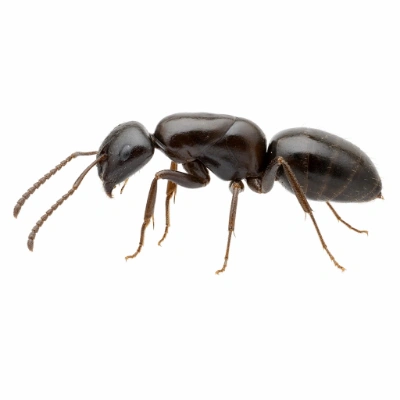
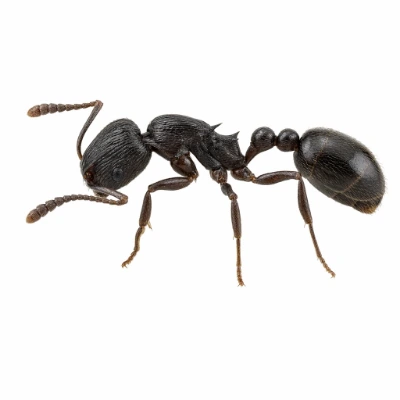
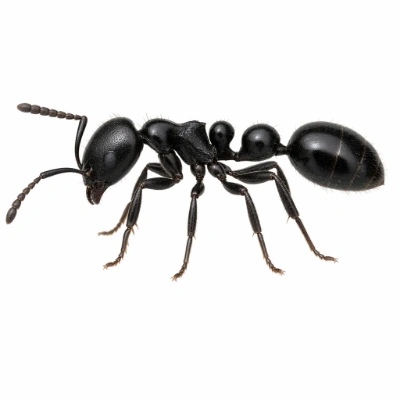
Three ants are regularly confused with Pharaoh ants. Color, movement pattern, and year-round indoor activity are the fastest separators without a microscope.

Species Size Key Feature Nesting Habit
Pharaoh Ant
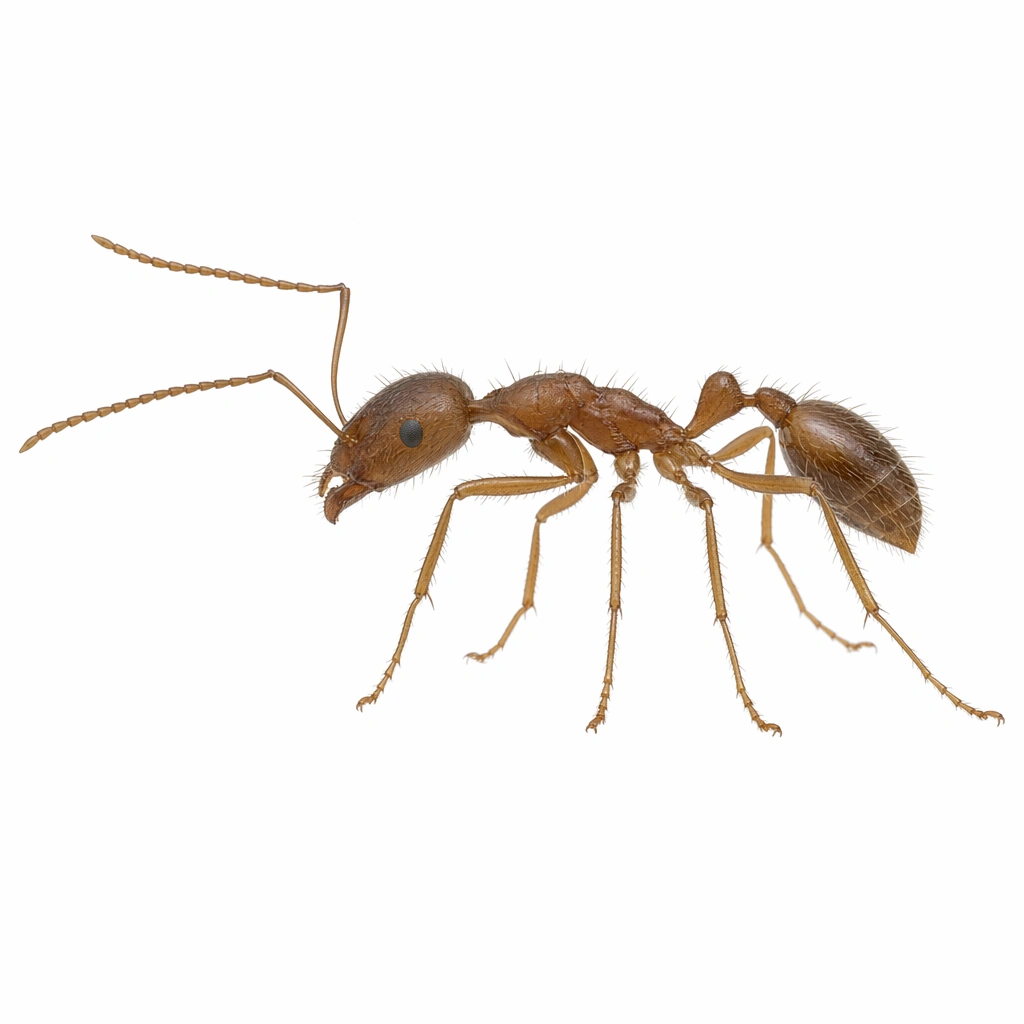
Pharaoh Ant AKA: Tiny Yellow Ant, Hospital Ant Monomorium pharaonis This species
1.5 to 2 mm, uniform across all workers. Yellowish to light amber, sometimes nearly translucent at the abdomen, with a slightly darker brown midsection. The pale color is unique among indoor ants in Collin County and separates this species from every dark-bodied lookalike at a glance. Pale yellow body with a two-node waist visible as two distinct bumps between midsection and abdomen. No odor when workers are crushed, which separates it from odorous house ant. Active year-round indoors with trails most visible along plumbing chases in kitchens and bathrooms. Deep inside the structure: between wall studs, inside insulation, behind cabinet backs, and around plumbing penetrations. Never nests outdoors in Collin County climate. The colony is permanent and runs through winter without slowdown.
Odorous House Ant
Odorous House Ant AKA: Sugar Ant, Stink Ant Tapinoma sessile
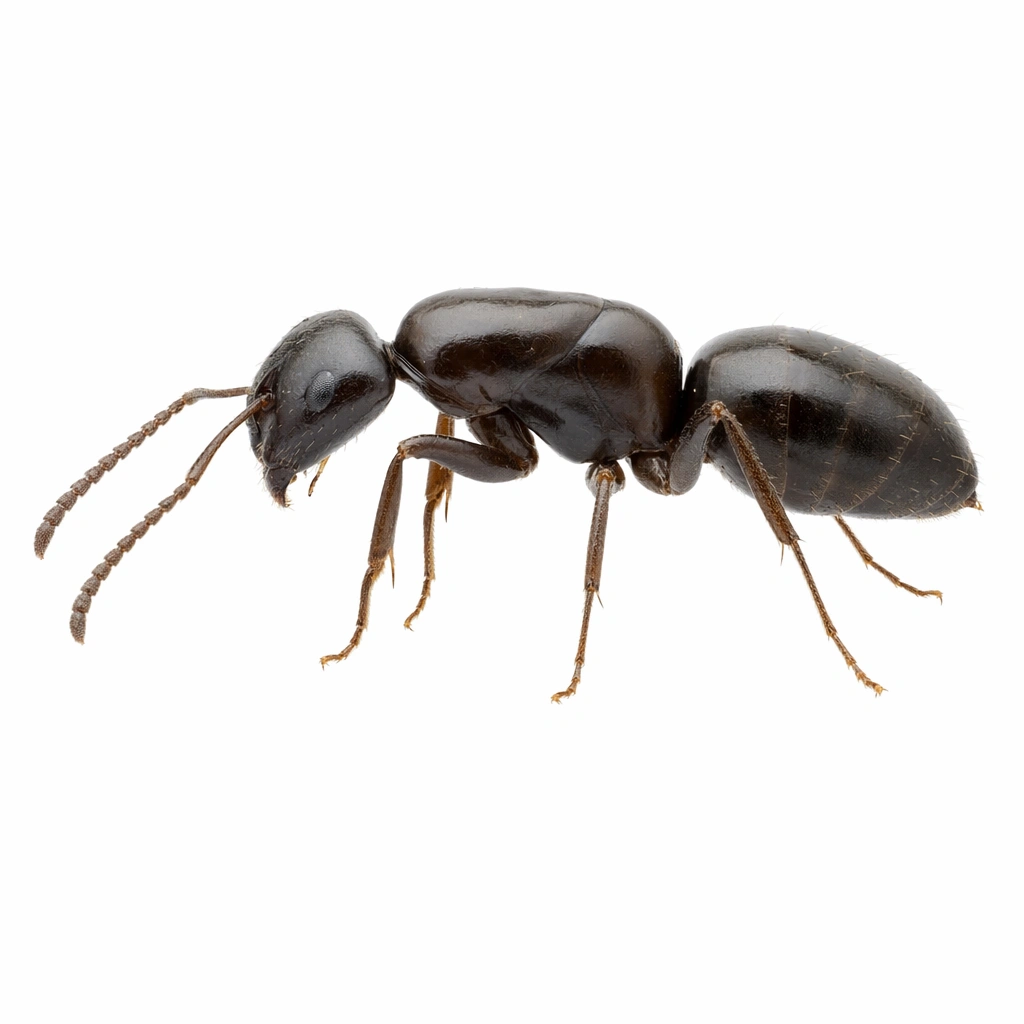
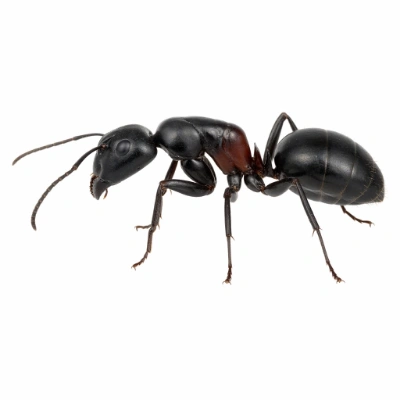
2.4 to 3.3 mm, uniform across workers. Dark brown to black, never pale or yellow. Visibly larger and substantially darker than a Pharaoh ant when the two are placed side by side, though both are small enough that color is the faster diagnostic than size. One-node waist (not two), with the node nearly hidden under the rear body segment. Strong rotten coconut odor released when workers are crushed. Expands by satellite budding when repellent products are applied, similar in mechanism to Pharaoh ant but driven by different colony triggers. Wall voids, under insulation, and beneath flooring indoors. Also nests outdoors in mulch beds and ground debris near foundation. Maintains year-round indoor satellite nests, similar to Pharaoh ant, but also has an outdoor presence that Pharaoh ant lacks.
Pavement Ant
Pavement Ant AKA: Sugar Ant, Sweet Ant Tetramorium immigrans
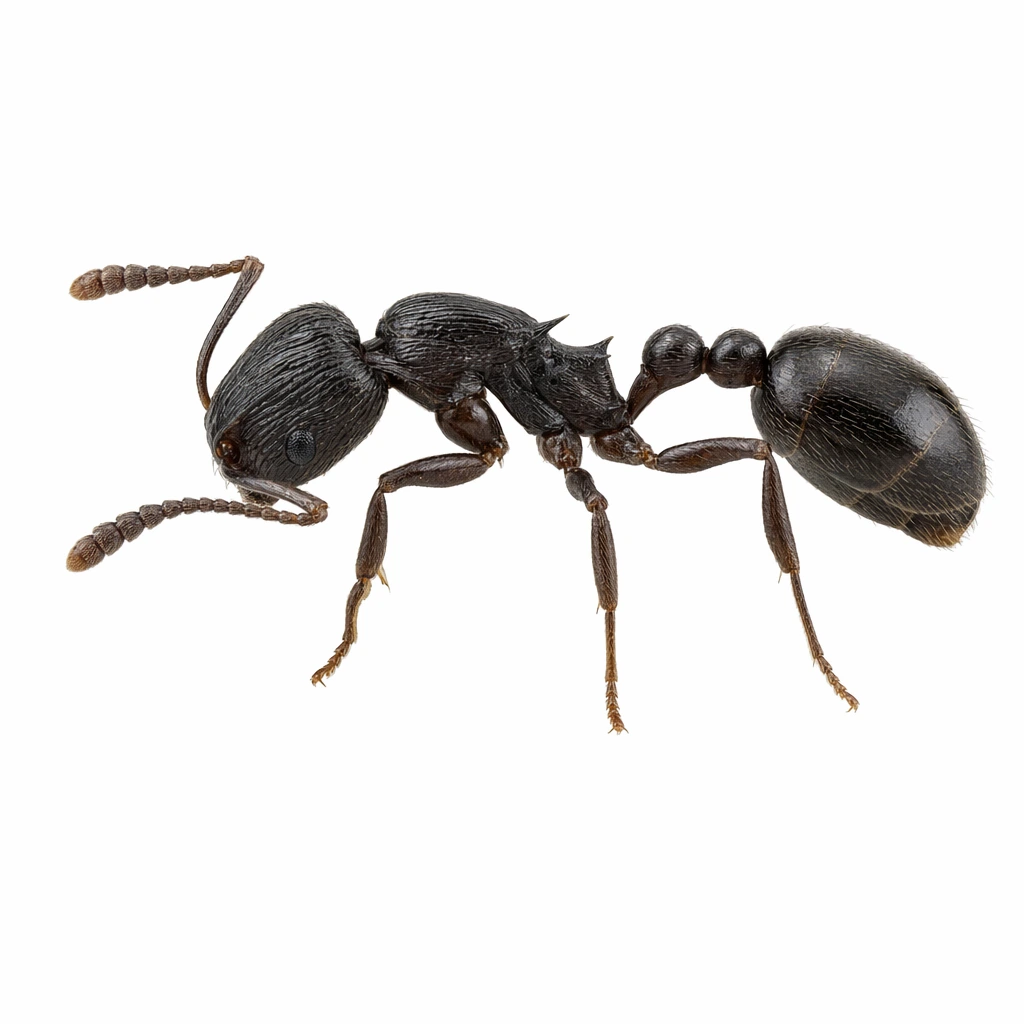
2.5 to 3 mm, uniform across workers. Dark brown to black, never pale yellow. Larger than a Pharaoh ant and clearly darker, with no color overlap between the two species. Parallel grooves run lengthwise on the head AND midsection, visible under magnification. Two-node waist similar to Pharaoh ant. No odor when workers are crushed. Sandy soil cones at driveway and sidewalk cracks signal nesting beneath concrete. Soil beneath driveways, sidewalks, and foundation slabs. Workers push sandy soil through surface cracks forming small cone-shaped piles. Slows in winter unlike the year-round indoor Pharaoh ant.
Tawny Crazy Ant
Tawny Crazy Ant AKA: Raspberry Crazy Ant, Hairy Crazy Ant Nylanderia fulva
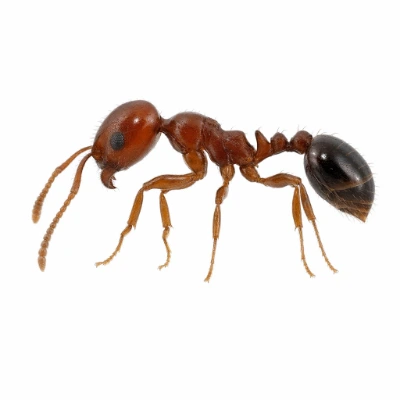
2 to 3 mm, uniform across workers. Reddish-brown to tawny in color, never the pale yellow of a Pharaoh ant. Slightly larger and visibly more orange-toned than the pale Pharaoh ant. Erratic, fast scatter movement instead of organized straight trails. Visible body hairs under magnification. No sting and no significant odor when crushed. Movement pattern alone separates this species from the orderly trailing of Pharaoh ant. Outdoor ground litter, beneath rocks and landscape objects, in mulch and leaf debris. Not yet established in Collin County as of 2026; included as a transport-risk identification page. Pharaoh ant is purely indoor and never overlaps in nesting habitat.
The fastest field separation: color and movement. Pharaoh ants are pale yellow to amber and trail in organized lines near plumbing. Odorous house ants and pavement ants are dark brown to black. Tawny crazy ants are reddish-brown and move in fast erratic scatter rather than organized trails. The crush test confirms separation from odorous house ants: crush one worker. Rotten coconut odor means odorous house ant. No odor means Pharaoh ant or pavement ant. Pavement ants are dark; Pharaoh ants are pale yellow.
Why Pharaoh Ants Score 1 of 3 on People Risk

People Risk for Pharaoh Ants

Pharaoh ants have a functional stinger but cannot generate the pressure to push it through human skin. No anaphylaxis pathway, no documented venom sensitization in residential contexts. The people concern is food contamination from trails crossing food-prep surfaces, not any medical risk from the ant itself.

People Risk
1/ 3
Low
People Risk Detail

Pharaoh Ants and Human Health

Pharaoh ant workers have a stinger but produce too little venom pressure to penetrate normal skin in any meaningful way. In residential settings, the people concern is food contamination: trails that cross food-prep surfaces, open containers, or cutting boards create a hygienic issue worth addressing but not a medical emergency. Discard any food item a trail has reached, clean the surface with soap and water, and address the colony through bait. The “hospital ant” designation reflects a contamination risk in healthcare environments, not a residential medical risk. For Collin County homeowners, the relevant concern is the food safety issue from indoor trailing, not the ant’s venom.

Why Pharaoh Ants Score 1 of 3 on Property Risk

Property Risk for Pharaoh Ants

Pharaoh ants do not excavate wood, do not damage wiring, and do not nest in soil beneath concrete. The colony lives inside the finished structure, traveling through existing gaps. No structural damage occurs. The property concern is limited to food contamination from kitchen and pantry foraging.

Property Risk
1/ 3
Low
Property Risk Detail

What Pharaoh Ants Actually Do to Your Property

The structural fabric of your home is irrelevant to a Pharaoh ant. It does not chew wood, does not tunnel through concrete, and does not nest in your electrical conduit. The colony lives inside gaps that already exist: between wall studs, inside insulation batts, behind cabinet backs, around plumbing penetrations. Workers trail through finished spaces to reach food and water. Indoor ant nesting and foraging behavior guidance places Pharaoh ant strictly in the food-contamination nuisance category with no structural damage potential. The only property issue is what you see on food-contact surfaces, in opened packages, and across food-prep areas. Seal food in containers, address trail entry points at the kitchen, and eliminate the source colony with bait. No structural repair is ever needed from this species.

Why Pharaoh Ants Score 3 of 3 on Persistence Risk

How Pharaoh Ants Spread

Pharaoh ants are the most extreme budding colony in the pest library. A single large colony runs multiple queens across multiple nest locations simultaneously. Any chemical disturbance, any repellent product applied anywhere near an active trail, triggers a colony-wide dispersal response. Queens and workers break into smaller groups and relocate, establishing new satellite nests elsewhere in the structure. The result of one spray application can be thirty small colonies where there was one large one.

Persistence Risk
3/ 3
High
Behavior and Biology

Pharaoh Ant Reproduction and Colony Dynamics

Queen Structure Multi-queen (multiple-queen); dozens of fertile queens per colony A single Pharaoh ant colony can house dozens of fertile queens distributed across multiple nesting pockets inside the structure. Killing one queen does not end reproduction. The colony continues producing workers from every other queen until each is reached.
Reproduction Method Colony budding, not nuptial flight Pharaoh ants do not produce winged reproductives that swarm and found new colonies the way fire ants do. New colonies form by budding: a queen leaves the nest with a group of workers and a portion of brood and establishes a new satellite nearby. Disturbance accelerates this process dramatically.
Worker Lifespan 9 to 10 weeks at indoor temperatures Workers are continuously replaced from brood produced by every queen in the colony. The population is constantly turning over, which is why even substantial worker mortality from a single bait visit does not collapse the colony unless queens are also reached.
Brood Development 38 to 45 days from egg to adult worker Eggs hatch in roughly a week, larvae develop over three weeks, and pupae mature in about 10 days. At constant indoor temperatures with no winter slowdown, the colony produces continuous waves of new workers year-round.
Dietary Phase Cycling Alternates between protein-seeking and carbohydrate-seeking Pharaoh ant colonies cycle their dietary preference based on brood needs. A colony in a protein phase will refuse sweet bait. A colony in a carbohydrate phase will refuse protein bait. Treatment must match the active phase or rotate both formulations to maintain uptake.
Indoor Persistence Year-round breeding inside heated structures; no winter slowdown A temperature-controlled home is a permanent habitat. Workers trail in January as consistently as in July. Outdoor weather has no effect on colony activity once nesting is established inside the structure.
Persistence Risk Detail

Pharaoh Ant Colony Network and Spread

A Pharaoh ant infestation is not a single colony in one location. It is a network of satellite nest locations connected by foraging trails, all drawing from a distributed pool of workers and queens. A single infestation in a Collin County home can involve dozens of nesting pockets in the same structure: inside the wall between the kitchen and bathroom, behind the insulation near the water heater, under the refrigerator motor housing, inside the cabinet bases. Workers trail between these sites and to food sources simultaneously. Pharaoh ant budding colony biology documentation describes the multi-queen, multi-site network as the defining feature of this species’ indoor persistence.

The colony does not expand by sending swarm queens out to found new nests the way fire ants or odorous house ants do. It expands by budding: when queens sense chemical disruption from a repellent spray or a disturbed trail, they move with a subset of workers to a new location and begin building a new satellite nest. The original nest continues. The result is multiplication. A homeowner who sprays one visible trail sees it disappear. Within one to two weeks, trails appear in multiple new locations throughout the home, often in rooms that had no previous activity.

Reality Check

What Happens When You Spray a Pharaoh Ant Trail

1

You apply over-the-counter ant spray to the visible kitchen trail

The trail goes away within hours. Workers in the immediate spray zone die. You see no ants for two to three days.

2

The queens sense the chemical signal

Repellent chemistry does not just kill workers. It signals the queens that their current location is under threat. The budding response activates.

3

The colony fragments and relocates

Queens each take a subset of workers and move to a new nesting location: behind a different wall, under a different cabinet, in a different room. Each group becomes a new nest.

4

New trails appear throughout the home

Within one to two weeks, trails emerge in the bathroom, the laundry room, the master bedroom. Ants are in places they had never been before. The spray multiplied the problem.

The only safe action before calling: do not apply any spray, bait, or powder product until the species is confirmed. A Pharaoh ant colony treated with repellent products before professional gel bait can take three to four times longer to eliminate, or may never fully resolve without a full wall-void treatment program.
Why Pharaoh Ants Score 3 of 3 on Difficulty to Treat

Treating Pharaoh Ants

Non-repellent gel bait is the only protocol that eliminates a Pharaoh ant infestation. Every other approach (sprays, dusts, repellent perimeter products, sealing entry points before treatment) either triggers the budding response or isolates ants inside the structure without eliminating the queens. Multiple visits are required to maintain bait across all active trails as the colony network contracts over weeks.

Difficulty to Treat
3/ 3
High
Treatment ANT-NIHILATION

How Pest Me Off Treats Pharaoh Ant Colonies

Ant-nihilation for Pharaoh ants is a bait-only protocol. No repellent products of any kind enter the structure. We place non-repellent gel bait (a product workers carry back to the colony without detecting it as a threat) along every confirmed active trail, near every plumbing chase, and at every entry point workers are using to reach food and water. The bait formulation must match the colony’s current dietary phase: Pharaoh ants cycle between protein-seeking and carbohydrate-seeking periods. Placing only sweet bait during a protein phase means workers will not take it. Our inspection identifies which phase the colony is in and places the correct bait formulation accordingly.

Step 1

Trail Mapping and Phase Diagnosis

We trace every active trail through the structure, identify all entry points workers are using to reach food and water, and diagnose the colony’s current dietary phase by observing what trails are foraging toward and what bait formulations workers accept during inspection.

Why this step: Treatment placed without a complete trail map leaves untreated nest pockets active. Diagnosing the dietary phase before placing bait determines whether protein-based, carbohydrate-based, or rotated formulations are needed for uptake. A colony in a protein phase will ignore sweet bait entirely.
Step 2

Non-Repellent Gel Bait Placement

Non-repellent gel bait is placed near (not directly on) each active trail. Workers carry bait back through the colony network to queens distributed across the satellite nests. The bait is invisible to colony chemistry, so workers do not recognize it as a threat and do not trigger the budding response.

Why this step: The indirect placement is intentional. Placing bait directly on a trail disrupts worker movement and reduces uptake. Bait needs to be close enough that workers find it while foraging but not so close that it disrupts the trail behavior that distributes it through the colony to every queen.
Step 3

Multi-Visit Follow-Through

Pharaoh ant colonies do not collapse in a single visit. The network of satellite nests means bait must reach queens across multiple locations over multiple treatment cycles. We return to replenish bait as the colony consumes it, rotate formulations as dietary phases shift, and track trail patterns as the infestation contracts.

Why this step: A large Pharaoh ant colony can deplete a bait placement within days. When the bait runs out, foraging resumes and the colony stabilizes again. Continuous bait availability across all active trails is what eventually starves out the queen network. Single-visit treatment is structurally unable to resolve this species.
Step 4

Trail Verification and Closure

Once trail activity has stopped across the structure for two consecutive inspection visits, we verify the colony is eliminated by placing fresh attractant bait at previous trail locations. No worker uptake over a verification window confirms closure. Plumbing-chase entry points are noted for sealing once the colony is gone, never before.

Why this step: Sealing entry points while the colony is still active traps living queens and workers inside the wall void where bait cannot reach them. The verification window confirms the colony network has been collapsed before any structural sealing happens. This is the difference between elimination and a sealed-in surviving colony that re-emerges in months.
Pest Me Off
Map every active trail, diagnose the dietary phase, place non-repellent bait (a product workers carry home without detecting it as a threat) near each trail, and return on a multi-visit cycle to replenish bait until the queen network across all satellite nests is starved out. Verify closure before sealing any entry points.
Store Products
& Other Companies
Spray and pray: a repellent contact spray is applied to the visible trail, no bait is placed, and the technician moves to the next stop. The queens detect the chemical signal, fragment the colony, and relocate to new satellite nests. One trail becomes ten, in rooms that had no previous activity.
Do It Yourself
Pharaoh Ant: What You Can Do and Where DIY Falls Short
Prevention steps that reduce the food and moisture rewards the colony depends on, and the reasons over-the-counter products almost always make a Pharaoh ant problem worse
DIY Prevention

DIY Pharaoh Ant Prevention for Your Property

Pharaoh ant prevention focuses on removing what draws workers in, not on chemical barriers. Any repellent perimeter application can trigger budding in an existing colony, so prevention products that would be appropriate for other ant species are not appropriate here.

1
Keep food in sealed rigid containers. Pharaoh ants trail to any exposed food, crumbs, or residue. Sealed containers eliminate the food reward that keeps the colony sending workers into kitchen and pantry areas. Pay particular attention to proteins (meat residue, pet food, grease), which matter as much as sweets for this species because of the colony’s dietary phase cycling.
2
Fix plumbing leaks and eliminate standing moisture. Pharaoh ants are heavily oriented to moisture sources: leaky pipes under sinks, condensation drip pans behind refrigerators, wet sponges left in the sink. Eliminating moisture removes a primary nesting-site attractor near kitchen and bathroom plumbing chases, where most of the satellite nests inside Collin County homes establish.
3
Do not seal entry points before treatment. Caulking visible cracks and gaps around plumbing penetrations seems like the right move, but doing it before the colony is eliminated traps living queens and workers inside the wall void where bait cannot reach them. The colony continues developing undisturbed and re-emerges in months when the seal fails or a new gap opens. Wait until treatment is complete before sealing anything.
4
Do not apply over-the-counter sprays to trails. This is the most important prevention step once a Pharaoh ant problem is confirmed. Any repellent contact triggers the budding response. If you see a pale yellow ant trail and suspect Pharaoh ants, call before treating. One wrong spray application can turn a single-room problem into a whole-home infestation that takes months to resolve.
DIY Pitfalls

Why DIY Can Fail for Pharaoh Ants

Pharaoh ants fail DIY treatment at higher rates than any other ant species in Collin County. The failure mode is consistent: a homeowner identifies a trail, applies an over-the-counter spray, sees the trail disappear, and assumes the problem is solved. Within two weeks, trails appear in multiple new rooms. The homeowner applies more spray. The infestation continues expanding. By the time professional treatment begins, the colony has fragmented across the structure and the timeline is substantially longer than it would have been at first identification. indoor ant treatment failure and bait protocol guidance documents repellent-spray budding as the primary reason DIY treatment of multi-queen indoor ant species fails.

Fails

Repellent Ant Sprays

Over-the-counter sprays that kill on contact are repellent products. Workers that touch them die. Workers that detect the chemical signal before contact trigger the colony dispersal response. The trail disappears. The colony multiplies into new satellite nests in rooms that previously had no activity.

Fails

Sealing Entry Points Before Treatment

Sealing the gaps workers are using to reach food without first eliminating the queens traps a portion of the colony inside the wall without a food route. Isolated queens continue producing workers. When sealed areas are eventually opened for repairs, an active colony has been developing undisturbed for months.

Works If Done Correctly

Non-Repellent Gel Bait

Hardware store gel baits in the non-repellent category (the bait is invisible to colony chemistry, so workers carry it home without recognizing it as a threat) can work but require correct placement: near but not on the trail, refreshed regularly, in both protein and carbohydrate formulations, across all active trails simultaneously. Partial coverage of one trail while another goes untreated does not collapse the colony network.

Fail

Using Only One Bait Formulation

Pharaoh ant colonies cycle their food preferences between protein and carbohydrate depending on what the brood needs at a given point in the season. A colony ignoring your sugar-based bait station is not resistant to bait: it is currently in a protein-feeding cycle. A colony ignoring your protein bait is in a carbohydrate cycle. Running only one formulation at a time means the bait goes untouched half the time and the colony continues growing. Professional Pharaoh ant programs run both protein and carbohydrate formulations simultaneously at all active trail points to stay aligned with whatever the colony is accepting at any moment.

Fail

Treating One Room While the Colony Occupies the Building

Pharaoh ant colonies in Collin County homes and commercial buildings distribute satellites across multiple rooms, wall voids, and sometimes multiple floors. Treating visible trails in the kitchen while ignoring trails in the master bath, the laundry room, and behind the refrigerator leaves the majority of the colony network untreated. Pressure on one satellite causes the colony to redistribute workers to untreated satellites, which homeowners experience as the ant problem moving rather than resolving. Full-building bait placement covering every active trail simultaneously is the only approach that reaches enough of the colony to produce collapse.

Questions

Common Pharaoh Ant Questions

Because the description is accurate. Pharaoh ant workers are 1.5 to 2 mm and yellowish to light amber, which makes them visually distinct from every other small indoor ant in Collin County. The odorous house ant, the little black ant, and the pavement ant are all dark brown to black. When a homeowner sees a pale yellowish ant trailing on a white kitchen countertop, “tiny yellow ant” is simply what they observe. The formal name Pharaoh ant has no easy descriptor built into it, so the color-based nickname is what most Collin County homeowners use when they call us.
Pharaoh ants have a behavioral response to repellent chemicals that other ant species do not. When workers detect a repellent product in their environment, the queens treat it as a colony-level threat. They respond by fragmenting the colony and relocating to new nest locations. One large colony becomes several smaller ones, each establishing trails in new locations. A homeowner who sprays one visible trail sees it stop. Within two weeks, trails appear in rooms that had no activity before. The spray did not eliminate the colony. It distributed it. Non-repellent gel bait (a product workers carry back to the colony without detecting it as a threat) is the correct protocol because workers transport it to the queens without triggering the dispersal response.
The fastest test is color and the crush test. Pharaoh ants are yellowish to light amber. Odorous house ants are dark brown to black. If the ant is pale, Pharaoh ant is the leading candidate. If you can reach one, crush it on a hard surface and smell your finger. Odorous house ants produce a strong rotten coconut odor from a compound in their defensive chemistry. Pharaoh ants produce no significant odor when crushed. No color, no smell: that combination in a tiny indoor ant points to Pharaoh ant. The location also matters. Pharaoh ants are more consistently found near plumbing in kitchens and bathrooms. Odorous house ants may trail anywhere and also appear outdoors in mulch and debris.
Pharaoh ants nest inside the structure’s finished surfaces, not in the soil or wood. The most common nesting locations are the spaces between wall studs behind kitchen cabinets, inside insulation near the water heater or HVAC unit, under refrigerator motor housings, behind wall outlets and switch boxes adjacent to plumbing, and inside cabinet base panels near moisture sources. A single infestation typically involves multiple satellite nesting pockets, not one central colony. The trails you see in the kitchen lead back to one or more of these nest locations through gaps in the drywall, around pipe penetrations, or through gaps between cabinet sections. Following a trail backward from the food source toward the wall will often show you which gap workers are using to reach their nesting area.
Three factors combine. First, the colony is distributed across multiple nest locations inside the structure, which means there is no single treatment point that eliminates it. Second, repellent products trigger the budding response instead of eliminating the colony, which means most homeowner DIY attempts make the problem harder to solve. Third, the colony is temperature-independent because it lives inside a heated and cooled structure, so there is no winter slowdown to reduce pressure. Elimination requires bait that workers carry back to all queens across all nest locations over multiple visits. The timeline is measured in weeks, not days, even with correct treatment.
Not in the way fire ants are. Pharaoh ants do not sting meaningfully, do not trigger allergic reactions in normal residential exposure, and do not damage the structure of your home. The concern is hygienic. Trails that cross food-prep surfaces, open containers, or cutting boards contaminate food contact areas. In healthcare settings, this species is associated with the potential spread of pathogens because it trails through sterile environments. In a residential kitchen, the issue is food safety and nuisance rather than a medical emergency. Discard any food item a trail has reached, clean the surface, and address the colony. No medical follow-up is needed for a standard Pharaoh ant encounter.
A Pharaoh ant colony that has not been previously disturbed by repellent products typically shows significant reduction within three to four weeks of consistent bait placement across all active trails. Full elimination, meaning no trail activity anywhere in the structure, typically takes six to twelve weeks depending on colony size and the number of satellite nest locations involved. Cases where the homeowner has previously sprayed repellent products before professional treatment began may take longer because the colony has fragmented and relocated into harder-to-reach nest locations. This is why we ask you to confirm the species with us before doing anything when you suspect Pharaoh ants. Pharaoh ant biology and treatment timeline research documents the multi-week elimination window as standard for correctly baited colonies.
Pharaoh ants are active every month. A temperature-controlled home provides year-round habitat, and the colony does not experience the winter slowdown that outdoor ant species follow. Trail activity is visible in January and December as consistently as in July. Peak expansion periods in Collin County appear to align with spring and fall when the colony actively grows its worker population, but the difference between peak and low activity is much less pronounced than for outdoor species. If you see a pale yellow ant trail in February, it is not going to resolve on its own with the change of seasons. The colony is established indoors and stays active regardless of outdoor conditions.
Two likely causes. First, the bait was depleted. Pharaoh ants consume gel bait at a rate proportional to colony size, and a large colony can empty bait placements within a few days. When the bait runs out, foraging resumes. The solution is to replenish bait regularly until trail activity stops completely and does not return. Second, the colony shifted its dietary phase. Pharaoh ants cycle between protein and carbohydrate preferences. If the bait you placed was sweet-based and the colony shifted to a protein-seeking phase, workers stopped taking it even if it was still present. Protein-phase bait or a rotation of both types addresses this. Consistent placement of fresh, appropriate bait across every active trail is the only approach that eliminates the colony network.
What's Bugging You?

The Ant You Should Never Spray. One Repellent Application and the Colony Multiplies.

We place non-repellent gel bait across every active trail, follow through with multiple visits to reach all queens across the satellite colony network, and resolve Pharaoh ant infestations across McKinney, Allen, Frisco, Plano, and the rest of Collin County.

12Stops Per Day
Other companies run 20+ stops a day. We cap at 12. The extra time is what it takes to correctly identify the species before choosing a product, map all active trails through the structure, place the right bait formulation in the right locations, and come back to follow through until every queen in the network is eliminated.