Home Pest Library Stinging Insects Carpenter Bee
Carpenter Bee (Wood Bee)

Carpenter Bees in Collin County, TX | Identification and Wood Damage Control

Last updated 2026

The eastern carpenter bee (Xylocopa virginica) and southern carpenter bee (Xylocopa micans) are the two large solitary bees drilling round 1/2-inch holes into fascia boards, cedar fences, pergolas, and deck wood across McKinney and Collin County. Also called wood bees, carpenter bees have a shiny, hairless-looking body section toward the rear and work entirely alone: no colony, no swarm, no queen. The structural damage they cause is cumulative: galleries expand as females return each year, and woodpecker excavation compounds the destruction faster than most homeowners expect. This page covers identification, why treating before sealing is the rule that determines whether treatment works, and how to protect the wood surfaces that keep getting targeted.

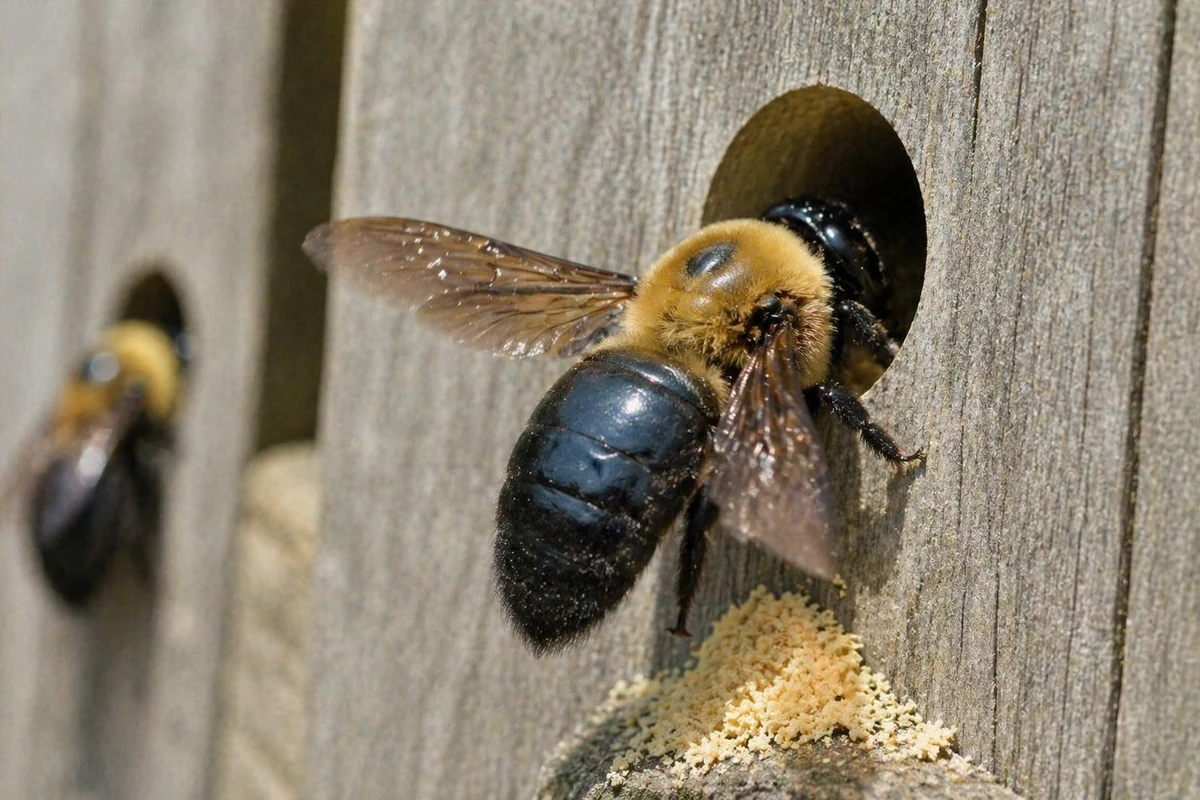
Carpenter bee hovering near round entry hole bored into unpainted cedar fascia board in North Texas
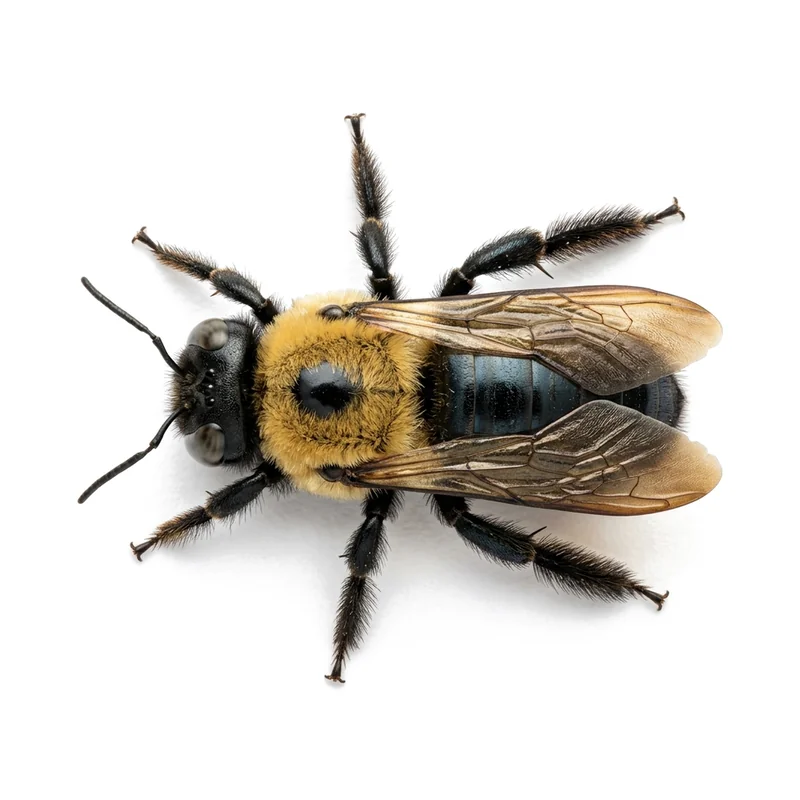
Eastern carpenter bee closeup showing shiny hairless black body and yellow-orange hairy midsection
Carpenter Bee
Xylocopa virginica & Xylocopa micans
AKA Wood Bee · Boring Bee · Drill Bee
Size (X. virginica)19 to 25 mm (0.75 to 1 inch)
Size (X. micans)15 to 25 mm (0.6 to 1 inch), entirely black
Key VisualShiny, hairless-looking black body toward the rear. The single fastest separator from bumblebee.
Entry HolePerfectly round, 12 to 13 mm (about 1/2 inch) diameter in unfinished wood
Gallery Length4 to 6 inches new; up to several feet in multi-season reused galleries
Can StingFemales yes, rarely. Males cannot sting at all.
North Texas Pest Calendar
Carpenter Bee Activity in Collin County by Month

Overwintered adults emerge in McKinney during warm spells as early as late February. Peak nesting and homeowner call volume runs April through May. Second-generation activity extends into August, producing two to three generations per year under North Texas conditions.

Jan
Dormant
Feb
Dormant
Mar
Emerging
Apr
Peak
May
Peak
Jun
Active
Jul
Active
Aug
Active
Sep
Slowing
Oct
Slowing
Nov
Dormant
Dec
Dormant
Dormant
Emerging
Active
Slowing
Peak
How to Identify a Carpenter Bee

What Carpenter Bees Look Like and Why They Are Confused With Bumblebees

Two carpenter bee species are active in Collin County. The eastern carpenter bee (Xylocopa virginica) is the larger and more common of the two, with a yellow-orange hairy midsection and a shiny, smooth-looking black body toward the rear. The southern carpenter bee (Xylocopa micans) is slightly smaller and entirely black or dark metallic blue-black with dark wings. Males of X. virginica have a distinctive white or yellow face patch.

Dead Giveaways
  • Perfectly round, smooth 1/2-inch hole in unfinished wood with yellowish sawdust below it
  • Large bee with a shiny, hairless-looking black body toward the rear hovering at the same wood surface
  • Yellowish-brown staining on the wood face below the hole (bee excrement)
  • Deep buzzing or scraping sound from inside the wood, especially in early morning
  • Ragged woodpecker damage adjacent to 1/2-inch entry holes
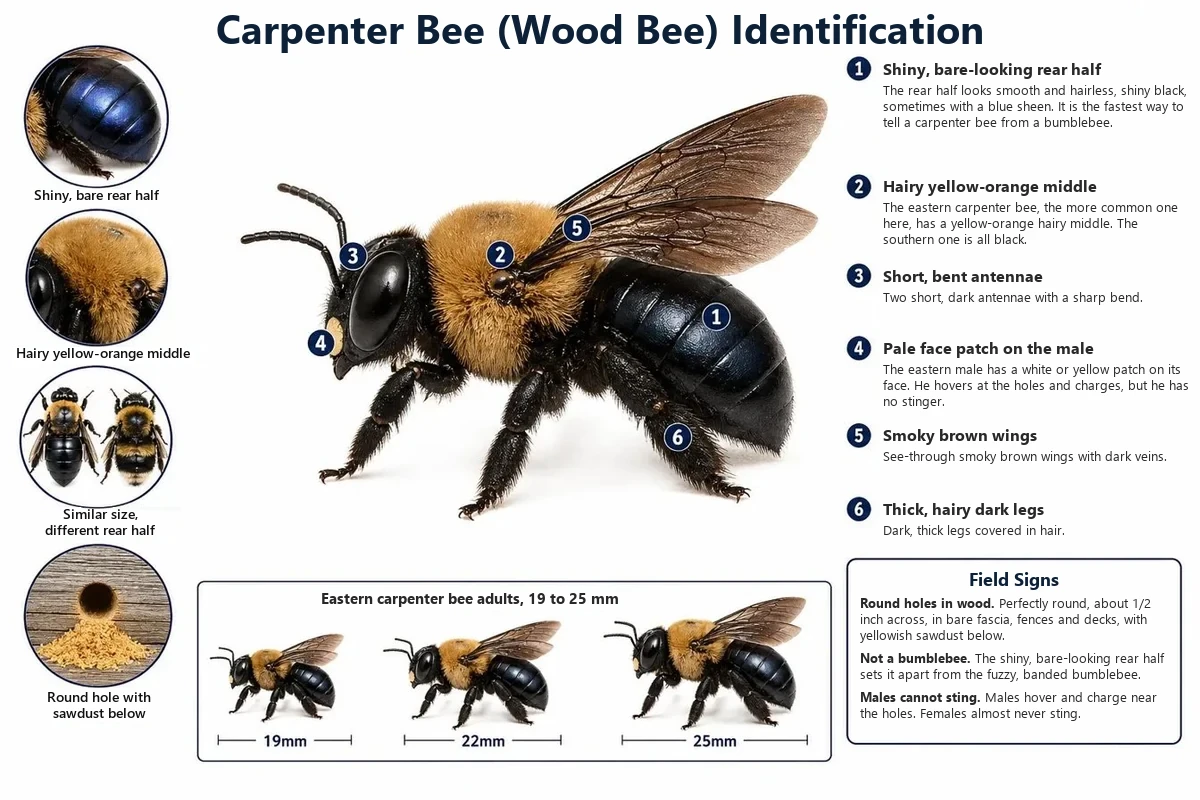
Annotated carpenter bee diagram showing shiny black body toward rear, hairy midsection, and round entry hole with yellowish sawdust below

AKA: Wood Bee

The most common homeowner misidentification in Collin County is calling carpenter bees bumblebees. Bumblebees have a fully fuzzy body toward the rear with yellow and black banding. Carpenter bees have a shiny, smooth-looking body toward the rear. That one visual difference settles the question at a glance.

The male carpenter bee is responsible for all the aggressive-looking hovering behavior in front of faces and porches. He cannot sting. He has no stinger. The buzzing dive-bomber behavior that concerns most homeowners is a territorial display, not a sting threat. The female does not hover. She goes directly to the entry hole and is responsible for all drilling. The female can sting but almost never does unless physically handled.

Carpenter bees are solitary nesters: no colony, no queen, no shared nest, no swarm. Each female drills and provisions her own gallery. Multiple females may use the same entry hole while maintaining completely separate tunnel systems branching in different directions inside the same board.

Species Comparison

What Carpenter Bees Are Confused With

Only species a homeowner could realistically mistake for a carpenter bee at a glance are listed here.

Species Size Key Feature Nesting Habit
Carpenter Bee
This species Carpenter Bee AKA: Wood Bee Xylocopa spp.
19 to 25 mm for X. virginica; 15 to 25 mm for X. micans. Body toward the rear is shiny and hairless-looking. Midsection is yellow-orange and hairy on X. virginica; entirely black on X. micans. Shiny, hairless-looking black body toward the rear is the fastest visual separator from all other large bees. Solitary: no colony, no swarm, no queen. Drills perfectly round 1/2-inch holes in unpainted or weathered wood. Males hover aggressively but cannot sting. Individual tunnels drilled into unpainted or weathered wood surfaces: fascia boards, cedar fences, pergolas, deck lumber. No colony, no comb, no honey. One to a few bees per entry hole. Does not nest in ground or wall voids.
Bumblebee AKA: Bumble Bee Bombus spp.
15 to 25 mm depending on species. Body is fully covered in dense yellow and black hair from midsection to tail, including the body toward the rear. Rounder and more barrel-shaped profile than carpenter bee. Fully fuzzy body toward the rear with yellow and black banding. This is the single fastest field separator from a carpenter bee. If the large bee’s rear section is fuzzy and banded, it is a bumblebee. If it is shiny and hairless-looking, it is a carpenter bee. Never bores holes in wood structures. Small ground cavities or abandoned rodent burrows. Small social colony of 50 to 400. No wax comb, no structural wood damage. Colony is annual: dies at first freeze, does not overwinter.
Honey Bee
Honey Bee AKA: Honeybee Apis mellifera
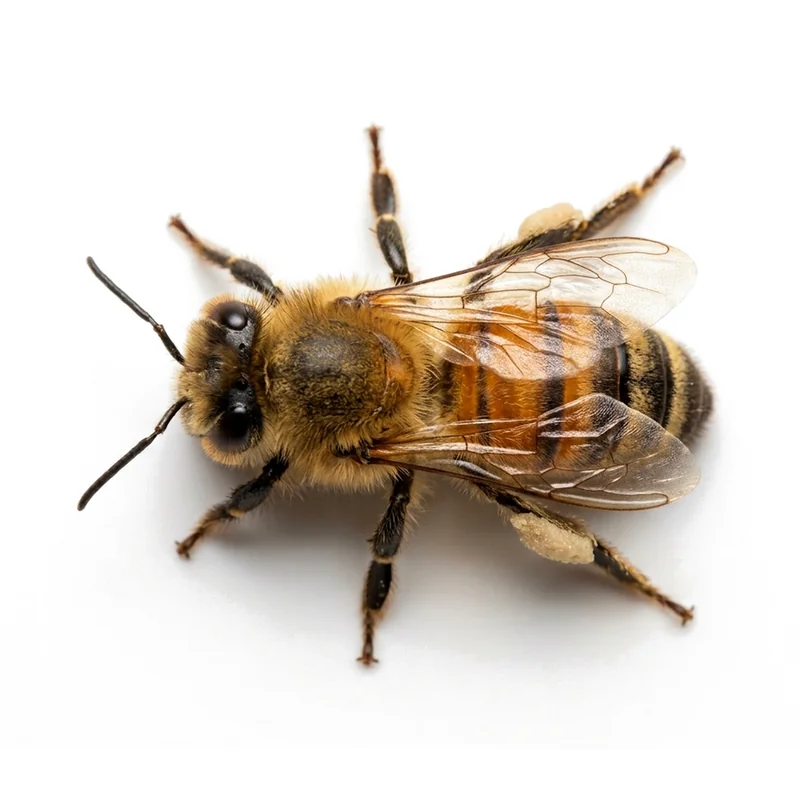
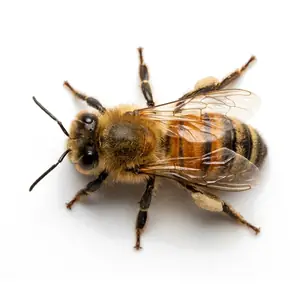
12 to 15 mm. Noticeably smaller than a carpenter bee. Golden-brown body with moderate hair. Narrower profile. Workers carry orange or yellow pollen masses on hind legs when foraging. Much smaller body at a glance. Produces a loud collective hum when a large group is disturbed at their nest. Pollen masses on hind legs during foraging are a reliable visual indicator. Never bores into wood structures. Wall voids, hollow trees, and structural cavities. Large social colony; produces wax comb and honey. Perennial colony that does not die seasonally. Entirely different removal process from carpenter bee.
Why Carpenter Bees Score 1 of 3 on People Risk

How Carpenter Bees Affect People

Carpenter bees are among the lowest sting-risk insects in Collin County. Males cannot sting and are responsible for virtually all of the intimidating behavior homeowners notice. Females can sting but almost never do unless physically grabbed. There is no defensive colony, no mass attack risk, and no venom-spraying behavior. The primary reason to call about carpenter bees is wood damage, not personal safety.

People Risk
1/ 3
Low
Sting Risk

The Bee That Charges You Cannot Sting You

The male eastern carpenter bee patrols a territory in front of the entry holes, hovering at face height and charging anything that enters his zone. This behavior looks aggressive and feels alarming at close range. He has no stinger. The display is territorial, not defensive. He cannot harm you regardless of how close he gets.

The female has a stinger and is capable of delivering a sting, but she does not defend the gallery entrance the way social insects defend a colony. She is focused on drilling and provisioning. She will sting if picked up or pinned against skin. Under normal yard and porch conditions, a sting from a female carpenter bee requires deliberate physical contact with the bee.

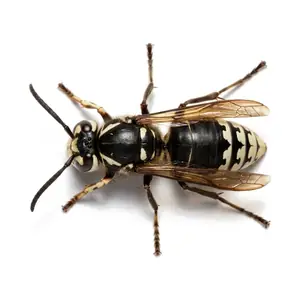
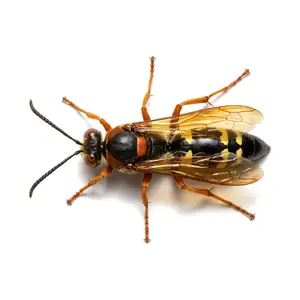
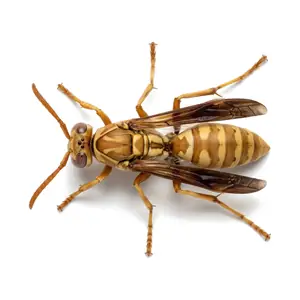
There is no colony defensive response. If one female is disturbed at her entry hole, no other bees join a coordinated defense. This is fundamentally different from paper wasps, yellowjackets, or bald-faced hornets, where disturbing a nest triggers a mass response from dozens or hundreds of workers.

Note
When Carpenter Bees Become a Direct Concern

For homeowners without known bee-venom allergies, carpenter bees present virtually no direct health risk under normal conditions. For individuals with a diagnosed bee-venom allergy, any bee sting is a potential anaphylaxis trigger. If you or a family member have a known venom allergy and carpenter bee activity is directly adjacent to an entry point or heavily trafficked outdoor area, treatment becomes urgent from a health standpoint regardless of the wood damage concern. Seek immediate emergency care if a sting produces difficulty breathing, hives spreading beyond the sting site, or throat tightening.

Why Carpenter Bees Score 2 of 3 on Property Risk

How Carpenter Bees Damage Wood Structures

A single carpenter bee gallery causes minor structural damage in its first season. The problem is cumulative: females return to the same galleries year after year, extending tunnels deeper and branching in new directions. A gallery system used across 3 to 4 seasons can hollow a fascia board from the inside. Add woodpecker secondary damage and what started as a 1/2-inch hole becomes a structural replacement conversation.

Property Risk
2/ 3
Moderate
Wood Damage

How the Damage Grows Season After Season

A new carpenter bee gallery follows a predictable pattern: the female bores straight into the wood approximately one inch, then makes a sharp 90-degree turn and excavates a tunnel running parallel to the grain, typically 4 to 6 inches long. She creates 6 to 10 individual cells in the tunnel, stocks each with pollen and nectar, lays one egg per cell, and seals each chamber with chewed wood pulp. The entry hole is roughly the diameter of a finger.

The problem begins when new adults emerge at summer’s end, overwinter inside old galleries, and return the following spring. A returning female does not drill a new hole. She re-enters the existing gallery and extends it. Reused galleries extend several feet through connected boards, hollowing the interior while the outside face of the wood looks largely intact.

Gallery Reuse and Expansion Multi-season galleries can exceed 10 feet of connected tunnels A gallery reused over 4 to 5 seasons can run more than 10 feet through connected fascia boards, hollowing the run from the inside while the outer surface appears only lightly damaged. The wood fails structurally when the gallery network removes too much internal material. This is why damage assessments can surprise homeowners who thought the problem was minor based on the number of visible entry holes.
Woodpecker Secondary Damage A single bird can open 3 feet of fascia board overnight Red-bellied woodpeckers and downy woodpeckers in Collin County detect carpenter bee larvae through the faint vibrations and sounds they produce inside the wood. Once a bird locates an active gallery, it excavates aggressively. A single Red-bellied Woodpecker can destroy 3 feet of fascia board in one overnight session. Woodpecker damage is ragged and irregular, contrasting with the bee’s clean round entry hole. Homes with active woodpecker damage require board replacement, not just bee treatment.
Staining and Debris Yellowish sawdust and yellow-brown staining identify active galleries Two types of debris accumulate below active carpenter bee entry holes: coarse yellowish sawdust (the chewed wood debris from gallery excavation) and yellowish-brown staining from bee excrement. The sawdust pile is the first sign most homeowners notice. It washes away in rain, but the staining on the wood and the round entry hole remain visible year-round as indicators of active or prior gallery use.
Why Carpenter Bees Score 2 of 3 on Persistence Risk

Why the Problem Returns Every Spring

Carpenter bee pressure in Collin County is not a one-time event. New adults overwinter inside old galleries and emerge the following spring, return to the same boards, and extend the existing tunnel systems. Properties with unpainted wood surfaces and prior gallery activity will see carpenter bees every year until the wood is treated and sealed. Properties with multiple exposed wood surfaces are high-pressure targets across every season.

Persistence Risk
2/ 3
Moderate
Behavior and Biology

Why Carpenter Bees Keep Coming Back

Overwintering Adults New adults overwinter in old galleries and return in spring Carpenter bees do not die with the first freeze the way yellowjackets and paper wasps do. New adults emerge in late summer, feed to build fat reserves, and overwinter inside the same old gallery tunnels. In McKinney and Collin County, overwintered adults begin emerging during warm spells as early as late February. These are the same individuals that will drill new brood cells and expand the gallery systems that produced them. The cycle reinforces itself on the same boards each year.
Site Fidelity Females return to the same boards where they developed Female carpenter bees demonstrate strong site fidelity, returning to reuse galleries at the same location where they overwintered. This is why carpenter bee damage on a specific fascia board or fence run tends to get worse rather than move around. Multiple females from successive seasons converge on the same high-activity boards, creating cluster damage in predictable locations rather than scattered individual holes spread across an entire structure.
Target Wood Surfaces Unfinished or weathered wood is the common denominator Properties with the highest annual pressure share the same characteristics: cedar or pine fencing stained but not sealed with a film-forming finish, pergolas and arbors built from cedar or Douglas fir, decks with unpainted or unfinished fascia boards, and homes with exposed wood trim that has never been fully painted. A solid paint or film-forming finish on all exposed wood surfaces is dramatically more effective at reducing carpenter bee attraction than stain alone.
Why Carpenter Bees Score 2 of 3 on Difficulty to Treat

Treating Carpenter Bee Wood Damage

Carpenter bee treatment is moderate in difficulty because the most common homeowner action is sealing the entry hole, and that single action makes the problem worse rather than solving it. Treatment must go inside the gallery before any hole is sealed. Missing that sequence means sealing bees inside, driving them to chew new exit holes, and leaving the gallery system intact for next season’s females to reuse and expand. Getting the sequence right is the whole job.

Difficulty to Treat
2/ 3
Moderate
Treatment STINGER SMACKDOWN

How Pest Me Off Handles Carpenter Bee Calls

Carpenter bee treatment has one step that determines whether everything else works: the dust goes in the gallery before the hole gets sealed. We treat every active and recently active gallery, allow the required treatment interval, then seal each hole and evaluate the surrounding wood surface for paint or finish recommendations. Treating only what is visible and skipping the follow-up is how results turn into callbacks.

Step 1

Full-Structure Gallery Assessment

Before any product is applied, the technician walks the full structure to locate every entry hole, every staining pattern, and every woodpecker damage area. Carpenter bee activity on one face of a fascia board frequently means additional active and historical galleries on adjacent faces and connected boards. Woodpecker damage is documented for the homeowner as a separate item from the bee treatment scope.

Why this step: Treating only the holes visible from ground level and missing the additional galleries on the sides or undersides of the same board leaves active nesting in place. A complete assessment before treatment ensures we are not leaving the problem partially addressed.
Step 2

Dust Application Into Each Gallery

Insecticidal dust is applied into each active gallery using a wand tip that reaches the full tunnel depth, not just the entrance. Dust formulations are recommended for carpenter bee galleries because the product spreads through the tunnel system as bees move in and out, and it maintains residual activity inside the sealed tunnel after the hole is closed. The female contacts the dust on every entry and exit until the treatment takes effect.

Why this step: Liquid sprays applied to the exterior surface of the entry hole do not penetrate the gallery. The bee enters through a short tunnel before reaching the main gallery and avoids any surface-applied product. Dust placed inside the gallery where the bee actually travels is the only formulation that makes consistent contact with the female during her normal nesting activity.
Step 3

Gallery Sealing After Treatment Interval

After the treatment interval, each gallery is sealed to prevent re-entry by new females next season and to remove woodpecker access to the tunnel. Sealing is done after treatment is confirmed complete, never before. A gallery sealed while bees are still active inside drives the bee to chew a new exit hole and creates a new entry point in the same board.

Why this step: An open, unsealed gallery is a ready-made nest for next season’s females. They prefer existing tunnels over drilling new ones. Sealing treated holes eliminates the advantage the returning female is looking for and forces any new bee to start from scratch in untreated wood.
Step 4

Surface Evaluation and Prevention Recommendation

After sealing, the technician evaluates all exposed wood surfaces for paint or film-forming finish recommendation. Bare cedar, pine, and weathered fascia that remains unfinished will continue attracting new females regardless of how well the active galleries were treated. The technician identifies which surfaces are highest priority and flags any boards with woodpecker damage that require replacement before the problem returns next season.

Why this step: Treatment stops what is active now. Paint stops what would have started next March. Recommending the surface finish is the part of the job that actually ends the annual cycle rather than managing the same boards every spring.
Pest Me Off
We treat every active gallery with dust applied to full depth before any hole is sealed. Assessment covers the full structure, not just the most visible face. We document woodpecker damage and make surface finish recommendations so the annual return visits stop.
Store Products & Other Companies
Spray the entry hole from outside, plug it with caulk, call it done. Most over-the-counter liquid sprays do not penetrate gallery depth, and sealing the hole without treating first traps the bee inside, which drives it to chew a new exit hole next to the caulk. Same call next April.
DIY Reality Check

Why Sealing the Holes First Does Not Work

How to Reduce Carpenter Bee Pressure

1 Paint or seal all exposed wood surfaces. A solid film-forming paint or finish is the most effective prevention available. Stain alone without a topcoat sealer does not provide the same protection. Bare, weathered cedar and pine are the primary targets in Collin County.
2 Treat before sealing every time. If you discover entry holes, dust goes in the gallery before anything is sealed. Sealing an active gallery first traps the bee inside, which drives her to chew out next to the caulk and start over. The correct sequence is treat, wait, then seal.
3 Schedule a late-season inspection. Second-generation activity runs through July and August. A spring treatment without a late-season follow-up leaves second-generation galleries untreated. Plan a July check on any boards that had active holes in April.
4 Address woodpecker damage separately. Boards a woodpecker has opened up need replacement, not just bee treatment. Identify replacement candidates early in the season before woodpecker activity creates structural failures in the fascia run.
Fail

Sealing the entry hole first

The single most common DIY error. The bee sealed inside chews a new exit hole next to the caulk. The original gallery is intact, the treatment was never applied, and there is now a second hole in the same board. Seal after treatment. Never before.

Fail

Spraying the exterior entry hole only

Liquid applied to the outside of the hole does not reach the bee in the gallery. The carpenter bee enters through a short tunnel before reaching the main chamber. Contact with a surface spray at the entry hole is brief and inconsistent. Dust placed inside the gallery is the only approach that produces reliable contact with the female during normal activity.

Fail

Targeting the hovering males

Males are doing all the visible hovering and charging. Treating males does not stop wood damage. Females are responsible for all drilling and do not hover. Every product that kills a male does nothing to the female actively nesting in the board behind him.

Fail

Treating one hole and missing adjacent galleries

A single fascia board with one visible entry hole frequently has additional active galleries on the sides, underside, or in adjacent boards. Treating only the most visible hole while missing connected gallery systems leaves active nesting in place for the season and woodpecker access to the untreated tunnels.

Fail

Ignoring woodpecker secondary damage

Woodpecker secondary damage on carpenter bee boards is a structural replacement indicator, not just a cosmetic issue. Boards with significant woodpecker damage need replacement. Treating the bees on a board the woodpecker has already partially demolished leaves a structural failure in progress.

Questions Homeowners Ask

Carpenter Bee FAQ

  • The name comes directly from what the female does: she chews through wood to build her nest. Wood bee, boring bee, and drill bee are all names Collin County homeowners use for the same insect, and all of them describe the same behavior. Whatever name you use, the identifying feature is the same: a large bee with a shiny, mostly hairless rear section drilling perfectly round 1/2-inch holes in your fascia boards, fence posts, deck rails, or wood trim.

  • Almost certainly not. The large bee hovering at face height near your porch or fascia boards is almost always a male carpenter bee. Male carpenter bees cannot sting. They have no stinger. The hovering and charging behavior is territorial display, not a sting threat. He is defending the entry holes the female drilled in the wood behind him. He cannot cause harm regardless of how close he gets. The female, who does have a stinger, does not hover. She goes directly to the entry hole. She can sting if physically handled but almost never does under normal yard conditions.

  • No. Sealing before treating is the most common DIY error on carpenter bee jobs, and it consistently makes the problem worse. The bee sealed inside the gallery chews a new exit hole next to the caulk. The original gallery is still intact and ready for next season’s female to move back into. The correct sequence is: treat the gallery with dust first, allow the treatment interval, confirm no activity, then seal. Holes sealed after treatment remove the ready-made tunnel that returning females look for next spring.

  • Check the body toward the rear. Carpenter bees have a shiny, smooth-looking, hairless-looking black body toward the rear. Bumblebees have a fully fuzzy body toward the rear covered in yellow and black hair. That one visual difference settles it from a few feet away without any equipment. If you are still not sure, look at the wood. A carpenter bee leaves a perfectly round, smooth 1/2-inch hole in the wood with a small pile of yellowish sawdust below it. Bumblebees do not bore holes in wood. If there is a round hole in your fascia board, it is a carpenter bee.

  • Carpenter bees overwinter inside old galleries as new adults and return to the same boards when they emerge in spring. The females that developed in a gallery are strongly inclined to return to that exact location and extend the existing tunnel rather than start a new one elsewhere. This is why carpenter bee damage on a specific board tends to get worse every season rather than spreading around. The wood that was targeted last year is the wood that will be targeted again this year until it is treated, sealed, and painted.

  • That is the chewed wood debris the female produces while excavating the gallery. She uses her mandibles to break and vibrate through the wood fibers, pushing the debris out as she goes. The pile you see on the deck or porch floor is the material removed to create the tunnel above. A fresh pile means active excavation is in progress. An old, weathered pile or staining without a fresh pile means the gallery exists but may be from a prior season. In wet weather the debris washes away, but the round entry hole and any staining on the wood face remain visible year-round.

  • That is woodpecker secondary damage, and it is one of the more alarming consequences of a carpenter bee infestation that goes untreated into summer. Red-bellied woodpeckers and downy woodpeckers in Collin County locate carpenter bee larvae by the sounds and vibrations they produce inside the wood. Once a bird finds an active gallery, it excavates aggressively. A single Red-bellied Woodpecker can destroy 3 feet of fascia board in a single overnight session. The damage is ragged and irregular, which is how you distinguish it from the bee’s clean round entry hole. Boards with significant woodpecker damage typically need replacement. Bee treatment alone cannot fix structural wood that has been opened up that way.

  • Yes, significantly. The finish type matters though. A solid paint with a film-forming surface is the most effective prevention available. Stain alone, especially penetrating stains without a topcoat sealer, does not provide the same protection. Carpenter bees strongly prefer unfinished, weathered, or bare wood. Wood with a complete painted or sealed surface is a much less attractive target. This is especially important for cedar fencing, pergolas, and deck fascia, which are the most common carpenter bee targets in McKinney and across Collin County. Treating the wood and then painting is the sequence that stops the annual cycle rather than managing it each spring.

What's Bugging You?

Round Holes in Your Fascia Boards and Decks. We Treat the Galleries, Seal the Holes, and Tell You Which Wood Needs Paint.

Most carpenter bee calls in McKinney involve boards that have been active for more than one season and galleries that are deeper than the visible hole suggests. We walk the full structure to find every active and historical gallery, apply dust to the full tunnel depth before anything is sealed, and evaluate which surfaces need a finish to stop next spring’s females from starting over. Stinger Smackdown across McKinney, Allen, Frisco, Plano, and all of Collin County.

12Stops Per Day
Other companies run 20+ stops a day. We cap at 12.
A carpenter bee job has more steps than it looks like from the driveway: full-structure assessment, dust into every gallery, treatment interval before sealing, board-by-board evaluation for wood finish. Doing that right takes time. The 12-stop limit is what gives us the time to do it rather than plugging the visible hole and moving on.