Little Black Ants in Collin County, TX | Identification and Control
The little black ant (Monomorium minimum), the tiny black ant most Collin County homeowners find in a kitchen trail, is the smallest ant you are likely to see indoors. PestWorld puts a worker at 1.5 to 2 mm long, about 1/16 inch. It usually nests outside in soil and ground debris and sends workers in through foundation cracks, though in buildings it can also nest in woodwork and wall voids. It cannot sting through skin and does no damage to wood. Bait that workers carry home to the outdoor colony is what stops the trail.
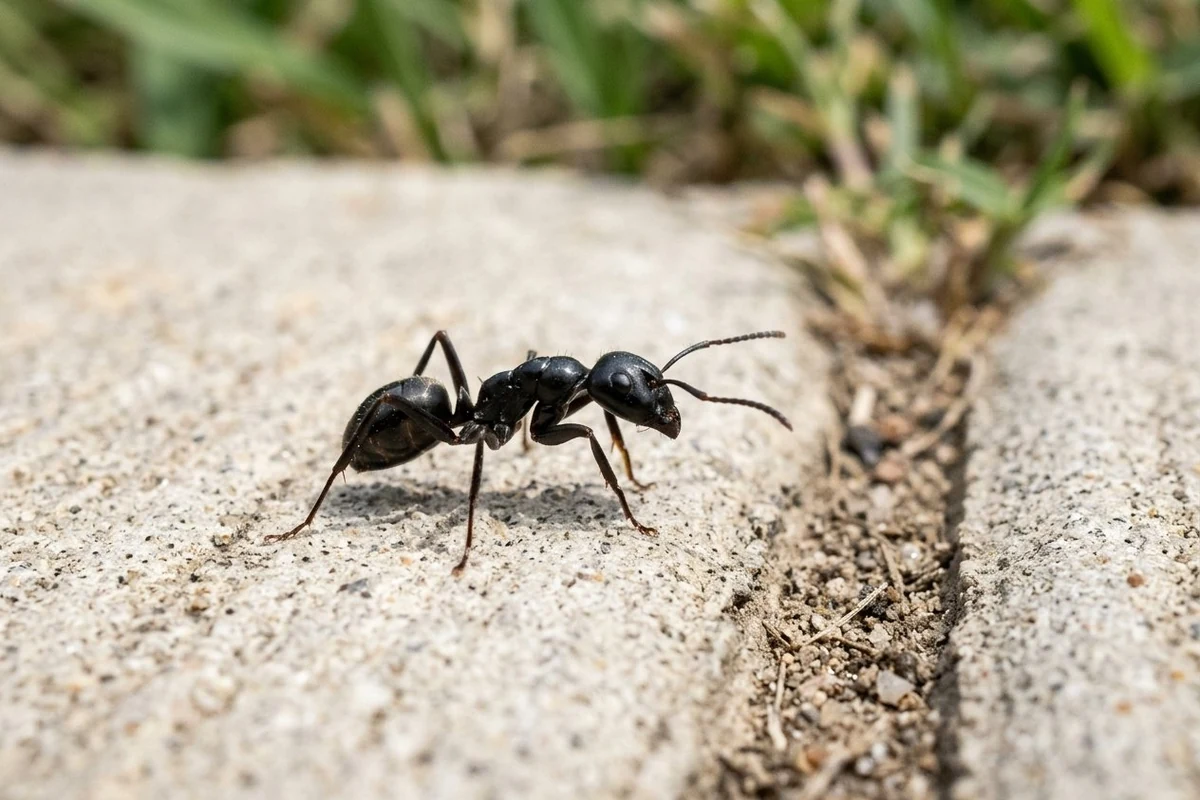
Found a trail in your kitchen in Collin County? Our office sits where McKinney, Plano, Frisco and Allen meet, 5 to 10 minutes from most homes in those four cities. Send us a photo or call, and we will tell you which ant it is.
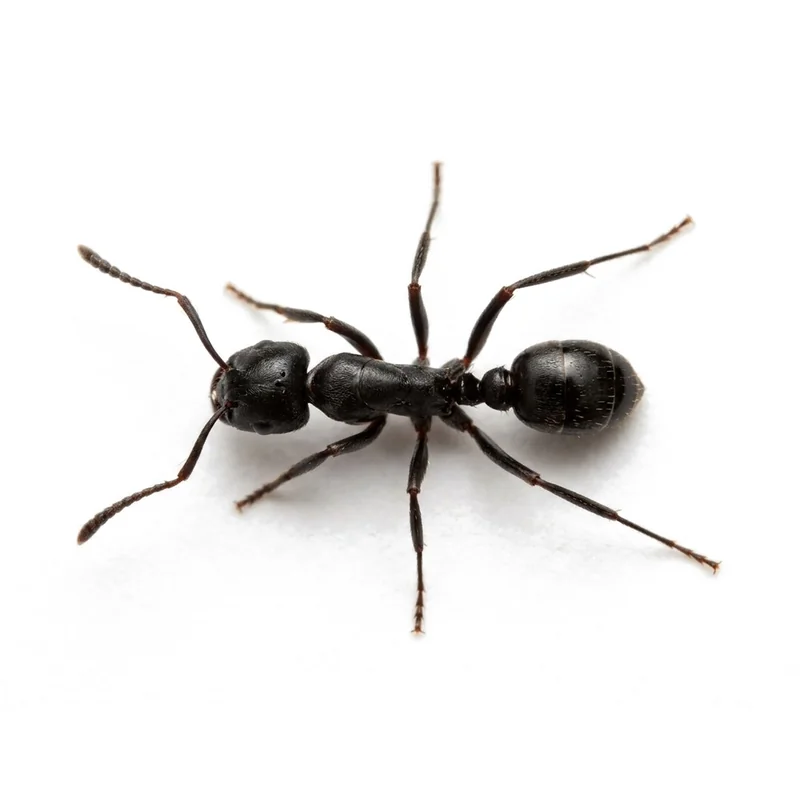
Little Black Ant
PestWorld’s little black ant guide lists the jet-black color and a body 1.5 to 2 mm long as the main field marks for this species.
Risk Assessment
Choose a row for the full detail- Color
- Jet black and shiny from head to abdomen
- Colony size
- Up to 2,000 workers with many queens
- Diet
- Sweets, proteins, honeydew and other insects
- Sting
- Has one, but too weak to get through human skin
- Odor when crushed
- None, the key test against the odorous house ant
- Nesting site
- Mostly outdoor soil, rotting wood and ground debris. Indoors, woodwork, wall voids, masonry and under carpets
- Worker size
- 1.5 to 2 mm, every worker the same size
What Little Black Ants Look Like
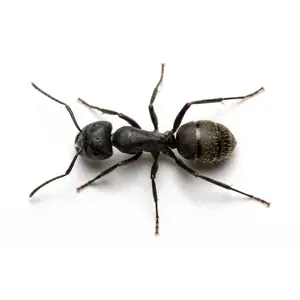
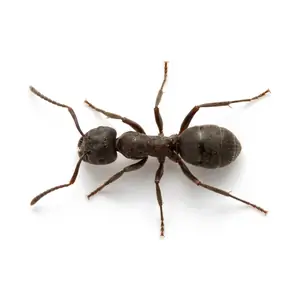
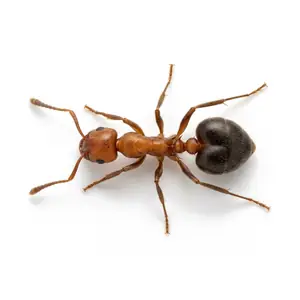
Little black ants are 1.5 to 2 mm long, and every worker in the colony is the same size. The body is a uniform glossy black with no brown tones, no red segment and no banding. Odorous house ants (2.4 to 3.3 mm) and pavement ants (2.5 to 3 mm) are both visibly bigger beside them.
The waist has two nodes, two small bumps between the midsection and the rear segment, and the body is smooth with no grooves. University of Missouri Extension gives the 2-node waist and the smooth body as the main field marks for this ant. A crushed worker gives off no smell at all.
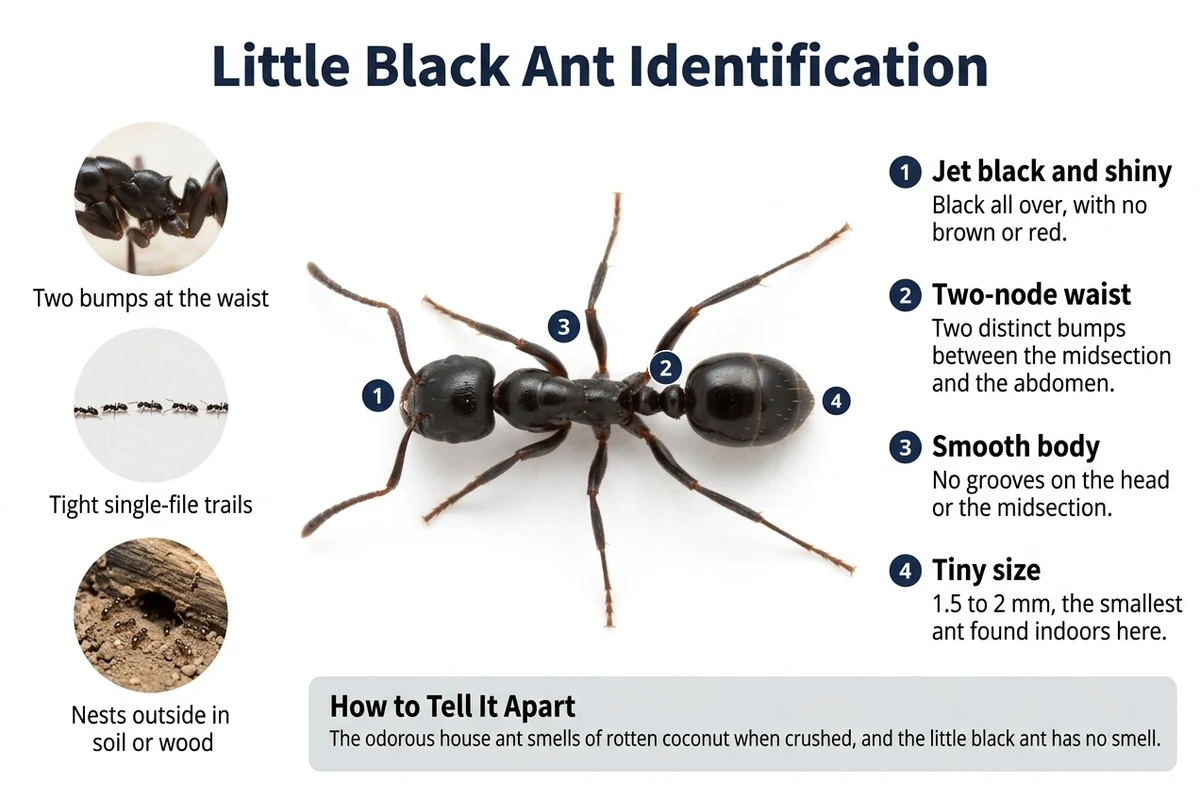
How to identify a little black ant from above, by its shiny jet-black body, smooth surface and two-node waist
- Smaller than any other ant you will find indoors in Collin County, 1.5 to 2 mm
- Jet black and shiny all over, with no brown or red anywhere
- Two-node waist, two distinct bumps between the midsection and the rear
- No odor when crushed, where the odorous house ant smells of rotten coconut
- Smooth body with no grooves, where the pavement ant has grooves on its head and midsection
- Workers of one size moving in a tight single-file line
- Trail usually leads outside to a nest in soil, debris or rotting wood
Other Names for the Little Black Ant
Most people call the little black ant a black ant or a tiny black ant, because color and size are all there is to see. It does not sting you, does not smell when crushed, does not chew wood and does not build a mound you would notice. The scientific name says the same thing. Monomorium minimum means single form and smallest, for workers that are all one size and the smallest Monomorium species commonly met in North America.
Where Are Little Black Ants Found?
Little black ants are found across North America, and they are common in Texas yards, Collin County included. Here they mostly nest outdoors in soil, under ground debris and in rotting landscape wood near the foundation, and what you see in the kitchen is usually a foraging trail from that colony.
Inside a building they can also nest in woodwork, wall voids, masonry and under carpets, so a trail that ends at a wall or the floor may lead to an indoor nest.
| Name | What it means |
|---|---|
| Black ant | The plain shorthand most homeowners use, from the jet-black color. |
| Tiny black ant | The same name with the size added, and the most searched version. |
| Small black ant | Another way of saying tiny black ant. It points to the same species. |
| Monomorium minimum | The scientific name, meaning single form and smallest. |
| Sugar ant | Not this ant. The name usually means the odorous house ant or the pavement ant, the two it is mixed up with most. |
How to Tell Little Black Ants from Other Ants in Collin County
Three ants are regularly mistaken for little black ants. Size, color and the crush test separate them without any equipment, and the comparison chart below sets them side by side.
| Species | Size | Key Feature | Where Found |
|---|---|---|---|
|
Little Black Ant
AKA: Black Ant, Tiny Black Ant
Monomorium minimum
This species
|
1.5 to 2 mm, jet black and the same size across all workers. The smallest ant routinely found indoors in Collin County. | Smooth jet-black body with no grooves on the head or midsection. Two-node waist. No odor when crushed. | Outdoor soil, rotting wood and ground debris near the foundation. Workers come in through foundation cracks and expansion joints. Indoors, can nest in woodwork, wall voids, masonry and under carpets. |
Fire Ant
AKA: Red Ant, Mound Ant
Solenopsis invicta
|
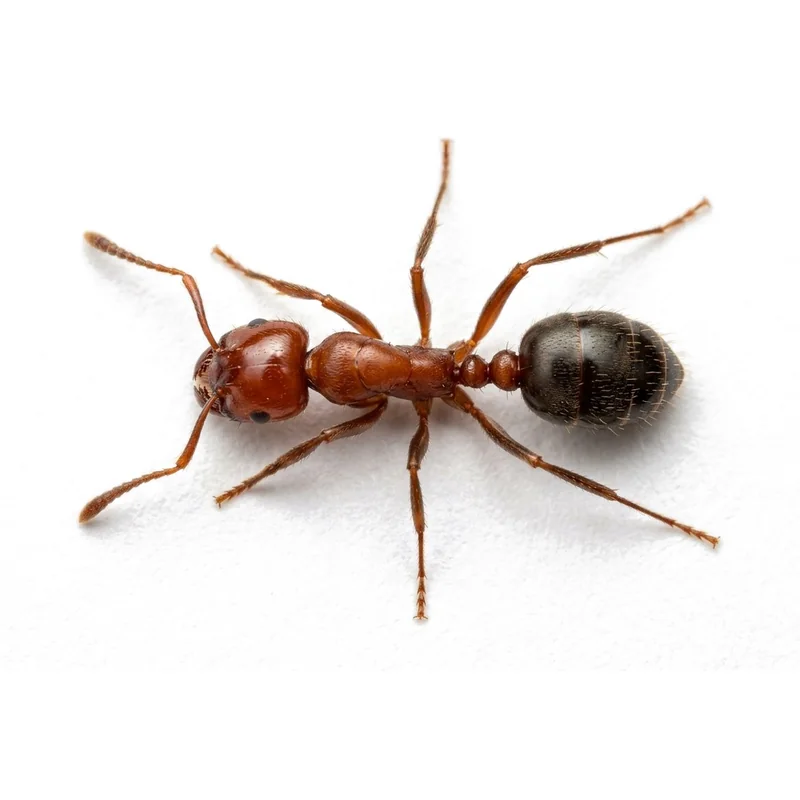
1.6 to 6 mm, with clearly mixed worker sizes in one colony. Reddish-brown, which sets it apart from the jet-black little black ant even at its smallest. | Reddish-brown head and midsection. Swarms and stings within seconds when the mound is disturbed. Two-node waist, no grooves and no odor when crushed. | Dome mounds with no opening on top in lawns, foundation edges and irrigated beds. Tunnels exit through the sides of the mound. |
Odorous House Ant
AKA: Sugar Ant, Stink Ant
Tapinoma sessile
|
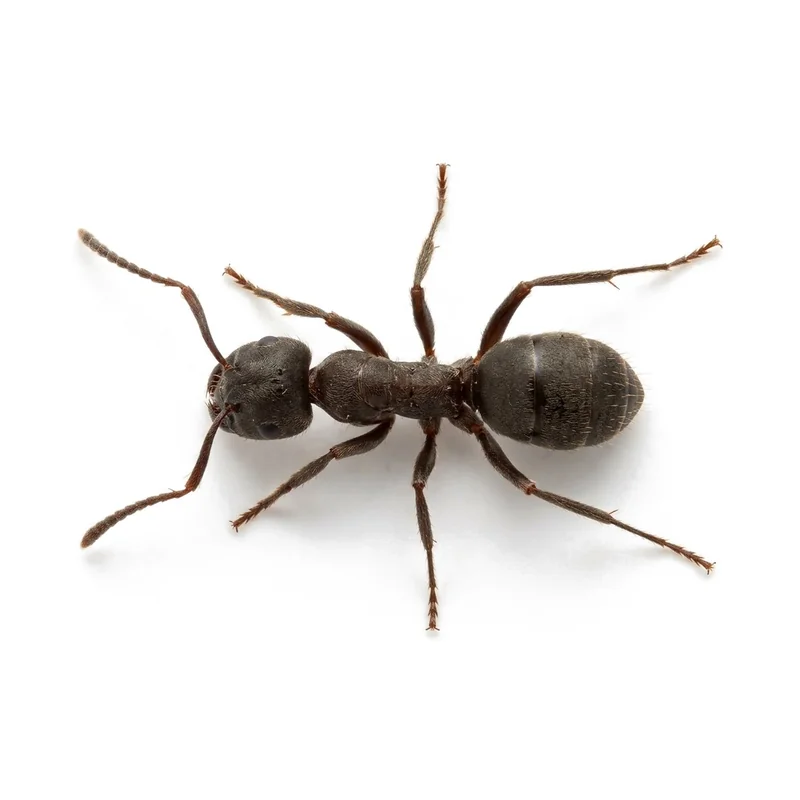
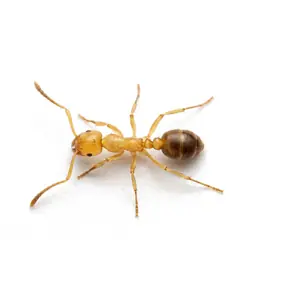
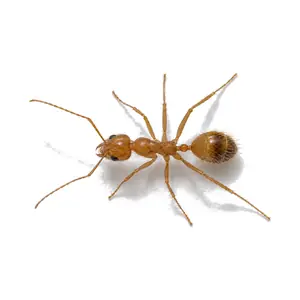
2.4 to 3.3 mm, dark brown to black and the same size across workers. Larger side by side, but not by enough to judge on size alone. | One-node waist, nearly hidden under the rear segment. Strong rotten coconut smell when crushed. Splits into new nests when sprayed with a repellent. | Wall voids, under insulation and beneath flooring indoors, plus outdoor soil and mulch. Keeps indoor nests all year. |
Pavement Ant
AKA: Sugar Ant, Sweet Ant
Tetramorium immigrans
|
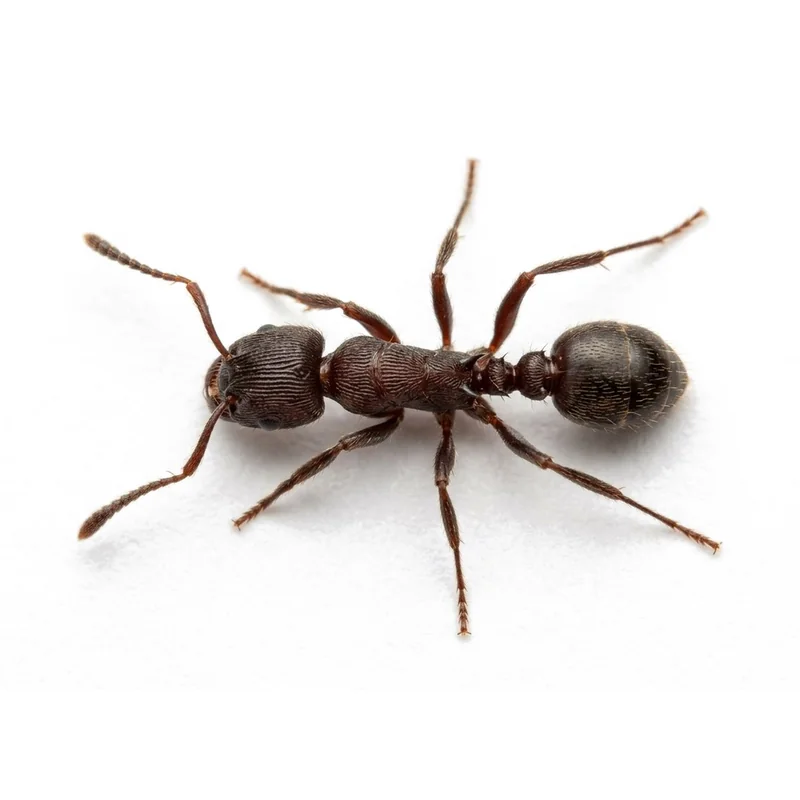
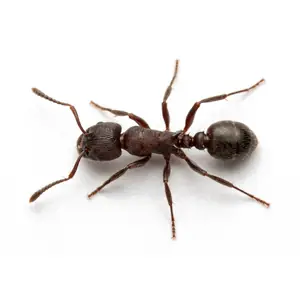
2.5 to 3 mm, dark brown rather than jet black, and a little larger. The brown tone is the fastest way to tell it apart. | Parallel grooves run lengthwise on the head and the midsection, visible under magnification. Two-node waist. No odor when crushed. | Soil under driveways, sidewalks and slabs. Workers push small cone-shaped piles of sand up through cracks in the concrete. |
Little Black Ant vs Odorous House Ant
The Little Black Ant in Three Numbers
1.5 to 2 mm
PestWorld puts a little black ant worker at 1.5 to 2 mm long, about 1/16 inch, which makes it the smallest ant in a Collin County home.
PestWorld
2 nodes
University of Missouri Extension names the 2 nodes in the little black ant waist, two small bumps, as one of its two field marks along with the smooth, grooveless body.
University of Missouri Extension
About 4 months
Texas A&M Urban and Structural Entomology says little black ant workers may live about 4 months in the lab, and queens about a year.
Texas A&M Urban and Structural Entomology
Are Little Black Ants Dangerous?
No. Little black ants are not medically significant, carry no documented disease association and are not known to trigger allergic reactions. The one real concern is hygiene. If a trail has crossed a food-prep surface or got into an open container, throw that food away and wash the surface with soap and water.
Do Little Black Ants Bite or Sting?
Little black ants do not sting people in any way you would feel. They do have a stinger, but it is too small to get through normal human skin, so no venom reaches you. A standard encounter needs no first aid and no medical follow-up.
When Little Black Ants Warrant Action
A Trail Reaching Food or the Pantry
A steady trail across the counter or into pantry packaging means an outdoor colony has found a route in and a reward worth coming back for. Throw out the food it reached and trace the trail to where it enters.
A Few Ants With No Health Effect
A handful of little black ants on a floor or a person is a nuisance, not a health problem. No one needs medical attention after contact with this species.
Why You Found Little Black Ants in Your House
Little black ants in the house are usually workers out looking for food from a colony outside, though a colony can also nest inside a wall void, woodwork or under carpet. They come in through foundation cracks, expansion joints between concrete sections, gaps around pipes and gaps under door thresholds, then follow a scent trail to sweets and proteins. Inside, the entry is usually at floor level, along a baseboard, under a cabinet toe kick or at a plumbing gap under the sink.
To find it, follow the trail backward from the food toward the wall and mark the spot with tape. Outside, the nest is usually within 10 to 20 feet of that entry, in soil under debris, in a crack between concrete sections or in a rotting landscape timber.
Where Little Black Ants Come From in Collin County
Little black ant colonies mostly live in outdoor soil, rotting wood and ground debris near the foundation, and in buildings they can also nest in woodwork, wall voids, masonry and under carpets. Penn State Extension places them in the food-nuisance group of ants, with no structural damage. Coarse sawdust by a door frame or ticking in a wall at night is carpenter ant work, not little black ant work.
Little Black Ant Presence Across Collin County
Little black ants turn up in kitchens across McKinney, Allen, Frisco, Plano and the rest of Collin County. Pressure is heaviest in neighborhoods with mature landscaping and ground debris, where several colonies can sit within foraging range of the same foundation.
That is why one treated colony is not always the end of it. A new trail can come from a different colony nearby, which is the job the foundation barrier described below is there to do.
Activity builds through spring and peaks in summer, when outdoor colonies are at full strength and workers range farthest from the nest. In Pest Me Off service call records across Collin County from 2023 to 2026, little black ants forage for 7 months a year, April through October, and kitchen trails are most common in June and July. Pressure drops sharply in late fall as colonies pull their foraging range in.
Pattern from Pest Me Off service call records across Collin County, 2023 to 2026.
Little Black Ant Colony Size and Queens
The Texas A&M Urban Entomology Program says a little black ant colony holds up to 2,000 workers and many queens. Most nest outdoors in lawn soil or under stones, bricks, wood and logs, and in buildings they nest in woodwork, wall voids, masonry and under carpets.
How Pest Me Off Handles Little Black Ants
Ant-Nihilation is our ant program. It pairs bait aimed at the queens with a foundation barrier we call the Scorched Earth Barrier. For little black ants we use non-repellent bait, a product workers do not recognize as a threat and carry home to the colony as food.
Inspect and Map Active Trails
Walk the kitchen and the foundation, trace each trail back to the crack or expansion joint where workers enter, and find the outdoor nest within 10 to 20 feet of that entry.
Trail-Targeted Non-Repellent Bait
Place bait at the indoor pickup point on each trail and at the foundation entry where workers bunch up. Trail activity collapses within 7 to 14 days. This species needs no bait spread across the yard.
Scorched Earth Barrier at the Foundation
Apply the Scorched Earth Barrier along the full foundation, the expansion joints and the concrete seams where trails come in.
Entry Point Closure and Seasonal Follow-Up
Note the foundation cracks and joints found at inspection for caulking. Quarterly barrier service is timed to April and May to stop early scouts before they set a route into the house.
& Quick Fixes
How to Get Rid of Little Black Ants Yourself
You can keep little black ants out with the right order of work. Close the way in, take away the nesting spots near the house, then remove the food that makes the trail worth running.
Why Some DIY Responses Fail for Little Black Ants
Little black ants look like an easy job, a small trail and nothing scary. Most DIY attempts that fail make one of the four mistakes below, each one hitting the trail and missing the colony outside.
Spraying the Trail and Treating Only Indoors
Store spray kills the workers you can see and leaves the outdoor colony and its queens untouched. Survivors walk around the treated spot and open a new trail through another crack within hours to days. Spraying baseboards and caulking inside gaps treat the symptom while the colony outside keeps sending workers out looking for food.
Placing Bait at the Wrong Spot
Bait stations set next to the food are too far from the entry and often the wrong kind for this ant. Placed where the trail comes in, the bait gets picked up by workers heading home. Placed anywhere else, it sits unused.
Using a Fogger or Bug Bomb
A fogger kills ants in the open air and coats surfaces, but never reaches cracks, the space under appliances or the colony outside. The ants drop out of sight for a while, which looks like success, and come back to the same spots within one to two weeks.
Giving Up on Bait Too Soon
Even well-placed bait takes 7 to 14 days to work through the colony, and the trail stays busy in the meantime. Wiping the bait away or spraying over it resets the clock. One full bait cycle left alone is what lasts.
Common Little Black Ant Questions
What are the tiny black ants in my kitchen?
Why do people call little black ants black ants?
How big are little black ants?
How big is a little black ant colony, and does it have a queen?
Are little black ants the same as odorous house ants?
Do little black ants damage wood or structure?
Will store-bought ant spray get rid of little black ants?
Where are the little black ants coming in from?
What time of year are little black ants most active in Collin County?
Are little black ants hard to get rid of?
Black Ant Trails in Your Kitchen Usually Start Outside. We Find the Colony and Bait It at the Entry Point.
We bait every active trail, run the Scorched Earth Barrier around the foundation and close the gaps that let outdoor colonies reach your kitchen. McKinney, Allen, Frisco, Plano, and all of Collin County.