
Bold Jumping Spiders in Collin County, TX | Identification and Control
The bold jumping spider is the small, compact, big-eyed black spider that turns and looks back at you from a fence rail or windowsill. PestWorld says jumping spiders have the best vision of any spider and can react to movement up to 18 inches away. It is harmless, it hunts in daylight, and it eats the mosquitoes, flies and moths that actually bother you. Treatment is almost never justified. Knowing what it is and why it is there settles most encounters.
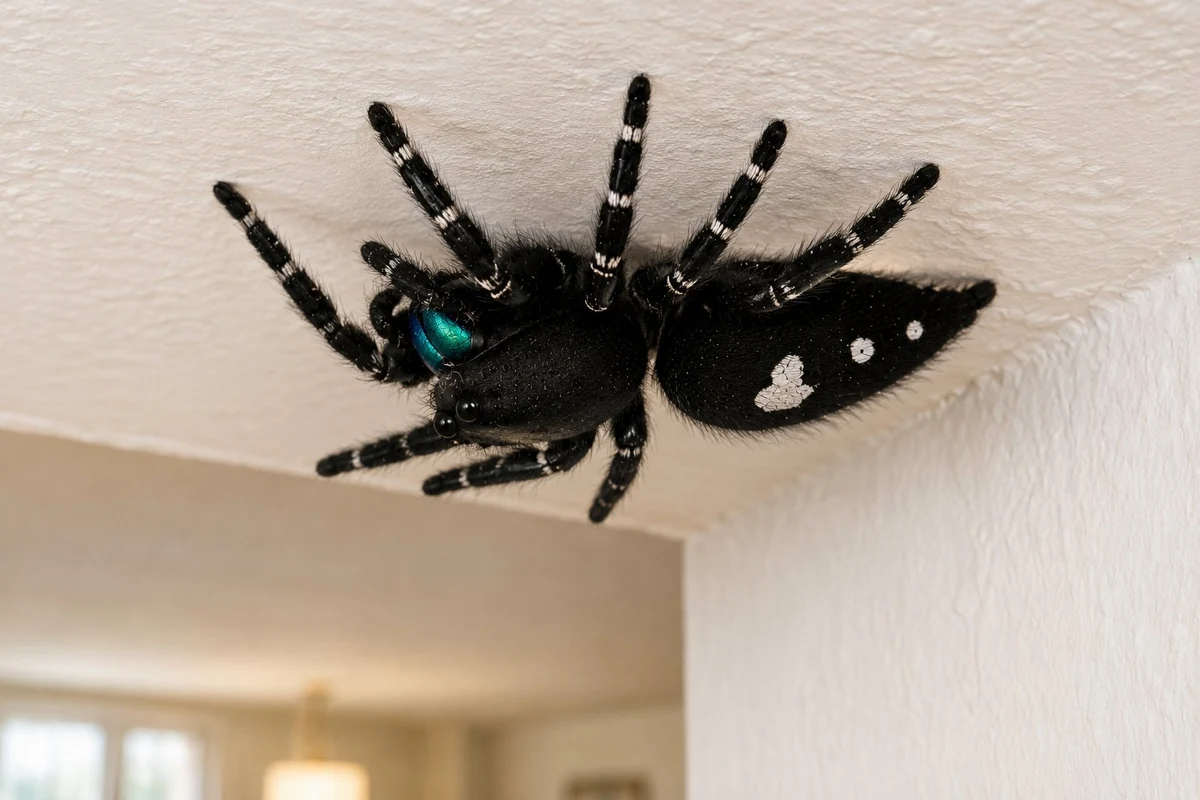
Found one on your fence or windowsill in Collin County? Our office sits where McKinney, Plano, Frisco and Allen meet, 5 to 10 minutes from most homes in those four cities. Send us a photo or call, and we will tell you what the spider is.
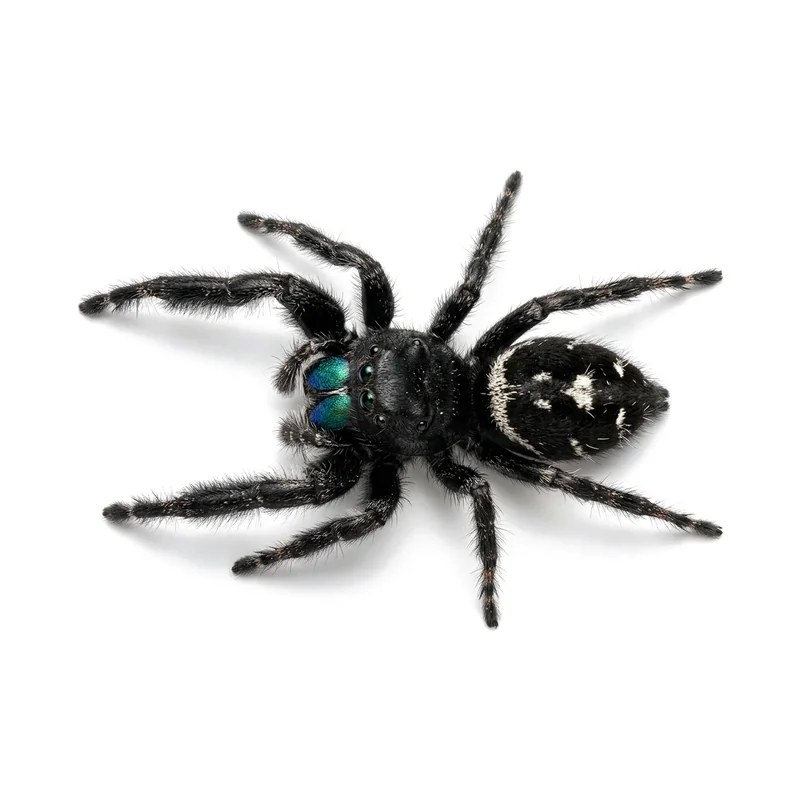
Bold Jumping Spider
Jumping spider identification and facts confirm their low-risk, high-benefit status. This is one of the few spiders that will look straight back at you.
Risk Assessment
Choose a row for the full detail- Color
- Black or very dark brown with a white, orange or red spot on the abdomen
- Prey
- Flies, mosquitoes, moths, caterpillars and other small insects
- Threat level
- Low
- Eyes
- Eight eyes in three rows, two of them enormous and facing forward
- Hunting style
- Daytime visual hunter that stalks and pounces, with no capture web
- Active season
- April through September in Collin County, young spiders overwinter in shelter
- Body length
- Female 1/4 to 3/4 in, male usually under 1/2 in, not counting legs, leg span 0.6 to 1 in
What a Bold Jumping Spider Looks Like
The bold jumping spider (Phidippus audax) is the most distinctive spider in Collin County. The body is compact and stocky, and the Missouri Department of Conservation gives its length, not counting legs, as 1/4 to 3/4 inch for females, with males usually under 1/2 inch. It is black or very dark brown, with a bright white, orange or red spot in the middle of the abdomen and smaller white spots around its edge. Young spiders can show orange spots that turn white as they molt.
The eyes are the giveaway. It has eight eyes in three rows, but the two enormous front eyes dominate the face and give it an almost animal-like stare. The mouthparts (chelicerae) at the center of the face are metallic green or blue and shine even from a short distance. No other common Collin County spider has this combination.
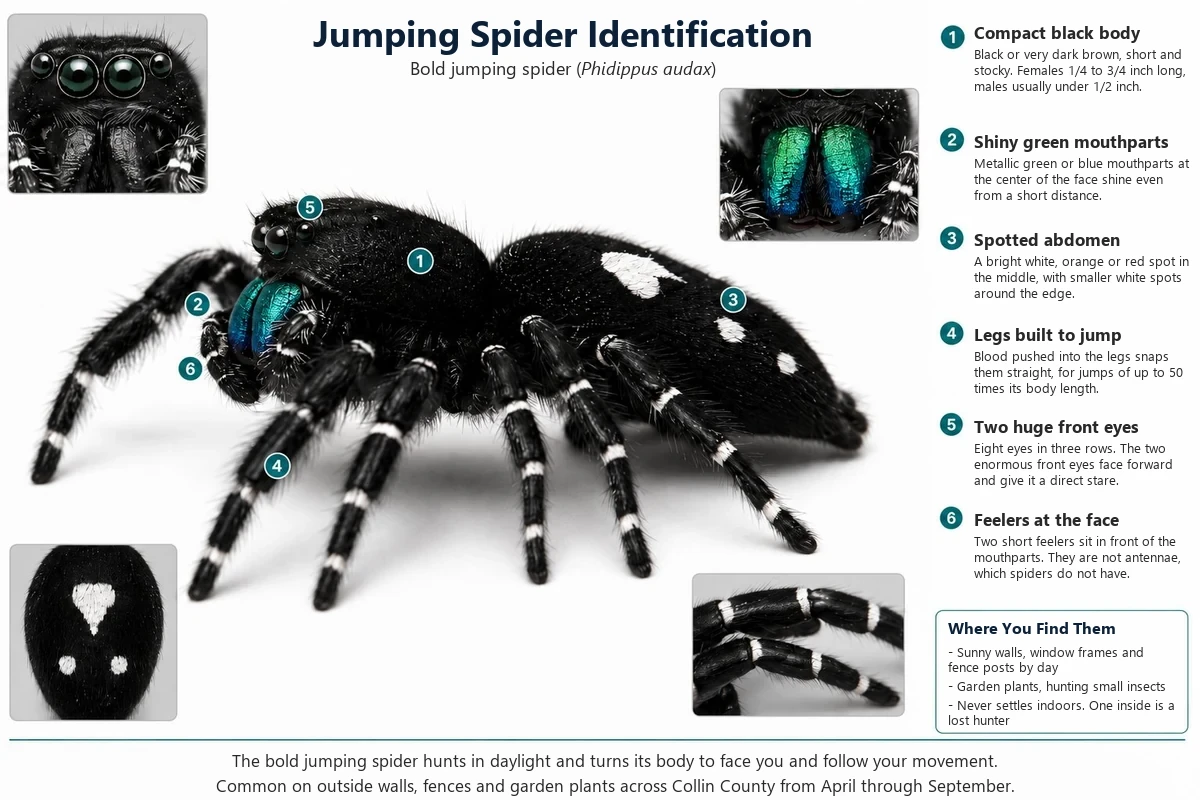
How to identify a bold jumping spider by its big front eyes, green mouthparts and spotted black body
- Two huge front eyes, visible from several feet away
- Shiny metallic green or blue mouthparts at the center of the face
- Black or dark brown body with a bold white, orange or red spot on the abdomen
- Compact, stocky build, much shorter and stubbier than a wolf spider or brown recluse
- Moves in short, confident jumps rather than long runs
- Out in full daylight and almost never seen at night
- Turns its body to face you and follow your movement
- No capture web, only a small silk shelter for resting and laying eggs
Other Names for the Bold Jumping Spider
The species name audax is Latin for bold or daring, and it describes how this spider treats people. Most spiders run when a large animal comes close. A bold jumping spider often holds its ground, turns to face you and looks you over, which is why photographers love it. It belongs to the jumping spider family, the most diverse spider family in the world with over 6,000 described species. Every name in the table means the same spider, so if you searched for any of them, this is your spider.
Where Are Bold Jumping Spiders Found?
Bold jumping spiders are found across all of Collin County, and they are the jumping spider people here meet most often. They live on sunny outdoor surfaces with plenty of flying insects, such as fences, exterior walls, mailbox posts, rock walls and garden plants.
Bold jumping spider sightings and range data show how common they are in yards and gardens across the county.
| Name | What it means |
|---|---|
| Bold jumper | The short form of the name, and one of the most searched. |
| Daring jumper | The other way to translate audax, the Latin word in its scientific name. |
| White-spotted jumper | Named for the white spot in the middle of the abdomen. |
| Phidippus audax | The scientific name, used in extension guides and on iNaturalist. |
| Black jumping spider | Not a separate species, but how most people describe it before they know the name. The black body with a white spot is the whole look. |
| Bold spider, bald jumping spider | Shortened or misspelled forms of the same name that point to the same spider. |
How to Tell Bold Jumping Spiders from Other Collin County Spiders
Anyone who sees a bold jumping spider clearly rarely mistakes it for a dangerous spider. The mix-ups happen with a quick look from a distance or in poor light, when only a black body with white marks registers and not the eyes or mouthparts. The table compares it with the three spiders it is most often confused with.
| Species | Size | Key Feature | Where Found |
|---|---|---|---|
|
Bold Jumping Spider
AKA: Bold Jumper, Daring Jumper
Phidippus audax
This species
|
Female 1/4 to 3/4 in body, male usually under 1/2 in, leg span 0.6 to 1 in. Compact, stocky and dense. Much shorter and stubbier than a wolf spider or southern house spider. | Two huge front eyes. Shiny metallic green or blue mouthparts. Black body with a bold white, orange or red spot. Moves in short jumps. Out in full daylight. Turns to face and track you. | Fences, exterior walls, windowsills, garden plants, mulch beds. Bright, open spots in daylight. Comes in through open doors and windows but never settles indoors. |
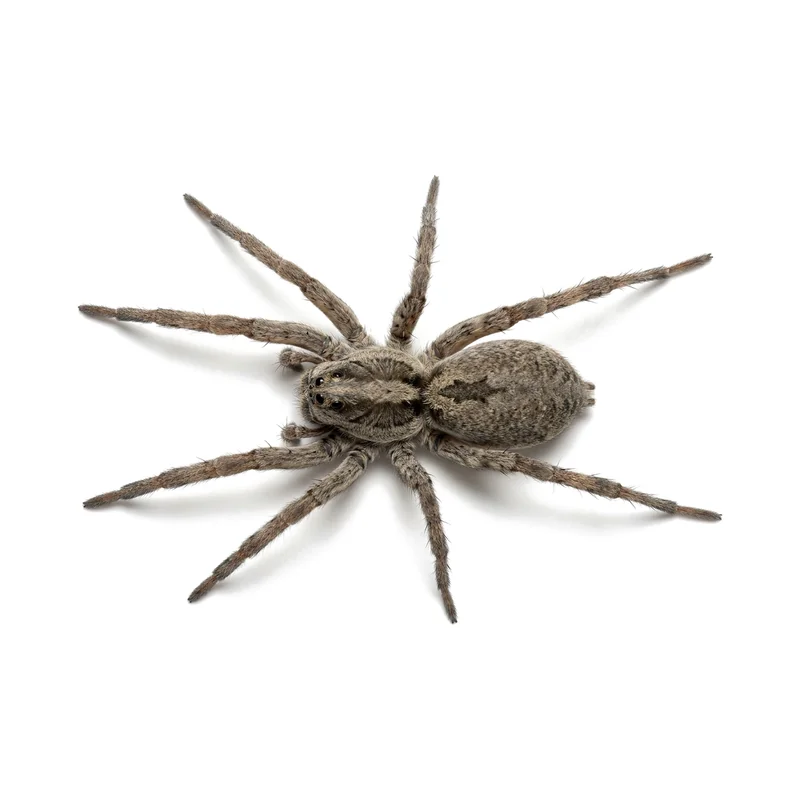
Wolf Spider
AKA: Hairy Spider, Ground Spider
Hogna carolinensis, Rabidosa spp.
|
0.5 to 1.5 in body, leg span up to 4 in. Much larger, stockier and hairier, three to five times the mass of a jumping spider. | 8 eyes in 3 rows, and the large middle pair glows bright green under a flashlight at night. Stripes on the front body section. No shiny mouthparts. Runs in long sprints on floors rather than jumping. Active at night. Does not turn to face you. | Open garage floors, under exterior doors. Ground hunter active at night, not in daylight. Comes in through gaps in fall, peaking in September and October. |
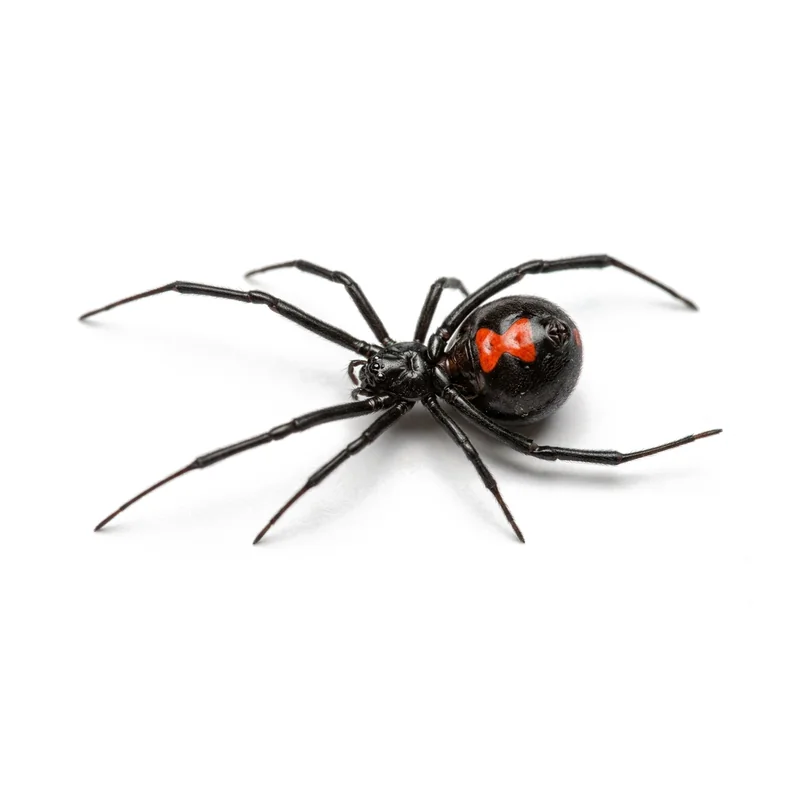
Black Widow
AKA: Southern Black Widow, Hourglass Spider
Latrodectus mactans
|
Female 0.5 in body, leg span 1.5 to 2 in. Longer and lighter built than a jumping spider. Glossy jet black with no hair visible from a distance. | Shiny jet-black body with a bright red or orange hourglass under the abdomen. No large forward-facing eyes. Hangs upside down in a messy tangle web low in corners. Does not jump. Active at night. Medically significant. | Garage corners near the floor, water meter boxes, woodpiles, utility boxes, inside outdoor furniture. Always with a messy low tangle web. Not on fences or plants in daylight. |
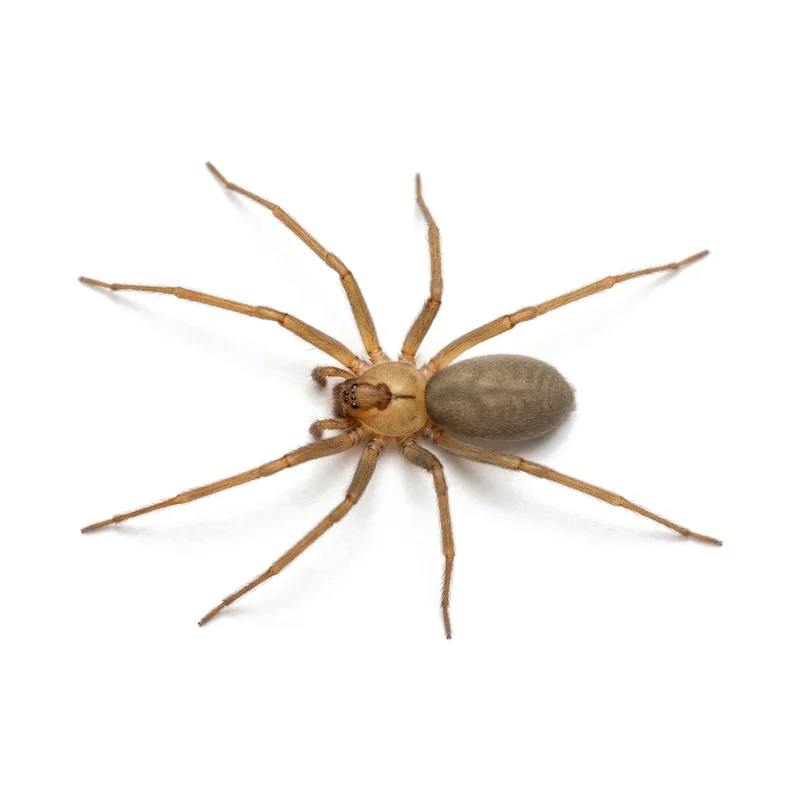
Brown Recluse
AKA: Violin Spider, Fiddleback
Loxosceles reclusa
|
0.25 to 0.5 in body, leg span 1 to 1.5 in. Slender and lightly built. Matte tan to medium brown with no bold markings and no white spots. | 6 eyes in 3 pairs, not 8. Violin-shaped mark on the front body section. No shiny mouthparts. Runs off rather than turning to face you. Active at night. Medically significant. | Dark, undisturbed storage such as closets, shoe boxes and garage shelving. Not on exterior walls, fences or garden plants in daylight. |
Bold Jumping Spider vs Black Widow
The Bold Jumping Spider in Three Numbers
Up to 50 times
University of Illinois Extension says a jumping spider can leap up to 50 times its own body length in a single jump.
University of Illinois Extension
80 to 100 eggs
Clemson Cooperative Extension says a female jumping spider makes several egg sacs with 80 to 100 eggs in each.
Clemson Cooperative Extension
1/4 to 3/4 in
The Missouri Department of Conservation puts an adult female bold jumping spider at 1/4 to 3/4 inch long, not counting legs, with males usually under 1/2 inch.
Missouri Department of Conservation
Are Bold Jumping Spiders Poisonous or Dangerous?
No. Bold jumping spiders are venomous, as nearly every spider is, but they are not dangerous to people or pets. The venom is made for subduing small insects and has no medically relevant effect on a person. Their bites are among the least significant spider bites in North America, with no tissue damage and no illness.
Do Jumping Spiders Bite?
A jumping spider can bite, but it almost never does. A bite happens only when the spider is pinned against skin and cannot escape, such as when someone sits on one or presses an arm against a rail where one is resting.
The result is minor redness, maybe a small welt like a mosquito bite, and mild itching that clears within 24 hours with no treatment beyond washing it with soap and water.
A jumping spider on your arm, fence post or windowsill is not trying to bite you. It is watching you with its big front eyes and deciding whether to jump away or stay put.
When Bold Jumping Spider Presence Warrants Action
Repeated Indoor Encounters Through One Entry Point
Finding jumping spiders inside again and again by the same door or window points to a gap worth sealing. The spiders need no treatment. Closing the gap stops the indoor visits and leaves the helpful outdoor population alone.
Severe Fear of Spiders in the Household
A spider that faces you and comes closer can deeply unsettle someone with a strong fear of spiders, even though it is harmless. In that home, sealing the gaps it uses is the right response, not chemical treatment.
Single Spider on the Porch Railing
A jumping spider on your porch rail is hunting the insects drawn to your outdoor lights. It poses no risk. Watch it hunt if you have a moment, or move it out with a cup if it gets inside.
Jumping Spiders in the Garden
A jumping spider on your tomato plants or rose bushes is cutting down the flies, moths and caterpillars on them. No intervention is needed, and none would help.
Why You Found a Bold Jumping Spider in Your House
A jumping spider in the house is a hunter that followed insects in from outside, not a sign of an indoor infestation. It comes through an open door or window, or a gap in a window frame or door seal. Once inside it heads for windows and bright light, hunting any flies there. It does not build a shelter indoors and leaves through any opening it finds. It is lost or hunting, not moving in.
The fix is a clear cup and a stiff card, covered in the steps below. If they keep turning up by the same window or door, the gap there is worth sealing.
Where Bold Jumping Spiders Come From in Collin County
Bold jumping spiders are outdoor hunters of open, sunny places. They want any surface with good sun and plenty of flying insects, such as garden plants, exterior walls, fences, rock walls, mulch beds and landscape plantings. At night they rest in small silk shelters under bark, leaves or in crevices. Being out in daylight in open places makes them easy to see but rarely a problem.
Bold Jumping Spider Presence Across Collin County
Jumping spiders live across all of Collin County in the warm season. The most visible populations are in established neighborhoods with mature landscaping, such as Stonebridge Ranch, Tucker Hill and El Dorado in McKinney, older Allen and Plano neighborhoods with mature trees and gardens, and greenbelt homes in Frisco and Prosper.
New construction in Celina and Melissa sees fewer until the landscaping grows in. Calls about jumping spiders alone are uncommon, because most homeowners recognize them as harmless once they look closely or send a photo.
Pest Me Off service records from 2024 to 2026 show bold jumping spiders out on walls, fences and garden plants for 6 months of the year, April through September. Young spiders spend the winter in sheltered spots like leaf litter, bark crevices and garage corners, and the mild Texas winter lets most of them survive and start hunting earlier in spring than in northern states. Indoor sightings come mostly in late spring and summer, when adults hunt near windows and doors.
Pattern from iNaturalist observation records and Pest Me Off service call data across Collin County, 2023 to 2026.
Bold Jumping Spider Biology Worth Knowing
How Pest Me Off Handles Bold Jumping Spiders
When we find jumping spiders during a broader spider service, our answer is identification and plain advice. We confirm the species, explain why it helps you, and recommend against treating it. If you want fewer indoors, we find the gaps they use and seal them rather than spraying.
Confirm the Identification
Check for the two large forward-facing eyes, the shiny mouthparts and the compact black body with white spots. With all three, the identification is certain. It takes about ten seconds.
Catch and Release Indoors
Place a clear cup over the spider, slide a stiff card under the rim, carry it to the nearest outside door and let it go. It takes about thirty seconds, and the outdoor population is untouched.
Seal Entry Gaps If Indoor Visits Are Frequent
If they keep coming in by the same window, door or utility opening, seal that gap. Look at window frames, door sweeps and any pipe or cable opening that was never caulked.
No Chemical Treatment in Normal Cases
A leftover pesticide spray for jumping spiders is not recommended. It brings no benefit and removes a natural check on mosquitoes and flies from the area treated.
& Quick Fixes
How to Get Rid of Bold Jumping Spiders Yourself
Managing jumping spiders takes very little. The ones outdoors need nothing. One indoors needs a cup and a card. Frequent visits through one spot need that gap sealed.
Why Some DIY Responses Are Wrong for Jumping Spiders
Most DIY responses that fail make one of the four mistakes below. Each one goes after a harmless spider with more force than a cup, and leaves a worse result.
Trying to Swat a Jumping Spider
A jumping spider sees your hand coming and has usually jumped before it lands. A missed swat sends it across the room. A cup is quicker and more reliable.
Glue Traps for a Spider That Jumps
Glue traps catch spiders that walk across them. Jumping spiders jump over surfaces and see an odd surface before they touch it, so few get caught. There is no reason to trap a spider you can carry out in thirty seconds.
Foggers and Household Sprays for One Spider
A fogger fills a room with pesticide for one harmless spider, which often jumps to an untreated surface and survives. Window cleaner or hairspray rarely kills it either and only drives it into a crack, where it is harder to catch.
Broad Perimeter Spray in Mosquito Season
A broad perimeter spray of a pyrethroid insecticide in spring or summer kills the jumping spiders on the fence and garden along with the target pests, so the mosquitoes and flies they were eating go unchecked. If outdoor insects are the real worry, keep the spray away from the fence and garden.
Common Bold Jumping Spider Questions
What is the little black spider with white spots and big eyes on my porch?
Why does the jumping spider look directly at me?
Why do jumping spiders have such large eyes?
How many eyes does a bold jumping spider have?
Can jumping spiders bite?
Are jumping spiders venomous?
Is a bold jumping spider safe around my children?
Should I kill jumping spiders in my home?
Do jumping spiders build webs inside the house?
How far can a bold jumping spider jump?
Are bold jumping spiders nocturnal or active in the daytime?
Are jumping spiders good for my yard?
How do I get rid of jumping spiders if I do not want them inside?
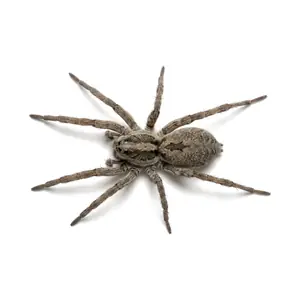
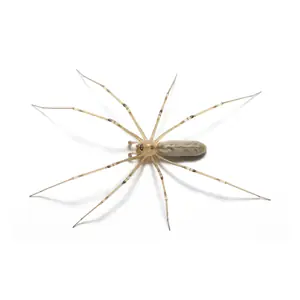
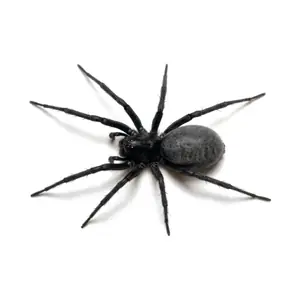
Jumping Spiders at Your Windows. Usually Good News. We Will Tell You If It Is Not.
We tell you straight when a spider is harmless and when it is not. A jumping spider is harmless and helpful, so leave it be. A black widow in the same garage corner is a different story. We find what is actually there and treat only what needs it, across McKinney, Allen, Frisco, Plano and all of Collin County.