Home Pest Library Cockroaches Oriental Cockroaches
Oriental Cockroaches (Black Beetle, Water Bug)

Oriental Cockroaches in Collin County, TX | Identification and Control

Last updated 2026

Oriental cockroaches (Blatta orientalis), known in North Texas as black beetles, water bugs, and shiny black roaches, are a distinctly different pest from the American cockroach despite sharing some of the same nicknames. They are slower, darker, never fly, and prefer the coolest and dampest zones of a structure. Oriental cockroach species documentation confirms the same contamination potential as American cockroach from sewer-environment foraging. In Collin County, they show up in garages, utility rooms, and along the slab edge where the ground stays damp longest. Field observations for Oriental cockroach in Texas confirm year-round sightings across the Dallas-Fort Worth region.

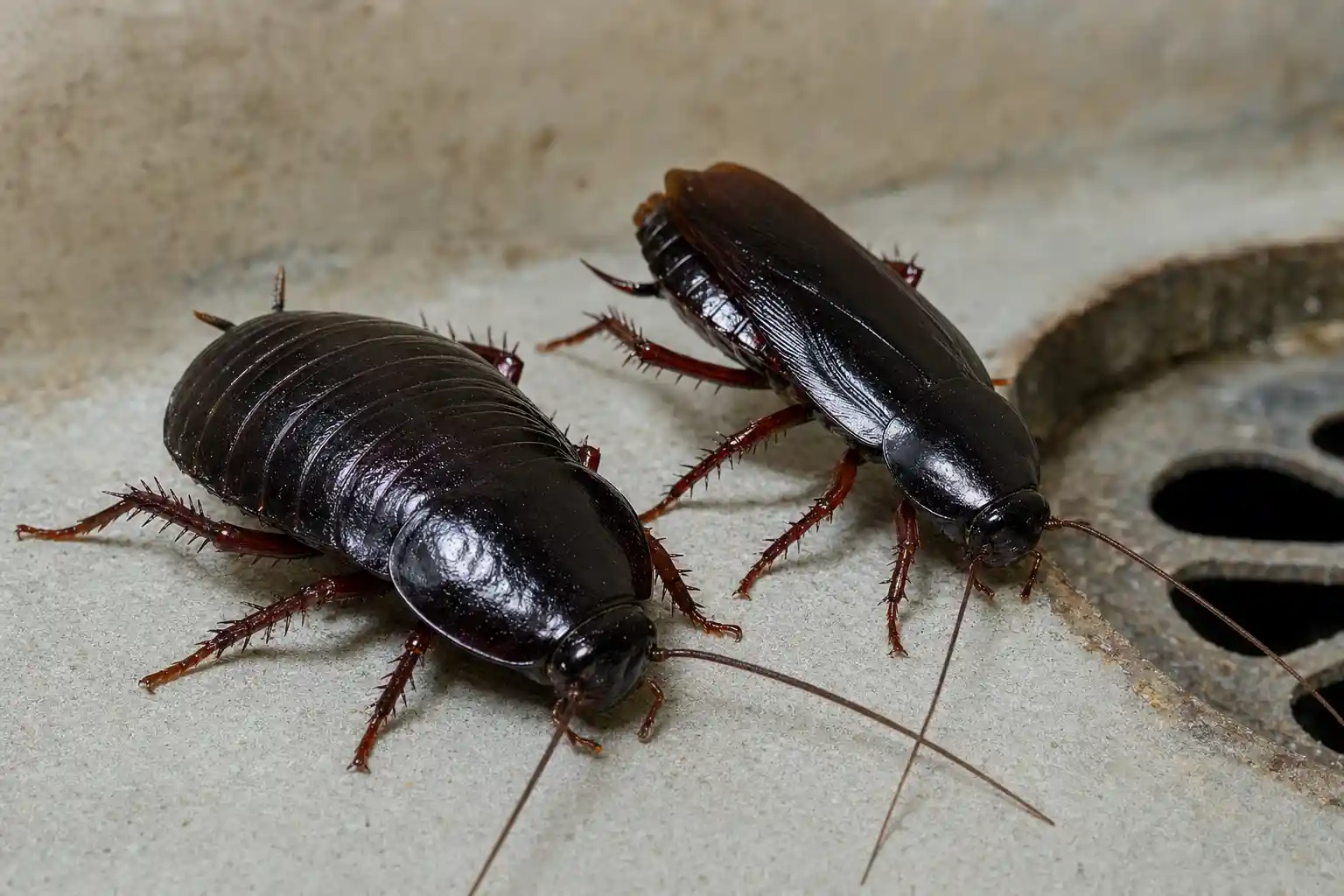
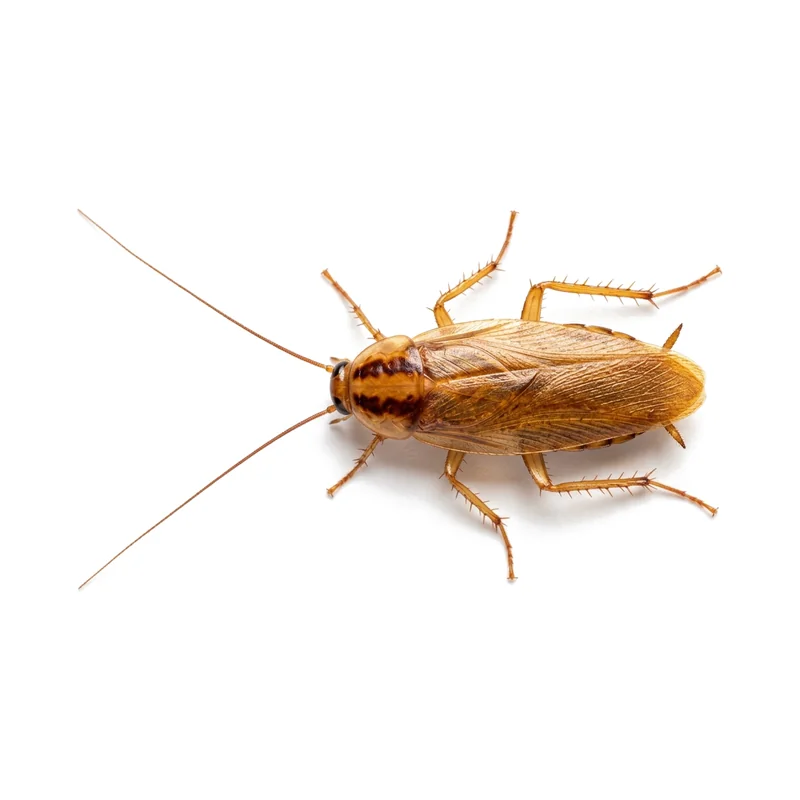
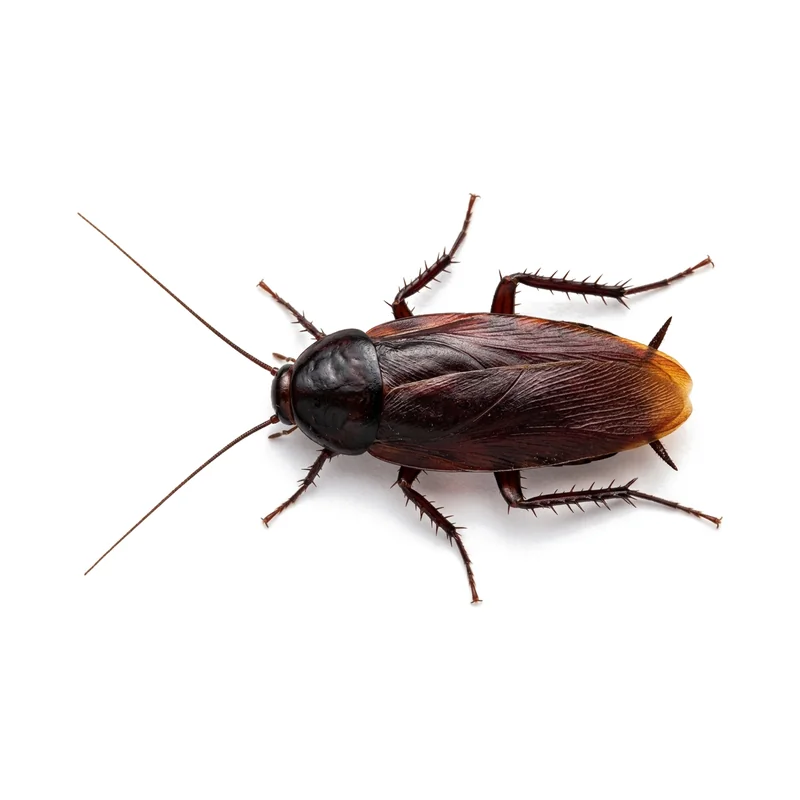
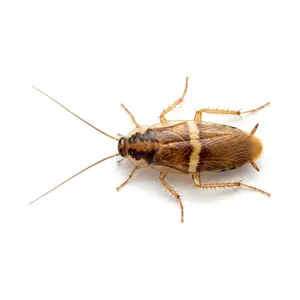
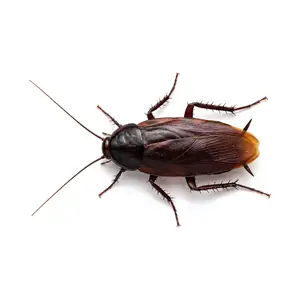
Oriental cockroach adult on garage floor showing shiny dark brown coloration in Collin County Texas
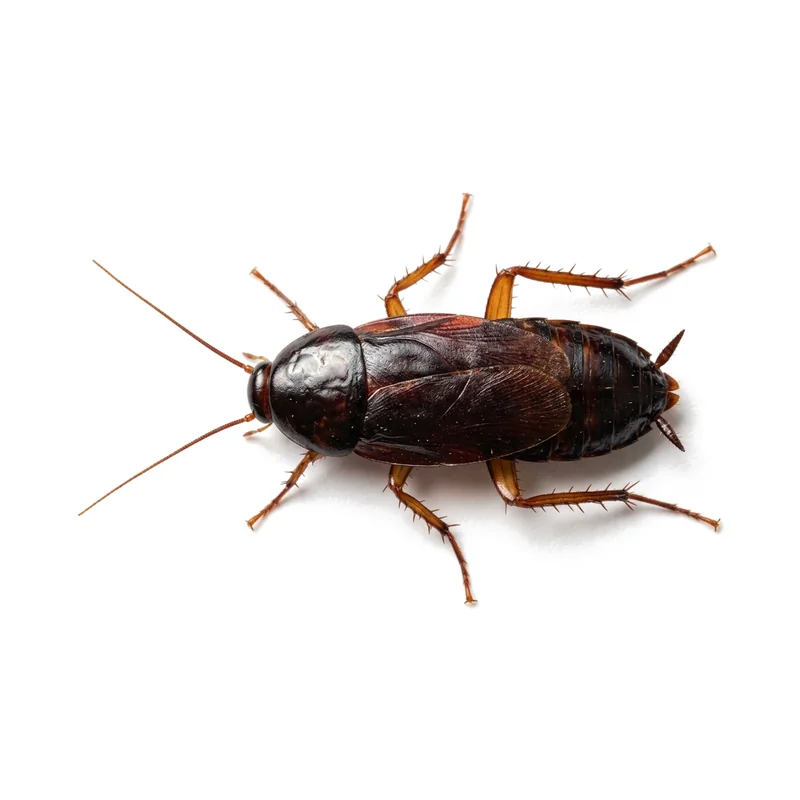
Oriental cockroach specimen showing uniformly shiny dark body and reduced wing pads
Oriental Cockroach
Blatta orientalis
AKA Black Beetle · Water Bug · Shiny Black Roach · Ground Cockroach
Adult body length22 to 27 mm (approximately 1 in)
ColorDark brown to shiny black with a greasy or oily surface sheen; no yellow markings
Eggs per case16 to 18
Egg cases per female8 to 14 over lifetime
Development time300 to 800 days (nymph to adult)
Adult lifespanApproximately 6 months
Peak seasonMay through July
Primary habitatSewer systems, damp soil at slab edge, garage floors, utility room drains

The slowest-developing and most moisture-dependent cockroach species we encounter in Collin County. Cannot survive more than a few days without water, which makes moisture source elimination the most effective prevention step available to homeowners.

PEST ME OFF | PEST LIBRARY | ORIENTAL COCKROACH pestmeoff.com
North Texas Pest Calendar
Oriental Cockroach Activity in Collin County by Month

Activity peaks in late spring through early summer when moisture is highest and temperatures sit in the comfortable range for this species. Unlike American cockroach, Oriental cockroach retreats during August heat and returns in fall. This spring-peak, summer-retreat pattern is the reverse of most other outdoor cockroach species in North Texas.

Jan
Low
Feb
Low
Mar
Emerging
Apr
Active
May
Peak
Jun
Peak
Jul
Peak
Aug
Low
Sep
Emerging
Oct
Active
Nov
Slowing
Dec
Low
Dormant / Low
Emerging
Active
Peak
Slowing

Confidence CONFIRMED. Pattern from Pest Me Off service call records across Collin County 2023 to 2026 cross-referenced with Oriental cockroach seasonal biology documentation for North Texas temperatures and humidity ranges.

Identification

What Oriental Cockroaches Look Like

Uniformly dark, slow-moving, strong musty smell

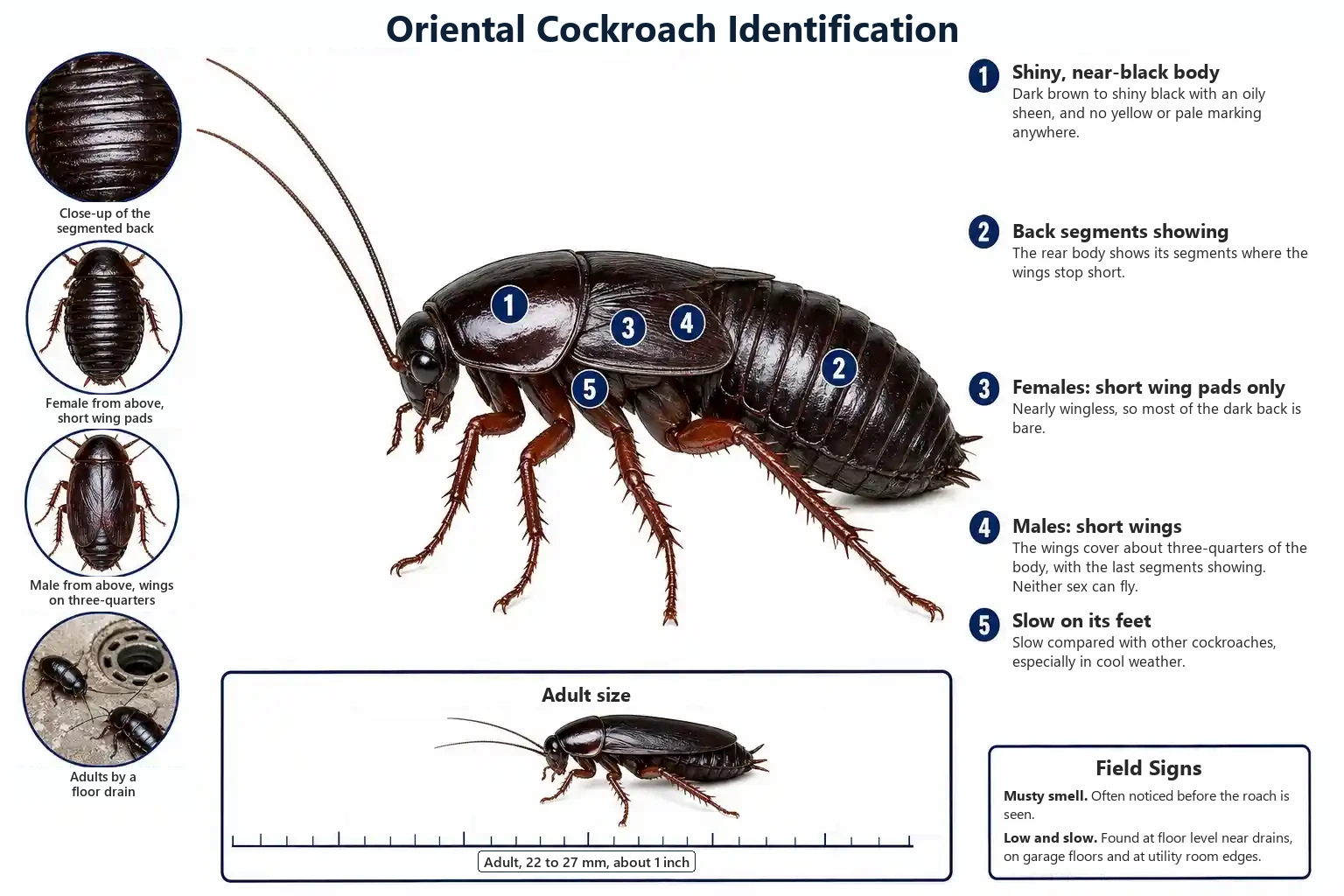
Oriental cockroach adults run 22 to 27 mm long (about 1 inch). The body color is dark brown to shiny black with a greasy surface sheen, often described by homeowners as looking oily. There are no yellow or pale markings anywhere on the body. Sexual difference is visible: males have wings covering about three-quarters of the body, with the last abdominal segments exposed; females have only small wing pads that do not cover the body. Neither sex can fly. The species moves slowly compared to American and German cockroaches, and produces a strong musty odor from natural chemical signals that is often noticed before the insect itself is found. Oriental cockroach biology research documents this species as the slowest-developing and most moisture-dependent cockroach in the common pest category.

The most common misidentification in our service area is calling this a black beetle. True ground beetles do occasionally enter garages but do not produce the musty aggregation odor, do not favor drain and utility room zones specifically, and are typically found individually rather than in the trail-following groups that Oriental cockroaches form. If the insect is dark, slow, near a floor drain or garage wall edge, and the area smells musty, Oriental cockroach is the correct identification.

Oriental cockroach identification diagram showing wing differences between male and female and shiny dark coloration

Oriental cockroach: male wing coverage vs female wing pads, shiny dark body, no yellow markings

Dead GiveawaysFastest visual cues, no microscope required
  • Uniformly dark brown to shiny black, often described as greasy-looking; no yellow markings anywhere
  • About 1 inch long: noticeably smaller than American cockroach, noticeably larger than German cockroach
  • Males have wings covering about three-quarters of the body; females have only small wing pads
  • Neither sex can fly: the clearest behavioral separator from American cockroach
  • Moves slowly compared to other cockroach species, especially in cool conditions
  • Strong, distinctive musty odor: often smelled before the insect is seen
  • Found at floor level in cool, damp areas: garage floors, floor drains, utility room edges
The Name

Black Beetle vs. Water Bug: Why Both Names Cause Confusion

Black beetle is what most homeowners call this species on first encounter because the shiny dark body and slow movement look more like a ground beetle than the cockroach they picture in their mind. The misidentification matters because beetle and cockroach treatments are different and homeowners who buy beetle treatments for an Oriental cockroach problem accomplish nothing. Water bug is the nickname it shares with American cockroach, which creates a second layer of confusion: both species prefer moist environments and can enter through drain systems, but they look completely different and require different treatment approaches.

When a Collin County homeowner calls about a water bug in the garage, the first question is always color. Dark brown to black with no yellow markings is Oriental cockroach. Large and reddish-brown with a yellowish halo behind the head is American cockroach. That color question settles the ID and determines the treatment plan before anyone drives out.

Confusion Matrix

Oriental Cockroach vs. Similar Species

Oriental cockroach is misidentified more often than any other cockroach species we encounter in Collin County. The “black beetle” confusion is responsible for most of the calls we receive, because homeowners treating a beetle problem and a cockroach problem have very different options.

Species Size & Color Key Feature Where You Find It
Oriental Cockroach
Oriental Cockroach AKA: Black Beetle, Water Bug, Shiny Black Roach Blatta orientalis This species
22 to 27 mm (about 1 inch). Uniformly dark brown to shiny black with a greasy or oily surface sheen. No yellow markings anywhere on the body. Dark enough that homeowners consistently describe it as a beetle rather than a cockroach on their first sighting. Neither sex can fly: the clearest behavioral separator from American cockroach. Slow-moving compared to other cockroach species. Emits a strong, recognizable musty odor that is often noticed before the insect itself is found. Garage floors, utility rooms, floor drains, the slab edge where the foundation meets the surrounding soil. Prefers cool and damp: retreats from garage interiors during the August heat peak. Most common in newer Celina and Prosper construction, and in Plano neighborhoods near Spring Creek.
American Cockroach
American Cockroach AKA: Palmetto Bug, Water Bug, Sewer Roach Periplaneta americana
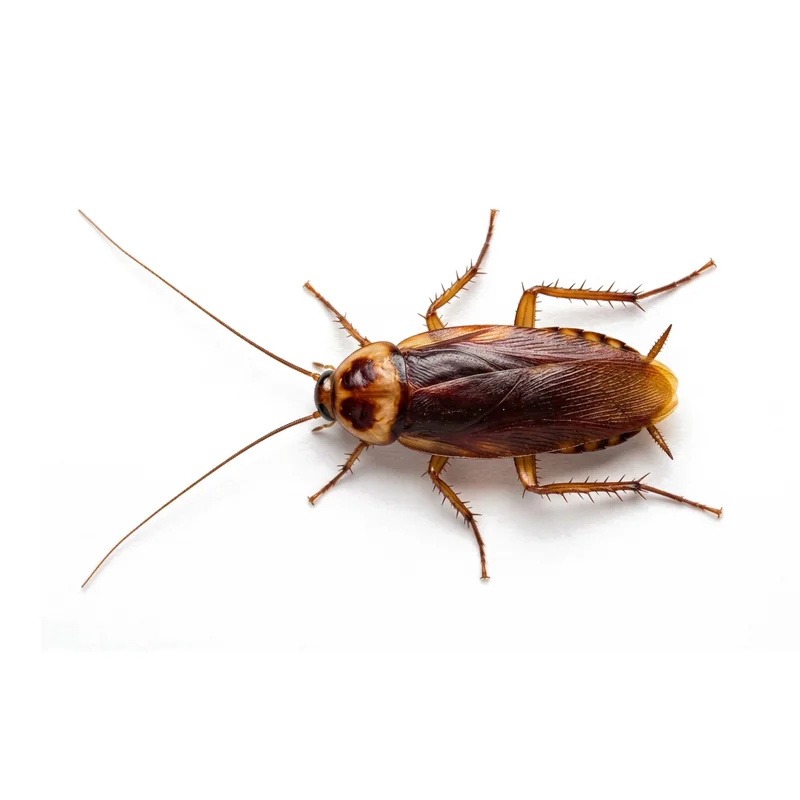
35 to 50 mm (1.5 to 2 inches), noticeably larger than Oriental cockroach. Reddish-brown with a distinct yellow halo outlining the back of the head. Both species are called “water bug,” but the color difference alone rules out confusion once seen side by side. Both sexes have fully developed wings and can glide in warm weather, which Oriental cockroach cannot do. The yellow pronotal marking is absent from Oriental cockroach entirely. American cockroach is significantly faster and more reactive when disturbed. Garages, utility rooms, floor drains, foundation perimeter, sewer access points. Pressure peaks in July through October during heat and drought. Enters primarily through drain systems and expansion joint gaps at the slab perimeter.
German Cockroach
German Cockroach AKA: Croton Bug, Kitchen Cockroach Blattella germanica
12 to 15 mm (about half an inch), roughly half the size of Oriental cockroach. Light tan to medium brown with two dark parallel stripes running lengthwise on the back. The color and size are both far enough from Oriental cockroach that confusion is uncommon, but it does happen when homeowners see nymphs. Exclusively indoor; the only cockroach species that lives and breeds inside heated structures year-round in Collin County. If the location is behind a kitchen appliance or inside a cabinet hinge pocket, German cockroach is by far the most likely species. Oriental cockroach is almost never found in kitchens. Kitchen cabinets, behind refrigerators and dishwashers, under sinks, inside hinge pockets, bathroom wall voids. Active year-round indoors. Never found outdoors in the Collin County service area.
Smoky Brown Cockroach
Smoky Brown Cockroach AKA: Tree Roach, Flying Cockroach Periplaneta fuliginosa
25 to 38 mm (1 to 1.5 inches), overlapping with Oriental cockroach in the smaller adult size range. Uniform shiny dark mahogany brown with no yellow markings, no banding, no lighter areas anywhere. The mahogany color is warmer and slightly lighter than the near-black of Oriental cockroach; under a flashlight the shiny surface has a reddish-brown tint rather than the dark gray-black of Oriental. Strong flier in both sexes, actively attracted to exterior lights at night: the clearest behavioral separator from Oriental cockroach, which cannot fly at all. Enters homes from above through attic vents and soffit gaps, not from floor drains. A large dark roach flying toward porch lighting on a summer night is Smoky Brown; one crawling slowly on the garage floor is more likely Oriental. Attic voids, exterior walls near lighting, mulch beds, gutters, and tree holes in southern Collin County (Plano, Allen, south McKinney). Enters at roofline level, not at slab drains. Not found in garages and utility rooms at ground level the way Oriental cockroach is.
Why Oriental Cockroaches Score 2 of 3 on People Risk

Health Considerations

Oriental cockroaches live in sewage environments and decaying organic matter. Their movement from those outdoor and sewer-adjacent zones into the utility rooms and garages of Collin County homes means they carry bacteria from those environments to whatever surfaces they cross. The health risk is real, though indoor population densities are typically lower than German cockroach, limiting the sustained allergen exposure that makes German cockroach the more serious medical concern.

People Risk
2/ 3
Moderate
Health Context

What Oriental Cockroaches Bring From Sewer Environments

Oriental cockroach spends the majority of its life in sewer systems, damp subfloor voids, and decaying organic matter. Research on cockroach-associated pathogens and allergens identifies mechanical contamination of enteric bacteria, including Salmonella and related organisms, as the primary health mechanism for species that forage between sewage and food-preparation surfaces. PestWorld’s Oriental cockroach profile confirms this species as a documented carrier of bacterial pathogens picked up from sewage environments. In Collin County homes, the most likely contamination scenario is the trail from a garage floor drain to a kitchen counter that an individual follows when it enters from below.

The musty odor Oriental cockroaches produce from natural chemical signals is not just unpleasant; it is a diagnostic sign that a population is present nearby and depositing chemical residue on surfaces. The documented Oriental cockroach allergen proteins are confirmed triggers for sensitized individuals, though sensitization rates in homes with only occasional entry are lower than in German cockroach infestations where high indoor breeding density creates continuous allergen exposure.

Food Safety
When to Discard Food After a Sighting

Oriental cockroaches move directly from sewage and drain environments onto household surfaces. If you spot one in a utility room, garage, or kitchen, treat any open or loosely sealed food items in the area as contaminated and discard them. Pet food stored in open bowls or soft bags is a primary target. Sealed hard containers are generally safe. The concern is not just what the cockroach visibly touched. It is the bacterial contamination deposited on every surface it crossed between the drain and your counter.

Why Oriental Cockroaches Score 1 of 3 on Property Risk

Property Impact

Oriental cockroaches do not establish large indoor breeding populations in Collin County slab homes. The absence of basement and crawl space construction limits the cool, damp, protected indoor habitat the species prefers. Property risk is low compared to German cockroach; the primary concern is contamination from outdoor-to-indoor migration, not structural or material damage from an established interior colony.

Property Risk
1/ 3
Low
Property Context

Why Oriental Cockroach Property Risk Is Low in Slab Construction

Oriental cockroaches thrive in crawl-space construction, where the cool, damp subfloor environment between the ground and the structure provides exactly the habitat conditions the species prefers. Collin County is slab-on-grade throughout the service area. Without a crawl space, Oriental cockroach populations in McKinney, Allen, Frisco, and the other 11 cities we serve are concentrated at the slab edge and in the garage and utility room zone where the structure meets the outdoors at grade level. Research on Oriental cockroach habitat confirms they are less likely to migrate into finished living spaces than in regions where crawl-space construction is common, and they do not establish kitchen or bedroom infestations the way German cockroaches do.

Why Oriental Cockroaches Score 2 of 3 on Persistence

How Persistent Are They?

Oriental cockroach persistence in Collin County is driven by the same outdoor source pressure that drives American cockroach: the sewer system and foundation perimeter moisture continue producing individuals as long as entry points remain open and exterior moisture sources are not corrected. Their dependence on moisture creates a natural upper limit; remove the moisture and the population cannot sustain itself indoors.

Persistence
2/ 3
Moderate
Biology

Why Moisture Is Everything for Oriental Cockroach

Egg Cases per Female 8 to 14 over a lifetime Each case holds 16 to 18 eggs, deposited in a protected, moist outdoor location shortly after forming. Unlike German cockroach which carries the case, and American cockroach which glues it after a brief carry, Oriental cockroach drops it in damp outdoor habitat. This keeps egg development tied to the outdoor moisture environment, not an indoor structure.
Nymph Development Time 300 to 800 days through multiple growth stages The slowest-developing cockroach species in our service area. That long developmental window means outdoor population pressure builds slowly compared to German cockroach, but the population is sustained year-round by adults in the sewer and foundation perimeter zone.
Adult Lifespan Approximately 6 months Longer-lived adults with a slow reproduction rate means the population is stable and persistent rather than explosive. This is a different management problem than German cockroach: you are dealing with a sustained outdoor population, not a rapidly multiplying indoor one.
Moisture Dependence Cannot survive more than a few days without water access This is both the vulnerability and the explanation for where populations concentrate. Populations establish where the structure provides sustained moisture near outdoor access: leaking hose bibs, clogged gutters saturating foundation soil, slab edges with pooled drainage. Fix the moisture source and the outdoor population moves away from the structure.
Collin County Slab Construction Context No crawl space throughout service area; populations concentrate at slab edge and garage zone Oriental cockroach populations in crawl-space construction can establish under the entire subfloor. In McKinney, Allen, Frisco, and the rest of our service area, slab-on-grade construction keeps populations at the foundation perimeter and in the garage and utility room zone where the structure meets the outdoors at grade level.
Temperature Preference Cool (50 to 75°F); retreats from hot, dry interior spaces This is the behavioral opposite of brown-banded cockroach and is why Oriental cockroach almost never appears in kitchens or bedrooms under normal conditions. It stays in the garage, utility room, and floor drain zones where conditions are closest to its outdoor cool-damp preference.

The key insight for Oriental cockroach persistence: the outdoor population drawn to your foundation is there because of moisture conditions you may not have noticed. The leaking hose bib, the clogged gutter, the pooling foundation drainage after rain. Documented Oriental cockroach habitat preferences confirm this species relocates away from structures when sustained moisture sources are eliminated. Treat the moisture source and the outdoor population follows. Treat only the insects without the moisture correction and the same outdoor population pressure returns within weeks of each service visit.

Why Oriental Cockroaches Score 2 of 3 on Difficulty to Treat

Treating Oriental Cockroaches

The treatment challenge with Oriental cockroach is protocol mismatch. It is not a kitchen pest, so German cockroach kitchen-bait protocols accomplish nothing. It does not establish large indoor breeding populations, so interior-only treatment is treating the wrong location. Effective elimination combines exterior moisture reduction, cool-zone bait placement, and drain management, in that order.

Difficulty to Treat
2/ 3
Moderate
Treatment COCKROACH CRACKDOWN

How Pest Me Off Treats Oriental Cockroach Infestations

Oriental cockroach treatment works in 4 steps that address the outdoor moisture source, the entry pathway, and the interior zones where they concentrate. Skipping exterior moisture reduction means the outdoor population keeps rebuilding regardless of what was applied inside.

Step 1

Inspect & Confirm

Confirm the species. Walk the full moisture audit: exterior hose bibs (leaks?), gutters and downspouts (directing water away from slab?), foundation drainage (pooling after rain?), floor drains (P-trap condition?), and any leaking plumbing under sinks in the utility zone. Document all entry-point candidates at the slab edge and utility penetrations.

Why this step: Oriental cockroach treatment without a moisture audit produces temporary results. The species is moisture-dependent; the outdoor population is drawn to wet soil against the foundation, and they stay as long as that moisture source remains. Treating the insect without treating the condition that attracts it restarts the problem.
Step 2

Exterior Moisture Reduction and Perimeter Treatment

Apply detailed bait around the full foundation perimeter, concentrated near moisture-adjacent zones: at downspout splash blocks, around exterior hose bibs, in foundation plantings, and along the garage slab edge. Follow with a non-repellent residual application (the kind cockroaches walk right through and carry back to the population) at the foundation band, weep holes, and all utility entry points at grade level.

Why this step: Oriental cockroach concentrates where soil moisture is highest. detailed bait in those zones reaches the population before it reaches the entry points. The non-repellent residual does not scatter them to a different part of the foundation; it lets them walk through the treatment and carry it back to the population in the damp soil.
Step 3

Interior Cool-Zone Bait and Drain Management

Place bait in floor-level, cool, damp locations: along garage wall edges, inside utility room cabinet bases, around floor drains, and at the slab-edge crack where the wall meets the floor. This is a different placement than German cockroach bait work: bait goes low and in the coolest zones, not high in cabinet hinge pockets. Treat floor drains. Install screened covers on infrequently used floor drains.

Why this step: Oriental cockroaches do not forage in warm, dry kitchen areas. Bait placed in kitchen cabinets or on countertops will never be found by this species. They move slowly and stay low; the bait has to be exactly where they walk. Cool floor-level placement is what makes bait work for Oriental cockroach.
Step 4

30-Day Moisture and Reinvasion Check

30-day reinspection to confirm the exterior moisture issues were addressed by the homeowner (gutter repair, hose bib fix, drainage correction) and that reinvasion pressure has dropped. If moisture sources were not corrected, reapply perimeter bait and document what is still attracting the outdoor population to the slab.

Why this step: The 30-day visit is specifically checking whether the moisture conditions that created the problem are still present. If they are, the perimeter treatment buys time but does not solve the underlying attraction. The visit creates accountability for the moisture correction work that determines long-term outcome.
Pest Me Off
Identify the moisture source that is drawing the outdoor population to the slab. Apply detailed bait in the exact zones where Oriental cockroaches concentrate. Perimeter treatment that cockroaches walk through without detecting and carry back to the outdoor population. Cool-zone interior bait placed at floor level where this species forages. Drain management for the sewer pathway. Moisture correction advice with 30-day follow-up to confirm the outdoor source is declining.
Store Products
& Other Companies
Apply a kitchen bait protocol designed for German cockroach to a species that never visits kitchens, or spray the garage floor and call it done. Neither addresses the exterior moisture that drew the population to the slab in the first place. The outdoor population in the damp soil against your foundation was never touched. Three weeks later, new individuals use the same entry points, and the homeowner assumes the treatment failed entirely rather than understanding that the wrong protocol was applied to the wrong species in the wrong location.
Do It Yourself
Oriental Cockroach: What You Can Do and Where DIY Falls Short
Moisture management steps that actually reduce the outdoor population, and the three DIY approaches that leave the source untouched
DIY Prevention

What Homeowners Can Do Before and Between Treatments

Oriental cockroach prevention is almost entirely moisture management. This species cannot sustain itself in dry conditions, which means the prevention steps that remove moisture from the foundation perimeter are directly reducing the outdoor population that produces the indoor pressure.

1
Fix exterior moisture sources at the foundation. Repair any leaking hose bibs. Clean gutters and confirm that downspouts direct water at least 6 feet from the foundation. Confirm irrigation heads are not saturating the foundation perimeter; adjust coverage so water is not pooling against the slab after a cycle. Replace thick organic mulch within 12 inches of the foundation with river rock or stone. These steps directly reduce the outdoor habitat that concentrates Oriental cockroach populations near your entry points.
2
Pour water down floor drains monthly. The same P-trap evaporation problem that lets American cockroaches enter through drains affects Oriental cockroach entry. A dry floor drain in a rarely-used utility room or garage is an open path from the sewer to your interior. One cup of water per floor drain per month keeps the seal intact. This is especially important for garages and utility rooms that see infrequent traffic through the warm months.
3
Seal slab-edge cracks and utility penetrations. The gap between the bottom of the garage wall and the concrete slab is a common Oriental cockroach entry point. Foam sealant applied along the interior base of garage walls seals the slab-edge crack that is often the actual doorway. Check every point where a pipe or conduit enters the garage or utility room from outside; gaps around those penetrations are common in North Texas slab construction and rarely sealed at build time.
4
Reduce interior cool-zone moisture. Fix any dripping or leaking pipes under utility room sinks. Wipe up standing water in garages after rain events that blow water under the door. If you have a water heater or HVAC unit in the garage, confirm the condensate drain line is directing water away from the floor rather than pooling. These micro-moisture sources at floor level in cool areas are exactly the conditions Oriental cockroach is attracted to indoors.
DIY Pitfalls

Why DIY Can Fail for Oriental Cockroaches

The failure pattern for Oriental cockroach DIY treatment is almost always protocol mismatch. Homeowners apply products designed for German cockroach or general-purpose sprays that have no effect on an outdoor-source pest, see no improvement, and conclude the problem is unsolvable rather than untreated correctly.

Fails

German Cockroach Bait Protocol Applied to Oriental Cockroach

The most common mistake we see. A homeowner buys gel bait intended for German cockroach and places pea-sized dots in kitchen cabinet hinge pockets and behind the refrigerator. Oriental cockroaches never visit those locations. They do not forage in warm, dry kitchen areas; they concentrate in cool, damp, floor-level zones in the garage and utility room. The bait sits untouched, the homeowner concludes bait does not work on their cockroaches, and the actual population continues entering through the garage floor drain. Bait works for Oriental cockroach only when it is placed where Oriental cockroach actually goes.

Fails

Interior Treatment Without Exterior Moisture Correction

Treating Oriental cockroaches inside the garage and utility room without correcting the exterior moisture source that draws the population to the foundation is treating a symptom with no end date. The damp soil against the foundation where the leaking hose bib or clogged gutter creates sustained moisture continues to support a large outdoor population that sends individuals inside regardless of what product was applied on the garage floor. Exterior moisture correction is not optional for Oriental cockroach control; it is the treatment that makes everything else work.

Fails

Repellent Garage-Floor Sprays

Spraying the garage floor with a repellent concentrate is one of the most common DIY approaches for a cockroach that appears in the garage. Oriental cockroaches detecting a repellent spray at the floor-level entry zone move to an adjacent unsprayed gap rather than retreating outdoors. In practice, the spray often redirects them from one slab-edge crack to another, or pushes them toward the door threshold they were not using before. The population does not shrink; its entry route changes to a location the homeowner did not spray.

Fails

Treating the Floor Drain Without Fixing the Moisture Source

Drain treatment alone addresses one entry route while the outdoor population remains at full pressure against the foundation. Oriental cockroach enters through floor drains, slab-edge gaps, and any low-level opening at grade. A drain treatment that reduces traffic through the floor drain simply shifts more individuals to the slab-edge gaps along the garage wall. The outdoor moisture source (pooling water, clogged gutters, dense foundation mulch) needs to be addressed at the same time, or the population remains at the same size and uses every available entry route simultaneously.

Fails

Single Application With No Return Visit

Oriental cockroach populations rebuild from outdoor mulch beds and decaying organic matter that continue generating pressure on the foundation perimeter regardless of a single interior or perimeter treatment. Once product residual fades (typically four to six weeks on exterior concrete in Texas summer heat), the same population that was present before treatment begins moving back through the same entry routes. A 30-day follow-up visit to confirm the exterior barrier is holding and the moisture conditions have not created a new pressure zone is what converts a temporary reduction into lasting control.

Common Questions

Oriental Cockroach FAQ

Most likely yes, in Collin County. True black beetles (family Carabidae or Tenebrionidae) are encountered in outdoor environments and rarely enter garages in numbers that generate service calls. Oriental cockroaches are consistently the “black beetle in the garage” that McKinney and Allen homeowners call about. The identification test: does it have six legs, long antennae, and a somewhat oval, slightly flattened body? Is it found near a drain, along the wall edge, or in a utility room? That is an Oriental cockroach, not a ground beetle. If you catch one, the combination of shiny dark body and strong musty odor confirms the species.
Water bug is a nickname that covers two different species in North Texas: Oriental cockroach and American cockroach. Both prefer moist environments and enter through drain systems, which is how they both ended up with the same informal name. The key difference: Oriental cockroach is dark brown to shiny black, about 1 inch long, and cannot fly. American cockroach is reddish-brown with a yellow marking behind the head, up to 2 inches long, and can glide in warm weather. When a Collin County homeowner calls about a “water bug,” we ask about the color first. Dark and nearly black points to Oriental. Large and reddish-brown points to American. The treatment approach is the same category (exterior-source management) but the specific protocol differs.
Oriental cockroaches produce natural chemical signals (aggregation compounds) from glands in the body. These compounds are used to communicate with other individuals in the population. The odor, which most homeowners describe as musty, oily, or stale, accumulates on surfaces the cockroaches travel across and is concentrated wherever they spend time. In Collin County homes, the smell is often the first sign of a population in the garage or utility room, noticed before any individual cockroach is spotted. A persistent musty smell near a floor drain or along the garage wall edge is a reliable early indicator and should prompt an inspection.
No. Unlike American cockroach, which can glide in hot weather, neither sex of Oriental cockroach can fly. Males have wings that cover about three-quarters of the body; females have only small wing pads. Neither set of wings is functional for flight. This is one of the most useful identification facts: if you saw it fly, it is not Oriental cockroach. If it was large, dark, and walking slowly on the garage floor with no flight whatsoever, Oriental cockroach is highly likely.
Oriental cockroach is a cool-weather cockroach relative to the other species we encounter in Collin County. It prefers temperatures between 68 and 84°F and cannot sustain itself in hot, dry conditions. During North Texas August temperatures, which routinely exceed 100°F at the slab surface, outdoor Oriental cockroach populations retreat to deeper, cooler zones (sewer mains, soil below the surface heat) and activity inside structures drops. Call volume peaks in May, June, and July, drops in August, and picks up again in September and October as temperatures moderate. This seasonality is opposite to American cockroach, which peaks in August and September when heat drives sewer populations upward.
Very likely yes. Newer construction in Prosper, Celina, and Anna consistently produces Oriental cockroach calls in the first one to two years after move-in, and the utility room is the most common location. The reason is specific to North Texas slab construction: gaps around utility pipes at the slab penetration points are commonly left unsealed during the build. These gaps sit at or near grade level, where damp soil contacts the slab edge, and they provide a direct low-resistance path from outdoor moist soil into the cool interior utility zone that Oriental cockroach prefers. Sealing those penetrations and treating the exterior foundation perimeter resolves most new-construction Oriental cockroach problems.
Different kind of challenging. German cockroach is harder because of indoor breeding complexity, resistance to common products, and the difficulty of reaching every hiding spot in a kitchen. Oriental cockroach is harder in a specific way: the source is outdoor, and the most effective treatment step (exterior moisture reduction) depends on the homeowner correcting gutters, hose bibs, and drainage issues alongside the professional treatment. Oriental cockroach control requires both parties to do their part. German cockroach control is more self-contained because the population lives inside the structure the whole time. Both require professional treatment; the strategies are completely different.
Not necessarily. A single Oriental cockroach in the garage is often a scout from an outdoor population that found an entry point. Unlike German cockroach, where a single individual seen during daylight strongly suggests a significant established colony, Oriental cockroach sightings in garages and utility rooms can range from a single entry event to a sustained population depending on how long the moisture and entry conditions have existed. If the odor is noticeable, or if you are seeing more than one or two individuals, the population in the outdoor zone adjacent to the entry point is likely larger than what is appearing indoors. An inspection that identifies the entry point and the moisture source gives you a clear picture of the actual scope.
What's Bugging You?

The Black Beetle in Your Garage. Moisture Source Fixed. Entry Points Closed. Population Gone.

We confirm the species, walk the exterior moisture audit, apply detailed bait in the cool damp zones where this species actually forages, treat the drains, and come back at 30 days to confirm the moisture correction held. Oriental cockroach is a moisture problem and an entry-point problem. Fix both and the population has no reason to stay. Cockroach Crackdown across McKinney, Allen, Frisco, Plano, and all of Collin County.

12Stops Per Day
Other companies run 20+ stops a day. We cap at 12. That is how a species that lives outside gets controlled permanently. Other companies do not leave time to walk the exterior moisture sources, apply bait in the floor-level cool zones where Oriental cockroach actually forages, treat the floor drain, document what moisture corrections the homeowner needs to make, and come back at 30 days to confirm the outdoor source is declining.