
Brown-banded Cockroaches in Collin County, TX | Identification and Control
The brown-banded cockroach (Supella longipalpa), also called the furniture roach, is a small roach about half an inch long with two light bands across its body. It hides behind TVs, inside electronics, in bedroom furniture and on upper cabinet shelves rather than under the kitchen sink. It almost always arrives on secondhand furniture, used appliances or moving boxes, and treating the kitchen for German cockroaches misses it entirely. According to the University of Florida, a single brown-banded female can produce about 14 egg cases in her lifetime.

Found small banded roaches in your bedroom or behind the TV in Collin County? Our office sits where McKinney, Plano, Frisco and Allen meet, 5 to 10 minutes from most homes in those four cities. Send us a photo or call, and we will tell you which roach it is.
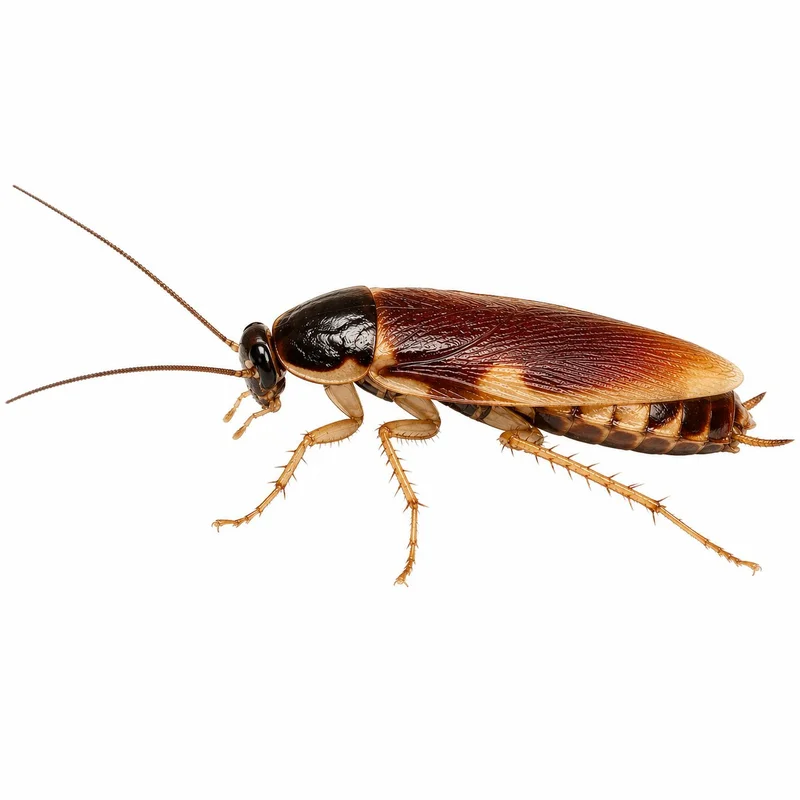
Brown-banded Cockroach
Oklahoma State University’s brown-banded cockroach profile shows the species at several life stages, which matters because the places to treat are completely different from a German cockroach’s.
Risk Assessment
Choose a row for the full detail- Color
- Tan to dark brown with two light yellowish bands across the wings
- Where it hides
- Electronics, upper cabinets, bedroom furniture, behind wall art and picture frames
- Adult lifespan
- About 200 days
- Active season
- Year-round indoors, peaking when rooms stay above 80°F
- Eggs
- 10 to 18 per egg case, about 14 cases per female over her lifetime
- Generation time
- About 70 days to hatch, then about 160 days to adulthood
- Adult body length
- About 1/2 inch (13 to 14.5 mm)
What a Brown-banded Cockroach Looks Like
A half-inch tan to brown roach with two light bands running across its body, not lengthwise like a German cockroach’s stripes
An adult brown-banded cockroach is about 1/2 inch (13 to 14.5 mm) long, according to the University of Florida, nearly the size of a German cockroach, which is where most mix-ups start. The body is tan to dark brown with two light yellowish bands crossing the wings in adults and the body in young roaches. The same University of Florida page shows the band direction at every life stage.
Males and females look different. Males have full wings that reach past the tip of the abdomen and can fly short distances, drawn to lights at night. Female wings are short and do not cover the abdomen, so females cannot fly. Both are small and pale enough that people who have seen German cockroaches before often take them for German young.
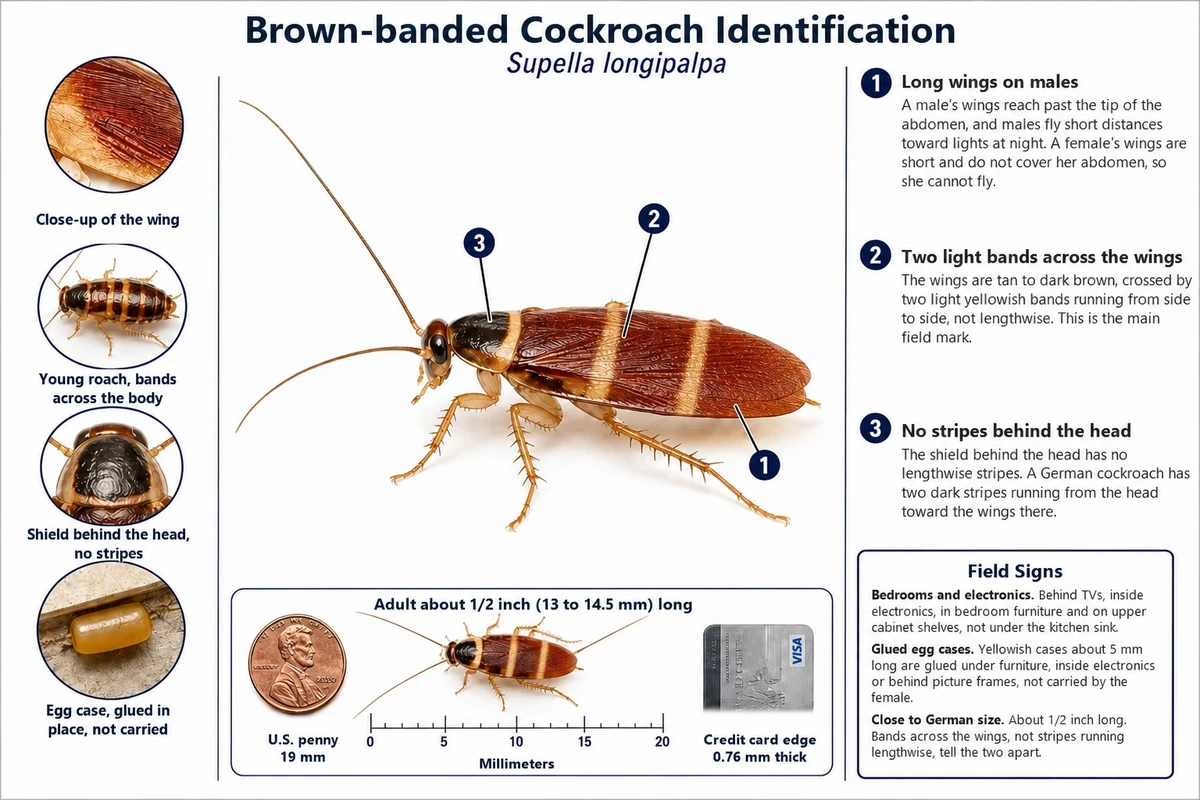
How to identify a brown-banded cockroach by the direction of its bands and the difference in wing length between males and females
- Two light bands running across the wings, not two dark stripes running lengthwise on the shield behind the head
- Tan to dark brown body about half an inch long, close to German cockroach size
- Found in a bedroom, a living room or inside electronics rather than behind the refrigerator or under the kitchen sink
- Small yellowish egg cases, about 5 mm long, glued under furniture, inside electronics or behind picture frames rather than carried by the female
- Males fly short distances toward lights at night, females cannot fly
- Young roaches carry the same crosswise bands as the adults
Other Names for the Brown-banded Cockroach
Most of this roach’s nicknames come from how it gets into a home and where it lives once inside. It rides in on secondhand sofas, dressers, bookshelves, entertainment centers and used appliances, then settles inside furniture and warm electronics instead of in the kitchen plumbing. Every name in the table means the same small banded roach, Supella longipalpa, so if you searched for any of them, this is your roach.
Where Are Brown-banded Cockroaches Found?
Brown-banded cockroaches are found across Texas. iNaturalist field observations document the species across Texas and throughout the southern United States. In Collin County it lives only indoors, in heated and cooled homes, and it is common in the boxes and furniture kept in commercial storage units.
| Name | What it means |
|---|---|
| Furniture roach | Also furniture cockroach. It rides into homes on secondhand furniture and then lives inside it. |
| Couch roach | The same idea, for the sofa or upholstered chair it hides in. |
| Bedroom roach | Named for where it turns up, in dry bedrooms away from the kitchen. |
| TV roach | Named for the warm electronics it hides inside. |
| Banded roach | Short for the two light bands across its body. |
| Small brown roach with stripes | Not a name, but how most people describe it. Stripes running across the back mean brown-banded, stripes running from head to tail mean German. |
How to Tell Brown-banded Cockroaches from Other Types of Roaches
Four types of roaches turn up in Collin County homes, and the brown-banded cockroach is most often mistaken for the German cockroach because the two are almost the same size. The American and Oriental cockroaches are an inch or more long, so size rules them out at a glance.
| Species | Size | Key Feature | Where Found |
|---|---|---|---|
|
Brown-banded Cockroach
AKA: Furniture Cockroach, Furniture Roach
Supella longipalpa
This species
|
About 1/2 inch (13 to 14.5 mm), nearly the same size as a German cockroach. Tan to dark brown with two light yellowish bands across the wings in adults and across the body in young roaches. Males are slimmer, with wings reaching past the tip of the abdomen. | The two light bands run across the wings, not lengthwise on the shield behind the head. Females glue their egg cases to hidden surfaces instead of carrying them. Tolerates much drier conditions than any other common cockroach in Collin County. | Bedrooms, living rooms and inside warm electronics such as TVs, gaming consoles, cable boxes and microwave clock housings. Upper kitchen shelves rather than lower cabinets by the sink. Behind wall art, picture frames and headboards. |
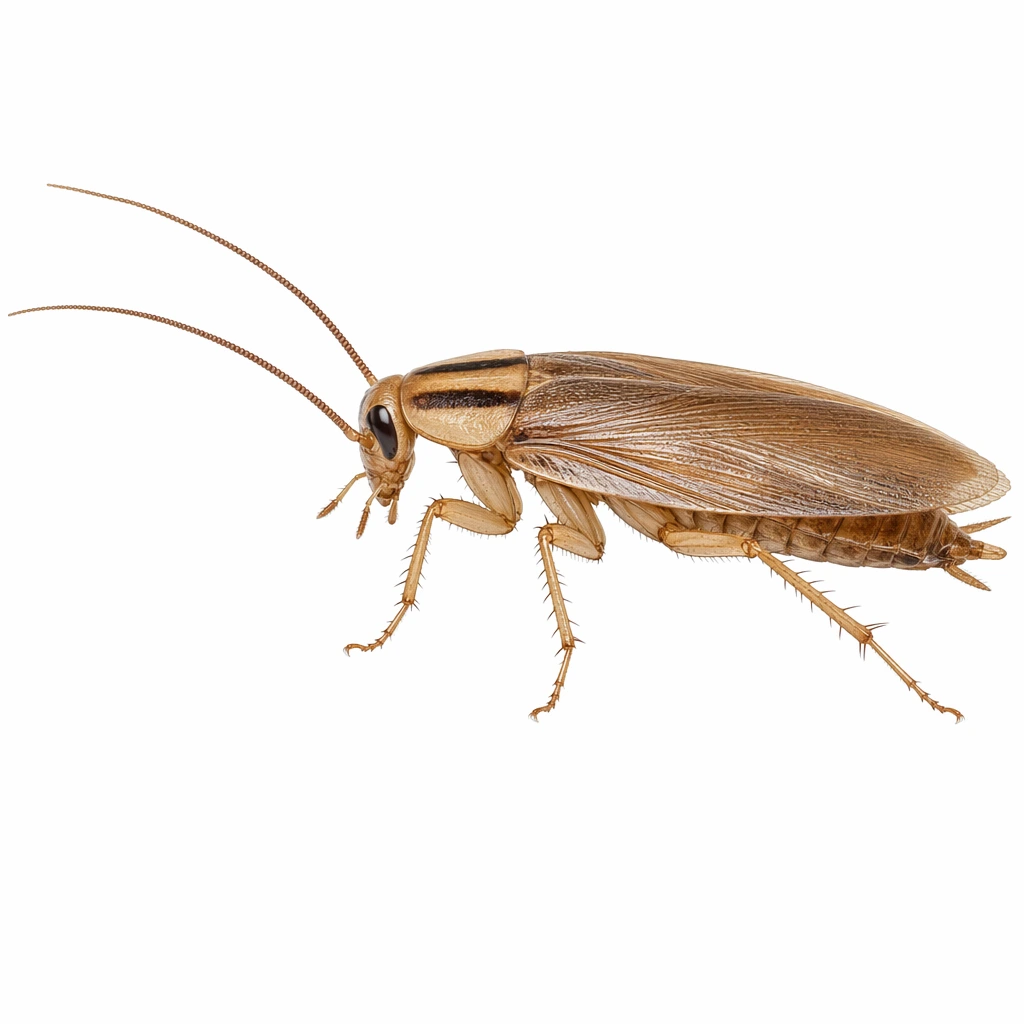
German Cockroach
AKA: Croton Bug, Kitchen Cockroach
Blattella germanica
|
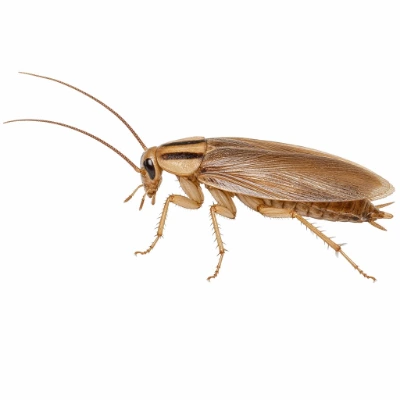
13 to 16 mm, slightly larger than brown-banded. Light brown to tan with a darker rear section. Young roaches are nearly black with a single pale stripe down the back rather than crosswise bands. | Two dark stripes run lengthwise on the shield behind the head, not across the wings. The female carries a brown bean-shaped egg case sticking out of the tip of her body for most of its development instead of gluing it to a surface. | Kitchens and bathrooms almost only, behind the refrigerator and dishwasher, under sinks, in cabinet hinge pockets and along plumbing. Almost never found in bedrooms or inside electronics in clean single-family homes. |
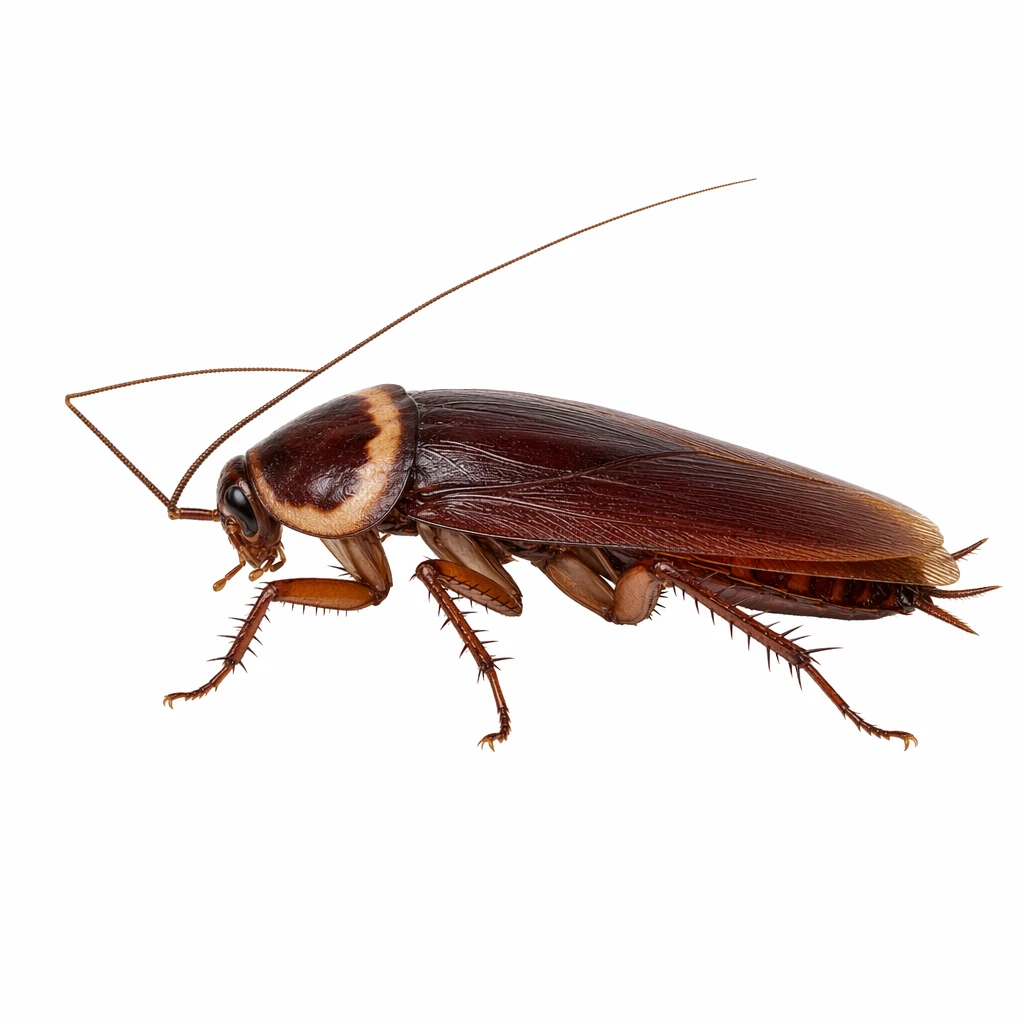
American Cockroach
AKA: Palmetto Bug, Water Bug, Sewer Roach
Periplaneta americana
|
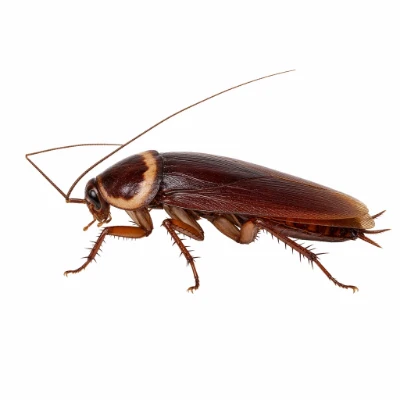
35 to 50 mm (1.5 to 2 inches), the largest cockroach in our service area and roughly three times the size of brown-banded. Reddish-brown with a yellow outline on the shield behind the head. No crosswise bands. | Makes short gliding flights in warm weather. Comes in through floor drains and slab expansion joints, often after rain, rather than riding in on furniture. | Garages, utility rooms, sewer drains, plumbing voids and the foundation edge. Outdoors in mulch and landscaping in the warm months. Gets in through floor drains, weep holes and utility pipe gaps. |
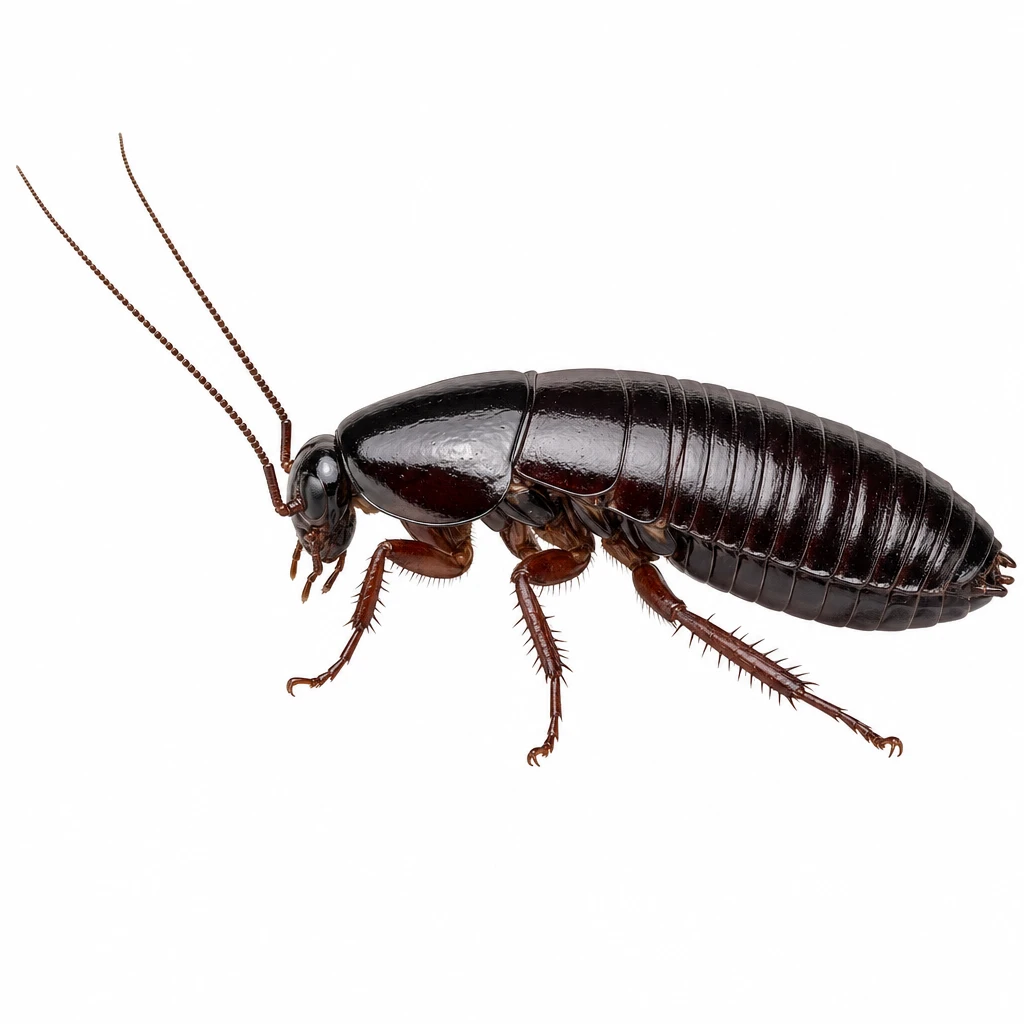
Oriental Cockroach
AKA: Black Beetle, Water Bug, Shiny Black Roach
Blatta orientalis
|
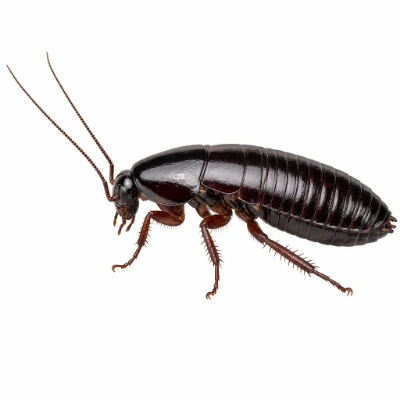
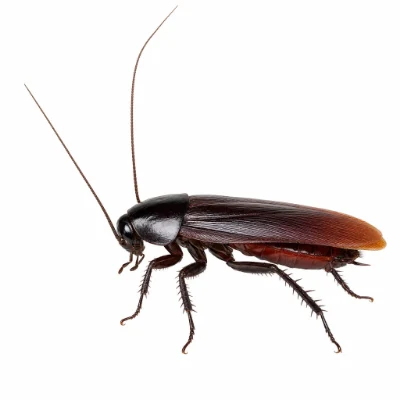
22 to 27 mm (about 1 inch), roughly twice the size of brown-banded. Shiny dark brown to jet black all over, the darkest cockroach in Collin County, with no light bands or markings. | Needs moist, cool conditions, the direct opposite of the warm, dry, high places brown-banded prefers. Color alone, jet black against banded tan, separates the two at once. | Garages, utility room floors, floor drains, the low foundation edge and under heavy appliances. Almost always at ground level near moisture. Almost never inside electronics or in bedrooms. |
Brown-banded Cockroach vs German Cockroach
The Brown-banded Cockroach in Three Numbers
0.5 inch
The University of Florida puts the adult brown-banded cockroach at about 0.5 inch long, 13 to 14.5 mm, nearly the size of a German cockroach.
University of Florida
About 70 days
University of Minnesota Extension reports that brown-banded cockroach eggs take about 70 days to hatch, so young keep appearing from cases glued to furniture or appliances long after the adults are gone.
University of Minnesota Extension
About 14
The University of Florida reports that a brown-banded cockroach female can produce about 14 egg cases in her lifetime.
University of Florida
Are Brown-banded Cockroaches Dangerous?
They are a moderate health concern, and a bigger one for anyone with allergies or asthma. Brown-banded cockroaches carry bacteria from waste areas onto surfaces where food is handled or stored, and their droppings and shed material hold allergen proteins that build up wherever the population lives and get stirred into the air by everyday activity. Penn State Extension’s guidance on urban pests places brown-banded in the moderate concern category, below the German cockroach, though less medical research exists on this species.
Before treatment, vacuum upholstered furniture in the affected rooms, wipe the outside of electronics with a dry cloth, and keep any food in bedrooms, closets and upper cabinets in hard sealed containers. These steps cut the buildup but do not remove the population.
Do Brown-banded Cockroaches Bite?
No. Brown-banded cockroaches are not a bite, venom or sting concern under normal household conditions. They feed on things like wallpaper paste, book bindings and fabric, not on people. The harm they do to people comes from what they leave behind, described above.
When Brown-banded Cockroach Presence Warrants Action
Someone at Home Has Asthma or Allergies
This roach scatters through bedrooms and closets, so its droppings and shed material collect where people sleep 7 to 8 hours a night. Treat a confirmed infestation as a medical priority. Strip and wash bedding in affected bedrooms, vacuum mattresses, and ask your doctor about cockroach allergy testing if symptoms are up.
Roaches Turning Up in More Than One Room
The population has spread from the item it came in on to other warm rooms. Every extra room adds hiding spots to find and treat, so an infestation caught late takes more work to clear completely.
Why You Found Brown-banded Cockroaches in Your House
Brown-banded cockroaches in your house almost always came in on something you brought inside. In McKinney, Allen, Frisco and Plano the usual routes are secondhand furniture from online resale marketplaces and thrift stores, used TVs, microwaves and gaming consoles, and moving boxes from storage units or an infested apartment. They do not walk in from the yard like Oriental cockroaches or come up drains like American cockroaches. Once inside they settle in the warm, dry rooms, which is why you see them in the bedroom or behind the TV rather than in the kitchen.
How to Tell If Your Furniture Has Roaches
Look with a flashlight in bright light, outside or in the garage before the piece comes indoors. Check drawer tracks, the undersides of shelves and the hidden corners of upholstered seating for small yellowish egg cases about 5 mm long glued to the wood or fabric, and watch for small banded roaches running when you move the piece. Fecal staining in those same corners is the other sign.
Where Brown-banded Cockroaches Hide in Collin County Homes
Brown-banded cockroaches need less water than any other common cockroach here, so they live in the warm, dry places other roaches avoid. Inside TVs, cable boxes and gaming consoles, on upper cabinet shelves, in dresser drawers and headboards, behind wall clocks and picture frames, and above ceiling tiles. The population starts on the item it arrived on, spreads to warm spots nearby, and then spreads to furniture and electronics throughout the living areas.
What Brown-banded Cockroaches Can Damage
The species feeds on things that are not food, including wallpaper paste, book bindings, fabric dyes, stamp glue and starched clothing. A heavy infestation in a storage closet can damage photographs, important papers and books kept in cardboard boxes. University of Missouri Extension names fecal staining and this kind of material damage as the main property concern for the species.
Inside electronics the roaches leave droppings and shed material. Whether that harms the equipment depends on how heavy the infestation is and how long it goes on.
Brown-banded cockroaches live entirely inside heated and cooled homes, so outdoor weather has little effect on them. Pest Me Off service records from 2023 to 2026 show a peak lasting 6 months, April through September, when rooms stay above 80°F. The winter slowdown is mild, never dormant.
Pattern from published brown-banded cockroach biology and Pest Me Off service records, 2023 to 2026, across Collin County.
Brown-banded Cockroach Biology Worth Knowing
How Pest Me Off Handles Brown-banded Cockroaches
Our brown-banded treatment follows four steps, and every product goes into the high, dry places the species lives rather than kitchen appliance gaps. Confirming the species comes first, because where we treat follows from it.
Confirm the Species
Inspect electronics, upper cabinet shelves, bedroom furniture and the backs of wall art before any product goes down. Collect a specimen or a clear photo to confirm the species, and look for the secondhand furniture or used appliance that brought them in.
Place Bait Up High
Gel bait goes at upper cabinet shelf edges, inside entertainment center channels, on the inner frames of dresser drawers, behind wall clocks and picture frames, and along the warm high spots where the roaches feed. No bait at floor level for this species.
Apply a Growth Regulator and Remove Egg Cases
Apply a growth regulator, a different kind of product that is not a poison, to the warm, dry high spots where young roaches develop. Pull off the egg cases we can reach on furniture undersides, clock workings and electronics, and note each spot for the 30-day return.
Return at 30 Days and Find Any New Source
Come back at 30 days to confirm the numbers are falling, look for anything new that arrived since, such as more secondhand furniture, moving boxes or a used appliance, and re-treat any new activity. We also show you how to check secondhand goods before they come in.
& Other Companies
How to Get Rid of Brown-banded Cockroaches Yourself
The highest-impact step is controlling what comes into the house, because secondhand goods start nearly every infestation. Start with the item they arrived on, then the hiding places around it.
Why Some DIY Responses Fail for Brown-banded Cockroaches
Most DIY failures with this roach are not product failures but location failures. The right product goes down the right way in the wrong rooms, or the egg cases and the source item are left in place.
Baiting the Kitchen Floor
Store gel bait under the sink, in appliance gaps and along lower cabinets is placed for German cockroaches. Brown-banded is in the bedroom dresser, inside the TV and on upper shelves, so it never finds the bait.
Treating Without Removing the Source
While the infested item stays, or new secondhand goods keep arriving unchecked, the roaches on it keep laying egg cases that spread back into treated rooms within weeks.
Killing Adults and Leaving the Egg Cases
Cases glued inside clock workings, picture frame backing, electronics and furniture undersides hatch on their own schedule. Without pulling them off and using a growth regulator, a full new generation arrives after the adults are gone.
Treating One Room and Stopping
This is a whole-home roach. Treat only the living room and the ones in the bedrooms, the spare room electronics and the upper bathroom cabinet move back in within a few weeks.
Common Brown-banded Cockroach Questions
What is the small brown roach with light bands I found in my bedroom?
Why are they called furniture cockroaches and furniture roaches?
How do I tell a brown-banded cockroach from a German cockroach?
How did brown-banded cockroaches get into my McKinney home?
Why are the roaches in my bedroom instead of my kitchen?
Can brown-banded cockroaches damage my electronics?
Why does treating the kitchen not get rid of brown-banded cockroaches in the rest of the house?
Are brown-banded cockroaches dangerous to my family?
Do brown-banded cockroaches bite?
Can cockroaches live in furniture?
Why do I keep seeing roaches even after treatment?
How do I get rid of brown-banded cockroaches?
Brown-banded Cockroaches in Your Bedroom and Living Room. We Find Them and Get Rid of Them.
Most pest companies treat the kitchen and call it done. We confirm the species first, treat behind the TV, in the bedroom furniture and in the upper cabinets where it actually lives, and come back to catch the next hatch before the population rebuilds. Cockroach Crackdown across McKinney, Allen, Frisco, Plano, and all of Collin County.