
Armadillos in Collin County, TX | Identification and Control
The nine-banded armadillo (Dasypus novemcinctus) is the armored, cat-sized digger that roots up Collin County lawns and flower beds at night hunting grubs, and digs burrows under slabs, porches, driveways and pools. Some armadillos in the southern United States carry the bacteria behind leprosy, but the CDC calls the risk very low and says around 95% of people cannot get leprosy at all.
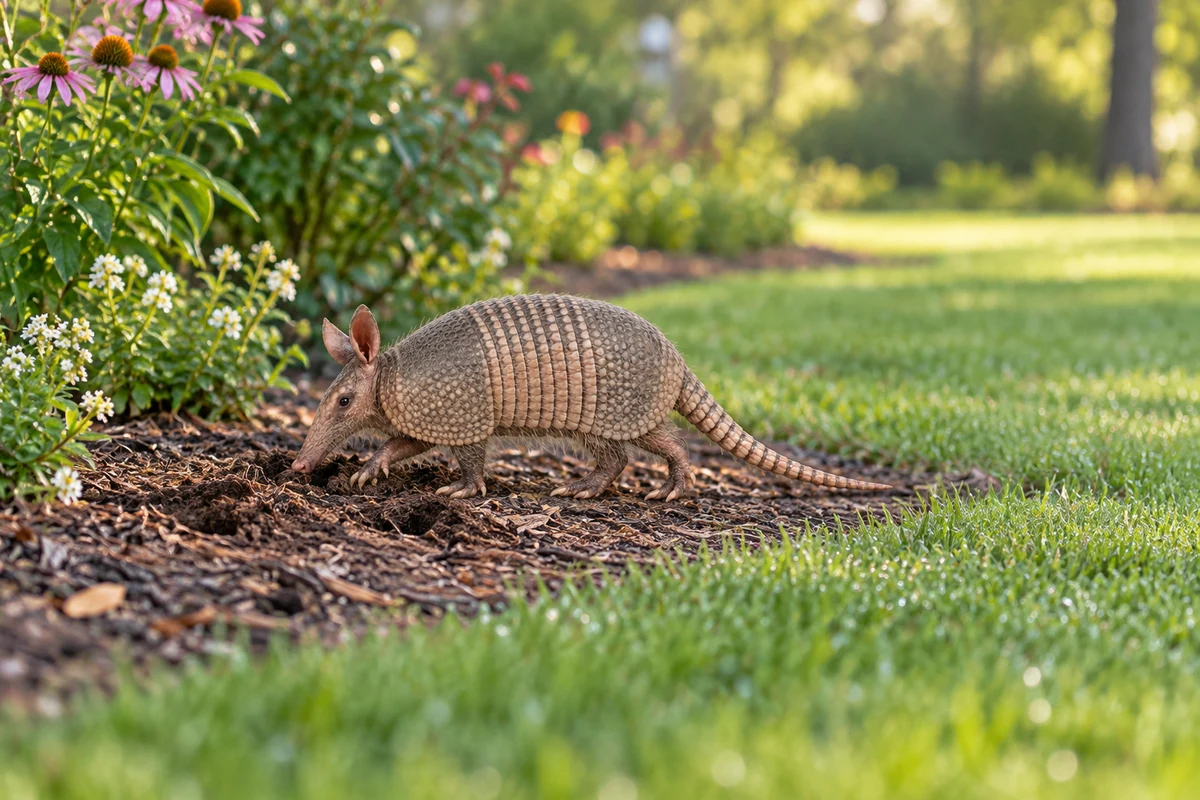
Lawn torn up overnight or a hole by the foundation? Our office sits where McKinney, Plano, Frisco and Allen meet, 5 to 10 minutes from most homes in those four cities. Call and we will find the burrow, the paths it travels and what is drawing it in.
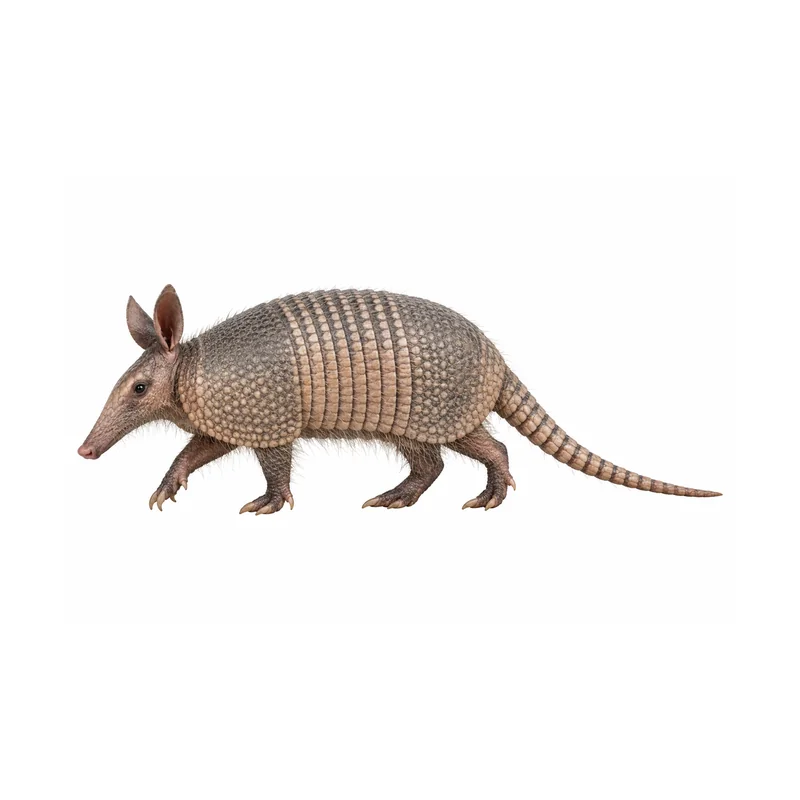
Nine-Banded Armadillo
The armadillo is a digging mammal covered in bony armor that feeds almost entirely on insects it roots out of the soil. Texas Parks and Wildlife finds it in all of Texas but the western Trans-Pecos and names it the state small mammal.
Risk Assessment
Choose a row for the full detail- Color
- A brownish gray bony shell with scattered pale hairs
- Diet
- Grubs, beetles, ants, termites, earthworms and other soil insects
- Threat level
- Low to people, hard on lawns
- Nesting site
- Burrows under slabs, porches, driveways, pools and shrubs
- Active season
- All year, at night in summer and afternoons in winter
- Young to adult
- Four identical young each March, breeding the next summer
- Size
- 8 to 17 lb, about 2 and a half feet long with the tail
What Does an Armadillo Look Like?
A cat-sized animal in a bony shell, with bands across its middle, a long narrow snout and a ringed tail
The armadillo is the only animal in Collin County that wears a shell. A large bony shield covers the shoulders and another covers the hips, with movable bands in between, and its long, tapering tail is wrapped in bony rings. Its head is small, with a long, narrow, pig-like snout, and its front feet carry big, strong claws for digging. Texas Tech University’s species account in The Mammals of Texas gives an average total length of 760 mm, about 30 inches, of which nearly 14 inches is tail, and puts adult males at 5 to 8 kg and females at 4 to 6 kg.
Most people meet the damage before the animal. The Internet Center for Wildlife Damage Management’s page on armadillo damage describes holes 1 to 3 inches deep and 3 to 5 inches wide, dug in search of food, along with uprooted flowers and ornamental plants. Its species overview adds that the tracks usually show the three forward toes with sharp claws, and that an armadillo grunts as it feeds.
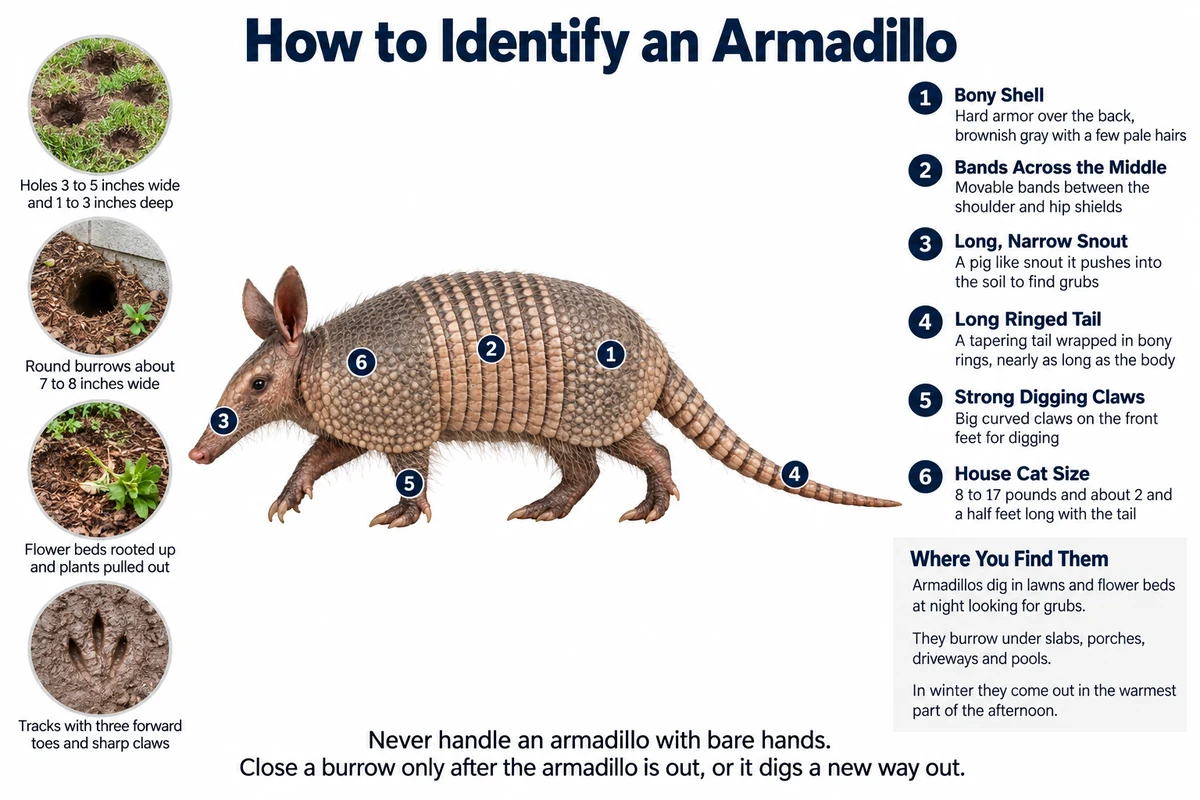
How to identify an armadillo by its bony shell, banded middle, long snout and ringed tail, with the holes, burrows and tracks it leaves behind
- Fresh holes 3 to 5 inches wide and 1 to 3 inches deep across the lawn each morning
- Flower beds and mulch rooted up, with plants pulled out of the ground
- A round burrow about 7 to 8 inches wide by the foundation, a driveway, a pool or a shrub
- Tracks in soft soil showing three forward toes with sharp claws
- Rustling and grunting in the beds after dark, with no strong smell
- The same digging turning up in the neighbors’ yards along a fence line
Other Names for the Armadillo
The armadillo in Texas is the nine-banded armadillo, named for the movable bands across its back between the shoulder and hip shields. Armadillo is the same word in Spanish, so Spanish speakers across Collin County use the same name. Texas Parks and Wildlife notes it is originally from South America and now ranges as far north as Texas, Oklahoma, Kansas and Louisiana.
One old nickname comes from a story that is not true. Texas Tech’s species account says rural folks in the South called armadillos gravediggers, believing they dug into graves, and that they were blamed for raiding quail and chicken nests. Bird eggs turned up in only 5 of 281 armadillo stomachs examined, which the account says refutes the egg story.
| Name | What it means |
|---|---|
| Nine-banded armadillo | The full name, after the bands across its back. |
| Armadillo | The everyday name, the same in English and Spanish. |
| Dasypus novemcinctus | The scientific name, the second word meaning nine-banded. |
| Gravedigger | An old Southern nickname from a story that is not true. |
How to Tell Armadillo Digging from a Skunk or Raccoon
All three dig up Collin County lawns at night hunting grubs and earthworms, and the wildlife damage reference says armadillo damage to turf can be hard to tell from a raccoon’s. The fix depends on which one it is, so the shape of the holes, the smell and any burrow tell them apart.
| Species | Size and Color | Key Feature | Where Found |
|---|---|---|---|
|
Armadillo
AKA: Nine-Banded Armadillo
Dasypus novemcinctus
This species
|
8 to 17 pounds, about 2 and a half feet long with the tail. A brownish gray bony shell with a ringed tail. | Holes 3 to 5 inches wide and 1 to 3 inches deep, plants pulled up, and a burrow about 7 to 8 inches wide. No smell. | Lawns, flower beds and mulch at night, with burrows under slabs, porches, driveways, pools and shrubs. |
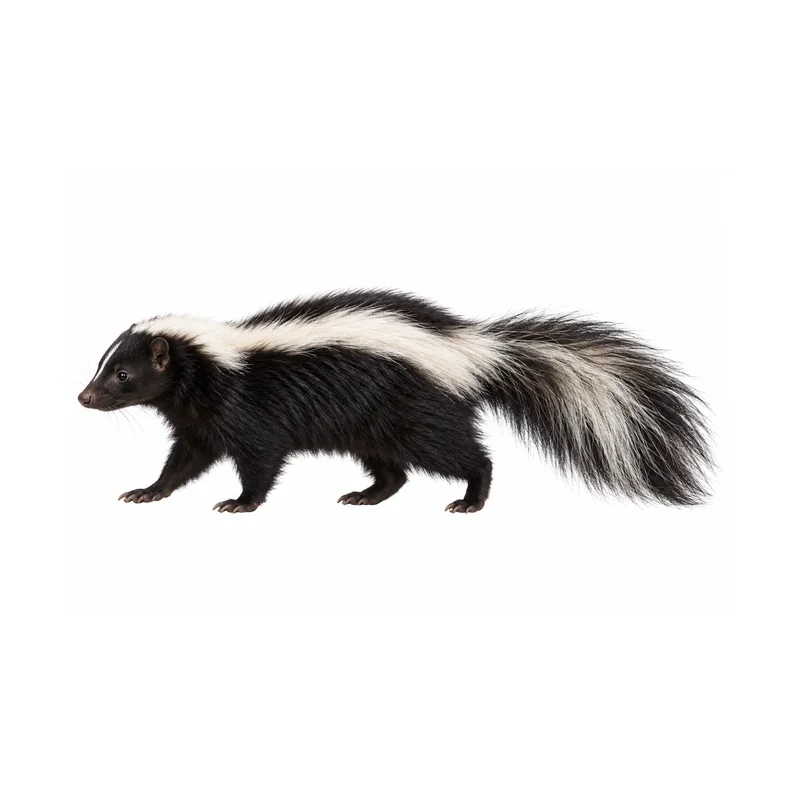
Skunk
AKA: Striped Skunk, Polecat
Mephitis mephitis
|
About the size of a house cat. Black with white stripes down the back and a white stripe on the face. | Small, cone-shaped holes 3 to 4 inches across or patches of turned-up soil, and a smell that gives it away. | Under decks, porches, sheds and slabs at ground level, digging in lawns for grubs at night. |

Raccoon
AKA: Racoon, Coon, Mapache
Procyon lotor
|
9 to 29 pounds, about 3 feet long with the tail. Grizzled gray with a black mask and a dark-ringed tail. | Rolls back freshly laid sod in strips looking for earthworms and grubs, often on several nights in a row. | Attics, chimneys and under decks, out at night raiding trash, pet food and new sod. |
Armadillo vs Skunk Digging
The Armadillo in Three Numbers
95%
The CDC says around 95% of people cannot get leprosy because their immune system fights off the bacteria, and that the risk from armadillos is very low.
CDC
3 to 5 inches
The Internet Center for Wildlife Damage Management describes armadillo feeding holes as 3 to 5 inches wide and 1 to 3 inches deep, dug as the animal roots for insects.
Internet Center for Wildlife Damage Management
93 percent
Texas Tech University’s Mammals of Texas reports that 93 percent of an armadillo’s food by volume is animal matter, chiefly insects and other small soil animals.
Texas Tech University, The Mammals of Texas
Are Armadillos Dangerous?
Not to people who leave them alone. An armadillo has no front teeth, only small peg-like teeth at the back of its jaw, and it runs or digs in when disturbed rather than fighting. The danger it carries is in its body, not its bite. The wildlife damage reference notes that armadillos can carry the bacterium that causes leprosy and the parasite that causes Chagas disease, though Chagas usually reaches people through insect bites rather than contact. Its advice is to avoid touching armadillos with bare hands and to avoid contact with their blood and fluids.
Can You Get Leprosy From an Armadillo?
It is possible but unlikely. According to the CDC’s page on leprosy, some armadillos in the southern United States are naturally infected with the bacteria that cause it and may be able to spread it to people, but the risk is very low and most people who come into contact with armadillos are unlikely to get leprosy. The CDC adds that around 95% of people cannot get leprosy at all, that up to 225 people in the United States are diagnosed with it each year, and that it is curable. Wear gloves if you ever have to move a live or dead armadillo, and wash your hands afterward.
Do Armadillos Carry Rabies in Texas?
Rabies in armadillos is not something Texas records. In the state’s 2024 report on rabies in animals, the Texas Department of State Health Services confirmed rabies in 388 wild animals, all of them bats, skunks, foxes, raccoons or coyotes, and none an armadillo. Texas law lists bats, skunks, foxes, raccoons and coyotes as the high-risk animals for rabies. Any bite or scratch from a wild animal still deserves soap, running water and a call to your doctor.
When Armadillo Activity Needs Fast Action
A Burrow Under Concrete
A burrow under a slab, a driveway or a pool deck can run up to 15 feet. Have it looked at before it is used for another season.
Handling One Bare-Handed
Picking up a live or dead armadillo without gloves is the contact the leprosy advice warns against. Wash well with soap and water.
New Holes Every Morning
Fresh digging night after night means an armadillo is feeding on your lawn’s grubs and will keep coming back while they last.
One Out on a Winter Afternoon
In cold weather armadillos feed in the warmest part of the day. Seeing one by daylight in winter is normal, not a sign of illness.
Why You Have an Armadillo in Your Yard
An armadillo is in your yard for the grubs. Texas Parks and Wildlife says its habit of digging up lawns is driven by its appetite for grubs, which can harm lawns too. Texas Tech’s study of more than 800 armadillo stomachs found nearly 28% of the insects eaten were scarab beetles and their grubs, the white grubs that feed on lawn roots, with termites and ants about 14% and caterpillars nearly 8%. A watered lawn, a soft mulch bed and moist soil under shrubs are where those grubs and earthworms are easiest to reach.
Soft soil matters as much as food. Texas Parks and Wildlife says armadillos are not found where the soil is too hard to dig, and Texas Tech’s species account notes that on the heavy clay prairie soils of Texas they are rare and keep to stream banks and the soft ground near water. Irrigated yards, flower beds and the edges of creeks, ponds and greenbelts give them that soft ground in Collin County. It is not a sign of a neglected yard. A well-kept, well-watered lawn next to open land is exactly what draws them.
Where Armadillos Live Around Collin County Homes
In the wild, armadillos prefer dense, shady cover near creeks and rivers in loose, sandy or loamy soil, according to the wildlife damage reference on armadillo biology. Around homes, the same reference lists burrows under foundations, concrete slabs, driveways, pools and other structures. A Texas Tech study found dens 3 to 16 feet long and averaging 17 to 20 cm, about 7 to 8 inches, across. Usually one adult lives in each occupied burrow.
Armadillo Pressure Across Collin County
Armadillo calls in our service notes come most often from McKinney, usually homes beside a greenbelt, a golf course or a nature preserve, where one armadillo travels through several yards along the fence lines. We also trap them in Allen, Frisco and Wylie.
On the newer edges of the county, in Melissa, Lucas and parts of Plano, we find armadillo digging in planter beds and along back fences, and burrows customers spot in the lawn, often where yards meet open land or a creek.
Armadillos are active all year in Collin County and do not hibernate. Our armadillo calls run highest from July into October. The young born in March are out on their own by then, and Texas Parks and Wildlife puts the breeding season in July.
Pattern from published armadillo biology (Texas Tech University and Texas Parks and Wildlife) and Pest Me Off armadillo calls, which have come mostly from midsummer into fall.
Why Armadillos Keep Coming Back
How Pest Me Off Removes Armadillos
Armadillo removal is four steps, every job. Catching the animal is the hard part, and closing its burrow and changing what drew it in is what keeps the next one from taking its place.
Inspect and Identify
A free wildlife inspection of the lawn, beds, fence lines and foundation. We confirm it is an armadillo and not a skunk or raccoon, find the burrow and track the paths it takes through the yard.
Trap and Remove
Live traps set at the burrow and along the routes it travels, with boards to guide it in, checked and moved as its route changes, and handled within Texas wildlife rules.
Close the Burrow
Once the armadillo is caught and out, we close the burrow and show you where it was digging and where it came in.
Talk Through What Draws Them
We walk you through what brought it in, the grubs in the lawn, the soft beds and the gap under the fence, so the yard is less inviting to the next one.
& Other Companies
How to Get Rid of Armadillos Yourself
Most DIY armadillo work makes the yard less worth digging and harder to reach. Texas A&M AgriLife’s guide to managing armadillo damage gives three ways to do that.
Why Some DIY Responses Fail for Armadillos
Most DIY armadillo trouble comes from trusting a product that does nothing, closing a burrow too early, or handling the animal without gloves.
Filling the Burrow With It Inside
An armadillo is a strong digger. Packing the burrow shut while it is inside just makes it dig a new way out, often under the slab or the pool deck.
Repellents and Mothballs
The wildlife damage reference says no repellents are registered for armadillos. A granule or mothball scattered in the beds is not a tested way to stop one hunting grubs.
Grabbing One by the Tail
Catching or moving an armadillo bare-handed is the contact the leprosy advice warns against, and its claws are built for digging. Wear gloves or leave it to us.
Common Armadillo Questions
What is an armadillo, and how big do armadillos get in Texas?
What do armadillo holes look like?
Why is an armadillo digging up my yard?
Can you get leprosy from an armadillo?
Do armadillos carry rabies?
Will an armadillo burrow under my house or pool?
When are armadillos most active?
Do armadillos always have four babies?
Can I trap an armadillo and release it somewhere else?
What keeps armadillos out of a yard?
How do I get rid of armadillos?
Lawn Dug Up Overnight? We Trap the Armadillo and Close the Burrow.
We find the burrow and the route it takes, trap it on the paths it uses, close the burrow once it is out, and talk you through what drew it in. Wildlife removal across McKinney, Allen, Frisco, Plano, and all of Collin County.