
Pigeons and Nuisance Birds in Collin County, TX | Identification and Control
Three birds cause most of the trouble around Collin County homes and storefronts. The feral pigeon (Columba livia), the European starling and the house sparrow nest in dryer vents, bathroom vents, soffits and porch lights, and leave droppings that stain, block gutters and can grow fungus. All three were brought here by people, so federal law does not protect them. Pigeons breed in every season, and the Internet Center for Wildlife Damage Management says they raise young 5 to 6 times a year.
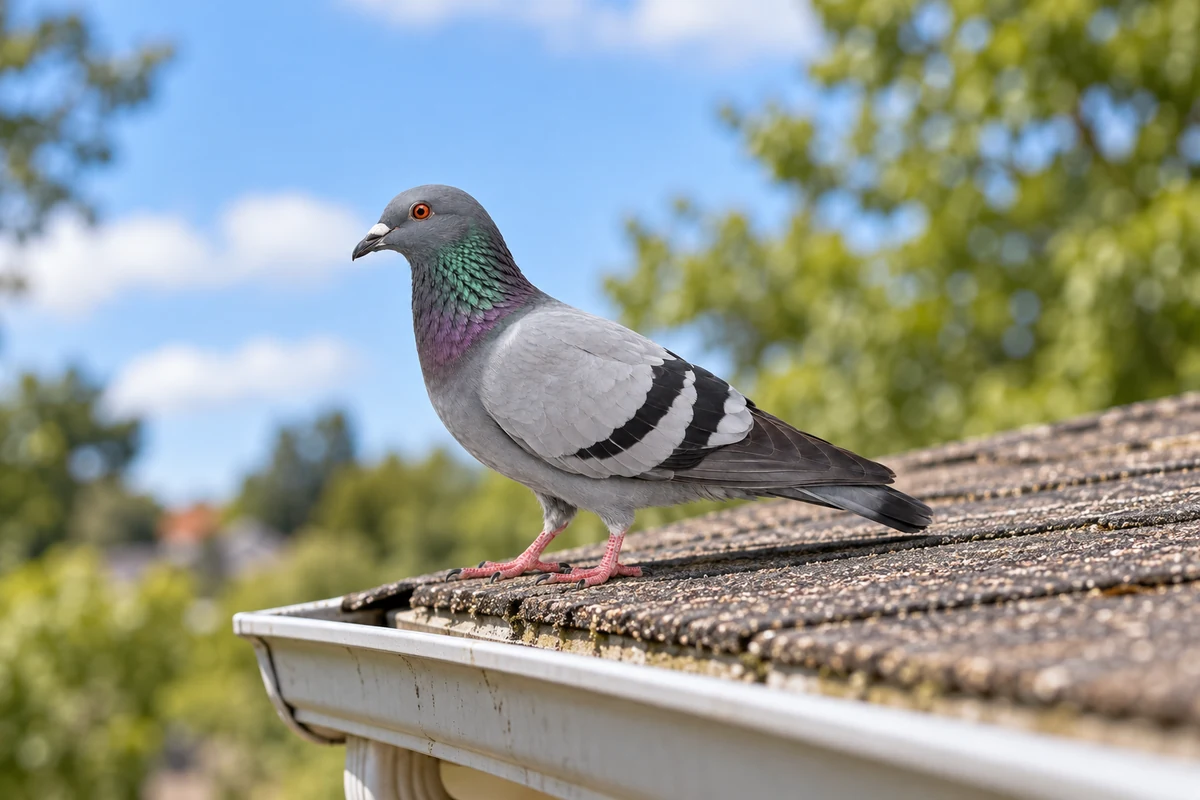
Chirping in your dryer vent or nests on the porch light? Our office sits where McKinney, Plano, Frisco and Allen meet, 5 to 10 minutes from most homes in those four cities. Call and we will find out which bird it is, whether the nest is active and how to keep it out.
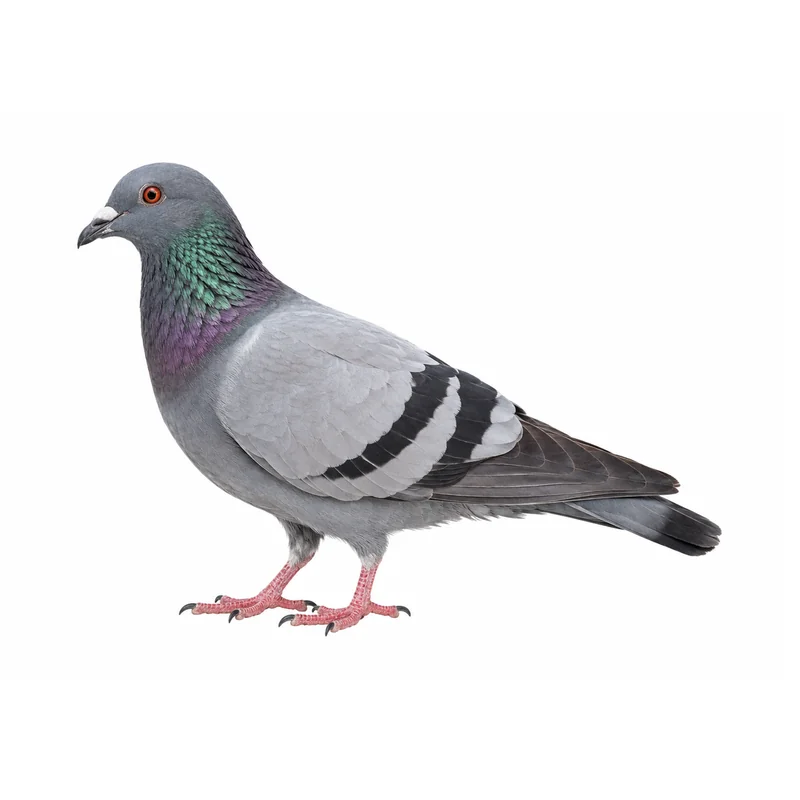
Feral Pigeon
The feral pigeon is the most common of the three nuisance birds, alongside the European starling and the house sparrow. It nests on ledges, in attics and under eaves, and the Internet Center for Wildlife Damage Management notes it is not protected by federal law.
Risk Assessment
Choose a row for the full detail- Color
- Blue-gray with two black wing bars, a dark tail band and red feet
- Diet
- Mostly grain and seed, plus garbage and food people leave out
- Threat level
- Moderate
- Nesting site
- Ledges, attics, eaves, vents and under solar panels
- Lifespan
- Seldom more than 3 or 4 years in towns
- Eggs
- 1 or 2 at a time, hatching after 18 days
- Size
- About 12 inches long, 12 to 17 ounces
What Do Pigeons and Other Nuisance Birds Look Like?
A blue-gray pigeon with black wing bars, a glossy speckled starling and a small brown sparrow
The feral pigeon is about 12 inches long and weighs 12 to 17 ounces. The Internet Center for Wildlife Damage Management’s pigeon account describes the usual bird as blue-gray with two black bands on the wings and one black band on the tail, a white rump and red feet, though some are all white, mottled brown or sooty black. Its wing tips touch as it takes off, making a clicking sound, and its call is a soft, throaty cooing.
The other two are smaller. New Mexico State University’s extension guide to nuisance birds describes the European starling as about the size of a robin, with a short square tail, mostly black with light shiny speckles and a bill that turns yellow from January to June. It calls the house sparrow a brown, chunky bird about 5 3/4 inches long, the male with a black throat, white cheeks and a gray crown.
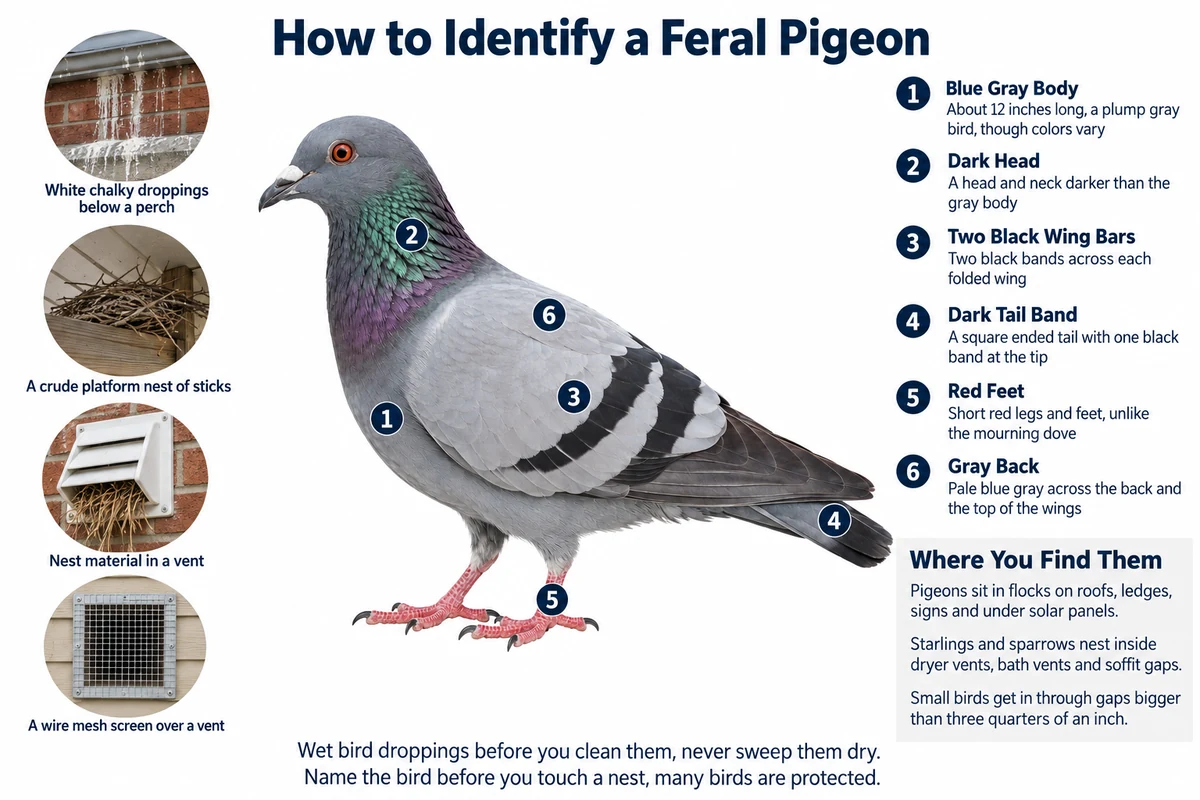
How to identify a feral pigeon by its blue-gray body, black wing bars and red feet, with the droppings and nests it leaves on ledges and in vents
- Chirping or fluttering inside a dryer vent or bathroom exhaust vent in daylight
- Twigs, grass or straw poking out from a vent cover, soffit or porch light
- White, chalky droppings streaked down a wall, ledge or sidewalk below a perch
- Cooing and wing clicks on the roof, under solar panels or on a ledge
- A crude platform of sticks on a ledge, beam or garage door opener
- Lint that stops blowing out of the dryer vent, or a dryer slow to dry
Other Names for Pigeons and Nuisance Birds
Bird books now call the city pigeon the rock pigeon, and older guides call it the rock dove, after the sea cliffs its wild ancestors nested on. Texas Parks and Wildlife’s guide to Texas doves and pigeons notes it has been introduced into almost all parts of the world, and that it ranges from gray to brown. Feral means a bird whose ancestors were kept by people and went wild.
The house sparrow is the same bird Texas law calls the English sparrow. Spanish speakers call the pigeon a paloma, a word also used for doves, and that is where the confusion starts. The mourning dove is a native bird with full protection, not a pigeon.
| Name | What it means |
|---|---|
| Rock pigeon | The current bird book name for the feral pigeon. |
| Rock dove | The older name for the same bird, still in Texas law. |
| English sparrow | The house sparrow, the name Texas law uses. |
| Paloma | The Spanish word, used for pigeons and doves alike. |
| Mourning dove | A different, native bird that is protected. |
How to Tell Pigeons from Doves, Starlings, Sparrows and Bats
The right fix depends on which animal it is, and so does the law. A feral pigeon, a starling or a house sparrow can be moved on and its nest taken out. A mourning dove or any other native bird is protected, and so are bats. What you see, when you hear it and what the droppings look like tell them apart.
| Species | Size and Color | Key Feature | Where Found |
|---|---|---|---|
|
Feral Pigeon
AKA: Rock Pigeon, Rock Dove
Columba livia
This species
|
About 12 inches long. Blue-gray with a dark head, two black wing bars and red feet, though colors vary. | Square-ended tail with a dark band, wing clicks on takeoff and soft cooing. Not protected by federal law. | Ledges, roofs, attics, under solar panels and on storefronts, in flocks. |
|
European Starling
AKA: Starling
Sturnus vulgaris
|
About robin sized. Mostly black with light, shiny speckles. | Short square tail, and a bill that turns yellow from January to June. Not protected by federal law. | Any hole it can fit, from vents and soffits to tree cavities, often over 1 inch wide. |
|
House Sparrow
AKA: English Sparrow
Passer domesticus
|
About 5 3/4 inches. Brown and chunky, the male with a black throat and gray crown. | Small, noisy and always near buildings. Not protected by federal law. | Building vents, window ledges, signs and porch lights, through gaps over 3/4 inch. |
|
Mourning Dove
AKA: Dove, Paloma
Zenaida macroura
|
Slimmer than a pigeon. Brown to buffy tan with black spots on the wings. | A long, pointed tail with white tips and a sad, soft cooing call. Protected as a migratory game bird. | Trees, shrubs, gutters and porch ledges, in pairs rather than flocks. |
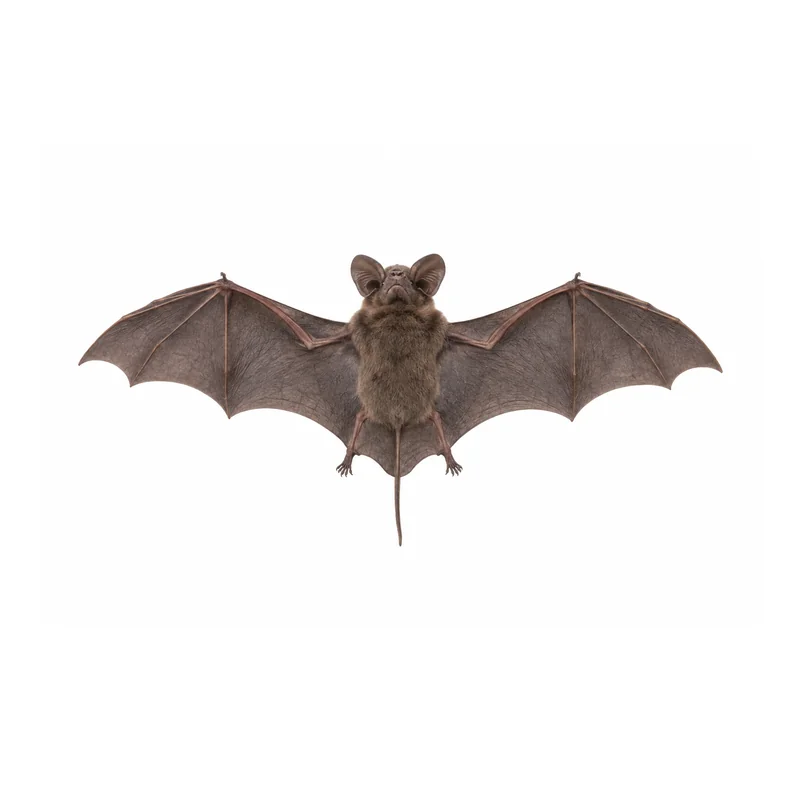
Bat
AKA: Mexican Free-Tailed Bat
Tadarida brasiliensis
|
Small, dark brown and furred, with thin wings of skin. | Rustling at dusk and dawn, and droppings that crumble to powder with no white in them. Protected in Texas. | Attics, wall gaps and behind shutters, flying out at dusk. |
Pigeon vs Mourning Dove
Pigeons and Nuisance Birds in Three Numbers
About 2%
New Mexico State University’s extension guide to nuisance birds reports that Salmonella, a cause of food poisoning, is found in about 2% of pigeon droppings.
New Mexico State University
3/4 inch
New Mexico State University’s guide advises closing every opening larger than 3/4 inch to keep house sparrows out of a building, and larger than 1 inch for starlings.
New Mexico State University
5 to 6
The Internet Center for Wildlife Damage Management reports that feral pigeons raise young 5 to 6 times a year, with 1 or 2 eggs each time.
Internet Center for Wildlife Damage Management
Are Pigeon Droppings Dangerous?
They can be when they pile up. The CDC’s National Institute for Occupational Safety and Health, in its overview of where histoplasmosis comes from, says the fungus grows especially well in soil or other material holding large amounts of bird or bat droppings, and names pigeons and starlings among the birds tied to outbreaks. The same page says fresh droppings on sidewalks and windowsills likely do not pose a risk. The danger is an old roost, an attic floor or a gutter full of dried droppings that gets stirred up.
Can You Get Sick From Bird Droppings?
Yes, mainly by breathing in dust. The CDC’s page on histoplasmosis says people catch it by breathing in spores, that fever, cough, tiredness and chest pain usually start 3 to 17 days later, and that it does not spread from person to person. A second fungus, Cryptococcus, lives in debris around pigeon roosts and soil fouled with pigeon droppings, according to a review in the CDC’s Emerging Infectious Diseases journal. It mostly sickens people with weakened immune systems. The Internet Center for Wildlife Damage Management also warns that people near an active roost can be bitten by bird mites.
When Bird Activity Needs Fast Action
A Nest in the Dryer Vent
A nest that blocks a dryer or exhaust vent traps hot, damp air and lint. The Internet Center for Wildlife Damage Management warns that blocked vents may cause fires.
Droppings Piled in the Attic
A thick layer of old droppings is where histoplasmosis fungus grows. Do not sweep it dry. The CDC says large amounts should be cleaned by professionals.
Tiny Mites Biting Indoors
Bites near a vent or window after a nest is abandoned can be bird mites leaving it. The nest has to come out and the opening closed.
Eggs or Young of an Unknown Bird
If you cannot tell which bird it is, leave the nest alone. A native bird’s eggs and young are protected by state and federal law.
Why You Have Birds in Your Vents
Starlings and house sparrows nest in holes, and a house is full of them. New Mexico State University’s guide says the starling nests in any suitable hole or cavity in buildings and trees, and the house sparrow in building vents and on window ledges. A dryer vent with a missing flap, a bathroom exhaust vent with a broken cover, a gable vent with torn screen or a gap where a soffit meets the roof is a dry, safe hole with heat coming through it. Pigeons want a flat ledge with cover overhead, which a porch, a beam, a sign or the space under solar panels gives them.
Food nearby keeps them coming back. Pigeons are mainly grain and seed eaters, and bird seed spilled under a feeder, pet food on a patio or open trash will hold a flock. It is not a sign of a dirty home. Once one pair has nested in a vent, others find the same opening, because nothing about the hole has changed.
Where Nuisance Birds Nest Around Collin County Homes
The wildlife damage reference on pigeon damage lists the harm. Droppings are acidic and speed the wear of building materials, piled droppings plug roof gutters and cause water damage, and nests can block exhaust vents. Around homes the birds use vents, soffit gaps, gable vents, porch lights, beams, gutters and the space under solar panels. Around shops and offices they gather on signs and ledges and foul the sidewalk below.
Nuisance Bird Pressure Across Collin County
Bird nests in vents show up in our service notes most often in McKinney and Frisco, where newer homes have many bathroom and dryer vents high on the wall and porch lights under deep entries. Spring and early summer bring the most calls, when every pair is looking for a nest site.
In Allen, Celina, The Colony and Little Elm we find nests behind patio heaters, in gazebos and on front porches, and pigeons gathering on storefront signs where droppings build up on the sidewalk.
Nuisance birds are here all year in Collin County. Nesting in vents and on porches climbs from late winter and peaks in spring and early summer, and pigeons have a second nesting peak in fall.
Pattern from published pigeon breeding biology (the Internet Center for Wildlife Damage Management, which puts peak pigeon nesting in spring and fall) and Pest Me Off bird calls, which come mostly from late winter into summer.
Why Nuisance Birds Keep Coming Back
How Pest Me Off Removes Nuisance Birds
Bird removal is four steps, every job. Taking out a nest is only half the fix, because the open vent or gap still invites the next pair.
Inspect and Identify
A free inspection from the roofline down. We confirm which bird it is, whether the nest has eggs or young, and every vent, soffit and gap the birds are using, and we rule out bats.
Remove Where the Law Allows
For a feral pigeon, starling or house sparrow, the birds and their nest come out of the vent or ledge. For a protected native bird, we confirm whether the nest is active before anything is removed.
Clean Up and Assess
We clear nesting material and droppings from the access area, then show you the damage and the exact ways in, from broken vent covers to a failed soffit.
Seal It Out for Good
Every vent and gap the birds used is screened or closed so it cannot be used again. This is the rodent proofing and exclusion work that keeps the next bird or animal out.
& Other Companies
How to Get Rid of Pigeons and Nuisance Birds Yourself
Most DIY bird work is taking away the food and the holes. The wildlife damage reference on pigeon control puts blocking openings first.
Why Some DIY Responses Fail for Nuisance Birds
Most DIY bird trouble comes from pulling a nest before knowing the bird, and from devices that scare birds for a day and then stop working.
Pulling a Native Bird’s Nest
Texas Parks and Wildlife’s page on protected wildlife says all wild birds native to Texas, with their eggs, nests and young, are protected by state and federal law.
Noise and Sound Devices
The wildlife damage reference says noise makers have little lasting effect on roosting pigeons and that high frequency sound does not work on them.
Pulling the Nest and Leaving the Hole
Birds rebuild in an open vent within days, often with more material each time. The vent stays blocked until a cover goes on.
Common Questions About Pigeons and Nuisance Birds
What are nuisance birds, and which ones cause trouble in Collin County?
Are pigeons protected in Texas?
Which birds does the Migratory Bird Treaty Act protect?
Can I remove a bird nest from my dryer vent?
Are pigeon droppings dangerous?
How do I get birds out of my bathroom exhaust vent?
What is the difference between a pigeon and a dove?
Is it birds or bats in my vent or attic?
Do bird spikes keep pigeons away?
How long do pigeons live, and how fast do they breed?
How do I get rid of pigeons?
Birds Nesting in Your Vents? We Get Them Out and Screen Them Out.
We name the bird, check the nest, remove what the law allows, clean out the nest and droppings, and screen every vent and gap so the next pair cannot move in. Wildlife removal across McKinney, Allen, Frisco, Plano, and all of Collin County.