
Clothes Moths in Collin County, TX | Identification and Control
The webbing clothes moth (Tineola bisselliella) is the small, plain golden moth that hides in dark closets. The adult never eats. Its creamy white caterpillars do the damage, grazing holes in wool sweaters, rugs, furs, felt and feathers. The University of California says each female lays 40 to 50 eggs, glued to the fabric threads, and they hatch in 4 to 10 days in warm weather.
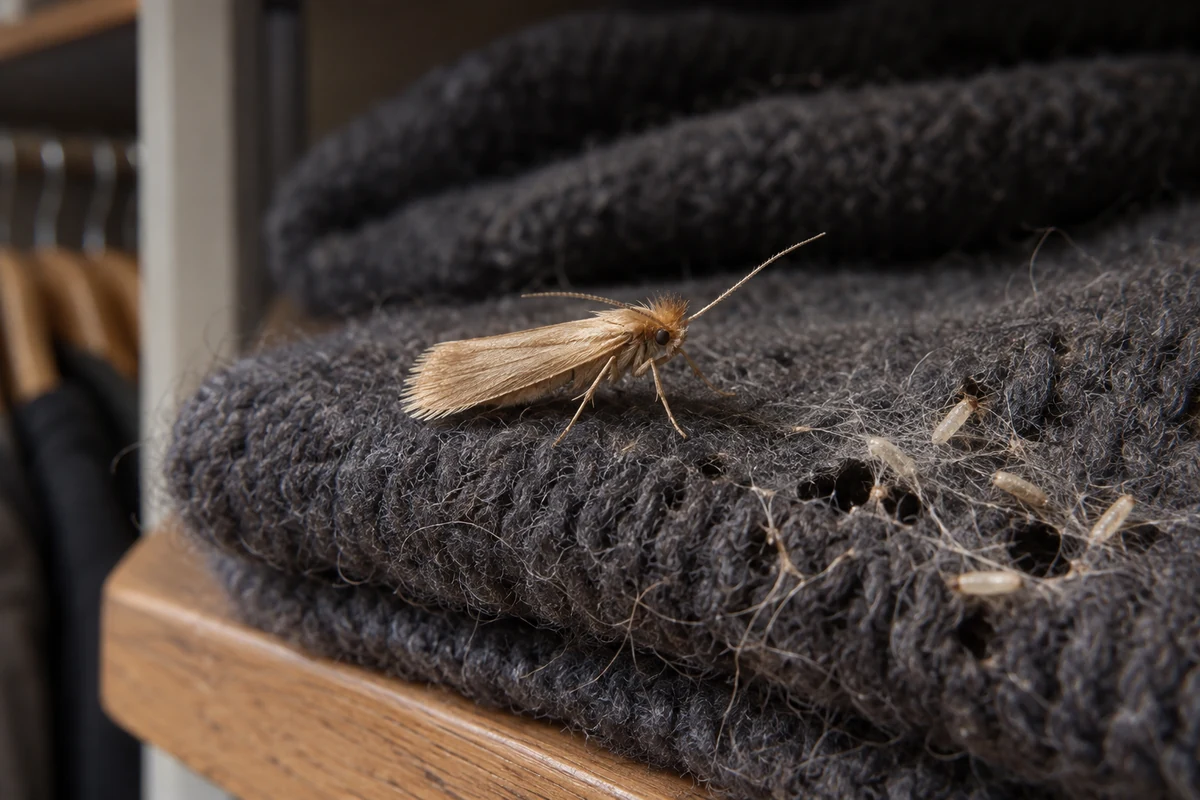
Holes in a sweater or a rug and tiny moths in the closet? Our office sits where McKinney, Plano, Frisco and Allen meet, 5 to 10 minutes from most homes in those four cities. Call and we will find what they are feeding on.
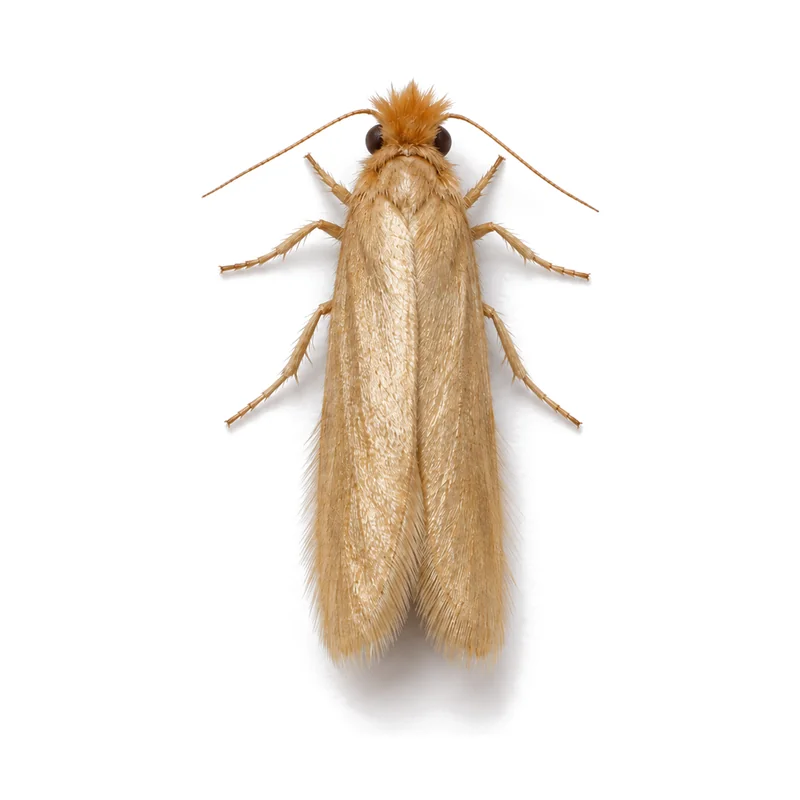
Clothes Moth
The webbing clothes moth is a tiny moth whose caterpillars eat wool, fur, silk, feathers and other animal fibers. Texas A&M’s Field Guide to Common Texas Insects says it is common in Texas.
Risk Assessment
Choose a row for the full detail- Color
- Plain shiny gold or buff, with a reddish gold tuft on the head
- Diet
- Caterpillars eat wool, fur, silk, feathers, felt and leather. Adults do not eat
- Threat level
- High for fabric, harmless to people
- Wings
- Narrow, with no spots, fringed with long hairs
- Where it hides
- Dark closets, stored woolens, rug edges under furniture and vents
- Adult lifespan
- About 16 days for females and 28 days for males
- Eggs
- 40 to 50 per female, hatching in 4 to 10 days
- Size
- About 1/4 inch long, 1/2 inch across the open wings
What Does a Clothes Moth Look Like?
A tiny, plain golden moth with a reddish tuft of hair on its head, found close to wool rather than near lights
The adult webbing clothes moth is small and plain. The Rutgers Cooperative Extension fact sheet on clothes moths describes it as covered with shiny golden scales, with fluffy reddish golden hairs on top of the head, a body about 1/4 inch long and a wingspan of about 1/2 inch. The wings are narrow and fringed with long hairs, and Texas A&M notes they are plain gold with no spots. A clothes moth flutters rather than flying straight, avoids light and stays near what it is eating.
The caterpillars do the damage. The University of Kentucky Entomology fact sheet on clothes moths describes them as creamy white, up to 1/2 inch long, spinning silk tubes or patches of webbing as they feed. They leave threadbare spots and holes, tiny droppings the color of the fabric, and on a fur or a mounted animal, clumps of hair that come loose from the skin.
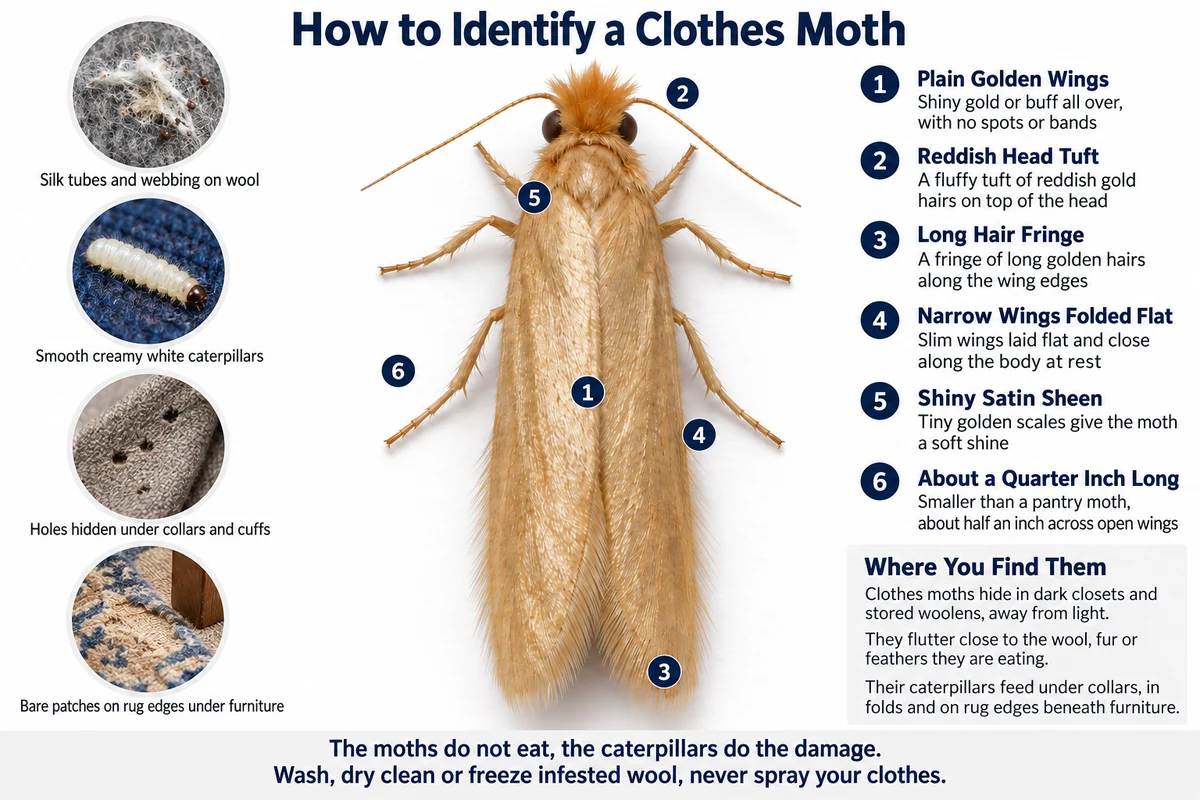
How to identify a webbing clothes moth by its plain golden wings and reddish head tuft, with the silk tubes, caterpillars and holes it leaves in wool
- Tiny golden moths fluttering in a dark closet, not circling a light
- Holes or bare, grazed patches in wool, cashmere, felt or fur
- Damage hidden under collars and cuffs, in folds, and on rug edges beneath furniture
- Silk tubes or matted webbing on the fabric, mixed with fibers and droppings
- Tiny droppings the same color as the fabric they came from
- Smooth, creamy white caterpillars with a dark head on stored woolens
Other Names for the Clothes Moth
Clothes moth is the everyday name for two closely related moths. The webbing clothes moth, Tineola bisselliella, is the one pictured here, and the University of California calls it the most common fabric moth. The casemaking clothes moth, Tinea pellionella, is similar but has dark spots on its wings, and its caterpillar drags a silk case around as it feeds. Both are common in Texas, and both are dealt with the same way.
The name that causes the most mix-ups is pantry moth. That is the Indian meal moth, a bigger, two-tone moth that eats stored food, not fabric. The look-alike table below shows how to tell them apart.
| Name | What it means |
|---|---|
| Webbing clothes moth | For the silk webbing its caterpillars spin. |
| Wool moth | For the wool it is best known for eating. |
| Fabric moth | The everyday name for any moth that eats cloth. |
| Casemaking clothes moth | A close relative whose caterpillar carries a case. |
| Pantry moth | A different moth that eats food, not fabric. |
How to Tell a Clothes Moth from a Pantry Moth or Carpet Beetle
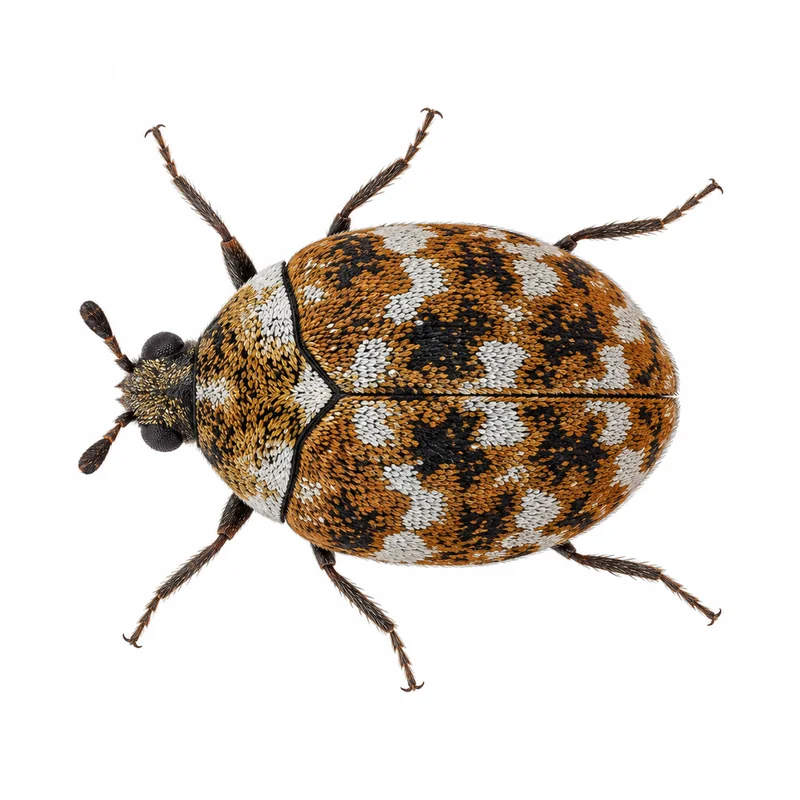
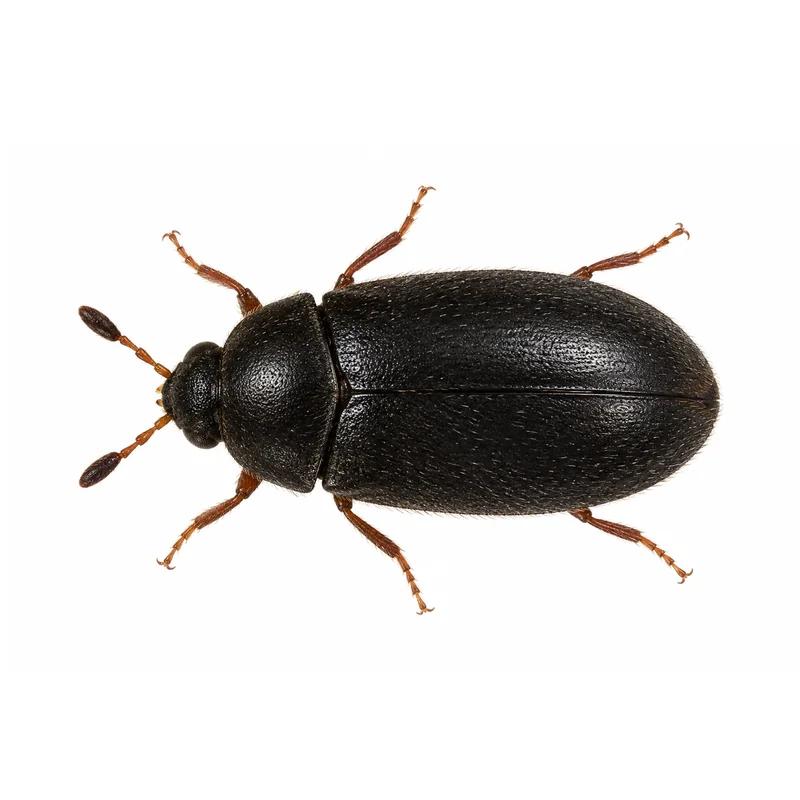
Small moths in the house and holes in a sweater are not always clothes moths. Pantry moths end when the infested food is gone, while clothes moths and carpet beetles both eat wool, fur and feathers, and the University of Kentucky notes that damage blamed on clothes moths is often carpet beetle damage. What the moth looks like, where it flies and what the young look like tell them apart.
| Species | Size and Color | Key Feature | Where Found |
|---|---|---|---|
|
Clothes Moth
AKA: Webbing Clothes Moth, Wool Moth
Tineola bisselliella
This species
|
About 1/4 inch long at rest. Plain shiny gold with a reddish gold tuft on the head. | A moth that avoids light. Its smooth, creamy white caterpillars spin silk tubes on wool and fur. | Dark closets, stored woolens, rug edges under furniture, upholstery and vents. |
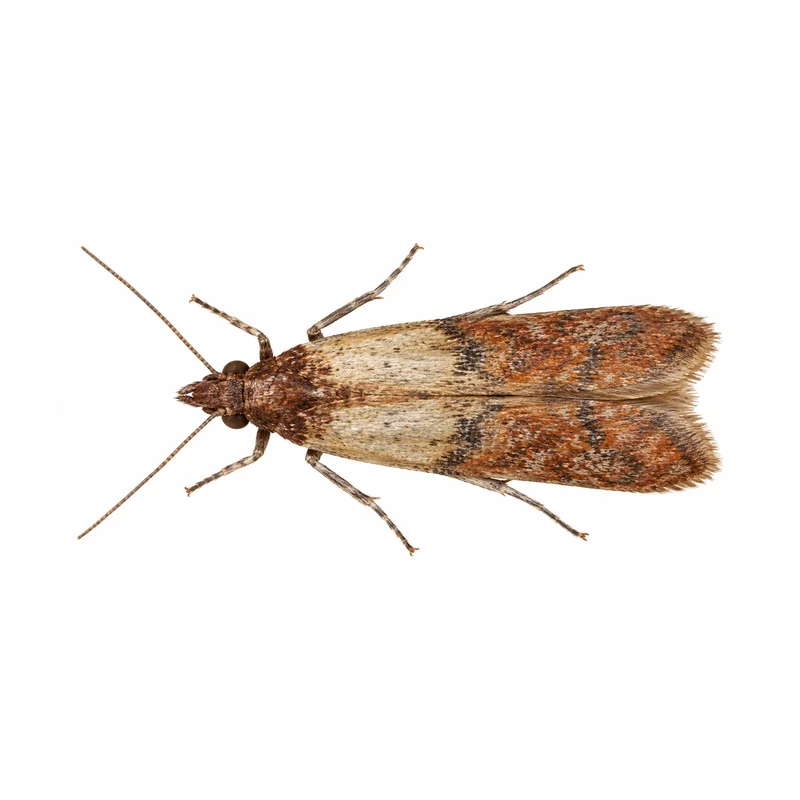
Indian Meal Moth
AKA: Pantry Moth
Plodia interpunctella
|
About half an inch long, double a clothes moth. Wings pale gray near the body, copper at the tips. | Two-tone wings and no head tuft. Drawn to lights, flying steadily rather than fluttering. | Kitchens and pantries, around flour, cereal, nuts, pet food and birdseed. |
Varied Carpet Beetle
AKA: Carpet Beetle, Woolly Bear
Anthrenus verbasci
|
About 1/10 inch. A round black beetle with white, brown and yellow patches. | A beetle, not a moth. Its young are hairy and striped, and they spin no silk. | Adults at windows in spring, the young in closets, rug edges, lint and attic nests. |
Black Carpet Beetle
AKA: Carpet Beetle
Attagenus unicolor
|
1/8 to 3/16 inch long. Shiny black and dark brown with brownish legs. | Oval with no pattern. Its young are shiny and cigar shaped with a long tail tuft, and spin no silk. | The same wool, fur and feathers, plus lint and hair along baseboards and under furniture. |
Clothes Moth vs Carpet Beetle
The Clothes Moth in Three Numbers
40 to 50
The University of California says a female webbing clothes moth lays an average of 40 to 50 eggs, glued to the fabric threads, which hatch in 4 to 10 days in warm weather.
University of California, Pest Notes
1/4 inch
Rutgers Cooperative Extension gives the webbing clothes moth a body about 1/4 inch long and a wingspan of about 1/2 inch.
Rutgers Cooperative Extension
Up to 2 years
The University of Kentucky says clothes moth caterpillars can take from one month to as much as 2 years to become moths, eating wool, fur, silk, feathers and leather the whole time.
University of Kentucky Entomology
Do Clothes Moths Bite or Harm People?
No. Texas A&M’s field guide calls clothes moths medically harmless. Rutgers Cooperative Extension says the adult moths do not eat and cause no damage, and Rutgers gives their average life as about 16 days for a female and 28 days for a male, long enough to mate and lay eggs. Only the caterpillars feed, and they eat animal fibers, not skin.
Are Mothballs Safe to Use for Clothes Moths?
Only exactly as the label says. The National Pesticide Information Center’s page on mothballs explains that mothballs, flakes and crystals are insecticides that give off a toxic gas, are meant for closed, airtight containers, and can harm people, pets and wildlife that touch them, eat them or breathe the vapors when used out in the open. They should never be used around food. The University of Kentucky adds never to scatter them in open closets where children or pets can reach them, and the University of California notes that the vapors only build up enough to kill moths in an airtight container.
When Clothes Moth Activity Needs Fast Action
A Child or Pet Got Into Mothballs
Mothballs are a pesticide. If a child or pet chews or swallows one, call Poison Control or your vet right away.
Moths Near Furs, Rugs or Heirlooms
Holes in wool and fur cannot be repaired away. Check valuable pieces the same week you see moths in that room.
New Holes After a Cleanout
Fresh damage after cleaning out a closet means another source is still feeding them, often a stored rug, a vent or an attic nest.
Moths Circling the Kitchen Light
A moth drawn to light in the kitchen is almost always a pantry moth. Check flour, cereal and pet food instead of the closet.
Why You Have Clothes Moths in Your House
Clothes moths settle wherever wool, fur or feathers sit undisturbed in the dark. The University of Kentucky says they seldom infest clothing and blankets in regular use or rugs that are walked on and vacuumed, but find stored sweaters, coats, scarves, felt hats, down pillows, old rugs, upholstery and mounted animals. In nature the caterpillars feed on bird and mammal nests, so an old bird or squirrel nest in an attic, chimney or wall can start an infestation too.
Dirty fabric draws them first. The University of California notes that wool stained with food, sweat or urine is more likely to be eaten, and that they will chew cotton or synthetic blends only when the fabric also contains wool or is heavily soiled. A clean home can still have them. A heated house lets them keep breeding through the winter.
Where Clothes Moths Live in Collin County Homes
Clothes moth caterpillars eat keratin, the protein in hair, fur, feathers and wool. The University of California’s Pest Notes on clothes moths lists wool clothing, carpets and rugs, upholstered furniture, furs, animal bristles in brushes and the felt pads in pianos. The damage is usually hidden, under collars and cuffs, in the creases of upholstery and in carpet under furniture, so it is often found only after it is done.
Clothes Moth Pressure Across Collin County
Clothes moths are not tied to one neighborhood. Texas A&M’s field guide says webbing and casemaking clothes moths are common in Texas, and the risk in a home follows what is stored there. Homes in McKinney, Plano, Frisco and Allen with wool rugs, seasonal woolens, furs or family heirlooms in closets give them the most to eat.
Our long, hot summers mean winter woolens sit packed away for months, the dark, undisturbed storage these moths prefer. Attic vents and eaves with old bird nests are worth checking too, in Prosper, Celina and across the county.
Clothes moths live indoors, so the weather outside matters little. Rutgers Cooperative Extension says the adults can be found all year in a heated building.
Pattern from the indoor biology described by Rutgers Cooperative Extension and the University of California. No peak month is marked because we have no clothes moth service records of our own to chart.
The Clothes Moth Life Cycle
How Pest Me Off Helps With Clothes Moths
A clothes moth visit starts with an inspection, because the moths you see are a clue, not the problem. The caterpillars are living in a source you usually cannot see, and spraying a room does nothing to them.
Inspect and Identify
A free inspection. We confirm whether it is a clothes moth, a carpet beetle or a pantry moth, because each is fixed in a different place.
Find the Source
We check closets, stored woolens, rug edges, under and behind furniture, vents and attic openings for what the caterpillars are feeding on.
Treat the Edges
A targeted treatment along baseboards, closet corners and carpet edges where the young travel and hide. Your clothes and bedding are never sprayed.
Clean and Store Tight
We show you which items to launder, dry clean, freeze or throw out, and how to store woolens in airtight containers so they cannot be reinfested.
& Other Companies
How to Get Rid of Clothes Moths Yourself
Most of the work is finding every infested item and cleaning it. The University of Kentucky says control starts with a thorough inspection of seams, folds, collars, cuffs and rug edges.
Why Some DIY Responses Fail for Clothes Moths
Most DIY clothes moth trouble comes from trusting a smell to protect the closet, or from spraying the room while the caterpillars sit safe inside the wool.
Mothballs on an Open Shelf
Outside an airtight container the vapors never get strong enough to kill caterpillars, and the balls are a pesticide children and pets can reach.
Cedar Closets and Chests
The University of Kentucky calls them seldom effective, and the University of California says cedar oil kills only small caterpillars and fades after several years.
Spraying the Clothes
Sprays cannot reach caterpillars deep in the fabric, and the University of Kentucky says infested clothing and bedding should not be treated with insecticides at all.
Common Clothes Moth Questions
What is a clothes moth?
What do clothes moth eggs look like, and how many do they lay?
How big are clothes moths?
What is the clothes moth life cycle?
How long do clothes moths live?
Do clothes moths bite people or pets?
What do clothes moths eat? Will they eat cotton?
Is it clothes moths or carpet beetles?
Why do I have clothes moths?
Do mothballs or cedar work against clothes moths?
Can freezing kill clothes moths?
How do I get rid of clothes moths?
Holes in Your Wool? We Find What Is Feeding Them.
We confirm whether it is a clothes moth or a carpet beetle, track down the closet, rug, vent or nest they are living in, treat the edges where the young hide and never spray your clothes. Pest control across McKinney, Allen, Frisco, Plano, and all of Collin County.