House Flies in Collin County, TX | Identification and Control
The house fly (Musca domestica) is the dull gray, quarter inch fly that lands on your food, windows and trash cans. It cannot bite, but Texas A&M AgriLife Extension says house flies are thought to carry more than 100 diseases. They breed outside, in garbage, pet waste, compost and manure, and come in through open doors and torn screens, so the fix starts with finding where they breed.
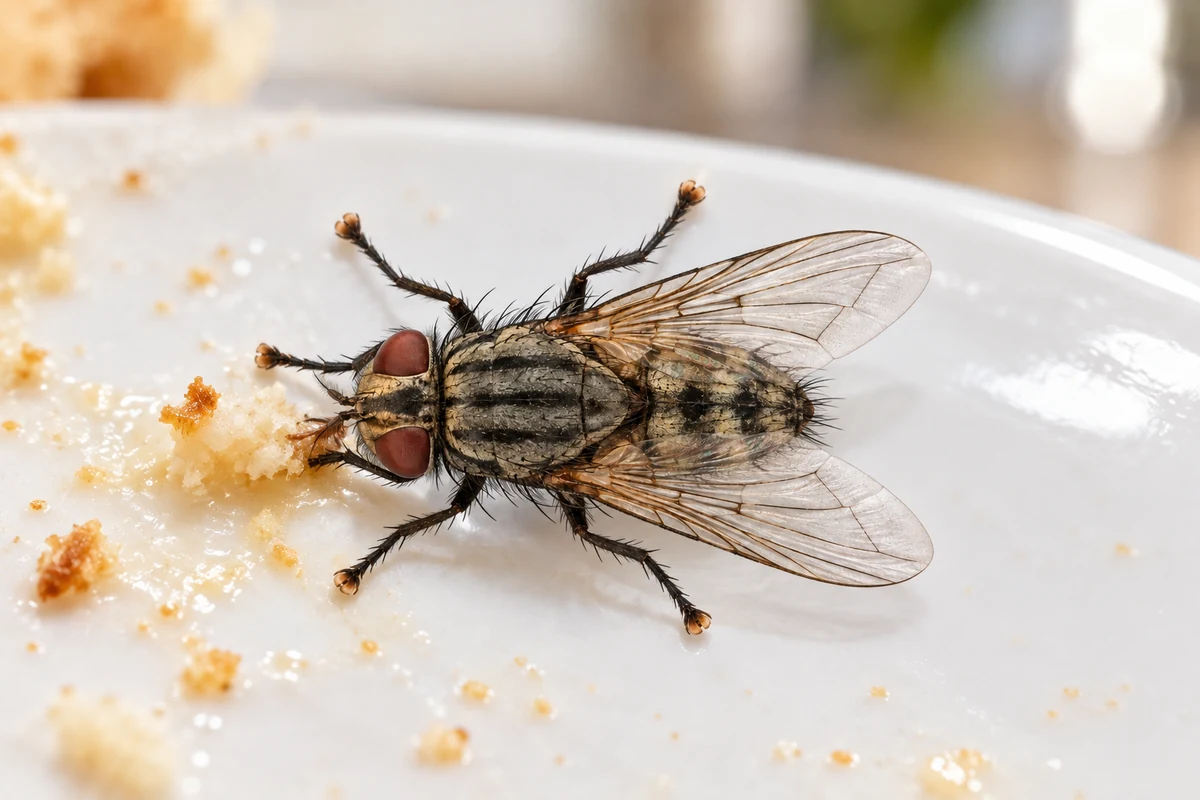
Flies all over the kitchen and the back door? Our office sits where McKinney, Plano, Frisco and Allen meet, 5 to 10 minutes from most homes in those four cities. Call and we will find what is breeding them.
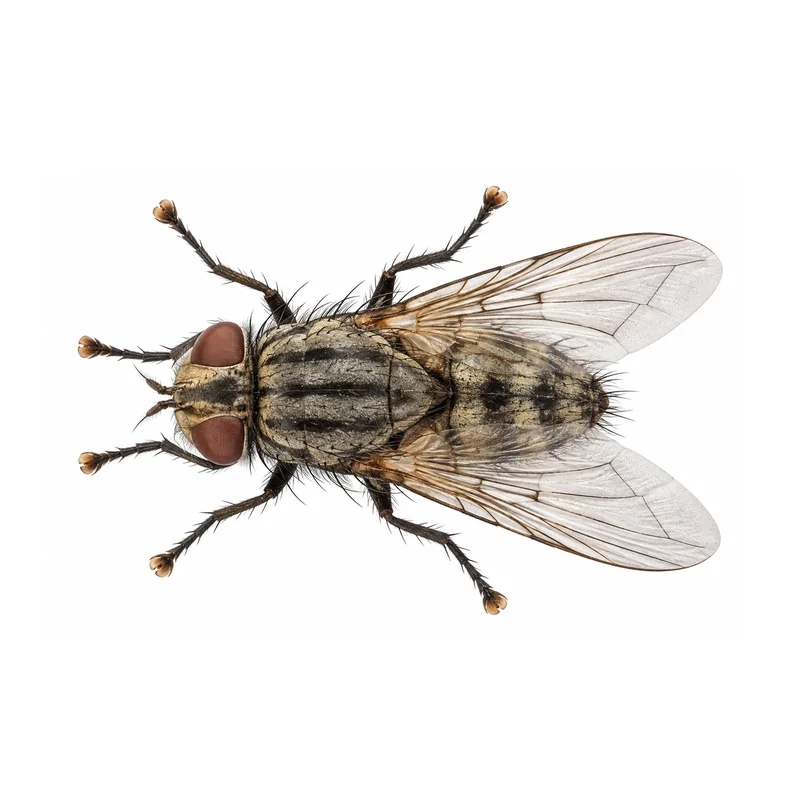
House Fly
The house fly is the most common fly around homes, breeding in garbage and manure outdoors and coming inside for food and shelter. The Field Guide to Common Texas Insects from Texas A&M describes it as a stocky fly with two clear wings and four dark stripes on its back.
Risk Assessment
Choose a row for the full detail- Color
- Dull gray, with four dark stripes on the back
- Diet
- Liquids, and solid food it softens with its own saliva
- Threat level
- Moderate
- Habitat
- Breeds in garbage, manure, pet waste and compost
- Adult lifespan
- Up to 3 or 4 weeks
- Egg to adult
- About 7 days in summer heat, 45 days in cool weather
- Size
- 3/16 to 1/4 inch long
What Does a House Fly Look Like?
A dull gray fly about a quarter inch long, with four dark stripes on its back and two clear wings
An adult house fly is dull gray and stocky, with two clear wings, a pair of large reddish eyes and four dark stripes running lengthwise down the back behind its head. Texas A&M’s Field Guide to Common Texas Insects puts it at 3/16 to 1/4 inch long. At rest it holds its wings apart in a V, and it feeds through a soft, sponging mouthpart, which is why it cannot bite.
The young are maggots. The same field guide describes them as creamy white and cone shaped, blunt at the back end and tapering to the head, and they grow in rotting food, garbage and animal droppings. When they finish feeding they crawl off to a drier spot and turn into brown, barrel shaped cases, then hatch as flies. That crawl out of a trash can or compost pile is often when people first notice them.
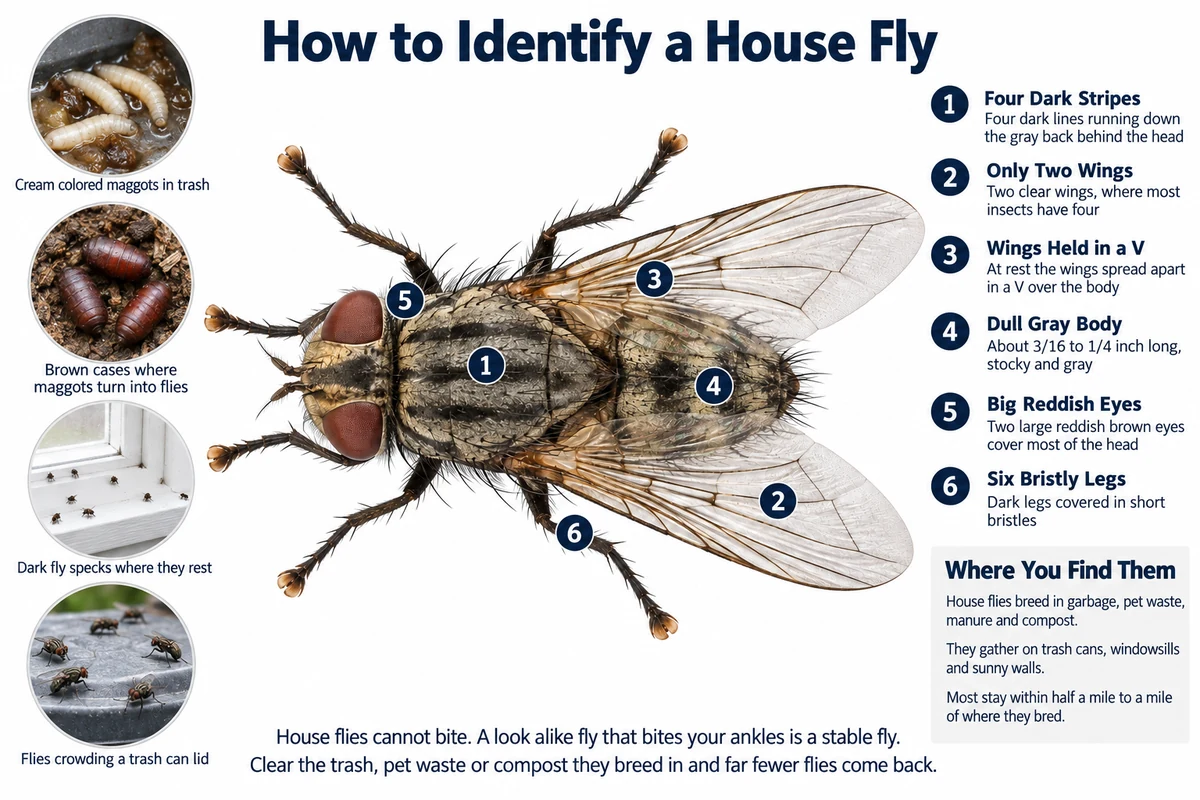
How to identify a house fly by its gray body, striped back and two clear wings, with the maggots and fly specks it leaves behind
- Gray flies about a quarter inch long landing on food, counters and windows
- Four dark stripes running down the back, seen up close
- Flies crowding around outdoor trash cans, a dumpster or a compost pile
- Cream colored maggots in the bottom of a trash can or in pet waste
- Small dark specks on windows, light fixtures and walls where flies rest
- More flies inside every time the back door or garage door opens
Other Names for the House Fly
House fly is also written as one word, housefly, and the scientific name Musca domestica is Latin for the household fly. In Spanish it is the mosca doméstica or mosca común. The University of Minnesota Extension calls it one of the most common of all insects, found throughout the world.
Two other names cause confusion. The little house fly is a smaller, slimmer fly that tends to hover in the middle of a room or porch, and the biting house fly is the stable fly, a look-alike that bites ankles. Neither is a house fly.
| Name | What it means |
|---|---|
| Housefly | The same name written as one word. |
| Common house fly | For how common it is around homes. |
| Mosca doméstica | The Spanish name, meaning the house fly. |
| Little house fly | A smaller, different fly that hovers. |
| Biting house fly | A different fly, the stable fly. |
How to Tell a House Fly from a Fruit Fly
Both turn up in Collin County kitchens, and the fix depends on which one it is. House flies breed outside and fly in, so the source is usually a trash can, compost pile or pet waste in the yard. Fruit flies breed inside, in ripe fruit, spilled drinks and drains. Size and where they gather tell them apart.
| Species | Size and Color | Key Feature | Where Found |
|---|---|---|---|
|
House Fly
AKA: Housefly, Common House Fly
Musca domestica
This species
|
3/16 to 1/4 inch long. Dull gray. | Four dark stripes on the back and two clear wings held apart in a V. | Breeds outdoors in garbage, pet waste, compost and manure, and comes in through doors and screens. |
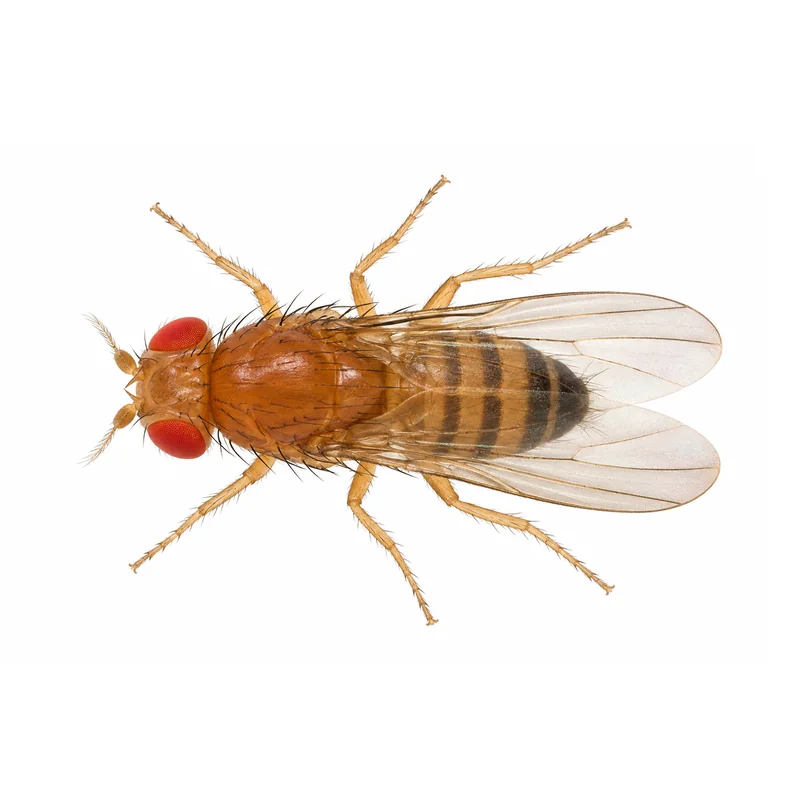
Fruit Fly
AKA: Vinegar Fly
Drosophila species
|
About 1/8 inch long, with a stout body and usually red eyes. | Small enough to pass through window screens, and hovers around fruit and drinks. | Indoors, breeding in overripe fruit, spilled drinks, wet trash can bottoms and drains. |
House Fly vs Fruit Fly
The House Fly in Three Numbers
100+
Texas A&M AgriLife Extension says house flies are thought to carry more than 100 diseases, because they keep leaving droppings and regurgitated food on the surfaces they land on.
Texas A&M AgriLife Extension, Indoor Flies and Their Control
1/2 to 1 mile
The same Texas A&M AgriLife Extension publication says a house fly can travel as far as 20 miles, but most stay within 1/2 to 1 mile of the spot where they bred.
Texas A&M AgriLife Extension, Indoor Flies and Their Control
75 to 100
The University of Minnesota Extension says a female house fly lays her eggs in batches of 75 to 100, usually in garbage but also in manure and rotting plants.
University of Minnesota Extension, Flies
Do House Flies Bite?
No. The University of California’s pest notes on flies explain that house flies have sponging mouthparts and cannot bite. They feed by spitting saliva onto solid food to soften it, then sponging it up. A fly that looks like a house fly but bites your ankles is a stable fly, which Texas A&M’s field guide says carries stiff, long mouthparts for drinking blood from animals and people.
Are House Flies Dangerous?
They can be, for what they carry rather than for any bite. Texas A&M AgriLife Extension’s guide to indoor flies says house flies are thought to carry more than 100 diseases, because they keep leaving droppings and regurgitated food on the surfaces they land on, and that health departments count flies in a restaurant as unsanitary. The University of California lists bacteria and viruses house flies are known to carry that cause diarrhea, cholera, food poisoning, dysentery and eye infections. They pick these up feeding on animal droppings and kitchen waste and leave them on the next meal they land on.
When House Fly Activity Needs Fast Action
Maggots Inside the House
Maggots crawling across a floor usually mean something has died in a wall, attic or chimney, or food waste is rotting out of sight. Find it and take it out.
Flies on Food and Baby Bottles
Cover food, pet bowls and bottles while flies are in the house, and throw out food they have been feeding on.
Flies Biting Your Ankles
That is a stable fly, not a house fly. It breeds in wet grass clippings, compost and livestock bedding, so the source to look for is different.
Dozens at the Windows Every Day
A steady crowd at the windows means something close by is breeding them every week. Check the trash cans, the compost and the yard first.
Why House Flies Get Into Your House
House flies come from outside. AgriLife says they rarely breed indoors, but readily take advantage of open doors and unscreened windows to come in for food and shelter, and the University of California says flies found inside a building have come in from outside in almost all cases. The same AgriLife guide says a house fly can travel as far as 20 miles, but most stay within 1/2 to 1 mile of where they bred, so the source is close by, often a trash can by the garage, a compost pile, pet waste in the yard, a dumpster behind a nearby business or a horse property down the road.
A sudden crowd of large, shiny blue or green flies indoors, with maggots on the floor, is usually not house flies. The same guide says those are blow flies or flesh flies, that they usually mean a bird, squirrel or rat has died somewhere in the house, and that the adult flies show up 1 to 2 weeks after the maggots.
Where House Flies Breed Around Collin County Homes
House flies lay their eggs in warm, moist, rotting material. The University of California lists manure, garbage, lawn clippings and decaying fruit and vegetables, and Texas A&M’s field guide adds piles of fermenting lawn clippings around the home, and barns, feed lots and poultry houses, where large numbers can breed and fly to nearby homes. Near open land, the University of Minnesota Extension says, they gather on the outside walls of homes on summer evenings.
House Fly Pressure Across Collin County
Fly calls show up in our service notes most often in McKinney, Frisco, Prosper and Allen, usually around trash cans, garages, windowsills and entry doors. In shopping centers the trouble starts at the dumpsters and back doors of restaurants.
In Princeton, Melissa and Anna, where homes sit closer to open land and horse properties, we also treat fence lines, because flies bred in nearby manure fly to the closest house.
House flies are active on warm days all year, but they breed fastest in summer heat. Fly calls climb through spring, peak from June through September and drop off once the nights turn cold.
Pattern from published house fly biology (Texas A&M AgriLife Extension) and Pest Me Off fly calls, which climb from April and are highest in early summer.
Why House Flies Keep Coming Back
How Pest Me Off Gets Rid of House Flies
House fly control is four steps, every job. Killing the flies in the kitchen is only part of the fix, because the place they breed keeps sending more.
Inspect and Identify
We walk the yard, trash cans, garage, windows and doors, confirm it is a house fly and not a fruit fly, drain fly or stable fly, and look for where they are breeding.
Find the Breeding Spot
We show you what is breeding them, whether a trash can, a dumpster, pet waste, compost or a pile of wet grass clippings, and what to change so it stops.
Bait Where Flies Rest
Fly bait goes where flies land and rest, around entry doors, windowsills and trash cans, with fly bait stations set behind the trash cans to draw flies away from the house.
Return and Check
We come back to check the bait and the breeding spot, refill what the flies have eaten, and treat again if flies are still coming.
& Other Companies
How to Get Rid of House Flies Yourself
Most house fly control is taking away what they breed in. The University of California puts sanitation and good screens first, and says most homes need no pesticide at all.
Why Some DIY Responses Fail for House Flies
Most DIY fly trouble comes from killing the flies you can see while the trash can, compost or pet waste that bred them keeps sending more.
Spraying the Kitchen Again and Again
Indoor spray kills the flies in the room and leaves the source untouched, so more keep arriving, and it puts insecticide near food and dishes.
A Bug Zapper Indoors
AgriLife says outdoor bug zappers should not be used indoors, because they scatter insect pieces around the room.
Fly Traps and Trash Cans by the Door
Smelly bait traps and trash cans next to the door draw flies toward it. The University of California says to keep both at a distance from the house.
Common House Fly Questions
What is a house fly, and what does it look like?
Do house flies bite?
Can house flies make you sick?
Are house flies dangerous to pets?
Why are there so many flies in my house all of a sudden?
Where do house flies lay their eggs?
How long do house flies live?
How far can a house fly travel?
What is the difference between a house fly and a fruit fly?
Why are there maggots in my trash can?
How do I get rid of house flies?
Flies All Over the Kitchen? We Find Where They Breed and Stop Them.
We find what is breeding the flies, show you how to clear it, and bait where they rest so new ones stop coming in. Pest control across McKinney, Allen, Frisco, Plano, and all of Collin County.