
Sawtoothed Grain Beetles in Collin County, TX | Identification and Control
The sawtoothed grain beetle (Oryzaephilus surinamensis) is a tiny, flat, brown beetle with six saw-like teeth along each side of the shield behind its head. It cannot chew into sound whole grain, so it lives in flour, cereal, pasta, dried fruit, pet food and bird seed, slipping into packages through folds and seams. Purdue University Extension puts the adult at 1/10 inch and says it can go from egg to adult in about 25 days.
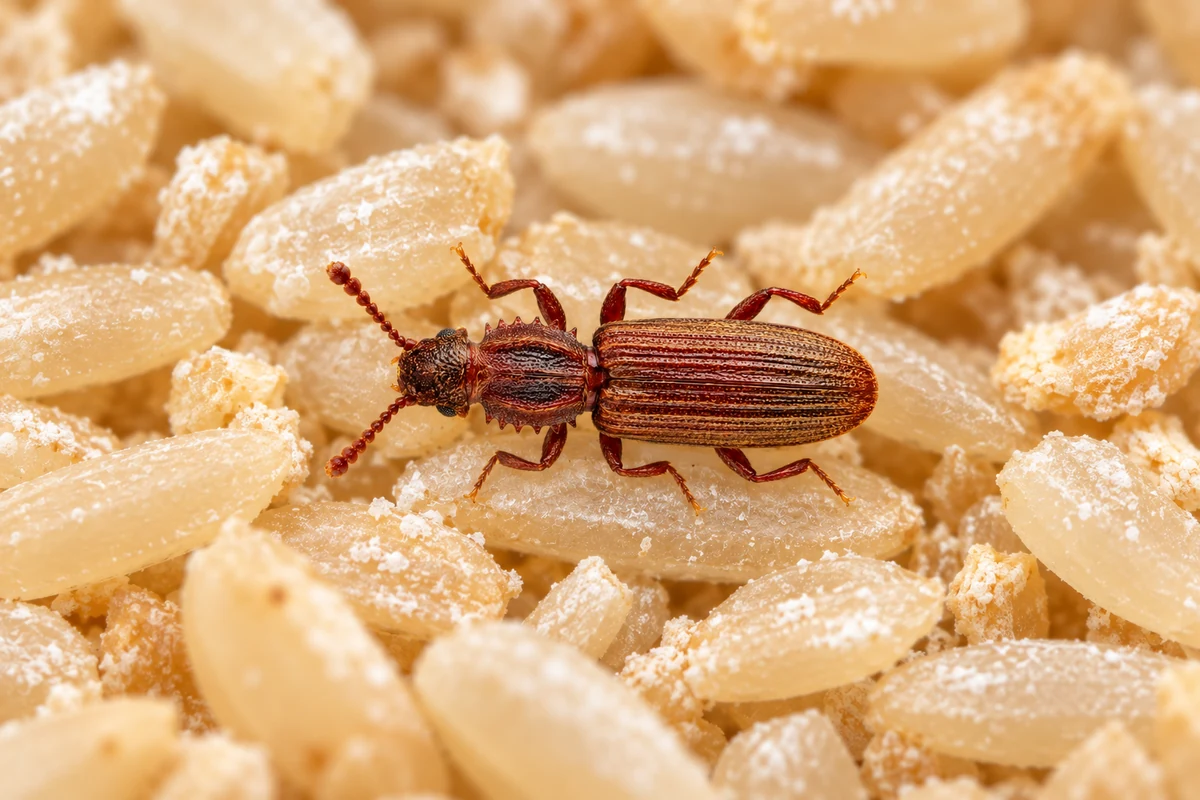
Tiny flat beetles in the flour or cereal? Our office sits where McKinney, Plano, Frisco and Allen meet, 5 to 10 minutes from most homes in those four cities. Call and we will find every box and bag they are breeding in.
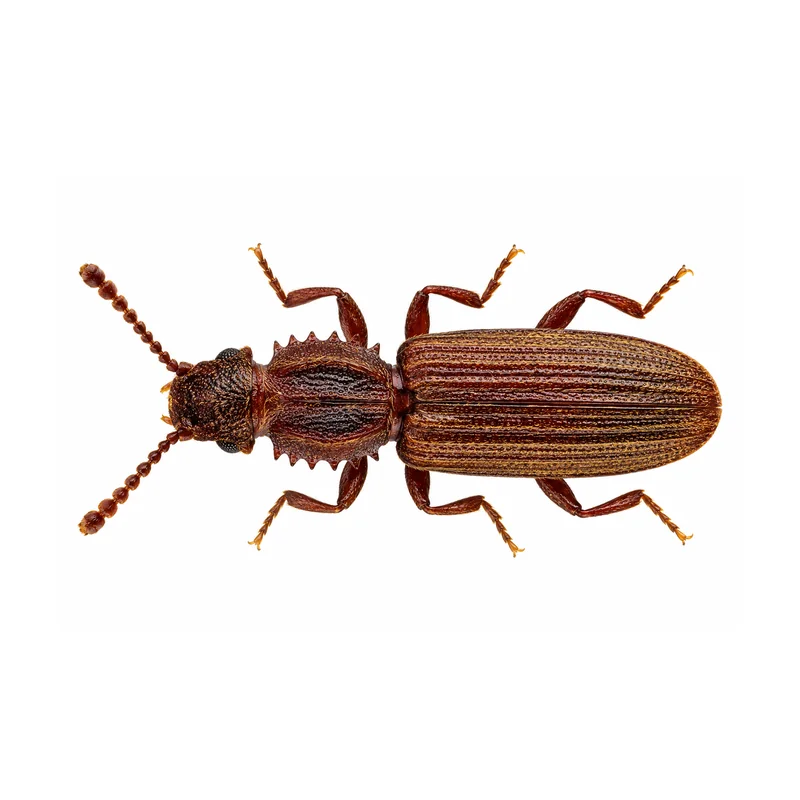
Sawtoothed Grain Beetle
The sawtoothed grain beetle is a flat little crawler that rides home in groceries and spreads along the pantry shelf. Penn State Extension calls it a widely distributed species commonly found in stored grain, and often confused with its near twin, the merchant grain beetle.
Risk Assessment
Choose a row for the full detail- Color
- Brown, with a slender, flat body
- Diet
- Flour, cereal, pasta, dried fruit, nuts, chocolate, pet food and bird seed
- Threat level
- Low
- Wings
- Has wings but is not known to fly
- Where it hides
- Inside boxes and bags of milled and dried food, and in shelf cracks
- Adult lifespan
- 6 to 10 months on average
- Egg to adult
- About 25 days in warm conditions
- Size
- About 1/10 inch long
What Does a Sawtoothed Grain Beetle Look Like?
A tiny, flat, brown beetle with six small teeth down each side behind its head
An adult sawtoothed grain beetle is slender, flat and brown, about 1/10 inch long. Purdue University Extension’s fact sheet describes the edges of the shield behind the head as saw-like, with six projections on each side, and three raised ridges running along the top of that shield. The flat body is built for crawling into cracks and the folds of a package. It has full wings, but Purdue has no record of it flying, and Penn State Extension says it cannot fly at all.
The young are small yellowish white grubs with a brown head, under 1/8 inch long when full grown, that crawl freely through the food rather than growing inside a kernel the way a weevil does. What most people notice first are the adults, crawling out of a box of cereal, along the edge of a shelf or across the counter. Purdue notes the adults are very active and tend to wander away from the food once their numbers grow.
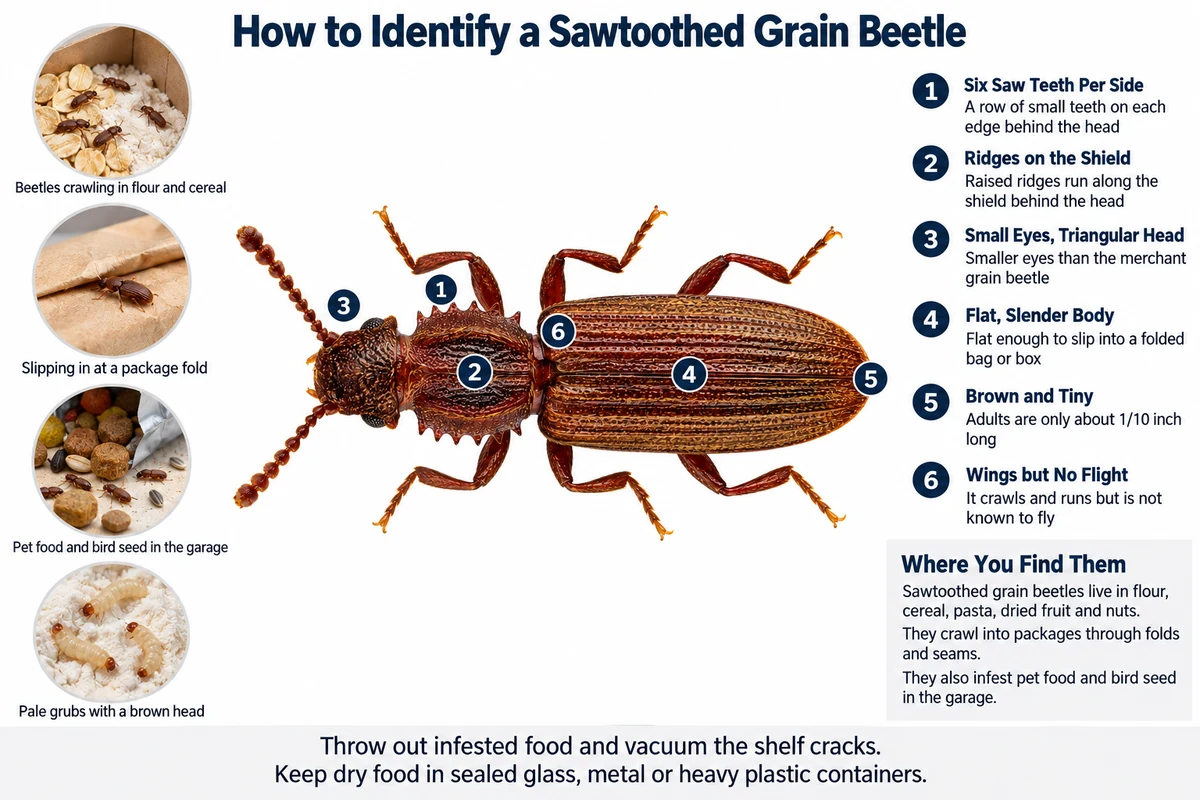
How to identify a sawtoothed grain beetle by its saw-toothed shield and flat body, with the foods and package folds where it turns up
- Tiny, flat, brown beetles crawling in flour, cereal, pasta, dried fruit or pet food
- A row of small teeth along each side behind the head, seen with a magnifying glass
- Beetles that crawl and run but never take off, even when disturbed
- Beetles inside a box or bag that was still folded shut
- Beetles in flour and broken grain while whole rice and corn kernels have no holes
- Beetles wandering across shelves and counters some distance from any food
Other Names for the Sawtoothed Grain Beetle
The name comes straight from its one sure mark, the six saw-like teeth on each side of the shield behind its head. Pest professionals often shorten it to the sawtooth beetle, and many homeowners simply call it a grain beetle. Despite that name, it is not a whole grain pest. Purdue University Extension says it cannot attack perfectly sound grain and feeds on grain that is already broken or milled.
The name that causes the most confusion is merchant grain beetle. That is a separate species, Oryzaephilus mercator, with the same six teeth and the same size. The University of California’s pantry pest guide describes the two together and notes they are managed the same way. The look-alike table below shows how to tell them apart.
| Name | What it means |
|---|---|
| Sawtooth beetle | The short name, after the teeth behind its head. |
| Grain beetle | A loose name for the small flat beetles in stored food. |
| Saw-toothed grain beetle | The same name, spelled with a hyphen. |
| Merchant grain beetle | A near twin, a different species that flies. |
How to Tell a Sawtoothed Grain Beetle from a Merchant Grain Beetle, Rice Weevil or Drugstore Beetle
All four are small brown beetles found in Collin County pantries, and knowing which one you have tells you which foods to check first. The teeth behind the head, the shape of the head, whether it has a snout and whether it flies tell them apart.
| Species | Size and Color | Key Feature | Where Found |
|---|---|---|---|
|
Sawtoothed Grain Beetle
AKA: Sawtooth Beetle, Grain Beetle
Oryzaephilus surinamensis
This species
|
About 1/10 inch. Slender, flat and brown. | Six saw-like teeth on each side behind the head. Small eyes and a more triangular head. Does not fly. | Flour, cereal, pasta, dried fruit, pet food and bird seed, never inside a sound whole kernel. |
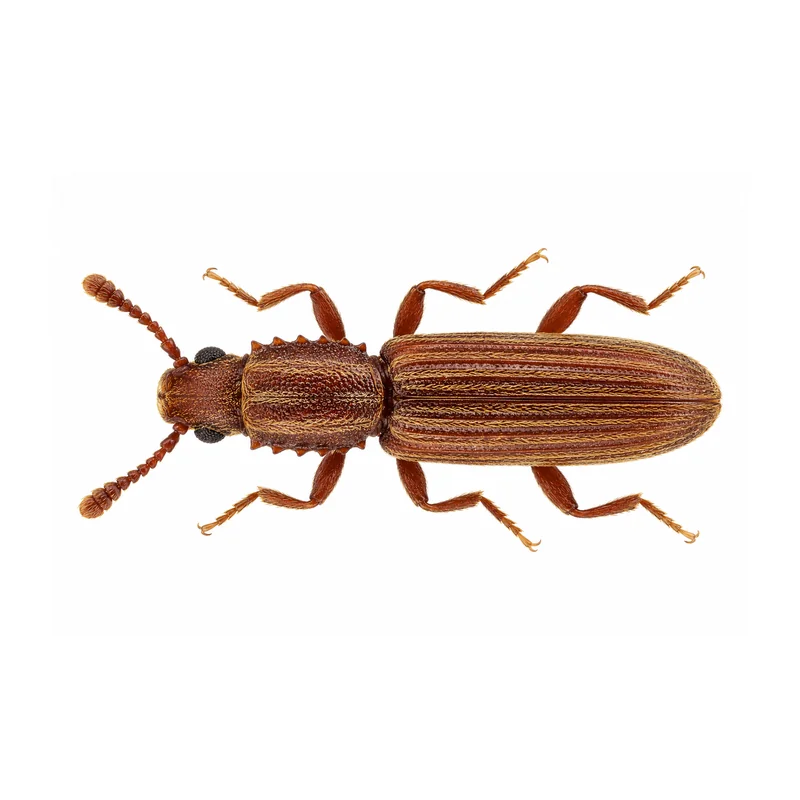
Merchant Grain Beetle
AKA: Grain Beetle
Oryzaephilus mercator
|
About 1/10 inch, a little larger and a darker brown. | The same six teeth on each side, but larger eyes and a more rectangular head. A strong flier. | Prefers oily foods such as nuts and sunflower seeds, and gets into other dry foods too. |
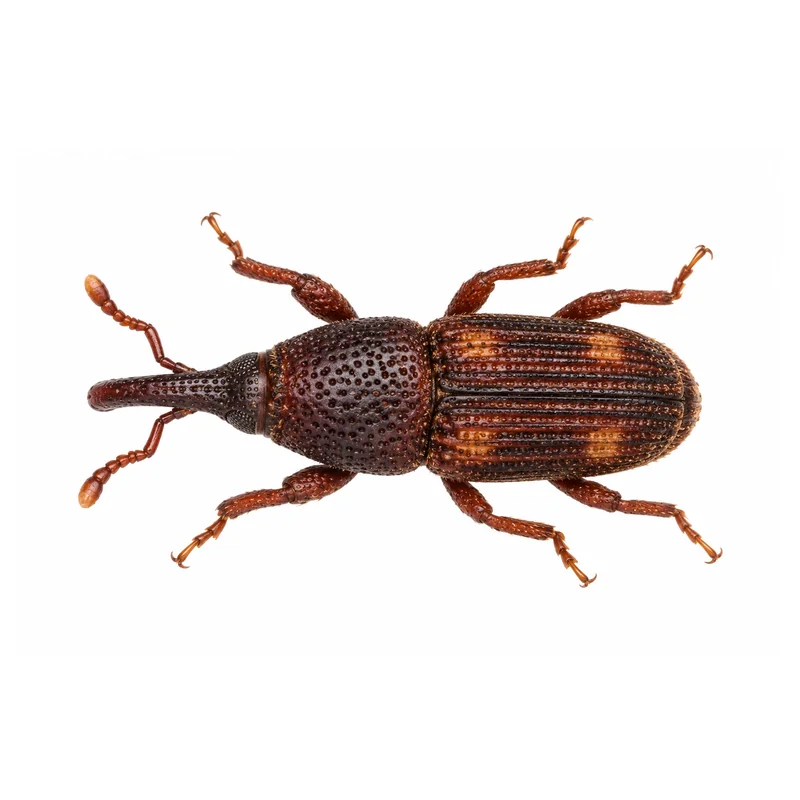
Rice Weevil
AKA: Snout Beetle, Grain Weevil
Sitophilus oryzae
|
About 1/8 inch. Reddish brown to black with four reddish or yellowish spots. | A long, slender snout on the front of the head and no teeth along the sides. Flies well. | Inside whole kernels of rice, wheat, corn and other grain, and in bird seed. |
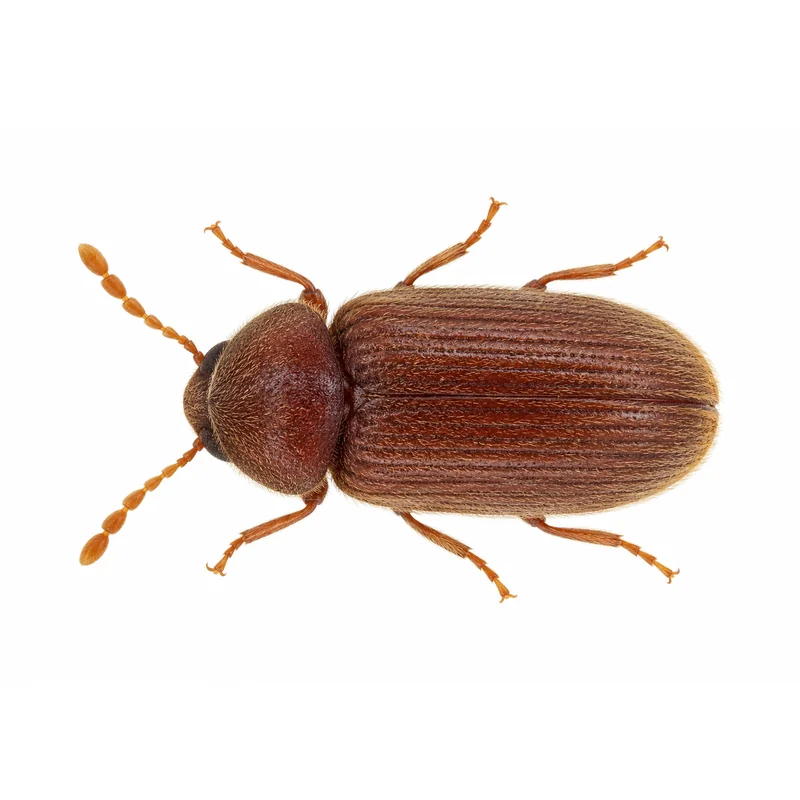
Drugstore Beetle
AKA: Biscuit Beetle, Bread Beetle
Stegobium paniceum
|
About 1/10 inch. Even light brown to reddish brown, rounder and not flat. | No teeth behind the head. Lined wing covers and antennae ending in a club of three large segments. | Flour, bread mixes, cereal, spices, pet food and pills, plus books and leather. |
Sawtoothed Grain Beetle vs Merchant Grain Beetle
The Sawtoothed Grain Beetle in Three Numbers
6 per side
Penn State Extension says the most telling mark of the sawtoothed grain beetle is its saw-like teeth, 6 per side, along each edge of the shield behind its head.
Penn State Extension
25 days
Purdue University Extension says a sawtoothed grain beetle can go from egg to adult in about 25 days in ideal conditions, so a few beetles become many within a couple of months.
Purdue University Extension
1/10 inch
The University of California describes the sawtoothed grain beetle as a slender, flat, brown beetle about 1/10 inch long, small enough to pass for a speck in the flour.
University of California
Do Sawtoothed Grain Beetles Bite?
No. Sawtoothed grain beetles chew dry food, not skin. The University of Minnesota Extension says the insects that infest stored food do not bite or sting people or pets, and do not feed on or damage the house. A beetle crawling on your hand or the counter is a sign of infested food nearby, nothing more.
Is It Safe to Eat Food With Grain Beetles in It?
Swallowing a beetle by accident will not poison you, but infested food is not worth keeping. The University of California’s pantry pest guide warns that pantry insects can bring microbes into food that may produce mycotoxins, especially when the food is kept warm and humid. Sifting out the adults also leaves the eggs and young behind in the flour or cereal. Throw infested food away and start fresh.
When Sawtoothed Grain Beetle Activity Needs Fast Action
Bug Spray Got on Food
The University of California warns that spraying pesticides on or near food can do more harm than the beetles. Throw out any food the spray touched.
Beetles in Several Packages
Their flat bodies get into folds and seams, so check every box and bag of dry food in the pantry and the garage, not just the first one.
Beetles Away From the Pantry
Adults wander off when their food gets crowded. Look at pet food, bird seed, decorative corn and dried flower arrangements too.
One Beetle on the Counter
Check the flour, cereal and dried fruit nearby. If every package is clean, keep them sealed and watch for a few weeks before doing more.
Why You Have Sawtoothed Grain Beetles in Your Pantry
Sawtoothed grain beetles almost always come home in the food. Penn State Extension notes that, unlike the merchant grain beetle, they cannot fly, so they have to be carried in with infested food. The University of Minnesota Extension says pantry pests most often get into opened packages, but they also reach unopened paper, thin cardboard and plastic, foil or cellophane wrapped packages, chewing their way in or crawling through folds and seams. A flat beetle 1/10 inch long fits through a gap you would never notice.
Once one box is infested, the beetles spread to the next. Purdue University Extension lists cereals, dried fruit, bran, rolled oats, brown rice, walnuts, macaroni, sugar and chocolate among their foods. The University of Kentucky’s pantry pest fact sheet adds dry dog food, dried meats and candy bars, and says that if the source is not in the pantry, decorative items and bird seed are the next places to look. It is not a sign of a dirty kitchen.
Where Sawtoothed Grain Beetles Live in Collin County Homes
Sawtoothed grain beetles live wherever dry food of plant origin sits for weeks. In a home that means the pantry and cupboards, where flour, cereal, pasta, dried fruit, nuts and chocolate are kept, and the garage, where pet food and bird seed sit in open bags. The University of Kentucky’s pantry pest fact sheet notes they cannot attack whole or undamaged grain, so they turn up in milled and broken foods rather than inside sound kernels.
Sawtoothed Grain Beetle Pressure Across Collin County
Sawtooth and other grain beetles turn up in our service notes in McKinney and Allen pantries, usually where rice, grain or flour was kept in open bags, and we treat pantry beetles in Plano and Frisco kitchens too. They arrive in groceries, so any home in the county can get them, new build or old.
The same goes for any home that keeps pet food, bird seed or feed in the garage or a barn. Buying dry food in bulk and storing it in its original bag for months gives a few beetles time to become many.
Sawtoothed grain beetles live indoors in heated and cooled homes, so they breed all year in Collin County. They build up fastest in the warm months, and a box or bag that sat through the summer is the one most likely to be full of them by fall.
Pattern from published sawtoothed grain beetle biology (Purdue University Extension’s best range of 86 to 95 degrees, and its note that the beetle survives three weeks near freezing) and Pest Me Off grain beetle calls, which come in summer, fall and winter.
Why Sawtoothed Grain Beetles Keep Coming Back
How Pest Me Off Gets Rid of Sawtoothed Grain Beetles
Sawtoothed grain beetle control is four steps, every job. Spraying the beetles you can see is not the fix, because the next batch is already growing in a box you have not opened.
Confirm Which Beetle It Is
A free inspection of the pantry and the garage. We confirm it is a sawtoothed grain beetle and not a merchant grain beetle, rice weevil or drugstore beetle, because each one favors different foods.
Remove Every Infested Source
We open and inspect the whole pantry, including sealed bags that look fine, and check the pet food, bird seed and bulk grain in the garage. Every infested item is bagged and out of the house before anything else happens.
Treat the Cracks, Never the Food
With the food out, we work a targeted treatment into shelf cracks, corners and crevices. Nothing is ever sprayed across food surfaces.
Store It Sealed and Check Back
We point out the open packaging that let them spread and help you move flour, cereal and grain into sealed containers. On a quarterly plan, every visit includes a pantry check.
& Other Companies
How to Get Rid of Sawtoothed Grain Beetles Yourself
Most DIY grain beetle work is finding the food they live in. The University of Minnesota Extension puts throwing out infested food and cleaning the shelves first, ahead of any product.
Why Some DIY Responses Fail for Sawtoothed Grain Beetles
Most DIY grain beetle trouble comes from spraying instead of searching, stopping at the first box, or trusting a home remedy that has never been shown to work.
Spraying the Pantry
The University of California warns that spraying pesticides on or near food may do more harm to your family than the beetles, and spray does not reach the beetles inside the packages.
Tossing Only One Box
By the time you see beetles, they have often crawled into other packages. Check every dry food in the pantry, the pet food and bird seed in the garage, and any decorative corn or dried flowers.
Bay Leaves and Gum
The University of Minnesota Extension found no evidence that bay leaves or sticks of spearmint gum in a cupboard prevent or get rid of pantry insects.
Common Sawtoothed Grain Beetle Questions
What is a sawtoothed grain beetle?
What is the difference between a sawtoothed grain beetle and a merchant grain beetle?
Do sawtoothed grain beetles bite?
Is it safe to eat food with grain beetles in it?
Are sawtoothed grain beetles harmful to pets?
Where do sawtoothed grain beetles come from?
Can sawtoothed grain beetles fly?
Why do I find grain beetles outside the pantry?
Does freezing kill sawtoothed grain beetles?
How long do sawtoothed grain beetles live?
How do I get rid of sawtoothed grain beetles?
Flat Brown Beetles in the Flour? We Find Every Infested Box.
We confirm the beetle, find and remove every infested package in the pantry and garage, and treat the shelf cracks without ever spraying your food. Pantry pest control across McKinney, Allen, Frisco, Plano, and all of Collin County.