
Termite Control and Treatment in McKinney, Allen & Frisco
Serving McKinney, Plano, Frisco, Allen and across Collin County.
 Free termite check for customers
 Annual protection plans
 Same-day inspections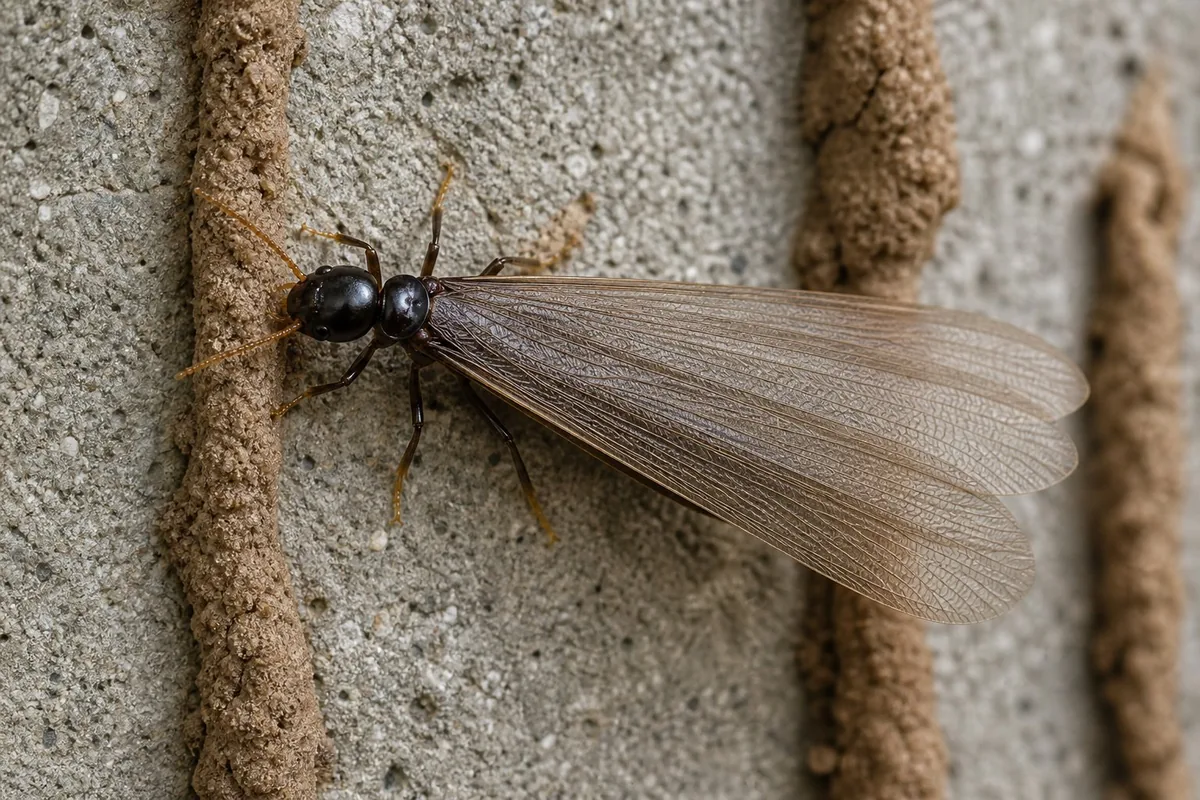



Why McKinney homeowners choose Pest Me Off for termites
Pest Me Off is a family-owned, Texas-licensed pest control company that has handled termite control and termite treatment for McKinney, Allen, Frisco and Plano homes, the Collin County side of the DFW area, since 2014.
Termite work is not a one-size spray. Every inspection is done by a licensed applicator who confirms the species and finds where the colony is feeding before anything is treated. We map active feeding with in-wall detection equipment, stop the colony at the foundation, and add in-ground bait stations that keep watching for the next colony year after year.
Signs of termites in a McKinney home
The Eastern subterranean termite enters through the foundation and never breaks a visible surface, so most homeowners find them by accident. These are the warning signs worth an inspection.
Mud tubes
Pencil-width soil tubes running up the foundation, piers, or garage wall. The termites build them to travel from the soil to the wood.

Hollow-sounding wood
Press a baseboard, door frame, or windowsill and it sounds hollow or gives way. The termites eat the wood from the inside and leave a thin shell.

Discarded wings
A pile of small, equal-length wings on a windowsill in late winter or spring. Winged termites shed them after they land indoors.

Bubbling or warped paint
Paint that blisters or trim that warps for no clear reason often means moisture and termite activity behind the surface.
Doors that suddenly stick
Wood swollen by termite moisture makes doors and windows bind in their frames where they used to open cleanly.

Moisture against the foundation
A leaking condensate line, clogged gutter, or slow slab leak gives termites everything they need to stay. They follow water.
Seen one of these? Do not disturb mud tubes or wood. Disturbing an active colony makes it scatter into other parts of the home.
Book a same-day inspectionHow to tell termites from flying ants
A pile of small wings indoors in February through May is the most common reason homeowners call. Here is the fast way to tell which insect you are looking at.
 Waist
Waist Wings
Wings Antennae
 Shed wings
 What it means
 Not sure? Save a few in a sealed bag and we will identify the species at your inspection at no charge.
Two termite species. Two different treatment strategies.
Species identification shapes the plan. Eastern and Formosan termites are both present locally and require different approaches when activity is found above the foundation. Each has a dedicated page in our Pest Library.
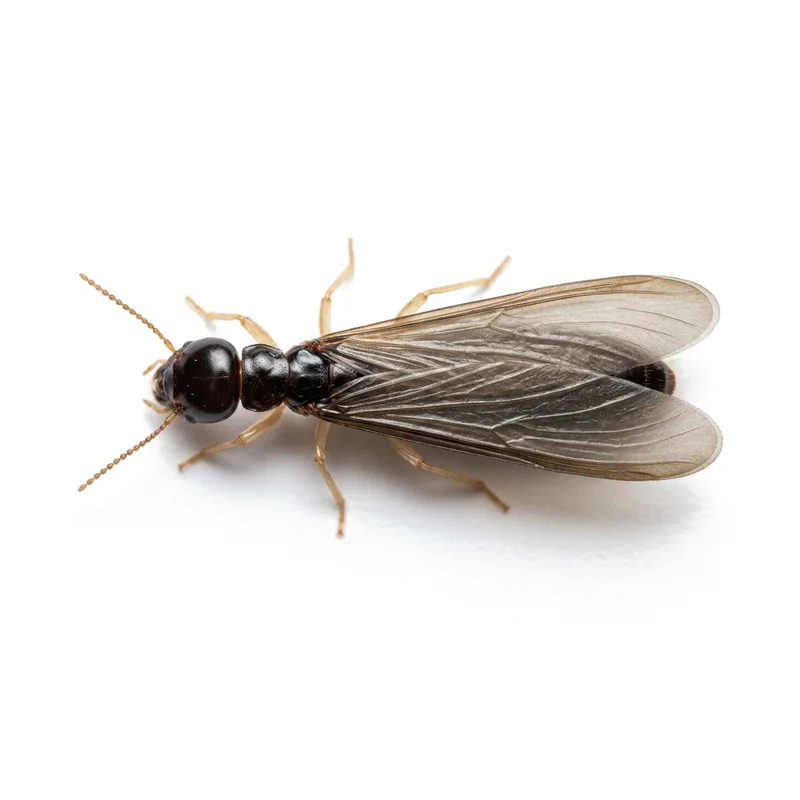
Eastern Subterranean Termite
AKA: wood termite
The most common termite locally. Lives underground and enters through the foundation with no visible surface warning.
 Where it lives
Underground, building mud tubes along the foundation to reach wood above. Most active February through May when winged termites emerge, and again in late summer.
 Where in the area
Present across all 14 cities we serve. Highest activity in older McKinney neighborhoods east of US-75, Plano near Spring Creek, and anywhere mature landscaping keeps soil moist.
 How we treat
An inspection with in-wall detection confirms where feeding is active. Spot treatment at confirmed entry points targets the colony. In-ground bait stations provide ongoing monitoring.
 Why it hides
It does not break through surface finishes. An intact baseboard does not mean there is no activity behind it. An inspection is the only way to confirm.
Caution. An intact tile floor or baseboard is not proof your home is clear. These termites stay completely hidden until damage appears.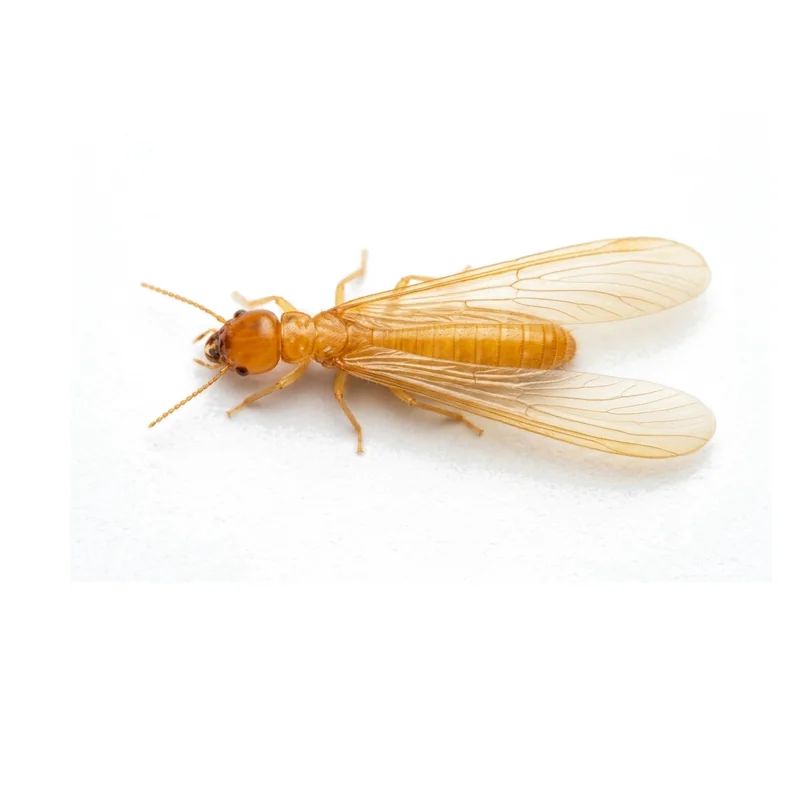
Formosan Subterranean Termite
AKA: super termite
Larger colonies and faster wood consumption. Now confirmed locally. Can nest inside walls above the foundation.
Where it livesMostly soil-dwelling, but Formosan colonies can nest inside wall cavities without soil contact when they have a moisture source from a roof leak or plumbing failure.
Where in the areaHighest watch areas are older McKinney historic-district homes, older eastern Plano subdivisions east of US-75, and older Carrollton sections. Confirmed in Collin County per October 2025 state regulations.
How we treatSoil-level liquid treatment and bait stations handle the colony in the ground. When an above-floor nest is confirmed by in-wall detection, foam treatment reaches the cavity that soil-level work cannot.
The moisture linkThe water source feeding an above-floor colony is found and documented so the conditions that let it nest indoors get fixed, not just the termites.
Caution. If you find chewed wood mixed with soil inside a wall during a renovation, stop and call before removing material. Disturbing a Formosan nest scatters the colony.How our termite service works with the RID Method
A can of spray on a hollow baseboard does nothing to a colony feeding in the soil and inside your walls. The RID Method goes after the whole problem: the active colony, the exact spots it is feeding, and the next colony that finds your foundation in a few years. Remove and Install start as soon as you approve the plan. Defend is the annual plan.
Remove
We start with an inspection to confirm the species and map where feeding is active. If we find activity, we show you what we found and recommend a plan, and treatment starts once you approve it.
- Inspection using in-wall detection that finds movement behind walls without drilling
- Spot treatment at confirmed active entry points and feeding zones
- Targeted liquid treatment along affected foundation sections
- Foam treatment into wall cavities where above-floor activity is confirmed
- Every treatment location photographed and documented
Install
We install Trelona in-ground bait stations around the full foundation. Active from day one, no waiting period.
- Stations set at roughly 10-foot intervals, 2 to 4 feet from the foundation
- Each station pre-loaded with a bait cartridge at installation
- Termites that feed on a station share the active ingredient with the colony
- Every station position documented and mapped for every station check
- Foam installed in confirmed above-floor cavities
Defend
The Defend step is included with every annual visit. This is what protects your investment over time.
- Full structural re-inspection at each annual visit, including an in-wall detection scan
- Every bait station opened, cartridge inspected, and replaced if consumed
- A consumed cartridge confirms the monitoring program is working
- Moisture inspection to catch new sources that raise termite risk
- Quarterly pest visits mean a technician watches your foundation all year
Every review, 5.0 stars on Google
We were dealing with termites, and the team handled it swiftly and professionally. They used non-invasive methods and followed up to ensure complete eradication.
Ryan and Dylan did such an amazing job for us. Very professional, communicative, personal and took their time to do things right but didn’t waste time either. It’s nice to find a pest control company that does things the right way.
Professional communication and the crew really take their time to work on the property to make sure nothing is forgotten.
In-wall detection finds termites before opening walls
A visual inspection only confirms activity where there is already visible damage. To find termites feeding inside a wall before they break the surface, we scan with movement-detection equipment.
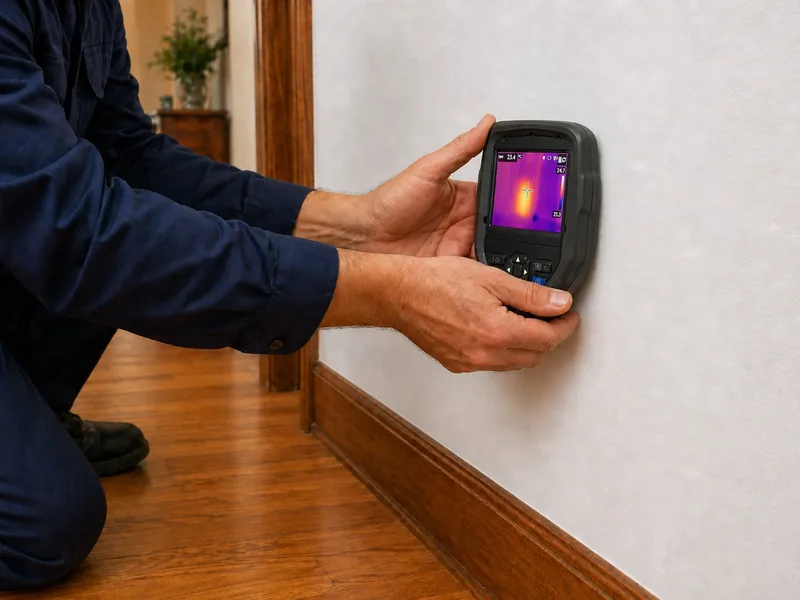
 The detector is pressed flat against the wall. No drilling, no damage to drywall or tile. Used during every termite inspection.
A visual check cannot confirm activity inside a wall where termites are feeding but have not broken through any surface yet. In-wall detection fills that gap.
 Termatrac T3i radar
The detector uses low-energy radar to sense movement through drywall, wood, tile, and plaster up to about 4 inches deep. The technician holds it against the wall and moves along the surface. Termite movement inside the wall changes the reflected signal, shown in real time. No drilling, no opening walls, no disturbing the colony.
- 1
 Held flush against the wallNo drilling, tapping, or cutting. The technician works along baseboards, window frames, and door frames where evidence suggests activity.
 - 2Radar picks up movement inside the wallTermites in an active colony are in near-constant motion. That movement creates a signal the device reads in real time.
- 3Findings are photographed and filedEvery area tested and every positive reading is photographed as part of your service record, giving a baseline for future visits.
- 4
 Treatment targets the confirmed spotBecause the device helps locate hidden activity, foam goes into the cavity where it was found instead of broad guesswork. Less disruption, more effective treatment.
Trelona bait stations for in-ground termite monitoring
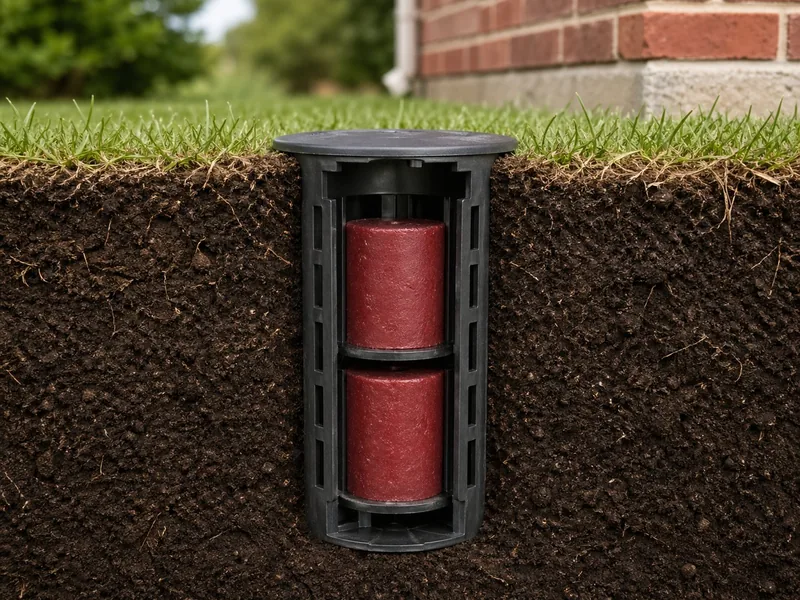
Trelona ATBS in-ground station. Two bait cartridges pre-loaded at installation. The cap sits flush at soil level next to the foundation.

Liquid treatment goes after the colony feeding on your home today. It cannot detect the next colony that finds your foundation in three or five years. In-ground stations intercept that activity before it reaches the foundation, year after year.
 Trelona ATBS
- 1Installed flush at soil levelStations are set at 10-foot intervals so the cap sits at grade. A typical home is done in half a day, and every station position is mapped.
- 2
 Termites find the station as they feedThe large vertical openings maximize soil contact. In a University of Delaware study, termites found the Trelona station in a median of 8 days. A competing brand of station took 46 days.How fast termites find the bait station8 days46 daysTrelona stationCompetitor stationUniversity of Delaware study, 20 replicates, stations placed 5.5 m from an active colony
 - 3
 The active ingredient moves through the colonyWorkers carry the bait back and share it through normal feeding. It prevents termites from molting, so colony members that never visited the station are affected too. Decline typically takes 60 to 90 days in warm months.
 - 4Every station is checked on a scheduleAbout every 120 days in the first year, sooner when termites are feeding, each station is opened, the cartridge inspected, and replaced if consumed. Heavy use at one station may add a supplemental station nearby. The visit includes a full re-inspection.
Wall-void foam treatment reaches the colony behind the surface
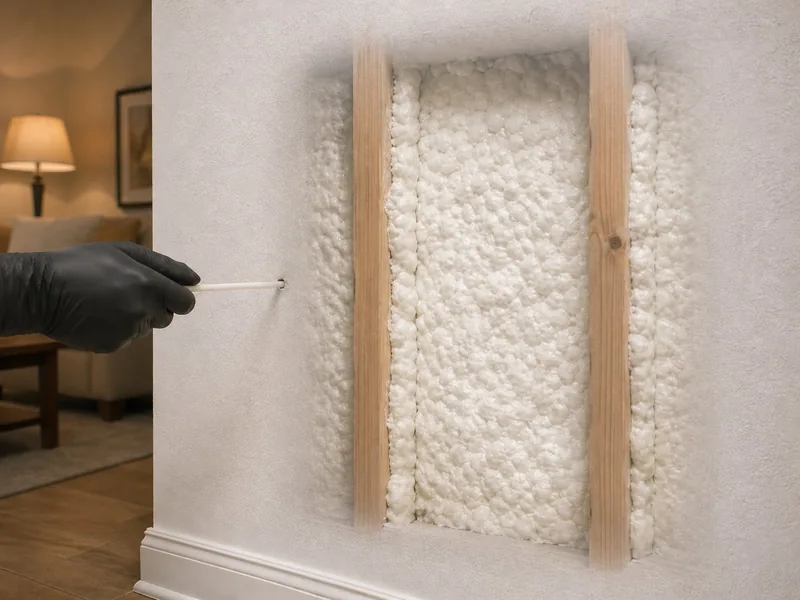
One small injection point fills the entire stud bay. The foam expands at about 30 to 1, coats every surface where termites travel, then collapses leaving a residual layer.
Bait stations and liquid treatment address termites traveling through the soil. When a Formosan colony nests inside a wall cavity above grade, the only way to reach it is from inside the wall.
 Expanding foam treatment
Foam is injected through a small access point into the cavity where detection confirmed activity. One ounce of product expands to about a quart of foam in seconds, filling the void completely. It coats every interior surface where termites travel, then collapses leaving a residual layer that reaches colony members the foam never directly touched.
- 1
 Activity confirmed before any access is madeThe technician confirms active movement in the cavity first. This prevents unnecessary drilling and pinpoints which section needs treatment.
 - 2
 Foam injected through a small access pointA small hole in an inconspicuous spot. The foam expands at a 30-to-1 ratio, so one injection fills a large cavity. Most access points patch with a standard repair.
 - 3Foam fills the void and coats every surfaceAs it expands and collapses, it leaves a residual layer on every stud and surface inside the treated section. Termites contact it regardless of where they enter.
- 4The active ingredient spreads through the colonyIt is non-repellent, so termites do not detect or avoid it. They carry it to other colony members through grooming and feeding.
Do bait stations have to go around the whole house?
Yes. Subterranean termite colonies send workers through the soil in every direction, so nobody can predict which side of your foundation they reach first. Stations every 10 feet around the full foundation catch them from any direction, and each one is checked about every 120 days in the first year, then about every six months once it stays clear.
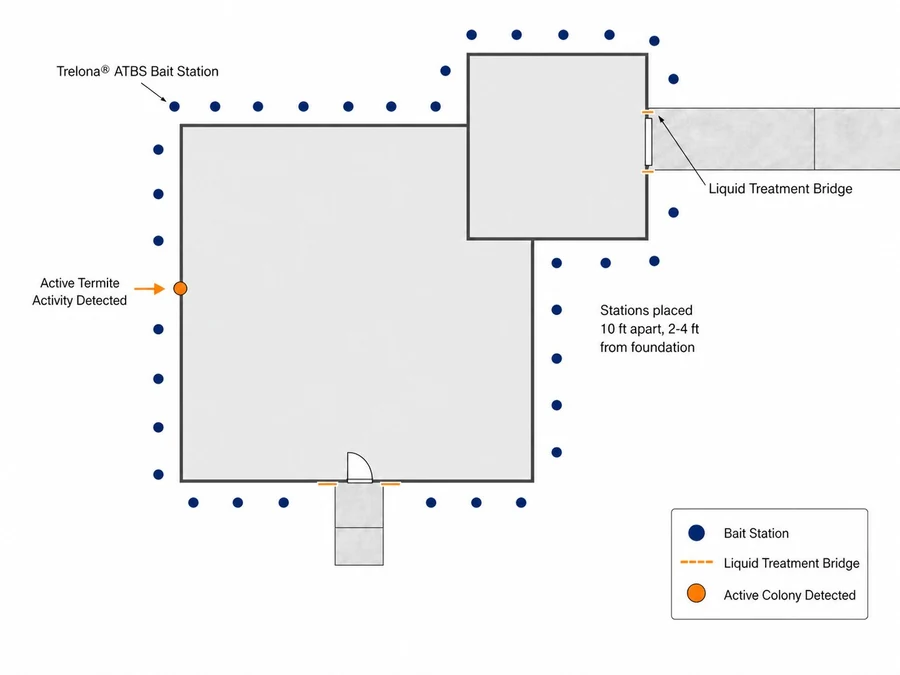
Termite colonies send workers in every direction through the soil, hundreds of feet from the nest. There is no way to predict which side of your foundation they reach first. A ring of stations around the full perimeter intercepts activity from any direction.
When an inspection finds active feeding at a specific entry point, we treat that location directly. Full-perimeter liquid treatment is not applied by default. Scope follows what the inspection finds.
Bait stations go around the full foundation as the annual monitoring component, so any new colony from any direction is intercepted before it finds a way in.



What goes into a termite treatment quote
Termite work is quoted per home, never a flat sticker price, because the right treatment depends on what the inspection finds. Here is exactly what shapes your number, and what stays free.

What changes the price
- Whether there is an active colony or you want preventive monitoring only
- Home size and the length of foundation to protect
- Slab vs pier-and-beam construction and access
- The species found and whether activity is above the floor
- Whether wall-void foam is needed for a hidden nest
- Number of in-ground stations the perimeter calls for

What stays free
You see the full scope and the price before any work begins. No surprise add-ons, no pressure.
 Free termite check for current customers
 Free written quote itemized by scopeWe only treat what we find
Not yet a customer? The termite inspection is paid. The official Texas wood destroying insect report a home sale uses is a separate report and is not part of the free check. Buying a house? Read what a termite inspection before buying a house covers.
Get my free quoteAnnual protection plan
Every bait station is checked about every 120 days in the first year and about every six months after a clear year, cartridges are replaced when consumed, and your home is re-inspected with detection equipment once a year, included with every service agreement.
Real termite work, documented
The strongest proof is a real job. Equipment in use, a station going in, and what we find behind the surface.
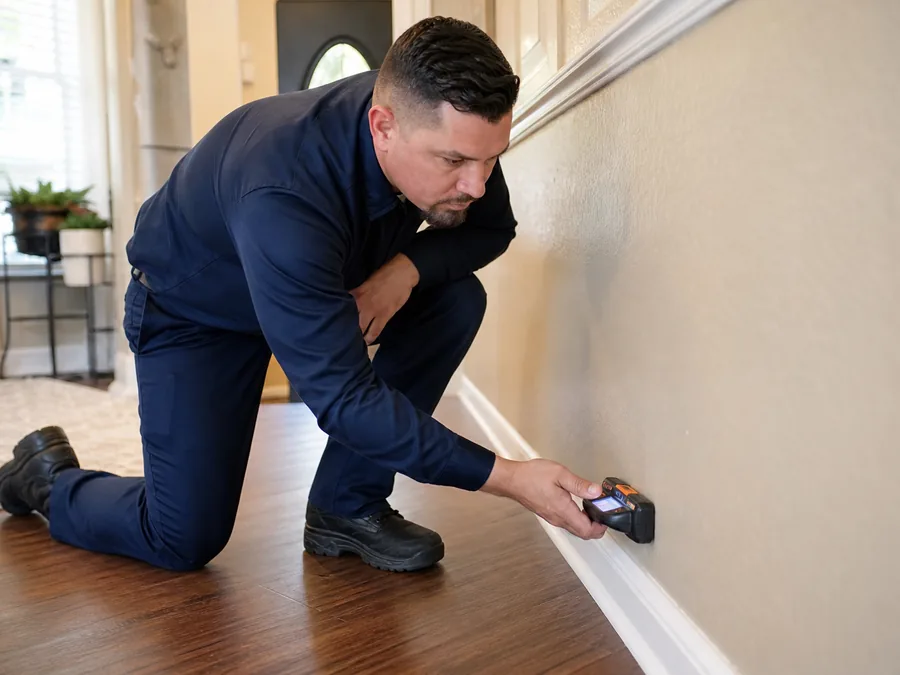
Confirmed active movement behind an intact baseboard before a single hole was made.
McKinney TX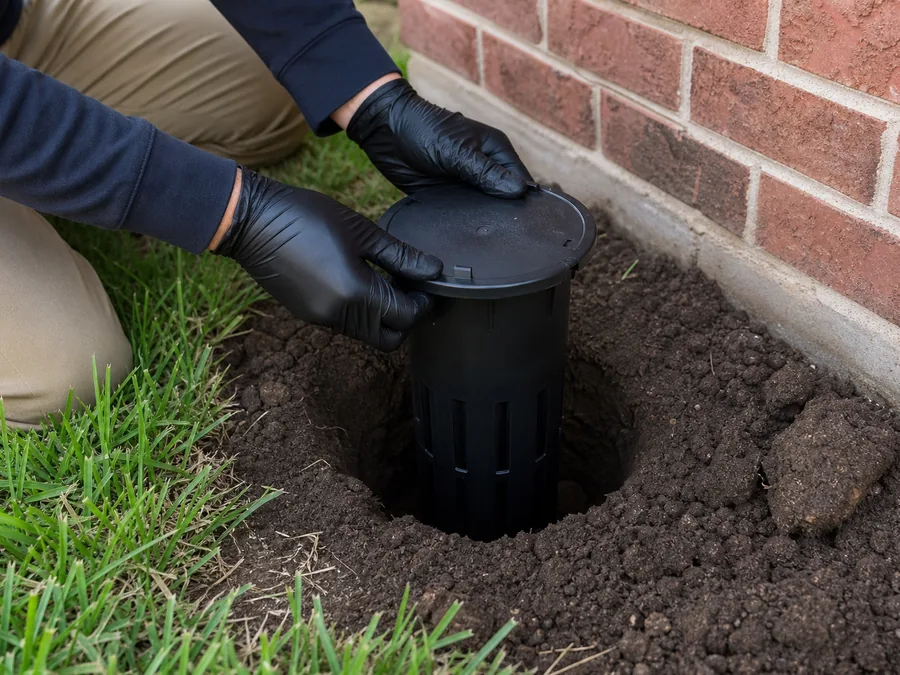
Full-perimeter Trelona program set at 10-foot intervals, mapped for the annual visit.
Allen TX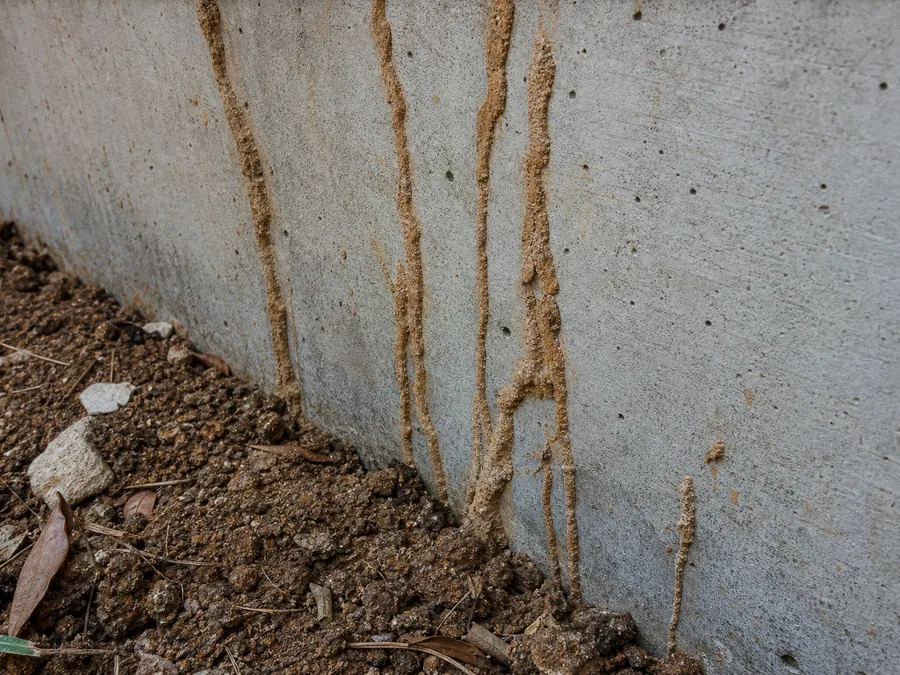
Active mud tubes climbing a foundation pier, the clearest sign of a colony already at work.
Frisco TXAll pest control services in McKinney & Collin County
Not the pest you have? We treat the full range across McKinney, Allen, Frisco and Plano.
Common pests
Ant Control Cockroach Control Spider Control Rodent Control Scorpion Control Mosquito Control Bed Bug Treatment Flea & Tick ControlPantry pests
Pantry Pest ControlNot sure which pest you have? Browse the Pest Library for help identifying it, or get a free estimate.
Termite Prevention in McKinney TX Homes
Termites are a year-round Texas reality, not a seasonal one. Our treatment stops the colony you have today. Keeping new colonies out comes down to three things: controlling moisture, cutting off wood-to-soil contact, and keeping the foundation clear, backed by yearly monitoring.

Treating one colony does not change the soil that keeps drawing new ones. An annual plan keeps the in-ground stations watching and re-inspects your home every year, so the next colony is caught before it costs you. Ask about the yearly service agreement.
See plan options
Fix the moisture and you take away what termites need most. Termites have to have water to survive. A leaking condensate line, a clogged gutter dumping water at the foundation, or a slow plumbing leak gives a colony everything it needs to stay. Across McKinney, Plano, Frisco, and Allen, the homes with the worst activity almost always have a chronic damp spot at the foundation. Fix the moisture first, whatever else you do.

Cut off the wood-to-soil contact that hands termites a bridge. Firewood stacked against the house, fence posts touching the siding, and deck framing sitting on soil are three of the most common entry paths we find. Move firewood at least 20 feet away and up off the ground, gap any fence-to-house junction, and keep untreated wood from touching the dirt at the foundation.

Keep mulch off the foundation and the weep holes clear. Mulch piled against the siding is the single most common thing we see drawing termites in. Keep a six-inch gap of bare soil or gravel between mulch and the wall, and make sure the brick weep holes are not buried by soil or landscaping fabric, because a blocked weep hole becomes a hidden, moist path straight up the wall.
All Pest Control Services in McKinney and Collin County
 Ant Control
 Bed Bug Control
 Cockroach Control
 Mosquito Control
 Rodent Control
 Spider Control
 Wasp and Hornet Control
 Wildlife Removal
 Termite swarm season: February through June
Schedule a termite inspection
same-day still available
Most McKinney homeowners do not find termites until a repair is already overdue. A same-day inspection tells you what is happening behind your walls right now.
Termite Treatment in McKinney, Allen, Frisco, and Plano
Termite pressure runs hardest where clay soil pulls away from a slab and opens a path in, and anywhere irrigation keeps the ground damp against the foundation. Mature trees, deep mulch beds and timber stored along a wall all add to it. We treat across all 14 service cities.

Allen, TX
High pressureHomes backing onto the Cottonwood Creek and Rowlett Creek corridors sit on ground that stays damp most of the year, which is exactly what a subterranean colony needs to keep working. Through Twin Creeks, mature landscaping and irrigation running against the slab are what bring them to the foundation. We treat the soil around the whole structure, check every slab penetration, and return when our technician decides it is needed to confirm the colony is dead rather than moved.
Allen pest control
Frisco, TX
High pressureNew builds in Phillips Creek Ranch and Hollyhock often sit on fill dirt with construction scrap still buried near the slab, which gives a colony something to feed on long before it reaches the house. Irrigated beds against fresh concrete keep that soil damp year round. The first thing most owners notice is flying ants in spring around a window or door frame, and by then the colony is established.
Frisco pest control
McKinney, TX
High pressureStonebridge Ranch and the older established streets are where we find the most damage, because mature trees, deep mulch beds and thirty years of irrigation have kept the ground beside those slabs damp for decades. In newer areas like Painted Tree, buried form boards and scrap timber left at the pour are the usual starting point. Either way the route in is the same, through the soil and up through a crack.
McKinney pest control
Plano, TX
Moderate pressurePlano is largely built out, so termite calls come from established homes with mature landscaping, especially properties bordering Arbor Hills, Oak Point Park and the Spring Creek nature area. Clay soil that shrinks through summer opens hairline cracks along the slab, and that is the way in. We treat the soil barrier, seal what can be sealed, and monitor the property afterwards.
Plano pest control