Yellowjacket Exterminator in McKinney TX
Mow your yard again.
Serving McKinney, Plano, Frisco, Allen and across Collin County.
 One-time from$299
 Plans from$40/mo
 No-contract options
 Same-day pest control
 Free inspection & estimate
 We find the real nest, not one entry hole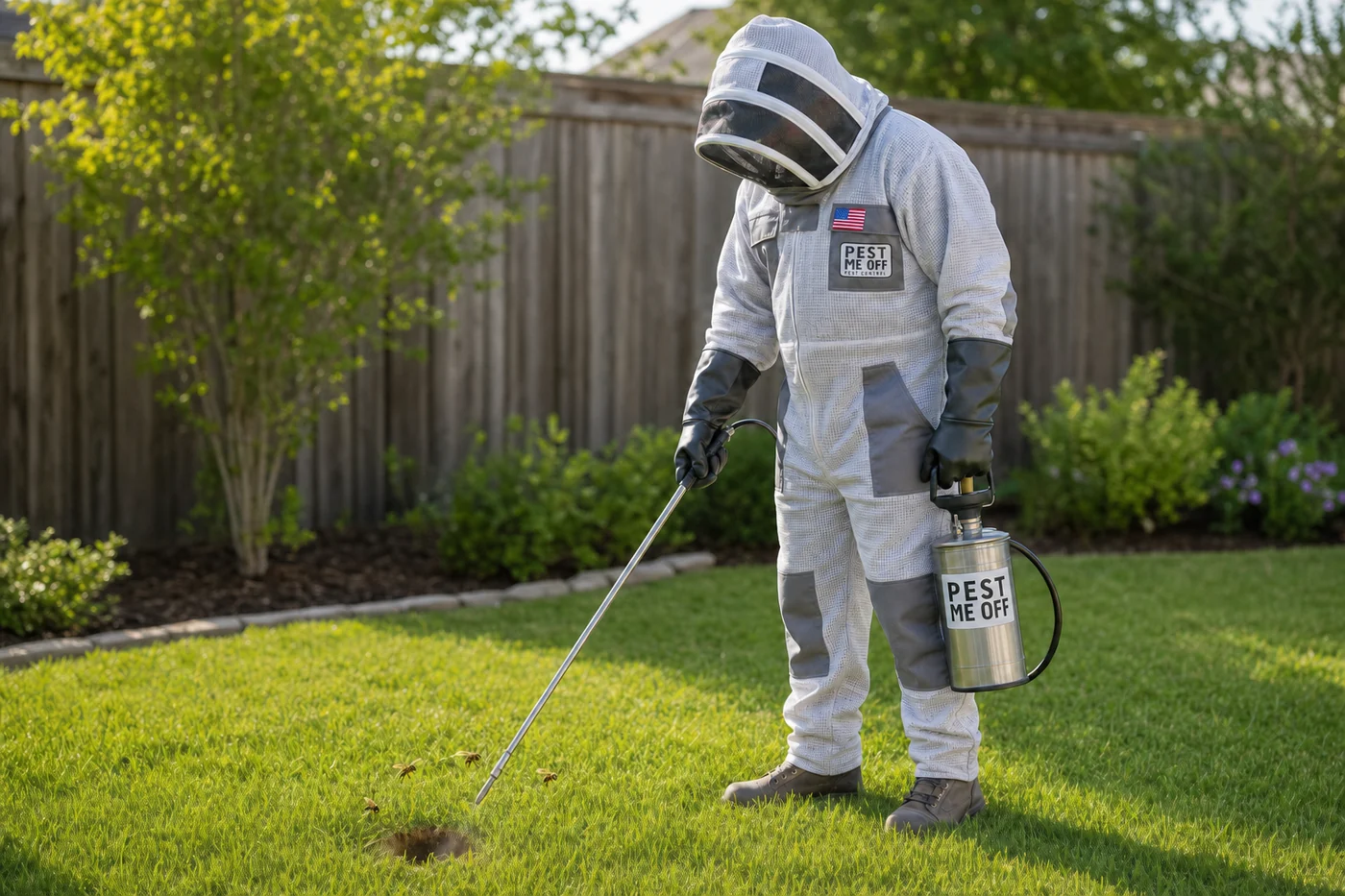


Why McKinney Homeowners Choose Pest Me Off for Yellowjacket Control
Pest Me Off is a family-owned, Texas-licensed pest control company that has been clearing yellowjacket nests from McKinney, Plano, Frisco and Allen homes since 2014.
A yellowjacket job is dangerous, not routine. The workers at the entry hole are not the colony. The nest behind them can hold thousands. Every job is handled by a licensed applicator, never a subcontractor, who locates the real nest and every entry, treats it at the right time of day in protective gear, and seals the void only after the colony is confirmed dead. That order is what keeps your family out of the blast radius.
How our yellowjacket exterminator service works
A can of wasp spray only reaches the workers at the opening. The nest sits 12 to 24 inches below ground or deep inside a wall, so the queen rebuilds within days and the daytime crew comes out stinging. The RID Method goes after the whole colony: the real nest, every entry, and the foundation void that let them in. Remove and Install both happen on the initial visit. That is our one-time Yellowjacket Annihilation service. Defend is the ongoing step, available on a recurring plan, for homes that get a new nest most years.
Remove the Nest at the Source
The workers buzzing the entry are not the problem. The hidden nest is. We Remove it by finding the real colony first: a ground burrow near the foundation, a wall void behind a weep hole, or a structural cavity, often with several entries feeding one nest. Then we apply a professional dust the workers carry deep to the queen, treating at the right time of day when the full crew is home.
- We locate the real nest and every entry, not just the one hole you found
- Professional dust the workers carry deep to the queen, not a surface jet
- Treated at the right time of day, in protective gear, to avoid a mass attack
- EPA-registered, pets back on treated areas once the treatment settles
Install Scorched Earth Barrier
Once the colony is treated, we Install the Scorched Earth Barrier around the foundation and treat the entry zones yellowjackets use on a Texas slab home: weep holes, foundation gaps, expansion joints, and utility penetrations. We leave the entry open until the nest is confirmed dead, then seal the void.
- Scorched Earth Barrier treats the foundation entry zones, not just the lawn
- The void is sealed last, after the colony is dead, never before
- Confirmed entry points handled, one trip, nothing to schedule later
- Pets and kids back outside once it dries
Defend Year-Round
Remove and Install kill the nest you have today. Defend keeps it that way. Quarterly visits keep the Scorched Earth Barrier live so when colonies hit peak size in late summer, a new queen choosing your foundation or a wall void runs into a treated zone instead. The one-time Yellowjacket Annihilation service handles R and I. Defend is the step you add when your home gets a nest most years.
- Quarterly re-treatment keeps the barrier live through peak yellowjacket season
- Re-service between visits when our tech decides it is needed
- Contract plans and no-contract options both available
- Quarterly plans start at $40/mo
University of Florida IFAS Extension and Texas A&M AgriLife document that yellowjacket nests are best treated by applying insecticide into the nest entrance after dark, when the workers have returned, and that the entrance should be left open afterward so the colony is eliminated rather than driven elsewhere. That is exactly the sequence we follow.



Real Yellowjacket Jobs We Have Handled
Not stock photos. Real yellowjacket calls across Collin County, with what we found and what we did.
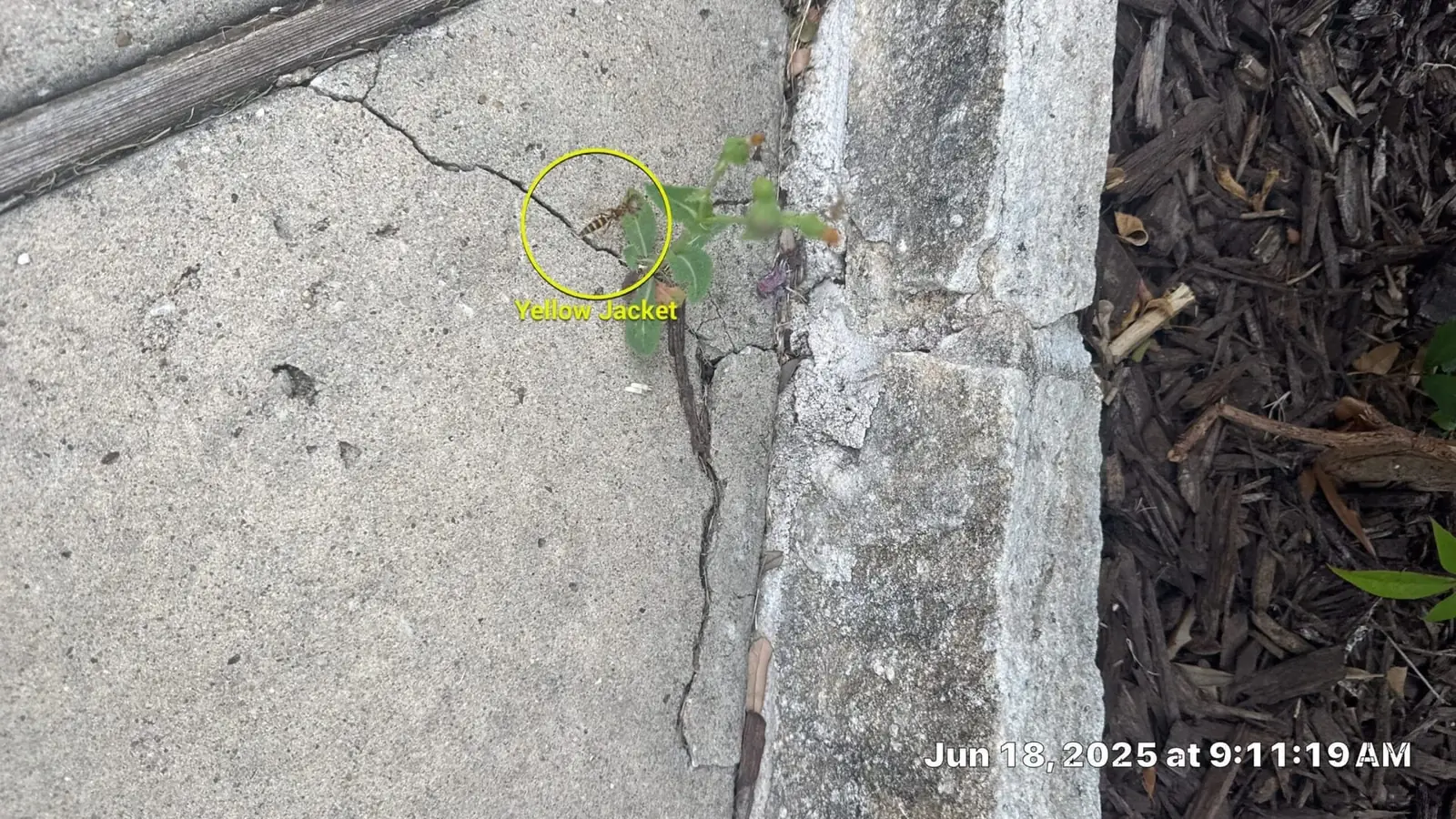
Yellowjacket working a cracked foundation gap on an Allen home
On an early-summer inspection in Allen in June 2025, we photographed a yellowjacket hovering at a crack in the exterior foundation (pictured). A single wasp slipping in and out of a foundation gap or weep hole is the first sign of a colony establishing inside a wall void, weeks before the heavy traffic of a mature nest shows up.
This is the window to catch it. A foundation gap that suits one queen in early summer becomes a 1,000-plus-worker nest by fall if it is left open. We mark the entry, locate the real nest behind it, treat at the right time of day, and seal the void only after the colony is dead.
One wasp at a foundation crack in June is a colony forming in the wall by September.
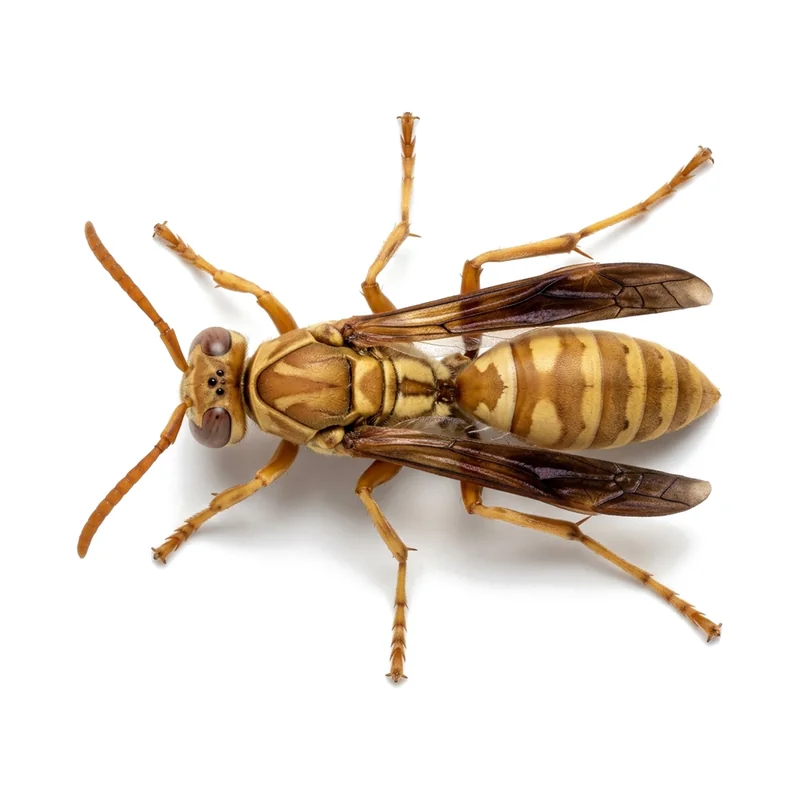
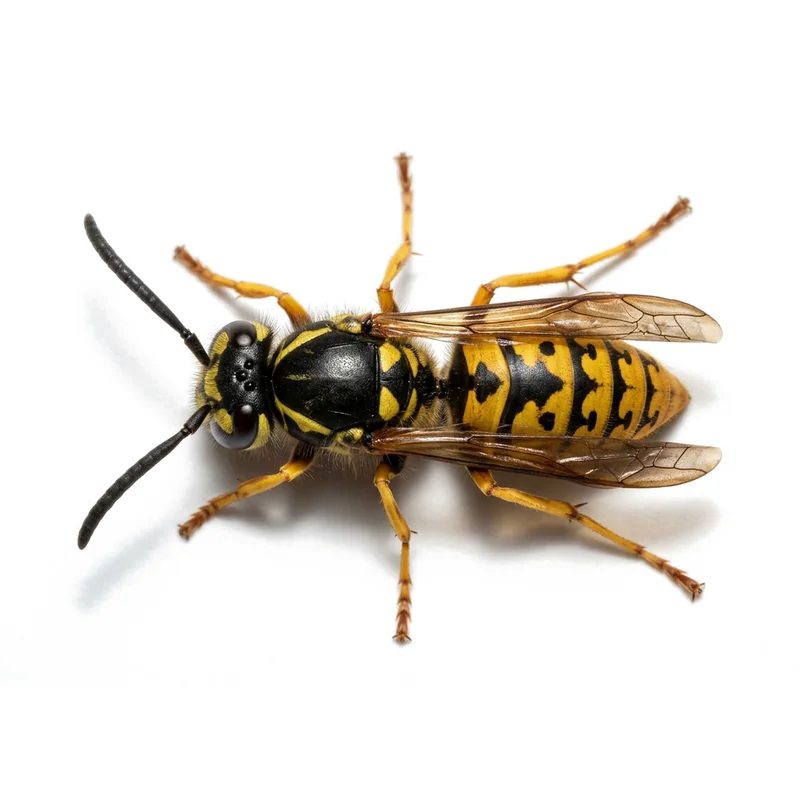
Paper Wasp or Yellowjacket? The Dangerous Cousin Is the One in the Ground

 Nest
Nest

 Behavior

 The removal
If you have found a grey ball nest in the ground or a wall, that is a yellowjacket, and we price those after a quick look. A paper wasp nest under the eave is the standard service.
Pricing for Yellowjacket Control
Three options, all built around the same treatment that finds the real nest and every entry, not just the wasps at the hole. Pricing scales with home size and where the nest is, ground or wall. The free inspection confirms your number before anything gets scheduled.
Our one-time knockout when you want the problem gone right now.
No return visits included. The recurring plan adds year-round protection.
- Full targeted treatment in one visit
- Pay once, no plan required
- Some activity for a short window is normal while the treatment works

The plan most McKinney homeowners choose. Quarterly coverage for this pest plus the common household pests and wasps.
- The full treatment repeated every quarter
- A protective barrier kept active around your home year-round
- Stops new pests drifting in from neighboring properties
- Re-service between visits when our tech decides it is needed

The same plan, month to month.
- The same quarterly treatment and year-round barrier
- No annual commitment
- Re-service on eligible plans when our tech decides it is needed
- Cancel any time without penalty
Want pricing detail for other pest services? See the full Pricing page.
Why DIY Yellowjacket Killer Fails in McKinney TX
Every can of wasp spray promises a quick fix, and with yellowjackets it is also the most dangerous one. The nest sits below ground or inside a wall, well past where any jet reaches, and the colony hits its largest, most defensive size in late summer. Disturb it and hundreds of stinging workers come out at once. Here is what homeowners try, why it falls short, and what we do instead.
| What homeowners try | Why it fails | What actually works |
|---|---|---|
|
Empty a can of wasp spray into the holeRaid, Spectracide jet class
|
The jet never reaches the nest.
The colony sits 12 to 24 inches below ground or deep in a wall. The queen and most of the workers are well past the spray, so they rebuild in days, and spraying in daylight brings the whole crew out stinging. |
We dust the nest the workers carry deep.
A professional dust applied to the real nest entrance at the right time of day, by a licensed applicator in protective gear. |
|
Plug the hole in the wall or groundcaulk, foam, or a rag in the opening
|
It traps thousands of workers inside.
With the exit blocked, they chew through drywall and follow wiring and ducts the other way, into your living space, and come out of outlets and light fixtures. This is the most dangerous yellowjacket mistake. |
We kill the colony first, seal last.
We leave every entry clear until the nest is confirmed dead, then close the void. |
|
Pour gasoline or boiling water down a ground nest
|
It is dangerous and rarely reaches the nest.
Gasoline poisons your soil and is a fire and fume hazard, and neither it nor boiling water travels deep enough to kill the queen. You provoke the colony without ending it. |
We treat the burrow at the right hour.
A targeted dust placed into the ground entrance after the workers return for the night, no household chemicals, no fire risk to your yard. |
|
Mow or trim right over the entry hole
|
Vibration triggers an immediate mass attack.
Near the nest, yellowjackets react to vibration, shadow, and movement without being touched. A hidden ground nest is behind most fall stings when someone runs a mower or trimmer over it. |
We clear it before you work the yard.
Mark the spot, stay well back, and call. We treat the nest so the lawn is safe to mow again, no guesswork in the blast radius. |




How to Know You Have Yellowjackets
A few quick tells confirm yellowjackets before we treat. For the full yellowjacket identification guide, honey bee and paper wasp lookalikes, and sting first-aid, see our yellowjacket pest library.

A yellowjacket is hairless, shiny, and bright yellow and black, with a fast, direct flight. A honey bee, by contrast, is fuzzy and golden-brown and carries pollen on its legs. The smooth, glossy body is the quickest tell.

A yellowjacket nest is a single hole, in the lawn or in a wall, with wasps streaming in and out in a steady line. A honey bee swarm is a fuzzy cluster hanging on a branch. The constant in-and-out at one opening is the structural sign.

Yellowjackets sting repeatedly and turn aggressive within a few feet of the nest, reacting to vibration and movement. Stings can cause a severe allergic reaction in sensitive people. Keep everyone well back and do not disturb the opening.
Yellowjacket vs honey bee and paper wasp lookalikes, the colony life cycle, and sting first-aid in our yellowjacket pest library.
Full Yellowjacket ID guideYellowjacket Prevention in McKinney TX Homes
Yellowjackets are a yearly Texas reality, not a one-time problem. Our one-visit treatment clears the nest you have today. Keeping a new colony out next year comes down to closing the foundation voids and catching a nest while it is still small.

Ongoing service keeps the foundation barrier live so a new queen cannot claim the same spot. Quarterly plans start at $40/mo, with re-service between visits when our tech decides it is needed. No-contract options are available too.
See plan options
Weep holes and foundation gaps are the doors to a wall nest. On a Texas slab home, the brick weep holes, foundation cracks, expansion joints, and gaps around HVAC and utility lines are exactly where a new queen slips in to start a colony. Across McKinney, Plano, Frisco, and Allen, the homes that get a wall nest are the ones with an open void near the foundation that no one has sealed.

Walk the yard before you mow, and catch a nest while it is small. Through summer, watch for a steady stream of wasps going in and out of one hole in the lawn, or working a single crack in the foundation. A nest found in June is a quick treatment. The same nest in September is a 1,000-plus-worker hazard. A quick look before you start the mower prevents the worst stings of the year.

The honest math on yellowjacket control. A single Yellowjacket Annihilation visit kills the nest you have today. A quarterly plan does that and keeps the barrier live so a new queen choosing your foundation next spring runs into a treated zone. For homes that get a nest most years, recurring service is the model that actually stops the repeat.
Yellowjacket Control in McKinney, Allen, Frisco, and Plano
Yellowjacket pressure runs hardest in late summer in neighborhoods with slab foundations and open lawns near greenbelts, where ground nests and wall voids are easy to find and easy to disturb. We work daily across all 14 service cities.

Allen, TX
High pressureThe open lawns and slab foundations through Twin Creeks and Cypress Meadows give yellowjackets both ground-nest sites and weep-hole entries into wall voids. Yards backing onto the greenbelts near Watters Creek see the heaviest late-summer ground nests, the kind a mower finds the hard way. We locate the real nest and treat it before the lawn is safe to work again.
Allen pest control
Frisco, TX
High pressureMaster-planned neighborhoods like Stonebriar and Phillips Creek Ranch pair newer slab homes with large, irrigated lawns, prime ground-nest territory by August. Hollyhock backs onto greenbelt buffers where yellowjackets nest at the tree line and forage into the yards alongside them. We treat the burrow at the right time of day so the colony is treated, not scattered.
Frisco pest control
McKinney, TX
High pressureEstablished lots across Stonebridge Ranch and Craig Ranch hide ground nests in flower beds and along fence lines, while wall-void nests show up at weep holes and utility gaps. Painted Tree backs onto wooded buffers that put colonies right at the property line. Older homes near historic downtown McKinney see wall-void nests where masonry has settled and cracked.
McKinney pest control
Plano, TX
High pressureMature, irrigated yards in Gleneagles and Willow Bend hold the soft soil and dense plant cover that ground nests favor. East Plano homes near the Spring Creek corridor sit against wooded greenbelts where late-summer colonies grow largest. We find every entry feeding the nest and seal the void only after the colony is confirmed dead.
Plano pest control
Get a free yellowjacket control estimate · response in 1 hour during business hours
Tell us where you are seeing the wasps and whether the nest is in the ground or a wall. We confirm your free same-day visit within 1 hour during business hours (Mon-Fri 8am-5:30pm). Mark the spot, keep everyone back, and leave the entry alone until we arrive.
- Nest treated at the source, one visit on every call
- Pet friendly service, family back outside once it dries
- No-contract options alongside quarterly plans
- Same-day service when you call before noon
- Re-service between visits on eligible recurring plans, when our tech decides it is needed
Thanks! We got your request.
A Pest Me Off team member will confirm within 1 hour during business hours.
For immediate same-day help: (972) 866-4720
Yellowjacket Control FAQ
There's a hole in my lawn with wasps going in and out. What do I do right now?+
Are yellowjackets more aggressive in the fall?+
Is it a yellowjacket or a honey bee?+
How do you handle yellowjacket treatment around my dog and kids?+
Why can't I just plug the hole where they are coming in?+
Why doesn't a can of wasp spray kill the nest?+
What should I expect in the day or two after treatment?+
Will yellowjackets come back to the same spot next year?+
All Pest Control Services in McKinney and Collin County
 Ant Control
 Bed Bug Control
 Cockroach Control
 Mosquito Control
 Rodent Control
 Spider Control
 Wasp and Hornet Control
 Wildlife Removal
 Termite Treatment
Ready for the nest gone in McKinney?
What's bugging you? Our team has cleared yellowjacket nests across McKinney, Plano, Frisco, and Allen since 2014. 300+ five-star reviews. Best Pest Control McKinney 2025 and 2026. Same-day service when you call before noon. Texas TPCL #0937184. Open Mon-Fri 8am-5:30pm.