
Kissing Bugs in Collin County, TX | Identification and Control
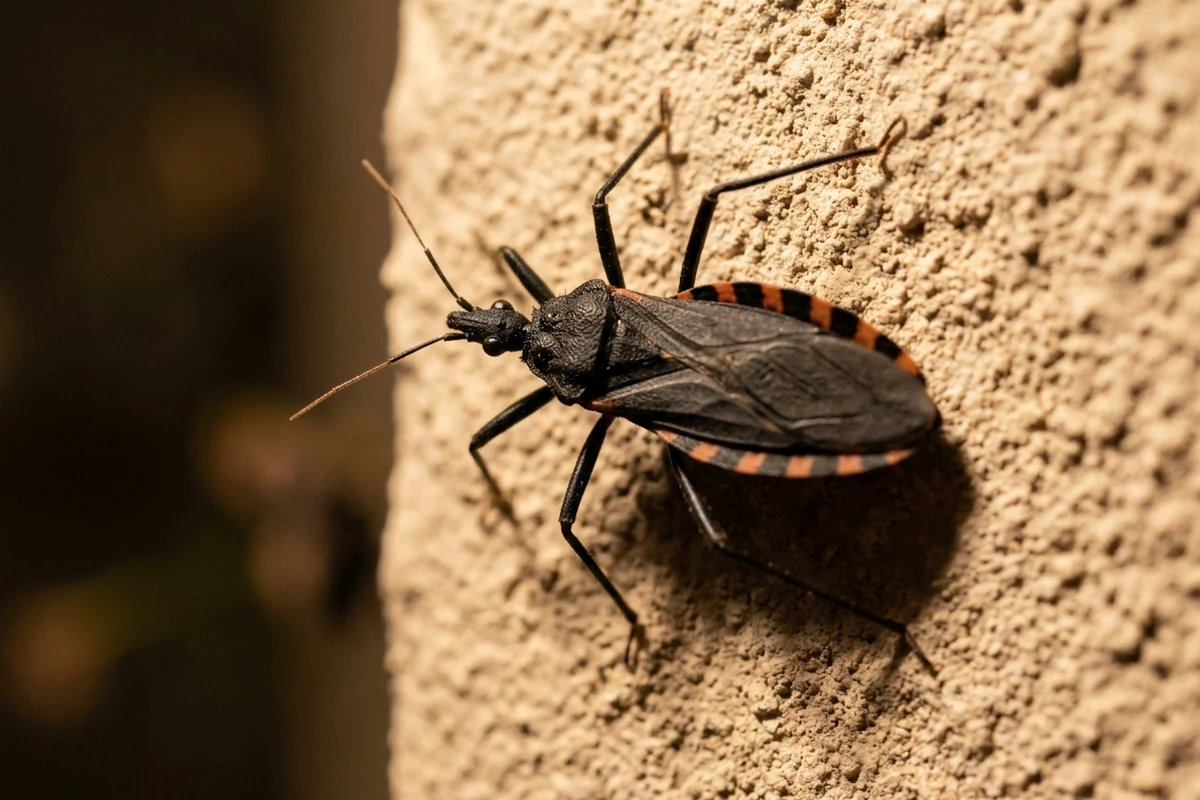
The kissing bug is a blood-feeding conenose bug that comes out at night, flies to porch lights and can crawl in through gaps around doors. The Texas A&M Kissing Bugs and Chagas Disease program puts an adult at 1/2 to 1 inch long, black or dark brown with an orange, red or yellow banded edge. Some carry the parasite that causes Chagas disease, which travels in the bug’s droppings, not its bite.
Found a cone-nosed bug by the porch light? Our office sits where McKinney, Plano, Frisco and Allen meet, 5 to 10 minutes from most homes in those four cities. Call and we will check what it is, what drew it and where it got in.
Kissing Bug
Kissing bugs feed on blood at night, from people, dogs and wild animals, and live around animal nests and dog kennels. The Texas A&M program’s questions page names Triatoma gerstaeckeri and Triatoma sanguisuga as the most common kinds in the south central United States.
Risk Assessment
Choose a row for the full detail- Color
- Black or dark brown with an orange, red or yellow banded edge
- Diet
- Blood only, from people, dogs and wild animals
- Threat level
- Moderate
- Defining behavior
- Feeds at night with a bite most people never feel
- Where it hides
- Woodrat and other animal nests, brush piles and dog kennels
- Lifespan
- Some kinds live up to two years
- Egg to adult
- Seven months or more in a lab study
- Size
- 1/2 to 1 inch long as an adult
What Does a Kissing Bug Look Like?
A dark bug with a long, cone-shaped head, thin legs and a banded edge around its body
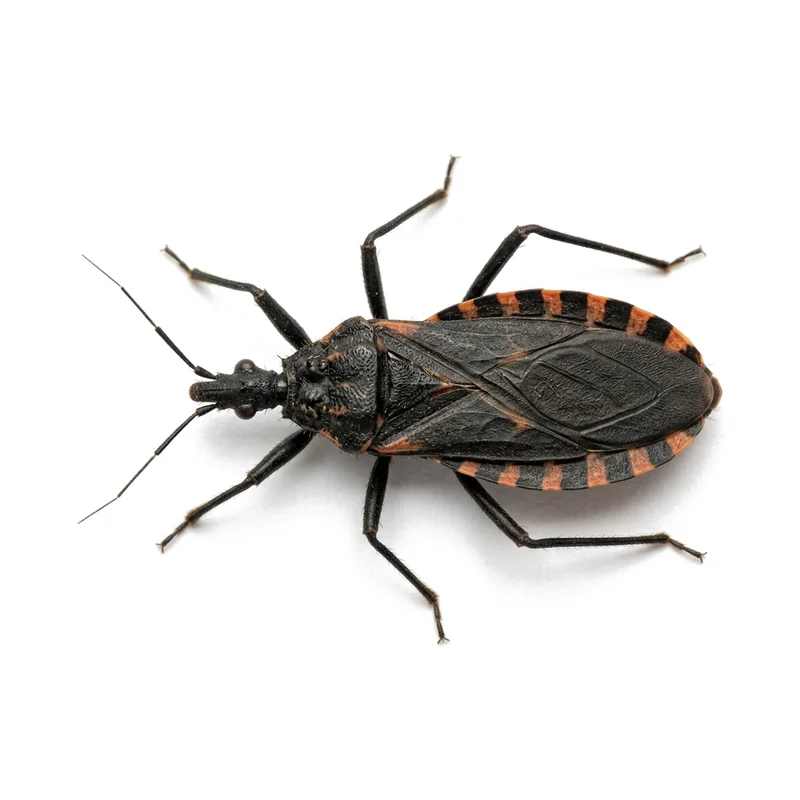
An adult kissing bug has a long, narrow head shaped like a cone, a pear-shaped black or dark brown body and long, thin legs with no thick sections. Most kinds have a band of orange or red markings around the edge of the body, and the Texas A&M Kissing Bugs and Chagas Disease program says adults are 1/2 to 1 inch long from the tip of the nose to the end of the body. The mouthparts are straight and thin and fold under the body when the bug is not feeding.
The two kinds most often found in this part of the country look a little different. The program’s questions page says Triatoma sanguisuga, the eastern conenose bug, has dark red stripes, while Triatoma gerstaeckeri, common in Texas, has yellow orange stripes. Both are about an inch long. The young look like small adults without wings, and only adults can fly.
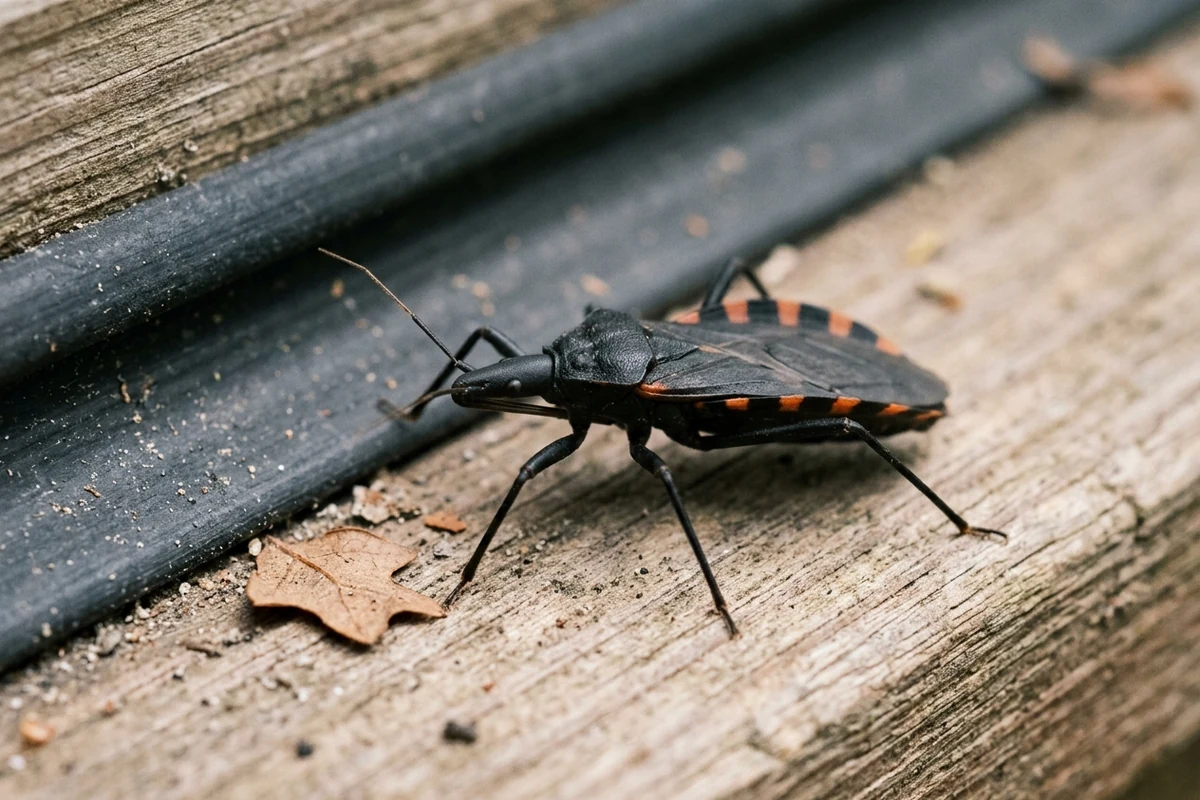
A kissing bug beside a door seal, the kind of gap these night fliers use to crawl inside after landing near a light
- A long, narrow, cone-shaped head with the antennae near its tip
- Orange, red or yellow bands around the flat edge of the body
- Long, thin legs with no thick or flattened sections
- A straight, thin beak folded under the head, not a thick curved one
- Found at night near a porch light, a door or a dog bed
- Small red bites found in the morning, often on the face, hands or arms
Other Names for the Kissing Bug
The name comes from the face. The Texas A&M program says people used to think these bugs mostly bit around the mouth or eyes, like a kiss, though they bite anywhere they can reach. Conenose bug describes the long head, and in Spanish they are called chinches, or vinchucas, a name the Texas Department of State Health Services also uses. Scientists call the whole group triatomine bugs.
The name that causes the most confusion is assassin bug. Kissing bugs belong to the same insect family, but assassin bugs such as the wheel bug hunt other insects and do not carry the Chagas parasite. The look-alike table below shows how to tell them apart.
| Name | What it means |
|---|---|
| Conenose bug | For its long, cone-shaped head. |
| Eastern conenose bug | One kind, Triatoma sanguisuga. |
| Chinche or vinchuca | Spanish names for the same bug. |
| Triatomine bug | The scientific name for the group. |
| Assassin bug | A related insect hunter, not a kissing bug. |
How to Tell a Kissing Bug from a Wheel Bug, Stink Bug or Bed Bug
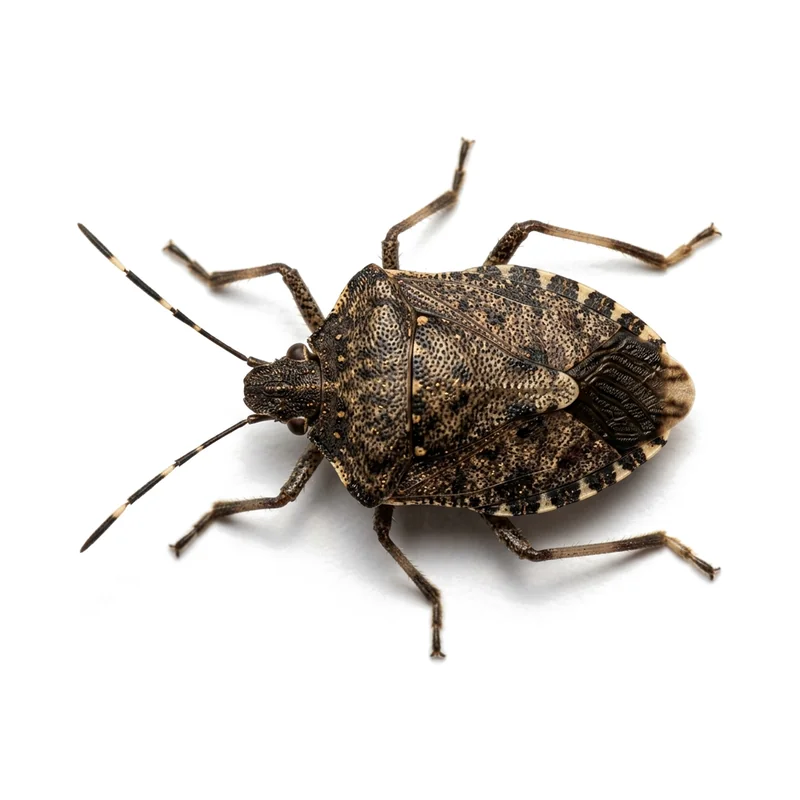
Many bugs around Collin County homes get mistaken for kissing bugs, and the Texas A&M program says it has been overwhelmed with photos of look-alike bugs. The head, the legs and the beak tell them apart.
| Species | Size and Color | Key Feature | Where Found |
|---|---|---|---|
|
Kissing Bug
AKA: Conenose Bug, Chinche
Triatoma species
This species
|
1/2 to 1 inch. Black or dark brown with an orange, red or yellow banded edge. | Long cone-shaped head, thin legs with no thick parts, a straight thin beak. | Animal nests, brush and dog kennels, and at night near lights and doors. |
|
Wheel Bug
AKA: Assassin Bug
Arilus cristatus
|
Mostly gray. | A raised half wheel shape on its back and a thick, curved beak. | Gardens, shrubs and trees, hunting other insects. |
Stink Bug
AKA: Shield Bug
Pentatomidae
|
Brown, gray or green, with a broad shield-shaped body. | A short, wide head with no long cone nose. | On garden plants, and on outside walls and windows. |
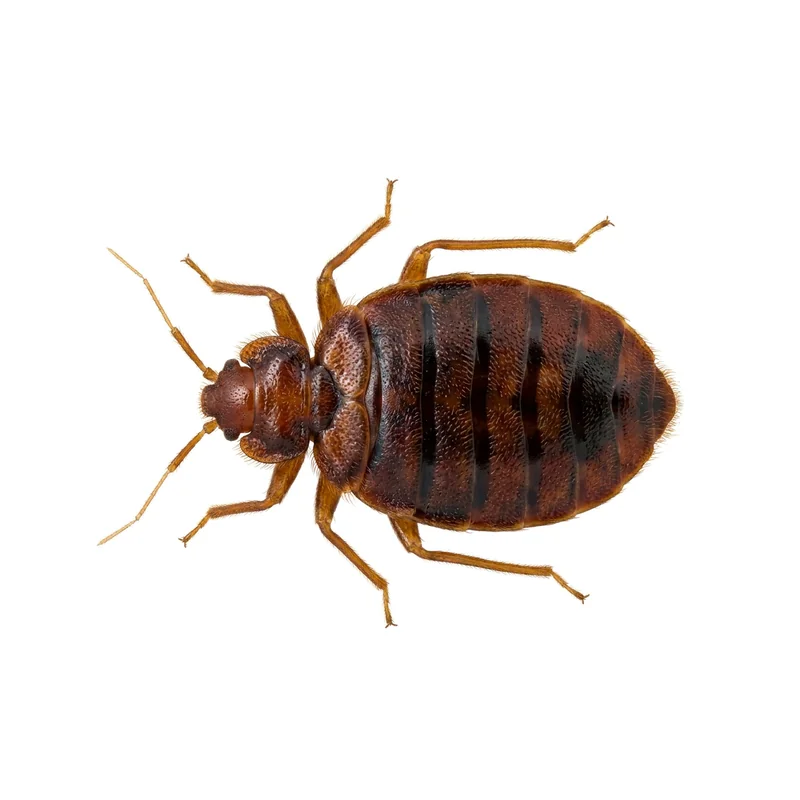
Bed Bug
AKA: Common Bed Bug
Cimex lectularius
|
Far smaller, flat, oval and reddish brown. | No wings and no long cone nose. | Inside, in mattress seams, bed frames and furniture. |
|
Leaf-Footed Bug
AKA: Leaffooted Bug
Leptoglossus species
|
Brown adults, with bright red young that gather in groups. | Wide, flattened back legs and no long cone nose. | On fruit, vegetables and garden plants. |
Kissing Bug vs Wheel Bug
The Kissing Bug in Three Numbers
1/2 to 1 inch
The Texas A&M Kissing Bugs and Chagas Disease program says an adult kissing bug is about 1/2 to 1 inch long, from the tip of its cone-shaped nose to the end of its body.
Texas A&M Kissing Bugs and Chagas Disease program
About 20 days
A 2007 laboratory study in Memórias do Instituto Oswaldo Cruz found that eggs of the Texas kissing bug Triatoma gerstaeckeri and two related kinds took about 20 days to hatch.
Memórias do Instituto Oswaldo Cruz, 2007
About 55%
The Texas A&M Kissing Bugs and Chagas Disease program found that about 55 percent of the more than 7,000 kissing bugs people sent it since 2012 carried the parasite that causes Chagas disease.
Texas A&M Kissing Bugs and Chagas Disease program
Are Kissing Bugs Dangerous?
They can be, but usually are not. The risk is Chagas disease, caused by a parasite some kissing bugs carry in their gut. The Texas A&M Kissing Bugs and Chagas Disease program found that about 55 percent of the more than 7,000 kissing bugs people sent it since 2012 carried that parasite. Even so, the Texas A&M AgriLife Extension fact sheet on conenose bugs says that for most people bitten in the United States the worst result is redness and itching where the bug fed.
What Does a Kissing Bug Bite Look Like?
There is no typical kissing bug bite. The Texas A&M program says most people do not feel the bite, that reactions run from nothing at all to a severe allergic reaction, and that you cannot tell what bit you just by looking at the mark. The AgriLife fact sheet adds that bites usually happen during sleep, most often on the face, hands and arms, and are found the next morning as red spots. Anyone worried about a bite should talk to a doctor, and anyone with swelling of the lips or throat or trouble breathing needs emergency care.
How Do You Get Chagas Disease From a Kissing Bug?
Through the droppings, not the bite. The Texas Department of State Health Services page on Chagas disease explains that an infected bug can leave droppings while it feeds, and the parasite gets in when a sleeping person rubs them into the bite, a cut, an eye or the mouth. The same page says human cases caught in Texas do occur but are uncommon, that early signs can include fever, body aches, a rash or swelling of one eyelid, called Romaña’s sign, and that most people with long-term infection never have symptoms, though 20 to 30 percent develop heart or digestive problems. Tests and treatment exist, so see a doctor if you think you have been exposed.
When a Kissing Bug Needs Fast Action
Swelling or Trouble Breathing
A bite followed by swelling of the face or throat, hives or trouble breathing is a severe allergic reaction. Call 911.
A Bug in a Bed or Bedroom
Keep the bug in a sealed bag or jar and call your doctor. The state health department tests bugs found in bedrooms or tied to a bite.
Wingless Young or Several Adults
Young bugs without wings, or more than one adult indoors, suggest the bugs are breeding in a nest close to the house.
One Adult by the Porch Light
A single adult that flew to a light is not cause for alarm. Catch it safely, check the doors and screens, and turn the light off at night.
Why You Have Kissing Bugs Around Your House
Kissing bugs live where their hosts sleep. Outdoors that means woodrat nests, raccoon and opossum dens, brush piles and dog kennels, and they fly at night toward lights. A Texas A&M study of 3,215 bugs collected from 2012 to 2016, published in the American Journal of Tropical Medicine and Hygiene, found that 92.9 percent of the bugs people collected were found indoors, around the house or in dog kennels.
From a porch light they crawl in through gaps around doors, torn window screens and doors left open without a screen. The Texas A&M AgriLife fact sheet notes that one bug in the house is not a reason to panic, because a single adult is usually a stray from outside. Young bugs without wings, or several adults, point to a nest nearby, often in a wild animal den, a woodpile or a dog house.
Where Kissing Bugs Live Around Collin County Homes
Kissing bugs stay close to the animals they feed on. The Texas A&M program lists woodrats, raccoons, coyotes and opossums among the wild animals that carry the parasite, and the state health department points to brush piles, rock piles, deep leaf litter, dog houses and chicken coops as places the bugs hide. Homes that back onto creeks, greenbelts or open land have more of those hosts close by.
Kissing Bug Pressure Across Collin County
Kissing bugs are not a common call for us in McKinney, Frisco, Allen or Plano. They are still worth knowing, because the Texas Department of State Health Services says both the bug and the parasite are present in all regions of Texas, and Texas A&M’s collections found the eastern conenose bug mostly in the northern and eastern parts of the state.
In Celina and Prosper, where newer homes border open land, creeks and brush, the woodrats, raccoons and opossums the bugs feed on can live closer to the house, along with the outdoor dog kennels the bugs are drawn to.
Adult kissing bugs fly in the warm months. The eastern conenose bug, the kind most found in the northern part of the state, was collected from June to October, peaking from July to September, in Texas A&M’s collections.
Pattern from Texas A&M’s 2012 to 2016 collections of adult kissing bugs (American Journal of Tropical Medicine and Hygiene, 2018). The common Texas kind Triatoma gerstaeckeri flies a little earlier, from May to September.
How Kissing Bugs Grow and Feed
How Pest Me Off Gets Rid of Kissing Bugs
Kissing bug control is four steps, every job. Most of the work happens outside, because the bugs breed in the nests and cover around the house and only wander in.
Inspect and Identify
A free inspection of the doors, screens, porch, garage, dog areas and the brush and woodpiles near the house. We confirm it is a kissing bug and not a wheel bug, stink bug or leaf-footed bug, and look for the nests feeding them.
Treat Where They Hide
A treatment around dog houses and kennels, woodpiles and the cover along the foundation, the places the Texas A&M AgriLife fact sheet names as hiding spots.
Guard the Way In
A treatment along the base of the house, the door and window frames, the thresholds and the garage, the spots kissing bugs cross on their way inside.
Take Away the Draw
We show you what is drawing them, from porch lights left on and gaps under doors to torn screens, brush piles and pet bowls left outside, and what to change.
& Other Companies
How to Get Rid of Kissing Bugs Yourself
Most DIY kissing bug work is keeping them out and away. The Texas A&M program and the state health department both put sealing and cleanup first.
Why Some DIY Responses Fail for Kissing Bugs
Most DIY kissing bug trouble comes from touching the bug, guessing from a bite mark, or leaving dogs and their food out where the bugs feed.
Crushing It With Bare Hands
The parasite lives in the bug’s droppings and can be on its body. Squashing one with your fingers can put the parasite on your skin.
Judging by the Bite Mark
A bite mark cannot tell you what bit you. Keep the bug if you can, and talk to a doctor about any bite that worries you.
Dogs and Bowls Left Outside
Dogs can catch the parasite by eating kissing bugs, and outdoor dogs face much higher risk. Bowls left out can be fouled by droppings.
Common Kissing Bug Questions
What is a kissing bug?
How big are kissing bugs?
What does a kissing bug bite look like, and does it hurt?
Can you get Chagas disease from a kissing bug bite?
What should I do if I find a kissing bug in my house?
Are there kissing bugs in Collin County?
Can my dog get Chagas disease from kissing bugs?
Is it a kissing bug or a wheel bug, stink bug or bed bug?
What do kissing bug eggs look like, and how long do they take to hatch?
Why are they called kissing bugs?
How do I get rid of kissing bugs?
Kissing Bugs at the Door? We Find What Draws Them.
We confirm what the bug is, treat the nests, kennels and cover where they hide and the doors where they get in, and show you what to change so fewer come back. Pest control across McKinney, Allen, Frisco, Plano, and all of Collin County.