
Stink Bugs in Collin County, TX | Identification and Control
Stink bugs are shield-shaped bugs that feed on plants and give off a sharp smell when they are crushed or handled. They do not bite people or pets. Texas A&M AgriLife Extension’s Insects in the City program says the name stink bug covers a family of about 220 North American insects. The one in our photos is the brown marmorated stink bug, the kind that floods houses in other states. It has rarely been confirmed in Texas, and the stink bugs most people here meet are the brown stink bug and the southern green stink bug.
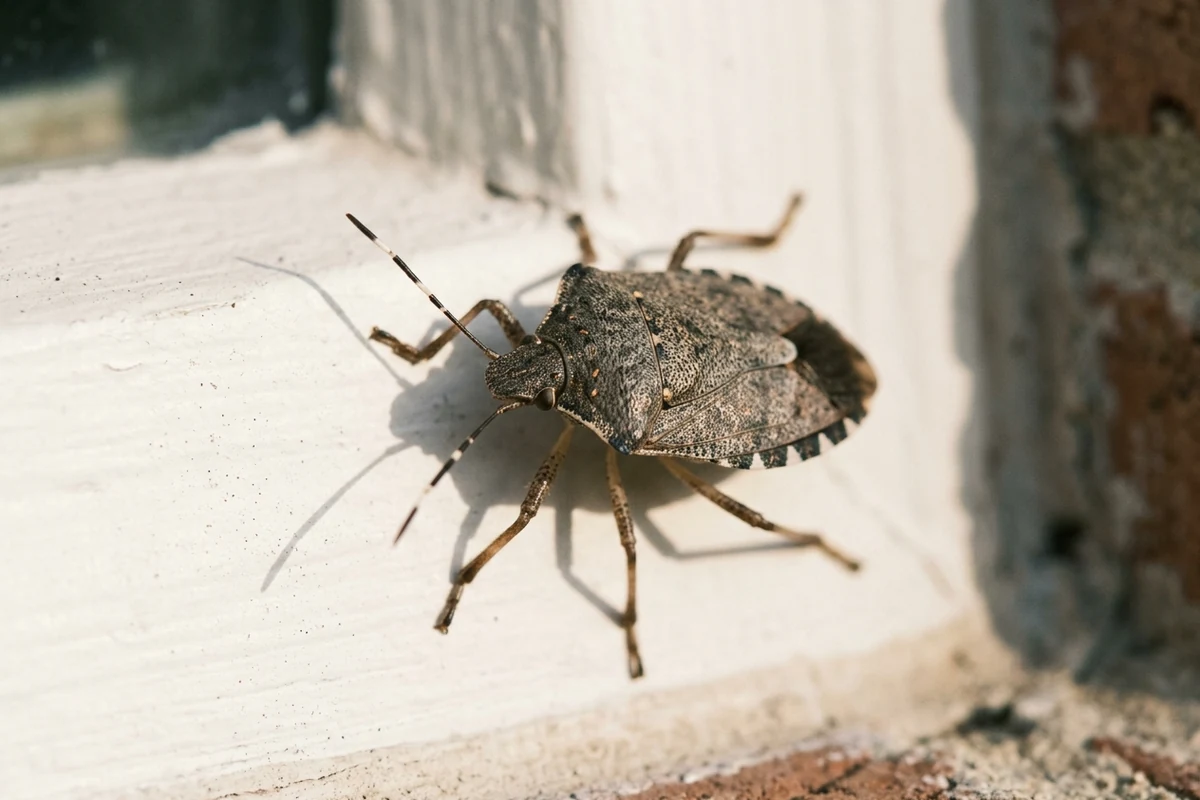
Stink bugs on the walls and window frames? Our office sits where McKinney, Plano, Frisco and Allen meet, 5 to 10 minutes from most homes in those four cities. Call and we will find the gaps they use and help you close the house up.
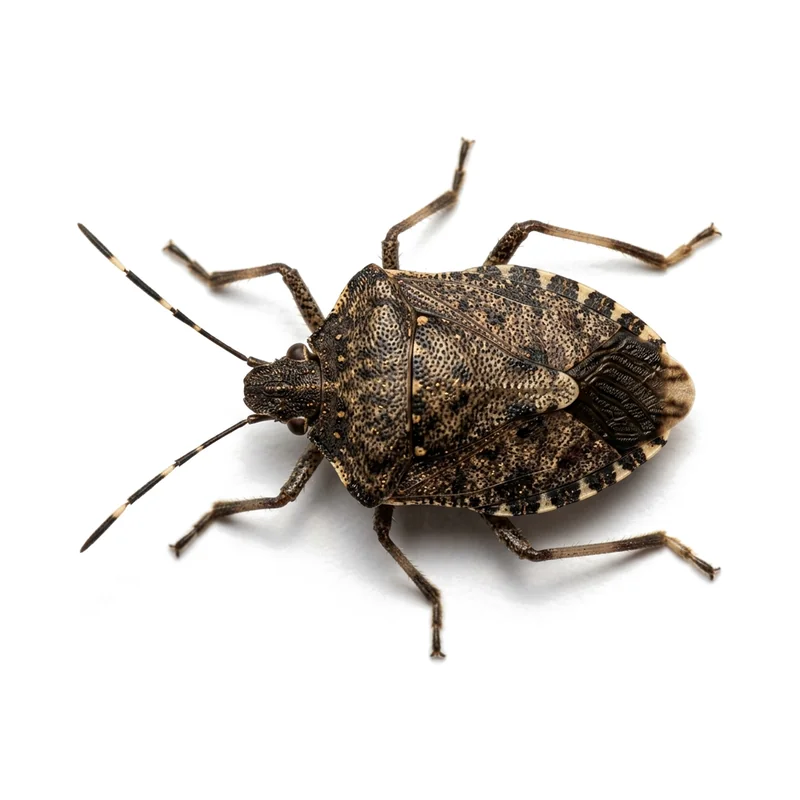
Stink Bug
A stink bug is a shield-shaped plant feeder that gives off a strong smell when disturbed. The University of Kentucky’s fact sheet on stink bugs in homes says they do not bite people or pets, because their long mouthparts are used only to suck juices from plants.
Risk Assessment
Choose a row for the full detail- Color
- Brown, gray brown or green, depending on the kind
- Diet
- Plant juices from fruit, seeds, pods and stems
- Threat level
- Low
- Odor when crushed
- A sharp smell some compare to cilantro
- Where it hides
- Wall gaps, window frames and attics in winter
- Lifespan
- A female brown stink bug lays eggs for more than 100 days
- Egg to adult
- About 40 to 60 days for the brown marmorated stink bug
- Size
- About 1/2 to 5/8 inch long
What Does a Stink Bug Look Like?
A flat, shield-shaped bug about half an inch long, brown, gray or green
Every stink bug has the same broad, shield-shaped body, almost as wide as it is long, with a small head and long antennae. The two kinds Texas gardeners meet most are named in a Texas AgriLife Extension and City of Austin guide to stink bugs. The brown stink bug is brown with a checkered border under its wing covers and about 1/2 inch long. The southern green stink bug is light green and also about 1/2 inch long. The University of Florida Extension fact sheet on the brown stink bug gives its adult length as 10 to 15 mm and describes it as grayish yellow with dark pits on its back.
The bug in our photos is the brown marmorated stink bug, a newcomer from Asia. The University of Kentucky describes it as about 5/8 inch long, a little larger than most, with white and black bands on its legs, its antennae and around the edge of its body, and notes that marmorated means marbled or streaked. The Texas A&M AgriLife Extension news release on the brown marmorated stink bug describes it as drab brown with black mottling and alternating white and black triangles along the edge of the body. Every stink bug smells when handled.
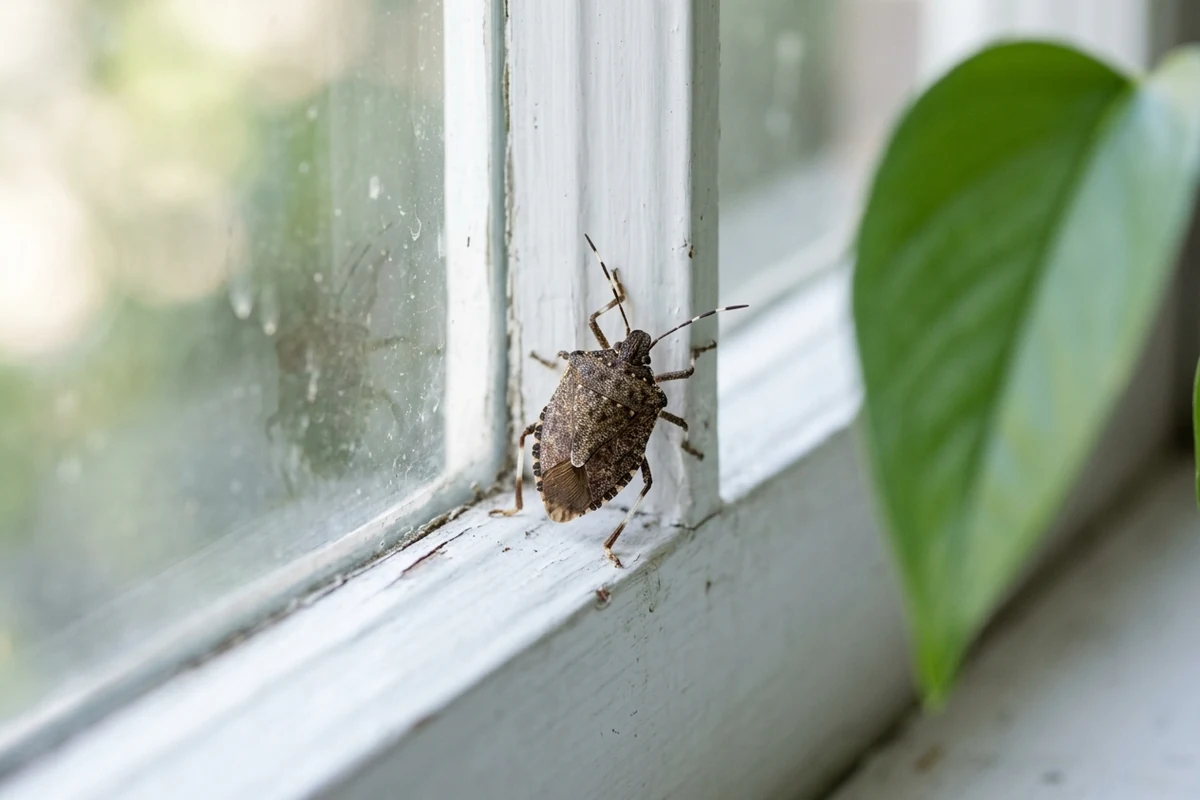
A brown marmorated stink bug on a window frame, the spot where people most often find stink bugs once the weather cools
- A flat, shield-shaped bug about half an inch long on a sunny wall, screen or window frame
- A sharp smell, often compared to cilantro, when one is picked up or crushed
- Bugs that drop straight down from a ceiling, lamp or curtain when you touch them
- Bugs buzzing around lamps and light fixtures in the evening
- Small dark spots of droppings on walls and curtains near where they gather
- Scarred tomatoes, peaches or pecans in the garden, and black spots on pecan kernels
Other Names for the Stink Bug
Stink bug is a family name, not one species. Texas A&M AgriLife Extension’s Insects in the City program says the stink bugs take their name from scent glands under the body that give off a musty odor, and that not all of them eat plants. The tree stink bugs it names hunt other insects instead. Scientists group the whole family as Pentatomidae.
The southern green stink bug is not a native. The University of Florida’s fact sheet says it is believed to have come from Ethiopia, and that in North America it lives mainly in the Southeast and west into Texas. The brown stink bug is found across much of North America. The brown marmorated stink bug is the newest arrival, first collected in Pennsylvania in 1998.
| Name | What it means |
|---|---|
| Stink bug | The family name, for the smell from its scent glands. |
| Brown stink bug | A common brown kind, Euschistus servus. |
| Southern green stink bug | The light green kind, Nezara viridula. |
| Brown marmorated stink bug | The marbled kind from Asia that floods houses elsewhere. |
| Tree stink bug | A kind that hunts other insects rather than eating plants. |
How to Tell a Stink Bug from a Kissing Bug and Other Look-Alikes
Several large bugs come up against Collin County houses in the fall, and one of them, the kissing bug, is worth knowing. The shape of the head, the legs and the edge of the body tell them apart.
| Species | Size and Color | Key Feature | Where Found |
|---|---|---|---|
|
Stink Bug
AKA: Brown Stink Bug, Southern Green Stink Bug
Pentatomidae
This species
|
About 1/2 to 5/8 inch. Brown, gray brown or green. | Broad shield shape with a small head and thin mouthparts held under the body. Smells when handled. | Garden plants and fruit trees in summer, sunny walls, windows and attics in fall and winter. |
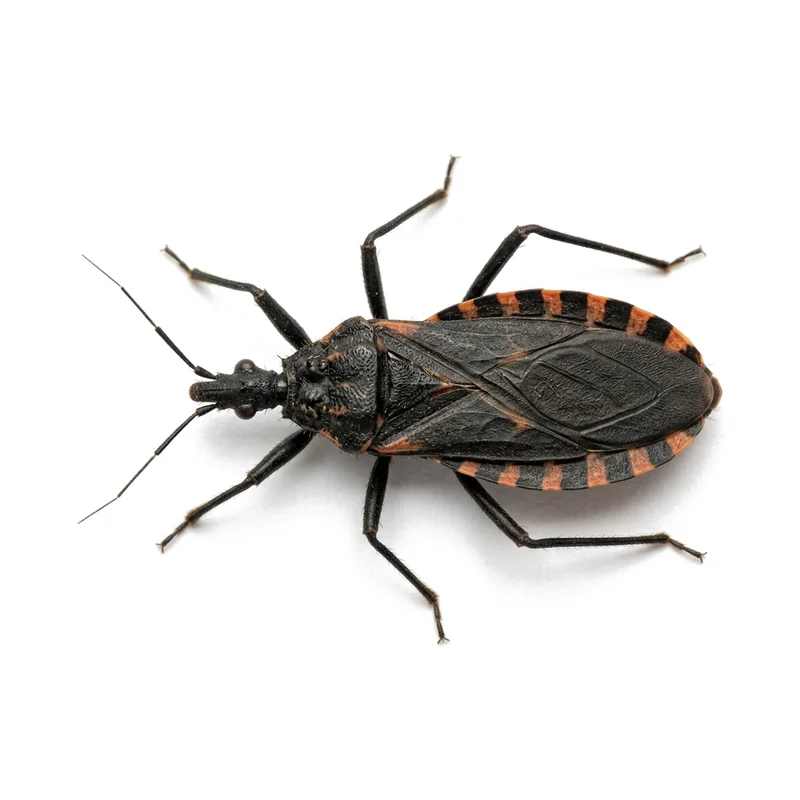
Kissing Bug
AKA: Conenose Bug
Triatoma
|
About 1/2 to over 1 1/4 inches. Dark brown to black with reddish to cream stripes along the body edge. | Pear-shaped, with a long, narrow, cone-shaped head and thin legs. Feeds on blood, mostly at night. | Near the dogs and wild animals it feeds on, and now and then indoors at night. |
|
Box Elder Bug
AKA: Boxelder Bug
Boisea trivittata
|
Smaller than most kissing bugs, with red eyes and markings on the wings. | No bands around the edge of the body, unlike a kissing bug or the brown marmorated stink bug. Does not bite. | Maple and box elder trees, then on walls and indoors for warmth in the fall. |
|
Leaf-Footed Bug
AKA: Western Conifer Seed Bug (one kind)
Coreidae
|
About 1 inch. Dark gray to brown or black with a pale stripe across the back. | Hind legs swollen or flattened, sometimes into a leaf-like shape. Feeds on plant seeds and does not bite. | Tomatoes, fruit and seeds in the garden, now and then on the house in fall. |
Stink Bug vs Kissing Bug
The Stink Bug in Three Numbers
30 to 130
University of Florida Extension says the southern green stink bug, a stink bug found in Texas, glues its eggs to leaves in masses of 30 to 130 eggs.
University of Florida Extension
100+ days
University of Florida Extension says a female brown stink bug lays about 18 egg masses over more than 100 days, so an adult can live well past three months.
University of Florida Extension
About 220
Texas A&M AgriLife Extension says the name stink bug covers a family of about 220 North American insects, and not all of them eat plants.
Texas A&M AgriLife Extension, Insects in the City
Are Stink Bugs Harmful?
Not in the way most people fear. The Texas A&M AgriLife Extension news release on the brown marmorated stink bug calls it no health threat to people or animals, and the University of Florida Extension fact sheet on the brown marmorated stink bug says it poses no risk of harm to homeowners. The trouble is the smell. The Penn State Extension page on the brown marmorated stink bug says its odor can set off a runny nose or itchy, red eyes in people sensitive to it, and that a bug crushed against bare skin can leave a rash in a small share of people. The University of Kentucky advises picking them up with a paper towel or tissue, keeping your hands away from your face and eyes, and seeing a doctor if the eye and nose trouble keeps up in a house with many stink bugs.
Do Stink Bugs Bite People or Pets?
No. The University of Kentucky says stink bugs feed only on plants and do not bite humans or pets. Their mouthparts are a thin straw built for plant juices, held flat under the body. Stink bugs are related to bed bugs, but they are a different kind of bug altogether. A bug that bit you at night is not a stink bug, and the large bug most worth checking in Texas is the kissing bug, described in the look-alike table above.
When Stink Bug Contact Needs Fast Action
Itchy Eyes or a Runny Nose Around Them
Some people react to the smell. If it keeps up in a house full of stink bugs, Kentucky’s advice is to see your doctor.
A Rash After Crushing One
Wash the skin with soap and water. A rash that spreads, blisters or will not settle is worth a call to your doctor.
A Bug With a Long, Cone-Shaped Head
That may be a kissing bug, not a stink bug. Texas A&M’s kissing bug program says never to touch one with bare hands, and to use a glove or a small plastic bag.
A Few on the Windows in Fall
A nuisance, not a danger. It does mean they are finding gaps around the windows, doors or attic vents.
Why You Have Stink Bugs in Your House
Stink bugs come inside to spend the winter, not to feed or breed. The University of Kentucky says shorter days and cooler temperatures set off the urge to find shelter, and that in Kentucky they move to buildings on warm, sunny days in September and October. They slip in through cracks around windows, doors, roof flashing, vents, window air conditioners, fascia and siding, and they favor the upper parts of a house, often getting in through the attic. Kentucky adds that they are drawn to light, so porch lights and lamps pull them toward the house in the evening.
The ones you find on a warm winter afternoon are not a new batch. Kentucky’s fact sheet says the adults spend the winter unmated and do not breed indoors, so a stink bug crawling across the ceiling in January came in the fall before and woke up in the warmth. Penn State notes that, once inside, they come out from cracks behind baseboards, around window and door trim and around ceiling fans and light fixtures. Texas A&M’s Insects in the City post on the brown marmorated stink bug also warns that they hitchhike in vehicles and travel trailers, which is how the first one reached Texas.
Where Stink Bugs Live Around Collin County Homes
In the warm months stink bugs live on plants. The Texas AgriLife Extension and City of Austin guide says the brown and southern green stink bugs suck juices from leaves, stems and fruit and are especially fond of tomatoes, southern peas, peaches and pecans, leaving deformed growth and black spots on pecan kernels. The University of Florida says the brown stink bug spends the winter in ditch banks, fence rows, under boards, stones and dead weeds and under tree bark. The brown marmorated stink bug is the one that moves into houses in large numbers, according to the University of Kentucky, choosing cool, dry cracks in walls, ceilings and attics.
Stink Bug Pressure Across Collin County
The brown marmorated stink bug that fills houses in the eastern states has rarely been confirmed in Texas. In 2012 Texas A&M AgriLife Extension had one confirmed find, in a travel trailer moved to Corpus Christi from Pennsylvania. The national StopBMSB.org map of where the brown marmorated stink bug is found, last updated in 2021, still lists Texas as a state where it has been detected but shows no sign of settled populations. Texas A&M’s entomologists said it could live almost anywhere in Texas, so a new stink bug you have not seen before is worth reporting.
In McKinney, Frisco, Allen and Plano, the stink bugs people are most likely to meet are the brown and southern green kinds, in vegetable gardens, on fruit and pecan trees, and now and then on a sunny wall or window screen as the weather cools.
Stink bugs spend the winter as adults in sheltered spots and wake on the first warm days of spring. They feed and breed on plants through the warm months, then look for winter shelter as the days shorten, which is when they turn up on walls and windows. On warm winter days the ones already inside can wander out.
Pattern from published stink bug biology (the University of Florida, the University of Kentucky and Penn State Extension). Our own service notes hold too few stink bug calls to chart.
Why Stink Bugs Keep Coming Back
How Pest Me Off Helps With Stink Bugs
Stink bugs are handled as part of general pest control, and almost all of the work happens on the outside of the house, where they get in.
Inspect and Identify
A free inspection of the outside of the house, the windows, doors, eaves and attic vents, and the rooms where they turn up. We confirm the bugs are stink bugs and not kissing bugs or another look-alike.
Find the Gaps
We look for the openings they use, around windows and doors, at the soffits and fascia, the attic vents and where pipes and wires enter the house.
Treat the Way In
The foundation and the entry points on the outside of the house are treated as part of general pest control.
Close the House Up
We point out the fixes that close the house up, from caulking cracks to fine screening behind attic vents, so fewer get in next fall.
& Other Companies
How to Get Rid of Stink Bugs Yourself
Most DIY stink bug work is closing the house before fall. The University of Kentucky calls sealing cracks and openings the most permanent fix, and summer the best time to do it.
Why Some DIY Responses Fail for Stink Bugs
Most DIY stink bug trouble comes from spraying inside the house, where it does little, or from killing large numbers inside the walls and attic.
Foggers in the Living Room
Penn State says a fogger kills the bugs gathered on ceilings and walls but does not stop more coming out of the walls soon after the room is aired.
Killing Them Inside the Walls
Kentucky and Penn State both warn that dead stink bugs piled in wall voids and attics can feed carpet beetles, which then move on to wool and stored goods.
Crushing Them
A crushed stink bug releases its smell and a fluid that can irritate skin. Pick them up with a tissue or vacuum them, and expect the vacuum to smell for a while.
Common Stink Bug Questions
What is a stink bug?
Are stink bugs harmful?
Do stink bugs bite people or pets?
Why are there stink bugs in my house in winter?
Are there brown marmorated stink bugs in Texas?
What kinds of stink bugs live in Texas?
Why do stink bugs smell?
Do stink bugs lay eggs in the house?
How long do stink bugs live?
What is the difference between a stink bug and a kissing bug?
How do I get rid of stink bugs?
Stink Bugs on the Windows? We Find the Gaps They Use.
We confirm which bug it is, find the openings around windows, doors and the attic, treat the foundation and entry points outside, and show you how to close the house up. Pest control across McKinney, Allen, Frisco, Plano, and all of Collin County.