
Tawny Crazy Ants in Collin County, TX | Identification and Control
The tawny crazy ant (Nylanderia fulva), also called the raspberry crazy ant, is a small reddish-brown ant that runs in fast, random scatter instead of trails. It was not established in Collin County as of April 2026, but it is spreading north from the Houston area on plants, mulch and equipment. The University of Texas at Austin reported in 2013 that in the US this ant can reach densities up to 100 times as great as all other ants in an area combined. It nests in electrical equipment and ignores fire ant bait, so call before you treat it with anything.
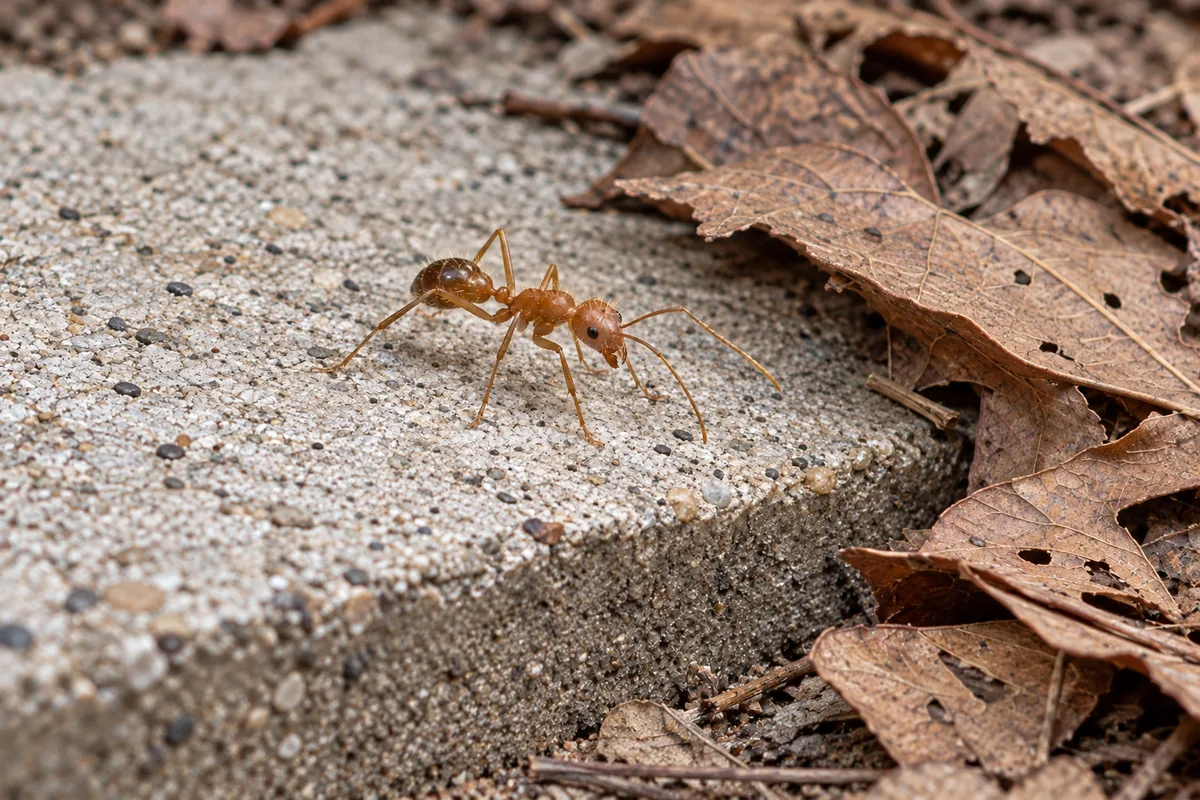
Seeing ants that scatter like this in Collin County? Our office sits where McKinney, Plano, Frisco and Allen meet, 5 to 10 minutes from most homes in those four cities. Send us a photo or call before you spray anything, and we will tell you what the ant is.
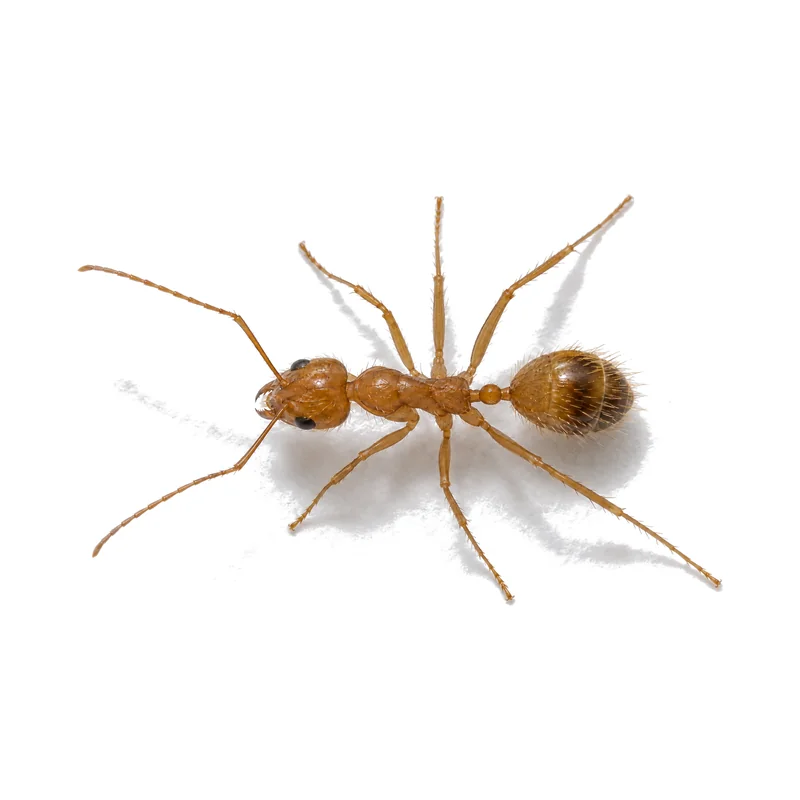
Tawny Crazy Ant
Texas A&M AgriLife guide to tawny crazy ants names the dense body hair as the main structural sign that separates this species from other small reddish ants in Texas.
Risk Assessment
Choose a row for the full detail- Color
- Tawny-golden to reddish-brown, with a slightly darker rear section
- Colony structure
- Multi-queen supercolonies with no mound and no central nest
- Body hairs
- Dense on every body segment and visible to the naked eye
- Movement pattern
- Fast, erratic scatter in every direction, never organized trails
- Fire ant bait
- No effect at all
- Collin County status
- Not established as of April 2026, a transport risk
- Worker size
- 2 to 2.5 mm, all workers the same size
What a Tawny Crazy Ant Looks Like
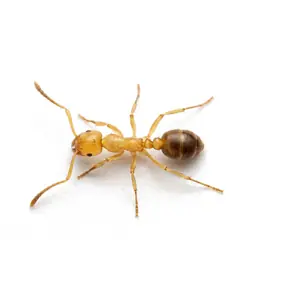
Tawny crazy ant workers are 2 to 2.5 mm long and all the same size, according to University of Georgia Extension. They are tawny-golden to reddish-brown with a slightly darker rear section. Dense hairs cover every body segment and show to the naked eye in good light. The antennae are long for the body, with 12 segments and no club, and the waist has a single node.
The movement is what makes it easy to spot. Every other ant in Collin County travels in trails or in one direction. Tawny crazy ants run fast and at random, never following each other, so a dense mass seems to cover a surface all at once. That scatter is the crazy in the name.
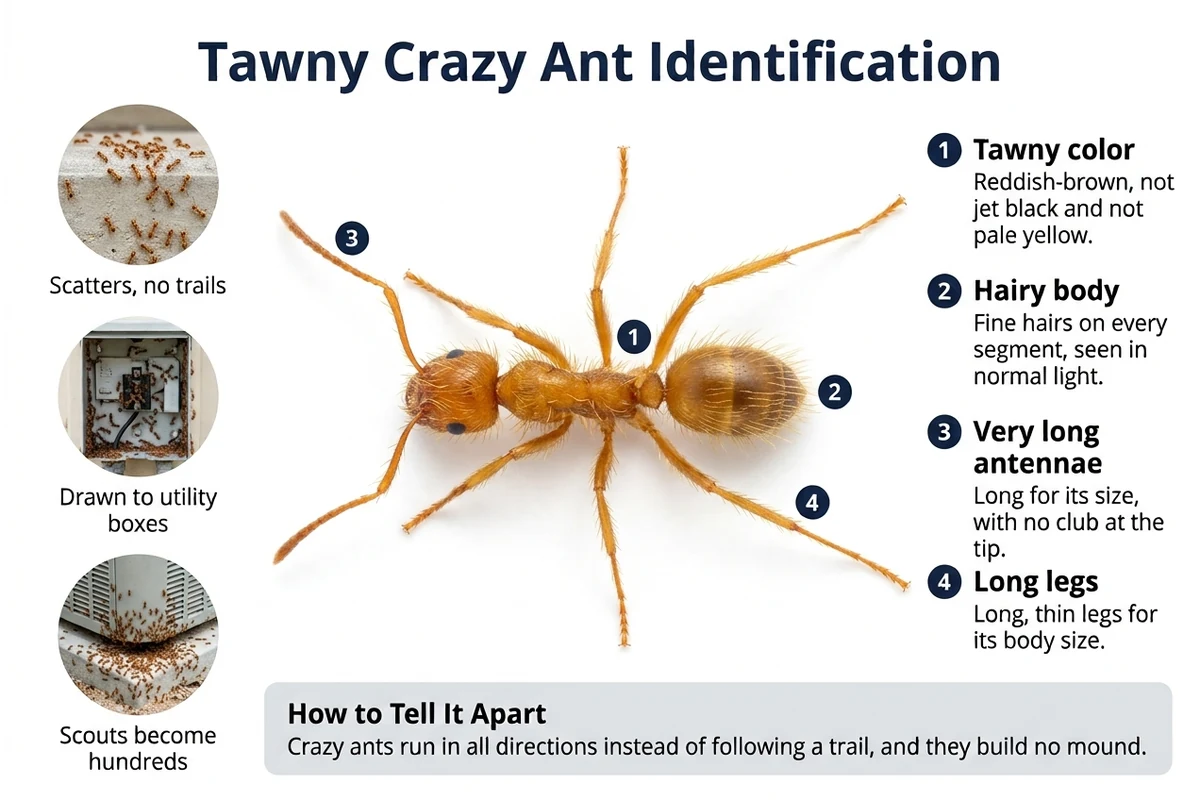
How to identify a tawny crazy ant from above, by its tawny hairy body and very long legs and antennae
- Workers scatter in all directions instead of trailing in lines
- Tawny to reddish-brown color, not jet black and not pale yellow
- Dense body hairs on every segment, visible in normal light
- Long antennae for the body size, with no club at the tip
- Long, thin legs for the body size
- A few scouts become hundreds within hours
- Drawn to electrical equipment such as HVAC units, utility boxes, vehicles and outdoor outlets
- No mound, no central nest and no foraging trail
Other Names for the Tawny Crazy Ant
The raspberry name comes from Tom Rasberry, a Houston-area exterminator who was among the first to document this ant spreading into residential neighborhoods in the early 2000s. It became the usual label in Texas pest control before the species was placed in the genus Nylanderia and named Nylanderia fulva. Most academic sources now use tawny crazy ant, for the reddish-golden color, but raspberry crazy ant is still common along the Gulf Coast and in Collin County calls. Every name in the table means the same ant.
Where Are Tawny Crazy Ants Found?
Tawny crazy ants are found mostly in Houston-area and Gulf Coast Texas, with populations spreading north. The species is native to South America and is believed to have arrived through the Port of Houston in the late 1990s to early 2000s. From there it moved north along transportation corridors, carried on landscaping materials, plants and equipment.
The Texas invasive species record for this ant puts the main risk on purchased materials, not on ants walking north.
| Name | What it means |
|---|---|
| Tawny crazy ant | The common name entomologists adopted, after the reddish-golden color of the workers. |
| Raspberry crazy ant | The name most Texans use, after the exterminator who first documented it near Houston. |
| Rasberry crazy ant | The original spelling of the same name, matching the exterminator’s surname. |
| Hairy crazy ant | Named for the dense body hairs, which are easy to see on a close look. |
| Longhorn crazy ant | A different species, Paratrechina longicornis. It also runs erratically but has noticeably longer legs and lacks the dense hair. |
| Nylanderia fulva | The scientific name, given when the species was moved into the genus Nylanderia. |
How to Tell Tawny Crazy Ants from Other Ants in Collin County
Movement, color and the lack of a mound separate tawny crazy ants from every other ant in the area. The table compares it with the three ants it is most often mistaken for.
| Species | Size | Key Feature | Nesting Habit |
|---|---|---|---|
|
Tawny Crazy Ant
AKA: Raspberry Crazy Ant, Hairy Crazy Ant
Nylanderia fulva
This species
|
2 to 2.5 mm, tawny to reddish-brown with dense visible body hairs on all segments. Workers are all about the same size, unlike fire ants, which come in mixed sizes. | Fast, erratic scatter in every direction with no organized trails and no mound. Dense body hairs visible to the naked eye in good light, the single most reliable structural sign at a glance. | No central nest. Loose gatherings under ground debris, in soil, under mulch and around foundations. Workers range freely across several properties with no territory boundary. |
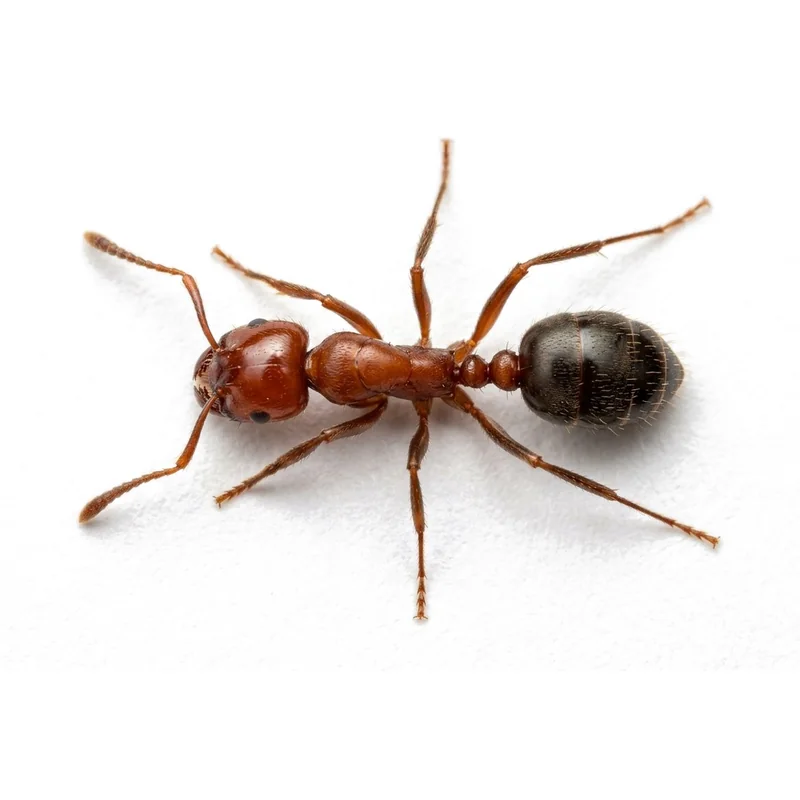
Fire Ant
AKA: Red Ant, Mound Ant
Solenopsis invicta
|
1.6 to 6 mm, reddish-brown head and middle with a darker rear section. Workers in one colony come in mixed sizes, small and large. | Organized trails to and from a dome mound, and a fast group sting when the mound is disturbed. No body hairs at the density of a tawny crazy ant, and movement is purposeful, not erratic. | Dome mound with no central opening, in lawns, landscape beds and along foundation edges. The mound is the clearest field separator, because tawny crazy ants never build one. |
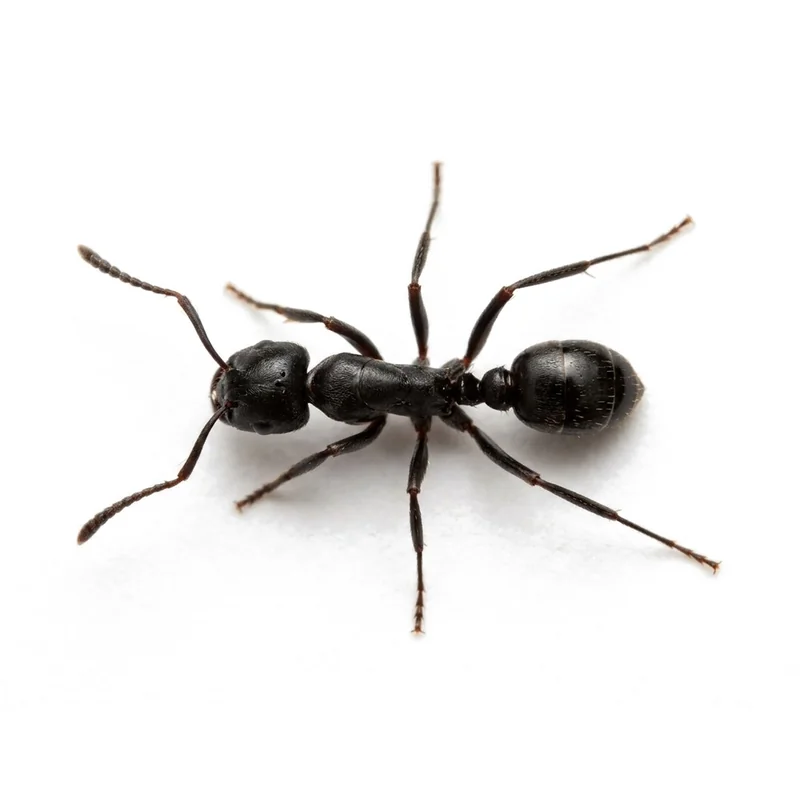
Little Black Ant
AKA: Black Ant, Tiny Black Ant
Monomorium minimum
|
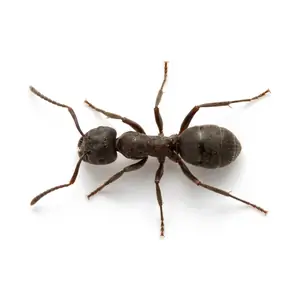
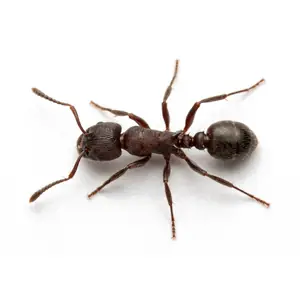
1.5 to 2 mm, jet black to very dark brown on every worker. The black color alone separates it from the tawny-red of a crazy ant. | Slow, organized trails along edges and surfaces, with no erratic movement and no visible body hairs. Trails follow set paths and never spread into a broad scatter. | Outdoor soil, rotting wood and under stones, sending trails indoors in season through foundation gaps and utility openings. Does not nest inside electrical equipment. |
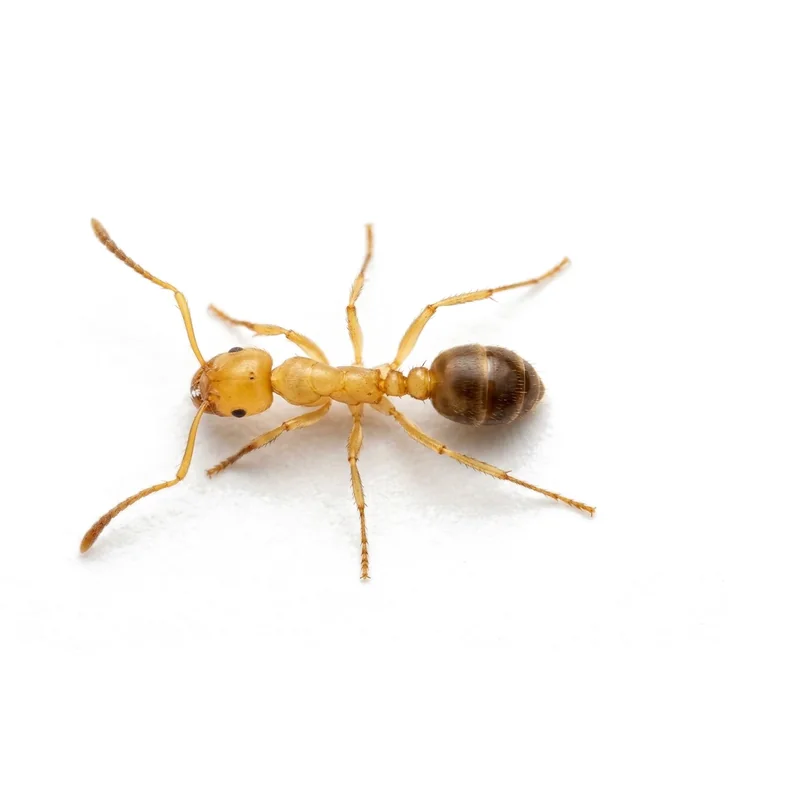
Pharaoh Ant
AKA: Tiny Yellow Ant, Hospital Ant
Monomorium pharaonis
|
1.5 to 2 mm, pale yellowish to light amber, clearly lighter than a tawny crazy ant. Workers are all about the same size. | Organized trails near plumbing and moisture, pale yellow color, and indoor activity all year. Trails follow set routes along baseboards and under cabinet edges, with no scatter. | Deep inside walls, insulation and cabinets near plumbing, as a permanent indoor colony. Does not gather outdoors or in open soil the way tawny crazy ants do. |
Tawny Crazy Ant vs Fire Ant
The Tawny Crazy Ant in Three Numbers
2 to 2.5 mm
University of Georgia Extension measures tawny crazy ant workers at 2 to 2.5 mm long, and every worker in a colony is the same size.
University of Georgia Extension
100 times
The University of Texas at Austin reported in 2013 that in the US, tawny crazy ants can reach densities up to 100 times as great as all other ants in the area combined.
The University of Texas at Austin, 2013
1 to 2 years
Texas A&M AgriLife Extension warns that a tawny crazy ant population can reach extraordinary densities within 1 to 2 years of arriving somewhere new.
Texas A&M AgriLife Extension
Are Tawny Crazy Ants Dangerous?
No. Tawny crazy ants are not dangerous to people. Where they are established, an outdoor encounter means ants covering surfaces and getting into shoes and clothing, which is a real nuisance and can make a yard hard to use, but it is not a health problem. The damage this ant does is to equipment, not to people.
Do Tawny Crazy Ants Bite or Sting?
Tawny crazy ants do not sting. They have no functional sting, so there is no venom and no risk of a serious allergic reaction. Workers can bite when they are pressed against skin, and the bite is felt only for a moment.
When Tawny Crazy Ants Warrant Action
Confirmed Ants Near Electrical Equipment
Once tawny crazy ants are confirmed on a property, check HVAC units, outdoor electrical boxes, irrigation controllers and vehicle engine compartments within 24 hours. Ants packed into relays and control boards can cause a failure faster than most homeowners expect.
Reddish-Brown Ants Scattering With No Mound
Photograph the ants from several angles and call before using any product. A small founding population that arrived on a delivery can be managed. A supercolony that has been in place for a season or more cannot.
Why You Found Tawny Crazy Ants in Your House
Tawny crazy ants come indoors looking for shelter and warmth, through utility openings, conduit, HVAC line sets and gaps in the walls. Where supercolonies are established on the Gulf Coast, they have been documented entering homes through every available gap, covering inside surfaces and getting into stored food. Indoors they are the same nuisance as outside, with no health risk.
Because this ant was not established in Collin County as of April 2026, a swarm of tiny reddish ants in a house here is worth a photo before you buy a spray. Send it to us or call, and once the species is known, seal the gaps the ants used.
Where Tawny Crazy Ants Nest and What They Damage
Tawny crazy ants build no mound. They gather loosely under ground debris, in soil, under mulch and around foundations, and they nest inside electrical equipment too: HVAC units, air conditioner condensers, utility junction boxes, irrigation control boxes, vehicle engine compartments and outdoor outlets.
Workers that touch a live component die and give off an alarm scent that draws more workers. Dead and live ants pile up until they cause short circuits, relay failures and motor damage. Texas A&M research on crazy ant damage documents ants in vehicle engine compartments, battery connections and onboard computer housings in established zones.
Tawny Crazy Ants and Collin County
As of April 2026, tawny crazy ants are not established in Collin County. Confirmed populations exist in parts of Dallas County and across established Dallas-Fort Worth zones farther south, and the species has been moving north from the Houston region and the Gulf Coast.
It spreads mainly by being carried on landscaping plants, potted soil, mulch, moving equipment and cargo, which moves it faster than the ants can travel on their own. The same route that brought it from Houston to Dallas could bring it into Collin County.
This calendar follows outdoor colonies in the Houston area and other Gulf Coast zones where the species is confirmed. Tawny crazy ants are not dormant in Texas winters, but they show less surface activity in the coldest months. Once established inside a climate-controlled building, a population stays active all year.
Pattern from established population records in Gulf Coast Texas. Not yet confirmed in Collin County.
Tawny Crazy Ant Biology Worth Knowing
New queens walk to a nearby nest site instead of flying, and research on invasive ant supercolonies documents how the colony grows without the swarms that spread fire ants and odorous house ants. So the ant spreads slowly on its own and turns up suddenly wherever a plant or a load of mulch carries it. Texas A&M AgriLife Extension warns that after arriving somewhere new, these ants can reach extraordinary densities within 1 to 2 years.
How Pest Me Off Handles Tawny Crazy Ants
Because the species was not established here as of April 2026, we treat every confirmed case in Collin County as early detection. Aggressive treatment before a supercolony forms gives the best chance of keeping the ant from settling in. Once a supercolony is established, keeping its numbers down is the ongoing goal.
Confirm the Species and Protect Equipment
We confirm the species before any product goes down. If it is a tawny crazy ant, we inspect every piece of electrical equipment on the property: HVAC condensers, outdoor junction boxes, irrigation controllers and vehicle engine compartments.
Reduce the Population With Products That Work
We apply non-repellent liquids and baits with a shown effect on Nylanderia fulva at the perimeter, at the gathering points we find, and along the routes into the structure. Workers carry these products back without sensing a threat, which spreads them through the population.
Monitor and Follow Up
When our technician decides it is needed, a follow-up inspection checks how the population is responding, and we reapply as needed. On an early-detection case we watch for the population dropping or for ants moving back in from next door. On an established one we track when numbers fall to a manageable level.
Recommend Sealing
We document utility openings, conduit entry points, HVAC line sets and other gaps that let workers into the house and into equipment boxes, and give specific sealing recommendations for you or a contractor to handle between visits.
& Quick Fixes
How to Get Rid of Tawny Crazy Ants Yourself
You cannot clear an established population yourself, because no store product works on it. What you can do is keep the ant from arriving, protect your equipment, and catch a new population early, while it is still small enough to treat.
Why DIY Treatment Fails on Tawny Crazy Ants
This is the one ant where store products should not be used at all. University of Florida guidance on store ant products warns that the wrong product does more than waste money, because it can spread the ants into new areas.
Broadcast Fire Ant Bait
Workers do not take the bait used in fire ant products, so spreading it does nothing and only delays the species check that should come first.
Spraying the Yard Edge
Contact sprays kill only the workers they touch, and the supercolony replaces them at once. A perimeter spray or granule stops ants at the line for a short while, then the colony routes around it or waits for it to wear off. Most homeowners who try it are back to the same numbers within 4 to 6 weeks, and repellent products can push the ants onto the next property.
Treating Before the Species Is Confirmed
Every treatment choice depends on knowing the ant. Fire ant products on an odorous house ant colony make it split into new colonies, and fire ant products on tawny crazy ants do nothing. Either way, calling first for a confirmed identification costs less.
Common Tawny Crazy Ant Questions
What are tawny crazy ants?
Why do people call tawny crazy ants raspberry crazy ants?
Are tawny crazy ants in Collin County yet?
Why do fire ant treatments not work on tawny crazy ants?
Do tawny crazy ants really destroy electronics?
How do I tell tawny crazy ants from fire ants?
How did tawny crazy ants get to Texas?
Will tawny crazy ants eliminate fire ants on my property?
Can tawny crazy ants be eliminated from a property?
How do I get rid of tawny crazy ants?
Ants That Scatter Instead of Trail? Call Before You Treat. Fire Ant Products Have Zero Effect.
We confirm the species, protect your equipment first, and use the treatment that actually works on tawny crazy ants. McKinney, Allen, Frisco, Plano, and all of Collin County.