Norway Rats in Collin County, TX | Identification and Control
The Norway rat (Rattus norvegicus) is the big, heavy rat that lives at ground level. It digs burrows along foundations, under sheds and in mulch beds, gnaws through wood, wiring and pipe, and can undermine a slab or walkway. Texas Tech’s Mammals of Texas puts an adult at 400 to 500 grams, about a pound, and its urine can carry leptospirosis, which the CDC says becomes more of a risk after flooding and heavy rain.
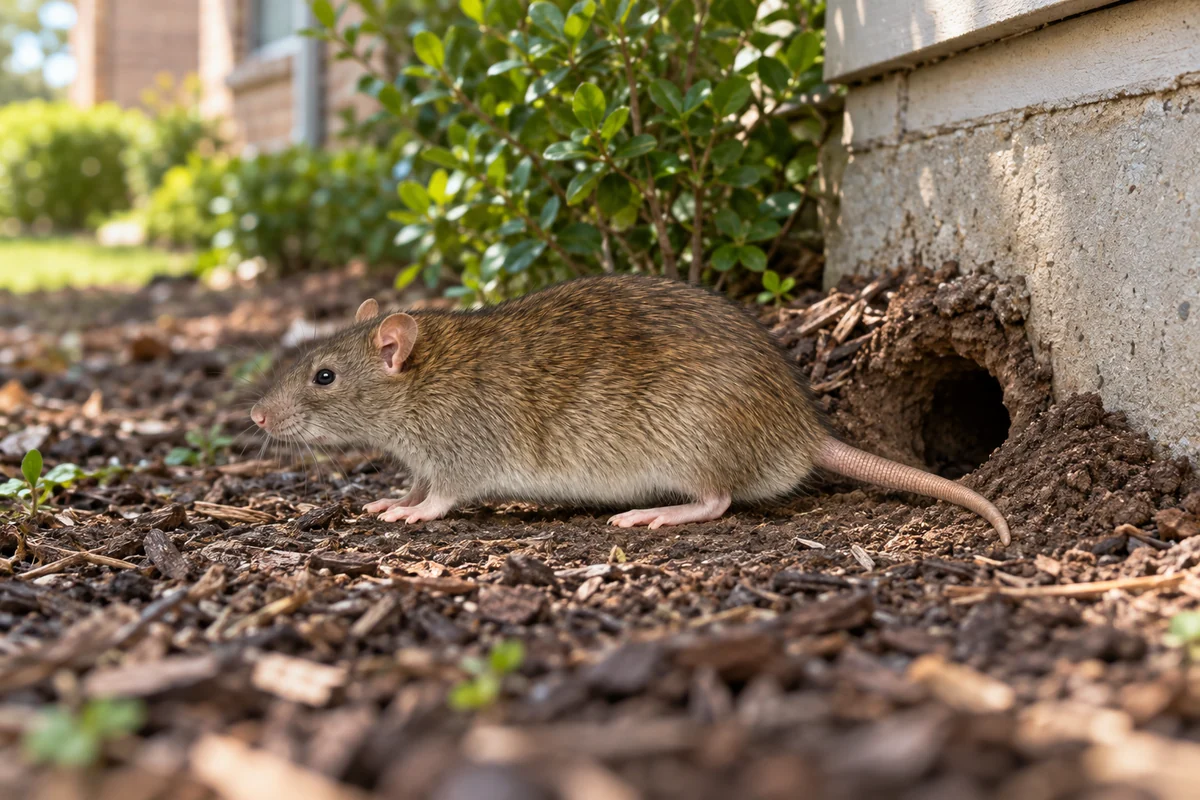
Holes along your foundation or under the porch? Our office sits where McKinney, Plano, Frisco and Allen meet, 5 to 10 minutes from most homes in those four cities. Call and we will find the burrows, the runways and every way in.
Norway Rat
The Norway rat is a burrowing rat that lives close to people, digging in under slabs, sheds and walkways and coming out at dusk to feed. Texas Tech’s Mammals of Texas calls it a very common species across the state.
Risk Assessment
Choose a row for the full detail- Color
- Brown or reddish gray above, gray to white below
- Diet
- Almost anything, preferring grain, meat, fish, nuts and pet food
- Threat level
- High
- Nesting site
- Burrows under slabs, sheds, porches, walkways and mulch
- Lifespan
- Reported at 2 to 3 years
- Young to adult
- Weaned at 3 to 4 weeks, breeding at about 3 months
- Size
- About 17 inches long with the tail, 400 to 500 g (about a pound)
What Does a Norway Rat Look Like?
A heavy brown rat with a blunt nose, small ears and a thick tail shorter than its body
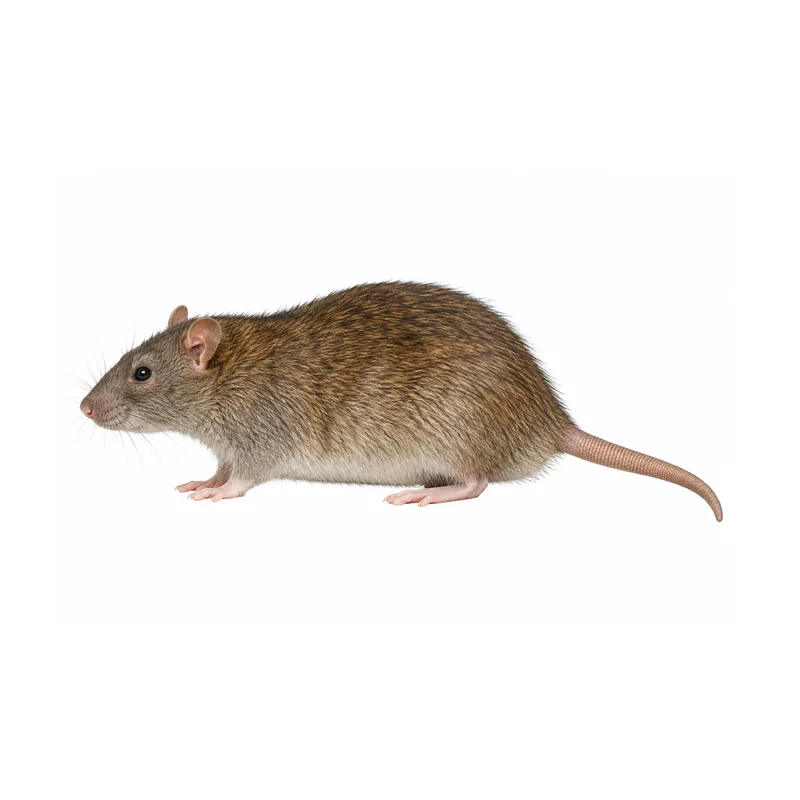
An adult Norway rat is big and chunky, with coarse brown or reddish gray fur on its back and a gray to white belly. Its nose is blunt, its eyes and ears are small, and its scaly tail is shorter than its head and body together. Texas Tech University’s species account in The Mammals of Texas gives an average total length of 440 mm, about 17 inches, of which about 8 inches is tail, and an adult weight of 400 to 500 grams.
Most people never get a good look at one. They find what it leaves. The national wildlife damage management reference on the Norway rat describes droppings up to three quarters of an inch long with blunt ends, 40 to 50 of them a day, and burrow openings 2 to 3 inches wide, swept clean, with rat hairs around the edge. The rat uses the same routes every night, so the grass wears into a path and the wall it runs along picks up a dark, greasy smudge.
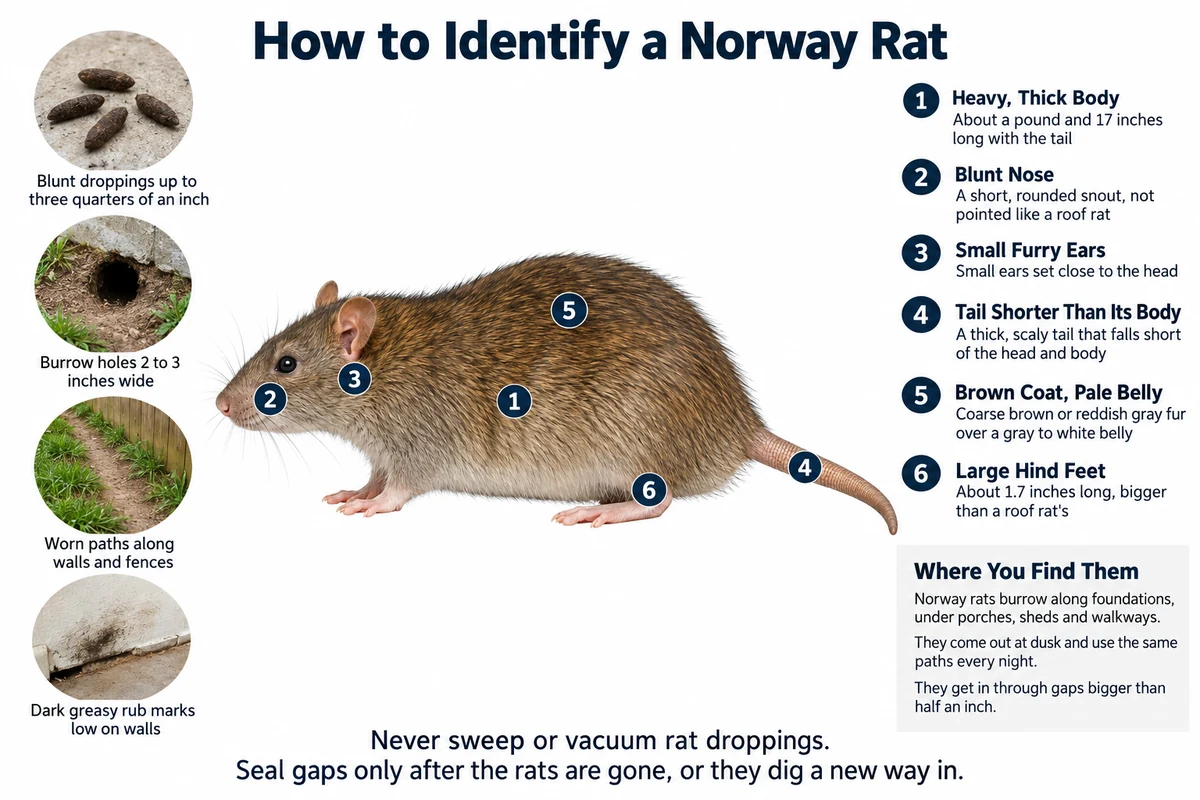
How to identify a Norway rat by its heavy body, blunt nose and short, thick tail, with the droppings, burrows and runways it leaves behind
- Holes 2 to 3 inches wide along the foundation, under a porch, shed or walkway, or in mulch beds
- Blunt-ended droppings up to three quarters of an inch long, in small clumps
- A bare, worn path in the grass running along a wall or fence
- Dark, greasy smudges low on walls, pipes and the edges of doors
- Chewed trash bags, gnawed bin lids and pet food gone overnight
- Scratching at ground level or under the slab, rather than overhead in the attic
Other Names for the Norway Rat
Despite the name, the Norway rat is not a Norwegian animal. It reached North America from Europe, and the wildlife damage reference lists brown rat, house rat, barn rat, sewer rat, gray rat and wharf rat as other names for the same animal. The scientific name Rattus norvegicus carries the Norway mistake into Latin. In Spanish it is the rata parda, the brown rat, or the rata noruega.
The name that causes the most confusion is black rat. That is the roof rat, a different species that is slimmer, climbs into attics and usually has a tail longer than its body. The look-alike table below shows how to tell the two apart.
| Name | What it means |
|---|---|
| Brown rat | The most common name worldwide, after its brown coat. |
| Sewer rat | For the sewers it lives and travels in. |
| Wharf rat | An old name from the docks and ships it spread on. |
| Rata parda | The Spanish name, meaning the brown rat. |
| Black rat | A different animal, the roof rat, not a Norway rat. |
How to Tell a Norway Rat from a Roof Rat or House Mouse
All three live around Collin County homes, and the right fix depends on which one it is. A Norway rat is caught and kept out at ground level, while a roof rat is dealt with up on the roof and in the attic. The tail, the size of the droppings and where the signs are tell them apart.
| Species | Size and Color | Key Feature | Where Found |
|---|---|---|---|
|
Norway Rat
AKA: Brown Rat, Sewer Rat, Wharf Rat
Rattus norvegicus
This species
|
About a pound and 17 inches long with the tail. Brown or reddish gray with a gray to white belly. | Heavy body, blunt nose, small ears and a thick tail shorter than its body. Blunt droppings up to three quarters of an inch long. | Burrows at ground level along foundations, under porches, sheds and walkways, and in mulch beds. |
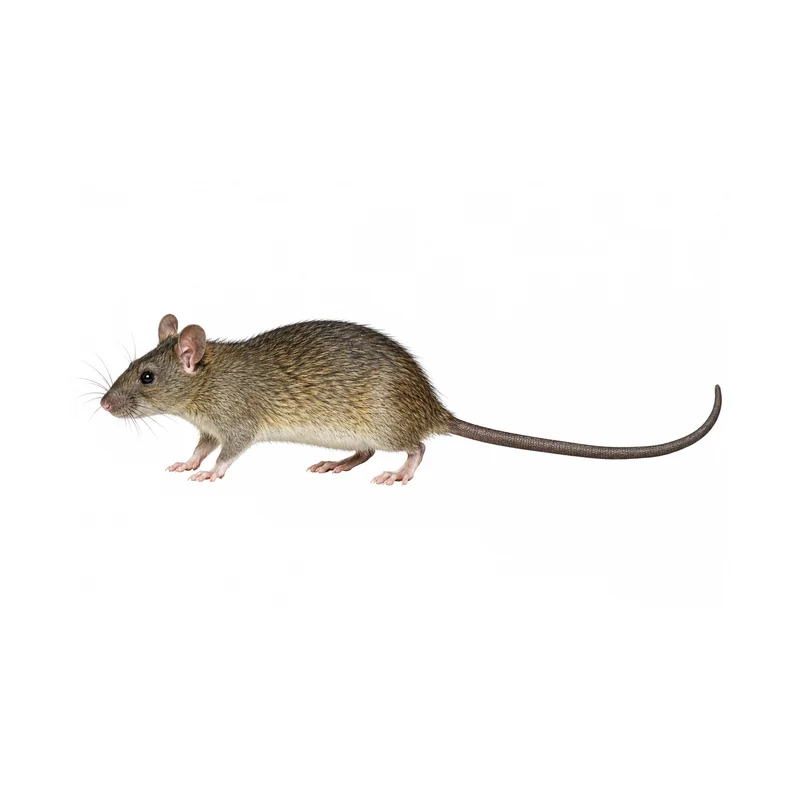
Roof Rat
AKA: Black Rat, Ship Rat
Rattus rattus
|
Slimmer and lighter, about 5 to 9 ounces. Brown mixed with black, or blackish, with a white, gray or black belly. | Pointed nose, large ears and a thin tail usually longer than its body. Droppings about half an inch long with pointed ends. | Up high. Attics, roof edges and trees, reached along branches, fences and utility lines. |
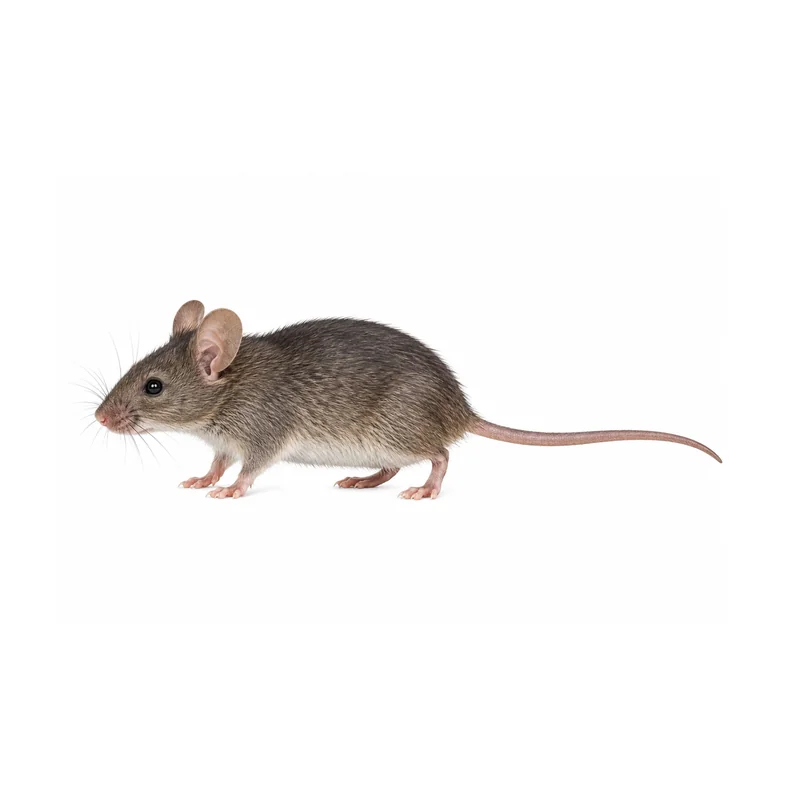
House Mouse
AKA: Mouse
Mus musculus
|
Far smaller, under an ounce. Gray brown with a gray or buff belly. | Small pointed nose with large ears, and droppings only about a quarter inch long. | Inside the house, in walls, cabinets, garages and behind appliances, through gaps a rat cannot use. |
Norway Rat vs Roof Rat
The Norway Rat in Three Numbers
1/2 inch
The national wildlife damage management reference advises sealing every hole and opening larger than 1/2 inch to keep Norway rats out of a building.
Internet Center for Wildlife Damage Management
40 to 50
The same reference reports that a Norway rat leaves about 40 to 50 droppings a day, usually in small clumps, which is why a few rats soon foul a garage or shed.
Internet Center for Wildlife Damage Management
7 or 8
Texas Tech University’s Mammals of Texas gives the average Norway rat litter as 7 or 8 young, after a pregnancy of only 21 to 23 days.
Texas Tech University, The Mammals of Texas
Are Norway Rats Dangerous?
Yes, mostly for what they carry rather than for biting. The wildlife damage reference on Norway rat damage lists leptospirosis, murine typhus, salmonella food poisoning, trichinosis and rat-bite fever among the diseases they spread, and notes that where rats are many they will bite infants and people who cannot defend themselves, usually on the hands and mouth where food smells linger. A healthy rat avoids people, but one that is cornered or trapped will bite.
Can You Get Leptospirosis From Rats?
You can. According to the CDC’s page on leptospirosis, the bacteria spread through the urine of infected animals, can live in water or soil for weeks to months, and infect people through contaminated water, soil or food, with the risk rising after floods and heavy rain. It takes 2 to 30 days to get sick, often with fever, headache, muscle aches and vomiting, and without treatment it can damage the kidneys and liver. Wear gloves and boots when cleaning up after rats, and see a doctor about any fever that follows.
What Is Rat-Bite Fever?
It is a bacterial infection people can get from a rat bite or scratch or other close contact with rats. The CDC’s page on rat-bite fever says it is rare in the United States, that symptoms such as fever, vomiting, headache and muscle pain usually start 3 to 10 days after contact, and that it must be treated quickly. Rats also carry Seoul virus, a hantavirus the CDC’s hantavirus page says is found in the United States, though fewer than 1 in 100 people who catch it die.
When Norway Rat Activity Needs Fast Action
A Rat Bite or Scratch
Wash it at once with soap and running water and call your doctor the same day. Rat-bite fever needs the right antibiotics quickly.
A Fever After Cleanup or a Flood
Fever, aches or vomiting in the weeks after cleaning out rat droppings or flood water can be leptospirosis. Tell your doctor about the rats.
Droppings Near Food
Droppings in the pantry, garage fridge or pet food bags mean rats are reaching food. Throw out anything they could have touched.
Rats Seen in Daylight
Norway rats come out at dusk. Seeing them by day usually means there are a lot of them, and the colony is outgrowing its burrows.
Why You Have Norway Rats Around Your House
Norway rats move in where food, water and cover sit close together. Trash cans with loose lids, pet food and water left out, bird seed on the ground, a leaking faucet, a compost pile, a woodpile and thick mulch or shrubs against the house give them everything they need within a few steps. The wildlife damage reference on Norway rat biology says a rat covers an area only about 100 to 150 feet across each day and seldom goes more than 400 feet from its burrow, so rats you see are living close by.
They dig in where the ground meets something solid, along a slab, under a porch or walkway, beneath a shed or in a mulch bed, and from there look for a way inside through a gap at the slab, a pipe opening or a worn garage door seal. The same reference notes they are excellent swimmers and live in some city sewers, and that the water in a drain trap does not stop them. It is not a sign of a dirty home. A tidy yard next to a greenbelt, a creek or a business with dumpsters can still draw them.
Where Norway Rats Live Around Collin County Homes
Norway rats nest in burrows below or at ground level. The wildlife damage reference lists burrows under buildings and concrete slabs, along stream banks and around ponds, and Texas Tech’s species account adds burrows under sidewalks and outbuildings. Each female keeps her own nest chamber, but several rats can share one burrow system. Although they climb well, they tend to stay on the lowest level of a building.
Norway Rat Pressure Across Collin County
Rat burrows show up in our service notes most often in McKinney, Frisco and Allen, usually in mulch beds, along fence lines and under porches and sheds. Homes beside creeks and greenbelts, or near businesses with dumpsters, give them the stream banks and steady food that Texas Tech and the wildlife damage reference describe.
In Plano, Celina and Prosper we also find rodent burrows around patios, foundations and sheds, often where the yard meets open land or a greenbelt.
Norway rats are active all year in Collin County. Breeding peaks in spring and fall and slows in the heat of summer, and fall is when rats press hardest at foundations and garages as the nights cool.
Pattern from published Norway rat breeding biology (the Internet Center for Wildlife Damage Management) and Pest Me Off rodent calls, which climb each fall.
Why Norway Rats Keep Coming Back
How Pest Me Off Gets Rid of Norway Rats
Norway rat control is four steps, every job. Killing the rats you can see is only part of the fix, because empty burrows and open gaps bring in the next ones.
Inspect and Identify
A free inspection of the foundation, yard, garage, fences and attic. We confirm it is a Norway rat and not a roof rat or mice, map the burrows and runways, and find every way in.
Bring the Numbers Down
Rat-sized snap traps set across the runways and locked, tamper-resistant bait stations along the foundation, near the burrows and away from children and pets.
Clean Up and Assess
We check traps and stations, remove what they catch, and show you the burrows, the gnawing and the gaps, from the slab edge to the garage door seal.
Seal It Out for Good
Once the rats are gone, burrows are closed and every gap over half an inch is sealed with materials a rat cannot chew, such as sheet metal, hardware cloth and concrete. This is the rodent proofing and exclusion work that keeps them out.
& Other Companies
How to Get Rid of Norway Rats Yourself
Most DIY rat work is taking away what drew them. The wildlife damage reference on Norway rat control puts sanitation and sealing first, ahead of any trap or bait.
Why Some DIY Responses Fail for Norway Rats
Most DIY rat trouble comes from treating the wrong rat, sealing too soon, or using poison where children, pets and wildlife can reach it.
Filling Burrows With Rats Inside
Packing a burrow shut while rats are still in it does not end them. They dig a new way out, sometimes under the slab and into the garage or house.
Loose Poison in the Yard
Bait tossed into burrows or left on the ground can be eaten by dogs, children and wildlife. Bait belongs in locked, tamper-resistant stations.
Sound Devices and Repellents
The same reference does not recommend ultrasonic devices for rodent problems and calls chemical repellents seldom practical for rats. Mouse traps are too small and attic traps miss a rat that lives on the ground.
Common Norway Rat Questions
What does a Norway rat look like, and how big do they get?
What is the difference between a Norway rat and a roof rat?
What do Norway rat droppings look like?
Are Norway rats dangerous to people?
Why are there rat holes in my yard and along my foundation?
Can a rat come up through the toilet?
How small a hole can a Norway rat get through?
Do Norway rats get into attics?
How fast do Norway rats breed?
Are Norway rats the same as sewer rats?
How do I get rid of Norway rats?
Rat Holes by the Foundation? We Bring Them Down and Seal Them Out.
We find the burrows, runways and every way in, bring the colony down with traps and locked bait stations, and seal the house so new rats cannot move in. Rodent control across McKinney, Allen, Frisco, Plano, and all of Collin County.