
Cigarette Beetles in Collin County, TX | Identification and Control
The cigarette beetle (Lasioderma serricorne) is a tiny, humpbacked, light brown beetle that breeds inside dry food. It turns up in spices, flour, dried beans, pet food, birdseed and dried flowers, and the adults fly to kitchen windows and lights. The Texas A&M Urban and Structural Entomology Program calls it the most common pantry pest in Texas, and says one female can lay up to 100 eggs. It does not bite and carries no known disease.
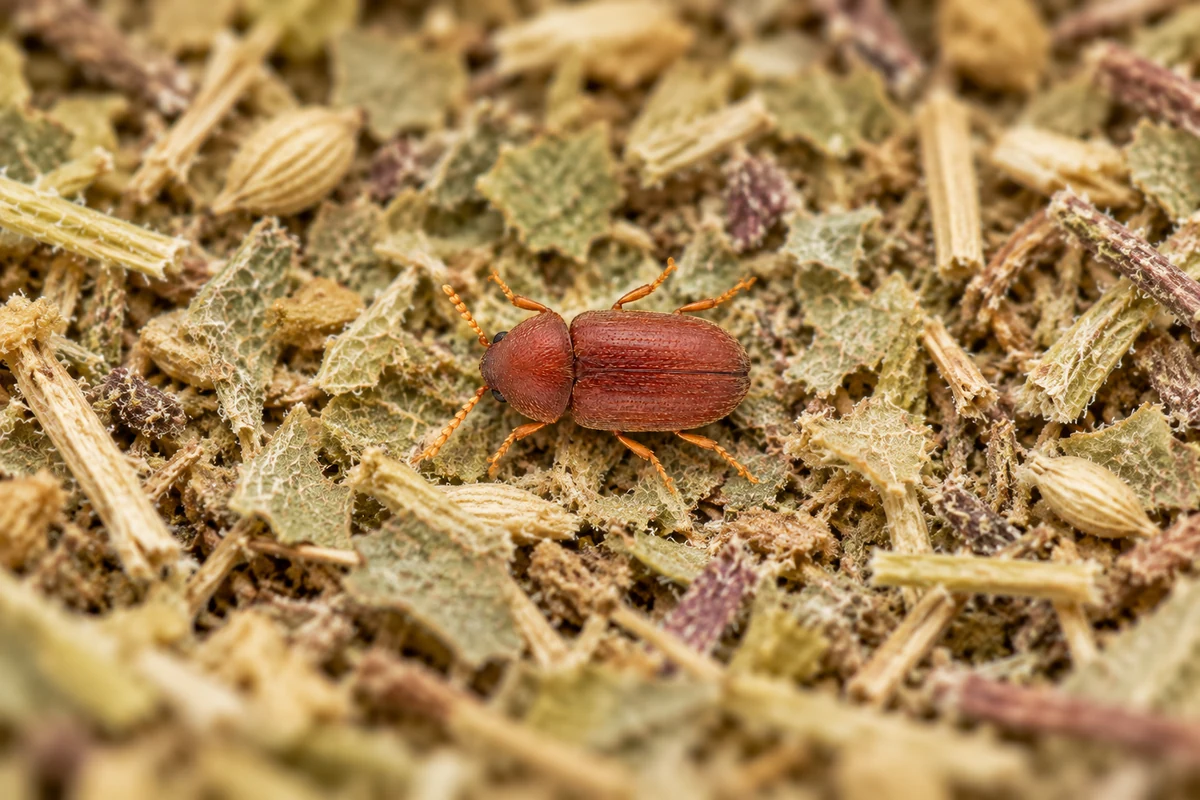
Tiny brown beetles in the spice cabinet or at the kitchen window? Our office sits where McKinney, Plano, Frisco and Allen meet, 5 to 10 minutes from most homes in those four cities. Call and we will find the package they are breeding in.
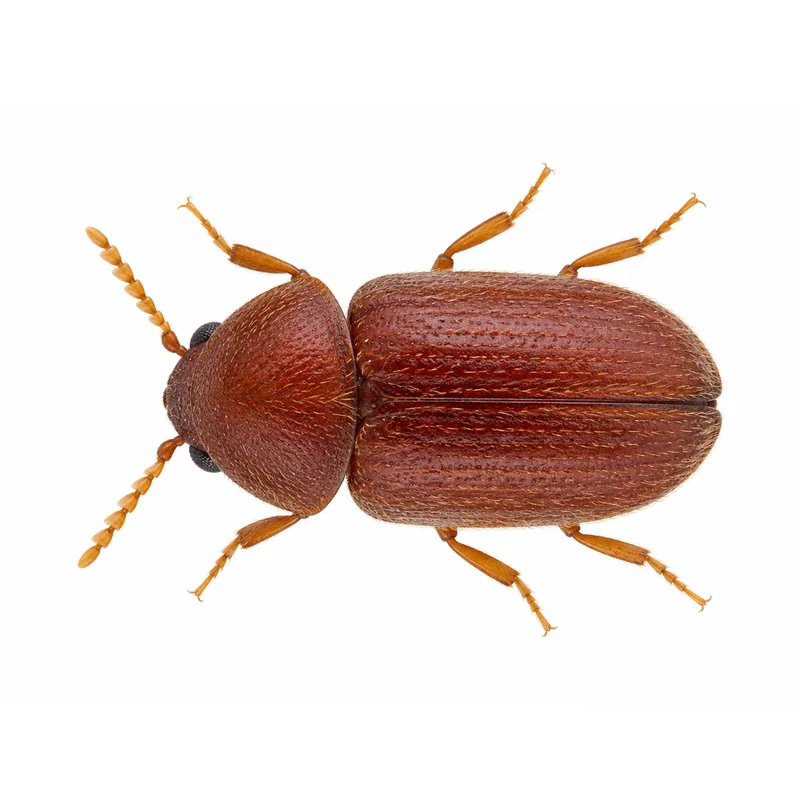
Cigarette Beetle
The cigarette beetle is a stored food pest that rides home in a package and breeds inside it, out of sight, until the adults start flying to the windows. The Texas A&M urban entomology page on cigarette beetles lists beans, flour, grains, nuts, seeds, spices, tobacco, potpourri, dried flowers and dried fruit among its foods.
Risk Assessment
Choose a row for the full detail- Color
- Light brown to reddish brown, all one color
- Diet
- Dry plant foods, spices, pet food, birdseed, dried flowers and tobacco
- Threat level
- Low
- Defining behavior
- Adults fly to windows and lights
- Where it hides
- Inside packages of dry food, spice jars and pet food bags
- Egg to adult
- Typically 6 to 8 weeks, and 26 to 100 days in all
- Adult body length
- 1/16 to 1/8 inch, about 2 to 3 mm
What Does a Cigarette Beetle Look Like?
A tiny, rounded, light brown beetle with a humped back, smooth wing covers and its head tucked out of sight
An adult cigarette beetle is oval, light brown and only 1/16 to 1/8 inch long, about the size of a sesame seed. Seen from above, its head is hidden under a hood behind it, and from the side the head bends sharply down, which gives the beetle its humped look. The Texas A&M Urban and Structural Entomology Program notes that its wing covers are very smooth and its feelers are saw-toothed, the two marks that set it apart from the drugstore beetle.
The young are small white grubs, curled into a C, with a brown head and a coat of fine hair. Texas A&M gives a full-grown grub at up to 3/16 inch. They live inside the food, so what most people find first is the adults, flying to a kitchen window in the evening or crawling on a shelf. Look closer and there are tiny round holes in packages, fine powder in the folds, and grubs or their small cases of food and silk inside a spice jar or bag.
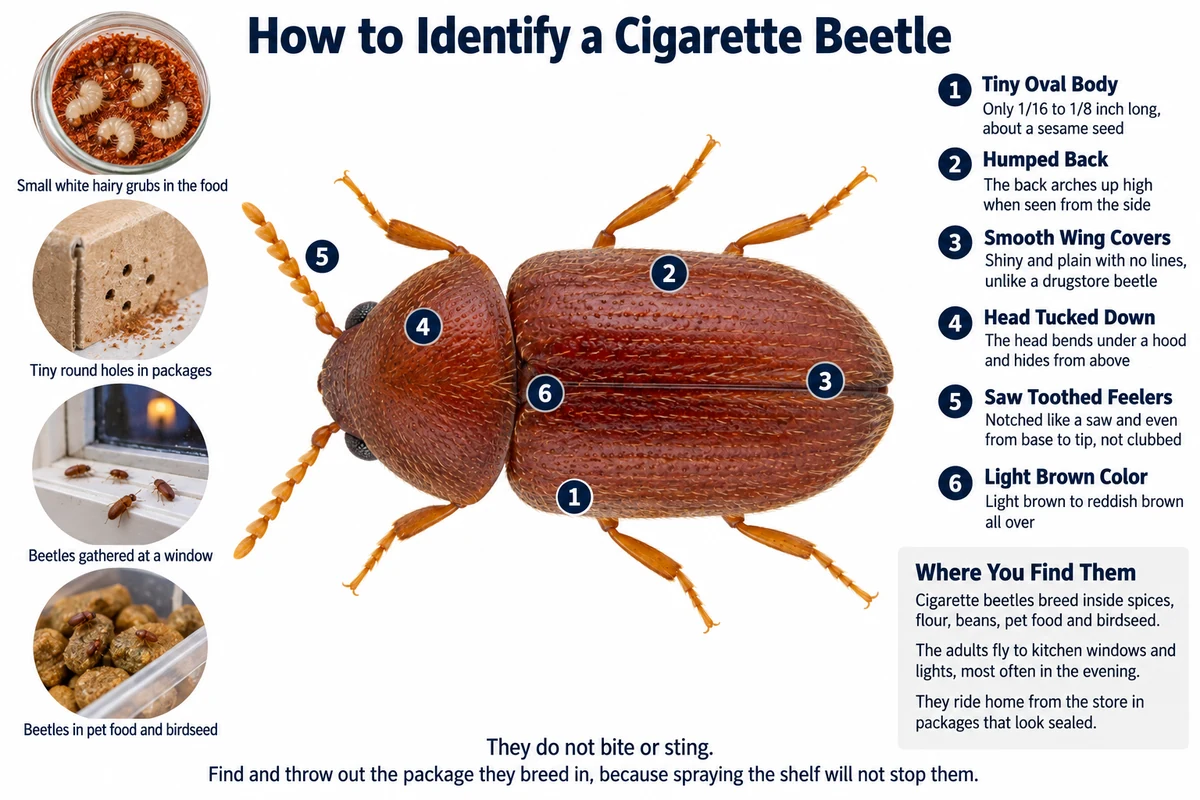
How to identify a cigarette beetle by its humped back, smooth wing covers and saw-toothed feelers, with the grubs and pinholes it leaves in dry food
- Tiny brown beetles at the kitchen window or under a light, most often in the evening
- Beetles or small white hairy grubs in spices, dried chili, flour, beans or pet food
- Small round holes chewed through paper, cardboard or thin plastic packages
- Fine brown powder in the folds of a bag or the corners of a shelf
- Smooth, shiny wing covers with no lines on them, seen up close or under a magnifier
- Beetles coming back after the pantry was wiped down, because the source is still there
Other Names for the Cigarette Beetle
The name comes from tobacco, not from smoking. Penn State Extension calls it the most important insect pest of stored tobacco, eating holes through cigars, cigarettes and chewing tobacco, which is also why it is called the tobacco beetle. In a home it is far more often found in the spice rack or the pet food than near anything to smoke.
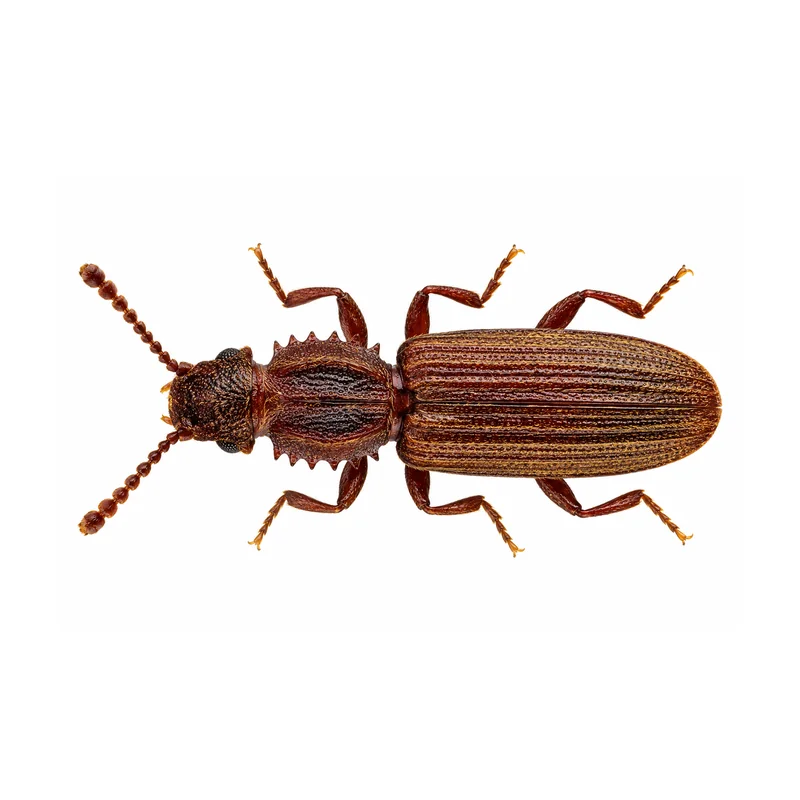
The scientific name Lasioderma serricorne points to its saw-toothed feelers. Pantry beetle is a loose name people use for any small beetle in stored food, which is why the cigarette beetle is so often mixed up with the drugstore beetle and the grain beetles in the table below.
| Name | What it means |
|---|---|
| Tobacco beetle | For the stored tobacco it is best known for damaging. |
| Pantry beetle | A loose name for any small beetle in stored food. |
| Escarabajo del tabaco | The Spanish name, meaning the tobacco beetle. |
| Lasioderma serricorne | The scientific name, after its saw-toothed feelers. |
| Drugstore beetle | A different beetle, with lines on its wing covers. |
How to Tell a Cigarette Beetle from Other Small Pantry Beetles
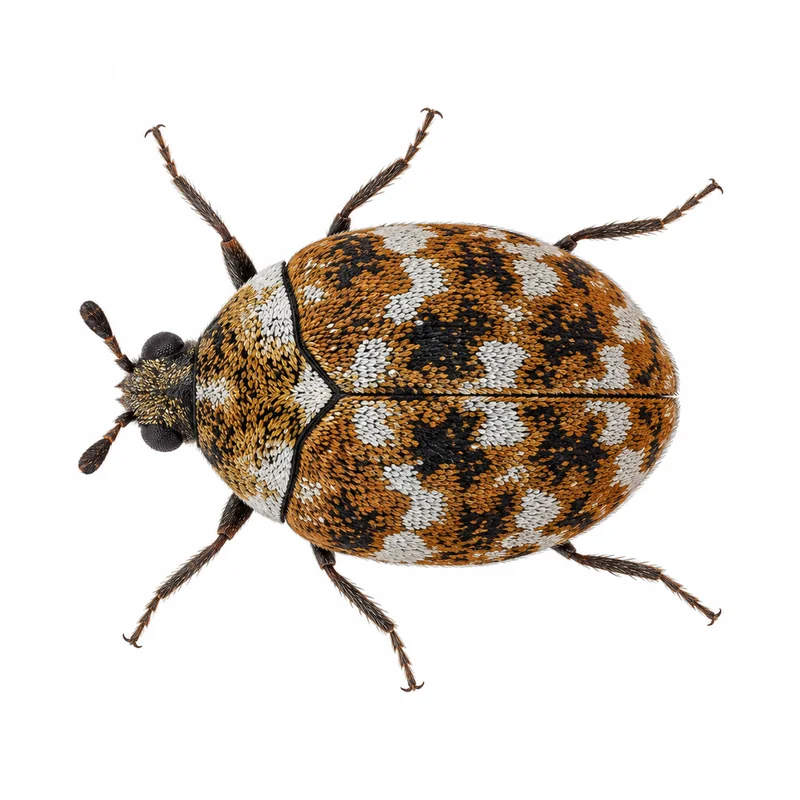
Several small brown beetles turn up in Collin County kitchens, and knowing which one it is tells you where to look. A cigarette beetle points to spices, dried plant foods and pet food, while a carpet beetle points to wool, pet hair and dust rather than food. The shape of the body and the wing covers tell them apart.
| Species | Size and Color | Key Feature | Where Found |
|---|---|---|---|
|
Cigarette Beetle
AKA: Tobacco Beetle
Lasioderma serricorne
This species
|
1/16 to 1/8 inch. Light brown to reddish brown, rounded and humpbacked. | Smooth wing covers with no lines, saw-toothed feelers, head tucked down out of sight. | Spices, flour, beans, pet food, birdseed, dried flowers and tobacco. Flies to windows and lights. |
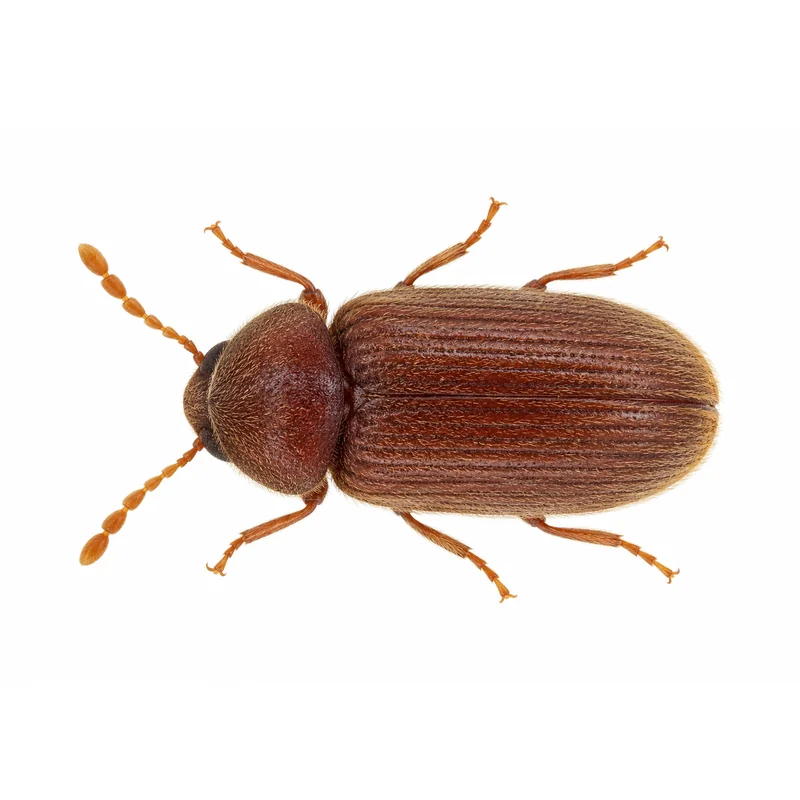
Drugstore Beetle
AKA: Pantry Beetle
Stegobium paniceum
|
About 1/10 inch. Light brown to reddish brown, longer and narrower than a cigarette beetle. | Distinct grooves running down the wing covers, and feelers ending in three larger segments. | Almost any dry food, seeds and stored goods, and it is named for feeding on medicines. |
Sawtoothed Grain Beetle
AKA: Grain Beetle
Oryzaephilus surinamensis
|
About 1/8 inch. Brown, long and flat rather than round. | Six small saw-like teeth along each side behind the head. It does not fly. | Birdseed, pasta, dried fruit, sunflower seeds, cereal and flour, slipping into packages. |
Varied Carpet Beetle
AKA: Carpet Beetle
Anthrenus verbasci
|
1/16 to 1/8 inch. Round, with a mottled pattern of black, gray, yellow and red scales. | Patterned scales on its back, and carrot-shaped hairy young rather than C-shaped grubs. | Wool, pet hair, dust along baseboards, and window sills and light fixtures with dead insects. |
Cigarette Beetle vs Drugstore Beetle
The Cigarette Beetle in Three Numbers
Up to 100
The Texas A&M Urban and Structural Entomology Program reports that a female cigarette beetle can lay up to 100 eggs, in the cracks and folds of the food itself.
Texas A&M Urban and Structural Entomology Program
Below 59°F
The same Texas A&M program says cigarette beetles stop developing below 59°F and above 94°F, which is why a heated home lets them breed all year.
Texas A&M Urban and Structural Entomology Program
6 to 8 weeks
Penn State Extension reports that a cigarette beetle typically grows from egg to adult in 6 to 8 weeks in good conditions, so a forgotten package can raise several waves of beetles.
Penn State Extension
Do Cigarette Beetles Bite, and Are They Dangerous?
No, they do not bite or sting, and they are not dangerous. Texas A&M AgriLife Extension’s booklet Pantry and Fabric Pests in the Home says the adults do not even feed, they only lay eggs on food, and that pantry pests like these are not typically dangerous to your health. The Clemson Home and Garden Information Center adds that no diseases have been linked to pantry pests, but that their presence makes food unfit to eat.
What If I Ate Food With Cigarette Beetles in It?
There is no need to worry. Eating a few beetles or grubs by accident is not known to make people sick, for the reasons above. Throw out the rest of that package and anything else on the shelf they could have reached, and check the other dry food before you cook with it again.
When Cigarette Beetle Activity Needs Fast Action
Beetles in Medicines or Supplements
Penn State lists dried drugs among the things they eat. Throw out any pills, herbal supplements or dried herbs with beetles or holes in them and replace them.
Beetles in the Pet Food
Texas A&M names birdseed and dog and cat food as the pantry items most often infested. Replace the bag and wash the bin before refilling it.
Beetles Spreading Room to Room
Adults fly from the source to windows and lights in other rooms. A steady stream means a package is still producing them and needs finding.
A Few Beetles at One Window
A handful near one window can be the last of a source already thrown out. Watch for a week, and if they keep coming, the source is still in the house.
Why You Have Cigarette Beetles in Your House
They almost always come home in something you bought. Texas A&M AgriLife Extension says food pests are usually brought home by accident from the grocery or pet store, and that even unopened packages may be infested, because some pests get through plastic, waxed paper and cardboard. Texas A&M’s urban entomology program adds that newly hatched cigarette beetle grubs are very active and slip into packaging through very small holes, so one infested jar can spread to its neighbors on the shelf.
The source is often not the kitchen pantry at all. It can be a spice jar from the back of the rack, a bag of dog food or birdseed in the garage, a dried flower arrangement, a bowl of potpourri or old rodent bait. Penn State Extension adds dried pet food, old rodent baits and the stuffing in some older upholstered furniture. It is not a sign of a dirty kitchen. The cleanest pantry can hold one forgotten package that feeds them for months.
Where Cigarette Beetles Live in Collin County Homes
Cigarette beetles live inside their food. The female lays her eggs in the cracks and folds of it, the grubs eat their way through it, and when they are grown they build small cases of food and silk inside it to change into adults. That is why a jar can look fine from outside while beetles are breeding in it. Spice racks, the back of the pantry, upper cabinets, pet food bins, garage shelves and dried flower arrangements are the usual places.
Cigarette Beetle Pressure Across Collin County
Cigarette beetles show up in our service notes in kitchens and pantries in McKinney, Frisco and Blue Ridge. Where they live has nothing to do with the neighborhood and everything to do with what is stored in the house, so homes with big spice collections, bulk pet food or birdseed are where we find them most.
In Allen, Plano and Celina we treat pantries for their look-alikes, the drugstore beetle, grain beetles and flour beetles, which is why every pantry job starts by confirming which beetle it is.
Cigarette beetles live indoors, so they can turn up in any month in Collin County. Our pantry beetle calls climb through spring and run highest from midsummer into fall.
Pattern from the development temperatures Texas A&M gives for the cigarette beetle and from Pest Me Off pantry beetle calls, which run highest from July to October.
Why Cigarette Beetles Keep Coming Back
How Pest Me Off Gets Rid of Cigarette Beetles
Cigarette beetle control is four steps, every job. Spraying the beetles you can see does nothing while the package they are breeding in is still on the shelf.
Confirm the Beetle
A free inspection. We confirm it is a cigarette beetle and not a drugstore beetle, a grain beetle or a carpet beetle, because each one points to different things to check.
Find and Remove Every Source
We open and inspect the whole pantry, including sealed bags that look fine from outside, plus the spice rack, garage pet food and birdseed. Every infested item is bagged and out of the house before any treatment goes down.
Treat the Cracks, Never the Food
With the food out, we treat the shelf cracks, corners and crevices where stray beetles and grubs hide. Treatment is never sprayed across food surfaces.
Keep the Next Bag From Starting Over
We show you which foods to keep in airtight containers. Homes that buy in bulk or store pet food and birdseed can add a quarterly plan with a pantry check on every visit.
& Other Companies
How to Get Rid of Cigarette Beetles Yourself
Most cigarette beetle problems end with finding the infested food. Texas A&M AgriLife Extension says that is often all it takes, starting with the oldest packages at the back.
Why Some DIY Responses Fail for Cigarette Beetles
Most DIY trouble with cigarette beetles comes from treating the room instead of the food, or from throwing out only the one bag where the beetles were seen.
Bug Bombs and Foggers
Texas A&M AgriLife Extension says fogs will not kill pantry pests in food containers or protected places. They coat the kitchen and leave the source alive.
Spraying Shelves With Food on Them
Never spray food, dishes or utensils. Any spray goes only into cracks of an emptied pantry, and it has to dry before food goes back.
Tossing Only the Open Bag
Penn State notes unopened items such as cake mixes can be infested with no sign outside. Check every package, and the garage too.
Common Cigarette Beetle Questions
What is a cigarette beetle?
Why are they called cigarette beetles if nobody in my house smokes?
Do cigarette beetles bite or sting?
Is it harmful to eat food that had cigarette beetles in it?
Are cigarette beetles dangerous to pets?
Why do I keep seeing tiny brown beetles at my windows?
How do I tell a cigarette beetle from a drugstore beetle?
Can cigarette beetles chew through packaging?
Can cigarette beetles live outside the kitchen?
How long do cigarette beetles live?
How do I get rid of cigarette beetles?
Beetles in the Spice Rack? We Find the Package They Breed In.
We confirm the beetle, open and check every package down to the garage pet food, remove the source and treat the shelf cracks without ever spraying your food. Pantry pest control across McKinney, Allen, Frisco, Plano, and all of Collin County.