
Silverfish in Collin County, TX | Identification and Control
The silverfish (Lepisma saccharina) is a small, wingless, silver-gray insect with three long tail bristles that darts away from the light in bathrooms, closets and attics. It is a nuisance rather than a health pest, but it eats paper, book bindings, wallpaper paste, starched fabric and dry food. The University of California’s pest notes say silverfish need relative humidity above 75 percent when it is warm, so finding them points to a damp spot in the house.
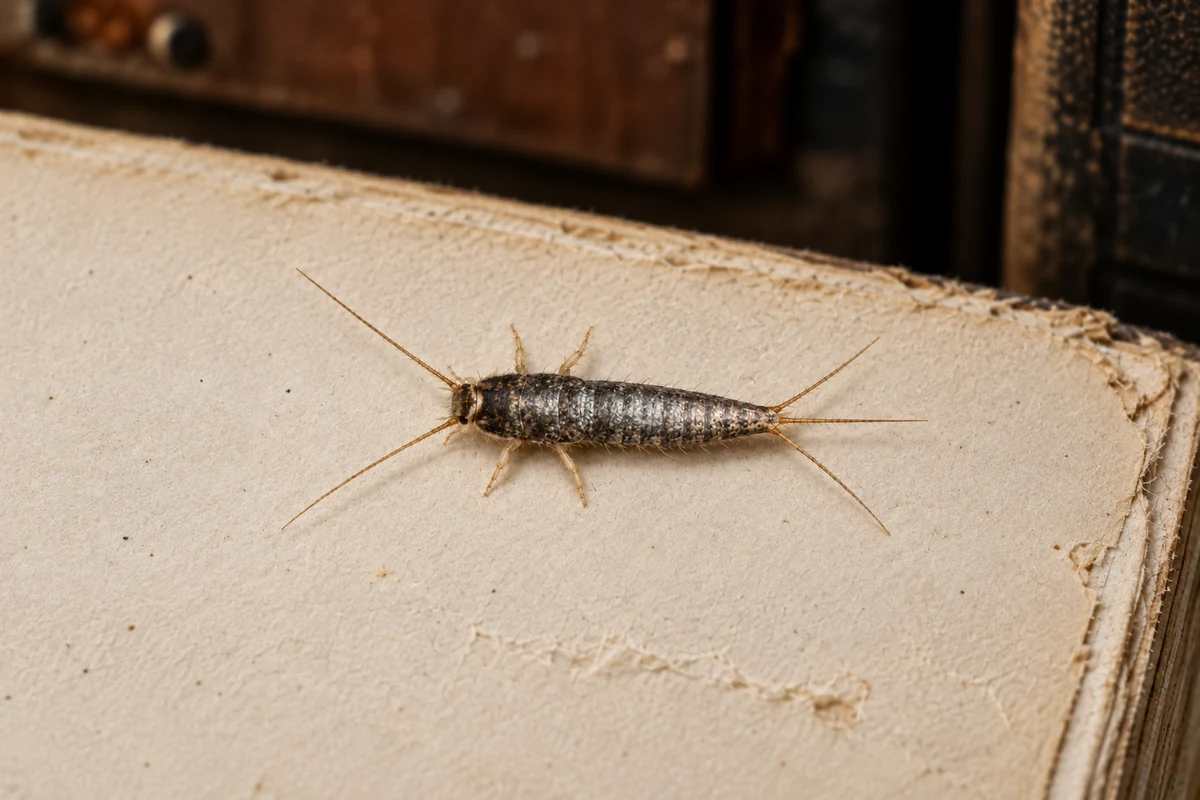
Silverfish in the tub or the closet again? Our office sits where McKinney, Plano, Frisco and Allen meet, 5 to 10 minutes from most homes in those four cities. Call and we will find where they hide and the damp spot that keeps them there.
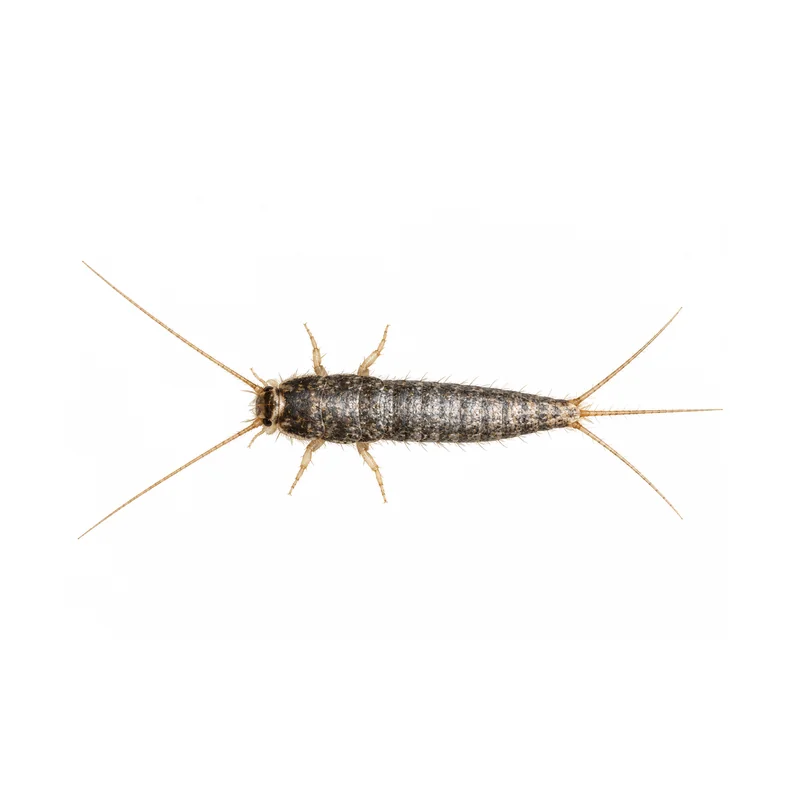
Silverfish
The silverfish is a fast, wingless insect that lives indoors, hides in cracks by day and comes out at night to feed on starch, paper and crumbs. The National Pesticide Information Center says their presence points to too much moisture.
Risk Assessment
Choose a row for the full detail- Color
- Shiny silver or pearl gray scales
- Diet
- Starch, paper, glue, book bindings, cereal, flour, pet food and dead insects
- Threat level
- Low
- Movement pattern
- A fast, wiggling run like a swimming fish, mostly at night
- Where it hides
- Bathrooms, closets, bookshelves, attics, garages and wall voids
- Lifespan
- Reported at 2 to 8 years for adults
- Size
- About 1/2 inch, up to 3/4 inch
What Does a Silverfish Look Like?
A flat, silver, carrot-shaped insect with two long antennae in front and three long bristles behind
An adult silverfish is about half an inch long and can reach three quarters of an inch, according to the University of California’s pest notes on silverfish and firebrats. Its flat body is widest at the front and tapers to three long, thin tail bristles, and it is covered in shiny silver or pearl gray scales. It has no wings. Penn State Extension notes its antennae are about as long as its body.
Most people see one only when they open a cabinet, move a box or switch on the bathroom light at night, and it runs off with a quick, wiggling motion. What it leaves behind is easier to find. Feeding on paper and fabric shows as small irregular holes, notched edges and yellowish stains, often with a fine silvery dust of shed scales, tiny dark specks of droppings and cast skins on or under the damaged item.
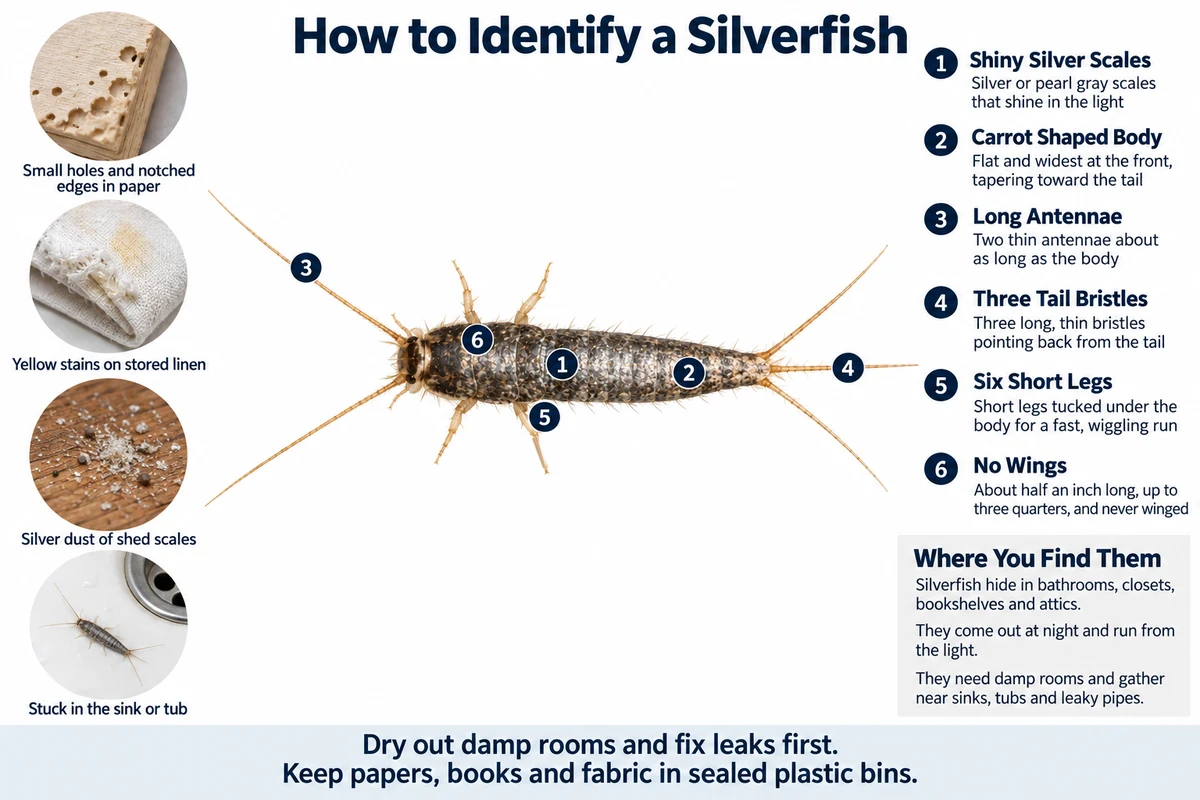
How to identify a silverfish by its silver scales, carrot-shaped body and three tail bristles, with the holes, stains and scales it leaves behind
- A fast silver insect stuck in the sink or bathtub in the morning
- Small irregular holes and notched edges in book pages, papers and wallpaper
- Yellowish stains and scraped spots on stored linen, cotton or silk
- A fine silvery dust of scales on shelves or under damaged items
- Tiny dark specks and cast skins in closet corners and behind boxes
- Insects that run from the light when you open a cabinet or move a box
Other Names for the Silverfish
The silverfish gets its name from its silver scales and the way it runs, a side-to-side wiggle that looks like a fish swimming. Penn State Extension lists bristletail, fishmoth, tasseltail and fringetail as older names, all for the three bristles at its tail. It is not a moth and has no wings at any age. In Spanish it is the pececillo de plata, the little silver fish.
The name that causes the most confusion is firebrat. That is a close cousin, mottled gray or brown rather than silver, that NC State Extension says favors hot spots of 90 degrees and above near water heaters, furnaces and stoves. It is controlled the same way.
| Name | What it means |
|---|---|
| Fishmoth | For its fish-like run, though it is not a moth. |
| Bristletail | For the three long bristles at its tail. |
| Tasseltail | Another old name for those same bristles. |
| Pececillo de plata | The Spanish name, meaning little silver fish. |
| Firebrat | A related insect that likes heat, not a silverfish. |
How to Tell a Silverfish from a House Centipede or Earwig
All three turn up in Collin County bathrooms and laundry rooms, and all three run when the light comes on. A silverfish is a moisture and storage problem, a house centipede is a sign of other insects for it to eat, and an earwig is an outdoor insect that wandered in. The legs and the tail end tell them apart.
| Species | Size and Color | Key Feature | Where Found |
|---|---|---|---|
|
Silverfish
AKA: Fishmoth, Bristletail
Lepisma saccharina
This species
|
About 1/2 inch, up to 3/4 inch. Shiny silver or pearl gray. | Six short legs, two long antennae and three long tail bristles. Runs with a fish-like wiggle. | Bathrooms, sinks and tubs, closets, bookshelves, attics and stored boxes. |
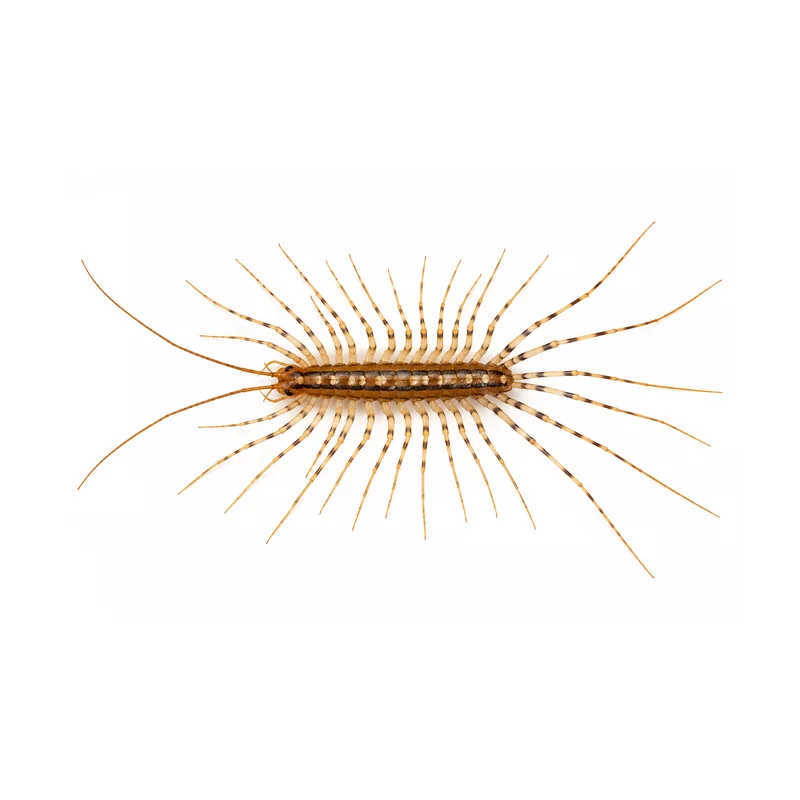
House Centipede
AKA: Centipede
Scutigera coleoptrata
|
Body 1 to 1 1/2 inches, 3 to 4 inches counting legs. Dirty yellow with three dark stripes. | 15 pairs of long legs banded light and dark, the last pair nearly twice the body length. | Indoors all year, hunting the small insects that share the house with it. |
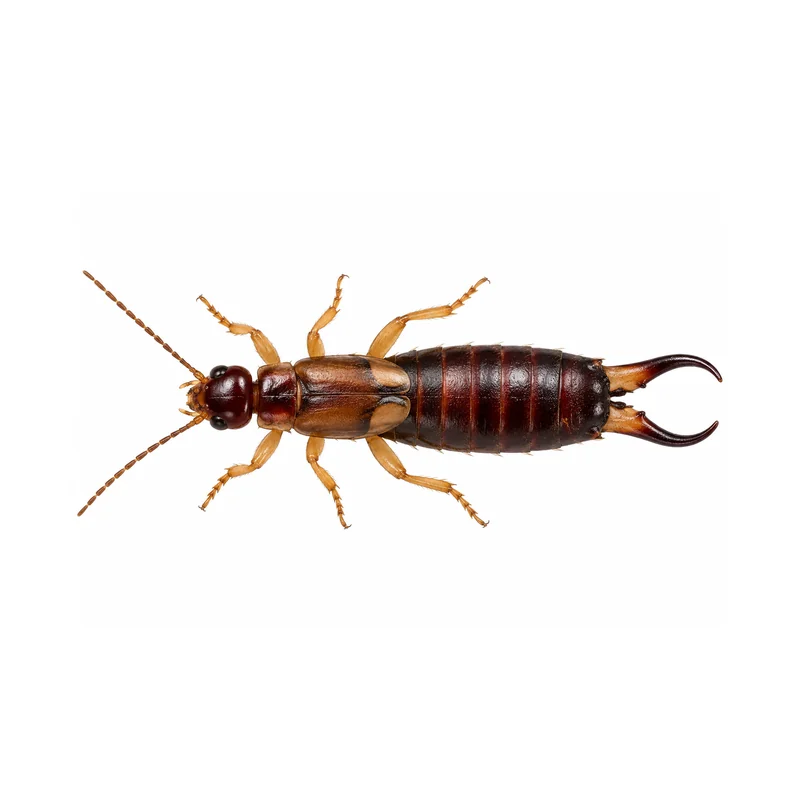
Earwig
AKA: Pincher Bug
Forficula auricularia
|
About 3/4 inch. Reddish brown, with no silver scales. | A pair of pincers at the tail end in place of three bristles. | Mulch, flower beds and damp debris outdoors, coming in when it is too hot, dry or cold. |
Silverfish vs House Centipede
The Silverfish in Three Numbers
75 percent
The University of California’s pest notes say silverfish need relative humidity above 75 percent in warm rooms, which is why they gather in bathrooms, laundry rooms and damp closets.
University of California, pest notes on silverfish and firebrats
300 days
Penn State Extension reports that a silverfish can live more than 300 days without food as long as it has water, so a clean house alone does not starve them out.
Penn State Extension
2 to 8 years
NC State Extension gives adult silverfish a life of 2 to 8 years, long for an insect, and they keep growing and shedding their skin the whole time.
NC State Extension
Do Silverfish Bite?
No bite worth worrying about. The University of California’s pest notes say silverfish have very weak jaws that scrape at the surface of paper rather than biting into it. Penn State Extension calls them mostly a nuisance pest, and none of the extension fact sheets we read lists a sting, a venom or a disease they carry to people. A silverfish on your pillow is a sign of damp and clutter nearby, not a danger to you.
Are Silverfish Harmful to Pets?
Not directly. A dog or cat that eats one is eating a small insect with no venom. The trouble for pet owners is the food bowl and the bag, because the University of California lists dry pet food among the things silverfish eat. The EPA’s pest control manual for schools adds that silverfish can draw spiders and scorpions that prey on them, which matters in Collin County, home to the striped bark scorpion.
When Silverfish Activity Needs Fast Action
Silverfish With Damp Walls or a Musty Smell
Silverfish point to moisture. The EPA manual warns that moisture left alone can bring termites, carpenter ants and wood rot, so find the leak.
Holes in Books, Papers or Photos
Feeding damage on things you cannot replace means a settled population. Move those items into sealed plastic bins today.
Silverfish in Several Rooms
Seeing them in the bathroom, the closet and the kitchen means they are traveling along pipes and wall voids, not just living in one spot.
One in the Bathtub
A single silverfish that fell into the tub is common. Dry the room out, set a sticky trap and watch for more.
Why You Have Silverfish in Your House
Silverfish settle where damp, food and hiding places meet. A bathroom with a weak exhaust fan, a slow leak under a sink, condensation on a pipe, a closet full of stored clothes or a garage stacked with cardboard boxes gives them all three. Clemson’s Home and Garden Information Center says they usually arrive inside in food, books, paper, starched clothing and furniture, and the EPA manual adds boxes that were stored in damp basements or attics. Once inside, they follow pipes and ducts from room to room.
New homes can have them too. The University of California notes that large numbers can move into new houses from surrounding open land as it dries out in summer, or come in on lumber and wallboard, while fresh concrete and green lumber hold the humidity they need. It is not a sign of a dirty home. It is a sign that somewhere in the house stays damp.
Where Silverfish Live Around Collin County Homes
The EPA manual lists bookcases, closet shelves, the spaces behind baseboards, wallpaper and window and door frames, wall voids, attics and the spaces under floors, and says they favor bathrooms and kitchens for the moisture. University of Maryland Extension adds the cabinet under the sink as a common daytime hiding place. Texas A&M AgriLife Extension notes that significant damage occurs only when a large population has been present for a long time.
Silverfish Pressure Across Collin County
Silverfish show up in our service notes most often in Frisco, McKinney and Princeton, usually in master bathrooms, along baseboards and around plumbing, with the attic as the next most common spot. Homeowners most often call when they find them in the tub or sink in the morning.
In Plano and Allen we find them the same way, around bathroom drains and under sinks, and we see them more in rentals and homes that stood empty for a while before someone moved in.
Silverfish live indoors and are active all year in Collin County homes. Calls about them climb from June through September and stay steady into the fall, then ease off over the winter.
Pattern from Pest Me Off silverfish calls and service records, 2024 to 2026, which climb each summer, and published silverfish biology (the University of California and NC State Extension).
Why Silverfish Keep Coming Back
How Pest Me Off Gets Rid of Silverfish
Silverfish control is four steps, every job. The few you see in the bathroom come from hiding places you do not see, so the treatment goes where they live, not just where they run.
Inspect and Identify
A free inspection of the bathrooms, closets, kitchen, garage and attic. We confirm it is a silverfish and not a firebrat or another household invader, and look for the damp spots and the damage.
Treat Where They Hide
An insecticide dust placed into the attic and wall voids, and a residual treatment along baseboard and closet cracks, where silverfish shelter during the day.
Find the Moisture
We trace the humidity feeding them and tell you the fix that matters most, such as better attic ventilation, a duct leak repaired or cardboard boxes moved off the garage floor.
Seal the Cracks
We seal the cracks they travel along baseboards and around plumbing and can lights, and treat the roofline and foundation entry points on the same visit.
& Other Companies
How to Get Rid of Silverfish Yourself
Most DIY silverfish work is taking away the damp and the food. The NC State Extension fact sheet puts drying rooms out, fixing leaks, sealing cracks and clearing clutter ahead of any insecticide.
Why Some DIY Responses Fail for Silverfish
Most DIY silverfish trouble comes from treating the room where they were seen instead of the damp spaces where they live, or from expecting one product to do the whole job.
Foggers and Bug Bombs
NC State Extension says fogging an attic rarely works because the mist cannot get under insulation, boxes and stored items where silverfish live.
Spraying Only What You See
A spray on the bathroom floor kills the few in the open. The rest stay in the walls, and Penn State Extension notes no single method clears them alone.
Drying Dusts in Wet Spots
Diatomaceous earth and similar dusts work only while they stay dry, Penn State Extension says, so dust under a leaking sink stops working fast.
Common Silverfish Questions
What are silverfish, and what do they look like?
Do silverfish bite people?
Are silverfish harmful to dogs and cats?
Why do I have silverfish in my bathroom?
Do silverfish come up through the drain?
Does having silverfish mean my house is dirty?
What do silverfish eat?
How long do silverfish live?
Where do silverfish lay their eggs?
What is the difference between a silverfish and a house centipede?
Do silverfish damage clothes and books?
How do I get rid of silverfish?
Silverfish in the Tub Again? We Treat Where They Hide, Not Just Where You See Them.
We find the damp spots and hiding places, treat the attic, wall voids and cracks where silverfish live, and tell you the moisture fix that keeps them from coming back. Silverfish control across McKinney, Allen, Frisco, Plano, and all of Collin County.