Home Pest Library Spiders Wolf Spider
Wolf Spider (Hunting Spider, Ground Spider)

Wolf Spiders in Collin County, TX | Identification and Control

Last updated 2026

Wolf spiders are the largest, hairiest spider most Collin County homeowners ever find on their garage floor. They are fast, intimidating, and completely harmless to healthy adults. They are also the most common spider mistaken for a brown recluse in North Texas. Three quick visual cues separate them without sending a specimen anywhere.

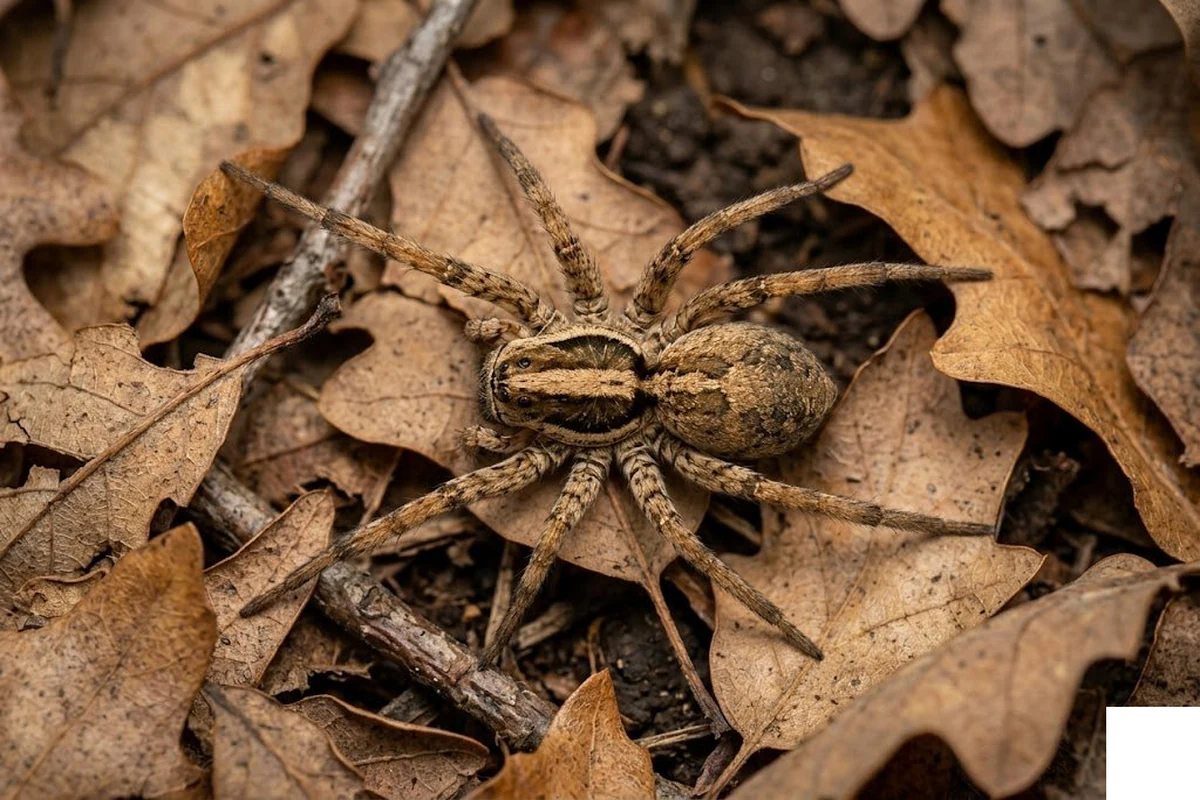
Wolf spider on garage floor showing large hairy body and striped cephalothorax
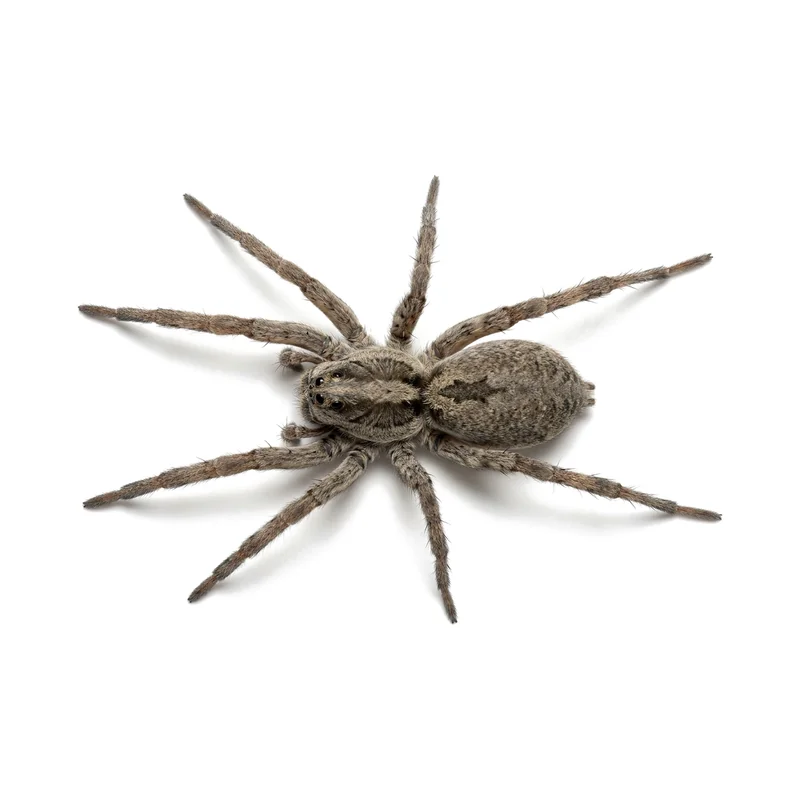
Wolf spider specimen showing mottled brown body, stripes, and large eyes
Wolf Spider
Hogna carolinensis, Rabidosa rabida and related
AKA Hairy Spider · Ground Spider · Texas Wolf Spider
Body length0.5 to 1.5 in (12 to 38 mm)
Leg spanUp to 4 in (100 mm)
Adult lifespanMales ~1 year; females 2 to 3 years
Active seasonSeptember and October peak; active spring through fall
PreyLarge insects, crickets, cockroaches, small lizards
Hunting styleActive ground hunter; no web; chases prey by sight
Eye shineBright green-white under flashlight at night (diagnostic)
Threat levelLOW

A large, fast, heavily built ground hunter that carries its babies on its back and glows bright green under a flashlight at night. Collin County’s most common “scary spider” call and the most frequent brown recluse false alarm.

PEST ME OFF | PEST LIBRARY | WOLF SPIDER pestmeoff.com
North Texas Pest Calendar
Wolf Spider Activity in Collin County by Month

Wolf spider indoor encounters peak sharply in September and October as adults seek warmth ahead of cooler nights and as prey populations peak in the fall. Spring and summer see outdoor activity near construction sites and greenbelts. Winter sightings are rare but possible in warm garages.

Jan
Low
Feb
Low
Mar
Emerge
Apr
Active
May
Active
Jun
Active
Jul
Active
Aug
Active
Sep
Peak
Oct
Peak
Nov
Slow
Dec
Low
Dormant / Low
Emerging
Active
Peak
Slowing

Pattern from iNaturalist observation records and Pest Me Off service call data across Collin County, 2023 to 2026.

Identification

What a Wolf Spider Looks Like

Big, hairy, striped, and very fast – the three traits that separate it from every spider homeowners confuse it with

Wolf spiders are among the largest spiders found inside North Texas homes, with body lengths up to 1.5 inches and a leg span reaching 4 inches in large females. They are stocky, heavily built, and covered in dense body hair. The cephalothorax (front half) carries distinct longitudinal stripes running front-to-back, not a violin-shaped mark. Legs are banded, not plain, and the overall impression is of a compact, muscular spider rather than the slender, low-profile body of a brown recluse.

The most diagnostic field test is eye-shine at night: wolf spider eyes contain a reflective layer called the tapetum lucidum, the same structure that makes cats’ eyes glow in the dark. A flashlight beam across a garage floor at night will pick up bright green-white eye-shine from a wolf spider several feet away. Brown recluse do not have this reflective layer and do not shine. Texas wolf spider identification and biology explains the eye-shine diagnostic in detail.

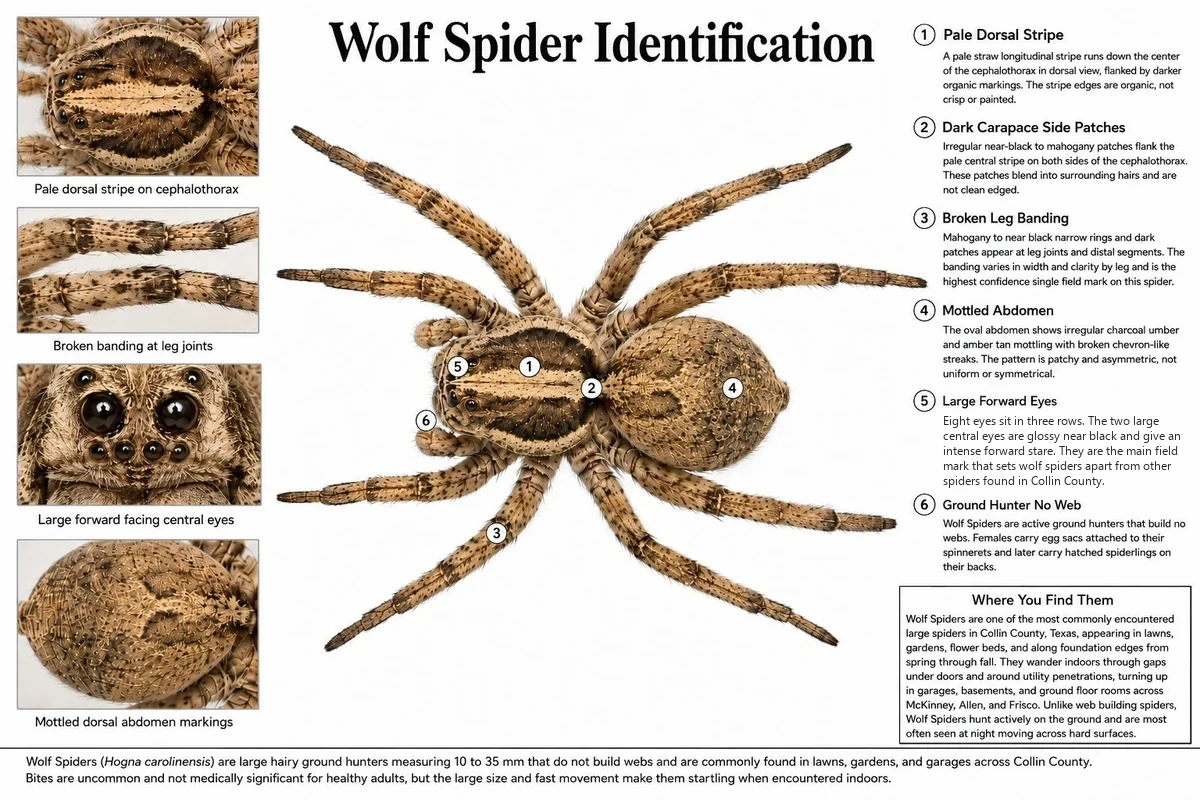
Wolf spider identification diagram with anatomical callouts

Wolf spider identification diagram with anatomical callouts

Dead GiveawaysThree tests that rule out brown recluse immediately
  • 8 eyes in 3 rows; large middle pair glows bright green-white under flashlight at night
  • Distinct longitudinal stripes on cephalothorax; no violin-shaped mark
  • Heavy, dense body hair across body and legs
  • Banded legs; brown recluse legs are uniformly colored
  • Significantly larger and bulkier than any brown recluse
  • Runs openly across floors; does not hide in clutter retreats
  • Female may carry round grayish egg sac attached to her spinnerets, or spiderlings on her back
The Name

Why They Are Called Wolf Spiders

Wolf spiders hunt actively like wolves rather than building a stationary web and waiting. They run down prey using exceptional eyesight and speed, reaching up to 2 feet per second in short bursts. Unlike most spiders that are essentially passive web traps, wolf spiders are active pursuit predators. This behavior is what makes them so startling in a garage: they move fast, they move in the open, and they move toward you if you’re between them and their exit.

The maternal behavior is also notable. After the egg sac hatches, spiderlings climb onto the mother’s abdomen and ride there for one to two weeks while they develop. A female with dozens of tiny spiderlings covering her back is one of the most startling pest encounters in North Texas. If you step on a female with babies, the spiderlings scatter in all directions across the floor, creating the impression of a much larger infestation than actually exists.

Look-Alikes

How to Tell Wolf Spiders from Other Collin County Spiders

Wolf spiders are the most common spider mistaken for brown recluse in Collin County. The confusion happens because both are brown and found on floors. Size, stripes, eye count, and eye-shine separate them in seconds under a flashlight.

Species Size Key Feature Where Found
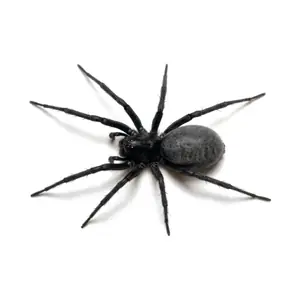
Wolf Spider
Wolf Spider AKA: Hairy Spider, Ground Spider Hogna carolinensis, Rabidosa spp. This species
Up to 1.5 in body, 4 in leg span. Stocky, bulky, densely hairy. Largest spider most homeowners encounter indoors. 8 eyes; large middle pair glows bright green-white under flashlight at night. Distinct longitudinal stripes on cephalothorax. Banded legs. Runs in open areas, does not hide in clutter retreats. Open garage floors, under doors, near exterior entry points. Enters during rain and fall temperature drops. Active runner in open areas.
Brown Recluse
Brown Recluse AKA: Violin Spider, Fiddleback Loxosceles reclusa
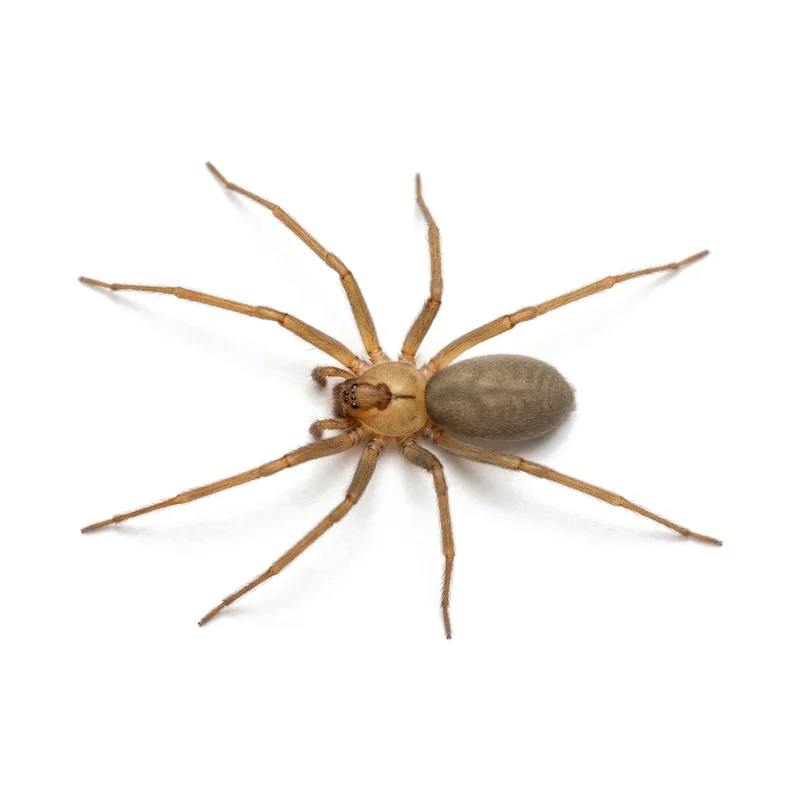
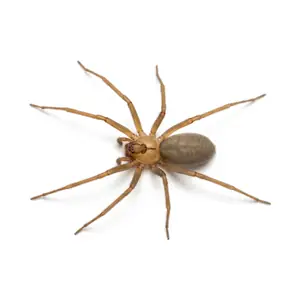
0.25 to 0.5 in body. Slender, lightly built, matte coloring. Much smaller and leaner than a wolf spider. 6 eyes in 3 pairs (no eye-shine). No stripes; plain tan-to-brown body. Uniformly colored, unbanded legs. Retreats immediately when exposed; does not run in the open. Dark undisturbed storage: cardboard boxes, stored shoes, garage shelves, closet floors. Hides in retreat webbing, does not cross open floor areas actively.
Southern House Spider
Southern House Spider AKA: Crevice Weaver, Woolly Web Spider Kukulcania hibernalis
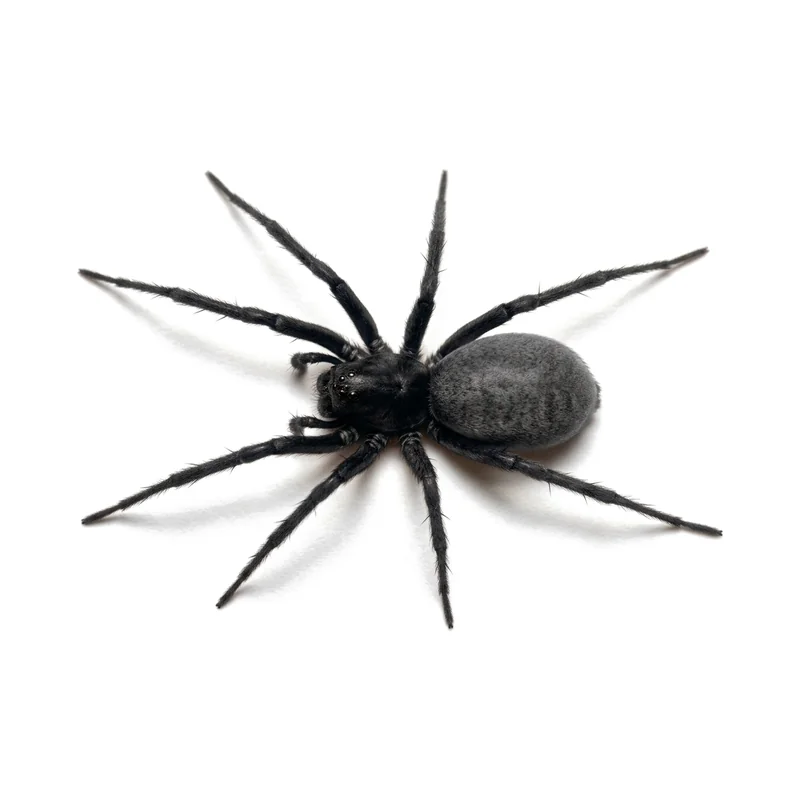
Female 0.5 to 0.75 in, charcoal gray, bulky. Male 0.35 to 0.5 in, khaki-tan. Female body sometimes mistaken for small tarantula at first glance. 8 eyes clustered tightly on a raised bump. Flat woolly web spreading from a crevice; wolf spiders do not build webs. Female very dark; male has extremely long pedipalps. Much slower and more deliberate than wolf spider. Crevices in window frames, door frames, garage walls, weep holes. Found in or near a flat woolly web, not on open floor areas.
Jumping Spider
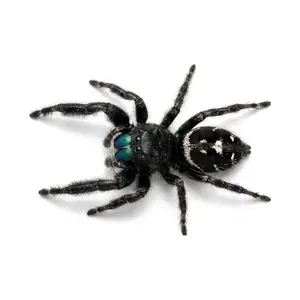
Jumping Spider AKA: Bold Jumping Spider, Daring Jumper Phidippus audax
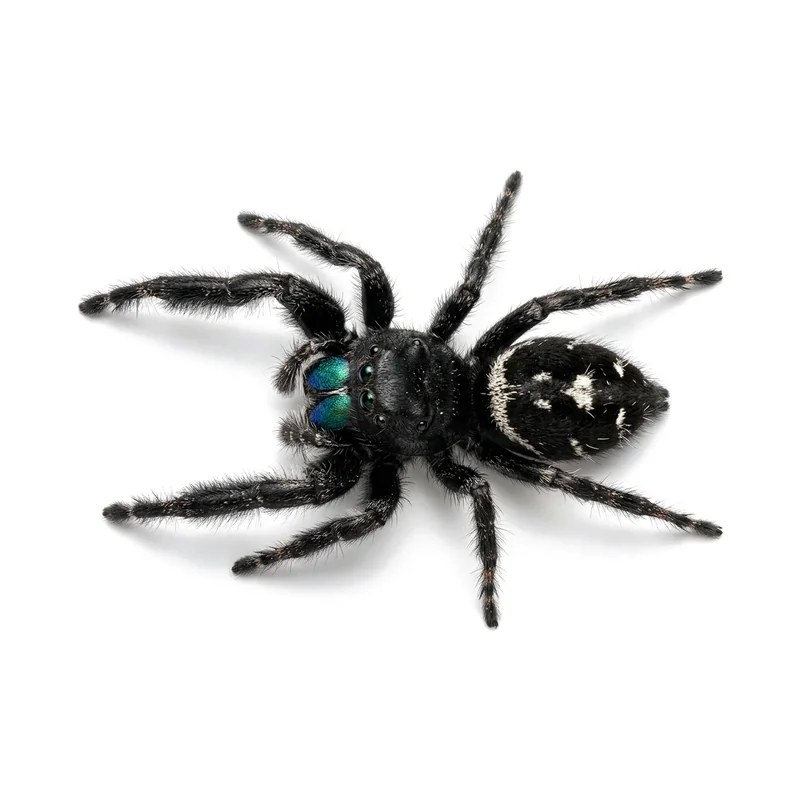
0.3 to 0.6 in body. Much smaller and more compact than wolf spider. Black with white or orange markings on abdomen. Two huge front-facing eyes immediately visible. Iridescent green or blue chelicerae. Moves in short confident jumps rather than sustained running. Active during daylight. Fences, exterior walls, windowsills, garden plants. Daytime hunter in bright, open locations, not on garage floors at night.
The fastest field test for wolf spider vs brown recluse: shine a flashlight across the floor at night. Wolf spider eyes glow bright green-white from several feet away. No eye-shine means no wolf spider. Then check size: if the spider is larger than 0.5 inches in body length, it is almost certainly not a brown recluse. Use both tests together for a confident identification without collecting a specimen.
Why Wolf Spider Scores 1 of 3 on People Risk

People Risk for Wolf Spider

Wolf spider venom is not medically significant. A bite from a wolf spider is comparable to a bee sting: localized pain and redness that resolves within a day or two without medical treatment. Bites are rare because wolf spiders do not bite aggressively; they bite only when pinned against skin and unable to escape. The primary risk from wolf spiders is the panic response and the physical hazard of stepping on a female carrying babies.

People Risk
1/ 3
Low
Medical Risk

Wolf Spider Bites and When to Seek Care

Wolf spider bites are medically insignificant for the overwhelming majority of people. The bite produces localized pain similar to a bee sting, possible minor redness and swelling at the site, and itching that resolves within 24 to 48 hours without treatment. Wolf spider venom does not cause tissue death, systemic cramping, or any of the medically significant effects of brown recluse or black widow venom. Wolf spider identification and management guidance confirms their low medical risk profile.

Seek medical attention for a wolf spider bite if: the bite site shows expanding redness beyond 2 to 3 inches after 24 hours (this may indicate secondary bacterial infection, not venom effect), if the bitten person has a known insect venom allergy, or if a child or elderly person was bitten and shows signs of unusual discomfort. These scenarios are uncommon; the standard outcome for a wolf spider bite is minor localized discomfort that resolves without intervention.

Good to Know
The Real Risk: Stepping on a Female With Babies

The most alarming wolf spider encounter in Collin County is stepping on or disturbing a female with spiderlings on her abdomen. When she is stepped on, dozens to hundreds of tiny spiderlings scatter in all directions across the floor. This looks catastrophic but is not a hazard: the spiderlings are tiny, not venomous at any meaningful level, and they disperse quickly. Vacuum the area thoroughly and they will not establish an indoor population. The mother was a single spider whose indoor tenure was already temporary.

Context

When Wolf Spider Presence Is Worth Addressing

Wolf spiders are beneficial predators that reduce cricket, cockroach, and moth populations. Most pest professionals consider a single wolf spider in a garage a non-event. The threshold for treatment shifts when the frequency becomes significant:

Worth Addressing

Multiple Spiders Per Week Inside

Finding wolf spiders inside more than once a week indicates a consistent entry point that is not sealed. The spiders themselves are not the problem; the gap that keeps letting them in is.

Worth Addressing

Home With Small Children or Spider Phobia

The size and speed of wolf spiders trigger intense fear responses in many people. In a home with young children or severe arachnophobia, controlling entry points is a reasonable comfort decision even though the medical risk is negligible.

Worth Addressing

Females With Egg Sacs or Babies Indoors

A female with a grayish egg sac attached to her spinnerets, or with spiderlings on her back, is reproducing. If she is indoors when the sac hatches, hundreds of spiderlings disperse through the home. Exclude her before hatch.

Low Priority

Single Spider in Garage Once Per Month

One wolf spider per month in a garage is not a population problem. It is a single animal that entered through a gap and will move on or be eaten by other predators. Catch and release or vacuum it; no treatment required.

Low Priority

Wolf Spiders in the Yard

Outdoor wolf spiders in gardens, mulch beds, and turf are actively suppressing cricket, roach, and moth populations. Treating wolf spiders outdoors removes a beneficial predator and is not recommended unless they are entering the home from those locations.

Verify First

Any “Wolf Spider” That Is Small and Tan

If a spider is smaller than 0.5 inches, plain tan-to-brown without stripes, and found in stored boxes or closet clutter, do not assume wolf spider. Use the flashlight eye-shine test and phone-camera zoom on the eye count before dismissing it as harmless.

Why Wolf Spider Scores 1 of 3 on Property Risk

Property Risk for Wolf Spider

Wolf spiders cause no property damage. They do not chew wood or wiring, build no webs that accumulate in corners, contaminate no food, and do not establish permanent indoor colonies. They are transient visitors that enter through gaps, move around for a period, and leave or die indoors without reproducing.

Property Risk
1/ 3
Low
Habitat

Where Wolf Spiders Come From in Collin County

Wolf spiders are fundamentally outdoor animals. Their natural habitat is disturbed soil, ground cover, mulch beds, turf edges, and field margins. In Collin County, the highest outdoor populations are in areas with recently disturbed soil: new construction in Celina, Prosper, Melissa, and Princeton, where land clearing destroys natural cover and drives prey insects toward residential structures. Greenbelts in Craig Ranch, Phillips Creek Ranch, and Stonebridge Ranch support continuous prey populations that draw wolf spiders to the immediate perimeter of homes. Wolf spider range and sighting records in Texas confirm their abundance across Collin County neighborhoods.

Indoor wolf spiders enter through gaps under garage doors, weep holes, utility penetrations, and open doors and windows. They do not seek out indoor environments specifically; they enter in pursuit of prey or warmth during fall temperature drops. Once inside, they hunt the same way they do outdoors: cruising floors at night looking for crickets and roaches. They are not attempting to establish a colony.

Local Pressure

Wolf Spider Pressure Across Collin County

Wolf spider indoor encounters in Collin County spike sharply in September and October every year without exception. This is the most predictable seasonal pest event in the region for any spider species. The timing corresponds to falling outdoor temperatures combined with peak cricket populations. Spiders push indoors through any available entry point seeking warmth and following prey.

New construction neighborhoods in Celina, Prosper, Melissa, and Princeton see the heaviest pressure because recent land clearing maximizes disturbed soil habitat. Greenbelt-adjacent properties in McKinney, Allen, and Frisco see consistent fall pressure from the adjacent natural habitat. Year-round encounters are less common but occur in Plano and older Allen neighborhoods where mature landscaping provides continuous ground-level cover.

Perspective

Wolf Spiders Are Beneficial

Worth Knowing

Wolf spiders reduce crickets, cockroaches, and moths. A wolf spider on your garage floor is almost certainly eating the prey insects that would otherwise attract worse pests. Eliminating every wolf spider from your property removes a natural pest suppression layer. The goal for most homes with occasional wolf spider encounters is not elimination but exclusion: seal the gaps that let them enter the garage and living areas, while leaving outdoor populations intact.

Why Wolf Spider Scores 2 of 3 on Persistence Risk

Why Wolf Spiders Keep Coming Back

Individual wolf spiders are easy to remove. The persistence challenge is that the outdoor population is large, the entry points are often structural (garage door gaps, weep holes), and the fall pressure season repeats every year regardless of treatment. Sealing entry points is the only lasting solution; treating outdoor populations is not practical or desirable.

Persistence Risk
2/ 3
Moderate
Behavior and Biology

Wolf Spider Biology That Explains Fall Invasions

Eye-Shine Tapetum lucidum produces bright green-white glow under flashlight The reflective eye layer that makes wolf spiders glow at night is the fastest field identification tool available. Walk a dark garage with a flashlight held at eye level and scan the floor. Wolf spider eyes are unmistakable. No other common house spider produces this glow.
Maternal Behavior Female carries egg sac on spinnerets; spiderlings ride on her back after hatching A female disrupted while carrying spiderlings scatters hundreds of babies. This happens most in fall when females with late-season egg sacs enter garages. Vacuum immediately after any spiderling scatter event; they will not establish an indoor population but they are alarming.
Speed Sprint speed up to 2 feet per second Wolf spiders are much faster than they look for their size. Attempting to step on or swat one often fails; the spider is already in a new location before contact. Direct spray or a vacuum are more reliable removal methods than physical smashing.
Entry Pattern Enters through same gaps repeatedly; does not establish indoor breeding Wolf spiders use consistent entry routes: the gap under the garage door, weep holes along the foundation, utility penetrations. Sealing these gaps stops the flow immediately. Chemical treatment of indoor areas where wolf spiders have been seen is less effective than closing the route in.
Prey Following Enters through any route that crickets and roaches use Wolf spiders follow prey. If crickets are entering your garage, wolf spiders are using the same gaps. A cricket control program that seals exterior entry points reduces wolf spider pressure as a direct consequence, because the prey population that draws them in is reduced first.
Seasonal Reset Fall pressure repeats every year regardless of prior-year treatment Even in homes where wolf spiders were successfully excluded the previous fall, outdoor pressure resets each September. The outdoor population is not declining; new adults emerge from spring egg sacs every year. Exclusion is a maintenance program, not a one-time fix.
Pest Me Off Translation
Tapetum lucidum The reflective eye layer that makes wolf spiders glow green in a flashlight beam at night.
Spinnerets The silk-producing organs at the tip of the abdomen; female wolf spiders attach the egg sac here and carry it.
Lycosidae The wolf spider family; over 2,400 species worldwide, most sharing the same hunting-without-a-web behavior.
Reality Check

Things You Should Know About Wolf Spiders

Facts that help you respond correctly when one runs across your garage floor

1
Wolf spider eyes glow bright green under a flashlight, just like cat eyes in headlights. This is the fastest field ID test available at night.Why this matters. You do not need to catch and examine a spider to separate wolf from recluse. Walk your dark garage with a flashlight held near your eyes and scan the floor. Green glow equals wolf spider, no glow equals something else that warrants closer inspection.
2
Stepping on a wolf spider female with babies causes them to scatter in every direction across the floor. It is startling, not dangerous.Why this matters. Vacuum immediately after any scatter event. Do not panic and spray the entire room. The babies are not going to form a colony indoors; they will die or disperse within a day or two without a mother to carry them further.
3
Wolf spiders can sprint at 2 feet per second, which is why trying to step on one usually does not work.Why this matters. A direct spray of a pyrethroid (insecticide chemical family) contact spray, or a vacuum with a hose attachment, is more reliable than trying to physically smash a wolf spider. They are simply too fast for that approach.
4
Wolf spiders are the most common reason for a recluse panic call in Collin County, September through November.Why this matters. Before calling an exterminator for a recluse emergency in the fall, use the flashlight test. If the spider glows, it is a wolf spider. If it does not glow, get a closer look at the eye arrangement and body size before deciding on treatment urgency.
5
Wolf spiders eat the crickets that attract brown recluse and scorpions to your property.Why this matters. An outdoor wolf spider population is functioning as a natural suppression layer for the prey insects that attract more dangerous species. Outdoor wolf spider control has ecological costs that indoor exclusion does not.
Why Wolf Spider Scores 1 of 3 on Difficulty to Treat

Controlling Wolf Spiders

Wolf spiders are straightforward to control because they are transient visitors, not indoor colony formers. Exclusion at entry points stops the flow. Perimeter treatment addresses spiders approaching from the exterior. Indoor chemical treatment has limited value because wolf spiders are moving targets that do not concentrate in one shelter zone.

Difficulty to Treat
1/ 3
Low
SPIDER CONTROL
Treatment

How Pest Me Off Controls Wolf Spider Entry

Wolf spider control is primarily an exclusion and perimeter problem. The indoor encounters are symptoms of an open entry point, not a sign of indoor shelter. Treating the garage floor where spiders have been seen is a partial solution; closing the gap that lets them in is the complete one.

Step 1

Entry Point Identification

Inspect the garage door threshold sweep, weep holes along the foundation, utility penetrations through the exterior wall, and any gap in the slab-to-wall joint. These are the consistent entry routes for wolf spiders in Collin County slab homes. A gap that lets crickets in is a gap that lets wolf spiders follow them.

Why this step: Wolf spiders enter through specific physical gaps. Finding those gaps and sealing them stops the flow permanently. Chemical treatment inside a garage without closing the entry gap is treating symptoms, not the cause.
Step 2

Exterior Perimeter Treatment

Apply residual pyrethroid (insecticide chemical family) along the foundation band, across the threshold, and around weep holes. The perimeter treatment intercepts wolf spiders approaching the structure before they reach the entry points. Timed for late August in Collin County, this covers the approach window before peak fall pressure begins in September.

Why this step: Wolf spiders approach from outdoor habitat, cross the lawn and foundation, and enter through gaps. A treated foundation band they have to cross before reaching the gap reduces the number that make it through, regardless of whether the gap is fully sealed.
Step 3

Entry Point Exclusion

Seal garage door threshold gaps with proper door sweeps rated for pest exclusion, not just weather. Fill weep holes with weep hole covers that maintain drainage while blocking pest entry. Apply exterior caulk or foam at utility penetrations. A sealed home does not need continuous perimeter treatment to maintain wolf spider exclusion.

Why this step: The best perimeter treatment is still not as effective as a properly sealed entry point. Wolf spiders that cannot enter do not need to be killed at the threshold. Exclusion is the only approach that does not require a product to be replenished.
Step 4

Cricket Population Reduction

Apply perimeter cricket bait or exterior residual targeting cricket populations along the foundation and in mulch beds adjacent to the structure. Reducing the cricket population removes the prey that draws wolf spiders toward the home. This step has double benefit: fewer crickets directly and fewer wolf spiders following those crickets.

Why this step: Wolf spider presence near a home is directly tied to prey availability. A home with no exterior cricket pressure at the perimeter is less attractive to wolf spiders than a home with a loud cricket chorus every August night. Cricket control reduces the recruitment pressure that brings wolf spiders to the threshold in the first place.
Pest Me Off
Inspect and seal the actual entry points. Apply perimeter treatment in August before the fall spike. Reduce cricket populations around the foundation. Walk the homeowner through the flashlight eye-shine test so future encounters are correctly identified before a panic call. Follow up in November after peak pressure season to confirm exclusion is holding.
Store Products
& Other Companies
Spray the interior of the garage where spiders were seen, leave a residual, schedule the next quarterly visit. The garage door gap that has been letting them in every September for three years stays open. Same call next October, same spray, same result. The spider problem and the entry gap are still both there.
Do It Yourself
Wolf Spider: What You Can Do and Where DIY Falls Short
The entry gap is the problem, not the spider on your floor
DIY Prevention

DIY Wolf Spider Prevention

Wolf spider prevention is almost entirely mechanical. The spiders are coming from outside and entering through physical gaps. Address those gaps and the flow stops.

1
Install a proper garage door sweep. The gap between a standard garage door and the concrete threshold is large enough for any wolf spider to walk through. A brush-style sweep rated for pest exclusion closes this gap without affecting door operation.
2
Install weep hole covers. Weep holes in brick veneer are a consistent spider entry route. Weep hole covers allow moisture drainage while blocking pest access; they cost a few dollars each and take minutes to install.
3
Reduce exterior lighting at night during August through October. Lights attract crickets; crickets attract wolf spiders. Turning off or switching exterior garage lights during peak pressure months reduces the prey concentration at your entry points.
4
Use the flashlight test before calling for treatment. A green eye-shine glow is a wolf spider, not a recluse. Correct identification before calling prevents unnecessary chemical applications and unnecessary anxiety about the wrong species.
DIY Pitfalls

Why Some DIY Approaches Fail for Wolf Spiders

Speed Problem

Trying to Swat or Stomp

Wolf spiders react to movement faster than a human can complete a stomp. Direct spray with a pyrethroid (insecticide chemical family) contact spray or a vacuum hose are more reliable than physical smashing. The spray reaches them before they run; the vacuum catches them regardless of speed.

Wrong Target

Treating Indoors Without Sealing Entry

Spraying garage baseboards where wolf spiders have been seen kills the current visitors but does not stop the next wave. New spiders enter through the same gap every week. Sealing the gap eliminates the source; interior spray only eliminates the symptom.

Misidentification

Emergency Treatment for a Brown Recluse That Is Not One

Using the flashlight test before making any treatment decision saves time and money. If the spider glows, it is a wolf spider and the urgency level is low. If it does not glow and is small and tan, then a closer look at eye arrangement is warranted before escalating to emergency treatment.

Disturbance Risk

Disturbing a Female With Babies

If you see a large wolf spider with what looks like a gray ball attached to her back end, or tiny spiderlings covering her abdomen, do not step on her. Use a jar and cardboard or a vacuum. Stepping on her scatters hundreds of spiderlings across the floor that are much harder to collect than one spider.

Wrong Season

Treating After Peak Season Begins

Treating the exterior perimeter in October, after wolf spider pressure has already peaked, is reactive rather than preventive. A late-August perimeter application covers the approach window before the September spike begins. Treating after the problem peaks addresses the current spiders but not the ones arriving next week.

Overreaction

Fogging for a Single Spider

One wolf spider on a garage floor does not warrant a fogger, bug bomb, or full-room spray. A single spider is a single animal that can be captured or killed directly. Fogging for one wolf spider introduces unnecessary chemical exposure for a non-problem that resolves with a jar and a walk outside.

Operational Questions

Common Wolf Spider Questions

Almost certainly a wolf spider. Use two quick tests: first, shine a flashlight at it in a dark room at night; wolf spider eyes glow bright green-white, brown recluse do not. Second, compare body size; brown recluse are 0.25 to 0.5 inches in body length, while wolf spiders range from 0.5 to 1.5 inches. A spider that is large, hairy, and striped running on your garage floor in September or October is a wolf spider with very high probability.
They can, but almost never do under normal circumstances. Wolf spiders bite only when physically trapped against skin and unable to escape. A wolf spider running across your floor is not attempting to bite you; it is trying to get away from you. If you pick one up bare-handed and it cannot escape, a bite is possible. The bite produces pain similar to a bee sting, minor redness, and resolves within 24 to 48 hours. Wolf spider venom has no medically significant effects in healthy adults.
Falling outdoor temperatures push wolf spiders toward warm structures through the same gaps that crickets use. The September and October spike in wolf spider indoor encounters in Collin County happens every year without exception. It is driven by the combination of cooling nights and peak cricket populations. When the crickets head toward warmth through garage gaps, wolf spiders follow them. The problem resolves naturally after the first cold stretch that kills the year’s adult generation, usually November in Collin County.
That is a female wolf spider carrying her spiderlings. After the egg sac hatches, baby spiderlings climb onto the mother’s abdomen and ride there for one to two weeks while they develop enough to survive on their own. This is completely normal wolf spider maternal behavior and is not a sign of an infestation. The babies are not venomous at any meaningful level. If you disturb her and the babies scatter, vacuum them up and they will not establish an indoor population.
No. Wolf spider venom is not medically significant for dogs. A dog that bites or paws at a wolf spider may experience minor mouth irritation comparable to a bee sting, which resolves quickly. The more realistic risk is that a dog steps on a female with babies and scatters spiderlings across the floor, which is alarming but not dangerous. Wolf spiders are not something that needs to be excluded from the yard for pet safety; they are beneficial predators that eat the crickets and roaches your dog is also finding.
Install a pest-exclusion door sweep on the garage door. Cover weep holes with weep hole covers. Caulk or foam any utility penetration gap through the exterior wall. Reduce exterior lighting during August through October to lower cricket attraction at the garage perimeter. Apply a perimeter residual treatment in late August before peak season. These steps together eliminate the entry routes that are responsible for nearly all indoor wolf spider encounters in Collin County.
No. Outdoor wolf spiders actively suppress cricket, cockroach, moth, and other insect populations. Eliminating outdoor wolf spiders removes a natural insect control benefit that your yard depends on. The goal for most properties is indoor exclusion, not outdoor elimination. Treat the indoor entry routes; let the outdoor population function as the beneficial predator it is.
Place a clear cup or jar over the spider, slide a stiff card underneath, and take it outside. This is fast, requires no chemicals, and works well for individual spiders. If you are not comfortable getting that close, a vacuum with a hose attachment is the next best option; the suction is fast enough to catch them despite their speed. Direct pyrethroid (insecticide chemical family) contact spray also kills them quickly if you prefer not to capture and release.
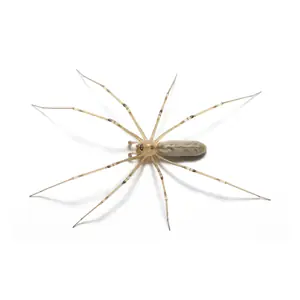
No. Wolf spiders do not build prey-capture webs. They are active hunters that chase and pounce on prey using their eyesight. The only silk they produce is a dragline (a safety thread they leave behind while moving) and a small retreat silk pouch used for resting. If you see large webs in your garage or home corners, those are from cellar spiders, southern house spiders, or black widows, not wolf spiders.
Glue traps placed along walls and in garage corners will catch individual wolf spiders, but they are not effective as a primary control method for a wolf spider entry problem. A wolf spider that cannot avoid the trap is captured; one that walks around it is not. More importantly, glue traps do not address the entry gap that is continuously replenishing the indoor population. Use glue traps to monitor activity level and confirm which areas have the highest traffic; use exclusion to actually solve the entry problem.
Several wolf spider species are documented in Collin County and across North Texas, with Hogna carolinensis being among the largest and most commonly encountered indoors. Rabidosa rabida (the rabid wolf spider, despite the alarming name, is harmless) is another common species. In practical terms, the species distinction does not change control strategy; all wolf spiders in the area share the same hunting-without-a-web behavior, respond to the same exclusion approaches, and carry the same low medical risk.
Yes, directly. Wolf spiders follow crickets. A garage or perimeter with a dense cricket population at night is actively recruiting wolf spiders from the surrounding outdoor habitat. Exterior cricket control, timed for August, reduces the prey concentration at your perimeter that draws wolf spiders toward entry points. It is the most upstream intervention in the chain: fewer crickets at the threshold means fewer wolf spiders at the threshold means fewer wolf spiders inside the garage.
What's Bugging You?

Wolf Spiders in Your Garage. We Seal the Gap They Use.

We find the entry points, apply perimeter treatment before the fall spike, reduce the cricket populations they follow in, and seal the gaps that keep your garage from becoming their hunting ground – across McKinney, Allen, Frisco, Plano, and all of Collin County.

12Stops Per Day
Other companies run 20+ stops a day. We cap at 12. That extra time is what it takes to actually find the garage door gap, install the weep hole covers, and do the perimeter work before the September spike rather than spraying after you are already dealing with it.