Odorous House Ants in Collin County, TX | Identification and Control
The odorous house ant (Tapinoma sessile) is the small dark ant most Collin County homeowners call the sugar ant, and the most common indoor nuisance ant in the area. Crush one and it smells like rotten coconut. Texas A&M AgriLife Extension puts one odorous house ant colony at a few hundred up to 10,000 ants, usually with multiple queens. The colonies nest inside wall voids, so a repellent spray splits one colony into several. The colony dies from bait the workers carry home, not from spraying the trail.
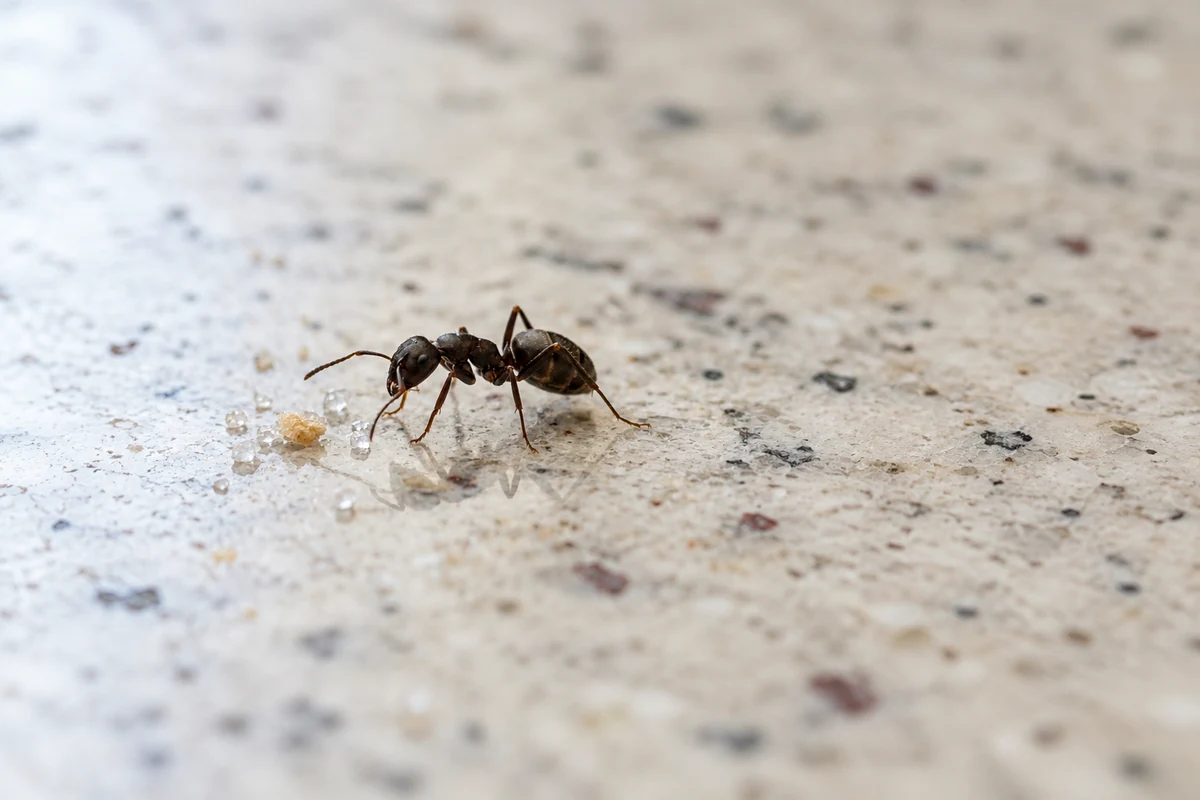
Tiny dark ants trailing across your kitchen in Collin County? Our office sits where McKinney, Plano, Frisco and Allen meet, 5 to 10 minutes from most homes in those four cities. Send us a photo or call before you spray, and we will tell you which ant it is.
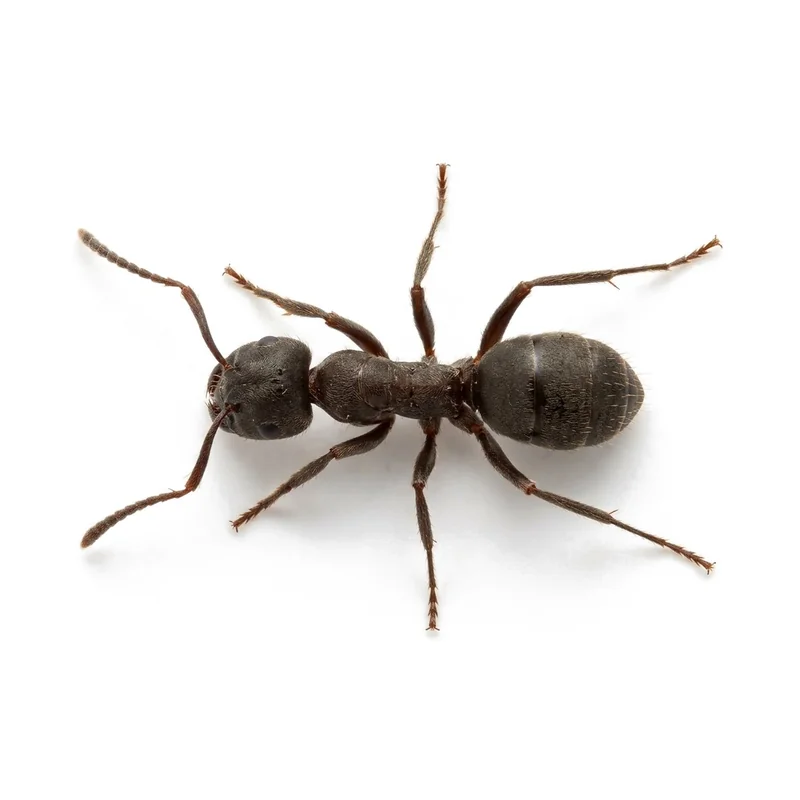
Odorous House Ant
Odorous house ant identification and biology confirms the hidden one-node waist as the main feature separating it from pavement ants and little black ants of the same size.
Risk Assessment
Choose a row for the full detail- Colony size
- A few hundred to 10,000, usually with multiple queens
- Queens per colony
- Many, spread across several nests
- Diet
- Sweets, honeydew from aphids, and proteins
- Smell when crushed
- Rotten coconut
- Nesting
- Wall voids near plumbing indoors, soil and mulch outdoors
- Active season
- Year-round indoors, outdoor peak May through July
- Worker size
- 2.4 to 3.3 mm, 1/16 to 1/8 inch, every worker the same size
What Odorous House Ants Look Like
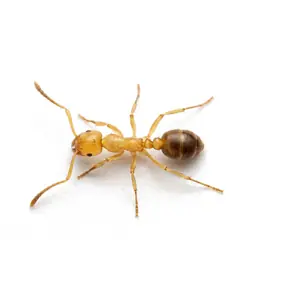
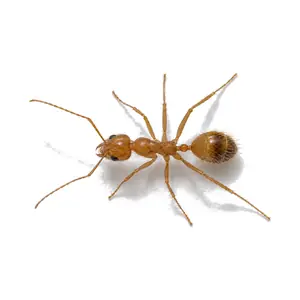
Penn State Extension measures odorous house ant workers at 1/16 to 1/8 inch (2.4 to 3.3 mm) long. They are dark brown to nearly black and all the same size. The body is one even dark color, with no banding, no red segment and no pale legs. The waist has a single node hidden under the rear section, so from above the ant seems to have no waist at all. The antennae have 12 segments with no club at the tip.
The fastest check needs no tools. Crush one worker and it gives off a rotten coconut smell, also described as overripe banana or blue cheese. No other common ant in Collin County smells like this. The smell is also an alarm signal that draws more workers to the spot, so swatting ants on a trail brings reinforcements rather than scaring them off.
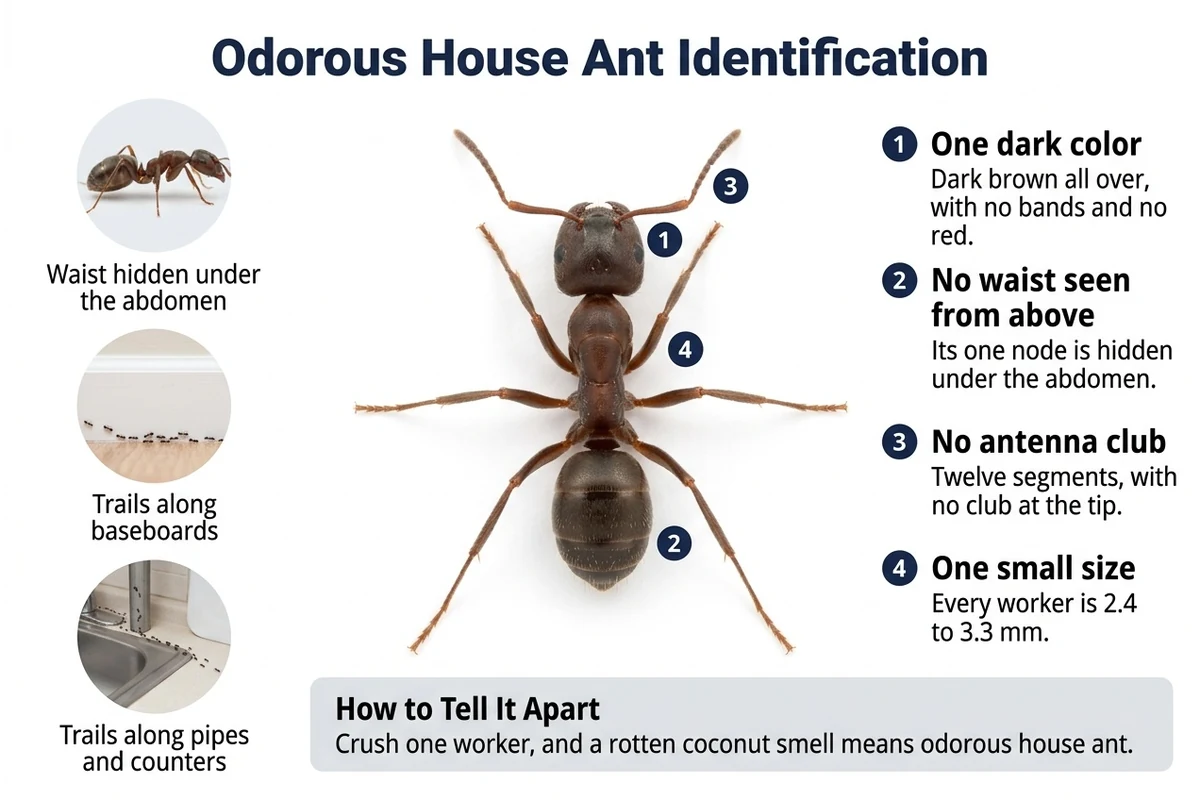
How to identify an odorous house ant from above, by its one dark color, hidden waist and antennae with no club
- Rotten coconut or overripe banana smell when one worker is crushed
- Dark brown to nearly black, one even color with no banding or red segment
- Every worker the same small size, 2.4 to 3.3 mm
- No visible waist from above, because its one node is hidden under the rear section
- 12-segment antennae with no club at the tip
- Tight trails along baseboards, countertops and pipe runs
- No sawdust-like wood shavings and no outdoor mound
Other Names for the Odorous House Ant
Every name in the table points to the same small dark ant, Tapinoma sessile, and most of them come from its smell. If you searched for any of them, this is probably your ant. The one name it shares is sugar ant, which Collin County homeowners also use for the pavement ant.
Are Odorous House Ants the Same as Sugar Ants?
Usually, yes. Sugar ant is a nickname, not a species, and in Collin County it most often means the odorous house ant, named for the tight trail workers run to the sugar bowl or honey jar. The pavement ant gets the same nickname because it also trails to sweets.
The two need different treatment, so the crush test below is worth ten seconds before you buy anything.
Where Are Odorous House Ants Found?
Odorous house ants are native to North America and established across Collin County, Texas, where they are the most common indoor nuisance ant. In Collin County homes, the ant people call a Texas sugar ant is most often this one. Where they nest outdoors and inside the walls is covered under Property Risk below.
| Name | What it means |
|---|---|
| Sugar ant | For the tight trails workers run to anything sweet. Also used for the pavement ant. |
| Texas sugar ant | Sugar ant with the state added. In Collin County homes it is most often this ant. |
| Coconut ant | For the rotten coconut smell a crushed worker gives off. |
| Stink ant, stinky ant, smelly ant | The same smell, described less kindly. |
| Odor ant, odorous ant | Short forms of the full name. |
| Odorless house ant | A common mix-up of odorous. This ant is anything but odorless. |
| House ant | A general name for ants that live indoors. This is the one found most often in Collin County homes. |
How to Tell Odorous House Ants from Other Ants in Collin County
Three ants are regularly mistaken for odorous house ants or share the sugar ant nickname. The crush test settles it in ten seconds, because none of the three gives off any smell when crushed.
| Species | Size | Key Feature | Where Found |
|---|---|---|---|
|
Odorous House Ant
AKA: Sugar Ant, Stink Ant, Coconut Ant
Tapinoma sessile
This species
|
2.4 to 3.3 mm, every worker in the colony the same size. Dark brown to nearly black with no banding or pale legs. | Single node hidden under the rear section, so the waist is invisible from above. Strong rotten coconut smell when crushed, the fastest field identification there is. | Wall voids, insulation and under-sink spaces indoors, soil and mulch beside the foundation outdoors. No mound and no wood shavings. Spreads by splitting into new nests, not by swarm flight. |
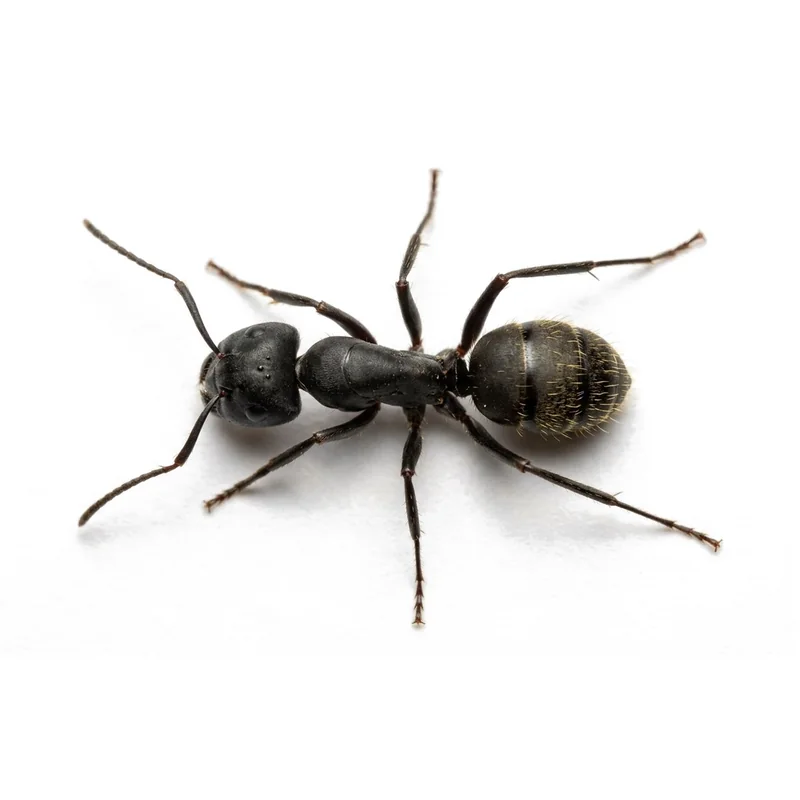
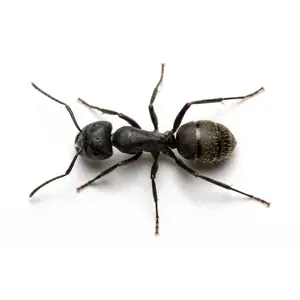
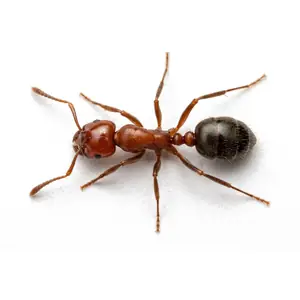
Carpenter Ant
AKA: Big Black Ant, Large Black Ant
Camponotus spp.
|
6 to 13 mm, with workers of graded sizes in one colony. All black or red and black. The size gap alone makes the separation immediate. | One visible node at the waist, not hidden. No smell when crushed. Leaves coarse wood shavings like damp sawdust near door frames, window trim or deck boards, which odorous house ants never do. | Tunnels dug into moisture-softened wood at door frames, fascia boards and decks. The indoor nest links back to a parent queen in a stump or log pile outdoors. |
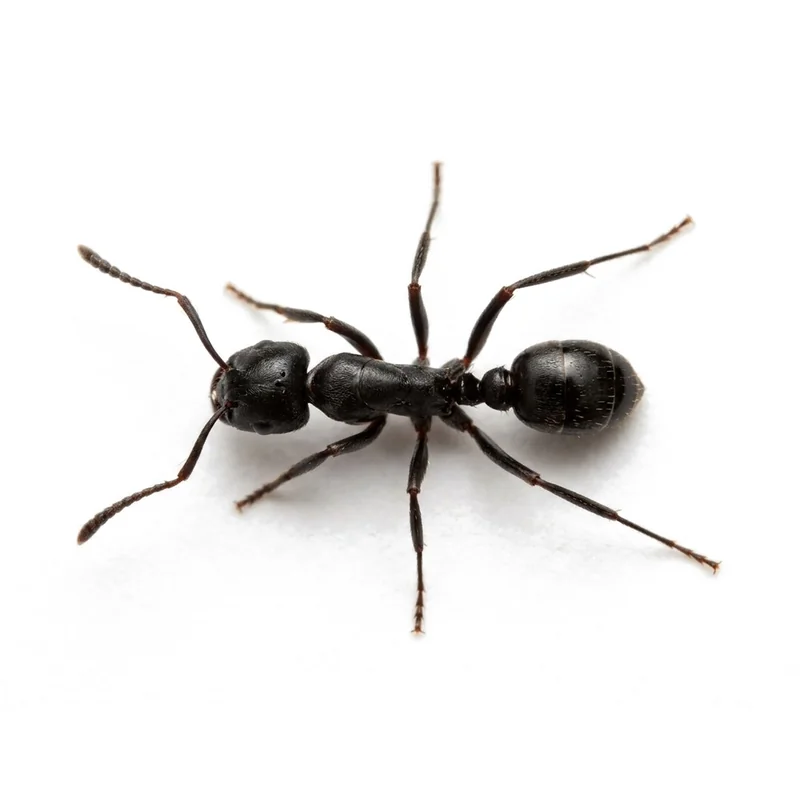
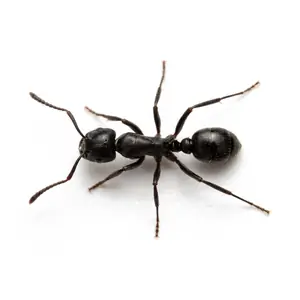
Little Black Ant
AKA: Black Ant, Tiny Black Ant
Monomorium minimum
|
1.5 to 2 mm, all one size, jet black and shiny. Visibly smaller than an odorous house ant when the two are side by side. | Two-node waist. No smell when crushed. Does not split when hit with a repellent, so a spray is far less likely to spread it indoors. | Outdoor soil, rotting wood and ground debris. Trails come indoors, but the colony does not set up nests inside the walls. |
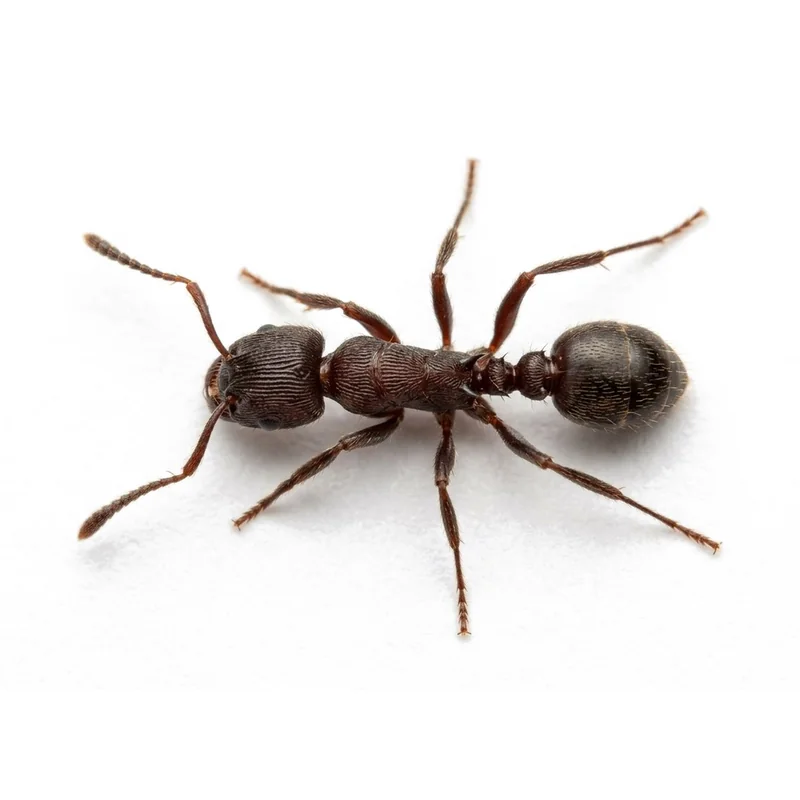
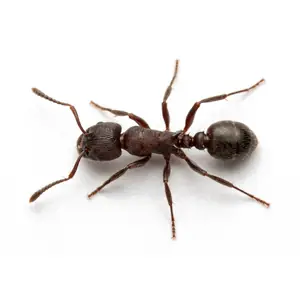
Pavement Ant
AKA: Sugar Ant, Sweet Ant
Tetramorium immigrans
|
2.5 to 3 mm, all one size, uniformly dark brown to black. So close in size to an odorous house ant that size alone cannot separate them. | Two-node waist, with fine parallel grooves on the head and midsection up close. No smell when crushed. Single-queen colony that does not split, so one service visit usually resolves it. | Soil under driveways, sidewalks and slabs, with fine sand pushed up at a crack as the visible sign. Does not nest inside the walls. |
Odorous House Ants vs Pavement Ants, the Other Sugar Ant
The Odorous House Ant in Three Numbers
33 to 157 feet
Utah State University Extension says odorous house ant foraging trails often run between 33 and 157 feet.
Utah State University Extension
2.4 to 3.3 mm
Penn State Extension measures odorous house ant workers at 2.4 to 3.3 mm long, 1/16 to 1/8 inch, and every worker in a colony is the same size.
Penn State Extension
Up to 10,000
Texas A&M AgriLife Extension puts one odorous house ant colony at a few hundred up to 10,000 ants, usually with multiple queens.
Texas A&M AgriLife Extension
Are Odorous House Ants Dangerous?
No. Odorous house ants have no sting and are not documented disease carriers, so they pose no direct medical risk to people. Pets face no toxicity risk from touching or eating a few workers, and there is no documented allergic reaction in dogs or cats. The concern is food.
Workers forage across food preparation surfaces, pantry shelves and any package with a gap in the seal, and food an active trail has crossed should be thrown out.
Do Odorous House Ants Bite?
They can, but rarely, and the bite is not medically significant. It happens when an ant is handled, and seldom in normal household contact. They have no sting, and odorous house ants are not documented disease carriers, so they pose no direct medical risk to people.
When Odorous House Ant Activity Warrants Action
Kitchen Trails in a Vulnerable Household
For a family with an infant, an elderly member or anyone immunocompromised, the food-safety concern alone justifies prompt treatment, even though the ant poses no direct medical risk.
Trails That Continue Through Winter
Ants indoors in winter mean a nest is already established inside the walls. Treating only the entry points will not stop it, and the trail resumes within days.
Why You Found Odorous House Ants in Your House
Odorous house ants come inside for food and water. The main colony usually lives in the yard, tending aphids on foundation shrubs for their sugary honeydew, and workers follow that food chain straight through weep holes and under door sweeps. Scouts that find sweets on a counter or in an unsealed pantry package keep coming back to the same spots.
Water draws them as strongly as food. A slow drip from a supply line inside a bathroom wall, or condensation from an HVAC line, is enough to anchor a nest even in a home with every food sealed. An odorous house ant call is often about hidden moisture, not a dirty kitchen. Hard-sided containers with tight lids take away the food reward, and fixing the drip takes away the water.
Where Odorous House Ants Nest in Collin County Homes
Outdoors, colonies nest in soil, under mulch, in the root zones of foundation shrubs, and beneath any stone or debris that holds moisture. Indoors, nests sit near water, most often in wall voids beside kitchen and bathroom plumbing, in insulation along shaded north and east exterior walls, and inside appliance motor housings that stay warm. The trail on the counter is rarely the nest. The nest is usually 5 to 15 feet away inside a wall or cabinet void, and workers reach the kitchen along baseboards, behind cabinet toe kicks and up pipe runs.
Odorous House Ant Presence Across Collin County
Pest Me Off service records for 2025 show odorous house ants are the most common indoor ant we are called out for in McKinney and Allen, and they lead indoor ant calls in Frisco as well. McKinney, Allen and Plano produce the majority of our calls for this ant. The species thrives on the county’s mix of mature landscaping, irrigated lawns and dense foundation planting, all of which support the aphids that feed outdoor colonies.
Pressure runs highest in neighborhoods with mature crape myrtles and roses, both heavy aphid hosts, and in homes with older plumbing that drips slowly inside wall voids. New construction in Prosper and Anna disturbs soil colonies during grading and pushes them to set up nests indoors early.
Pest Me Off service call records from 2023 to 2026 show outdoor foraging peaking for three months, May through July, after the April aphid season on landscape plants. Indoor pressure runs year-round, because nests already inside the walls do not go dormant in Collin County winters.
Pattern from Pest Me Off service call records across Collin County, 2023 to 2026, and published Tapinoma sessile seasonal biology literature.
How Odorous House Ant Colonies Spread
Odorous house ants do not swarm. They spread by splitting, where a queen and a group of workers leave the parent colony for a new nest site, usually 10 to 30 feet away, with no outward sign. A threat can set it off, including a repellent spray on an active trail, so one nest becomes two or three spread wider through the house. Texas A&M AgriLife Extension puts a colony at a few hundred to 10,000 individuals, usually with multiple queens. University of Minnesota Extension documents this repellent-triggered splitting as the main reason infestations grow after homeowners spray.
How Pest Me Off Handles Odorous House Ants
Ant-Nihilation is our ant program. It pairs queen-targeted bait with a foundation barrier we call the Scorched Earth Barrier, and for odorous house ants it uses non-repellent products throughout, the kind workers carry back to the queens without sensing a threat. Penn State Extension confirms that any repellent applied to active trails makes the colony split and spreads the infestation, so we make no exceptions.
Trail Mapping and Nest Count
We follow every active indoor trail back to where it enters the wall, count the separate nest zones, and note moisture sources such as dripping supply lines and HVAC condensate. The nest count sets how much bait goes where.
Indoor Non-Repellent Gel Bait
Gel bait goes along every active indoor trail and at every confirmed entry into a wall void. Workers pick it up, carry it home and pass it through the colony by contact and grooming.
Outdoor Non-Repellent Yard Treatment
A non-repellent bait is spread where the outdoor colony forages around the foundation, reaching the main soil colony and any nests tending aphids in the landscaping. We point out aphid colonies on foundation shrubs so they can be removed.
Scorched Earth Barrier and Timeline
After the colony collapses, the Scorched Earth Barrier, our non-repellent perimeter treatment around the foundation, irrigation and property edges, goes down every quarter. Pest Me Off treatment timelines show a single-nest infestation usually has fewer trails within 10 to 14 days and is gone in 3 to 4 weeks, while several nests take 4 to 8 weeks of bait upkeep plus the outdoor yard treatment. We give you the realistic timeline at the first visit.
& Quick Fixes
How to Get Rid of Odorous House Ants Yourself
You can get rid of a small odorous house ant problem yourself with the right bait and some patience. Use a product that does not repel, then remove the water and the routes that keep drawing new workers inside.
Why Some DIY Responses Fail for Odorous House Ants
Pest Me Off service records for 2025 show over 60 percent of odorous house ant calls came after a store-bought repellent spray had already spread the colony. The four mistakes below are why.
Sprays and Natural Repellents on the Trail
Store sprays, contact killers, diatomaceous earth and essential oil sprays such as peppermint or tea tree all repel. Workers sense them and route around them, which sets off the split into new nests and widens the infestation with every application.
Wiping the Trail Before Bait Is Down
Wiping a trail with a sponge or cleaner removes the scent path for a few hours, then it comes back. Bait travels home along that same trail, so wiping it removes the route the treatment needs. Leave active trails alone wherever bait is or will be placed.
Baiting One Trail While Others Stay Active
A colony often runs several trails along different walls through different cracks. Bait on the kitchen trail alone, while trails along the garage wall and bathroom baseboard stay active, gives partial results, and the untouched nests rebuild the treated spots.
Removing Bait Before the Cycle Finishes
Non-repellent bait takes 7 to 21 days to work through a colony, and the trail stays busy the whole time. It is easy to read that as failure and remove the bait, switch products or spray, which breaks the cycle and resets the clock. Patience through visible activity is the hardest part.
Common Odorous House Ant Questions
What are the tiny dark ants that smell like rotten coconut when I crush them?
Why do people call odorous house ants sugar ants?
Why do I smell rotten coconut or overripe fruit near my baseboards?
How big are odorous house ants?
How big is an odorous house ant colony?
Where do odorous house ants nest in my house, and what does the nest look like?
Are odorous house ants dangerous to my kids or pets?
Do odorous house ants damage wood or structure?
Why are odorous house ants active in my house during winter?
Will treating odorous house ants scatter the colony and make the problem worse?
Why do odorous house ants come back in a different area after spraying?
Is there a permanent fix for odorous house ants?
How do I get rid of odorous house ants?
Repellent Sprays Split the Colony. Bait Reaches Every Queen.
We find every trail, bait every nest inside and out, and hold the foundation with the Scorched Earth Barrier. McKinney, Allen, Frisco, Plano, and all of Collin County.