
Skunks in Collin County, TX | Identification and Control
The striped skunk (Mephitis mephitis) is the black and white animal about the size of a house cat that dens under Collin County decks, porches, sheds and slabs. Its musk soaks into carpets and rises through floors, and it is one of the two main carriers of rabies in Texas. The Texas Department of State Health Services confirmed rabies in 136 skunks in Texas in 2024, and 31 percent of the skunks tested were positive.
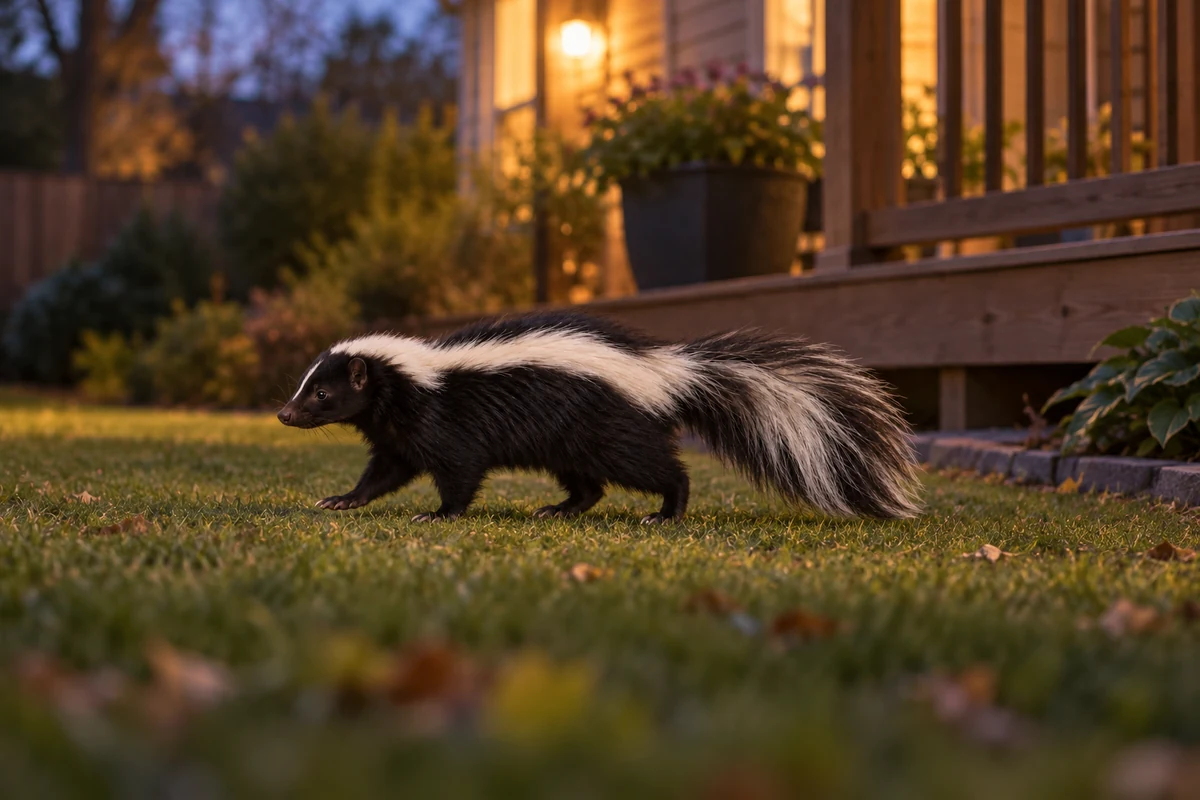
Skunk smell under the house or a hole by the porch? Our office sits where McKinney, Plano, Frisco and Allen meet, 5 to 10 minutes from most homes in those four cities. Call and we will find the den, every way in and whether there are young.
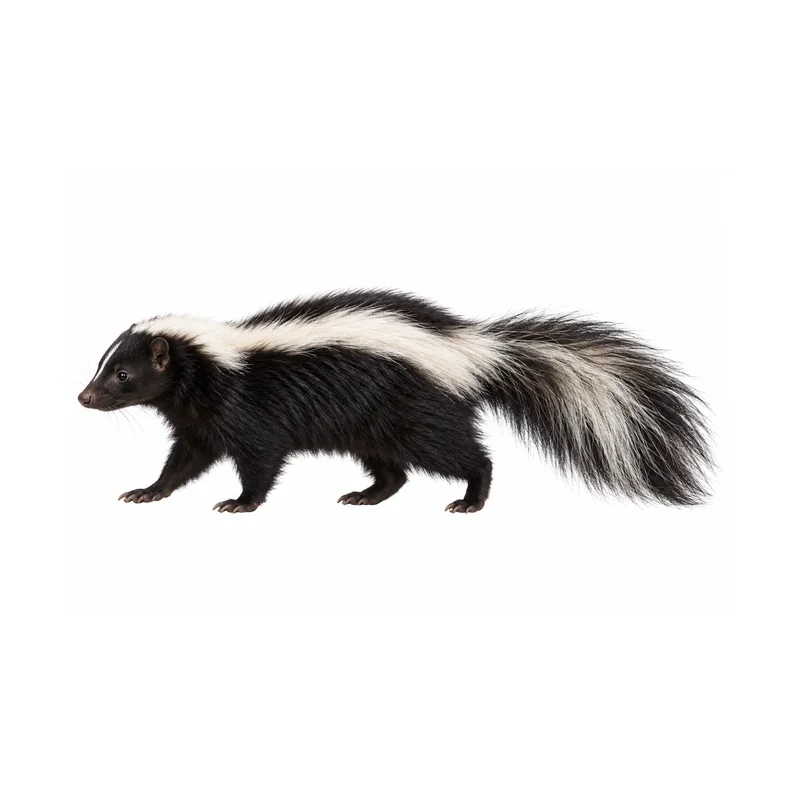
Striped Skunk
The striped skunk is a slow, nocturnal animal that digs for grubs and dens under houses, decks and sheds. Texas Tech’s Mammals of Texas calls it the most common skunk across the state and common in many towns and cities.
Risk Assessment
Choose a row for the full detail- Color
- Black with two white stripes down the back that meet at the neck
- Diet
- Mostly insects and grubs, plus mice, eggs, fruit and pet food
- Threat level
- High
- Defining behavior
- Stamps its front feet and raises its tail before it sprays
- Nesting site
- Under houses, decks, porches, sheds and slabs, and old armadillo burrows
- Lifespan
- Seldom more than 2 to 3 years in the wild
- Size
- About 2 feet long with the tail, 3 to 14 lb (1.4 to 6.6 kg)
What Does a Skunk Look Like?
A stout black animal the size of a house cat, with white stripes down its back and a long bushy tail
An adult striped skunk is stout and short legged, with long, coarse black fur, a white stripe on the forehead and two white stripes that join at the neck and run down each side of the back onto the tail. The pattern varies, and some skunks are mostly black or mostly white. Texas Tech University’s species account in The Mammals of Texas gives an average total length of 680 mm, about 27 inches, for a male, of which about 10 inches is tail, and a weight of 1.4 to 6.6 kg, about 3 to 14 pounds, depending on age and fat.
Most people smell a skunk long before they see one. The national wildlife damage management reference on skunks says the musk can be smelled up to a mile away, and that the long front claws make skunks very good diggers. Their hind foot tracks are about 2 and a half inches long with five toes and claw marks, and their droppings are 1 to 2 inches long and full of insect pieces.
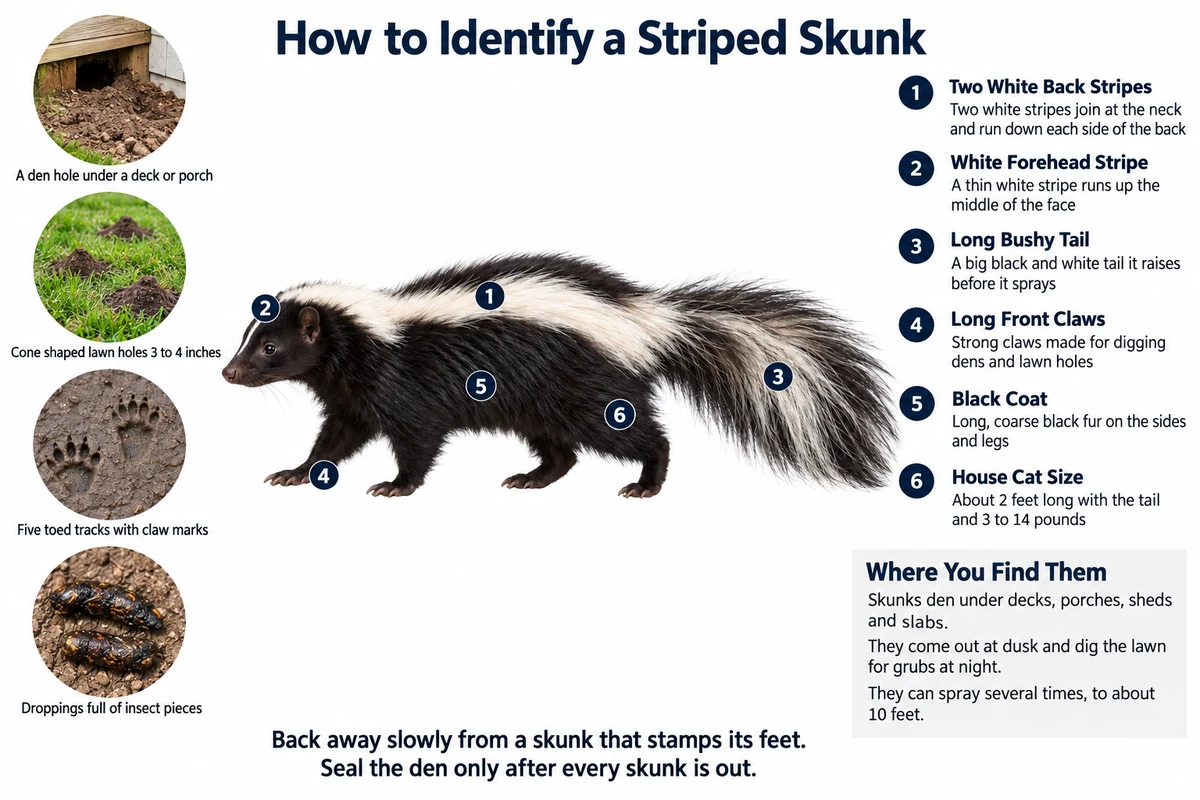
How to identify a striped skunk by its white back stripes, bushy tail and long digging claws, with the den holes, lawn holes and tracks it leaves behind
- A strong musky smell low to the ground, under the house or rising through the floor
- A hole dug at the edge of a deck, porch, shed or slab, with no climbing marks above it
- Small cone-shaped holes 3 to 4 inches across, dug neatly section by section in the lawn
- Five-toed tracks with claw marks in mud or dust by the hole
- Droppings 1 to 2 inches long full of shiny insect pieces
- A dog that comes back in at night smelling of skunk
Other Names for the Striped Skunk
Skunks were once classed with the weasels, and the wildlife damage reference notes they now sit in a family of their own. The scientific name Mephitis mephitis comes from the Latin word for a foul smell, used twice. Many Texans still call a skunk a polecat, and Spanish speakers across Collin County call it a zorrillo.
The skunk in a Collin County yard is nearly always the striped skunk. The same reference says the hog-nosed skunk, with an all-white back and tail, lives in the southern half of Texas, and the hooded skunk only in west Texas.
| Name | What it means |
|---|---|
| Skunk | The everyday name, and the word most people search. |
| Polecat | An old name heard across Texas and the South. |
| Zorrillo | The Spanish name, used in many Collin County households. |
| Mephitis | Latin for a foul smell, the first word of its scientific name. |
| Hog-nosed skunk | A different skunk with a white back, found farther south. |
How to Tell a Skunk from a Raccoon, Opossum or Armadillo
All four live around Collin County homes, den under decks and porches and dig or raid at night. Most people only find the hole or catch the smell. The smell, the shape of the hole and whether the animal climbs tell them apart.
| Species | Size and Color | Key Feature | Where Found |
|---|---|---|---|
|
Striped Skunk
AKA: Skunk, Polecat, Zorrillo
Mephitis mephitis
This species
|
About the size of a house cat, 3 to 14 pounds. Black with white stripes down the back. | The musky smell. Neat cone-shaped holes in the lawn and a den hole at the edge of a deck or slab. Rarely climbs. | At ground level under decks, porches, sheds, slabs and crawl spaces, and in old armadillo burrows. |
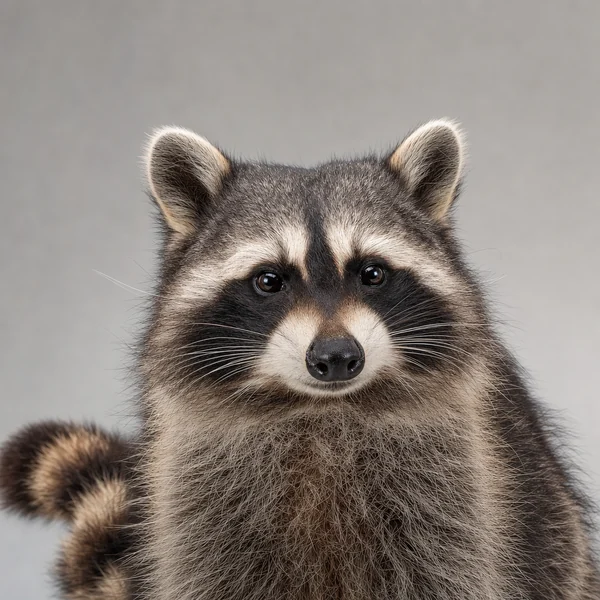
Raccoon
AKA: Racoon, Coon, Mapache
Procyon lotor
|
Larger, 9 to 29 pounds. Grizzled gray with a black mask and a ringed tail. | Hand-shaped prints and torn soffits or shingles. No white stripes, and no spray. | Attics and chimneys as well as under decks. Climbs well, so it reaches the roof. |
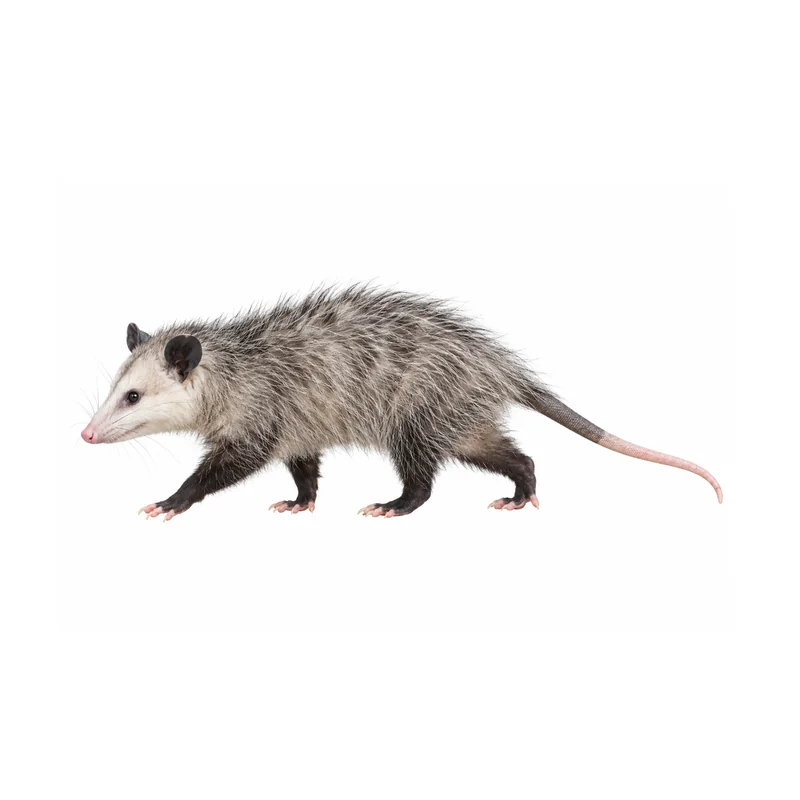
Opossum
AKA: Possum
Didelphis virginiana
|
About the size of a house cat. Gray-white with a white face and a bare, pink tail. | No stripes. Can give off a skunk-like smell of its own, and plays dead when threatened. | Under decks and sheds, in crawl spaces and garages, often in the same spots skunks use. |
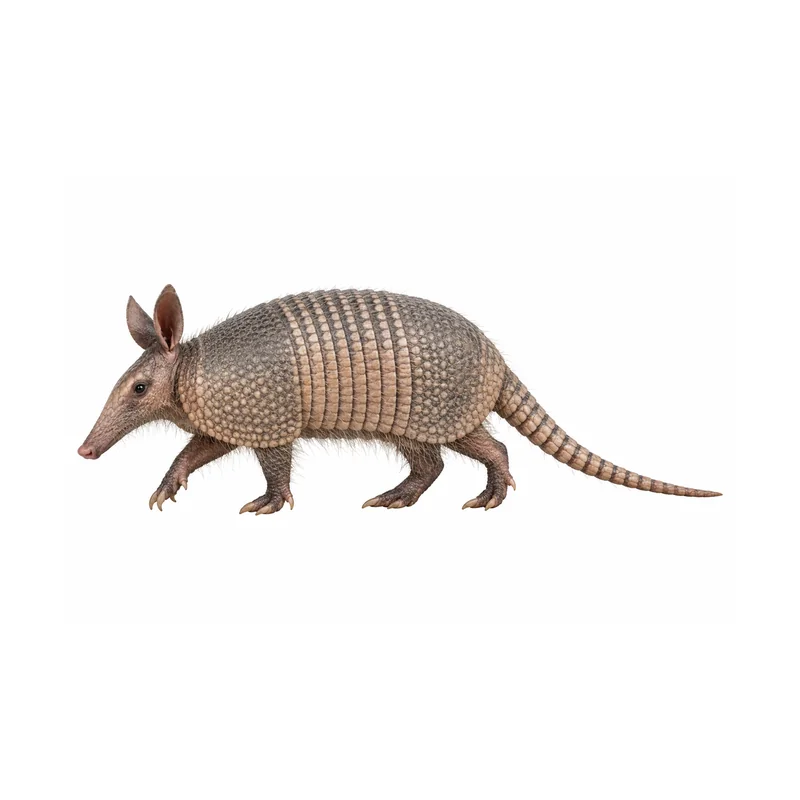
Armadillo
AKA: Nine-banded Armadillo
Dasypus novemcinctus
|
About the size of a house cat. Gray brown, covered in a banded shell. | No stripes and no spray. Digs lawn holes too, and burrows along foundations and beds. | Burrows along foundations, slabs and flower beds. Skunks often move into its old burrows. |
Skunk vs Raccoon Under the Deck
The Striped Skunk in Three Numbers
136
The Texas Department of State Health Services confirmed rabies in 136 skunks in Texas in 2024, a third of the 412 rabid animals found statewide that year.
Texas Department of State Health Services, 2024
31 percent
The same 2024 report found that 31 percent of the skunks tested for rabies in Texas were positive, which is why a skunk that bites or scratches anyone matters.
Texas Department of State Health Services, 2024
About 10 feet
Texas A&M AgriLife Extension says a skunk can spray its musk several times, with accuracy to about 10 feet, so keep at least that far back from a skunk.
Texas A&M AgriLife Extension
Do Skunks Carry Rabies in Texas?
Yes, and more often than almost any other animal here. In the state’s 2024 report on rabies in animals, the Texas Department of State Health Services confirmed rabies in 136 skunks, second only to bats, and names bats and skunks as the main hosts of the rabies strains found in Texas. A skunk strain of rabies is settled in Texas and spills over into other animals, including cats. Texas law lists skunks among the high-risk animals for rabies. The CDC’s page on rabies says rabies spreads mainly through bites and scratches, that a bite or scratch should be washed at once with soap and water, and that treatment after exposure works nearly every time, while rabies is nearly always fatal once signs appear. Wash any skunk bite or scratch and call your doctor the same day.
How Far Can a Skunk Spray, and Is It Dangerous?
A skunk can spray several times in a row, and Texas A&M AgriLife Extension’s guide to managing skunk damage says it is accurate to about 10 feet. It warns first. Texas Tech’s species account describes a skunk rising on its hind feet, lurching forward, stamping both front feet and clicking its teeth before it sprays, and the wildlife damage reference adds that it arches its tail over its back. Back away quietly and slowly when you see that. The wildlife damage reference on skunk damage says the spray is not known to carry rabies, but some people get asthma-like symptoms from the smell and should leave the area.
When Skunk Activity Needs Fast Action
A Bite or Scratch
Wash it at once with soap and running water and call your doctor the same day. Skunks are a high-risk animal for rabies under Texas law.
A Skunk Acting Strangely
A skunk out in daylight that walks straight at people or pets without fear may be rabid. Keep everyone away and call local animal services.
A Pet That Fought a Skunk
Do not touch a sprayed pet with bare hands. Wash it first, check its rabies shots are current and call your vet about any bite.
A Smell That Gets Stronger Each Day
A skunk smell that lasts for days and grows stronger usually means a skunk has died under the house or slab and needs to be found.
Why Your House Smells Like Skunk
A skunk smell inside the house almost always means a skunk is living underneath it, or has sprayed close to a vent, a crawl space door or a gap at the slab. The wildlife damage reference says the musk soaks into carpets, cloth furniture and clothing and can reach rooms several floors away from where it was sprayed. Skunks pick dry, sheltered spots, and Texas Tech’s species account says they are known for denning under houses, barns and empty buildings and for moving into old armadillo burrows.
The smell is not always a skunk. The same reference warns that opossums give off a skunk-like smell too, and that a dog or cat sprayed outside can make it seem a skunk is inside. What draws skunks in is food and cover close together: grubs in the lawn, mice around a shed or garage, pet food and water left out at night, open trash and piles of lumber or brush. It is not a sign of a dirty home.
Where Skunks Den Around Collin County Homes
In the wild, striped skunks den in rock crevices, along stream banks and in the burrows of armadillos and other animals. Around homes, the wildlife damage reference on skunk biology says they prefer the space under decks, porches and other quiet spots with good drainage. They dig in at the edge of a slab, patio or shed, and rarely climb, so attics are seldom their home.
Skunk Pressure Across Collin County
Skunk calls in our service notes come from McKinney, Allen, Prosper and Anna, and next door in The Colony. They are usually a smell under a home or shop, or a hole under a porch, patio or slab, and they come in early spring, early summer and fall.
Homes that back onto creeks, greenbelts, golf courses and open land see the most, because Texas Tech’s species account says skunks favor stream edges and open ground and forage within 1 to 2 miles of the den each night.
Skunks are active all year in Collin County, resting in the den during cold spells. Texas Tech’s species account puts mating in late February and March, when males roam widely, and most births in early May. The young follow their mother through summer, and families split up in late summer and fall, when young skunks look for dens of their own.
Pattern from published Texas skunk breeding biology (The Mammals of Texas) and Pest Me Off skunk calls, which come mostly in early spring and fall.
Why Skunks Keep Coming Back
How Pest Me Off Removes Skunks
Skunk removal is four steps, every job. Getting the skunk out is only half the fix, because an open den invites the next one.
Inspect and Identify
A free inspection around the foundation, porches, patios, decks and sheds. We confirm it is a skunk and not a raccoon, opossum or armadillo, find every hole it uses and look for signs of young.
Remove the Humane Way
Live traps or one-way doors sized for a skunk, set at the den entrance, checked every day and handled within Texas wildlife rules. When there are young, we make sure the whole family comes out.
Clean Up and Assess
We clear nesting material from the access area, then show you the den, the damage and every opening along the foundation, porch and patio.
Seal It Out for Good
Once the skunks are gone, the den entrance and every low opening are closed with materials a skunk cannot dig through or pull apart. This is the rodent proofing and exclusion work that keeps the next animal out.
& Other Companies
How to Get Rid of Skunks Yourself
Most DIY skunk work is taking away what drew them and closing the space under the house. The wildlife damage reference on skunk control puts cleanup and sealing ahead of trapping.
Why Some DIY Responses Fail for Skunks
Most DIY skunk trouble comes from closing a den before knowing it is empty, and from Texas rules on what may be done with a skunk once it is caught.
Filling the Hole Too Soon
Texas A&M AgriLife Extension advises sprinkling flour at the hole and checking for tracks after dark to see when the skunks have left. Closing it sooner traps them, and they dig out or die under the house.
Trapping and Driving It Away
Texas Parks and Wildlife’s rules on nuisance fur-bearing animals allow a trapped skunk to be released elsewhere only with the department’s approval and the release site owner’s consent.
Mothballs, Lights and Repellents
The wildlife damage reference says no repellent is registered for skunks and no frightening device works on them.
Common Skunk Questions
What does a skunk look like, and how big do skunks get in Texas?
How do I know if a skunk is living under my house?
Why does my house smell like skunk?
How do you get skunk smell off a dog?
Do skunks carry rabies in Texas?
How far can a skunk spray?
Is skunk spray dangerous?
Are skunks digging the holes in my lawn?
What does skunk poop look like?
When do baby skunks leave the den?
Can I trap a skunk and release it somewhere else?
How do I get rid of skunks?
Skunk Under the House? We Get It Out and Seal the Den.
We find the den, every way in and any young, get the skunks out the humane way, and seal the house so the next one cannot move in. Wildlife removal across McKinney, Allen, Frisco, Plano, and all of Collin County.