
Lone Star Ticks in Collin County, TX | Identification and Control
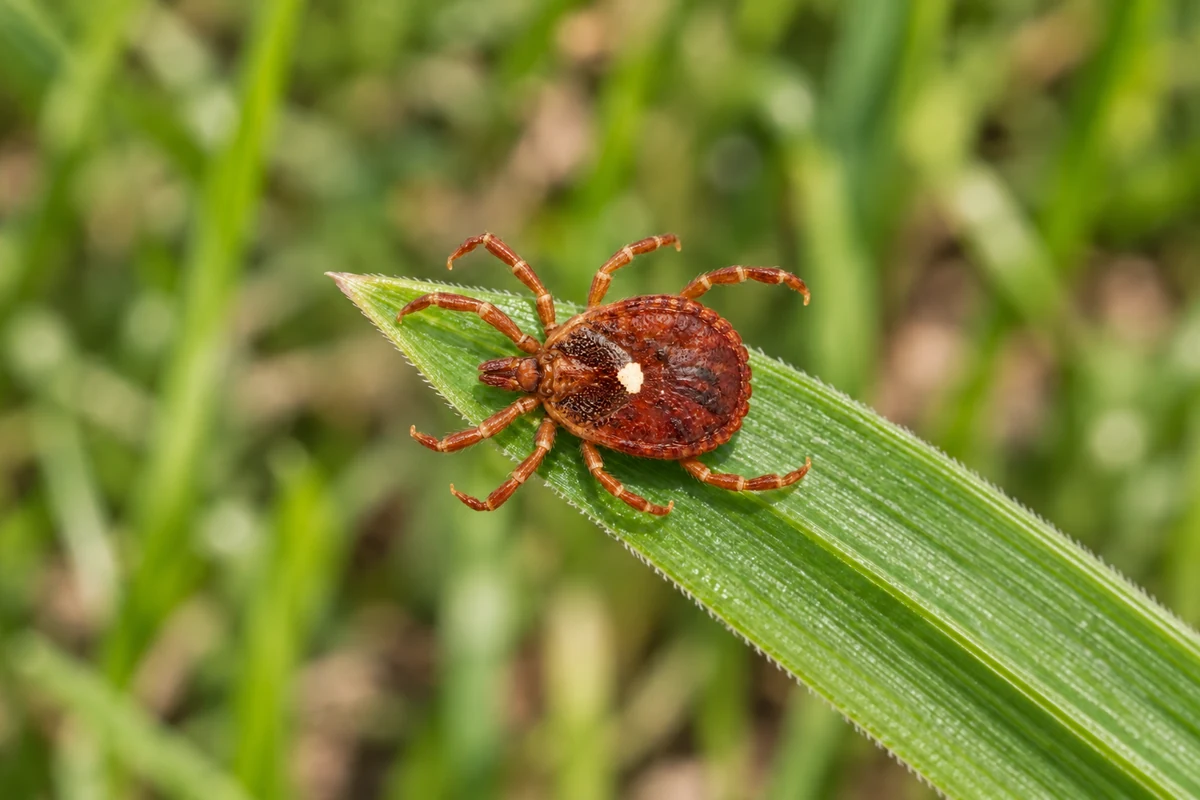
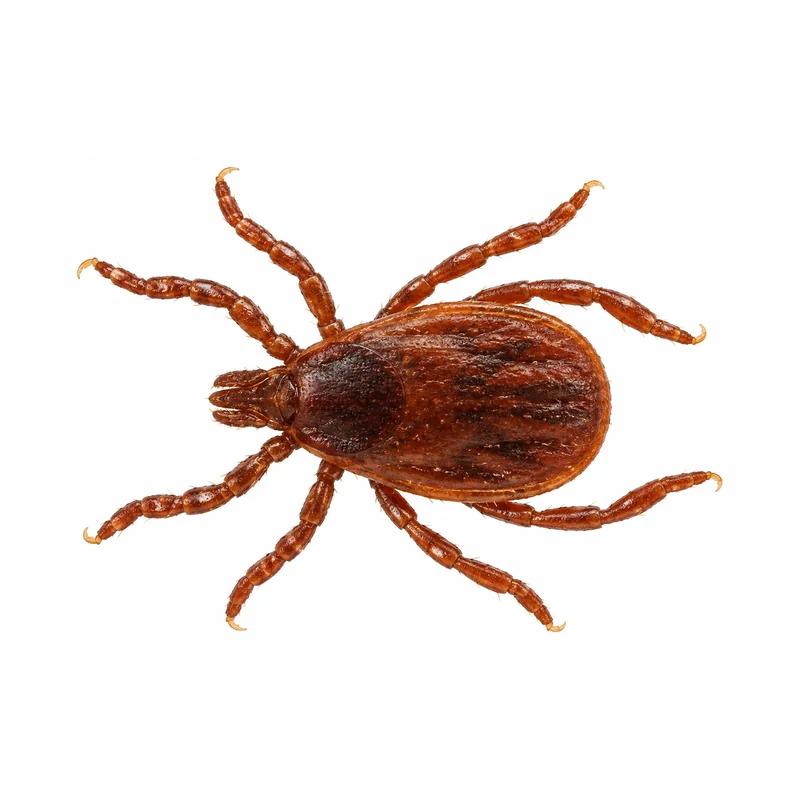
The lone star tick (Amblyomma americanum) is a reddish brown tick that waits in tall grass, brush and leaf litter and bites people at every stage of its life, along with dogs, deer and other animals. The adult female carries one white dot in the middle of her back. Its bite is linked to alpha-gal syndrome, a red meat allergy, and the CDC reports more than 110,000 suspected cases of it in the United States from 2010 to 2022.
Pulling ticks off your dog after every walk? Our office sits where McKinney, Plano, Frisco and Allen meet, 5 to 10 minutes from most homes in those four cities. Call and we will find the yard edges where ticks are waiting.
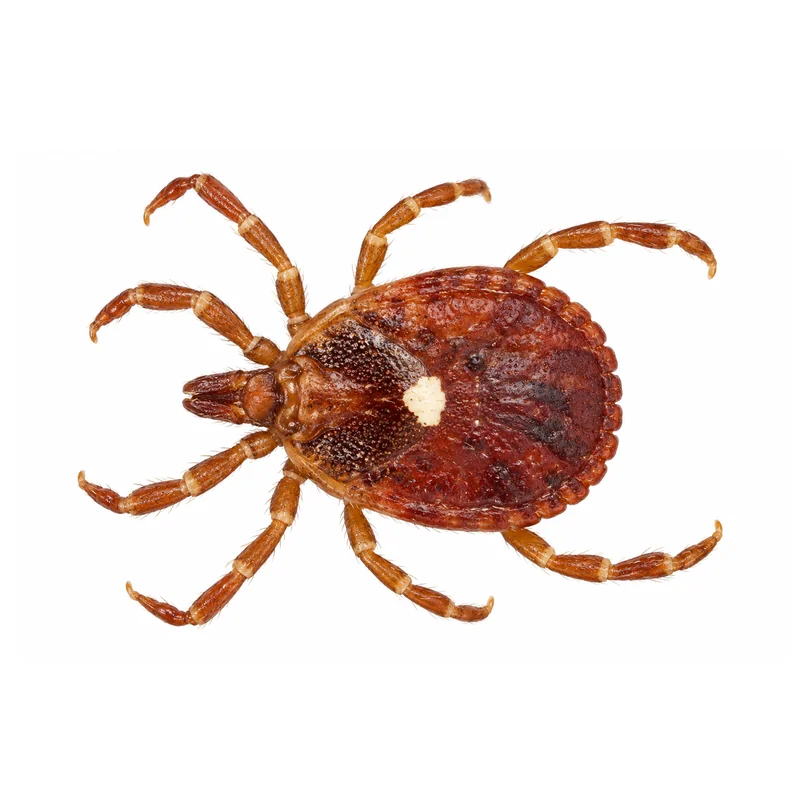
Lone Star Tick
The lone star tick is an outdoor tick that climbs grass and brush at yard edges, trails and creeks and grabs on to whatever walks past. Texas A&M AgriLife’s Tick App says it feeds on almost any animal at all three active stages, from birds and small animals to deer, dogs and people.
Risk Assessment
Choose a row for the full detail- Color
- Reddish brown, the female with one pale dot on her back
- Diet
- Blood, from birds and small animals up to deer, dogs and people
- Threat level
- High
- Defining behavior
- Walks toward people and pets rather than only waiting on grass
- Habitat
- Tall grass, brush, leaf litter and wooded or creek edges
- Eggs
- Over 8,000 from one female, laid on the ground
- Size
- Female 4 to 6 mm before feeding, 16 mm or more once full
What Does a Lone Star Tick Look Like?
A flat, reddish brown tick, and the female carries one white dot in the middle of her back
The adult female is the easy one to name. Texas A&M AgriLife’s Tick App describes her as reddish brown with a single spot in the center of her back, often shiny and anywhere from white to cream or gold to bronze. She measures 4 to 6 mm before she feeds, under a quarter inch, and swells to 16 mm or larger once she is full of blood. Males are 2 to 5 mm, dark brown, and carry pale streaks along the back edge of the body in place of the single dot.
The young are far harder to see. Purdue University’s extension entomologists note that the newly hatched ticks, called seed ticks or turkey ticks, have only six legs, while the older young and the adults have eight. Seed ticks hatch together from one egg mass, so they are often found in groups on legs and ankles. Purdue also points out the lone star tick’s long mouthparts, which give it a deeper bite than the American dog tick.
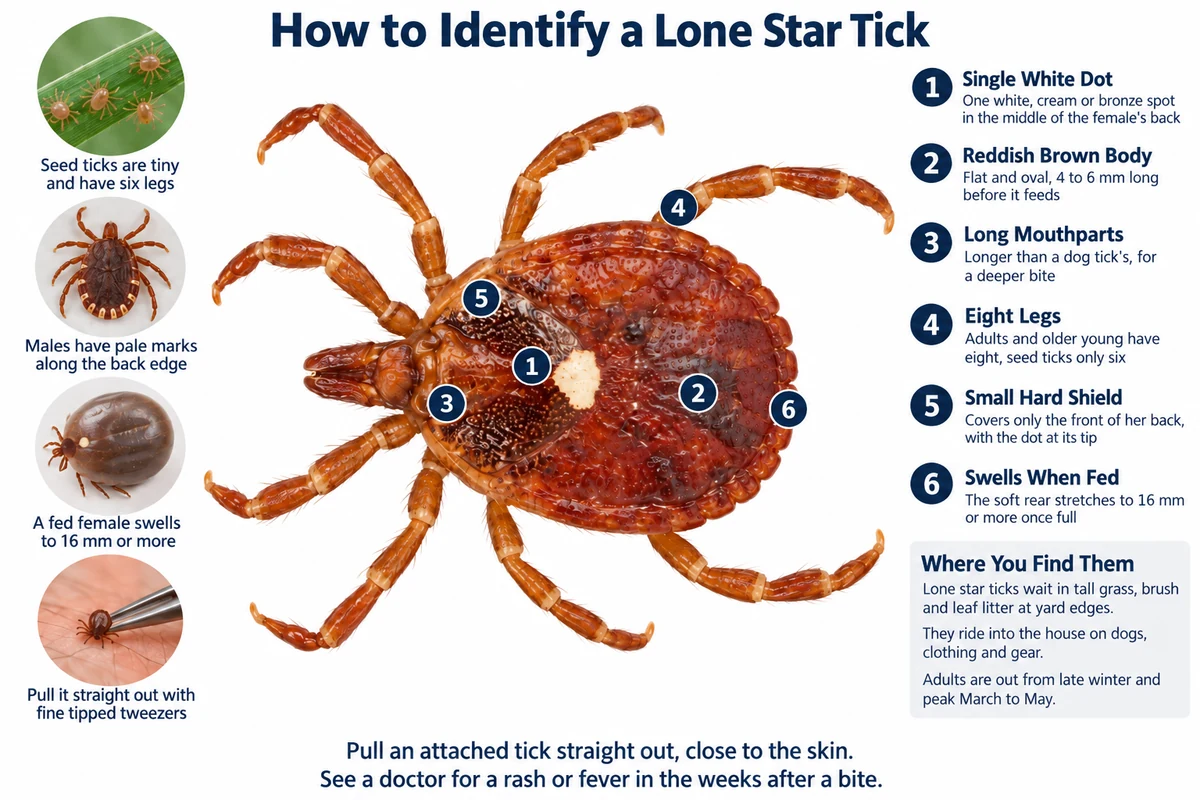
How to identify a lone star tick by the female’s single white dot, her reddish brown body and long mouthparts, with the seed ticks, males and fed females you may also find
- One white, cream or bronze dot in the middle of a reddish brown tick’s back
- A dark tick with pale streaks along the back edge of its body, the male
- Ticks found on you or your dog after time at a brushy yard edge, a trail or a creek
- Many tiny bites at once in summer, from a cluster of seed ticks
- A tick walking toward you across the ground or a patio
- A red rash that keeps spreading around a bite in the week after it
Other Names for the Lone Star Tick
The name has nothing to do with Texas. The CDC’s guide to where ticks live explains that the adult female is known by the white dot, the lone star, on her back, and the tick lives across the South, the Midwest and the Northeast. The scientific name Amblyomma americanum simply marks it as an American tick.
The names that cause confusion belong to its young. Purdue’s extension page says the six legged young are called seed ticks or turkey ticks, which is why people who find a cluster of tiny ticks often do not connect them to the bigger tick with the white dot.
| Name | What it means |
|---|---|
| Lone star tick | For the single white dot on the female’s back. |
| Seed tick | The newly hatched young, tiny as seeds. |
| Turkey tick | Another name for the same young ticks. |
| Amblyomma americanum | The scientific name, meaning the American tick. |
How to Tell a Lone Star Tick from an American Dog Tick or Brown Dog Tick
All three ticks bite dogs around Collin County homes, and the right fix depends on which one it is. A lone star tick or an American dog tick is dealt with in the yard, while a brown dog tick can live and breed inside the house. The marks on the back tell them apart.
| Species | Size and Color | Key Feature | Where Found |
|---|---|---|---|
|
Lone Star Tick
AKA: Seed Tick, Turkey Tick
Amblyomma americanum
This species
|
Female 4 to 6 mm before feeding. Reddish brown. | The female has one pale dot in the middle of her back. Long mouthparts. | Outdoors in tall grass, brush and leaf litter, carried indoors on pets and clothing. |
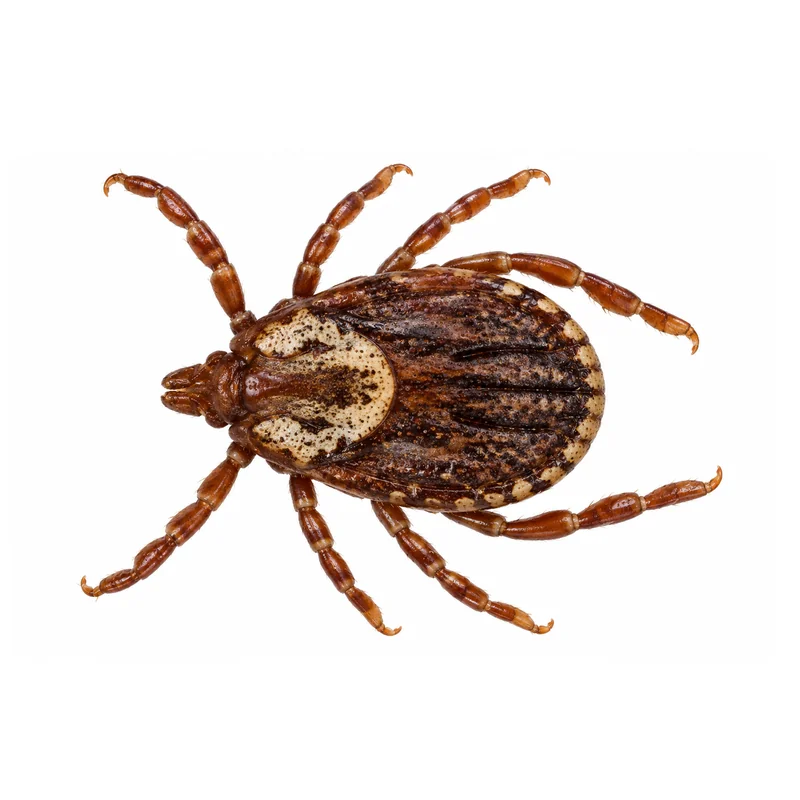
American Dog Tick
AKA: Wood Tick
Dermacentor variabilis
|
Female about 3.8 mm before feeding. Dark brown with cream markings. | A cream colored shield behind the head with a mottled pattern, no single dot. Short mouthparts. | Outdoors in grass and brush, mostly on dogs, coyotes and other wild animals. |
Brown Dog Tick
AKA: Kennel Tick
Rhipicephalus sanguineus
|
Small and plain, light to dark brown all over. | No markings at all on the back. Short mouthparts. | Inside homes and kennels, crawling up walls, wherever dogs sleep. |
Lone Star Tick vs American Dog Tick
The Lone Star Tick in Three Numbers
110,000
The CDC reports that more than 110,000 suspected cases of alpha-gal syndrome, the red meat allergy tied mainly to lone star tick bites, were identified in the United States from 2010 to 2022.
CDC, alpha-gal syndrome
3 to 6 hours
The University of Kentucky’s entomology department says the allergic reaction to red meat comes 3 to 6 hours after eating beef, pork or lamb, which is why few people link it to a tick bite.
University of Kentucky
8,000
Purdue University’s extension entomologists report that one lone star tick female can lay over 8,000 eggs before she dies, so a single fed tick can restock a brushy yard edge.
Purdue University
Are Lone Star Ticks Dangerous?
They can be. The CDC’s guide to where ticks live calls the lone star tick a very aggressive tick that bites humans, and lists ehrlichiosis, tularemia, Heartland virus and Bourbon virus among what it can spread. The CDC’s page on ehrlichiosis symptoms says fever, chills, a bad headache and muscle aches usually start 1 to 2 weeks after the bite, and that delaying antibiotics can lead to severe illness. Most bites cause only a small red, sore spot, which the CDC says does not by itself mean an infection.
Can a Lone Star Tick Bite Cause a Red Meat Allergy?
Yes. According to the CDC’s page on alpha-gal syndrome, a bite can pass a sugar called alpha-gal into the blood, and the body can then react to beef, pork, lamb, venison and other mammal products. In the United States the lone star tick is the tick most often tied to it, and the CDC counts more than 110,000 suspected cases from 2010 to 2022, with as many as 450,000 people possibly affected. Reactions range from mild to life threatening, and not everyone who is bitten develops it.
Do Lone Star Ticks Carry Lyme Disease?
No. The CDC’s page on southern tick-associated rash illness says lone star ticks have not been shown to spread the Lyme disease germ, and their saliva has been shown to kill it. Some people do get a red, expanding rash after a lone star tick bite that looks like the Lyme bull’s eye. According to the CDC it usually appears within 7 days and grows to 3 to 12 inches across, sometimes with fever, headache and aches, so see a doctor about any rash like it.
When a Lone Star Tick Bite Needs Fast Action
A Fever in the Weeks After a Bite
Fever, chills, headache or aches in the 2 weeks after a tick bite or a day outdoors can be ehrlichiosis. See a doctor and mention the tick.
A Rash or Swelling After a Meal
A skin rash or swelling a few hours after eating red meat can be alpha-gal syndrome. Trouble breathing needs emergency care.
A Spreading Red Rash
A red rash that keeps growing around a bite, past the small spot most bites leave, needs a doctor to look at it.
Ticks Found Every Week
Finding ticks on your dog or your children after most trips into the back yard means they are living at your own yard edges.
Why You Find Lone Star Ticks in Your House
A lone star tick in the house nearly always rode in. The CDC’s tick prevention page says ticks are carried inside on clothing and pets and can attach to a person later, and that many people pick up ticks in their own yard or neighborhood rather than on a hike. The dog that runs the fence line, the child who plays at the edge of the lawn and the gardener kneeling in the beds all bring them in.
They do not set up home indoors. The CDC’s page on ticks and pets names the brown dog tick as the one that is unique in being able to infest homes and kennels. So if ticks keep turning up in a dog bed or on the walls, it is worth having them identified, because that points to a brown dog tick and a different plan.
Where Lone Star Ticks Live Around Collin County Homes
Ticks live in grassy, brushy or wooded areas, the CDC’s prevention page says, and wait on the tips of grass and low leaves for something to brush past. Texas A&M’s Tick App lists birds and small animals for the young, and deer, cattle, horses, dogs and people for the adults. The CDC’s lone star tick surveillance page calls white-tailed deer a keystone host, so yards that back onto a greenbelt, creek or open field where deer move are the ones that see the most.
Where Are Lone Star Ticks Found in Collin County?
The CDC’s 2025 county data lists the lone star tick as established in Dallas, Denton, Grayson, Fannin and Hunt counties and as reported in Collin County. The same page says a county not marked established does not mean the tick is absent, and that counties often move to established once they are sampled and recorded for the first time.
Our own tick work comes most from McKinney, Allen, Frisco and Farmersville, often from homes with dogs, and usually paired with flea work in the same yard.
Adults wake up in late winter and peak from March to May. Young ticks follow from April through summer, and seed tick clusters are heaviest from June to August.
Pattern from Texas A&M AgriLife’s Tick App on lone star tick seasons, the CDC’s note that ticks are most active from April to September, and Pest Me Off flea and tick calls.
Why Lone Star Ticks Keep Coming Back
How Pest Me Off Gets Rid of Lone Star Ticks
Lone star tick control is four steps, every job. Pulling ticks off the dog handles today, but the yard edges keep handing out new ones until they are treated.
Inspect and Identify
A free inspection of the yard, the fence lines and the pet areas. We confirm which tick it is, and whether fleas are in the mix, and find the shaded edges and leaf litter where ticks are waiting.
Install the Scorched Earth Barrier
Our long lasting exterior treatment goes along the fence lines, tall grass edges, leaf litter and the soil under decks and shrubs, with granules worked into the shaded beds a spray cannot reach.
Line It Up With Your Vet
We time the yard visit with the tick prevention your vet puts on your dog, so the yard and the pet are both protected from the same day.
Defend Through the Season
On a recurring plan we return about 30 days after the first visit, then keep the barrier active every quarter through the warm months when ticks are out.
& Other Companies
How to Get Rid of Lone Star Ticks Yourself
Most DIY tick work is making the yard edge a poor place to wait and checking people and pets every time they come in. The CDC’s tick prevention page puts both ahead of any spray.
Why Some DIY Responses Fail for Lone Star Ticks
Most DIY tick trouble comes from the wrong way of pulling a tick off, from trusting a spray to do it all, or from washing ticks rather than drying them.
Burning or Smothering a Tick
The CDC’s tick removal advice says not to use petroleum jelly, heat or nail polish, which can force infected fluid into the skin. Pull it straight out with tweezers.
Relying on a Yard Spray
Spraying can cut the number of ticks in a yard, the CDC says, but should not be relied on alone to prevent illness. Tick checks and repellent still matter.
Washing Clothes in Cold Water
Cold and medium temperature water do not kill ticks, the CDC notes. Put dry clothes straight in the dryer on high heat, or wash them in hot water first.
Common Lone Star Tick Questions
What is a lone star tick, and what does it look like?
Is the lone star tick named after Texas?
Can a lone star tick bite make you allergic to red meat?
Do lone star ticks carry Lyme disease?
Are lone star ticks dangerous to dogs?
Can lone star ticks live in your house?
What are seed ticks?
How do you remove a lone star tick?
When are lone star ticks most active in Collin County?
How do I get rid of lone star ticks?
Ticks on the Dog Again? We Treat the Edges Where They Wait.
We find the shaded fence lines, beds and leaf litter where ticks gather, treat them, and line the visit up with your dog’s tick prevention. Flea and tick control across McKinney, Allen, Frisco, Plano, and all of Collin County.