Woodlouse Spiders in Collin County, TX | Identification and Control
The woodlouse spider is a red-orange spider with disproportionately large fangs found under flagstones, patio pavers, and flower pots across Collin County. It is one of the most alarming-looking spiders homeowners encounter during yard work, and one of the least medically dangerous. A 2006 study of 16 verified woodlouse spider bites by Vetter and Isbister found none caused tissue damage or illness. Its primary prey is pill bugs and sowbugs. Getting rid of it starts with understanding the pill bug problem first.
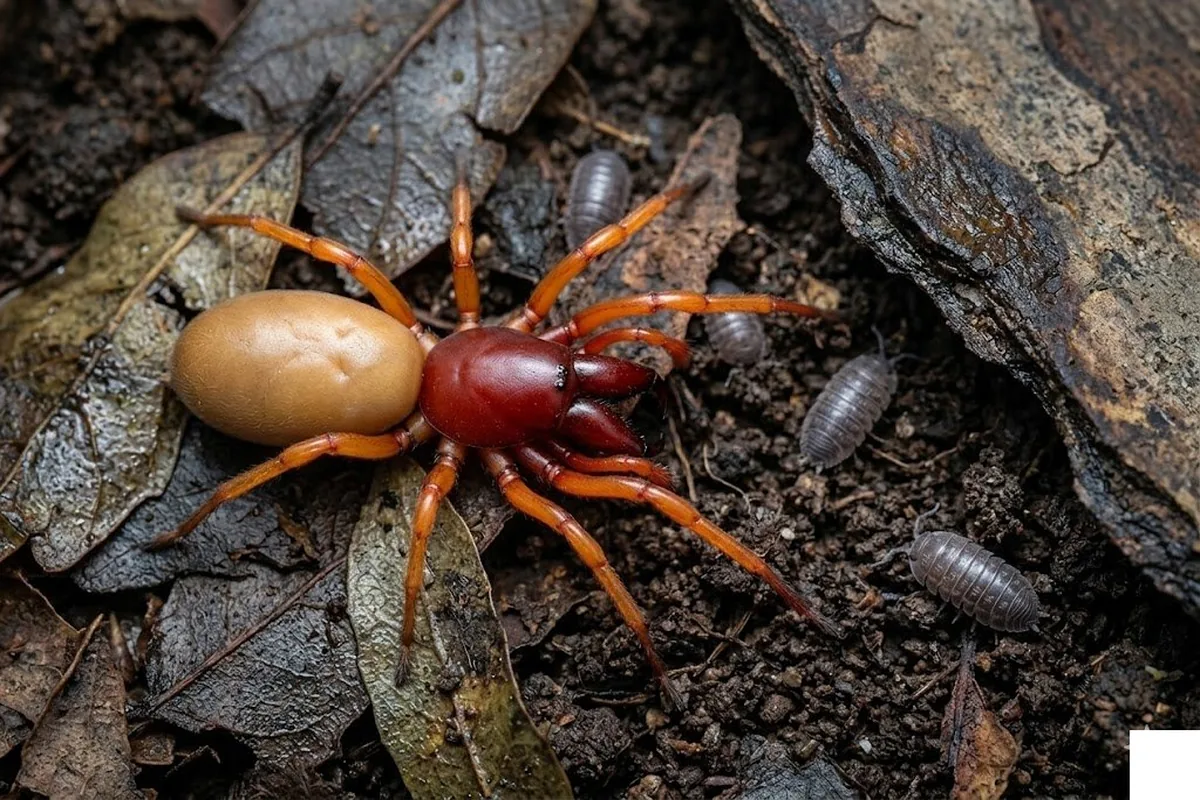
Found one under your patio in Collin County? Our office sits where McKinney, Plano, Frisco and Allen meet, 5 to 10 minutes from most homes in those four cities. Send us a photo or call, and we will tell you what the spider is.
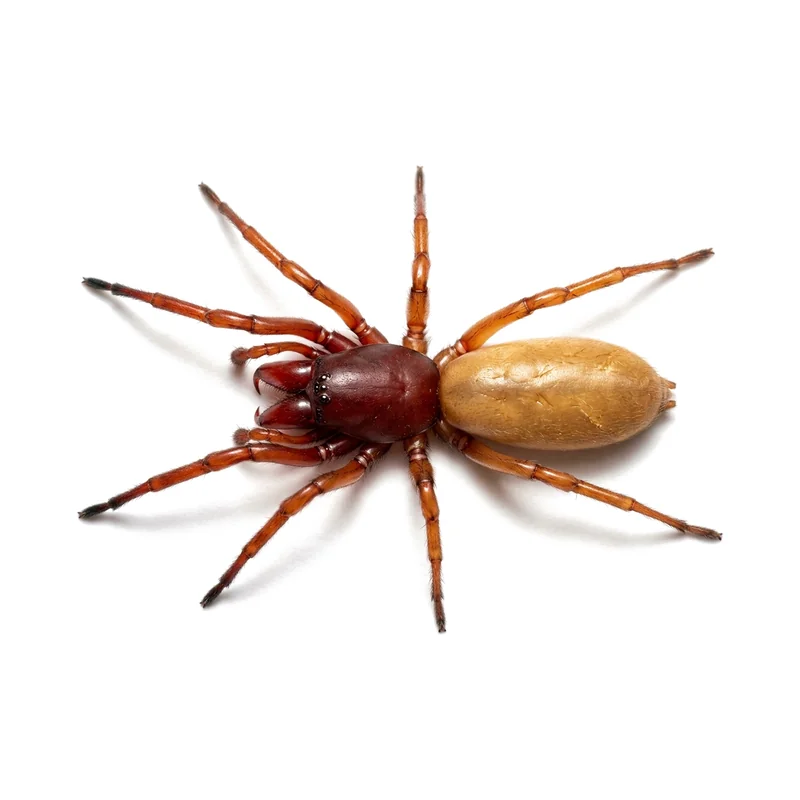
Woodlouse Spider
Woodlouse spider identification and facts confirm this species as one of the least medically dangerous spiders homeowners encounter despite its alarming appearance.
Risk Assessment
Choose a row for the full detail- Color
- Vivid reddish-orange cephalothorax and legs, pale cream to grayish-yellow abdomen
- Primary prey
- Pill bugs and sowbugs, plus silverfish, earwigs, small beetles, and crickets
- Threat level
- Low
- Eye arrangement
- Six eyes in a tight oval cluster, unlike the brown recluse’s three separated pairs
- Hunting style
- Nocturnal hunter with no prey-capture web and a silk tube retreat under hardscape
- Active season
- Year-round in Collin County, with peak call season in April-May and September-October
- Body length
- Female 0.43 to 0.59 in (11-15 mm), male 0.35 to 0.39 in (9-10 mm)
What a Woodlouse Spider Looks Like
The woodlouse spider (Dysdera crocata) is one of the most visually distinctive spiders in Collin County. The front body section and all eight legs are vivid reddish-orange and the abdomen is pale cream to beige, a two-tone pattern no other common Collin County spider has. Penn State Extension measures female woodlouse spiders at 11 to 15 mm and males at 9 to 10 mm, with very large fangs (Penn State Extension).
The fangs (chelicerae) are the second giveaway and the main source of alarm. They are oversized and point forward, clearly visible without magnification, and the spider spreads them when threatened. They are built for cracking the hard shell of pill bugs, not for threatening people.
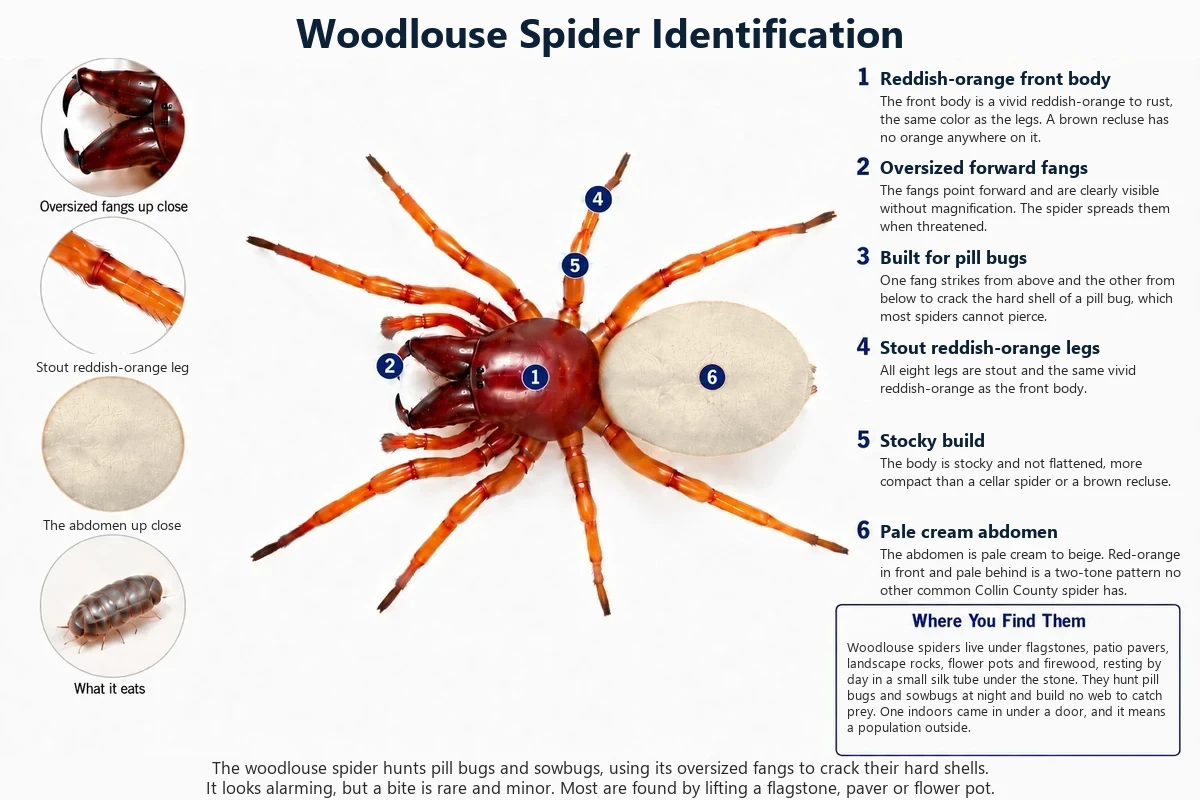
How to identify a woodlouse spider by its red-orange front, pale abdomen, large fangs and six eyes in an oval
- Vivid reddish-orange or rust-colored cephalothorax and legs with a pale cream to beige abdomen
- Oversized chelicerae (fangs) clearly visible from the front without magnification
- Six eyes in a tight compact oval cluster (brown recluse has six eyes in three separated pairs). A phone camera zoom usually shows the difference, so photograph the eyes when in doubt
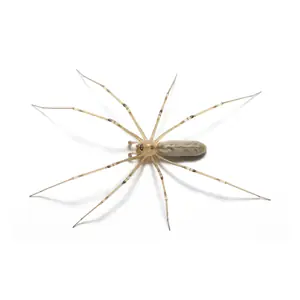
- Stocky, not-flattened body, more compact than a cellar spider or brown recluse
- Found by lifting flagstone, paver, or flower pot, not in webs on walls or in closets
- Small silken tube retreat in the gap under the stone, with no web around it
- Usually found near heavy pill bug populations in mulch beds and under pavers
Other Names for the Woodlouse Spider
Woodlouse is the British name for what most Americans call a pill bug or roly-poly, the armored crustacean that rolls into a ball in damp soil and mulch. The spider is named for that prey: one fang strikes from above and the other from below to crack a shell most spiders cannot pierce. Every name in the table means the same red-orange spider, Dysdera crocata, so if you searched for any of them, this is your spider.
Where Are Woodlouse Spiders Found?
Woodlouse spiders are found across most of the United States. Penn State Extension puts the North American range from New England to Georgia and west to California, and Texas sits well inside it. The species started around the Mediterranean and spread worldwide in the soil of potted plants.
It is not rare here. Any Collin County yard with flagstone, pavers and mulch beds full of pill bugs can carry it.
| Name | What it means |
|---|---|
| Woodlouse hunter | The most common name in extension guides, and the plainest description of how it lives. |
| Sowbug killer, or sowbug spider | The American version of the same idea, since most Americans say sowbug or pill bug rather than woodlouse. |
| Pill bug spider | The same idea again, named for the roly-poly. |
| Slater spider | Slater is the word for a woodlouse in Scotland, Ireland, Australia and New Zealand. |
| Wood house spider | Not a separate species, and also written woodhouse spider. It is how woodlouse spider often sounds when said aloud, and it points to the same spider. |
| Red spider with a white or tan body | Not a name, but the way most people describe it before they know one. The orange front and pale abdomen are the whole identification. |
How to Tell Woodlouse Spiders from Other Collin County Spiders
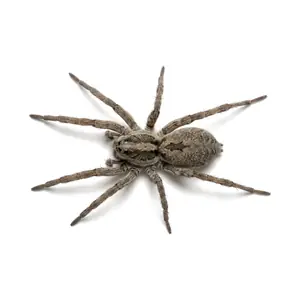
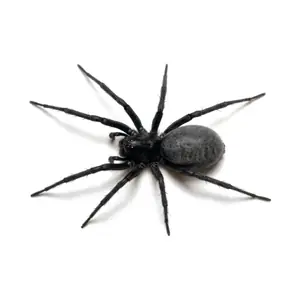
Its big fangs and its hiding place under stones get the woodlouse spider mistaken for a brown recluse. Color settles it in good light, but the shade under a paver can hide the color, so the table compares it with the three spiders it is most often confused with.
| Species | Size | Key Feature | Where Found |
|---|---|---|---|
|
Woodlouse Spider
AKA: Woodlouse Hunter, Pill Bug Spider
Dysdera crocata
This species
|
0.43 to 0.59 in body (female), stocky, not flattened. Legs are stout and reddish-orange matching the cephalothorax. | Vivid reddish-orange cephalothorax and legs. Pale cream to beige abdomen. Oversized chelicerae projecting forward, visible without magnification. Six eyes in tight oval cluster. No prey-capture web. Found under hardscape, not in corners or indoor storage. | Under flagstones, patio pavers, landscape rocks, potted plant saucers, mulch beds. Outdoor species. Rarely indoors except as a wanderer through garage or patio doors. |
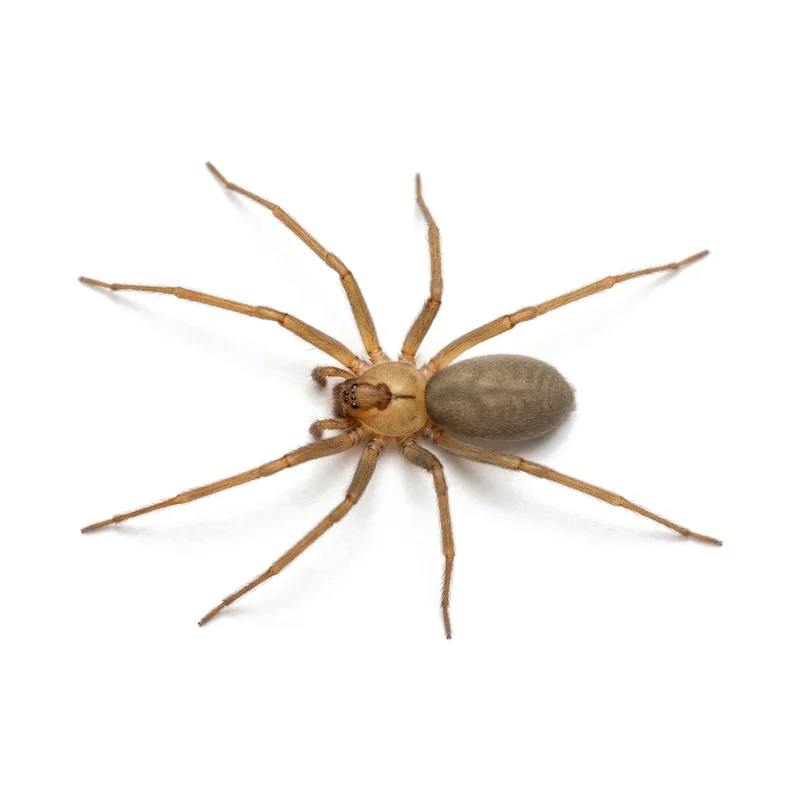
Brown Recluse
AKA: Violin Spider, Fiddleback
Loxosceles reclusa
|
0.25 to 0.5 in body, leg span 1 to 1.5 in. Slender, lightly built, flat-bodied. Uniformly matte tan to medium brown, with no reddish or orange coloration anywhere. | Uniformly matte tan to brown body throughout. No reddish-orange coloration. Six eyes in three distinct separated pairs in a semicircle (not an oval cluster). Violin-shaped marking on cephalothorax. Standard-sized chelicerae (not oversized). Medically significant. | Dark undisturbed indoor spaces: closets, stored boxes, rarely-moved furniture, garage shelving. Not under flagstones or in mulch beds outdoors. |
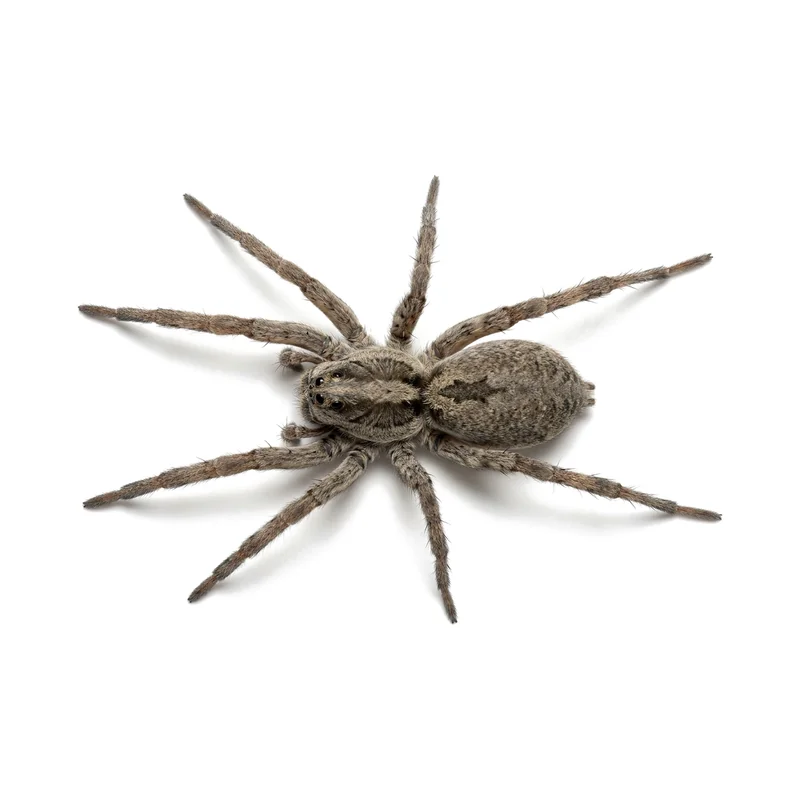
Wolf Spider
AKA: Hairy Spider, Ground Spider
Hogna carolinensis, Rabidosa spp.
|
0.5 to 1.5 in body, leg span up to 4 in. Much larger than woodlouse spider. Brown or gray with mottled or striped markings and no reddish-orange coloration. | Brown or gray mottled body. Eight eyes in three rows including a prominent large central pair. No oversized chelicerae. Moves quickly across open surfaces. Does not rest inside a silk tube retreat under stones. | Open garage floors, foundation entry points. Ground hunter active at night across open surfaces. Does not build silk tube retreats in hardscape gaps. |
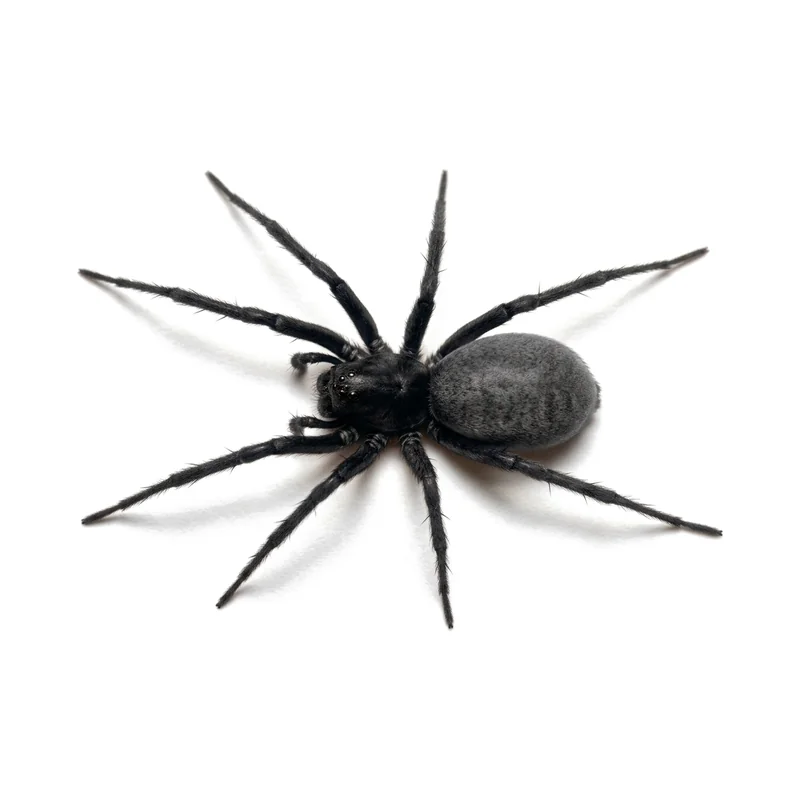
Southern House Spider (male)
AKA: Crevice Weaver
Kukulcania hibernalis
|
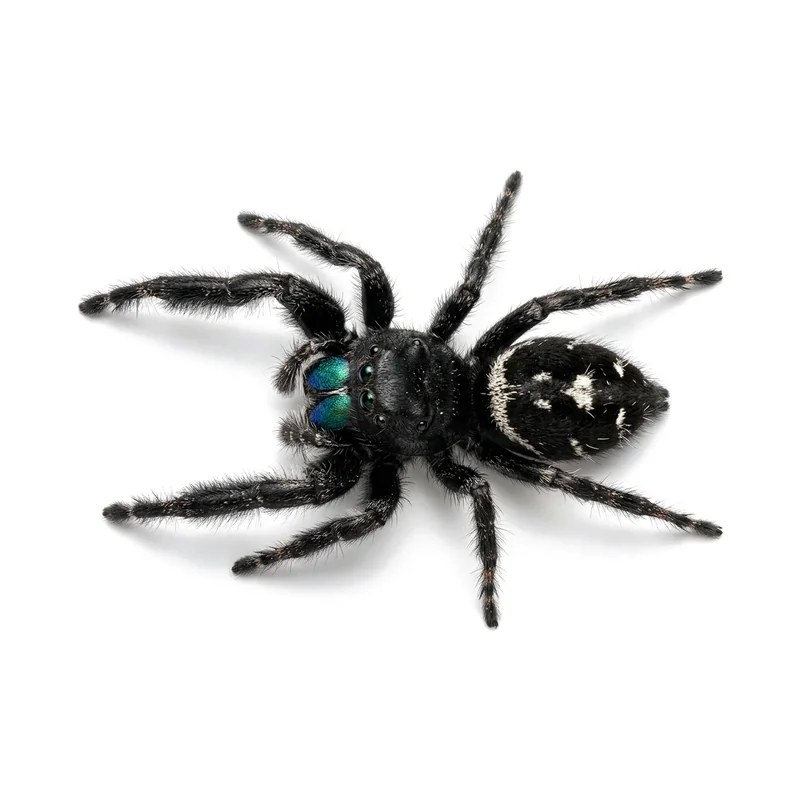
Male 0.4 to 0.5 in body. Dark brown to nearly black. No reddish-orange coloration. Long forward-projecting pedipalps often mistaken for oversized fangs. | Dark brown to nearly black body (male). Very long forward-projecting pedipalps, not oversized chelicerae. Eight eyes. No reddish coloration. Builds distinctive woolly, cotton-candy web in window frame corners and eave crevices. | Window frame corners, garage door frames, exterior eave crevices. Associated with a woolly web. Found on structures, not under patio pavers or in mulch beds. |
Woodlouse Spider vs Brown Recluse
The Woodlouse Spider in Three Numbers
16
Vetter and Isbister reviewed 16 verified woodlouse spider bites in the journal Toxicon in 2006, and none caused tissue damage or illness.
Vetter and Isbister, Toxicon, 2006
1 hour
Across those 16 bites, Vetter and Isbister found the pain of a woodlouse spider bite usually faded within 1 hour, mostly from the puncture itself.
Vetter and Isbister, Toxicon, 2006
9 to 15 mm
Penn State Extension measures female woodlouse spiders at 11 to 15 mm and males at 9 to 10 mm, with very large fangs.
Penn State Extension
Are Woodlouse Spiders Poisonous or Dangerous?
No. Woodlouse spiders are venomous, as nearly every spider is, but they are not dangerous to people. The venom is weak and the big fangs are built for pill bug shells. In a published study of 16 verified bites (Vetter and Isbister, Toxicon, 2006), none caused tissue damage or illness.
Eight of those bites were reported to the authors and eight came from earlier medical literature. In that study, the main symptom was pain from the puncture that faded within about an hour, sometimes with mild redness or swelling.
What Does a Woodlouse Spider Bite Feel Like?
A woodlouse spider bite feels like a sharp pinch, because the fangs are large enough to break skin. The pain usually fades within an hour. Wash the spot with soap and water and hold something cold on it if it is sore.
Call a doctor only if redness keeps spreading after the first day, which points to an infected scratch rather than to venom.
Bites occur only when the spider is physically pinned against skin, which happens when someone reaches blindly under a stone or presses a hand into mulch where the spider is resting. Wearing gloves when working in mulch beds or lifting pavers prevents the pinning scenario.
When Woodlouse Spider Presence Warrants Action
Large Population Under Patio Hardscape
Finding multiple woodlouse spiders under flagstones or pavers when doing seasonal landscaping work means the pill bug population under that hardscape is high. That pill bug population is what needs treating.
Single Spider Found Under One Paver
A single woodlouse spider under one flagstone, with no others found during inspection, is not a population problem. The spider is doing its job (eating pill bugs) and poses no risk. Replace the stone and leave it.
Why You Found a Woodlouse Spider in Your House
A woodlouse spider in the house is a wanderer from outside, not a sign of an indoor infestation. It lives under stones, pavers and mulch next to the foundation and hunts pill bugs at night. On warm nights it can walk in under a garage door, a worn door sweep or a gap beside a patio door. It cannot find enough prey indoors to settle or breed, so one inside means a population outside.
The fix is outside too. Move the spider out with a cup and a piece of card, then look at the beds and hardscape along that wall. Deep mulch, damp soil and a lot of pill bugs next to the house are what draw it in. Tighter door sweeps close the route it used.
Where Woodlouse Spiders Come From in Collin County
Woodlouse spiders are fundamentally outdoor spiders. Their shelter is under hardscape: flagstones, patio pavers, landscape rocks, potted plant saucers, firewood piles, and any structure that creates a dark, slightly moist space above soil. During the day the spider rests inside its silk tube retreat tucked into the gap between the underside of a stone and the soil. At night it emerges to hunt in the surrounding area, primarily targeting pill bugs and sowbugs in mulch beds and irrigated planting zones. It may travel several meters from its retreat in a single hunting session.
Woodlouse Spider Presence Across Collin County
Woodlouse spider pressure tracks closely with landscape investment and pill bug population. The highest-activity properties in Collin County are those with extensive flagstone or paver hardscape: McKinney neighborhoods like Stonebridge Ranch, Adriatica, and Tucker Hill with significant patio and walkway installations. Allen Twin Creeks properties with mature trees, shade, and established mulch beds create ideal pill bug habitat that supports woodlouse spider populations. Pool and patio homes with decorative rock features and stacked stone water features throughout Frisco and Plano provide shelter volume that sustains larger populations.
Newer construction in Celina and Prosper may see pressure building as mulch beds mature and pill bug populations develop with the landscape.
Woodlouse spiders are present year-round in Collin County but call volume peaks in spring (April-May) and fall (September-October) when homeowners are most active in their yards. The spider is not necessarily more active in those months: encounters spike because digging in mulch beds, lifting flagstones, and moving flower pots for seasonal plantings exposes the spider’s daytime retreat. Collin County mild winters allow woodlouse spiders to remain active at low levels through January and February, with activity increasing as soil temperatures rise through March.
Pattern from iNaturalist observation records since 2023 and Pest Me Off service call data since 2024, across Collin County.
Woodlouse Spider Biology Worth Knowing
How Pest Me Off Handles Woodlouse Spider
When we service a property with woodlouse spider activity, the treatment plan starts with the pill bug population, not the spider. We assess the mulch bed conditions, irrigation patterns, and hardscape volume before selecting products.
Confirm Species and Assess Shelter
Visually confirm the reddish-orange cephalothorax and pale abdomen. Look for the silken tube retreat under the flagstone where the spider was found. Assess pill bug population in surrounding mulch beds and under adjacent pavers.
Pill Bug and Sowbug Population Control
Apply dry bait and liquid products labeled for pill bugs and sowbugs to mulch beds, foundation edges, paver joints, and any other area with visible pill bug activity. This step directly reduces the prey base that sustains the woodlouse spider population.
Shelter Modification
Reduce unnecessary shelter: reduce mulch depth to two inches or less where possible, reset settled flagstones with crushed stone beneath rather than soil to eliminate the moist gap where retreats form, remove firewood piles from foundation contact, eliminate decorative stones not serving a structural purpose, and clear potted plant saucers that collect moisture. These changes make the area less hospitable to both pill bugs and woodlouse spiders without chemical application.
Perimeter Treatment at Paver Edges and Foundation
Apply liquid residual along the foundation line, paver and flagstone edges, patio perimeter, and landscape timber borders. Focus on the edges where hardscape meets soil, which is the travel corridor between retreats and hunting areas. Treat paver joints where accessible. For indoor wanderers, treat garage perimeter, slab expansion joints, and exterior door thresholds with residual product.
& Quick Fixes
How to Get Rid of Woodlouse Spiders Yourself
DIY management for woodlouse spiders is possible with the right sequence. Start with the pill bugs and the mulch they live in, then the stones the spider rests under.
Why Some DIY Responses Fail for Woodlouse Spiders
Most DIY attempts that fail make one of the three mistakes below. Each one goes after the spider and leaves the pill bugs and hiding places that keep bringing it back.
Surface Spray That Cannot Reach Under Hardscape
A surface spray applied to the top of paver edges does not penetrate into those gaps. Effective treatment targets the edges where pavers meet soil and the foundation line where the spider travels at night, not the stone surfaces themselves.
Treating for Brown Recluse Based on Misidentification
A homeowner who misidentifies a woodlouse spider as a brown recluse may apply indoor brown recluse treatments (sticky traps in closets, treatment behind furniture) in the wrong locations entirely. Treating the inside of the house for a spider that is living outside under the patio is an expensive misapplication that solves nothing.
Treating Once and Expecting Lasting Results
A single perimeter treatment in spring removes the spiders present that day. Properties with active mulch beds and continuous irrigation rebuild woodlouse spider activity within three to six weeks of a one-time spray. Two to three follow-up applications combined with pill bug control sustain results through the full active season.
Common Woodlouse Spider Questions
What is the red-orange spider with big fangs I found under my flagstone in McKinney?
Why is the woodlouse spider also called the woodlouse hunter?
Is the woodlouse spider a brown recluse?
Is the woodlouse spider dangerous to people, cats or dogs?
Why does the woodlouse spider have such large fangs?
Where do woodlouse spiders live in Collin County?
What is the small silk tube I found under my flagstone?
Are woodlouse spiders common in McKinney TX?
What do woodlouse spiders eat?
How is the woodlouse spider different from the southern house spider?
How big do woodlouse spiders get?
How long do woodlouse spiders live?
What does a woodlouse spider egg sac look like?
Should I worry if my child found a woodlouse spider?
How do I get rid of woodlouse spiders in my yard?
Red Spider Under Your Flagstone. Looks Scary. Not What You Think It Is.
We identify it in seconds and tell you what it actually is and what it actually takes to get rid of it. If it is a woodlouse spider, the pill bug problem in your mulch beds is what we address first. McKinney, Allen, Frisco, Plano, and all of Collin County.