
Field Crickets in Collin County, TX | Identification and Control
The field cricket is the shiny black cricket that chirps after dark and piles up at garage doors, storefronts and bright lights in late summer and fall. It does not bite or sting, and it cannot breed indoors. The University of Florida’s Featured Creatures profile gives the Texas field cricket 2 generations a year, and Texas A&M AgriLife’s Insects in the City blog says the second, bigger one is the generation that swarms the lights.
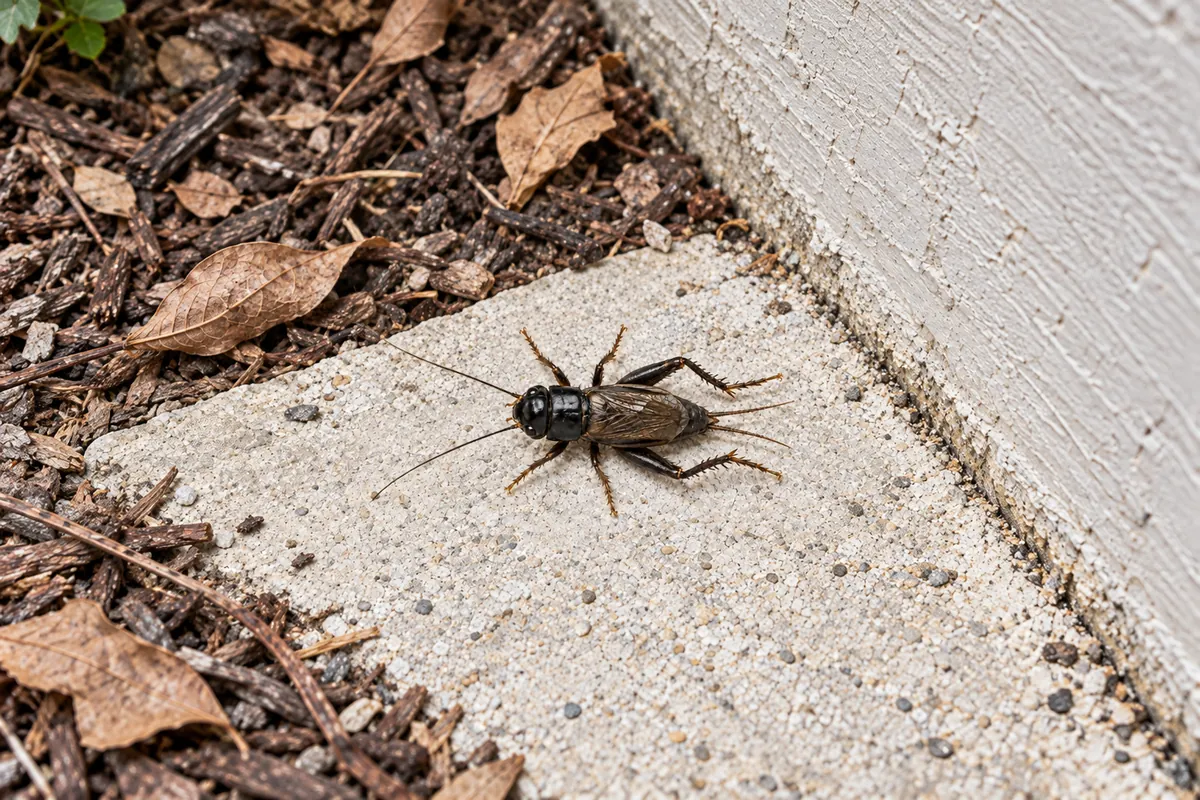
Black crickets piling up at the garage door? Our office sits where McKinney, Plano, Frisco and Allen meet, 5 to 10 minutes from most homes in those four cities. Call and we will treat where they gather and close the gaps they walk through.
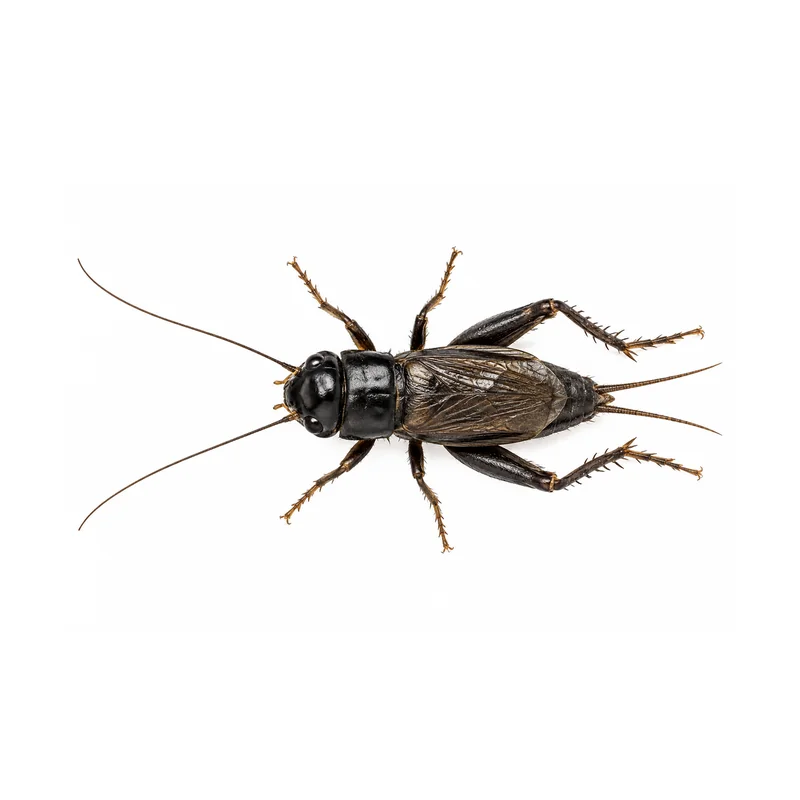
Field Cricket
The field cricket lives outdoors in lawns and beds, hides by day and comes out at night to feed. The Field Guide to Common Texas Insects from Texas A&M calls it more of a nuisance than a plant pest, one that prefers the outdoors but is drawn to lights in large numbers and invades homes.
Risk Assessment
Choose a row for the full detail- Color
- Shiny black to dark brown, with no stripes or bands
- Diet
- Plants, fruit, dead insects and other crickets
- Threat level
- Low
- Defining behavior
- Males chirp after dark, and crowds gather at bright lights
- Where it hides
- Lawns, beds, leaf piles, under trash cans and lumber
- Young to adult
- About 12 weeks, depending on temperature
- Size
- 1/2 to 1 1/4 inches long, with long thin antennae
What Does a Field Cricket Look Like?
A stout, shiny black cricket with long antennae, big jumping legs and wings folded flat on its back
A field cricket is stout and shiny, black to dark brown all over, with long thread-thin antennae, thick back legs built for jumping and wings that lie flat over its back. Texas A&M’s Field Guide to Common Texas Insects describes field crickets as dark brown to black and 9/16 to over 1 inch long, and the University of Maryland Extension puts them at 1/2 to 1 1/4 inches, about the same length as a camel cricket but built very differently.
Look at the tip of the body to tell male from female. Both have two short tail feelers there, and the female also carries a long, sword-like spike between them, which she uses to lay eggs in the soil. Only the males chirp. Young field crickets look like small adults without wings, so a mix of sizes in the same flower bed is normal. The University of Florida’s Texas field cricket profile shows adults in both long-winged and short-winged forms.
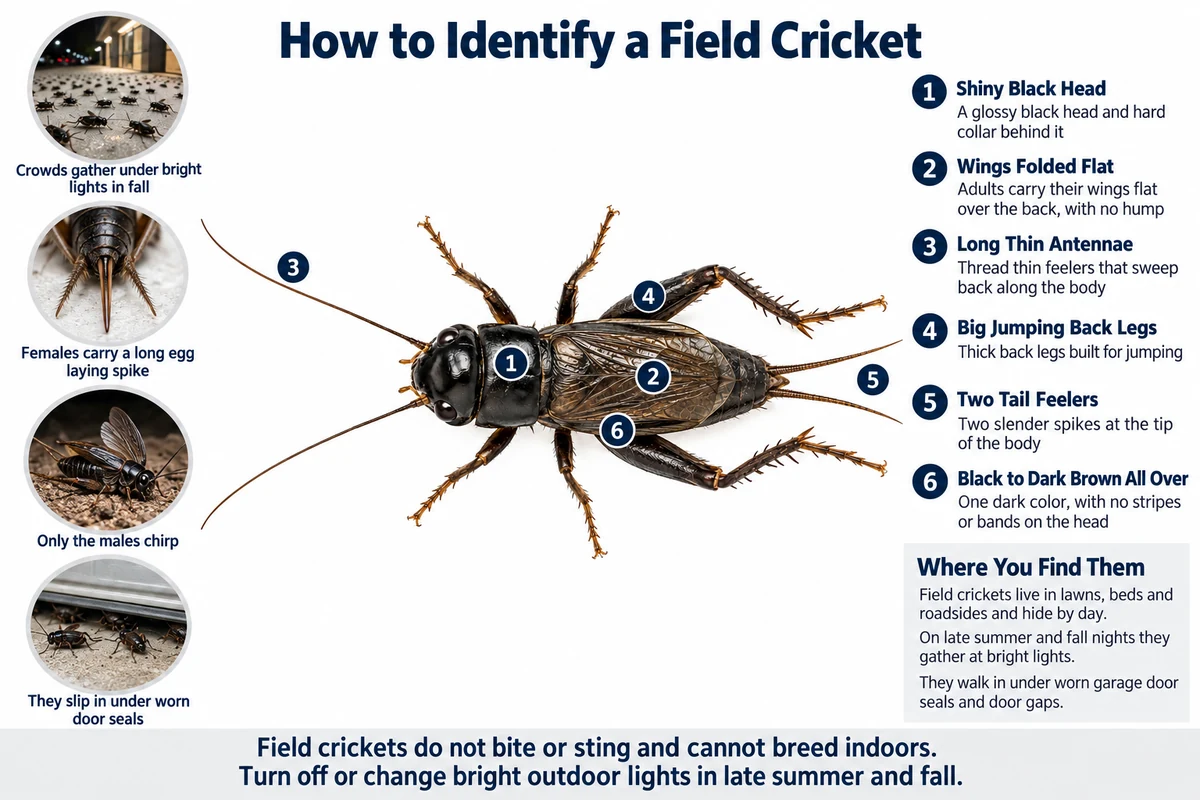
How to identify a field cricket by its shiny black body, flat folded wings and big back legs, with the places it gathers in fall
- Shiny black crickets gathered under porch lights, garage lights and lit storefronts after dark
- A loud chirp at night from the garage, a wall or behind furniture
- Wings folded flat on the back, and no hump
- Dead crickets along garage walls and door thresholds, with a bad smell when there are many
- Crickets hiding under trash cans, leaf piles and lumber beside the house
- Numbers jumping in late summer and fall, after the first cool fronts
Other Names for the Field Cricket
Field cricket is a name for a group of look-alike crickets in the genus Gryllus, Latin for cricket. The one that swarms around Texas homes is the Texas field cricket, Gryllus texensis, which the Louisiana State University AgCenter calls the Texas black field cricket. A second kind, the southeastern field cricket, looks the same, and the University of Florida’s profile says the two can be told apart only by the speed of the male’s song. Texas A&M AgriLife Extension’s Insects in the City blog notes that the Texas field cricket is the only one of them known to swarm in large numbers.
Most people simply call it a black cricket. It is not the house cricket, which the Texas A&M field guide describes as smaller, about 3/4 inch, and yellowish brown with three dark bands on the head, and it is not the humpbacked, wingless camel cricket that lives in damp garage corners.
| Name | What it means |
|---|---|
| Black cricket | The everyday name, after its shiny black body. |
| Texas field cricket | The kind that swarms the lights in Texas each fall. |
| Texas black field cricket | Louisiana State University’s name for it. |
| Southeastern field cricket | A twin species told apart only by its song. |
| Grillo | The Spanish word for a cricket. |
How to Tell a Field Cricket from a Camel Cricket or Oriental Cockroach
All three turn up on Collin County garage floors, and the right fix depends on which one it is. Field crickets walk in from the lawn toward the lights, camel crickets live in damp, dark corners, and an oriental cockroach comes up from cool, wet spots at the slab edge. Wings, a chirp and the back legs tell them apart.
| Species | Size and Color | Key Feature | Where Found |
|---|---|---|---|
|
Field Cricket
AKA: Black Cricket, Texas Field Cricket
Gryllus texensis
This species
|
1/2 to 1 1/4 inches long. Shiny black to dark brown and stout. | Wings folded flat on the back, big jumping back legs and two tail feelers. Males chirp after dark. | Lawns and beds by day, piling up at lit doors, garages and storefronts on fall nights. |
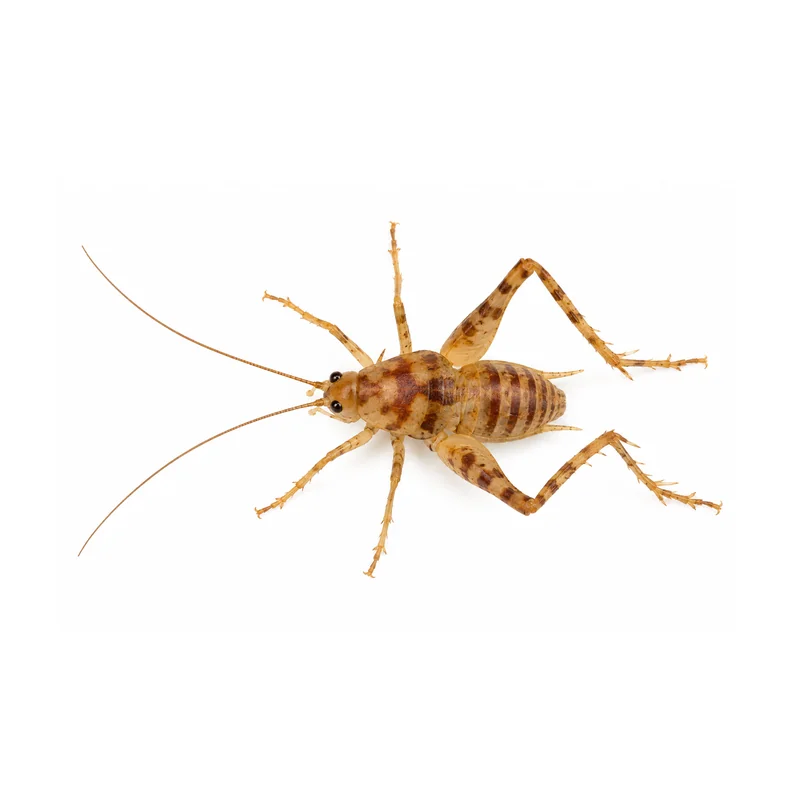
Camel Cricket
AKA: Spider Cricket, Cave Cricket
Ceuthophilus species
|
1/2 to 1 1/4 inches long. Light tan to dark brown, often mottled. | Humped back, no wings, very long antennae and back legs. Silent. | Damp, dark garage corners, laundry rooms, crawl spaces, under mulch and woodpiles. |
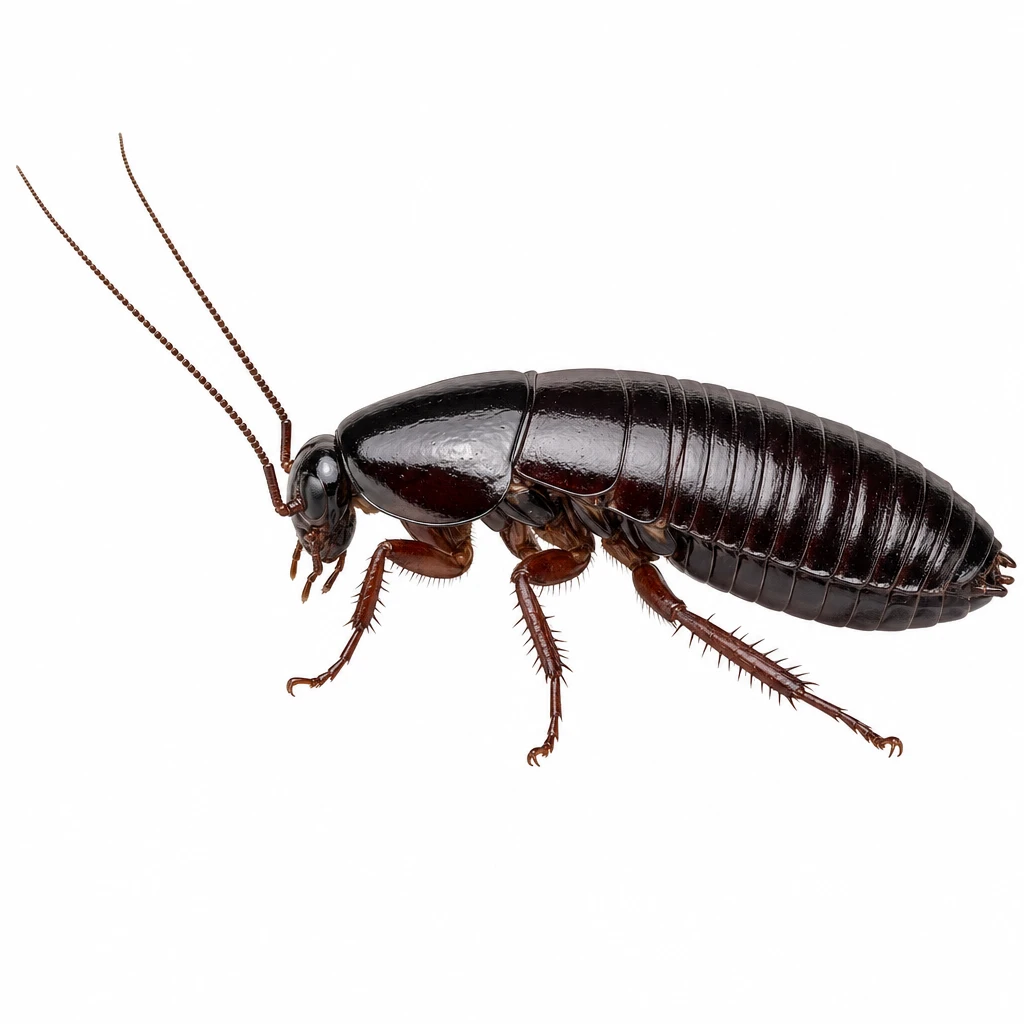
Oriental Cockroach
AKA: Water Bug, Black Beetle
Blatta orientalis
|
About 1 inch. Near-black with an oily sheen. | Flat oval body and no big jumping legs. Runs rather than leaps, never chirps, and smells musty. | Garage floors, utility rooms, floor drains and the slab edge where it stays cool and damp. |
Field Cricket vs Camel Cricket
The Field Cricket in Three Numbers
18 inches
The University of Maryland Extension advises trimming back ground cover growing within 18 inches of a house, so field crickets have less cover right beside the foundation.
University of Maryland Extension
2 generations
The University of Florida’s Featured Creatures profile gives the Texas field cricket 2 generations a year, with the late summer and fall adults producing the young that become adults the next spring.
University of Florida, Featured Creatures
12 weeks
Texas A&M’s Field Guide to Common Texas Insects says young field crickets grow into adults in about 12 weeks, depending on the temperature.
Texas A&M, Field Guide to Common Texas Insects
Do Field Crickets Bite?
No. In a 2024 Texas A&M AgriLife article on fall cricket swarms, an extension entomologist says the crickets do not sting or bite and are doing nothing other than being annoying, especially when a male gets into the house and chirps to attract females. They carry no venom, and brushing one off your arm does no harm. If you are sweeping up a pile of dead ones, wear gloves and wash your hands afterward, as you would for any dirt.
Are Field Crickets Dangerous to Pets?
The crickets themselves are not, since there is no bite or sting for a dog or cat to suffer, and pets often chase them. The bigger risk to a pet is the product used against them. Any spray or bait goes only where the label allows, and pets stay away until it has dried, as the label directs.
Why Do Crickets Chirp at Night?
It is the males calling. The University of Maryland Extension explains that a male makes the sound by rubbing a sharp edge at the base of one front wing along a ridge under the other, that he sings a call song to attract females, a warning song to other males and a courtship song, and that crickets hear through eardrums on their front legs. The warmer the night, the faster they sing.
When Field Cricket Activity Needs Action
Piles at a Door
Dead crickets heaped at a garage door or shop entrance soon smell. Sweep or vacuum them up and look at the lights above.
Chirping Every Night
A cricket singing indoors means a gap under a door or around a frame is open. Catch it, then find and close the gap.
Chewed Fabric or Carpet
Nibbled holes in stored clothes, rugs or linens mean dozens have been living inside. Bag what you can and clear the clutter.
A Few at the Porch Light
A handful under the light on a warm fall night is normal. Switch to a yellow bulb or turn the light off and watch the numbers drop.
Why You Have Field Crickets in Your House
Light and cooler nights bring them. The Texas A&M AgriLife article explains that field crickets hatch in early spring, keep a low profile through the summer heat, and become far more active when the first cool fronts arrive in late summer and early fall. Buildings with bright lights left on from dusk to dawn then pull them in, and Texas A&M says they gather at the front doors of businesses, gas stations and car dealerships for the same reason. Around a home, it is usually the porch, garage or flood lights.
From the light they walk inside under a worn garage door seal or a loose door threshold, and the Louisiana State University AgCenter notes that even in quiet years some get into buildings around brightly lit entrances. They do not move in for good. The same page says field crickets will not infest or breed inside a home, because they need humidity, outdoor food and moist soil to lay eggs in. It is not a sign of a dirty home.
Where Are Field Crickets Found?
The University of Florida’s profile places the Texas field cricket in lawns, pastures and roadsides, from western Texas east to western Florida. By day they hide in cracks, under leaf piles, bricks, lumber and firewood, and the University of Maryland Extension notes they often gather under garbage cans in great numbers. Indoors they are usually found on the lowest floor. The Texas A&M field guide says they can damage natural and synthetic fabrics, furs and carpet, though Maryland adds that unless dozens are inside, the damage usually goes unnoticed.
Field Cricket Pressure Across Collin County
Cricket calls in our service notes come most often from McKinney, Frisco, Allen and Princeton, and they climb from late summer to a peak in September and October. We also find them inside warehouses, shops, offices and food businesses in McKinney, Allen, Plano and Frisco each fall, the lit business buildings Texas A&M and Louisiana State University describe.
Homes in Melissa, Anna and Celina turn up in our cricket notes too, mostly in fall. Anywhere in the county, a garage left open with the light on after dark invites them in.
Field crickets hatch in spring and stay out of sight through the summer heat. The first cool fronts of late summer set them moving, and they gather at lights and garage doors through September and October before the cold ends the season.
Pattern from published field cricket biology (Texas A&M AgriLife and Louisiana State University) and Pest Me Off cricket calls, which climb from late summer and peak in September and October.
Why Field Crickets Keep Coming Back
How Pest Me Off Gets Rid of Field Crickets
Field cricket control is four steps, every job. Sweeping up the crickets in the garage is only part of the fix, because the open gaps and the bright lights bring in the next ones.
Inspect and Identify
A free inspection of the garage, doors, foundation and beds. We confirm it is a field cricket and not a camel cricket, and find where they gather and how they get in.
Treat Where They Gather
A treatment along the foundation, the edges of the mulch beds and the spots where crickets bunch up outside, with bait granules worked into the beds where a liquid cannot reach.
Seal the Way In
We seal and treat the gaps they use on a slab home, the garage door sweep gap, the brick weep holes, the slab expansion joints and the door thresholds.
Cut the Pull of the Lights
We point out the bright outdoor lights drawing crickets to your walls after dark. Switched to warm or motion-activated bulbs, they stop pulling in the nightly crowd.
& Other Companies
How to Get Rid of Field Crickets Yourself
Most DIY field cricket work is the lights and the gaps. The University of Maryland Extension puts tight doors, cleanup and fewer outdoor lights ahead of any spray.
Why Some DIY Responses Fail for Field Crickets
Most DIY field cricket trouble comes from treating them like an indoor pest, leaving the lights blazing, or letting the dead ones pile up by the door.
Spraying Inside the House
Field crickets do not breed indoors, so an indoor spray only kills the ones already inside. The next wave walks in under the same door.
Lights On All Night
A bright flood light over the garage door draws crickets from across the yard every warm night, however much you spray below it.
Leaving the Dead Ones
Texas A&M AgriLife calls a pile of dead crickets a stinky mess, and live crickets feed on the dead. Sweep or vacuum them up each morning.
Common Field Cricket Questions
What is a field cricket?
Do field crickets bite or sting?
Are field crickets dangerous to dogs and cats?
Why are there so many crickets in the fall?
Why do crickets gather at my garage door and porch light?
How long does cricket season last?
How do I find a cricket chirping in my house?
What is the difference between a field cricket and a camel cricket?
Can field crickets live and breed in my house?
Do field crickets damage anything?
Can you tell the temperature from a cricket’s chirps?
How do I get rid of field crickets?
Crickets Piling Up at the Garage Door? We Treat Where They Gather and Shut Them Out.
We confirm it is a field cricket, treat the foundation and beds where they gather, seal the garage door gap and weep holes they walk through, and point out the lights pulling them in. Cricket control across McKinney, Allen, Frisco, Plano, and all of Collin County.