Bald-Faced Hornets in Collin County, TX | Identification and Nest Removal
The bald-faced hornet (Dolichovespula maculata), also called the white-faced hornet, is the black and white wasp that builds the largest wasp nest in Collin County. The nest is a gray paper ball hanging in a tree or shrub, and by late summer it can reach 24 inches tall. The colony is one of the most defensive here, and Iowa State University Extension and Outreach says the hornets will usually attack anyone who comes within 3 feet of the nest. A nest near people is a job for after dark, and one far from people can wait for winter.
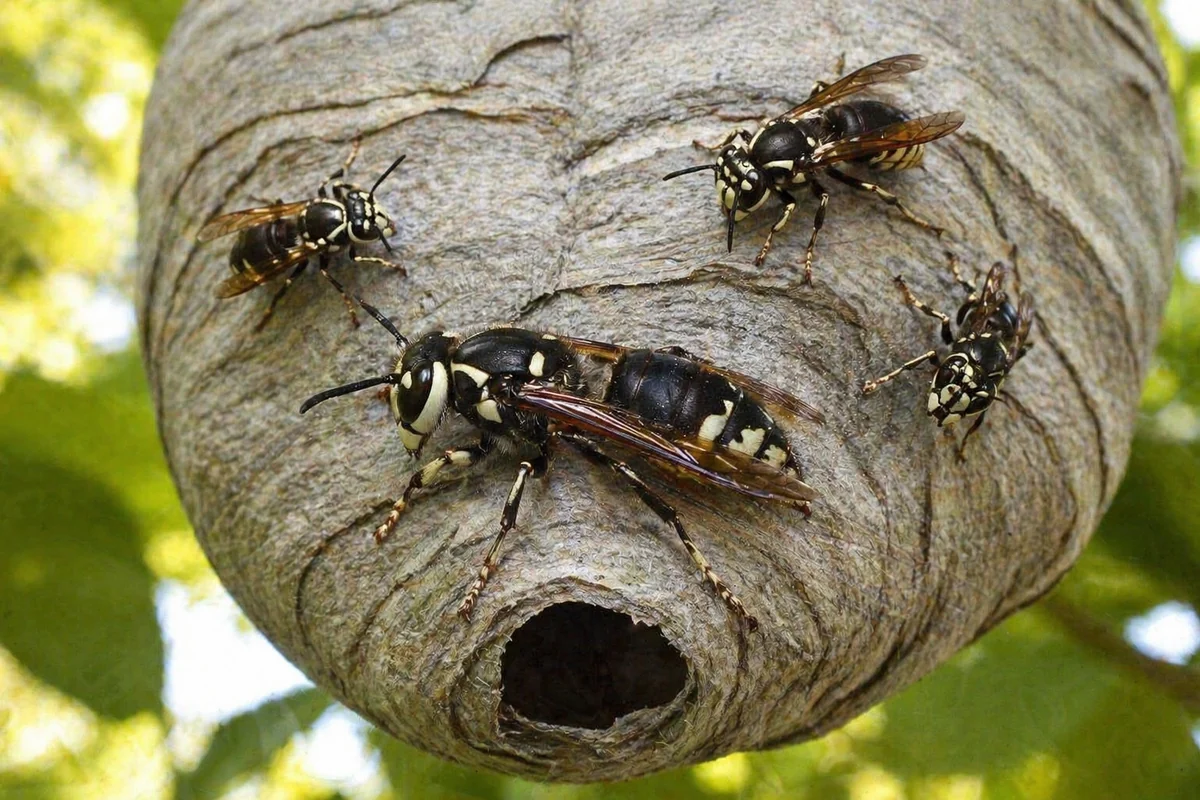
Found a gray paper nest in a tree in Collin County? Our office sits where McKinney, Plano, Frisco and Allen meet, 5 to 10 minutes from most homes in those four cities. Send us a photo or call, and we will tell you what it is and whether it can wait for winter.
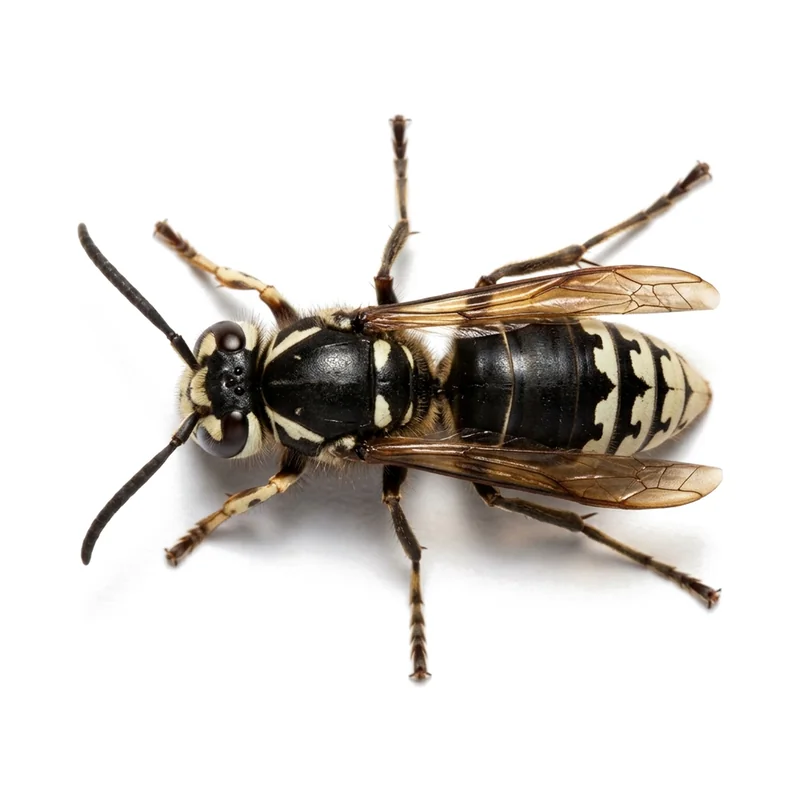
Bald-Faced Hornet
Penn State Extension’s baldfaced hornet fact sheet is the reference this page uses for colony size and treatment timing.
Risk Assessment
Choose a row for the full detail- Color
- Black with white markings on the face, the upper body and the tip of the abdomen
- Colony size
- 100 to 400 workers at peak
- Can sting
- Yes, many times, and it can spray venom toward the eyes
- Threat level
- Moderate
- Nest
- Large enclosed gray paper ball with one entry hole at the bottom
- Active season
- Queens emerge in April and May, colonies last until November, peak in August and September
- Body length
- 15 to 20 mm, about 3/4 in
What a Bald-Faced Hornet Looks Like
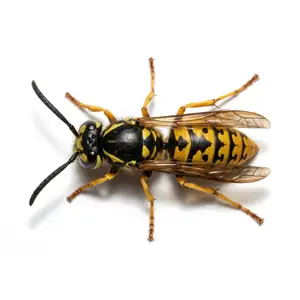
Bald-faced hornets are black with bold white or ivory markings on the face, the upper body and the tip of the abdomen. Workers measure 15 to 20 mm, about 3/4 inch, and look heavier in flight than a paper wasp of the same length, with no legs dangling below.
The nest is the surest sign. It is an enclosed gray ball of chewed wood fiber mixed with saliva, holding 2 to 4 flat combs inside, with one round entry hole at the bottom. It grows from walnut size in May to football size by July, and Penn State Extension says it can reach up to 24 inches in height and 18 inches across.
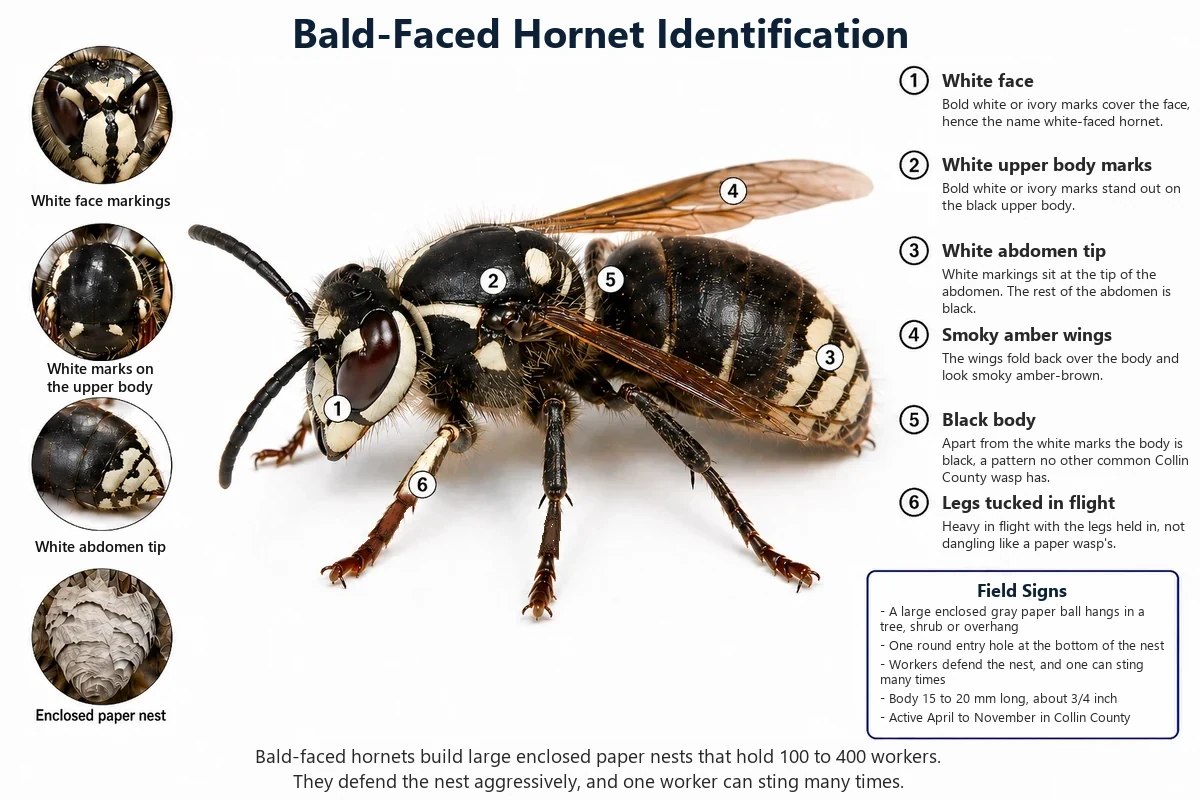
How to identify a bald-faced hornet by its white face, black body and enclosed gray paper nest
- Black body with white markings on the face, upper body and abdomen tip, a pattern no other common Collin County wasp has
- A large, gray, enclosed paper ball hanging in a tree, a large shrub or from an overhang
- One round entry hole at the bottom of the nest, with workers flying in and out fast and straight
- A nest that grows month by month, from walnut size in May to basketball size or larger by August
- A heavy build in flight with the legs tucked in, unlike the dangling legs of a paper wasp
- Workers hunting flies and other insects around the nest and the yard
Other Names for the Bald-Faced Hornet
Every name in the table means the same black and white insect, so if you searched for any of them, this is your hornet. Despite the name, it is not a true hornet. True hornets belong to the genus Vespa, and bald-faced hornets belong to the genus Dolichovespula, a separate branch of the wasp family from the ground-nesting yellowjackets.
Bald-Faced Hornet vs White-Faced Hornet
There is no difference. White-faced hornet is another name for the bald-faced hornet, given for the same white face, and many Collin County homeowners use it.
Where Are Bald-Faced Hornets Found?
Bald-faced hornets live in Texas, and Collin County properties with mature trees see new nests every summer. They live above ground, never in it. The nest hangs in a tree, a large shrub or from an overhang on a house, so a wasp going in and out of a hole in the lawn is a yellowjacket, not a bald-faced hornet.
| Name | What it means |
|---|---|
| White-faced hornet | The most descriptive name. The white face is the one feature that sets it apart from every other social wasp here at a glance. |
| Bald hornet | A shortened form of bald-faced hornet. |
| Baldface or baldfaced hornet | The same name run together, the way it is often typed. |
| Bull wasp | Another name you may hear for the same insect. |
| Black and white wasp or hornet | Not a name, but how most people describe it before they know one. Also searched as white wasp or white hornet. |
| Black-faced hornet | A mix-up of the name. The face is white, not black, but the search points to the same insect. |
How to Tell a Bald-Faced Hornet from Similar Wasps
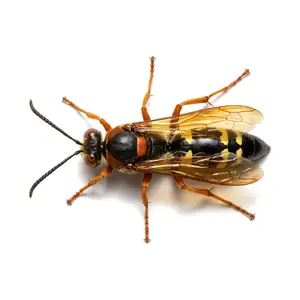
The enclosed gray paper ball is the definitive feature. No other common Collin County wasp builds an enclosed nest in trees, so a gray paper ball hanging in a tree or shrub is a bald-faced hornet nest until an inspection proves otherwise. The table compares it with the three wasps it is most often mistaken for.
| Species | Size | Key Feature | Nesting Habit |
|---|---|---|---|
|
Bald-Faced Hornet
AKA: White-Faced Hornet
Dolichovespula maculata
This species
|
15 to 20 mm. Heavily built, larger and heavier than a yellowjacket. Black body with white markings on the face, upper body and abdomen tip. | White markings on an otherwise black body, a pattern no other common Collin County wasp shares. The most defensive social wasp in the area, and it can spray venom toward an intruder’s eyes. | Enclosed gray paper ball or football shape hanging in a tree, a large shrub or from an overhang, with one entry hole at the bottom. Never in the ground. Never an open comb. |
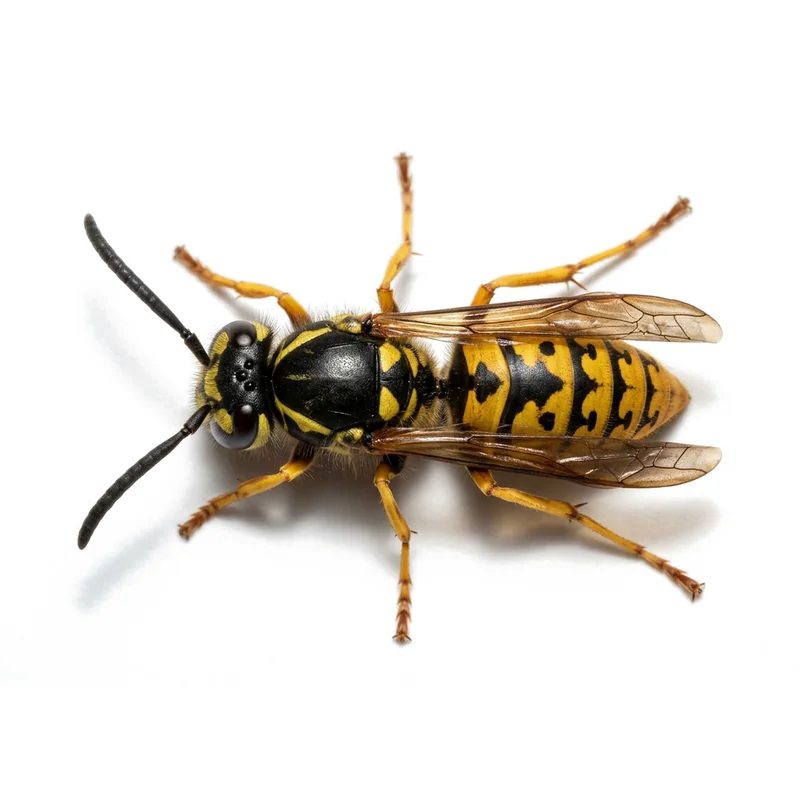
Yellowjacket
AKA: Ground Hornet, Ground Wasp
Vespula species
|
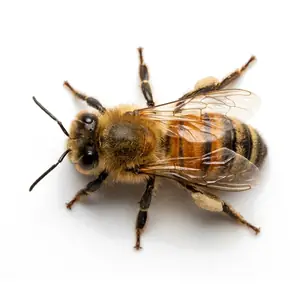
10 to 16 mm. Stocky and compact. Bright yellow and black bands. Legs held close to the body in flight. | Yellow and black pattern, brighter and sharper than any bald-faced hornet. No white face. No nest on view, only an entry hole or crack, so the colony is far more hidden. | Most Collin County colonies nest underground or inside wall voids reached through a crack, weep hole or expansion joint. A ground hole with fast in-and-out traffic is the sign. Never an enclosed nest in a tree. |
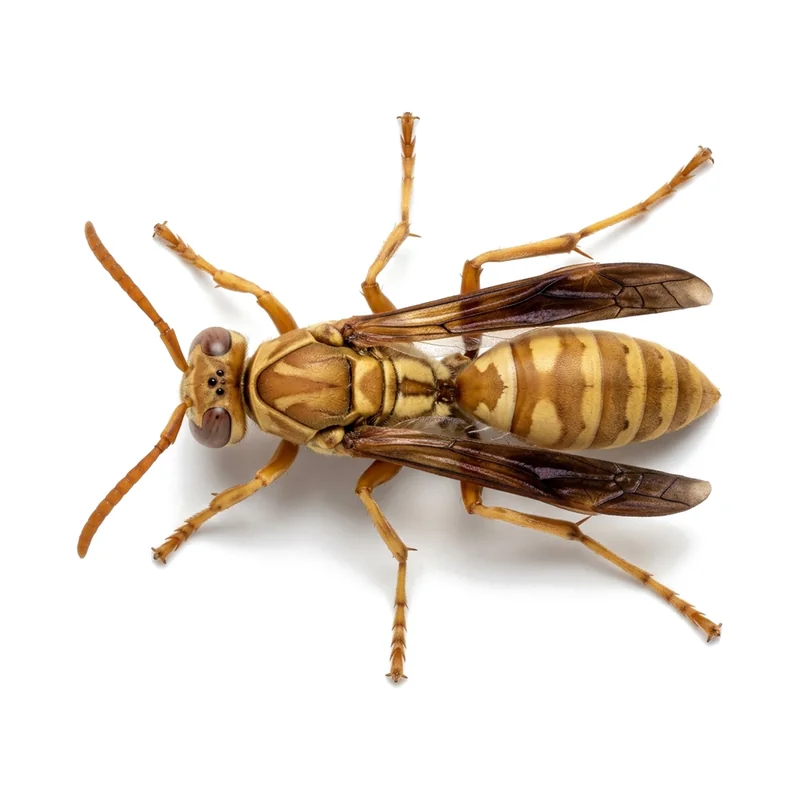
Paper Wasp
AKA: Umbrella Wasp, Red Wasp
Polistes species
|
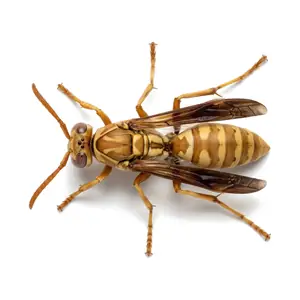
16 to 25 mm. Slender with a very narrow waist. Brownish-orange to reddish-brown. Long hind legs dangle below the body in flight. | Open umbrella-shaped comb with its six-sided cells in plain view, hanging from one stalk and never enclosed. Less defensive than a bald-faced hornet colony. | Exposed, sheltered surfaces such as eaves, porch ceilings, door frames and window frames. If you can see open cells, it is a paper wasp nest, not a bald-faced hornet nest. |
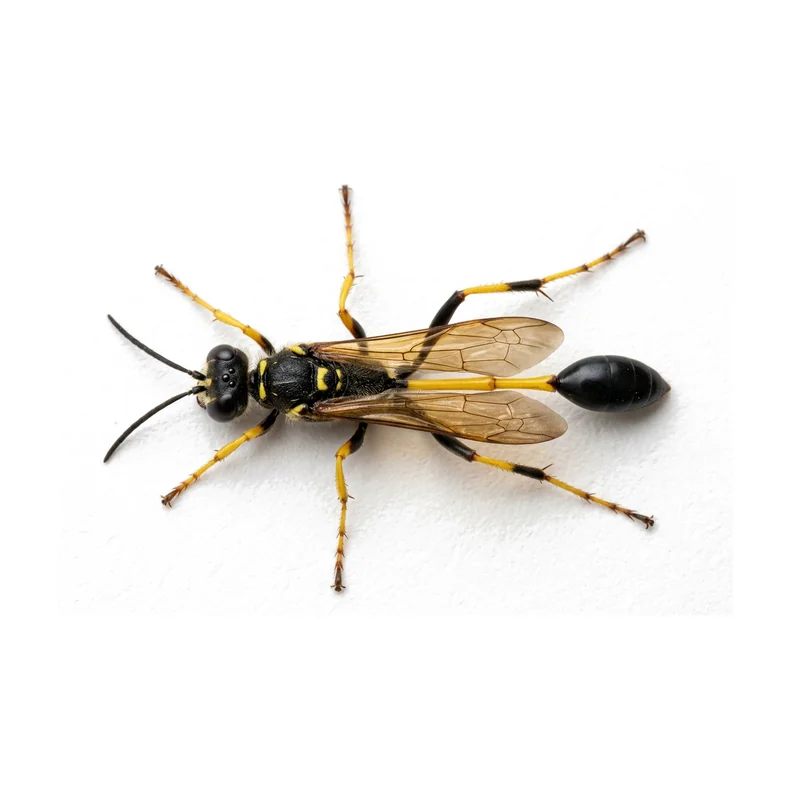
Mud Dauber
AKA: Dirt Dauber, Mud Wasp
Sceliphron species
|
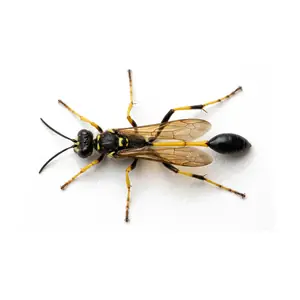
25 to 35 mm. Very long and slender with a thread-thin waist. Mostly black or shiny blue-black. Longer than a bald-faced hornet but far slimmer. | Solitary, with no colony and no nest defense. Will not sting unless handled. Builds mud tubes, never a paper nest. | Mud tubes on protected surfaces such as garage walls, porch ceilings, attic beams and outside walls. Each cell holds a paralyzed spider as food for one young wasp. |
Bald-Faced Hornet vs Yellowjacket
The Bald-Faced Hornet in Three Numbers
100 to 400
Penn State Extension puts a mature bald-faced hornet colony at one queen and 100 to 400 workers, and in Collin County a colony reaches that size in August and September.
Texas A&M AgriLife Extension
3 feet
Iowa State University Extension and Outreach says bald-faced hornets will usually attack anyone who comes within 3 feet of their nest.
Iowa State University Extension and Outreach
3/4 inch
Texas A&M AgriLife Extension says bald-faced hornets are large, about 3/4 inch long, and black with white markings.
Texas A&M AgriLife Extension
Are Bald-Faced Hornets Dangerous or Aggressive?
Yes, near the nest. Away from it they hunt insects and ignore people, but Iowa State University Extension and Outreach notes that hornets are very protective of their colony and will usually attack anyone who comes within 3 feet of the nest.
Once the colony is disturbed, workers keep after a threat well beyond the nest, much farther than paper wasps. Most stings happen by accident, during yard work, tree trimming or children playing near a tree that hides a nest in late summer.
If you disturb a nest, run in a straight line to a car or a building and do not swat, because swatting draws more workers.
Bald-Faced Hornet Sting Symptoms and What to Expect
A bald-faced hornet sting brings intense pain, burning and swelling, usually worse than a paper wasp sting in the same spot. The stinger is smooth and reusable, so one worker can sting many times, and a disturbed colony joins in fast. Several stings within seconds of the first are the norm, not the exception.
The serious risk is anaphylaxis in people with a known or undiagnosed wasp and hornet venom allergy. Anyone who has had a whole-body reaction to a wasp or bee sting should carry an epinephrine auto-injector and leave any bald-faced hornet nest near people to a professional. Purdue Extension guidance on venom allergy covers how sensitive people are assessed. A mass attack from a full colony can make even a person with no allergy seriously ill, because the risk from many stings at once does not depend on a past reaction.
Call 911 or go to an emergency room right away if a sting is followed by difficulty breathing, wheezing or throat tightening. University of Florida guidance on sting response names these as the main signs of anaphylaxis. Hives or flushing that spread beyond the sting, dizziness or a racing pulse also need emergency care, as do multiple stings on a child, an elderly person or anyone with a past sting reaction. Anyone with a known venom allergy should get checked after even one sting, without waiting for symptoms. These signs do not clear up on their own.
Can Bald-Faced Hornets Spray Venom?
Yes. Bald-faced hornets have been documented squirting venom toward the eyes of a threat during a defensive attack, which is unusual among North American wasps. It raises the risk of serious injury when a nest is disturbed by accident, and it is why eye protection is part of every professional treatment.
When a Bald-Faced Hornet Nest Warrants Action
Nest Within 15 to 20 Feet of People
A nest within 15 to 20 feet of a driveway, patio, play area or path should be treated before the August peak. The colony only grows larger and more defensive through summer, so waiting gains nothing.
Nest High in a Tree Away From Traffic
A nest high in a large tree, well away from where people walk, sit or play, and in a tree nobody will trim, can be left alone. The colony dies with the first hard freeze and never comes back to that nest.
Where Bald-Faced Hornets Nest Around Your Home
Bald-faced hornets hang their nests in trees, large shrubs and under structural overhangs, usually inside the leaf canopy where the nest stays hidden through early summer. The one property concern is the branch it hangs from. A basketball-sized nest can weigh several pounds, and on a branch that is already stressed, the extra weight and the wind can affect it. That matters little on a healthy tree but can on a thin ornamental one. An empty nest left through winter breaks down on its own.
Bald-Faced Hornet Presence Across Collin County
Bald-faced hornet activity follows the tree canopy. Properties with mature live oaks, pecans, Bradford pears and cedar elms see nests year after year in the same general area, and the older and fuller the canopy, the more places a queen has to start one. The pattern holds in McKinney, Allen, Frisco and Plano alike.
A property that had a nest one year is the one to check first the next May, because a new queen often picks the same tree.
Queens come out in April and May and start new nests. The colony builds through summer, and its defense peaks in August and September at full size. It dies with the first hard freeze, usually in November, and the empty nest can stay visible after the leaves drop.
Bald-Faced Hornet Colony Cycle
How Pest Me Off Treats Bald-Faced Hornets
We treat bald-faced hornets at night, with a different timing, angle and distance from paper wasp work. Iowa State University Extension advises treating a colony at night, when the workers are least active and most of them are at the nest, because approaching an active colony in daylight puts the applicator inside the defense zone before any product goes in.
Daylight Assessment from a Safe Distance
We find the nest in daylight from outside the defense zone, mark the entry hole at the bottom, and plan an angle that gets product into the hole from as far away as possible, out of the path of falling workers. Where a ladder would be needed, we use long-reach equipment instead.
After-Dark Application into the Entry Hole
We treat after dark, when the whole colony is inside and slowed down, using red-filtered light only, because bald-faced hornets are drawn to white light. A labeled wasp and hornet spray with a 15 to 20 foot range goes straight into the bottom entry hole for 10 to 15 seconds, from the side and slightly below, never directly underneath.
24 to 48 Hour Confirmation Window
We check worker traffic from a safe distance 24 to 48 hours later. A treated colony shows little or no traffic at the entry hole by 24 hours. If traffic carries on as normal, we schedule a second application, and nobody goes near the nest until a full observation period shows zero activity.
Nest Removal After Confirmed Elimination
Once the colony is confirmed dead, we take the nest down with a pole pruner or telescoping tool, never standing directly below it, and seal it in a plastic bag. On a building we clean the attachment point of leftover comb.
& Quick Fixes
How to Get Rid of Bald-Faced Hornets Yourself
A full-size bald-faced hornet nest is not a DIY job. What you can do yourself is catch the nest early in spring, keep people clear of it in late summer, and take down an empty nest in winter after the colony has died.
Why Bald-Faced Hornet DIY Fails
Most DIY attempts on a live bald-faced hornet nest fail in one of four ways below. Each one either leaves the queen alive inside or puts the person spraying within reach of the whole colony.
Spray That Never Reaches the Entry Hole
Store wasp spray on the outside of the nest does not soak through the paper layers to the combs where the queen, eggs and young are. Workers near the hole may die, but the colony carries on, and a colony that was sprayed and survived is no smaller, only angrier. Wind makes it worse by carrying the spray away from the hole, and rain dilutes what lands, so treat only in still, dry weather.
Approaching During Daylight
In daylight part of the colony is out hunting and the rest is at peak alert, so anyone close enough to aim a store spray can at the entry hole is close enough to be attacked. After-dark treatment is not optional.
Using a Ladder Near the Nest
A sting at height can make you lose your grip without thinking, and a fall while several workers sting at once is the real injury, not just the stings. Professionals use long-reach equipment so no ladder goes near an active colony. If you would need a ladder to reach the nest, stop and call.
Removing the Nest Before the Colony Is Dead
Knocking down, cutting or pulling off a live or partly treated nest releases the survivors straight at whoever disturbed it, all at once, with no paper cover between you and them. This causes the worst bald-faced hornet sting events. Take a nest down only after a full observation period with no worker activity.
Common Bald-Faced Hornet Questions
What is the black and white wasp with a gray paper nest in my tree?
Is a white-faced hornet the same as a bald-faced hornet?
Is a bald-faced hornet actually a hornet?
Are there hornets in Texas?
How big are bald-faced hornets?
Can bald-faced hornets spray venom?
How far will bald-faced hornets chase you?
What does a bald-faced hornet nest look like compared to a paper wasp nest?
Why did I not notice the nest until it was huge?
Do bald-faced hornets reuse their nest?
Do bald-faced hornets do anything useful?
Can I leave the nest alone if it is high in the tree?
How do I get rid of a bald-faced hornet nest?
Gray Paper Ball in Your Tree. We Treat at Night, Confirm It Is Dead, Then Take It Down.
We look at the nest from outside the defense zone, treat after dark with long-reach equipment and no ladder, confirm the colony is dead before anyone goes near it, and take the nest down clean. Stinger Smackdown covers McKinney, Allen, Frisco, Plano and all of Collin County.