
Raccoons in Collin County, TX | Identification and Control
The raccoon (Procyon lotor) is a masked, ring-tailed animal of 9 to 29 pounds that lives across all of Texas and moves into Collin County attics and chimneys each spring to raise its young. It tears open rooflines to get in, fouls insulation, and leaves droppings that can carry raccoon roundworm. Rabies is a real but small risk here. The Texas Department of State Health Services confirmed rabies in 11 raccoons in Texas in 2024, against 205 bats and 136 skunks, and any raccoon that acts sick or fearless should be kept away from people and pets.
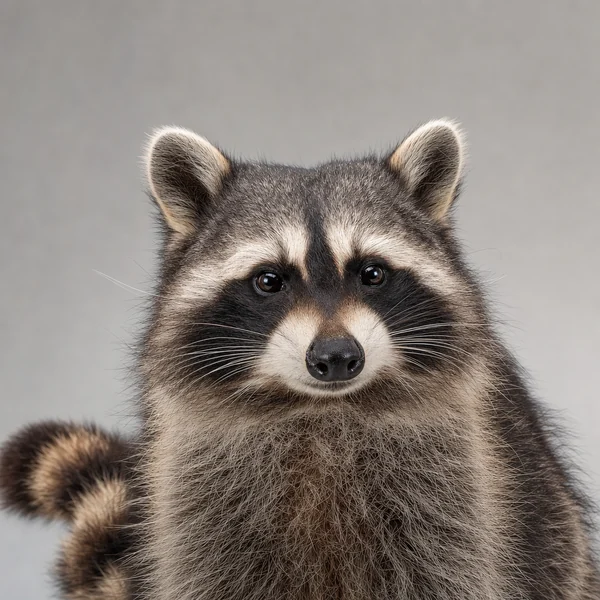
Heavy thumping in your Collin County attic after dark? Our office sits where McKinney, Plano, Frisco and Allen meet, 5 to 10 minutes from most homes in those four cities. Call and we will find what is up there, how it got in and whether there are young.
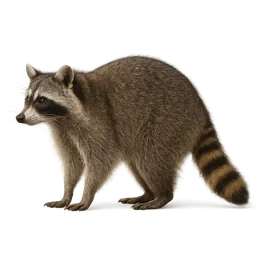
Raccoon
The raccoon is a nocturnal animal that eats almost anything and dens in hollow trees, under decks, in chimneys and in attics. Texas Tech’s Mammals of Texas records it in every part of the state.
Risk Assessment
Choose a row for the full detail- Color
- Grizzled gray with a black mask and a tail of dark rings
- Diet
- Almost anything, from fruit and insects to pet food and trash
- Threat level
- Moderate
- Nesting site
- Hollow trees, chimneys, attics, under decks and sheds
- Lifespan
- Most wild raccoons live under 5 years
- Young to adult
- Born April or May, weaned at 2 to 4 months
- Size
- 9 to 29 lb (4 to 13 kg), about 3 feet long with the tail
What Does a Raccoon Look Like?
A black mask across the eyes, a ringed tail and a heavy gray body the size of a large house cat or bigger
An adult raccoon is grizzled gray to brownish gray, with a black mask across the eyes framed in white, a pale muzzle and a bushy tail with dark rings. Texas Tech University’s species account in The Mammals of Texas gives adult weights of 4 to 13 kg, about 9 to 29 pounds, and a total length of about 880 mm, close to 3 feet, for an adult male including the tail.
Its front paws look and work like small hands with long fingers, which is how it opens trash can lids, latches and pet doors and pulls up shingles and soffit panels. It walks flat-footed with a hunched, rolling gait, and it is out almost entirely at night. A raccoon moving about in daylight is not always sick, especially a mother with young to feed in spring, but one that staggers, circles or shows no fear of people should be left alone and reported.
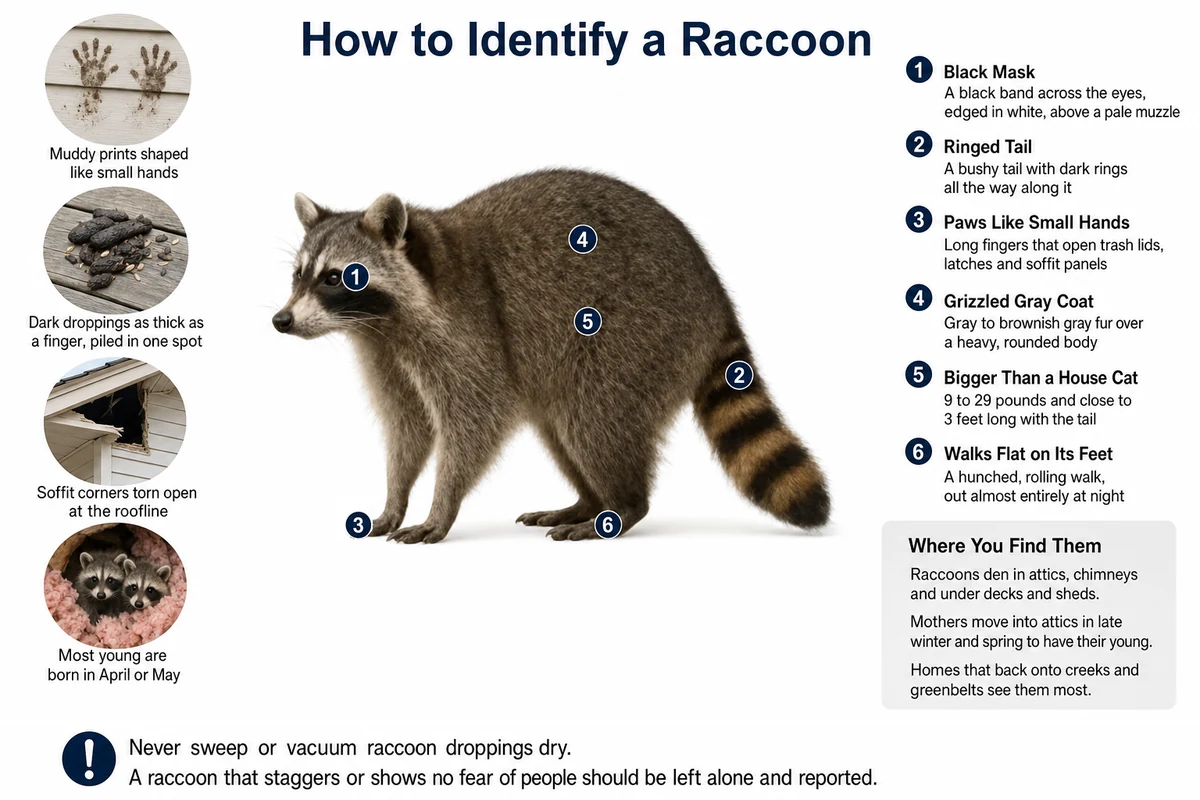
How to identify a raccoon by its black mask, ringed tail and hand-like front paws, with the prints, droppings and torn soffits it leaves behind
- Heavy thumping and walking overhead after dark, not light scurrying at dawn
- Soffit panels, vent covers or shingles torn back at a roof corner
- Muddy hand-shaped prints on siding, downspouts or the air conditioner
- Piles of dark, tube-shaped droppings about as thick as a finger, in one spot
- Chittering, purring or crying from the attic or chimney in spring, which means young
- Trash cans tipped and opened, and pet food gone overnight
Other Names for the Raccoon
The English name comes from a Powhatan word for the animal, and racoon with one c is an older spelling that many people still search. The scientific name Procyon lotor ends in the Latin word for a washer, after the raccoon’s habit of handling and dunking its food in water. Spanish speakers across Collin County call it a mapache. Every name in the table means the same animal.
One Texas name causes confusion. The ringtail, sometimes called a ringtail cat, is a different and much smaller animal, Texas’s state mammal, with a slim body and a long striped tail. It is rarely seen in Collin County homes and is not a raccoon.
| Name | What it means |
|---|---|
| Racoon | An older spelling with one c, still one of the most common ways people search for it. |
| Coon | The everyday short form heard across rural Texas. |
| Mapache | The Spanish name, used in many Collin County households. |
| Northern raccoon | The formal name, used to tell it apart from raccoon relatives farther south. |
| Ringtail | A different, smaller animal with a striped tail, not a raccoon. |
How to Tell a Raccoon from an Opossum, Squirrel or Skunk
Most people never see the animal in their attic or under their deck. They hear it, smell it or find what it left behind. The noise, the time of day and the size of the way in tell these four apart.
| Species | Size and Color | Key Feature | Where Found |
|---|---|---|---|
|
Raccoon
AKA: Racoon, Coon, Mapache
Procyon lotor
This species
|
9 to 29 pounds, about 3 feet long with the tail. Grizzled gray with a black mask and a dark-ringed tail. | Heavy thumping overhead after dark. Hand-shaped prints and torn soffits or shingles. Droppings piled in one spot. | Attics, chimneys, under decks and sheds, storm drains and wooded creeks. Out at night, raiding trash and pet food. |
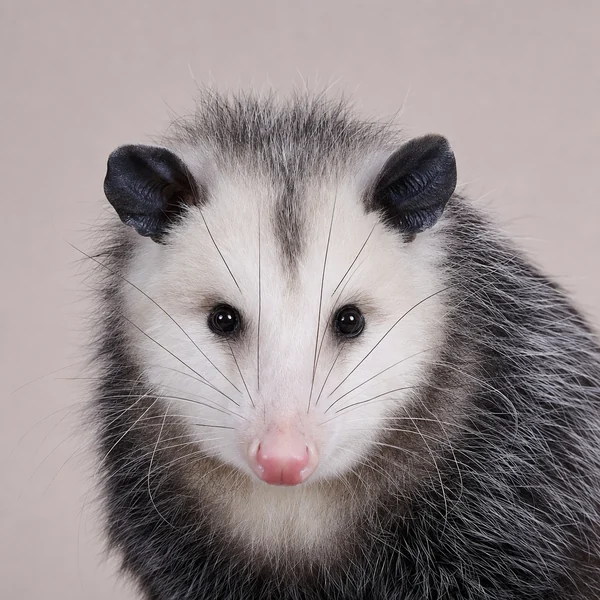
Opossum
AKA: Possum
Didelphis virginiana
|
About the size of a house cat. Gray-white with a white face, pink nose and a bare, pink, rat-like tail. | No mask and no tail rings. Slow shuffling rather than thumping, and it plays dead when threatened. | Under decks and sheds, in crawl spaces and garages. Rarely climbs into an attic the way a raccoon does. |
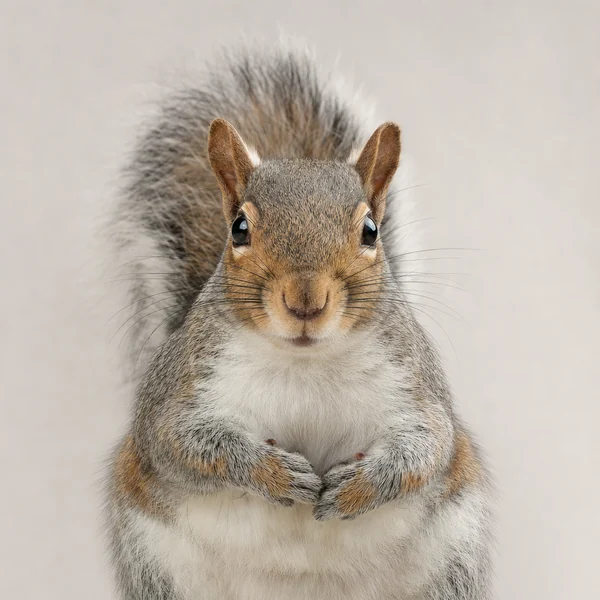
Squirrel
AKA: Fox Squirrel, Gray Squirrel
Sciurus species
|
About 1 to 2 pounds, much smaller than a raccoon. Gray or rusty orange with a long bushy tail and no rings. | Fast scratching and rolling sounds at dawn and in the daytime, not at night. Chews round holes about the size of a golf ball to a baseball. | Attics reached from overhanging trees, gable vents and fascia gaps, and nests of leaves in trees. |
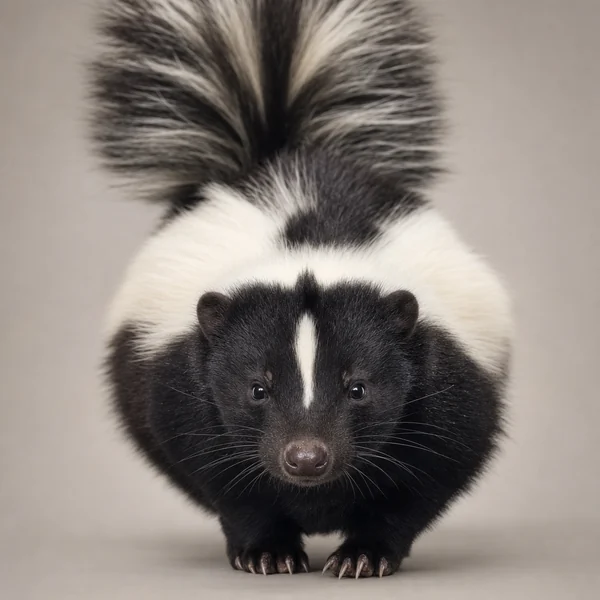
Skunk
AKA: Striped Skunk, Polecat
Mephitis mephitis
|
About the size of a house cat. Black with white stripes down the back and a white stripe on the face. | The smell gives it away long before you see it. It digs small cone-shaped holes in lawns and does not climb into attics. | Under decks, porches, sheds and slabs at ground level, with a burrow opening dug at the edge. |
Raccoon vs Squirrel in the Attic
The Raccoon in Three Numbers
11
The Texas Department of State Health Services confirmed rabies in 11 raccoons in Texas in 2024, against 205 bats and 136 skunks, so raccoons are a small share of Texas rabies.
Texas Department of State Health Services, 2024
2 to 4 weeks
The CDC reports that raccoon roundworm eggs passed in raccoon droppings take 2 to 4 weeks to become infectious, so a pile of droppings grows more dangerous the longer it sits.
CDC
2.8
Texas Tech University’s Mammals of Texas gives the average Texas raccoon litter as 2.8 young, most born in April or May.
Texas Tech University, The Mammals of Texas
Are Raccoons Dangerous?
Not usually, as long as nobody corners one. A healthy raccoon avoids people, but a cornered raccoon or a mother with young will bite and scratch, and dogs that tangle with one often come off worse. Never reach into a chimney, a vent or a hole where young raccoons are crying, and keep pets and children away from any raccoon on the ground in daylight.
Do Raccoons Carry Rabies in Texas?
They can, but far less often than bats and skunks. In the state’s 2024 report on rabies in animals, the Texas Department of State Health Services confirmed rabies in 11 raccoons out of 412 rabid animals statewide, while bats and skunks are the main carriers of the Texas strains. Texas law still lists raccoons among the high-risk animals for rabies, so any bite or scratch from a raccoon needs washing with soap and water right away and a call to your doctor the same day.
What Does Raccoon Poop Look Like, and Is It Dangerous?
Raccoon droppings are dark, tube-shaped and about as thick as a finger, often full of seeds, berries or bits of insects, and piled in one spot rather than scattered. Raccoons use the same toilet spot again and again, called a latrine, usually on a flat roof, a deck, the base of a tree, a woodpile or one corner of the attic. Those piles are the real health risk. According to the CDC’s page on raccoon roundworm, people are infected by swallowing the parasite’s eggs from droppings or soil, most cases are in young children who put dirt in their mouths, and the eggs take 2 to 4 weeks to become infectious once they are passed. Never sweep or vacuum raccoon droppings dry. The cleanup section below gives the safe way.
When Raccoon Activity Needs Fast Action
A Bite or Scratch
Wash it at once with soap and running water and call your doctor the same day. Raccoons are a high-risk animal for rabies under Texas law.
A Raccoon Acting Sick
Staggering, circling, drooling or walking up to people with no fear can mean illness. Keep everyone away and call local animal services.
Droppings Where Children Play
A latrine on a deck, in a sandbox or by a play set puts young children closest to roundworm eggs. Keep children away until it is cleaned properly.
Crying in the Attic or Chimney
Young raccoons mean the mother will fight to get back in. Do not seal or block the opening until the whole family is out.
Why You Have a Raccoon in Your Attic
A raccoon in the attic is almost always a mother looking for a dry, safe place to have her young. Texas Tech’s species account puts most Texas births in April or May, so late winter and spring is when attics and chimneys are claimed. She finds a weak spot where a lower roof meets a wall, a loose soffit corner, a roof vent or an uncapped chimney, and pulls it open with her front paws.
What draws raccoons to a property in the first place is food and shelter close together: open trash cans, pet food left outside, bird feeders, fallen fruit, a creek or greenbelt behind the fence and trees that reach the roof. It is not a sign of a dirty home. Homes backing onto Collin County’s creeks and wooded greenbelts see them most.
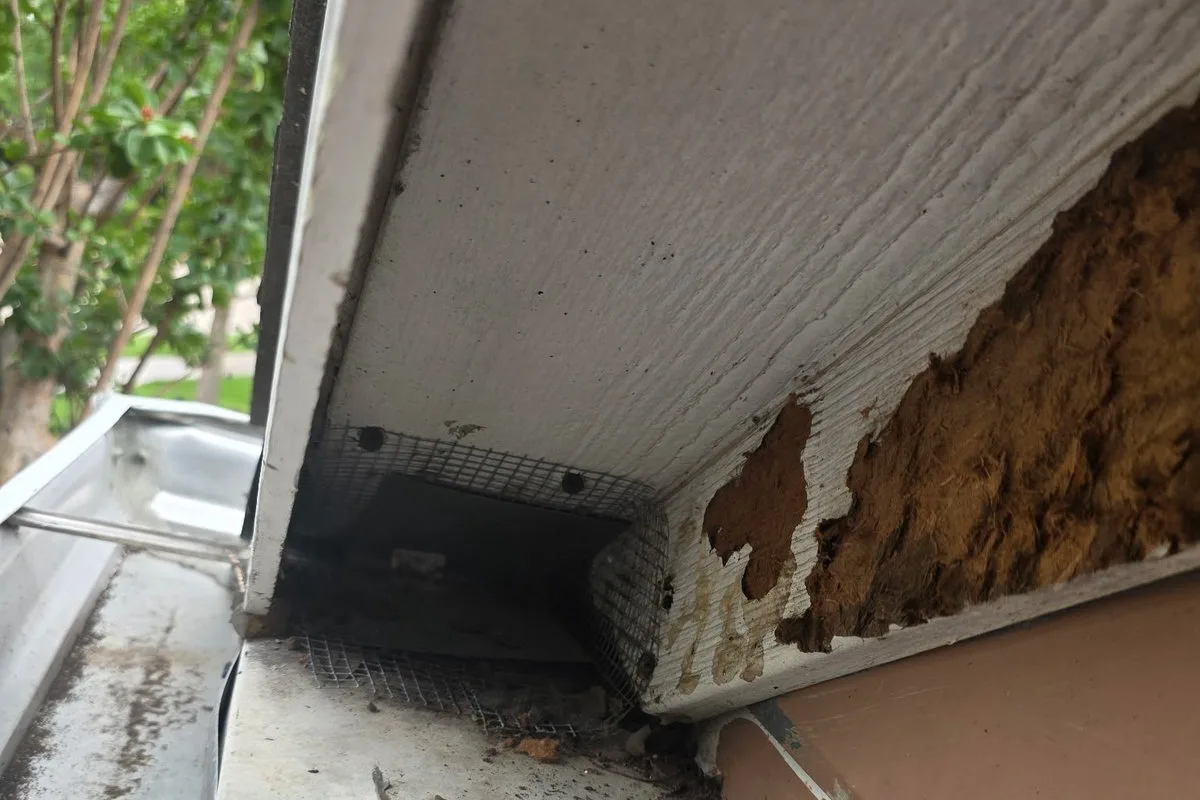
A Frisco roofline we were called to. Raccoons get into attics where the roofline meets a lower roof, at loose soffit corners and through roof vents, and they pull the opening wider each night
Where Raccoons Den Around Collin County Homes
In the wild, raccoons den in hollow trees, brush piles, rock crevices and storm drains near water. Around homes they use the same kinds of spaces the house offers: the attic above a garage, the chimney, the space under a deck, porch or shed, and crawl spaces. The national wildlife damage management reference on raccoon biology lists chimneys, attics and the space under sheds and porches among their regular den sites. They usually keep several dens and move between them.
Raccoon Pressure Across Collin County
Raccoon pressure follows water and trees. Homes that back onto creeks, greenbelts and parks in Plano, McKinney, Allen and Frisco see the most, because raccoons travel those corridors at night and find older trees that reach the roof.
Acreage and newer neighborhoods at the edge of open land in Prosper, Celina, Anna and Melissa see raccoons along fence lines, in barns and under decks, often alongside skunks and opossums.
Raccoons are active all year in Collin County, slowing only in the coldest spells. Attic trouble peaks in spring, when mothers look for a den to give birth. Texas Tech’s species account puts most Texas mating in March and most births in April or May, and the young stay with the mother into summer.
Pattern from published Texas raccoon breeding biology (The Mammals of Texas) and Pest Me Off raccoon calls, which have come mostly in spring.
Why Raccoons Keep Coming Back
How Pest Me Off Removes Raccoons
Raccoon removal is four steps, every job. Getting the animal out is only half the fix, because the opening it made still invites the next one.
Inspect and Identify
A free inspection from the roofline to the crawl space. We confirm it is a raccoon and not a squirrel, opossum or skunk, find every way in, and look and listen for young before anything else happens.
Remove the Humane Way
Live traps or one-way doors sized for a raccoon, set at the active opening, and handled within Texas wildlife rules. When there are young, we make sure the whole family comes out together.
Clean Up and Assess
We clear nesting material and droppings from the access area, then show you the damage and the exact way in: torn soffits, crushed ducts, soiled insulation.
Seal It Out for Good
Every opening is closed with materials a raccoon cannot pull apart, and roof vents and chimneys get covers. This is the rodent proofing and exclusion work that keeps the next animal out.
& Other Companies
How to Get Rid of Raccoons Yourself
The best DIY work happens before a raccoon moves in. Take away what draws it to your property and close the easy ways into the house, and most raccoons pass by.
Why Some DIY Responses Fail for Raccoons
Most DIY raccoon trouble comes from acting before knowing whether there are young, and from Texas law on what may be done with a raccoon once it is caught.
Sealing the Hole Too Soon
Closing the opening while a raccoon or her young are inside traps them. The mother tears a new hole from outside, or the young die in the attic and the smell lasts for weeks.
Trapping and Driving It Away
Texas Parks and Wildlife’s rules on nuisance fur-bearing animals make it a Class C misdemeanor to transport a live raccoon anywhere in Texas, a rabies rule. Trapping one also often leaves young behind.
Lights, Radios and Smell Repellents
Mothballs, ammonia, predator scent, lights and radios may move a raccoon with no young for a night or two. A mother with young in the attic stays put, and mothballs in an attic leave fumes in the house.
Common Raccoon Questions
What does a raccoon look like, and how big do raccoons get in Texas?
What does raccoon poop look like?
Is raccoon poop dangerous?
How do I know if I have a raccoon in my attic?
Do raccoons carry rabies in Texas?
Are raccoons dangerous to dogs and cats?
When do baby raccoons leave the attic?
Can I trap a raccoon and release it somewhere else?
What smell keeps raccoons away?
Does a raccoon in the daytime mean it has rabies?
How do I get rid of raccoons?
Thumping in the Attic After Dark? We Get the Raccoons Out and Keep Them Out.
We find every way in and any young, get the whole family out humanely, clean up what they left, and seal the house so nothing pulls it open again. Wildlife removal across McKinney, Allen, Frisco, Plano, and all of Collin County.