
Squirrels or Rats in the Attic? What the Noises Mean
Scratching overhead at first light, or quick scurrying after everyone has gone to bed, are two different animals, and they need two different fixes. This article covers how to tell a squirrel from a roof rat in a Collin County attic by when you hear it, how big it is and the hole it uses, and what to do before anyone seals a hole.
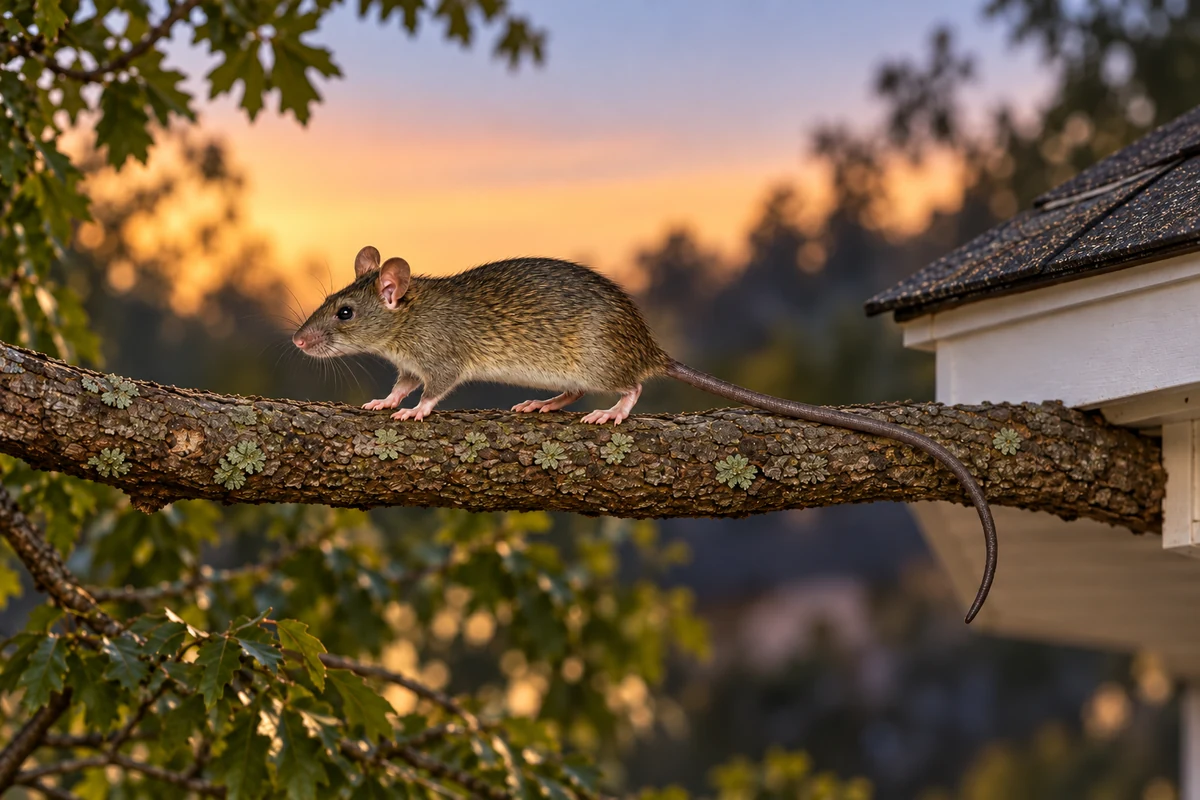

- Squirrels are busy by day. Roof rats are heard at night, once the house goes quiet.
- A fox squirrel weighs about 1 3/4 to 2 1/4 pounds. A roof rat weighs about 5 to 9 ounces.
- A fox squirrel uses a hole about the size of a baseball. A roof rat gets through far smaller gaps.
- Squirrel young can be in an attic from February through August.
- Both chew on wiring, and squirrels chewing electrical lines can start fires.





How do you know if you have rats or squirrels in your attic?
Squirrels in the attic are noisy by day and rats are noisy at night, so the time you hear it is the quickest clue. The Internet Center for Wildlife Damage Management says fox and gray squirrels are active primarily during the day, and that roof rats are heard scurrying once everyone is asleep and the house is quiet.
Listen for a few days and note the hour. Scratching at dawn that stops at dusk points to a squirrel. Scurrying that starts after the lights go out points to a rat.
Then look at the size of the way in and what is left behind. The wildlife damage reference’s page on squirrel damage says fox and gray squirrels use a hole about the size of a baseball. In Collin County that hole is usually at a soffit, a gable vent or a roof corner. Its roof rat page gives roof rat droppings as about 1/2 inch long with pointed ends, and a thin, scaly tail as long as the body.
If the droppings are small and dark and the attic insulation has tunnels worn through it, read our article on telling rats from mice as well, because a house mouse leaves smaller signs in the same places.
What does a squirrel in the attic sound like?
A squirrel in the attic sounds like fast scratching and running, mostly at first light and through the day, then quiet after dark. Sometimes a nut rolls across the boards. Our wildlife team links fast scratching at dawn to squirrels, the animal we remove from McKinney attics most often.
Texas A&M AgriLife Extension calls the fox squirrel the most common squirrel in Texas, and the squirrel in a Collin County attic is usually a fox squirrel. The wildlife damage reference puts a fox squirrel at 18 to 27 inches from nose to tail tip, which is why it sounds heavy for a rodent.
The noise can change with the season. The reference’s page on squirrel biology says fox and gray squirrels breed in mid-December or early January, a small share breed again in June, and a litter is about 3 young. The young start to explore outside the nest at 10 to 12 weeks, so an attic often gets noticeably busier in spring. Our squirrel page in the pest library shows the fox squirrel and the holes it chews.
What do rats in the attic sound like?
Rats in the attic sound like light, quick scurrying and gnawing that starts after dark. The Internet Center for Wildlife Damage Management says sounds in the attic are often the first sign of roof rats in a home, heard when everyone is asleep and the house is quiet, and that rats living there tear up the insulation for nests.
The same page on roof rat damage says they gnaw on electrical wiring, and that rats living in an attic may feed outdoors.
A roof rat is far smaller than a squirrel. The reference gives about 16 inches from nose to tail tip, about half of it tail, and 5 to 9 ounces. Its page on roof rat biology says roof rats travel 100 to 300 feet for food, so the rat in your attic may be eating at a neighbor’s, and that a female has 5 to 8 young a litter and usually 3 or more litters a year, with the most breeding in spring and fall.
How they climb up there is covered in our article on how roof rats get into the attic, and the roof rat page in our pest library has photos of the rat, its droppings and its trails.
Do squirrels make noise at night in the attic?
Squirrels rarely make noise in the attic at night. The Internet Center for Wildlife Damage Management says fox and gray squirrels are active primarily during the day, so steady scratching or scurrying after dark points to rats instead. A heavy thumping at night is more often a raccoon, which our wildlife team links to torn soffits and shingles.
The reference names one exception, the flying squirrel, which is active at night and gets in through a hole about the size of a quarter.
A squirrel can also be heard after dusk if it is trapped inside. The reference’s page on squirrel control warns that a squirrel sealed in by mistake may cause a great deal of damage chewing its way back out, which is why a hole is never closed until the animals are out.
Squirrel or roof rat, told apart
These details come from the wildlife damage reference’s pages on tree squirrels and roof rats. Both animals climb, both chew and both nest in attic insulation.
| Feature | Fox squirrel | Roof rat |
|---|---|---|
| When you hear it | Dawn and through the day | After dark, once the house is quiet |
| Size | 18 to 27 inches, nose to tail tip | About 16 inches, nose to tail tip |
| Weight | About 1 3/4 to 2 1/4 pounds | About 5 to 9 ounces |
| Tail | Long, furry and bushy | Thin and scaly, 6 to 8 inches |
| Way in | A chewed hole about the size of a baseball | Any opening over 1/2 inch, high on the house |
| Young | About 3 a litter, present February through August | 5 to 8 a litter, 3 or more litters a year |
Daytime and a big hole means a squirrel. Night and a small gap means a rat.

That gap is why a home can have rats with no hole anyone has noticed. The reference adds that finding a roof rat’s way in usually takes longer than for Norway rats, because roof rats climb so well.
What to do about noises in the attic
- Note the time of day you hear it for two or three days. Daytime scratching points to a squirrel and night scurrying to a rat, and the fix is different for each.
- Walk the outside of the house in daylight and look up. Chewed holes at the soffits, gable vents and fascia corners, and limbs touching the roof, are the usual ways in. The wildlife damage reference says to trim limbs back 6 to 8 feet from the house.
- Do not seal a hole while anything is still inside. The reference says squirrel young can be present from February through August, and the reference shows 1/2 inch plywood gnawed by a gray squirrel trying to get back to her young.
- Skip the mothballs. The reference says the chemical in mothballs is not recommended in the attic of a lived-in home, because it can cause severe distress to people.
- Expect rats to be wary of traps. The roof rat biology page says roof rats avoid new objects and may take several days to go near a trap, so traps belong on the routes they already travel.
How Pest Me Off handles squirrels and rats in the attic
Pest Me Off starts with a free inspection, because the noise only narrows it down and the attic and roofline settle it. For squirrels, the technician finds the active hole, sets a live trap or a one-way door there, checks for a litter, and seals the opening once the squirrels are out. Our wildlife removal service covers squirrels, raccoons and the other larger animals.
For rats, we confirm the species, map the runways and entry points, set traps on the routes the rats actually travel, and come back in 7 to 10 days to collect them and confirm the attic has gone quiet. Locked bait stations go along the outside, and you get a written map of every gap we find. Our rodent control service covers the trapping, and same-day service is available Monday through Friday, when you call before noon, across McKinney, Plano, Frisco, Allen and the rest of Collin County.
Scratching in the attic and not sure what it is? Same-day pest control in McKinney and the surrounding cities when you call before noon.
We find out whether it is squirrels or rats, get them out, and seal the way they came in so the next one cannot follow. Free inspection. No-contract options.
