
Gnats, Fruit Flies or Drain Flies? How to Tell Which Small Fly You Have
Fungus gnats, fruit flies and drain flies look alike from across the room, but each one breeds somewhere different. The quickest way to tell them apart is where they gather. Fruit flies hover over fruit, trash and recycling, drain flies rest on the wall beside a sink or tub, and fungus gnats stay near houseplant soil and windows. When Pest Me Off’s technicians answer a call about gnats in a Collin County home, naming the fly comes first, because a fix aimed at the wrong fly catches nothing.
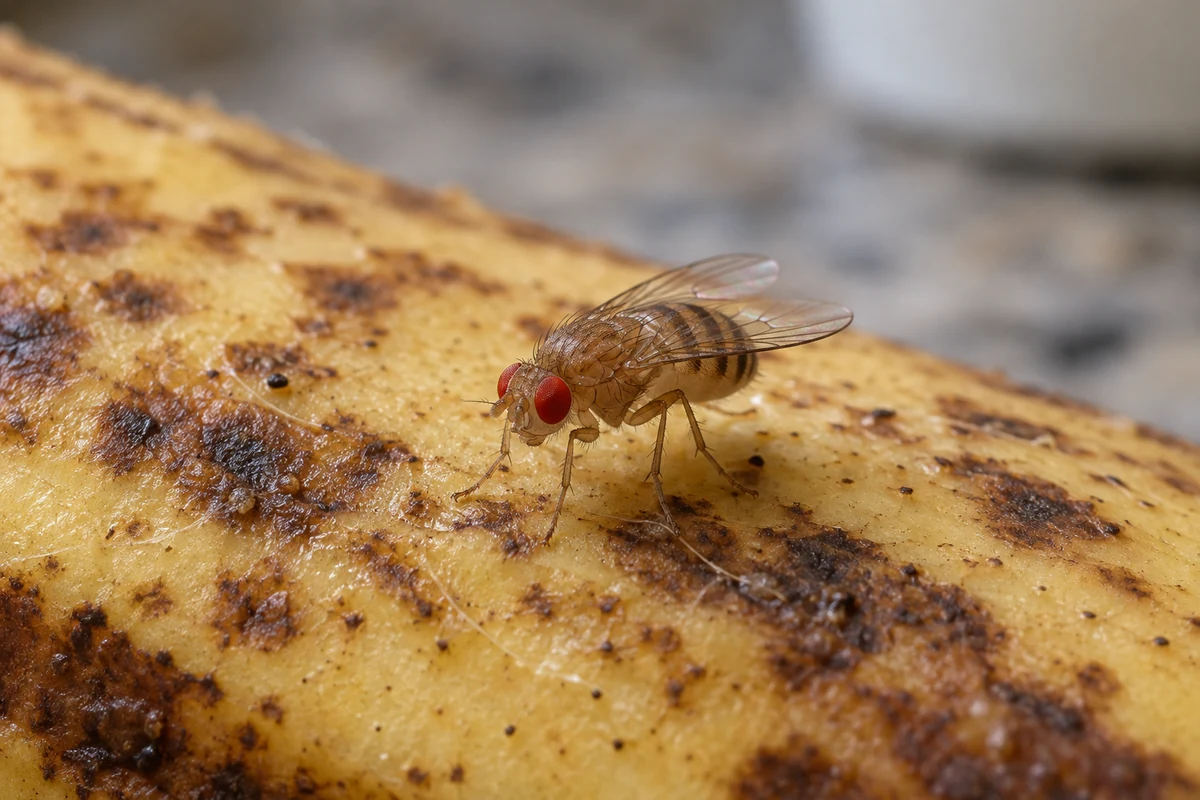

- All three are tiny, from 1/16 to 1/5 inch long, so size alone will not tell you which one you have.
- Fruit flies are tan with reddish eyes and breed in overripe fruit, onions, potatoes and the wet bottom of a trash can.
- Drain flies are fuzzy, gray and moth-like, and breed in the slime film inside sink and floor drains.
- Fungus gnats are slender dark flies, like tiny mosquitoes, that breed in damp houseplant soil.
- None of the three bites people, and spraying the adults alone rarely ends the problem.




Are gnats and fruit flies the same?
No. Gnat is a loose name for any tiny fly, and the small flies that breed inside homes are mainly fruit flies, drain flies and fungus gnats, with the phorid fly. They belong to different fly families and breed in different places.
Texas A&M AgriLife Extension says each indoor fly is unique, so naming the fly is the first step in getting rid of it.
That matters because a trap or a cleanup aimed at one fly does nothing for the others. A vinegar trap on the counter catches fruit flies and leaves the drain flies in the bathroom untouched, and scrubbing the drains does nothing for gnats rising out of a potted plant. Texas A&M AgriLife’s guide to indoor flies puts it plainly: insecticides alone rarely succeed, and control works when the breeding site is found and removed.
Fungus gnats, fruit flies and drain flies, told apart
Where the fly sits and how it moves says more than its size. All three are tiny, from 1/16 to 1/5 inch long, so size alone will not tell you which one you have.
| Feature | Fruit fly | Drain fly | Fungus gnat |
|---|---|---|---|
| How it looks | Tan, stout body with reddish eyes | Fuzzy, gray and moth-like, wings held flat or like a roof | Slender and dark, long legs, like a tiny mosquito |
| Size | About 1/8 inch | 1/16 to 1/5 inch | 1/16 to 1/8 inch |
| Where it breeds | Overripe fruit, onions, potatoes, trash and recycling | The slime film inside drains, drip pans and wet tile cracks | Damp houseplant soil |
| Where you see it | Hovering over the fruit bowl and the trash | Resting on the wall by a sink or tub, making short hops | Near houseplants and windows, flying weakly |
| The quick test | A jar of cider vinegar fills with them | Clear tape over the drain catches them coming up | A yellow sticky card in the pot catches them |
| The fix | Remove the produce or trash it breeds in | Scrub the slime out of the pipe and trap | Let the soil dry out between waterings |
A fly resting on the bathroom wall is most likely a drain fly, not a fruit fly.
Where do gnats come from in my house?
Gnats in a house come from a damp spot inside it where they are breeding, and the spot depends on the fly. Fruit flies breed in overripe fruit, bagged onions and potatoes, and the wet bottom of a trash can. Drain flies breed in the slime inside sink and floor drains.
Fungus gnats breed in wet potting soil. All three need moisture, and Texas A&M AgriLife says young flies cannot develop without a source of water.
The less obvious spots are where searches stall. AgriLife lists the drip pans under refrigerators and air conditioners, cracked floor tile, the tracks of sliding glass doors, damp mops and recycling bins full of unrinsed cans. The University of Kentucky’s fruit fly fact sheet adds that a single rotting potato or onion forgotten in a closet can breed thousands of fruit flies. If yours turn out to be fruit flies, our article on how and why fruit flies enter your home covers the ways they get in from outside.
What are drain flies a sign of?
Drain flies are a sign of standing water and the slime film it leaves in a drain, toilet or drip pan that sits unused or uncleaned. After a vacation they are often a short visit that ends once water runs through the pipes again, according to the University of Kentucky.
Drain flies that keep turning up week after week point to a steady breeding spot that has to be found and cleaned out.

Drain flies do not always start indoors. The University of Kentucky’s drain fly fact sheet says they also breed outside in summer, in low wet spots where the air conditioner drains and in clogged gutters, and fly in through open doors. If the tape test on every indoor drain comes up empty, those outdoor spots are the next place to look.
Do gnats bite?
No. None of the three small flies that breed in homes bites people. Texas A&M AgriLife Extension says fruit flies and fungus gnats do not bite, and the University of Kentucky describes drain flies as non-biting. The harm is elsewhere: fruit flies can carry bacteria onto food, and fungus gnat young can chew the roots of houseplants.
The University of California’s fungus gnat guide says the adults do no damage, but large numbers of the young can stunt a young plant or kill it in wet, rich potting soil. A wilting houseplant with gnats around it may be short of healthy roots rather than short of water, though the same guide says overwatering and poor drainage are far more common causes.
How to get rid of gnats for good
- Name the fly first, using the table above. Each one breeds in a different place, so the fix for one does nothing for the others.
- Find the breeding spot. Lay clear packing tape across a drain without covering the whole opening, so air still moves, and check it over a few days. Flies stuck to the tape mean that drain is the source. A clear plastic bag taped over a garbage disposal overnight does the same job.
- For fruit flies, eat, refrigerate or throw out ripe produce, cut away bruised spots, and empty and rinse the trash and recycling bins.
- For drain flies, scrub the pipe and the trap with a stiff brush, then flush with very hot water. AgriLife says bleach and drain cleaner are largely ineffective against the film, and the University of Kentucky warns against pouring insecticide down a drain.
- For fungus gnats, let the top of the soil dry out between waterings, stop overwatering, and move a badly infested pot outside or repot it in fresh soil.
- Then trap what is left, with a jar of cider vinegar for fruit flies and yellow sticky cards for fungus gnats. Traps alone rarely clear a problem, but a trap that stays empty shows the source is gone.
How Pest Me Off handles small flies
Pest Me Off’s pest control service treats a small fly problem the same way every time: name the fly, find every place it is breeding, clean out the source, then trap the adults that are left. A technician checks the sinks and floor drains, the disposal, the trash and recycling, the pantry and the space under the fridge, treats the drains with a foaming product that breaks down the film the young flies feed in, and shows you each breeding spot found. Spraying the flies in the air does the least on its own, because a drain or a pot that keeps breeding replaces them.
If the flies turn out to be fruit flies, our guide to making a fruit fly trap that works covers the trap and why one stops catching flies. Same-day service when you call before noon is available across McKinney, Plano, Frisco, Allen and the rest of Collin County, with no-contract options.
Small flies that keep coming back? Same-day pest control in McKinney and the surrounding cities when you call before noon.
A technician names the fly, finds every place it is breeding, from drains and the disposal to the trash and the pantry, cleans out the source and traps the adults that are left. No-contract options.
