
How to Get Rid of Chiggers in Your Yard
You should be able to use your own back yard without coming inside covered in bites. Getting rid of chiggers comes down to three jobs in the right order: find the spots where they wait, take away the shade and damp those spots give them, then treat only there. Here is how each one works, and why chiggers come back.
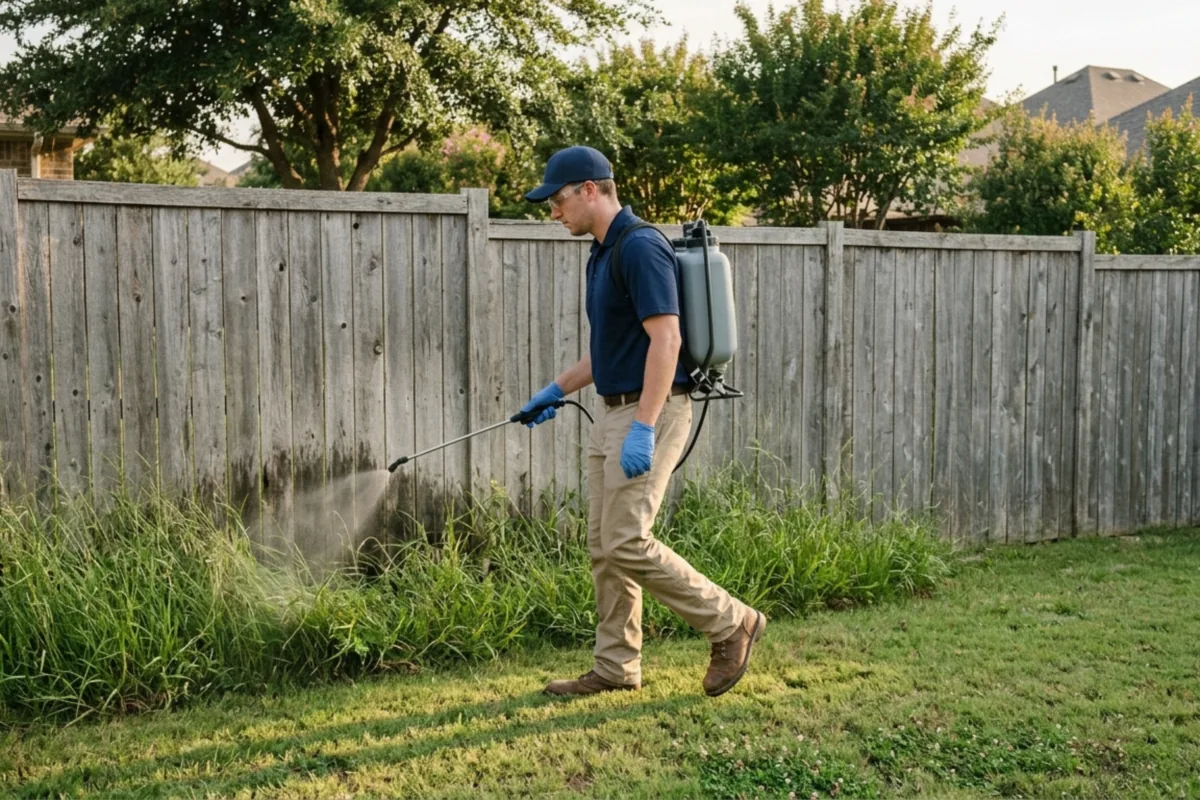

- Chiggers gather in patches, so the work goes where they wait, not across the open lawn.
- Short grass and trimmed plants warm and dry the soil, which makes a lawn less friendly to them.
- Texas A&M says liquid sprays generally work better on chiggers than granules.
- Pets stay off a treated yard until the spray has dried.
- A bite can keep itching for a week or more after the chigger is gone.





How do you get rid of chiggers in your yard?
Find where they wait, take away the shade and damp they need, then treat only those spots. Texas A&M AgriLife Extension says short grass and trimmed plants can make a lawn less hospitable to chiggers and that residual sprays can help suppress them. Ohio State says treating hot spots can give short-term knockdown, so the yard work has to continue.
The order matters because chiggers are patchy. The Texas A&M AgriLife Extension chigger guide says they can be concentrated heavily in one spot while virtually absent nearby, so a spray across the open middle of a lawn can miss them completely. Start by asking yourself where and when the bites happen: after mowing, after the kids play near the back fence, after weeding the shady bed, or after a walk through the tall grass behind the shed.
- Map the spots. The test Ohio State University Extension describes is a square of black paper or cardboard laid in the grass for 10 minutes. Any chiggers crawl onto it and show up yellowish red against the black. Our guide to where chiggers wait in a Texas yard has the spots to try first.
- Cut back the shade. Mow, trim, and clear brush and leaf litter in the spots you mapped.
- Treat the mapped spots with a liquid product labeled for lawns, as the label directs.
- Keep the grass short and the edges open for the rest of the season, so the spots do not fill back in.
What kills chiggers in the yard?
A residual insecticide spray labeled for lawns. Texas A&M AgriLife Extension names sprays containing bifenthrin, cyfluthrin, esfenvalerate or permethrin as able to help suppress chiggers, and says granules are generally less effective than sprays. Among granules, it says, bifenthrin performed best in recent studies. Read the label before you buy, because it says where a product may go.
The Texas A&M AgriLife City Bugs blog says a liquid spray like bifenthrin can significantly reduce chiggers in a lawn. Mow before you spray, it adds, because that lowers the humidity on the soil surface and makes it easier for the spray to reach them. For a large lawn area, the AgriLife guide suggests a hose-end sprayer and long pants, shoes and any other protective gear the product label calls for.
Protect the bees while you do it. Ohio State says these broad-spectrum products put beneficial predators and pollinators at risk, so do not spray where flowers are blooming or while pollinators are flying. If the lawn is full of dandelions, clover or other flowers, City Bugs says to spray in the evening.
How do you get rid of chiggers in your yard naturally?
Take away the conditions they need, with no spray at all. Texas A&M AgriLife Extension says keeping grass short and plants well trimmed can raise the soil temperature and lower humidity enough to make a lawn less hospitable to chiggers. Ohio State University Extension adds brush control and changes that let more sun and air into the yard.
Clemson Extension says removing brush and weeds can help keep chigger numbers low, and that a female chigger lays 1 to 5 eggs a day in leaf litter, damp soil or overgrown weeds. That is why raking out heavy leaf litter and cutting the weeds along a fence line both count. Clemson also says treating a yard is usually not practical or recommended, except for severe populations.
Sulfur often comes up as the natural answer. Both Texas A&M sources describe sulfur as protection for the person, dusted on clothing, shoes and lower legs, and neither describes spreading it on a lawn. For what to put on your skin and clothes, read our comparison of DEET, picaridin and permethrin.
Is chigger treatment for the yard safe for dogs?
Keep dogs and other pets off the treated area until the spray has dried. Texas A&M AgriLife Extension says pets should be out of the yard during treatment and can go back once the spray residues are dry. Ohio State University Extension says the product label gives the cautions for pets and children and the re-entry periods.
Ohio State puts it plainly: the label is the law. Read it before the sprayer comes out, and go by the drying, not by a guess at how many minutes have passed. Before a treatment, clear the dog’s water bowl, toys and anything else you can move out of the areas being treated, and keep the dog inside until the treated grass is dry. The same goes for children.
Why do chiggers come back after you spray?
A spray knocks down the chiggers there, and more arrive. Ohio State University Extension says insecticide is not generally recommended because of the risk that chigger numbers rebound, and that treating hot spots can give short-term knockdown. Texas A&M AgriLife Extension says wild mammals, birds and reptiles can keep chiggers going in a back yard, so nearby land matters.
If your yard backs onto a greenbelt, a creek, an empty lot or a field, that land behind the fence still matters after a treatment. The AgriLife guide says chiggers are less common in kept lawns, but that ground recently cleared for building can bring them into the plants around a new home. That fits the newer neighborhoods in Princeton, Anna and Celina, where a fresh lawn backs onto field or brush.
The season is long, too. The AgriLife guide says chiggers are active from late spring to fall in most of Texas, with up to 4 generations a year in the south of the state. In Dallas, City Bugs says even a sunny turf plot gets chiggers every year from around late May and early June. So the mowing and trimming that keeps a yard less friendly to them carries on all summer.
Why do the bites still itch after the yard is treated?
The itch outlasts the chigger. Texas A&M AgriLife Extension says itching peaks 24 to 48 hours after the bites and that redness and itching can last a week or more in some people. Texas A&M’s City Bugs blog says the marks take 1 or 2 weeks to disappear, so itching on its own does not show a treatment failed.

What tells you more is a new bite after time in a particular part of the yard. Note where you were and when, because that points to the spot that still needs work. For easing the itch, read our article on how long chigger bites last and what helps. The AgriLife guide says anyone with a severe reaction to chigger bites should see a doctor.
The ways to get rid of chiggers, compared
From the Texas A&M AgriLife Extension guide, its City Bugs blog, Ohio State University Extension and Clemson Extension.
| Method | What it does | What the sources say |
|---|---|---|
| Black paper test | Shows where the chiggers are | 10 minutes in the grass, Ohio State |
| Mowing and trimming | Warms and dries the soil | Can make a lawn less hospitable, Texas A&M |
| Clearing brush and weeds | Removes egg-laying and waiting spots | Can help keep numbers low, Clemson |
| Liquid spray on hot spots | Can knock down the chiggers there | Short-term knockdown, Ohio State |
| Granules | Scattered over the ground | Generally less effective than sprays, Texas A&M |
The yard work lasts all season. A spray on its own does not.
What a chigger treatment from Pest Me Off involves
When you call us about chiggers in a McKinney, Plano, Frisco or Allen yard, we start by asking where your family spends time outside and when the bites happen. A bite alone does not tell us which pest it was, so we put the whole picture together before we recommend anything. Then we walk the yard and look at the tall grass, overgrown fence lines, brush and leaf litter, and the places where your kept yard meets overgrowth or open land.
If what we find supports a chigger treatment, we explain which areas we recommend treating and why, what to do before the visit, and when your family and pets can go back outside. Before the visit, mow 1 to 2 days ahead, clear toys, pet bowls and anything else you can move out of the treatment areas, keep pets inside, and make sure we can reach every area. We treat the mapped areas that need it at ground level, with products applied as the label directs, and plan the work around site conditions with label precautions to protect pollinators. People and pets stay out until the treated areas are dry.
Before we leave, we explain what to cut back and clear, because that yard work helps the treatment succeed. If your yard backs up to brush or open land, we tell you what can be managed on your side of the fence and what to watch for. If new bites show up, tell us where they happened. Our chigger control page explains the service, and the chigger page in our pest library shows how to tell a chigger from a flea or a red patio mite.
Chiggers in the back corner of the yard? Same-day pest control in McKinney and the surrounding cities when you call before noon.
We ask where and when the bites happen and inspect the yard before we recommend anything. Free inspection and estimate.
