
Do Plants That Repel Mosquitoes Work? Citronella, Lavender and the Texas Patio
Every spring, garden centers sell citronella plants and lavender as mosquito plants. This article covers whether plants that repel mosquitoes work, citronella and lavender in particular, which of them are safe around dogs and cats, and what keeps a Texas patio usable instead.
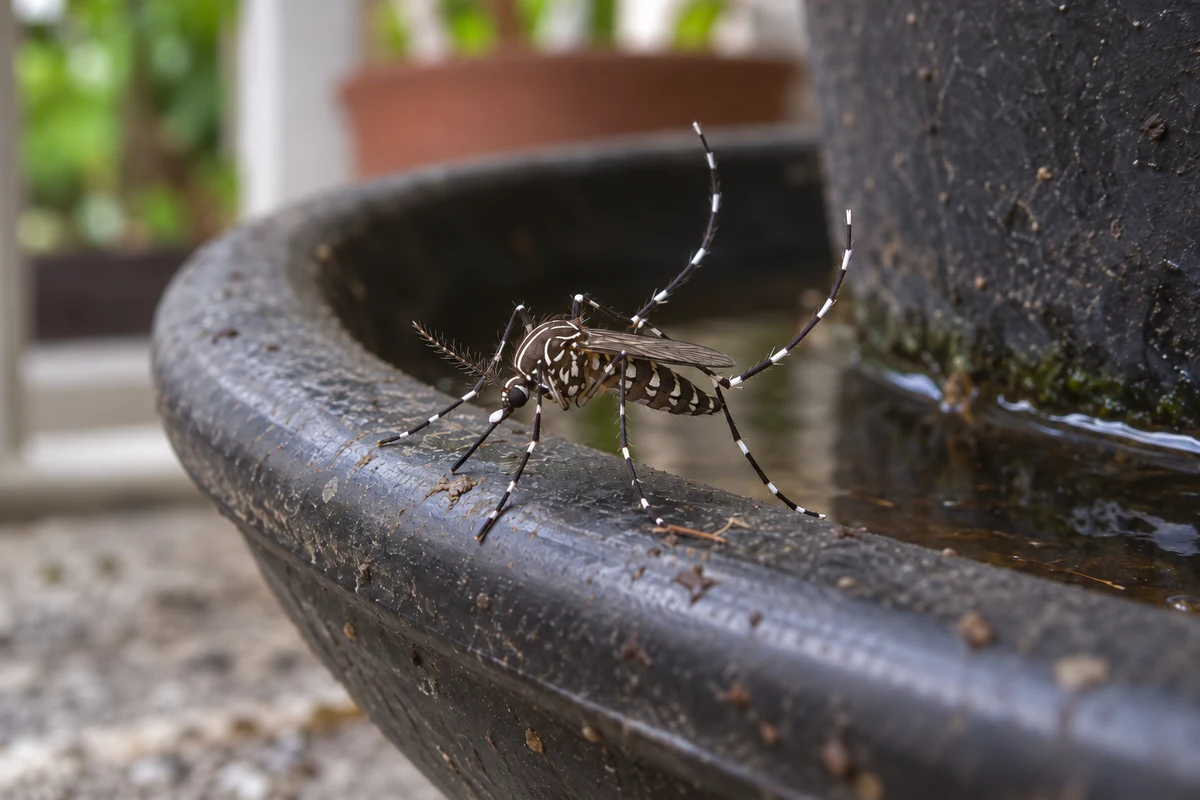

- Extension services in four states say plants growing in a yard do little or nothing to stop mosquitoes.
- The mosquito plant, or citrosa, sold in stores is a scented geranium with no citronella oil in it.
- The oils in these plants work only crushed or extracted, and on skin they last minutes, not hours.
- The ASPCA lists lavender, scented geraniums, lemongrass and mint as toxic to dogs and cats.
- A fan across the patio does more, because mosquitoes are weak fliers.





Do plants that repel mosquitoes work?
Not while they sit in a pot or a flower bed. Iowa State University Extension says a plant just sitting on the patio has no effect on mosquitoes in the area, and Colorado State University says none of the usual ones repel mosquitoes by merely growing. The repellent oils stay in the leaves until they are crushed.
The plants are not useless, they are just sold for the wrong job. The University of Florida says eucalyptus, citronella, mint, basil, lavender and marigolds all carry oils that can deter mosquitoes, but those oils have to be extracted and used in concentrated forms, like sprays, to be truly effective.
Nobody has shown the planted version working. Clemson Extension points to a review in the Malaria Journal of 62 studies on plant oils and mosquitoes, and none of them tested plants growing in a landscape. The scent a plant gives off drifts away into the air, Clemson says, and a breeze thins it further.
Do citronella plants repel mosquitoes?
Not the citrosa, the scented geranium sold as the mosquito plant. Colorado State University says that lemon-scented geranium, marketed only for repelling mosquitoes, does not contain citronella oil, and studies at the University of Guelph found no repellent properties. The oil comes from citronella grass, which Iowa State says helps only when crushed.
Citronella oil itself does have a place. The Environmental Protection Agency lists oil of citronella as the active ingredient in three registered skin repellents. That is the oil, measured into a product, not a plant on the porch.
The candles fare no better. The University of Florida says there is anecdotal information about citronella candles but science has not confirmed their bite-fighting power, and our mosquito control page says candles and coils shift the air a few feet at best, and only while they burn.
Does lavender repel mosquitoes?
A lavender plant growing by the patio does not. The University of Florida names lavender among the plants whose oils can deter mosquitoes, but says the oils have to be extracted and used in concentrated forms, such as sprays, to be truly effective. Clemson Extension adds that a plant’s scent drifts away on the air.
Crushed leaves are not much better. For the plants it names, scented geranium, lemon thyme and citronella grass, Iowa State says a pile of damaged leaves on a table is not terribly effective either, and that leaves crushed and rubbed on the skin give some benefit, but only a fraction of what a product made as a repellent gives.
The same goes for the rest of the herb bed. Colorado State lists catnip, peppermint, rosemary, marigolds and eucalyptus among the plants that do not repel mosquitoes just by growing.
Are plants that repel mosquitoes safe for dogs and cats?
Many of them are not. The ASPCA lists lavender, geraniums, lemongrass and mint as toxic to dogs and cats, and catnip as toxic to cats, with signs such as vomiting or an upset stomach if a pet eats them. Rosemary and basil are on its non-toxic list for both. Pick plants for the garden, not for the mosquitoes.
The citrosa sold as the mosquito plant is a scented geranium, and the ASPCA page on geraniums lists all of them, the Pelargonium species, as toxic to dogs and cats, with vomiting and skin irritation among the signs. The ASPCA page on lavender lists nausea and vomiting. Catnip is a problem for cats only, and the ASPCA page on mint says its signs come with large amounts eaten.
If a dog or cat has eaten one of these plants, the ASPCA says to call its poison control line at (888) 426-4435, where a consultation fee may apply, or your veterinarian as soon as possible.
The usual mosquito plants, and what the research says
These come from the extension pages of Iowa State, Colorado State, Clemson and the University of Florida, and the pet column from the ASPCA plant list.
| Plant | What the research says | For dogs and cats |
|---|---|---|
| Citrosa, the mosquito plant | No citronella oil, and no repellent effect found | Toxic, as a Pelargonium |
| Lavender | Its oil has to be extracted to work well | Toxic to both |
| Lemongrass | Its oil on skin lasted about 40 minutes | Toxic to both |
| Rosemary | Its oil on skin lasted about 15 minutes | Non-toxic to both |
| Catnip | Its oil is in 4 registered repellents, the growing plant does not repel | Toxic to cats |
| Basil and mint | Oils that can deter, plants that do little in the bed | Basil non-toxic, mint toxic |
Not one of these keeps mosquitoes away by growing in the yard.
What keeps mosquitoes off a Texas patio instead
A repellent made as a repellent. The Environmental Protection Agency registers skin repellents with deet, picaridin, IR3535, oil of lemon eucalyptus, PMD or 2-undecanone, and also catnip oil in 4 products and oil of citronella in 3. Clemson notes that some plant oils irritate the skin, especially in high concentrations. Our article on why mosquito bites swell covers why some people get bitten more than others.
Moving air. Our mosquito control page says mosquitoes are weak fliers and cannot land in moving air, so a fan across the patio protects a seating area in a way a pot of lavender cannot.
Fewer places to hatch, and more animals that eat mosquitoes. Florida says to empty plant saucers and water-holding plants such as bromeliads, to give a permanent pond mosquito-eating fish, and to grow native plants that draw birds and dragonflies, which hunt mosquitoes. Our articles on mosquito season in Texas and mosquito dunks cover the standing water.
How to keep mosquitoes away from the patio this spring
- Plant for the garden, not the bites. If a dog or cat shares the yard, rosemary and basil are on the ASPCA’s non-toxic list, and lavender and geraniums are not.
- Empty the plant saucers. The University of Florida says plant saucers and water-holding plants such as bromeliads breed mosquitoes, and to flush bromeliad cups with a hose.
- Set a fan across the seating area. Our mosquito control page says mosquitoes cannot land in moving air.
- Trim the dense shrubs and ground cover near the patio. Our mosquito control page says adults wait out the heat under the leaves there, and that irrigation overspray keeps foliage wet.
- Wear a registered repellent outside. Before rubbing crushed leaves or a plant oil on skin, check for an allergy first, as Iowa State advises, since Clemson says some oils irritate the skin.
How Pest Me Off handles mosquitoes in a planted yard
On a mosquito control visit, Pest Me Off treats the shaded resting zones where adults wait out the heat, the shrubs, fence lines, areas under decks and around tree bases, and walks the yard to find, drain and flag every breeding site. The Scorched Earth Barrier is applied to the foliage where mosquitoes rest, never to open blooms where bees feed, and it keeps working on the foliage for 3 to 4 weeks.
Pets and kids are back in the yard in 1 to 2 hours, once the treatment dries. Our Skeeter Beater program comes back every 3 weeks, April through October. The inspection and estimate are free, with same-day service when you call before noon, in McKinney, Plano, Frisco, Allen and across Collin County.
Mosquitoes still biting on the patio? Same-day pest control in McKinney and the surrounding cities when you call before noon.
We treat the shaded foliage where adults rest, never the open blooms where bees feed, and drain the water where they breed. Free inspection and estimate.
