
Why Stink Bugs Come Into Texas Homes, and Whether They Are Harmful
A stink bug on the window screen in the fall, or one crawling across the ceiling on a warm winter afternoon, is looking for a place to spend the cold months. Stink bugs do not bite and do not breed indoors, but they smell when they are crushed. This article covers why they come in, whether they are harmful, which ones live in Texas, and how to get them out of a Collin County home and keep them out.
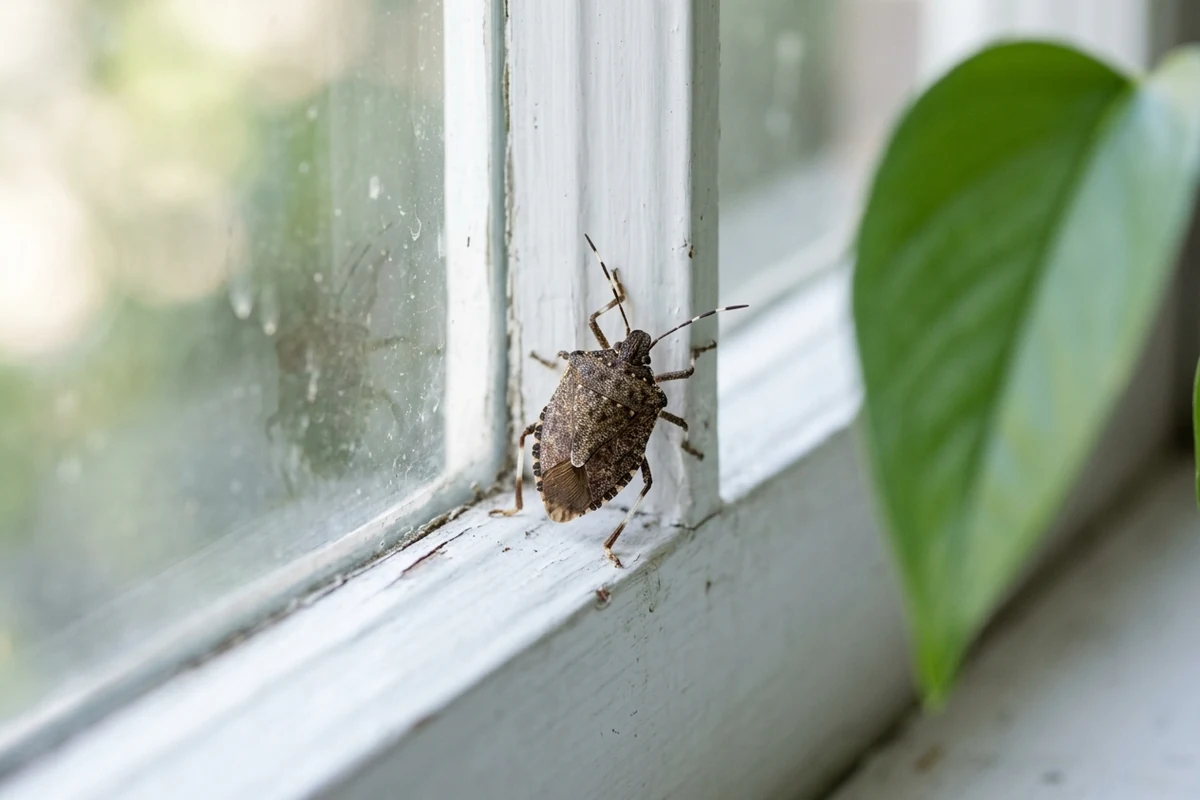

- The stink bugs that come inside do it in the fall, to spend the winter sheltered.
- They do not bite people or pets, and they do not breed inside the house.
- Crushing one releases the smell they are named for. Pick them up with a tissue instead.
- The kind that invades homes by the thousands elsewhere had one confirmed Texas find by 2012.
- Sealing the gaps they use is the lasting fix. Spraying inside is not.





Why are stink bugs in my house?
The few kinds of stink bugs that come indoors do it in the fall, looking for a sheltered place to spend the winter. The University of Kentucky says shorter days and cooler weather set off the move, and that the bugs slip in through gaps around windows, doors, vents and siding.
Kentucky was describing the brown marmorated stink bug, the kind best known for invading homes.
The University of Kentucky fact sheet on stink bugs in homes says the brown marmorated stink bug gathers on buildings on warm, sunny days, in Kentucky in September and October, prefers the upper parts of a building and often get in through the attic and the chimney. Once inside they stay in the walls and the attic, and on warmer winter days they wander out into the rooms. The ones you see in January are the same bugs that got in the fall before, Kentucky’s entomologists say, because stink bugs do not breed indoors.
Kentucky adds that the brown marmorated stink bug is drawn to light, buzzing around lamps in the evening and gathering at porch lights in late summer and fall. Texas A&M AgriLife Extension calls it one of a string of foreign pests that want to share our homes during the winter months.
Are stink bugs harmful?
Stink bugs are a nuisance in a home, not a danger. Penn State Extension says they will not reproduce inside a house or damage it, and Texas A&M AgriLife Extension entomologist Wizzie Brown has said the brown marmorated stink bug is not a health threat to people or animals.
The smell, and an allergic reaction in sensitive people, are the real costs.
Penn State Extension’s page on the brown marmorated stink bug says the odor can set off a runny nose or itchy eyes in people sensitive to it, and that a bug crushed against bare skin can leave a rash in a small share of people. The University of Kentucky suggests picking them up with a paper towel or tissue and keeping your hands away from your face and eyes.
The one indirect risk is in the walls. Both Kentucky and Penn State warn that killing a large number of stink bugs inside the walls can leave dead bugs for carpet beetles to feed on, and the beetles can then move on to wool and stored food. Outdoors, Texas A&M says green and brown stink bugs can damage tomatoes and other garden fruit.
Do stink bugs bite?
No. Stink bugs do not bite people or pets, the University of Kentucky says. They are related to bed bugs, but their long, piercing mouthparts are made for sucking the juices out of plants, not for biting skin. What a stink bug does instead is give off the strong smell it is named for when disturbed.
Kentucky’s entomologists compare the smell to cilantro. It comes from scent glands on the bug’s body, which Texas A&M AgriLife Extension’s Insects in the City post on stink bugs says give off a musty odor. A broom or a vacuum used on them can smell like stink bugs for a while afterward, Kentucky adds, before the odor fades.
So a stink bug on a pillow or a sleeve is harmless. Brush it into a cup or onto a tissue and put it outside, rather than squashing it.
Which stink bugs are found in Texas?
The stink bugs Texas gardeners notice are green and brown stink bugs on vegetables, Texas A&M AgriLife Extension says, and they rarely cause much trouble in town. Its Insects in the City program says the name covers about 220 North American insects, and that not all of them eat plants.
The kind that fills houses by the thousands in other states is the brown marmorated stink bug, an insect from Asia first noticed in Pennsylvania in 1998. When Texas A&M AgriLife Extension warned Texans about it in 2012, it had only one confirmed find in the state, in a travel trailer that had been moved to Corpus Christi from Pennsylvania. Its entomologists said the bug could live almost anywhere in Texas, and that it might already be in parts of the state without anyone reporting it. That 2012 warning is the most recent Texas A&M word on its spread in Texas that we could find, while Kentucky’s 2020 fact sheet says it has reached at least 46 states.
The Texas A&M warning about the brown marmorated stink bug describes it as drab brown with black mottling on its back and a pattern of alternating white and black triangles around the edge of its body. Kentucky adds that it is about 5/8 inch long with white and black bands on its legs and antennae, and that in places where it has settled in, stink bugs gathering indoors usually means this one, though it is easy to confuse with other bugs. Texas A&M asked anyone who finds a stink bug they have not seen before to send one to an AgriLife Extension agent to be identified. Our stink bug identification page has close photos and the bugs most often mistaken for one.
Where stink bugs get into a house
These are the openings the University of Kentucky and Penn State Extension name, and the fix for each one.
| Way in | The fix |
|---|---|
| Gaps around windows and doors | Seal with caulk. Penn State suggests a good silicone or silicone-latex caulk |
| Soffits, fascia and siding | Seal the cracks with caulk or another sealant, as Kentucky advises |
| Attic vents | Screen behind the vent with mesh no larger than 1/6 inch |
| Window air conditioners | Seal around the unit, or take it out of the window in the fall |
| Pipes and wires through the wall | Seal the gap where each one enters the house |
| Torn window screens | Repair or replace them |
| Baseboards, trim and ceiling lights | Inside, seal the cracks they crawl out of, as Penn State advises, so the bugs in the walls cannot reach the rooms |
Kentucky says summer is the best time to seal, before the bugs start moving to buildings.

That is why ordinary hardware cloth over an attic vent does not stop them. Stink bugs are thin, Kentucky says, and fit through surprisingly tight spaces.
How to get rid of stink bugs in the house
- Pick them up or vacuum them. The University of Kentucky says the best way to remove stink bugs indoors is by hand, with gloves or a tissue, or with a broom or vacuum. Texas A&M AgriLife Extension calls the vacuum the best answer for fall invaders and says to throw the bag out afterward.
- Do not crush them with bare hands. Kentucky says a crushed or handled stink bug can give off chemicals that irritate the skin. A cut-off nylon stocking in the vacuum’s suction tube limits the smell and saves vacuum bags, Kentucky says, and Texas A&M shows the same stocking trick for catching bugs to let go outside.
- Use their habit of dropping. Kentucky says stink bugs fall straight down when disturbed, so a cup held under one on a wall or curtain, and a gentle nudge, catches it cleanly.
- Skip the spray inside. Kentucky says insecticides are not warranted against stink bugs indoors, except perhaps in a heavily infested attic, and the Texas A&M Insects in the City post on fall invaders warns that sprays which kill large numbers indoors or in the attic can leave the smell of the dead bugs behind. Penn State adds that foggers do not stop more bugs from coming out of the walls.
- Seal the way in, and call a professional if they come back every year. Sealing is the most lasting fix, Kentucky says. For a home that fills with stink bugs every fall, it suggests a professional treatment on the outside of the house before the bugs gather, repeated through the weeks they are flying to buildings.
How Pest Me Off helps with stink bugs
Pest Me Off’s general pest control covers the outside of the home: a technician inspects it for gaps, treats the foundation and entry points, and points out the fixes that close the house up. For a home where the bugs keep finding a way in, our pest exclusion and rodent proofing service seals the openings themselves, from weep holes and foundation gaps to AC line openings, attic vents, garage door corners and chimney openings.
Same-day service, when you call before noon, is available across McKinney, Plano, Frisco, Allen and the rest of Collin County, with no-contract options.
Stink bugs on the windows or in the attic? Same-day pest control in McKinney and the surrounding cities when you call before noon.
We inspect the outside of the house for the gaps they use, treat the foundation and entry points, and seal the openings that let them back in. No-contract options.
