
Are Possums Dangerous? Opossums in Collin County Yards
A gray animal with a white face and a bare pink tail crossing the fence at dusk is a Virginia opossum, and in spring it is often a mother looking for a dry spot under a deck or a house. This article covers whether possums are dangerous, whether they carry rabies, when they bite, the fleas they bring, and how to get one out from under your house in Collin County.
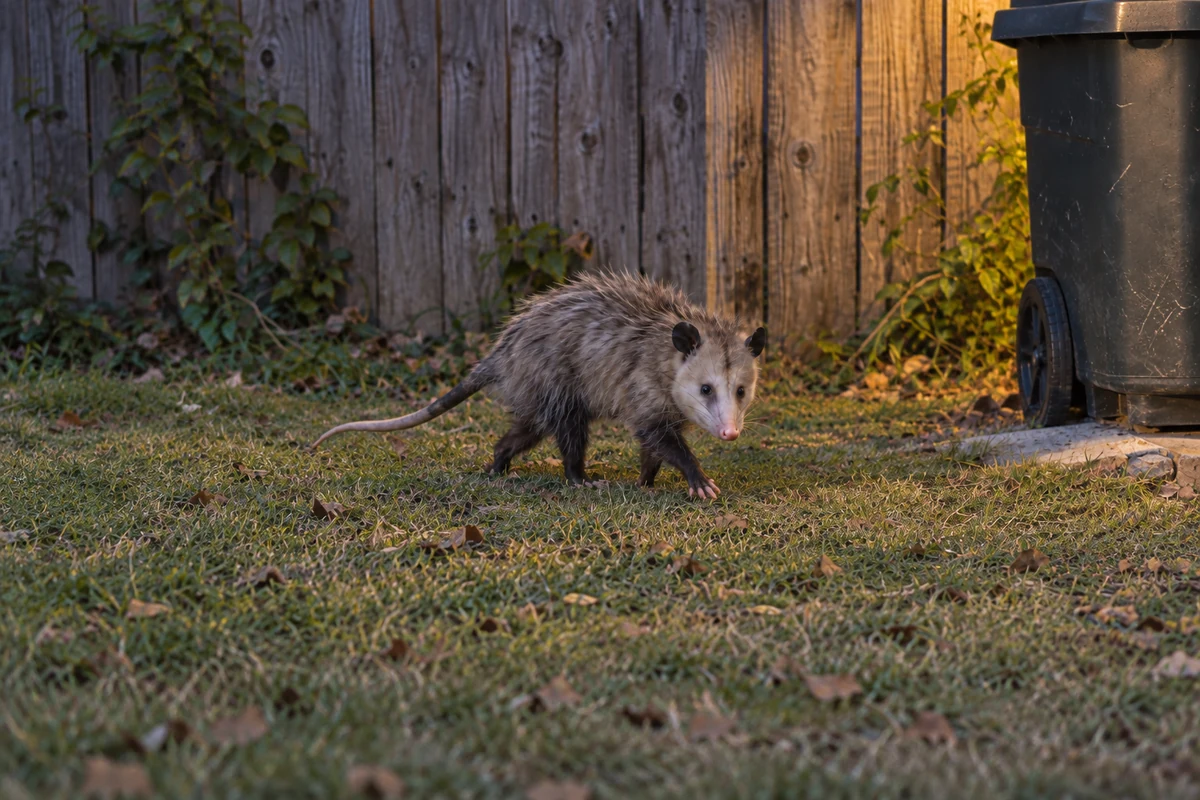

- Of the 388 wild animals confirmed with rabies in Texas in 2024, 0 were opossums.
- An opossum has 50 teeth and can bite when it feels threatened.
- Its fleas can spread flea-borne typhus to people and pets.
- It is not strong, so it usually moves in through gaps that are already there.
- Usually two litters a year in Texas, one in February and one in June.





Are possums dangerous?
A possum can bite when threatened, but a frightened one often just plays dead, hunkers down or bares its teeth. It often carries fleas and ticks. The Internet Center for Wildlife Damage Management says opossums generally avoid pets and livestock, so keep your distance and leave catching one to a professional.
The teeth are what make people nervous. An opossum has 50 of them, more than any other North American mammal, according to the wildlife damage center’s opossum page, and it hisses, growls and screeches as it shows them. Its damage identification page warns that injuries can happen when a dog or cat goes after one.
The bigger health worry is the fleas. The Texas Department of State Health Services page on flea-borne typhus names opossums among the animals whose infected fleas spread the disease, and says new areas of it have turned up in the Dallas-Fort Worth area. Texas A&M AgriLife Extension says opossums can pass it to people and pets. Our article on flea bites on people covers how fleas end up in a home with no pets.
A possum out in the daytime is not always sick. The wildlife damage center’s biology page says opossums are mainly active at night but may feed by day, especially in cold weather. Its damage identification page notes that an opossum may not move when approached, and advises keeping people and pets away and giving it 24 hours to move on. If it is still there after that, the page says to assume it is sick or injured. That is the point to call a wildlife professional rather than handling it yourself.
Do possums have rabies?
Possums can get rabies, but it is rare. The Texas Department of State Health Services confirmed rabies in 388 wild animals in 2024, and not one was an opossum. The Internet Center for Wildlife Damage Management says opossums are more resistant to rabies than any other mammal, though they are not immune.
The state’s 2024 report on rabies in animals lists the wild animals that tested positive that year as 205 bats, 136 skunks, 35 foxes, 11 raccoons and 1 coyote. Texas law names those same five, bats, skunks, foxes, raccoons and coyotes, as the high-risk animals for rabies. The opossum is not one of them.
Rare is not never. The CDC’s page on rabies says it spreads through the bites and scratches of an infected animal, and that any possible exposure means washing the bite or scratch right away with soap and water and getting medical care urgently. That advice holds for an opossum bite too.
Do possums bite?
Possums can bite, and they are most likely to when they feel threatened. The Internet Center for Wildlife Damage Management lists biting among the things a threatened opossum may do, along with hissing, growling, baring its teeth and giving off a musky liquid, and it says injuries may result when pets approach one.
The other thing a cornered possum does is play dead. The wildlife damage center’s opossum biology page describes it rolling onto its back and going limp, sometimes with its tongue hanging out, and says this may be an involuntary state rather than an act. A limp opossum is often alive, so never pick one up or poke it.
The safest course is to keep pets inside while an opossum is in the yard, and to leave catching it to a professional with the right equipment.
How do you get rid of possums under your house?
To get rid of possums under your house, take away what draws them, get the animal out, then close the opening. The Internet Center for Wildlife Damage Management says opossums are not strong, so they usually use openings that are already there, and it recommends securing crawl spaces, porches and decks with galvanized hardware cloth.
Opossums do not dig their own burrows. The wildlife damage center says they use burrows abandoned by other animals, along with tree cavities and brush piles, and sometimes den under homes, in attics and in garages. Texas Tech’s Mammals of Texas lists dens under buildings and in attics too, and records the opossum statewide apart from the driest parts of the Trans-Pecos.
Timing matters in spring. Texas Tech says a Texas opossum usually has two litters, one in February and one in June, and the young stay attached in the pouch until they are about 7 weeks old. Close the gap while a mother and her young are under the floor and they can be trapped inside, which is why our inspection checks for young before anything is sealed.
Getting the animal out is the part to hand off. The wildlife damage center describes one-way doors about 6 by 6 inches that let an opossum leave and not come back. Texas Parks and Wildlife lists the opossum among the state’s fur-bearing animals. Its rules on nuisance fur-bearing animals allow one to be moved and released only with the department’s authorization and the permission of the owner of the land where it is let go. Do not count on sprays or noise boxes either. The wildlife damage center’s control page says no repellents are registered for opossums and no frightening devices are effective against them.
What draws possums to a yard, and how to take it away
These come from the Internet Center for Wildlife Damage Management, Texas A&M AgriLife Extension and the Texas Department of State Health Services.
| What draws it | Why it works | What takes it away |
|---|---|---|
| Pet food left outside | Opossums visit dishes of food meant for pets | Bring bowls in, and never leave pet food out at night |
| Open trash cans | They get into garbage near homes | Cans with lids that lock or fasten tight |
| Fallen fruit and pecans | They eat fruit, pecans and garden produce | Pick up fallen fruit and nuts |
| Bird feeders and compost | Spilled seed and food scraps are easy meals | Feeders that do not spill, compost in a locking bin |
| Brush piles and woodpiles | Cover to hide and sleep in | Clear brush, mow, keep firewood off the ground |
| Gaps under decks and sheds | A dry den they do not have to dig | Galvanized hardware cloth with a buried skirt |
Food brings an opossum in, and an open gap gives it a reason to stay. Take away both.
How to keep possums out from under the house
- Take the food away at night. The Texas Department of State Health Services says not to leave pet food out at night, and the wildlife damage center says to cover trash and keep compost in a bin with a locking lid.
- Clean up the yard. Pick up fallen fruit and pecans and stop bird feeders from spilling seed on the ground. The state health department says to clean up the yard so rodents, opossums and stray cats cannot live there, because the infected fleas they carry spread typhus. It suggests removing brush and trash, keeping the grass mowed and keeping firewood off the ground.
- Find the way in. Walk the edge of the deck, porch, shed and crawl space and look for gaps, flattened soil or tracks that look like small hands with the fingers spread wide.
- Make sure nothing is inside before you close anything. A mother may have young with her from late winter into summer. If you think one is living there, call a wildlife professional rather than trapping it yourself.
- Close the low openings with metal mesh. The wildlife damage center recommends galvanized hardware cloth with a 1 by 1/2 inch mesh, buried at least 2 inches with a skirt of 12 to 18 inches laid under the soil to discourage digging.
How Pest Me Off handles possums
For opossums, Pest Me Off’s wildlife removal means we trap and remove the animal, then show you the low openings letting it in. Every job starts with an inspection from the roofline to the crawl space to confirm the animal, find the entry points and check for a nest or young. Removal is the humane way, with live traps or one-way doors sized to the species and a check for a litter so nothing is left behind. We clear nesting and droppings from the access area and never use poisons on wildlife.
Then the way in gets sealed with metal and mesh an animal cannot chew through, through our rodent proofing and exclusion service, so the next one cannot follow it in. The wildlife inspection is free, and the job is quoted after it, never guessed over the phone. Same-day service when you call before noon, in McKinney and the surrounding cities.
An opossum under the deck or the house? Wildlife removal across Collin County.
We find where it sleeps and check for young, trap and remove it the humane way, clean up the access area, and seal the low openings so the next one cannot move in. Free wildlife inspection.
