
No-See-Ums in Collin County, TX | Identification and Control
A no-see-um is a biting midge, a tiny fly also called a sand gnat or a punkie, that bites at dusk and slips through ordinary window screens. The University of Florida says adults are usually 1 to 2 mm long, and that only the females bite, because they need blood to develop their eggs. They breed in wet ground.

Stinging bites at dusk and nothing to see? Our office sits where McKinney, Plano, Frisco and Allen meet, 5 to 10 minutes from most homes in those four cities. Call and tell us where and when the bites happen. We look before we recommend anything.
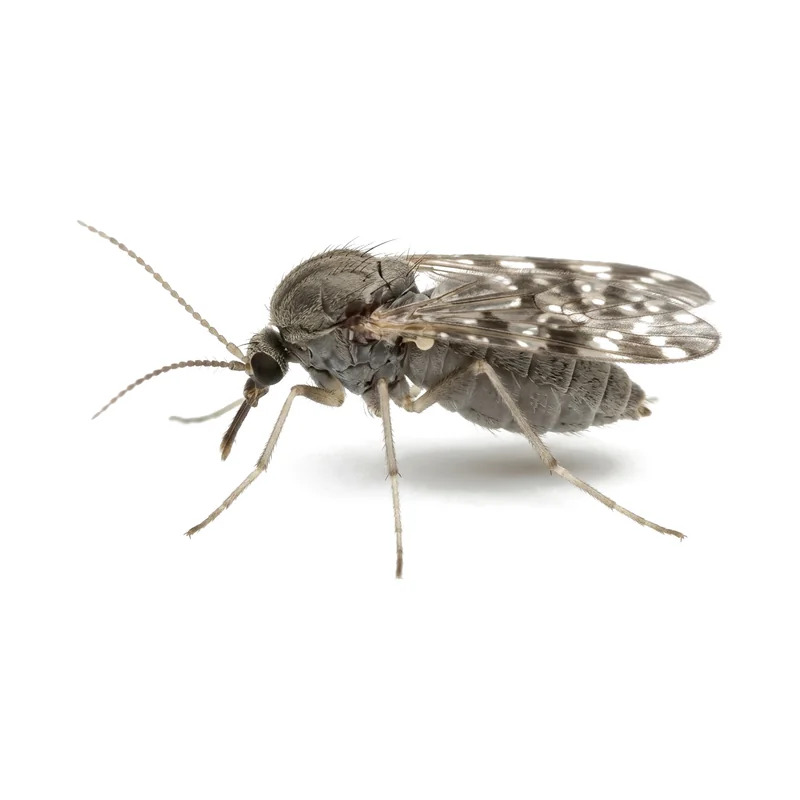
No-See-Um
The no-see-um is a biting midge, a true fly with two wings in the family Ceratopogonidae. The University of Florida says most of that family do not bite, and that about 170 species of the main biting group, Culicoides, live in the United States.
Risk Assessment
Choose a row for the full detail- Color
- Small and dark, barely visible to the naked eye
- Diet
- Both sexes drink nectar, females also take blood to develop their eggs
- Threat level
- Moderate
- Wings
- Two, most patterned with dark and pale spots
- Habitat
- Wet ground, mud and soggy mulch or lawn, where the larvae live
- Travel range
- About 1.2 miles for adults of many species
- Generation time
- About 2 to 6 weeks, varying widely
- Size
- Adult usually 1 to 2 mm
What Does a No-See-Um Look Like?
Adult biting midges are usually 1.0 to 2.0 mm long, according to the University of Florida’s biting midge profile, and many species are less than 1/24 inch. The same profile says the wings of most species are patterned with dark and pale spots, and that the females have mouthparts built for piercing skin.
The University of Arizona Cooperative Extension describes small, dark flies with short, stocky bodies and a shiny back, barely visible to the naked eye. Up close or under a microscope, it says, they may look like miniature mosquitoes.
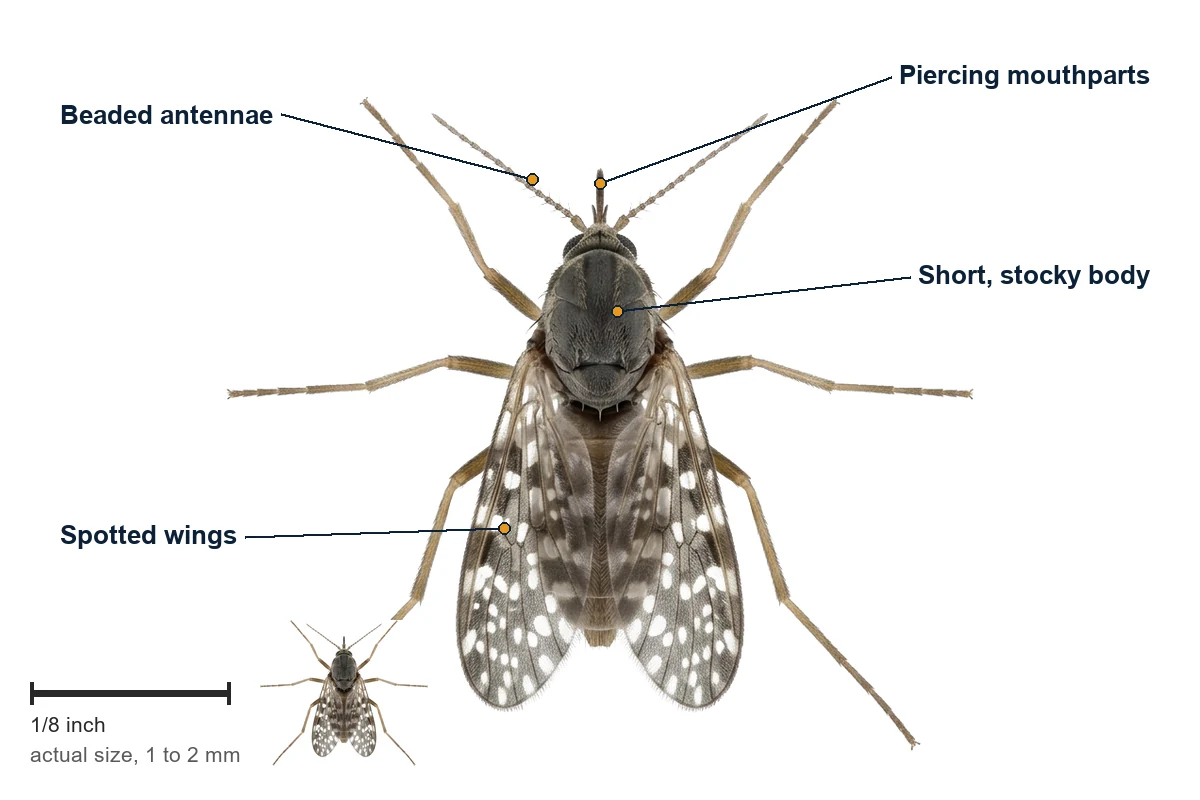
A no-see-um is usually 1 to 2 mm long, the University of Florida says, with spotted wings and mouthparts built for piercing.
- A sharp sting or burn on bare skin with nothing there to slap
- Bites at dusk, at night or in the early morning
- Small red welts about 1/8 inch across, or small water-filled blisters
- Bites on the head and neck after time outside
- Tiny dark flies getting in through the window screens
- Bites near wet ground, a pond, a creek or a soggy flower bed
Other Names for the No-See-Um
The University of Florida says biting midges are also known as no-see-ums and sand gnats, and that they belong to the fly family Ceratopogonidae. The University of Arizona Cooperative Extension adds a fourth name, punkies.
The main biting group is the genus Culicoides. The University of Florida says it holds around 1,350 species worldwide, about 170 of them in the United States, and that each species usually breeds in just one or two kinds of wet places.
| Name | What it means |
|---|---|
| Biting midge | The name scientists use for these tiny bloodsucking flies. |
| Sand gnat | A common name the University of Florida lists. |
| Punkie | A common name the University of Arizona lists. |
| Culicoides | The main biting genus, about 170 species in the United States. |
How to Tell No-See-Um Bites from Chigger or Mosquito Bites
No-see-ums, chiggers and mosquitoes all leave itchy red bumps after time outside, and the right fix depends on which one it is. Where the bites are, when they started and where you were tell them apart. Chiggers come from shaded grass and brush, a job for Chigger Control. Mosquitoes are a job for Mosquito Control. No-see-ums come from wet ground nearby, a job for No-See-Um Control.
| Species | Size and Color | Key Feature | Where Found |
|---|---|---|---|
|
No-See-Um
AKA: Biting Midge
Culicoides species
This species
|
Usually 1 to 2 mm. Small, dark and barely visible. | Felt as a sting or burn on bare skin, often at dusk. Passes through standard window screens. | Breeds in wet ground, mud, soggy mulch or lawn and the edges of ponds and streams. |
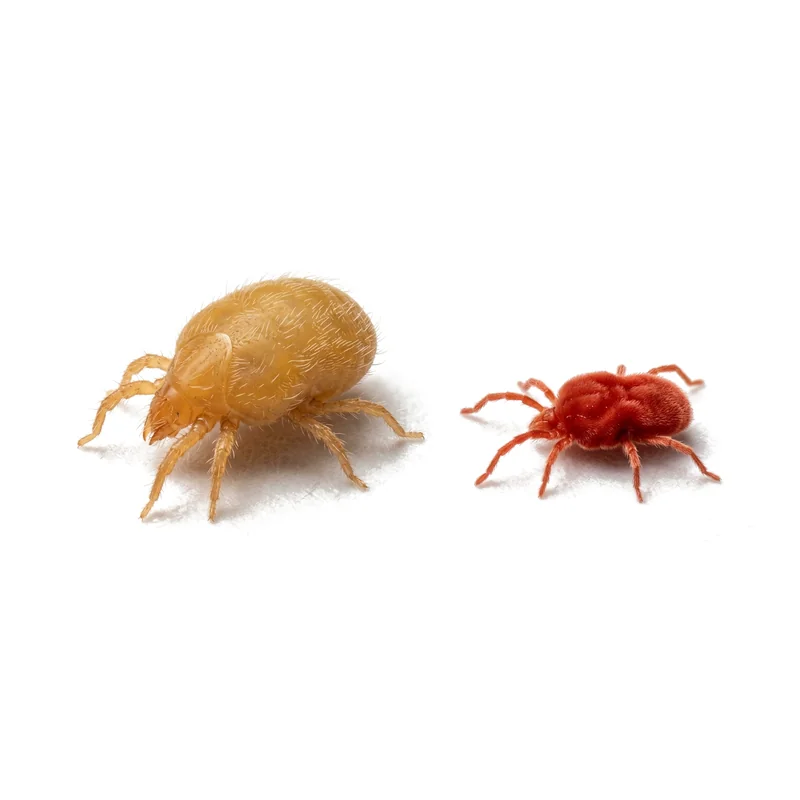
Chigger
AKA: Red Bug
Eutrombicula species
|
The biting young is about 1/100 inch, yellowish to light red. | A mite, not a fly. Bites cluster where clothing is tight and itch 3 to 6 hours later. | Shaded soil under grass, weeds and brush. |
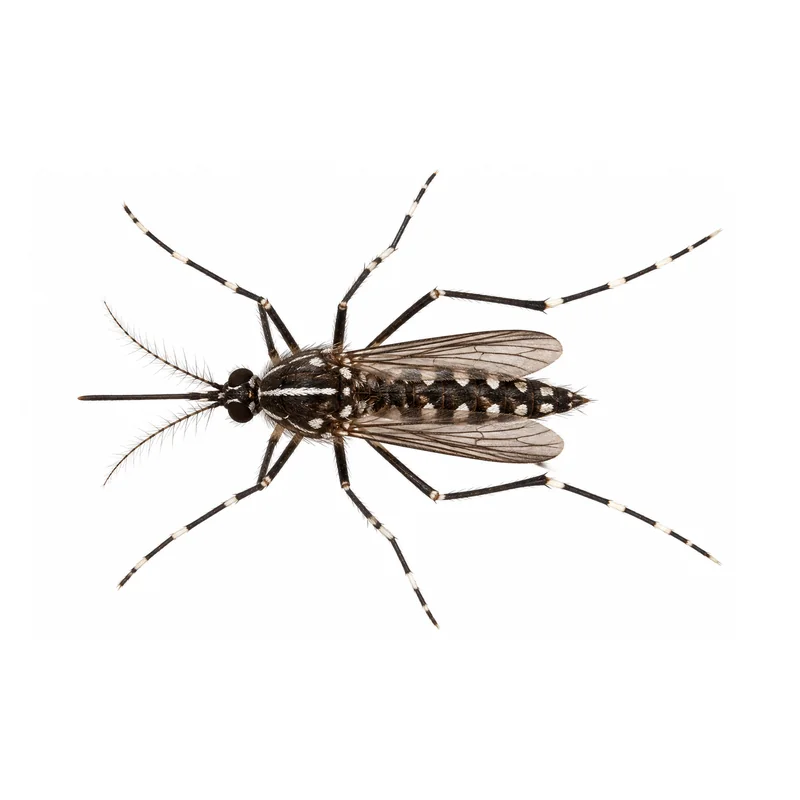
Mosquito
AKA: Asian Tiger Mosquito
Aedes albopictus and others
|
Larger. A no-see-um looks like a smaller, more compact mosquito. | Usually a biter you can see. The same repellents work on both. | See our Asian tiger mosquito page for where it breeds and rests. |
No-See-Um Bites vs Chigger Bites
The No-See-Um in Three Numbers
1 to 2 mm
The University of Florida says adult biting midges are usually 1 to 2 mm long.
University of Florida
2 to 3 days
The University of Florida says people who are hypersensitive to the bites may itch for 2 to 3 days.
University of Florida
1.2 miles
The University of Florida says adults of many biting midge species fly about 1.2 miles.
University of Florida
Do No-See-Ums Bite People?
Yes, the females do. The University of Florida says females of most species feed on blood to develop their eggs, using mouthparts with mandibles used for cutting flesh. The males cannot pierce skin, and both males and females feed on nectar.
The University of Arizona says the females bite people and other animals, and that the bites are painful and irritating and may come with allergic reactions.
What Do No-See-Um Bites Look Like?
The University of Arizona Cooperative Extension says bites usually appear as small red welts or water-filled blisters that itch intensely, and its Backyard Gardener sheet puts the welt at about 1/8 inch across. The University of Florida says the bite itself feels like a local sting or burn, with a defined red area around each bite.
The welts can break open and bleed when scratched, and the itching may continue, the University of Arizona adds.
How Long Do No-See-Um Bites Itch?
The University of Florida says the discomfort usually lasts minutes to hours, but people who are hypersensitive to the bites may itch for 2 to 3 days. The University of Arizona says sensitive people may develop long-lasting painful and itchy sores.
For the itch, the University of Arizona says over-the-counter cortisone creams usually help, and an over-the-counter anti-inflammatory may be needed for pain or swelling. For a more severe reaction, it says to see a dermatologist or physician.
Are No-See-Ums a Risk to Horses and Livestock?
They can be. The University of Florida says biting midges carry bluetongue and epizootic hemorrhagic disease viruses to sheep, cattle and deer, and that the bites can cause an allergic skin condition in horses called sweet itch. The University of Arizona names one species that spreads bluetongue to sheep and cattle.
If you keep horses or livestock and see bites or a skin reaction, your veterinarian is the one to check the animal.
When No-See-Um Bites Need Fast Action
A Severe Reaction
The University of Arizona says a more severe reaction to the bites calls for a dermatologist or physician.
Sores That Will Not Settle
Sensitive people can develop long-lasting painful and itchy sores, the University of Arizona says. Show them to your doctor.
Bites Every Evening at Home
The University of Arizona says heavy biting usually happens close to where no-see-ums emerge. Finding that wet spot is the first step.
Horses or Livestock on the Property
Biting midges can carry livestock diseases and cause sweet itch in horses, the University of Florida says. Ask your veterinarian.
Why You Have No-See-Ums Around Your Home
No-see-ums need wet ground to breed. The University of Arizona Cooperative Extension says that in towns they can breed in any muddy or moist spot, such as over-irrigated mulch or sod, tree holes, new construction sites, indoor plant pots and even water from air conditioners. The University of Florida adds the edges of streams, marshes, ponds and puddles, and says the larvae cannot survive drying out.
Distance matters too. The University of Florida says adults of many species fly about 1.2 miles, so a pond out of sight can still supply the bites. The University of Arizona says that most bites still happen close to where they emerge, which makes the wet spots nearest the patio the first place to look. Because they pass through ordinary window screens, the same insects can bite indoors.
Where No-See-Ums Breed Around Collin County Homes
No-see-um larvae live in wet ground rich in organic matter, the University of Arizona says, and cannot survive a total lack of moisture or more than 2 inches of water. The University of Florida says improving drainage may reduce the number of larvae in an area.
No-See-Um Breeding Spots Across Collin County
No-see-ums follow the water, not the city line. In McKinney, Frisco, Allen and Plano, the yards that fit the University of Florida’s description are the ones backing onto creeks, ponds and wet greenbelts, and the ones whose beds and lawns stay soaked.
Newer neighborhoods still under construction in Princeton, Prosper and Farmersville fit another place the University of Arizona names, new construction sites.
No-see-ums are a dusk, night and early morning biter. This chart shows the time of day, not the months, because no Texas source on their season could be read.
Pattern from the University of Florida, which says most biting midges bite at dusk, at night or in the morning, though in cold weather and near the coast many bite in broad daylight, and the University of Arizona, which says they are usually active at dawn or dusk.
Why No-See-Ums Keep Coming Back
How Pest Me Off Handles No-See-Ums
No-see-um control starts with asking where and when the bites happen and looking at the yard and the house, because a bite alone does not identify the pest. We explain what we found and what we recommend before any work is done.
Ask and Inspect
We ask where your family gets bitten and at what time of day, then look at the soggy beds and lawn corners, the air conditioner’s drain line, the creek or pond behind the fence, and the screens and doors. A bite alone does not identify the pest, so we put the whole picture together first.
Explain What We Found
We explain what we found, what we recommend and why, before any work is done.
Show You What to Dry Out
We point out the wet spots you can change yourself, like a bed the sprinklers keep soaked, a low corner that never dries, or a drain line dripping onto the soil.
Show You the Way In
We show you where they get inside, like a torn screen or a door left open at dusk. Tell us where and when the bites still happen, and we look again at what fits.
& Other Companies
How to Avoid No-See-Um Bites Yourself
The University of Arizona Cooperative Extension says to cover up, use a repellent, keep them out of the house and dry out the spots where they breed.
Why Some DIY Responses Fail for No-See-Ums
Most DIY no-see-um trouble comes from trusting ordinary screens, spraying where the larvae cannot be reached, or counting on one repellent to do all the work.
Ordinary Window Screens
The University of Florida says regular window screens do not keep biting midges out, and the University of Arizona says they pass through standard 16 by 16 mesh.
Spraying for the Larvae
The University of Arizona says insecticides on the larvae are not a viable option, because the wet spots where they lay eggs are scattered and hard to reach. Drying the wet spots works better.
A Repellent Alone
The University of Arizona’s Backyard Gardener sheet says the usual mosquito repellents seem only marginally effective against them. Cover up as well.
Common No-See-Um Questions
What are no-see-ums?
What do no-see-um bites look like?
Are no-see-ums gnats?
How long do no-see-um bites itch?
Do no-see-ums carry disease?
When do no-see-ums bite?
Can no-see-ums get through window screens?
Where do no-see-ums breed?
What repellent keeps no-see-ums off?
How do I get rid of no-see-ums?
Bitten at Dusk by Something You Cannot See? Start With a Call.
We ask where and when the bites happen, look at the yard and the house, and explain what we found before any work. No-see-um help across McKinney, Allen, Frisco, Plano, and all of Collin County.