
Chiggers in Collin County, TX | Identification and Control
A chigger is the young stage of a tiny mite that waits in shaded, grassy ground and bites people who walk or sit there. Texas A&M AgriLife Extension says the biting young chigger is about 1/100 inch across, so most people never see one. The bites cluster where clothing is tight and itch for days. Chiggers do not burrow and do not drink blood.
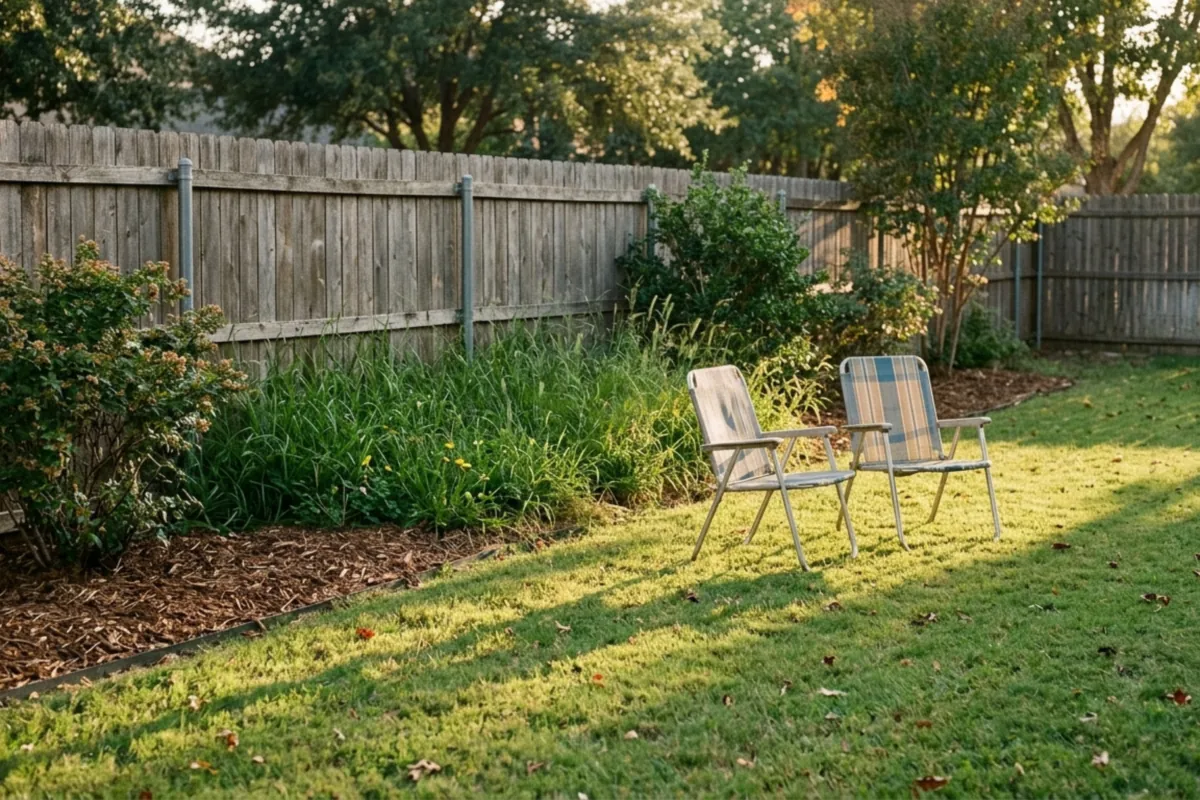
Itchy bites at the sock line after an evening outside? Our office sits where McKinney, Plano, Frisco and Allen meet, 5 to 10 minutes from most homes in those four cities. Call and tell us where and when the bites happen. We inspect first, then treat the areas that need it.
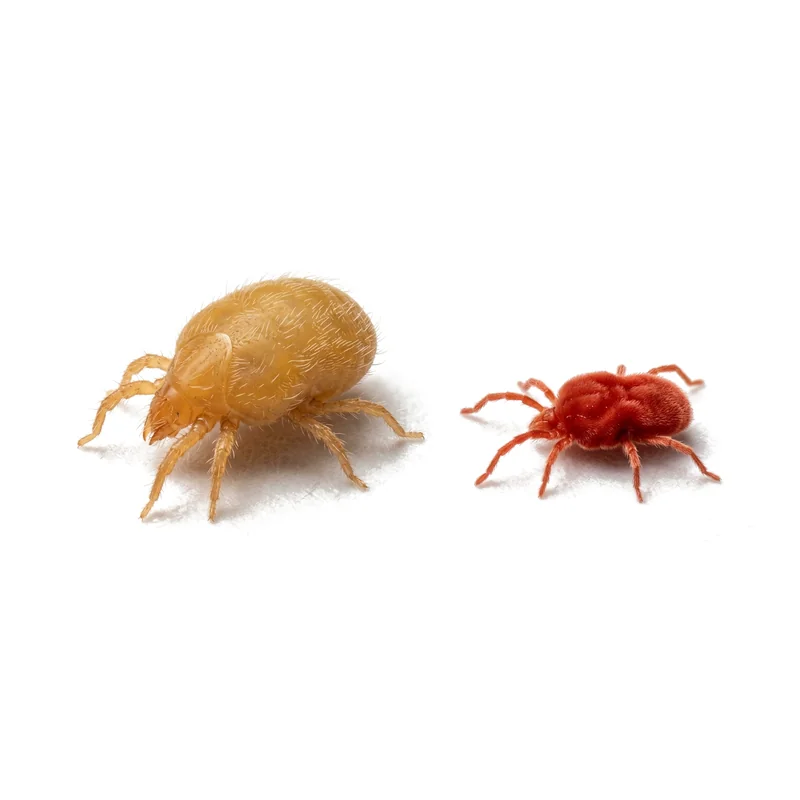
Chigger
The chigger is the six-legged young of a mite, related to ticks, spiders and scorpions rather than insects. Texas A&M AgriLife Extension says only the young bite, and that two kinds cause the trouble in Texas.
Risk Assessment
Choose a row for the full detail- Color
- Young yellowish to light red, adult bright red
- Diet
- Young feed on skin cells of animals and people, adults eat tiny soil insects and eggs
- Threat level
- Moderate
- Where it hides
- Shaded soil under grass, weeds, brush and leaf litter
- Active season
- Late spring to fall in most of Texas
- Egg to adult
- 2 to 12 months
- Size
- Young about 1/100 inch, adult about 1 mm
What Does a Chigger Look Like?
You will almost never see the one that bites. The young chigger is a yellowish to light red speck about 1/100 inch across. You see the signs instead: clusters of small, red, itchy bumps at the sock line, the waistband and behind the knees, a few hours after time in tall grass.
The biting young chigger has six legs, is yellowish to light red and measures 0.15 to 0.3 mm, about 1/100 inch across, according to Texas A&M AgriLife Extension’s chigger guide. That is smaller than the period at the end of this sentence. The same guide says only the young stage feeds on people and animals.
The adult mite is easier to spot. Texas A&M says it is about 1 mm long, brilliant red and velvety, with eight legs, and is sometimes seen walking in leaf litter or along the edges of stones and concrete. The adult does not bite. It hunts small insects and insect eggs in the soil.
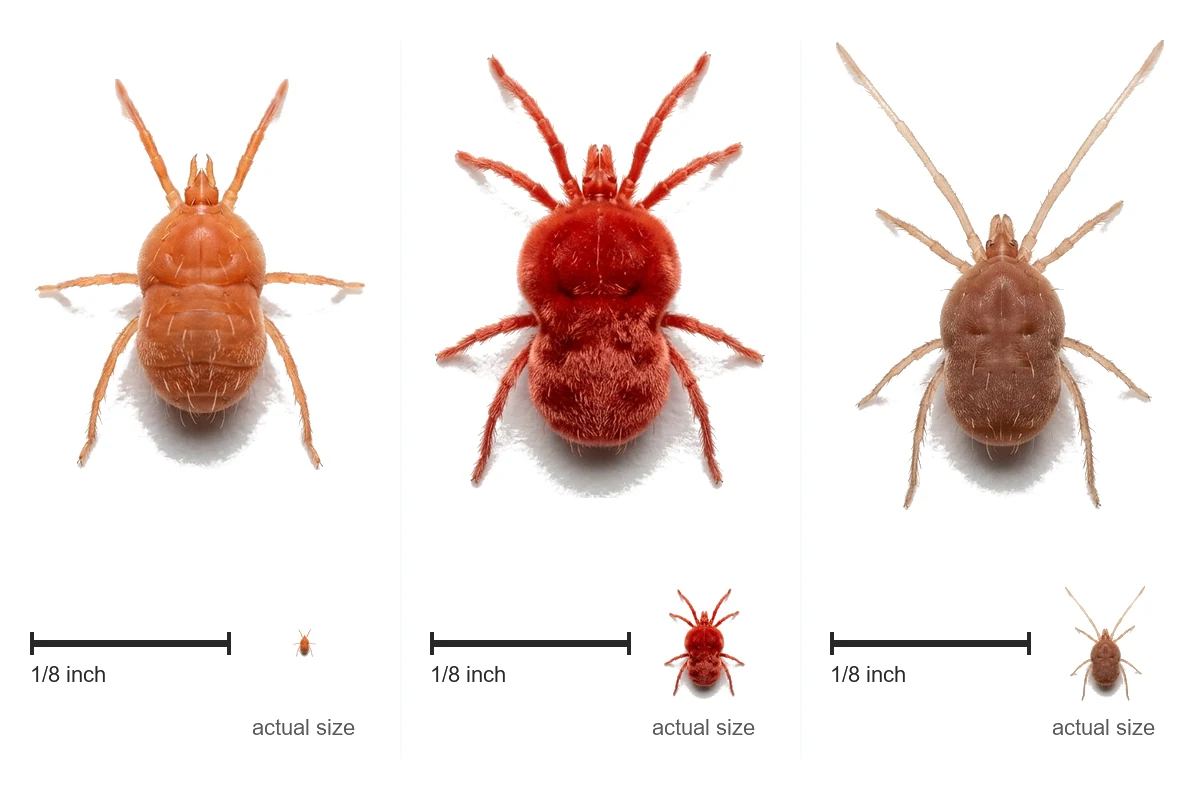
Left to right, the biting chigger young, the adult chigger and a clover mite, each at actual size beside a 1/8 inch bar.
- Clusters of small red bumps around the ankles, right under the sock line
- Bites along the waistband, behind the knees, in the groin or under the arms
- Itching that starts a few hours after time outside, not right away
- Bites after sitting on the lawn, walking a trail edge or working in a shady bed
- A red dot in the middle of a bump that looks like something buried in the skin
- No pet scratching and no specks in pet bedding, which points away from fleas
Other Names for the Chigger
Texas A&M AgriLife Extension says the bright red adults are often called red bugs, and that in Texas the word chigger is used for the biting young of mites in the genus Eutrombicula. Chiggers belong to the mite family Trombiculidae.
Two Texas species do nearly all the biting. Texas A&M names Eutrombicula alfreddugesi, found in grassy and weedy ground, briar patches and wooded edges, and Eutrombicula splendens, which prefers damp places such as rotten logs and stumps.
| Name | What it means |
|---|---|
| Red bug | The common name for the bright red, velvety adult, which does not bite. |
| Chigger mite | A reminder that chiggers are mites, not insects. |
| Eutrombicula alfreddugesi | The Texas chigger of grassy, weedy ground and wooded edges. |
| Eutrombicula splendens | The Texas chigger of damp ground, rotten logs and stumps. |
How to Tell Chigger Bites from Flea or Mosquito Bites
Chiggers, fleas and mosquitoes all leave itchy red bumps, and the right fix depends on which one it is. Where the bites are and where you were before they started tell them apart. Fleas come from a pet and the carpet, so they are a job for Flea and Tick Control. Mosquitoes come from standing water, a job for Mosquito Control. Chiggers come from shaded grass and brush in the yard.
| Species | Size and Color | Key Feature | Where Found |
|---|---|---|---|
|
Chigger
AKA: Red Bug
Eutrombicula species
This species
|
The biting young is about 1/100 inch, yellowish to light red. The adult is about 1 mm and bright red. | Too small to see. Bites cluster where clothing is tight, at socks, waistbands and behind the knees, and itch a few hours later. | Shaded soil under tall grass, weeds, brush and leaf litter outdoors. |
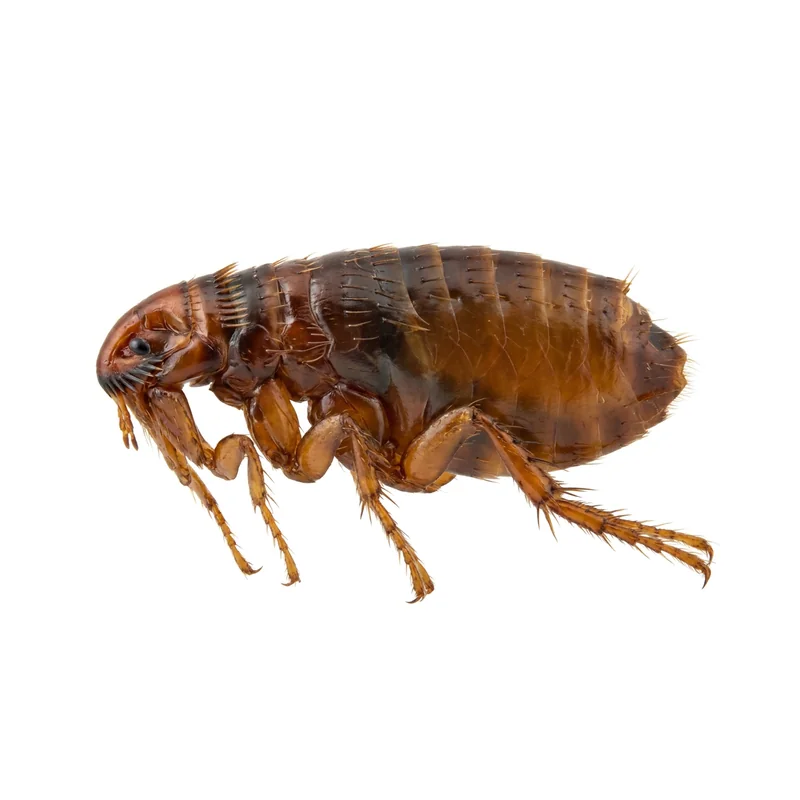
Cat Flea
AKA: Flea
Ctenocephalides felis
|
About 1/8 inch, 1 to 3 mm. Reddish brown to black. | Big enough to see, and it jumps. Bites are mostly on the ankles and lower legs, often with a scratching pet. | On dogs and cats, and in carpet, pet bedding and shady soil where pets rest. |
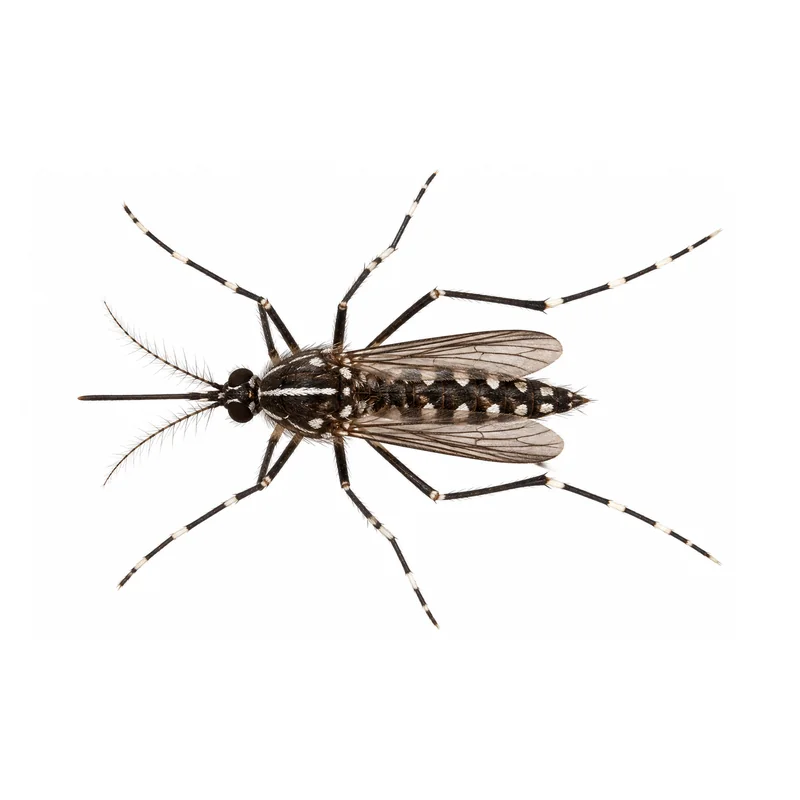
Asian Tiger Mosquito
AKA: Tiger Mosquito
Aedes albopictus
|
Small. Shiny black with silver white markings and one white stripe down the back. | You see and feel it land. It bites by day, most of all in the early morning and late afternoon. | Resting in shrubs near the ground in shade, breeding in containers of standing water. |
|
Clover Mite
AKA: Red Mite
Bryobia praetiosa
|
Smaller than the head of a pin. Reddish or brown to dark green. | Front legs much longer than the rest. Does not bite people, but leaves a rusty red smear when crushed. | On sunny walls, windowsills and the lawn next to the house, mostly in the cool months of fall and spring. |
Chigger Bites vs Flea Bites
The Chigger in Three Numbers
1/100 inch
Texas A&M AgriLife Extension says the biting young chigger measures 0.15 to 0.3 mm, about 1/100 inch across.
Texas A&M AgriLife Extension
3 to 6 hours
Texas A&M AgriLife Extension says the itching from a chigger bite usually begins within 3 to 6 hours.
Texas A&M AgriLife Extension
24 to 48 hours
Texas A&M AgriLife Extension says the itching usually peaks 24 to 48 hours after chigger bites.
Texas A&M AgriLife Extension
Do Chiggers Bite People?
Yes, though people are poor hosts. Texas A&M AgriLife Extension says chiggers prefer birds, reptiles, rodents and other small animals, and that they often do not survive on a person more than 1 or 2 days. They still bite readily when given the chance.
Scratching and the skin’s reaction see them off. They climb onto shoes and clothing as you walk through grass and brush, then explore for several hours before they settle on a spot to feed.
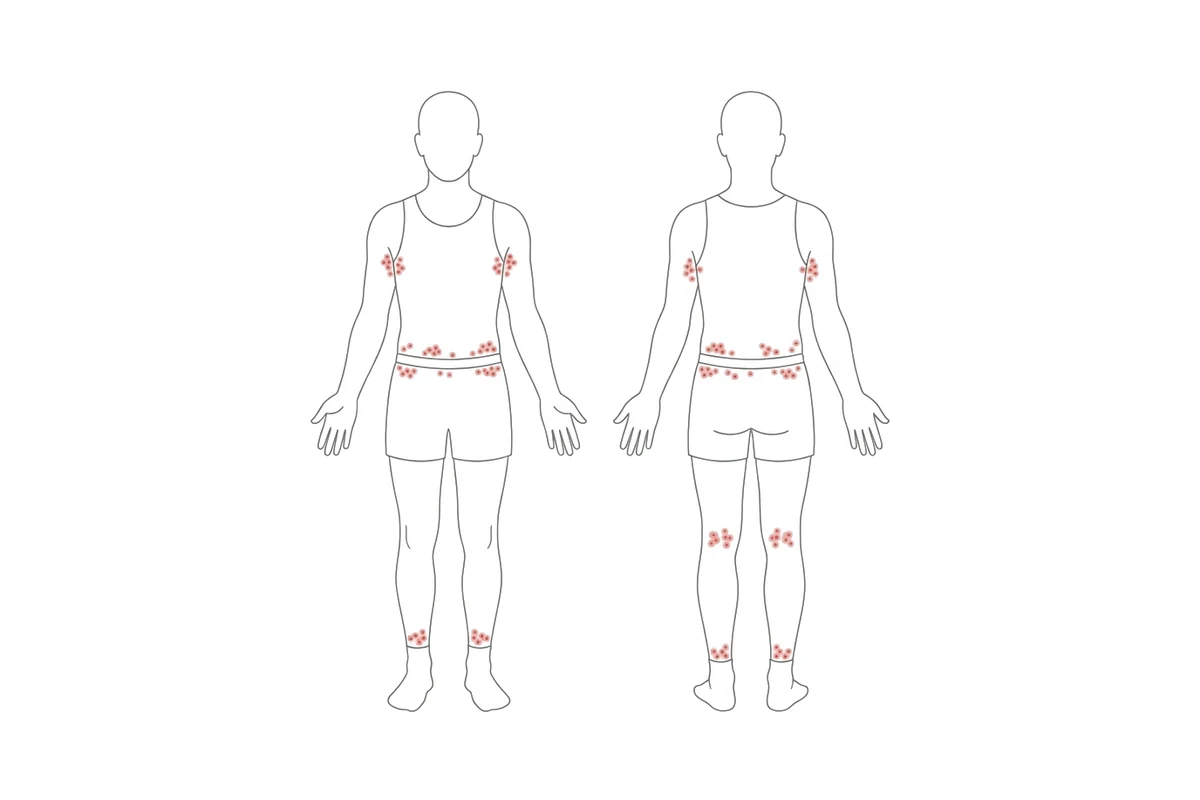
Chigger bites cluster where clothing is tight or skin is thin, at the ankles, behind the knees, the waistband and armpits.
Do Chiggers Burrow Under the Skin?
No. Texas A&M says chiggers do not burrow into the skin or suck blood. They pierce the skin and inject a digestive enzyme that breaks down skin cells, then feed on them. As the skin turns red and swells, it can close around the chigger, which is why it looks as if one dug in.
Once it finds a host, a young chigger feeds for about 3 days and then drops off, though on people most are scratched or washed away long before that.
How Long Do Chigger Bites Itch?
Texas A&M AgriLife Extension says the itching usually begins within 3 to 6 hours of a bite and peaks 24 to 48 hours after it, and that redness and itching can last a week or more in some people. Scratching makes it worse.
The Texas A&M City Bugs post on chigger season puts it as 1 to 2 days of terrible itching, then red marks that take 1 or 2 weeks to fade. A warm, soapy shower with a good scrub within a few hours of being outside cuts down the number of bites. Texas A&M lists antihistamines, anti-itch creams and hydrocortisone for the itch.
Are Chiggers Dangerous to Pets?
Chiggers feed on many kinds of animals, and Texas A&M says they prefer birds, reptiles, rodents and other small mammals, so a dog that roams the same shaded edges can pick them up too. Watch for scratching after a walk through tall grass.
If your dog or cat is scratching after a walk through tall grass, show the vet, who can tell chigger bites from fleas or an allergy. Your veterinarian is the one to treat the pet itself.
When Chigger Bites Need Fast Action
Bites That Look Infected
Spreading redness, warmth, pus or a fever after scratching chigger bites can mean infection. See your doctor.
A Severe Reaction
Texas A&M says people with severe reactions or a strong sensitivity to chigger bites should see their doctor.
Bites Every Time You Use the Yard
Bites after every evening outside mean chiggers have a hot spot in your own yard. Finding that spot is the first step.
A Child With Many Bites
Many itching bites can keep a child scratching and awake. Ask the pediatrician what to use for the itch, and check the play area.
Why You Have Chiggers in Your Yard
Chiggers live outdoors in shaded soil under grass, weeds and brush, and small animals keep them going. Texas A&M AgriLife Extension says they are less common in kept lawns and landscaped yards, but that sites recently cleared for building can bring them close to a home, and that wild mammals, birds and reptiles can keep them going in a backyard. A yard that backs onto a field, a creek or a wooded greenbelt has all of that next door.
A hot, humid stretch makes it worse. The Texas A&M City Bugs team says the usual places are bramble patches, woods and long-grass fields, but that in a bad year chiggers can be a problem even in kept lawns, and its own sunny turf plots in Dallas get them every year from around late May and early June. Chiggers do not come in from a dirty house or a pet. They come from the yard and the ground around it.
Where Chiggers Live Around Collin County Homes
Chiggers live where plants shade the soil and keep it damp. Texas A&M says they are spotty even in good habitat, heavy in one spot and almost absent a few steps away, which is why one corner of a yard can bite every time while the rest stays clear. Short grass and trimmed plants let the sun warm and dry the soil, which makes a lawn less friendly to them.
Chigger Pressure Across Collin County
Chiggers follow the ground, not the city line. In McKinney, Frisco, Allen and Plano, the yards that fit Texas A&M’s description are the ones backing onto creeks, greenbelts, fields and wooded trails, where tall grass and wildlife sit right behind the fence.
Newer neighborhoods built on cleared land in Princeton, Prosper and Farmersville fit the other case Texas A&M names, ground recently cleared for building with open fields close by.
Chiggers are an outdoor, warm-weather pest. Eggs are laid in the first warm days of spring, and the biting young are out from late spring into fall.
Pattern from Texas A&M AgriLife Extension’s chigger guide, which says chiggers are active from late spring to fall in most of Texas, and the Texas A&M City Bugs team, whose Dallas turf plots get them every year from around late May and early June.
Why Chiggers Keep Coming Back
How Pest Me Off Gets Rid of Chiggers
Chigger control starts with asking where and when the bites happen and inspecting the yard, because a bite alone does not identify the pest. Because chiggers gather in a few shaded spots, the work goes where the bites come from.
Inspect and Identify
We ask where your family spends time outside and when the bites happen, then walk the yard and check the tall grass, fence lines, brush and the places where the kept yard meets overgrowth. A bite alone does not identify the pest, so we put the whole picture together first.
Treat the Mapped Areas
We treat the mapped grass, fence line and brush areas that need it, at ground level and as the label directs. We do not fog the yard or mist around the house.
Show You What to Cut Back
We explain what to cut back and clear, like tall grass, overgrowth and heavy leaf litter. If the yard backs up to brush or open land behind the fence, that ground still matters.
Keep People and Pets Out Until Dry
People and pets stay out of the treated areas until they are dry. Itching from earlier bites can last after the chiggers are gone, so tell us about new activity and where it is happening, and we decide whether a follow-up is needed.
& Other Companies
How to Avoid Chigger Bites Yourself
Texas A&M AgriLife Extension says the best defense against chiggers is to avoid them, then wash off any that climbed on before they settle in to feed.
Why Some DIY Responses Fail for Chiggers
Most DIY chigger trouble comes from treating the wrong part of the yard, using the wrong form of product, or trusting a remedy built on the myth that chiggers burrow.
Spraying Only the Open Lawn
A pass across the middle of the lawn misses the shaded fence lines, beds and brush where Texas A&M says chiggers usually live.
Granules Alone
Texas A&M says granular products are generally less effective on chiggers than sprays. Spray in the evening if flowers are blooming, the City Bugs team adds, to spare the bees.
Nail Polish and Home Remedies
Covering a bite to smother a chigger does nothing, because Texas A&M says chiggers do not burrow. Do not scratch, and use an anti-itch cream instead.
Common Chigger Questions
What are chiggers?
What do chigger bites look like?
Do chiggers burrow into your skin?
How long do chigger bites itch?
Do chiggers carry disease?
Does nail polish kill chiggers?
Can chiggers live in my house or bed?
When is chigger season in Texas?
Where do chiggers live in a yard?
How do I get rid of chiggers?
Chigger Bites From Your Own Yard? We Find the Hot Spots.
We inspect first, treat the areas that need it and explain what to cut back and clear. Chigger control across McKinney, Allen, Frisco, Plano, and all of Collin County.