
Water Bug, Palmetto Bug or Cockroach? What Texans Mean by Each
A big reddish-brown bug in the bathtub at night gets called a water bug, a palmetto bug or a cockroach, depending on who finds it. This article covers whether a water bug is a cockroach, what a palmetto bug is in Texas, what the real water bug looks like, whether water bugs bite, and why they turn up in the house.
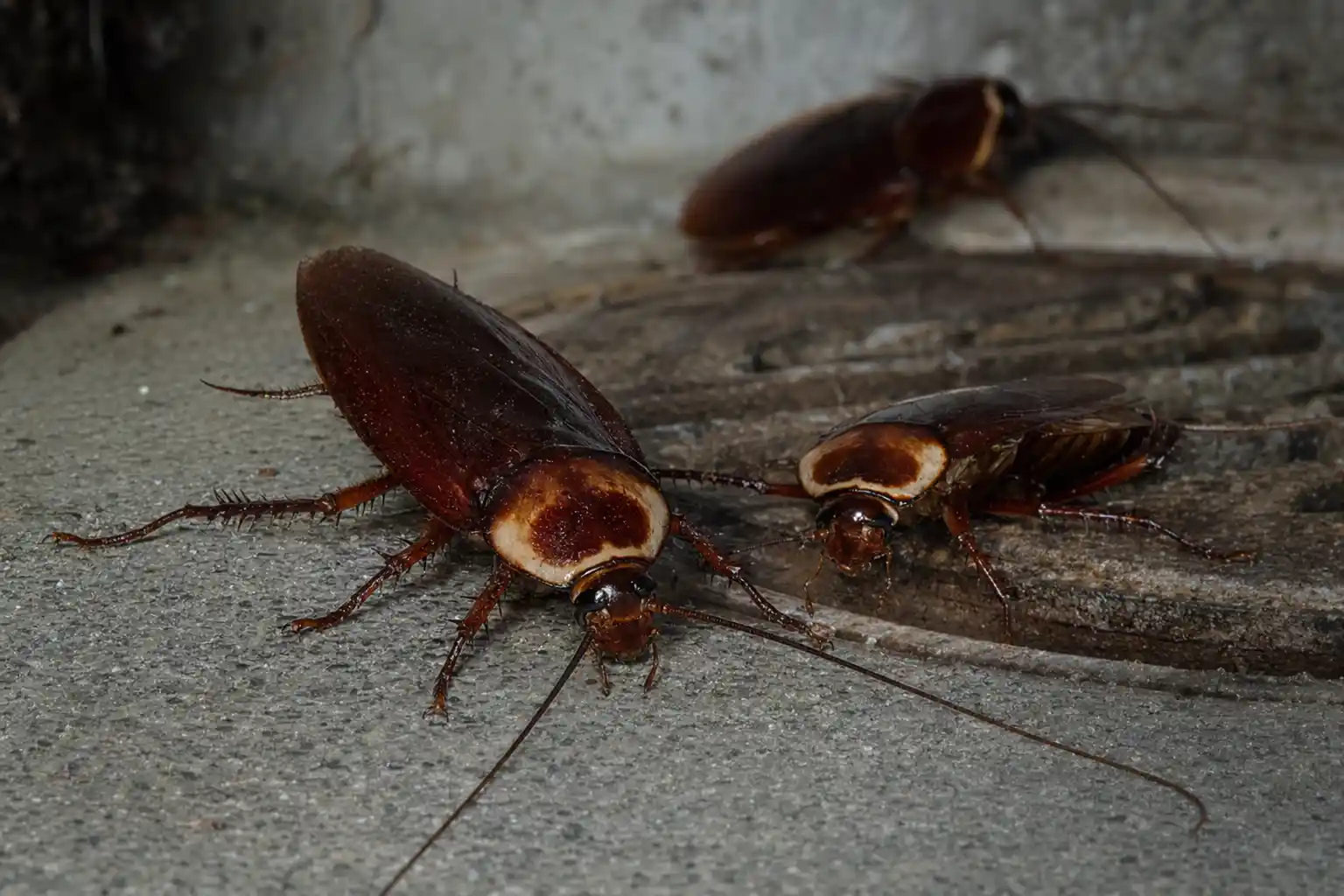

- In Texas the American cockroach is also called a waterbug or palmetto bug.
- It is the largest cockroach in Texas, 1 1/2 to 2 inches long.
- The Oriental cockroach gets the name for its dark color and damp hiding spots.
- Both come in through floor drains, so a dry drain trap is an open door.
- The real water bug lives in ponds and has a painful bite.





Is a water bug a cockroach?
Usually it is. Texas A&M AgriLife Extension says American cockroaches are also known as waterbugs or palmetto bugs, and the University of Florida says the Oriental cockroach is called a water bug for its dark color and damp hiding places. The real water bug is a different insect that lives in ponds and streams.
The name follows the water. Penn State Extension says Oriental cockroaches are often called water bugs because they like dark, damp, cool spots such as under sinks and washing machines. Texas A&M AgriLife Extension’s cockroach guide names the four most common cockroaches in Texas as the American, German, Oriental and smokybrown, and says the American, Oriental and smokybrown live mostly outdoors and may come in looking for food or water.
So the big roach in the tub is not a sign of a dirty kitchen. The small German cockroach is the one that lives and breeds indoors. Our cockroach control page calls the American roach the one most people call a water bug or palmetto bug, and says it does not breed in your kitchen. It is an invader from outside.
To tell one from the other by eye, look at the antennae and front legs. Texas A&M AgriLife says cockroaches have long, thin antennae and move surprisingly fast on long, spiny legs. Mississippi State describes the giant water bug’s pincher-like front legs, which it uses to grab prey. A roach is the bigger worry indoors, because Texas A&M AgriLife says cockroaches may transfer disease-causing organisms.
What is a palmetto bug in Texas?
In Texas, a palmetto bug is the American cockroach. Texas A&M AgriLife Extension calls it the largest cockroach in Texas, 1 1/2 to 2 inches long, reddish brown with tan to light-yellow bands outlining the shield behind its head. Both males and females can fly, and adults usually live 1 to 2 years.
The Texas A&M urban entomology program says American cockroaches like high humidity, live under bark and leaf litter outside, and use sewer systems to spread through cities, moving through the pipes and into kitchens and bathrooms through the drains.
The University of Florida’s profile of the American cockroach shows how many can live below the street.

Another large roach is often mistaken for it. The smokybrown cockroach is 1 1/4 to 1 1/2 inches long and dark brown to black, with wings reaching past the end of its body, Texas A&M AgriLife says, and it lives in mulch, tree holes, soffits and attic eaves.
What is a real water bug?
A real water bug is the giant water bug, an insect that lives in water and is not a cockroach at all. The University of Maine Cooperative Extension says it is also called a water roach, toe-biter or electric-light bug. The adults fly at night and are drawn to lights, so they turn up near porch lights.
The University of Maine gives the species Lethocerus americanus as 2 to 4 inches long and calls it the largest true bug in the US and Canada. Mississippi State University Extension puts adults at up to 2.5 inches and says they live in ponds, lakes and streams across the country and hunt minnows, tadpoles and frogs.
Mississippi State explains why one ends up on a sidewalk or patio. On summer nights the adults crawl out of the water and fly off to find mates or a new pond, get drawn to artificial lights and land near them. A giant water bug by the porch light came from a pond, not from your drains.
Do water bugs bite?
The cockroaches people call water bugs do not bite, but the real giant water bug can, and it hurts. Mississippi State University Extension says people who have been bitten call it more painful than any other insect sting or bite they have had, though the pain is short-lived with no long-term effects. Bites are rare.
Mississippi State says giant water bug bites are rare because the bugs are rarely met and most people avoid handling them. That is where the toe-biter name comes from, though Mississippi State says it is hard to find a case of someone bitten on the toes just for dangling them in the water. Barefoot waders are sometimes bitten, and it warns against poking one found on a sidewalk with your toe. Leave it alone or move it with a dustpan.
Why are water bugs in my house?
Big roaches called water bugs come in from outside, through drains, under doors and through roof soffits. Texas A&M AgriLife Extension says American and Oriental cockroaches use floor drains as common entry points, and that keeping drain traps filled with water puts a barrier between the sewer and the home.
A drain that is rarely used, such as a guest bathroom shower or a laundry floor drain, can dry out, and then nothing stops a roach climbing up from the sewer. The University of Florida says American cockroaches migrate into houses from sewers through the plumbing, and from trees and shrubs beside the building. They also wander in looking for food and water or to escape extreme weather.
The University of Florida’s profile of the Oriental cockroach says it lives in damp, shady places near the ground and travels through buildings along plumbing pipes, turning up in basements, crawl spaces, floor drains and under sinks. On our own calls, American roaches come up through drain lines most in the late-summer heat, and Oriental roaches peak in late spring. In a bathroom, the tub and shower drains are the usual way in, especially a guest bath drain that sits unused and dries out.
Water bug, palmetto bug or cockroach, told apart
These come from Texas A&M AgriLife Extension, the University of Florida, the University of Maine and Mississippi State University.
| Insect | Size and look | Where it comes from |
|---|---|---|
| American cockroach | 1 1/2 to 2 inches, reddish brown, yellow band behind the head, can fly but seldom does | Sewers, drains and moist spots outdoors |
| Oriental cockroach | About 1 to 1 1/4 inches, dark brown to black, does not fly | Damp, cool ground-level spots, crawl spaces and drains |
| Smokybrown cockroach | 1 1/4 to 1 1/2 inches, dark brown to black, long wings | Mulch, tree holes, soffits and attic eaves |
| Giant water bug | Up to 2 1/2 inches, sometimes 4, with pincher-like front legs | Ponds, lakes and streams, flying to lights at night |
Found inside by a drain, it is almost certainly a cockroach. Found under a porch light in summer, it may be the real water bug.
How to keep water bugs out of the house
- Keep the drain traps wet. Texas A&M AgriLife says to keep P-traps filled with water as a barrier between the sewer and the home, and the University of Florida says drain traps should be kept full or capped. Pour a little water down any drain you rarely use.
- Close the way in at the doors and roof. The same guide says to check the seals under doors and make sure roof soffits are screened. The University of Florida says to caulk any openings through walls at ground level.
- Dry things out. The University of Florida says to fix plumbing leaks, air out damp spaces, clear rotting leaves from around the house and keep garbage cans out of moist spots.
- Take away food and water at night. Texas A&M AgriLife says to empty pet bowls each night, reduce clutter and keep mops and wet items off the floor.
- Find where they come in. Texas A&M AgriLife suggests sticky card monitors by doors, behind laundry appliances and under the stove and refrigerator to show where cockroaches travel.
How Pest Me Off handles water bugs
On every cockroach control visit, Pest Me Off confirms the species first, because each roach needs a different fix. For the American roach, the one most people call a water bug or palmetto bug, we treat the drains and floor drains it travels, install the Scorched Earth Barrier outside, and seal the gaps and cut the yard moisture pulling it in. For the Oriental roach, we cut the moisture and treat the garage floor cracks and the foundation.
If you are not sure what you found, snap a photo and send it with your estimate request, and we will confirm the species before any product goes down. The inspection and estimate are free, with same-day service when you call before noon, in McKinney, Plano, Frisco, Allen and across Collin County.
Big roaches coming up the drains? Cockroach control across Collin County.
We confirm the species first, treat the drains and entry points the big roaches travel, and seal the way they get in. Free inspection and estimate.
