
Voles in Collin County, TX | Identification and Control
A vole is a small, stocky, short-tailed rodent that lives in thick grass, mulch and garden beds, eating roots, stems, seeds and bark. Homeowners usually find the trails long before they see a vole. The Internet Center for Wildlife Damage Management says the surest sign is a network of surface runways 1 to 2 inches wide with several burrow openings, and voles can gnaw the bark off shrubs and young trees in fall and winter.
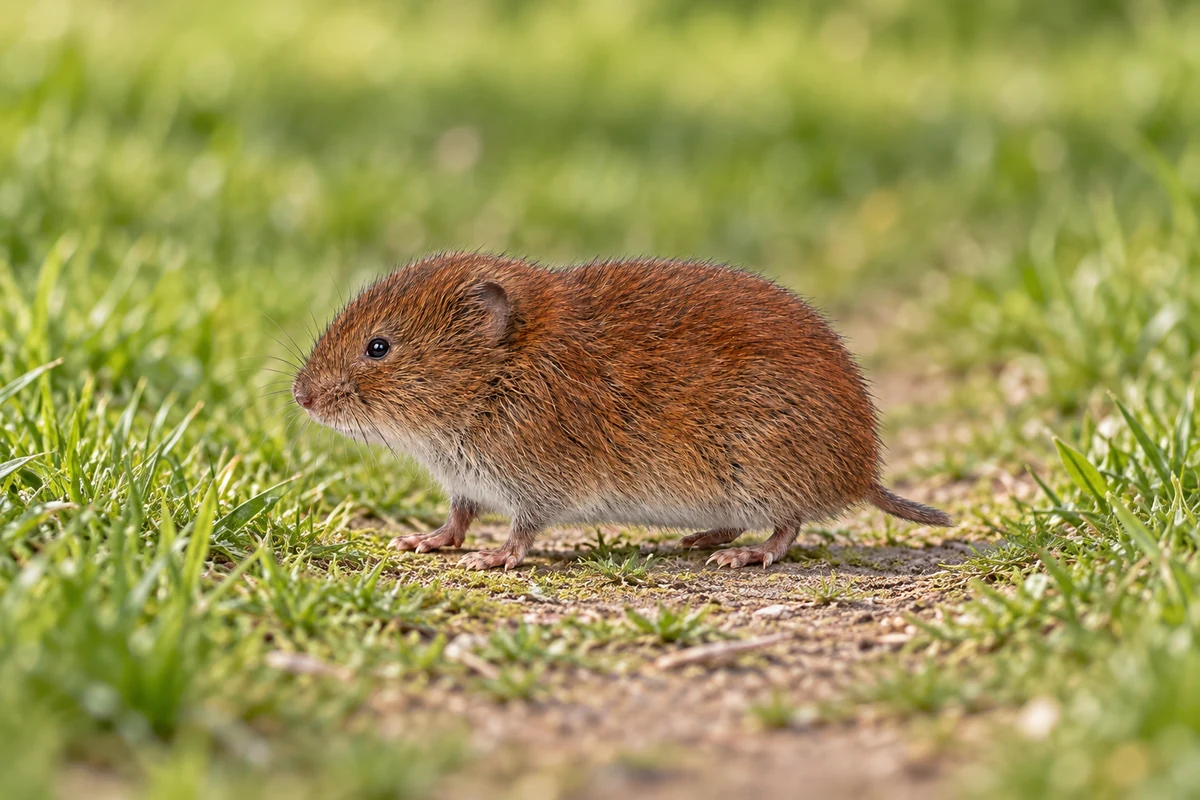
Trails and small holes spreading across your lawn? Our office sits where McKinney, Plano, Frisco and Allen meet, 5 to 10 minutes from most homes in those four cities. Call and we will find the runways, confirm it is voles and not moles, and show you what is feeding them.
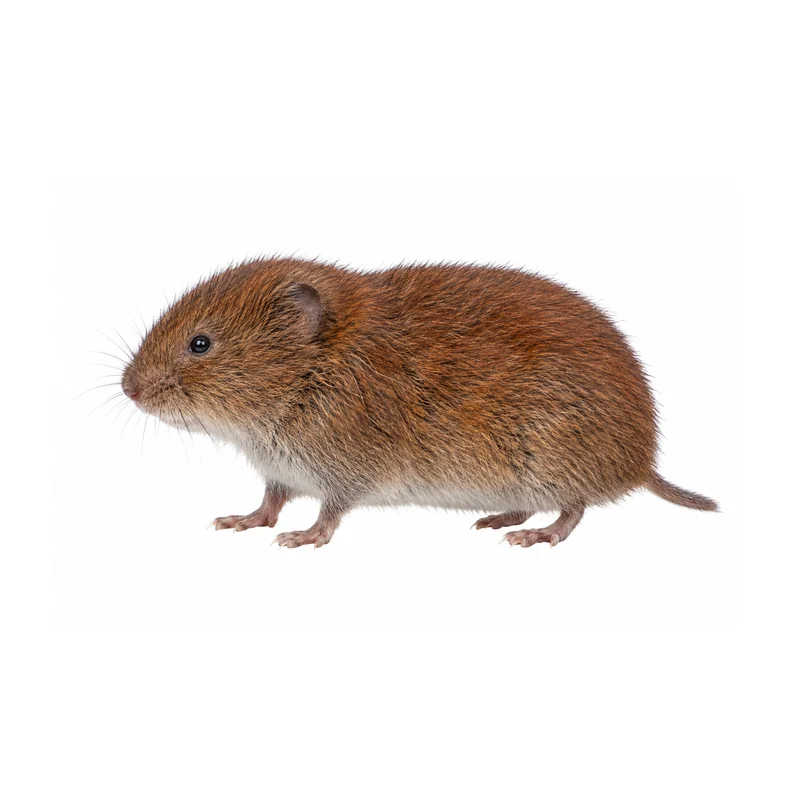
Vole
Voles are plant-eating rodents that live under thick ground cover, in shallow burrows and trails they cut through the grass. Texas Tech’s Mammals of Texas places the woodland vole across eastern and central Texas.
Risk Assessment
Choose a row for the full detail- Color
- Dull chestnut brown tinged with black, cinnamon below
- Diet
- Grass, stems, roots, bulbs, seeds and bark
- Threat level
- Low
- Nesting site
- Shallow burrows and grass nests under thick cover and mulch
- Lifespan
- 2 to 16 months
- Young to adult
- Weaned by 3 weeks, females mature at 35 to 40 days
- Size
- About 5 inches with a 1 inch tail, 25 to 45 g (1 to 1.5 oz)
What Does a Vole Look Like?
A small, stout reddish brown rodent with short legs, small eyes, ears tucked into its fur and a very short tail
Collin County’s vole is the woodland vole, also called the pine vole. Texas Tech University’s species account in The Mammals of Texas places it across eastern and central Texas, in scattered pockets rather than everywhere. It is small and stout, about 135 mm or 5 inches long, with a tail of only 25 mm, about an inch, barely longer than its 18 mm hind foot. It weighs 25 to 45 grams, and its short, dense, glossy fur is dull chestnut brown tinged with black above and cinnamon below.
The national wildlife damage management reference on voles describes every vole as compact, with a stocky body, short legs, a short tail, small eyes and ears that barely show. The vole most articles describe is the prairie vole of the Great Plains grasslands, but Texas Tech records the prairie vole in Texas only in Hardin County and a few Panhandle counties. The short tail and hidden ears are what set any vole apart from a mouse.
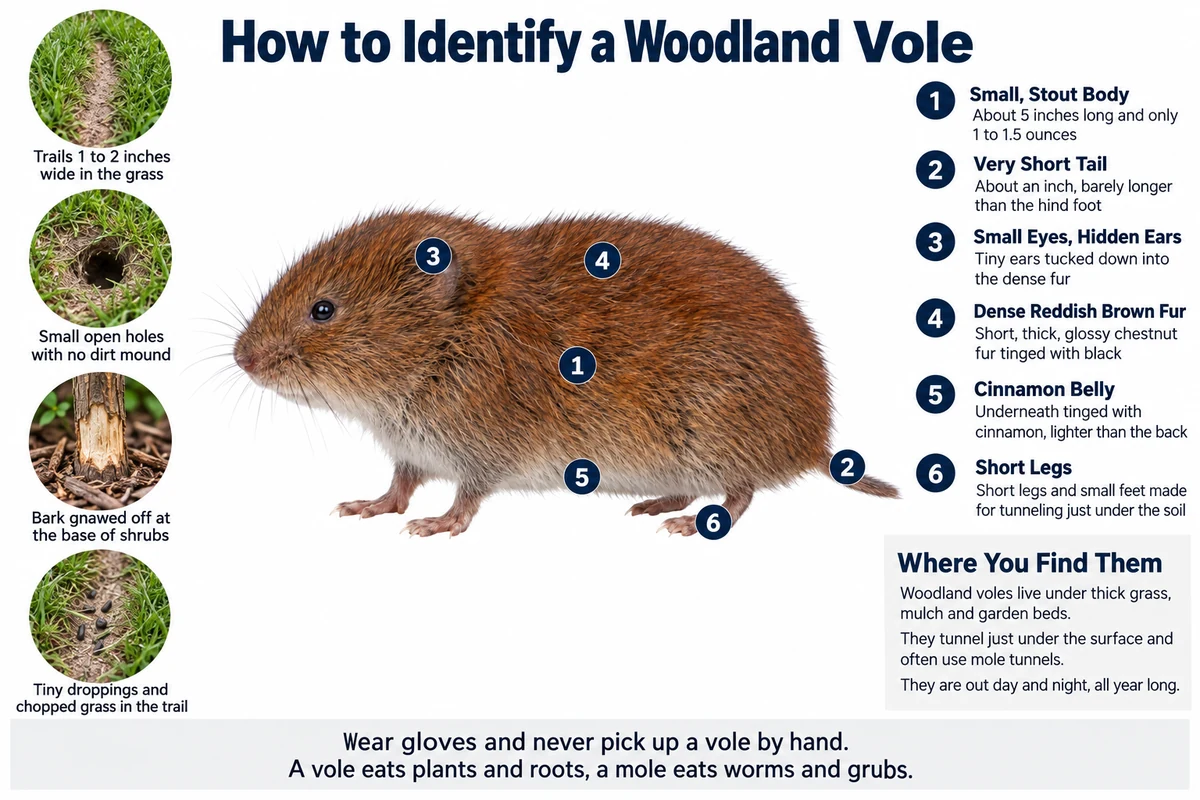
How to identify a woodland vole by its stout body, very short tail and ears hidden in its dense reddish brown fur, with the runways, holes and gnawed bark it leaves behind
- Narrow trails 1 to 2 inches wide worn through the grass, with the grass clipped short beside them
- Small, open holes along those trails, with no mound of soil around them
- Tiny droppings and bits of chopped grass lying in the trails
- Bark gnawed off the base of shrubs and young trees in uneven patches
- Bulbs, roots and garden plants eaten from below and pulled down into the soil
- Small brown rodents darting between mulch, fence lines and sprinkler boxes by day as well as by night
Other Names for the Vole
Vole is a group name, not one animal. The wildlife damage reference counts 23 species of voles in the United States, all in the genus Microtus, and says they are also called meadow mice or field mice. That second name causes the most confusion, because a vole is not a house mouse and rarely comes indoors.
The other name to watch is mole. A mole is not a rodent at all and eats worms and grubs rather than plants, so the two need different fixes. The look-alike table below shows how to tell them apart.
| Name | What it means |
|---|---|
| Meadow mouse | An old name for any vole, after the grassy places it lives. |
| Field mouse | Another everyday name for a vole, though not a true mouse. |
| Woodland vole | Collin County's vole, the one in our pictures, per Texas Tech. |
| Pine vole | Another name for the woodland vole, used in the eastern states. |
| Prairie vole | The Great Plains vole people read about, rare in Texas. |
How to Tell a Vole from a Mole or House Mouse
Voles, moles and mice all get blamed for the same lawn and garage trouble, and the right fix depends on which one it is. A vole eats plants and lives in surface trails, a mole eats worms and grubs underground, and a house mouse wants to be inside the house. What the damage looks like and where it is tell them apart.
| Species | Size and Color | Key Feature | Where Found |
|---|---|---|---|
|
Vole
AKA: Pine Vole, Meadow Mouse
Microtus pinetorum
This species
|
About 5 inches with a 1 inch tail, 25 to 45 grams. Chestnut brown above, cinnamon below. | Stout body, small eyes, ears hidden in fur and a very short tail. Leaves open trails and small holes with no mound. | Lawns, mulch beds, gardens and fence lines with thick cover, out by day and by night. |
|
Mole
AKA: Eastern Mole
Scalopus aquaticus
|
About 7 inches long, 3 to 4 ounces. Short, dense, velvety gray fur. | Pointed, hairless snout, no ears you can see and huge, broad front feet. Raised ridges and volcano-shaped mounds of soil. | Underground in moist lawns and beds, following worms and grubs. Rarely seen above ground. |
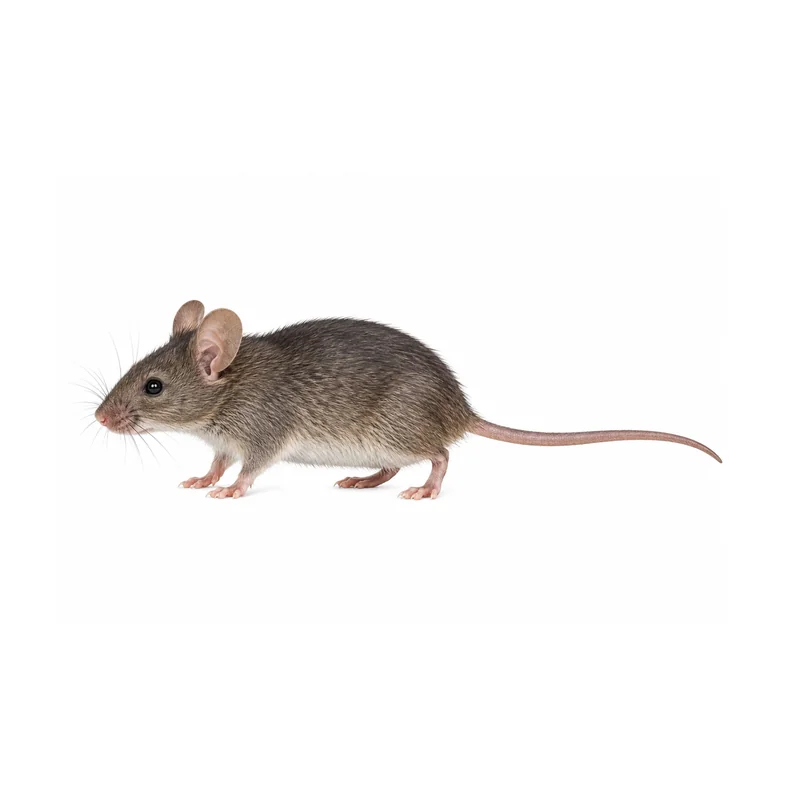
House Mouse
AKA: Mouse
Mus musculus
|
Under an ounce, 3 to 4 inches plus the tail. Gray brown with a gray or buff belly. | Slim body, pointed nose, large thin ears and a long, nearly bare tail. Droppings about a quarter inch long. | Inside garages, walls, cabinets and attics, close to food and warmth. |
Vole vs Mole
The Vole in Three Numbers
4,000
The national wildlife damage management reference reports that in population booms vole numbers have reached 4,000 voles per acre, which is why a few voles can become many.
Internet Center for Wildlife Damage Management
1 to 2 inches
The same reference says vole runways are 1 to 2 inches wide, with several burrow openings, and that this trail system is the easiest sign of voles to spot.
Internet Center for Wildlife Damage Management
4 cm
Texas Tech University’s Mammals of Texas gives woodland vole burrows as about 4 cm across, roughly an inch and a half, and seldom more than 7 to 10 cm below the ground.
Texas Tech University, The Mammals of Texas
Are Voles Dangerous?
Not much. The wildlife damage reference on vole damage says voles pose no major hazard to public health because they seldom come in contact with people. It also notes they may carry plague and tularemia, that mites and ticks feed on them, and that anyone handling a vole should wear protective gloves. A vole will not come after a person or a pet, but one grabbed by hand can bite. Wash any bite with soap and water and call your doctor.
Do Voles Carry Rabies?
It is very unlikely. The CDC’s rabies prevention recommendations say small rodents, such as squirrels, chipmunks, rats and mice, are rarely infected with rabies and have not been known to pass it to people. Voles are small rodents of the same kind. The bigger worry with a dead vole a dog or cat brings in is the ticks on it, so check your pets.
When Vole Activity Needs Fast Action
A Bite From a Vole
Wash it at once with soap and running water and call your doctor the same day. Voles can carry tularemia, which needs the right treatment.
Bark Chewed Off a Shrub or Tree
Bark gnawed all the way around the base cuts the plant off from its roots. Act before more of the landscape is ringed.
Runways Spreading Across the Lawn
More trails and holes each week mean the numbers are climbing. Voles breed fast, so it is cheaper to act early.
A Vole in the Garage or Pool
Voles that turn up in the garage, pool or sprinkler boxes are spilling out of a crowded yard. Find where they live outside.
Why You Have Voles in Your Yard
Voles move in where the ground cover is thick and the food sits close by. The wildlife damage reference on vole biology says they prefer heavy cover of grass, weeds and plant litter, and eat grasses and leafy plants most of the year, storing seeds, bulbs and roots in late summer and fall and turning to bark in fall and winter. Deep mulch, tall grass along a fence, spilled bird seed, a vegetable bed and a neighbor’s field or greenbelt give them all of that within a few steps.
A vole’s whole world is small. The same reference puts its home range at a quarter acre or less, so the voles in your trails are living right there. They seldom come into houses. When they reach a garage, a pool or an air conditioner pad, it usually means the yard around it is full and the cover runs right up to the house.
Where Voles Live Around Collin County Homes
Voles live in the cover at ground level, in mulch beds, along fence lines, in unmowed strips and around garden beds. Texas Tech says the woodland vole burrows just under the surface, much like a mole, and often takes over tunnels dug by moles and shrews. Its nest is a ball of dead grass and leaves in an underground chamber, with two or more passages running up to the surface. Voles can also girdle shrubs and trees, mostly in fall and winter, leaving uneven gnaw marks about an eighth of an inch wide, according to the wildlife damage reference.
Vole Pressure Across Collin County
Voles show up in our service notes most often in Celina and Frisco, in newer neighborhoods that back onto fields, lakes and open land. Those edges give voles the thick, unmowed cover the wildlife damage reference describes, and the voles work their way in along the fence line.
In Plano and McKinney we find them in established yards with deep mulch beds, porches and pools, and homeowners call us when trails and holes appear in the lawn.
Voles are active day and night all year and do not hibernate. Most breeding happens in spring and summer, and fall and winter are when they eat bark and girdle shrubs, which is also when most of our vole calls come in.
Pattern from published vole biology (the Internet Center for Wildlife Damage Management) and Pest Me Off vole calls, which come mostly from October to February.
Why Voles Keep Coming Back
How Pest Me Off Gets Rid of Voles
Vole control is four steps, every job. Trapping the voles you have is only half of it, because the cover and food that drew them will draw the next ones.
Inspect and Identify
A free inspection of the lawn, beds, fence lines, porch and garage. We confirm it is voles and not moles or mice, map the runways and burrow openings, and find what is feeding and hiding them.
Trap and Bring the Numbers Down
Traps set across the active runways and covered, so the voles walk into them while birds, pets and children cannot reach them.
Clean Up and Assess
We check the traps, remove what they catch and move traps that stay empty. Then we show you the runways, the gnawed plants and where the voles are coming from.
Change What Feeds Them
We talk through the lawn, mulch and cover that keep voles fed, and close the gaps at garage doors and pipe openings where they get in. This is the rodent proofing and exclusion work that keeps them out of the garage.
& Other Companies
How to Get Rid of Voles Yourself
Most DIY vole work is taking away the cover they need. The wildlife damage reference on vole control puts changing the habitat first, with trapping for a small area like a home yard.
Why Some DIY Responses Fail for Voles
Most DIY vole trouble comes from treating them like moles, trusting devices that do not work, or using poison and traps where birds and pets can reach them.
Sound Stakes and Scare Devices
No frightening device works on voles, according to the wildlife damage reference, and store repellents give short-term protection at best.
Loose Poison in the Lawn
Vole poisons scattered on the ground can kill seed-eating birds. Bait belongs only in locked, tamper-resistant stations where pets and birds cannot reach it.
Catching and Moving Voles
Relocating voles is not recommended by the same reference. A yard full of cover refills from the neighbors, and moving them just hands the problem to someone else.
Common Vole Questions
What is a vole, and what does it look like?
What is the difference between a vole and a mole?
What kind of vole lives in Collin County?
What do vole holes and runways look like?
Are voles dangerous to people or pets?
Do voles carry rabies?
What do voles eat, and will they kill my shrubs?
Why do I have voles in my yard?
Do voles come into the house?
How fast do voles breed?
Can I catch a vole and let it go somewhere else?
How do I get rid of voles?
Trails and Holes Across the Lawn? We Find the Voles and Bring Them Down.
We confirm it is voles and not moles, trap them on their runways, and show you the cover and gaps that keep bringing them back. Wildlife removal across McKinney, Allen, Frisco, Plano, and all of Collin County.