
Furniture Carpet Beetles in Collin County, TX | Identification and Control
The furniture carpet beetle (Anthrenus flavipes) is a tiny round beetle, 2 to 3.5 millimeters long, black with speckles of white and yellow to orange. It is mainly a pest of the southern states and a common pest of upholstered furniture. Its hairy young eat padding, wool, fur and feathers, and the University of California Pest Notes guide says they grow up in just 70 to 94 days.
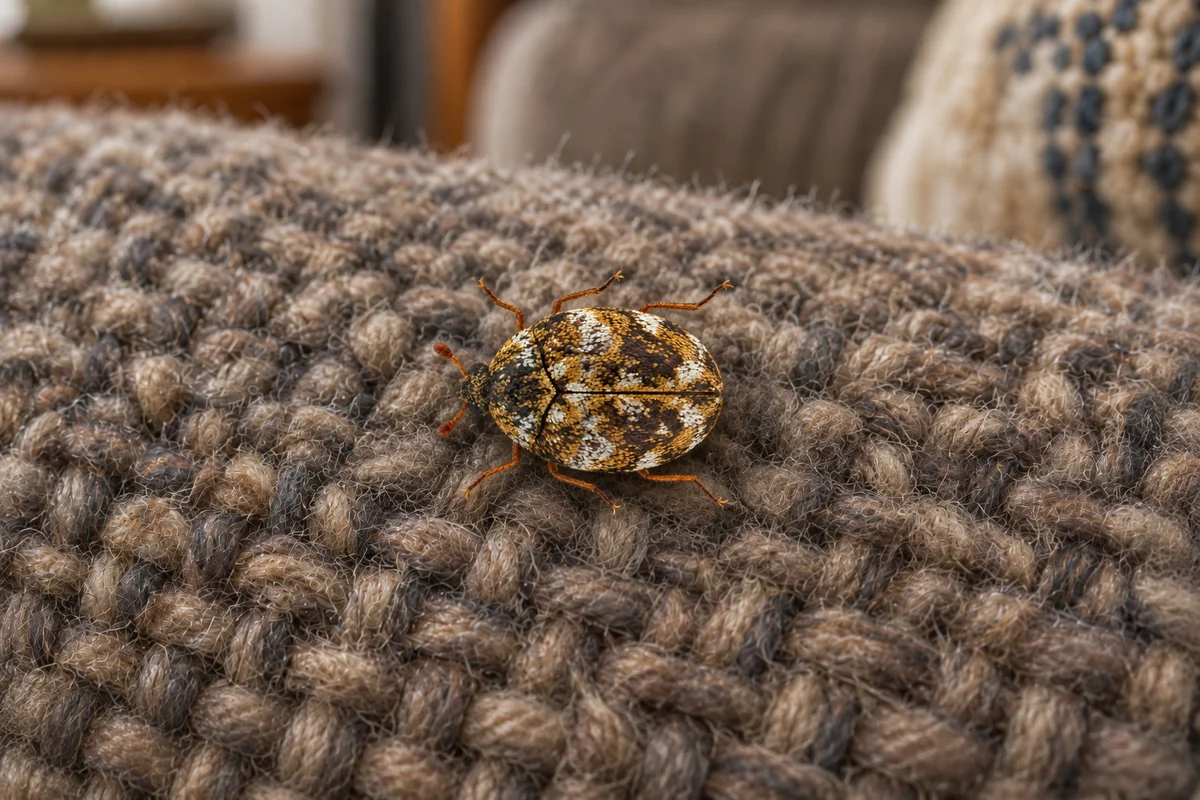
Speckled beetles on the couch or bare spots in the upholstery? Our office sits where McKinney, Plano, Frisco and Allen meet, 5 to 10 minutes from most homes in those four cities. Call and we will find what the young beetles are feeding on.
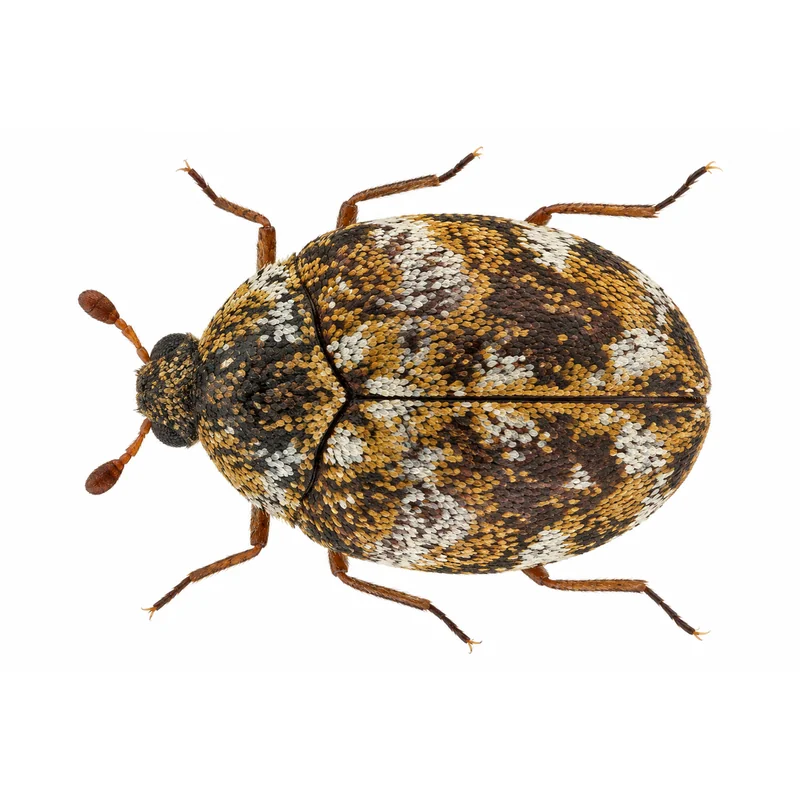
Furniture Carpet Beetle
The University of Florida Featured Creatures profile of the furniture carpet beetle calls it a common pest of upholstered furniture that can eat both the padding and the cover. The adults feed on flower pollen. Their young live indoors on hair, wool, fur, feathers and silk.
Risk Assessment
Choose a row for the full detail- Color
- Black with speckles of white and yellow to orange, white underneath
- Diet
- Adults eat pollen, the young eat hair, padding, wool, fur, feathers and silk
- Threat level
- Low to people, moderate to upholstery, wool and fur
- Where it hides
- Inside and under upholstered furniture, rug edges, closets and lint in vents
- Adult lifespan
- 4 to 8 weeks
- Young to adult
- 70 to 94 days as a young beetle, then 14 to 17 days changing into an adult
- Size
- 2 to 3.5 millimeters long, round like a very small ladybug
What Does a Furniture Carpet Beetle Look Like?
A tiny round beetle speckled black, white and orange, with hairy young that are wider at the head
The adult is round and about the shape of a ladybug but far smaller. The University of Florida Featured Creatures profile gives it as 2 to 3.5 millimeters long, black with a mottling of yellow and white scales on its back and thick yellow scales on its legs. The University of California Pest Notes guide to carpet beetles adds black spots among white and dark yellow to orange scales, and a white underside. Old adults lose their scales and can look solid black.
The young are what do the damage. The California guide says they start out white and darken to dark red or chestnut brown, and are broader at the front and narrower at the rear. The Florida profile describes a hairy, oval young beetle about 5 millimeters long, with a long pencil of hairs at its tail that keeps quivering, and says its color can follow the color of what it eats. As they grow they leave brown, hairy shed skins behind.
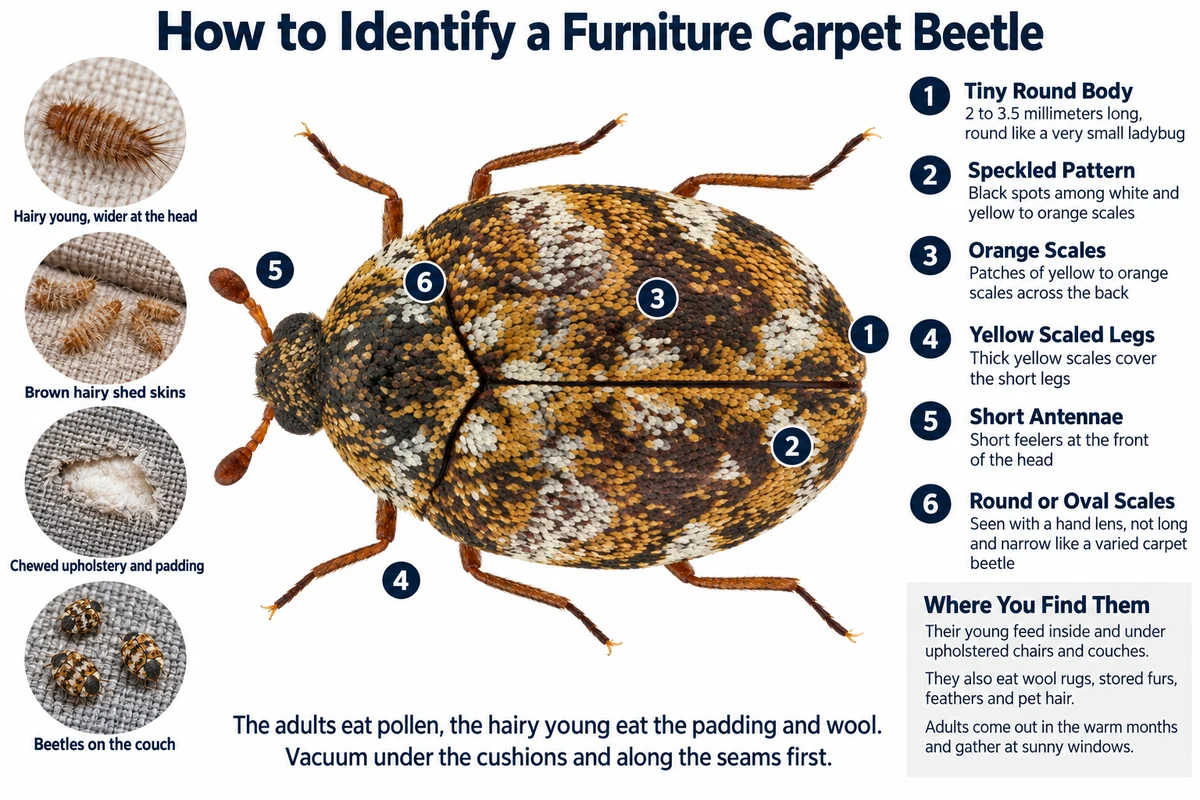
How to identify a furniture carpet beetle by its round speckled body, with the hairy young, shed skins and chewed upholstery it leaves behind
- Tiny round beetles speckled black, white and orange on the couch, drapes or windowsill
- Hairy brown young under cushions, inside chair seams or along rug edges
- Young that are wider at the head end, with a quivering tuft at the tail
- Brown, hairy shed skins under and inside upholstered furniture
- Thin, chewed spots in upholstery, padding, wool rugs or stored furs
- Beetles near lint and pet hair along baseboards and in floor vents
Other Names for the Furniture Carpet Beetle
Most people call it just a carpet beetle, a name it shares with its close cousins, the varied carpet beetle and the black carpet beetle. Its own name comes from its habit of feeding in upholstered furniture. Its scientific name is Anthrenus flavipes.
The Florida profile says it is mainly a pest of the southern states, and in colder states it turns up mostly in heated buildings. It belongs to the dermestid family, the same beetle family as its two cousins.
| Name | What it means |
|---|---|
| Carpet beetle | The everyday name, shared with two close cousins. |
| Dermestid beetle | The beetle family all three carpet beetles belong to. |
| Escarabajo de alfombra | The Spanish name, meaning carpet beetle. |
| Anthrenus flavipes | The scientific name used by entomologists. |
How to Tell a Furniture Carpet Beetle from Other Carpet Beetles and Bed Bugs
The three carpet beetles eat the same things and are handled the same way, so telling them apart matters most when you are deciding whether you have carpet beetles or bed bugs. The shape of the adult, the shape of the young and where they turn up tell them apart.
| Species | Size and Color | Key Feature | Where Found |
|---|---|---|---|
|
Furniture Carpet Beetle
AKA: Carpet Beetle
Anthrenus flavipes
This species
|
2 to 3.5 mm. Black spots among white and yellow to orange scales, white underneath. | Round or oval scales and yellow scaled legs. The young are broader at the front. | Inside and under upholstered furniture, rug edges, closets and stored furs. |
Varied Carpet Beetle
AKA: Carpet Beetle, Woolly Bear
Anthrenus verbasci
|
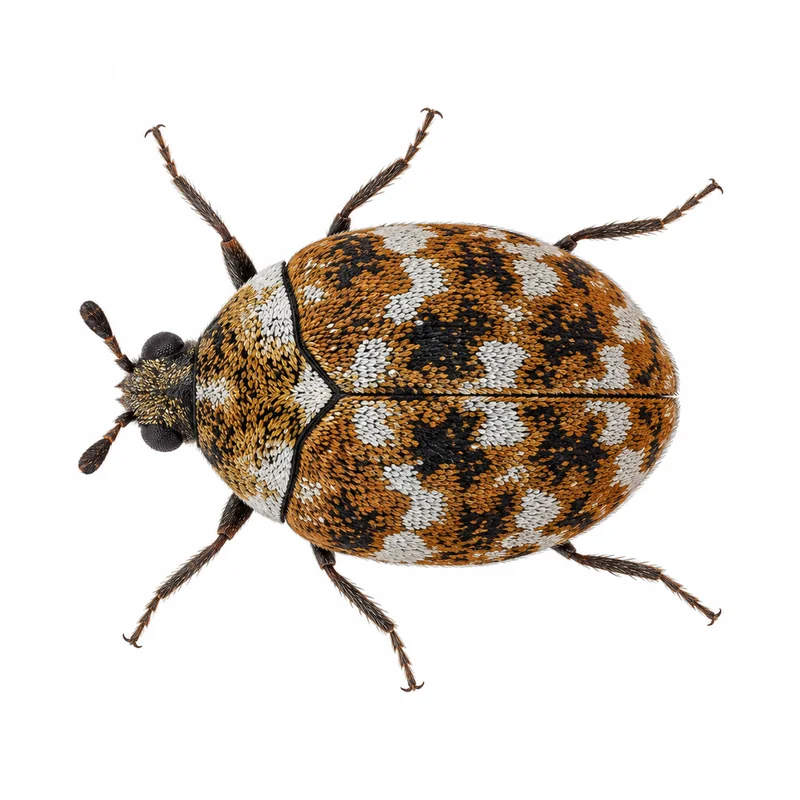
Slightly smaller, about 1/10 inch. Black with an irregular pattern of white, brown and dark yellow. | Long, narrow scales. The young are striped and broader at the rear. | Adults at windows in spring. Young in closets, rug edges, lint and attic nests. |
Black Carpet Beetle
AKA: Carpet Beetle
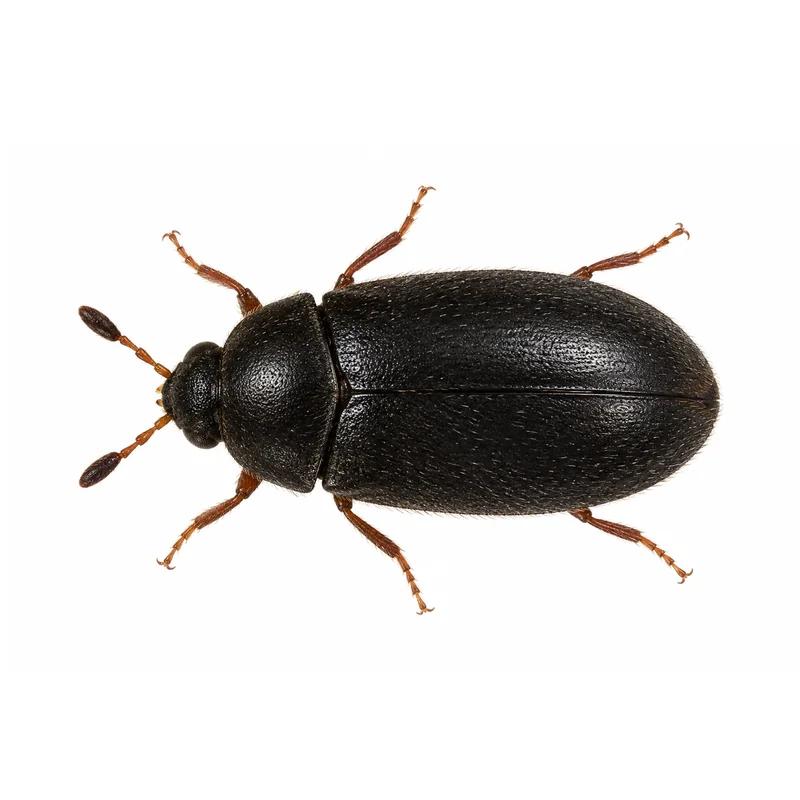
Attagenus unicolor
|
Larger, 1/8 to 3/16 inch. Shiny black and dark brown with no pattern. | No speckles. The young are shiny and smooth, taper to the rear and end in a long tuft. | Fabrics, and also flour, grains and cereals in the pantry. |
Bed Bug
AKA: Common Bed Bug
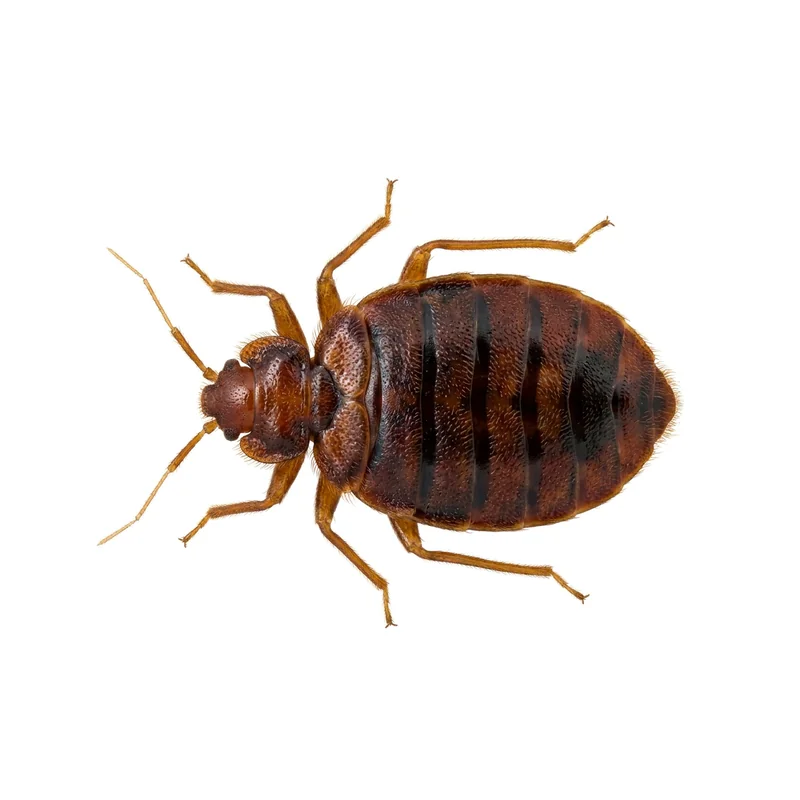
Cimex lectularius
|
About 1/5 inch long. Rusty red or mahogany. | Flat, oval and wingless. It bites and feeds on blood, and leaves dark spots on sheets. | Mattress seams, box springs and cracks near where people sleep or sit. |
Furniture Carpet Beetle vs Varied Carpet Beetle
The Furniture Carpet Beetle in Three Numbers
11 people
A 2021 report in Emerging Infectious Diseases described 11 people in 7 families in southern France who had an itchy rash in early 2020 from the hairs of young carpet beetles of the furniture carpet beetle’s genus.
Emerging Infectious Diseases, 2021
70 to 94 days
The University of California Pest Notes guide gives the furniture carpet beetle’s young stage as 70 to 94 days, against 220 to 630 days for the varied carpet beetle.
University of California Pest Notes
35 to 100 eggs
The University of Florida Featured Creatures profile says a female furniture carpet beetle lays 35 to 100 eggs in cracks near the food her young will eat.
University of Florida Featured Creatures
Do Furniture Carpet Beetles Bite?
No. Neither the adults nor the young bite or sting. The adults eat pollen, and a report on carpet beetle rashes in the journal Emerging Infectious Diseases calls them harmless to humans. What people take for bites is a reaction to the hairs of the young, which the same report says mimic bites but are an allergic reaction to hairs stuck in the skin. People in close contact with infested items can also react to beetle fragments, shed skins and dust, the Florida profile adds.
Can Furniture Carpet Beetles Cause a Rash?
They can. The 2021 report in Emerging Infectious Diseases followed 11 people in 7 families in southern France who had itchy red bumps for several weeks in early 2020, caused by the young of carpet beetles in the furniture carpet beetle’s genus. Fine hairs from the young had worked into their skin, mostly under clothing on the thighs, arms, chest and belly. The report notes that the adults like to lay eggs in furniture. Washing the clothes, vacuuming and cleaning the air conditioning that blew the hairs around cleared every case within 3 days. Anyone with a rash that will not go away should see a doctor and mention the beetles.
Are Carpet Beetles Dangerous to Pets?
No. The same report notes that the young never infest living animals. They eat the hair pets shed into the couch cushions, the carpet and the floor vents, which is why homes with pets can have more of them, but they do not live on or feed on the dog or cat.
When Furniture Carpet Beetle Activity Needs Fast Action
Thin Spots in Upholstery or Furs
Chewed spots in a chair cover, the padding under it, a wool rug or a stored fur mean the young are feeding now. Look under the cushions and along the seams.
An Itchy Rash With No Bed Bugs Found
Single itchy bumps under clothing, in more than one family member, with no bed bugs found, can be carpet beetle hairs. See a doctor and check the couch and closets.
Shed Skins Under the Couch
Brown, hairy shed skins under or inside upholstered furniture mean the young have been growing there. Find the cushion, padding or rug they came from.
A Few Beetles at the Window
A few speckled adults on the windowsill are not cause for alarm on their own. Look for hairy young in the furniture and closets before treating anything.
Why You Have Furniture Carpet Beetles in Your House
Furniture carpet beetles start outdoors. The California guide says carpet beetle adults feed on flowers with plenty of pollen, such as crape myrtle and spiraea, fly in through open windows and doors, and often ride in on cut flowers. The Florida profile says this species is most destructive in warm parts of the world and is mainly a pest of the southern states, which puts Collin County homes squarely in its range.
Indoors, the female lays her eggs in cracks right beside the food her young will eat. The same profile says the young feed on hair, padding and upholstery in furniture, and that the green rubber coating on horsehair padding does not protect it. The University of Kentucky fact sheet on carpet beetles points to under and inside upholstered furniture, the edges of rugs, and floor vents and ducts full of pet hair and lint. It is not a sign of a dirty home. A spotless house with an upholstered chair, a wool rug or a dog that sheds can still feed them.
Where Furniture Carpet Beetles Live in Collin County Homes
The young feed in dark, quiet places. The University of Kentucky fact sheet says clothing and blankets in regular use are seldom attacked, and neither are rugs that are vacuumed often. The trouble is in what sits still: the underside and inside of upholstered chairs and couches, the edges and undersides of rugs, wool and fur stored in closets and chests, and the lint and pet hair in vents and ducts.
Furniture Carpet Beetle Pressure Across Collin County
Carpet beetles show up in our service notes most often in McKinney, then in Frisco, The Colony and Allen, in houses and apartments alike. Calls climb in April and stay steady through the summer, when new adults are out and people notice them on the couch and at the windows.
In Prosper and Plano we find them in closets, bathrooms and bedrooms, and on the sticky monitor boards we leave in a home. Homes with older upholstered furniture, wool rugs or long-haired pets give them the steadiest food.
The young feed indoors all year in a heated and cooled home. The adults come out in the warm months, and our carpet beetle calls climb in April and stay up through the summer.
Pattern from the University of Florida profile, which says the adults come out during the warm summer months, and Pest Me Off carpet beetle calls, which climb each April.
Why Furniture Carpet Beetles Keep Coming Back
How Pest Me Off Gets Rid of Furniture Carpet Beetles
Furniture carpet beetle control is four steps, every job. The beetles you see are a clue, not the problem, so the work goes into finding what the young are eating.
Inspect and Identify
A free inspection under and behind the furniture, along the seams and cushions, in the closets and at the attic vents. We confirm it is a carpet beetle and not a bed bug, and find the actual feeding spot.
Remove the Source
Infested items are bagged and treated, a bird nest in a vent is pulled, and a hidden build-up of hair and dust under the furniture is cleaned out.
Treat the Edges
Our Scorched Earth Barrier goes along baseboards, closet corners and the routes the young beetles use, plus the outside entry points where adults get in.
Screen and Defend
Attic, eave and dryer vents are screened so birds cannot nest there again. Homes with older upholstered furniture, pets or repeat nesting can add a quarterly plan that keeps the barrier active through the beetle season.
& Other Companies
How to Get Rid of Furniture Carpet Beetles Yourself
Most DIY carpet beetle work is cleaning. Proper cleaning cannot be overemphasized, the Florida profile says, and the vacuum is the main tool.
Why Some DIY Responses Fail for Furniture Carpet Beetles
Most DIY carpet beetle trouble comes from treating the beetles you can see while the young keep eating somewhere you have not looked.
Spraying the Beetles You Can See
The adults eat pollen, not upholstery. Killing them leaves the young feeding inside the chair or rug, and the California guide warns never to spray clothing or bedding.
Mothballs in the Closet
Mothballs offer little protection against furniture carpet beetles, according to the Florida profile. The University of Kentucky fact sheet adds they must never be scattered where children or pets can reach them.
Spraying a Dirty Couch
The Florida profile says furniture should be vacuumed and cleaned before any treatment to avoid staining the upholstery. Spraying over hair and dust also leaves the food in place.
Common Furniture Carpet Beetle Questions
What is a furniture carpet beetle?
How is it different from a varied carpet beetle?
What do young furniture carpet beetles look like?
Do carpet beetles bite?
Can carpet beetles cause a rash?
Are carpet beetles harmful to dogs and cats?
Can carpet beetles live in a couch?
Why do I have furniture carpet beetles in my house?
Do furniture carpet beetles eat cotton or polyester?
Do mothballs kill furniture carpet beetles?
Does steam cleaning kill carpet beetles?
How do I get rid of furniture carpet beetles?
Beetles on the Couch and Bare Spots in the Fabric? We Find What They Are Eating.
We look under the cushions, behind the furniture, in the closets and at the vents until we find the source, remove it, treat the edges and screen the vents. Carpet beetle control across McKinney, Allen, Frisco, Plano, and all of Collin County.