Indian Meal Moths in Collin County, TX | Identification and Control
The Indian meal moth (Plodia interpunctella) is the small two-tone moth behind most pantry moth problems. It rides home inside flour, cereal, nuts, pet food or birdseed, and its pale caterpillars spin silk webbing through the food. The University of Florida says a single female can lay up to 400 eggs, usually right on the food, so one forgotten bag can spread to every open package on the shelf.
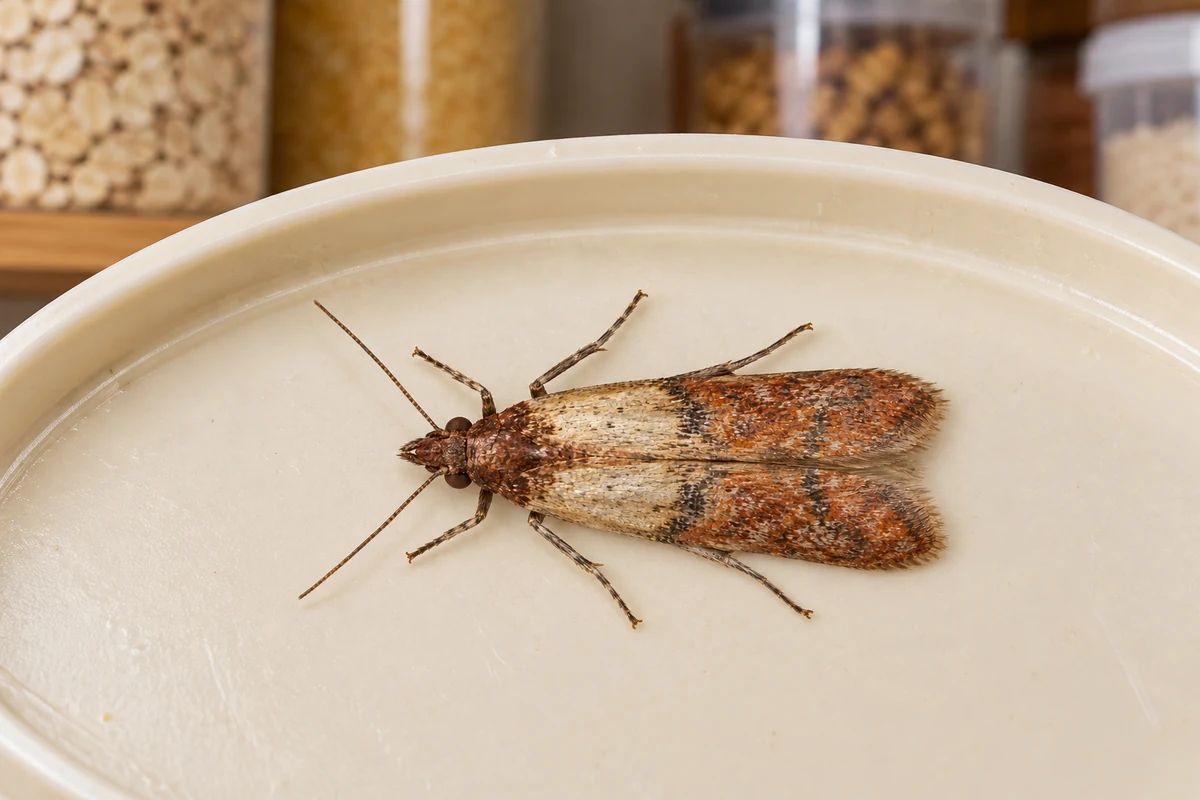
Little moths fluttering around the kitchen? Our office sits where McKinney, Plano, Frisco and Allen meet, 5 to 10 minutes from most homes in those four cities. Call and we will find the package they are coming from.
Indian Meal Moth
The Indian meal moth is a small moth whose caterpillars live in dry stored food. The University of California’s guide to pantry pests calls it the most common moth found on food products in the home.
Risk Assessment
Choose a row for the full detail- Color
- Wings pale gray near the body, reddish copper beyond
- Diet
- Caterpillars eat dry foods such as flour, cereal, nuts, dried fruit, pet food and birdseed. Adults do not eat
- Threat level
- Moderate
- Where it hides
- Opened packages of dry food, with cocoons in shelf cracks and ceiling corners
- Adult lifespan
- About a week
- Eggs
- Up to 400 per female, laid on or near the food
- Egg to adult
- About 25 days at 86°F, 60 days at 68°F
- Size
- About half an inch long, 16 to 20 mm across the open wings
What Does an Indian Meal Moth Look Like?
A small moth with wings pale gray near the body and reddish copper at the tips
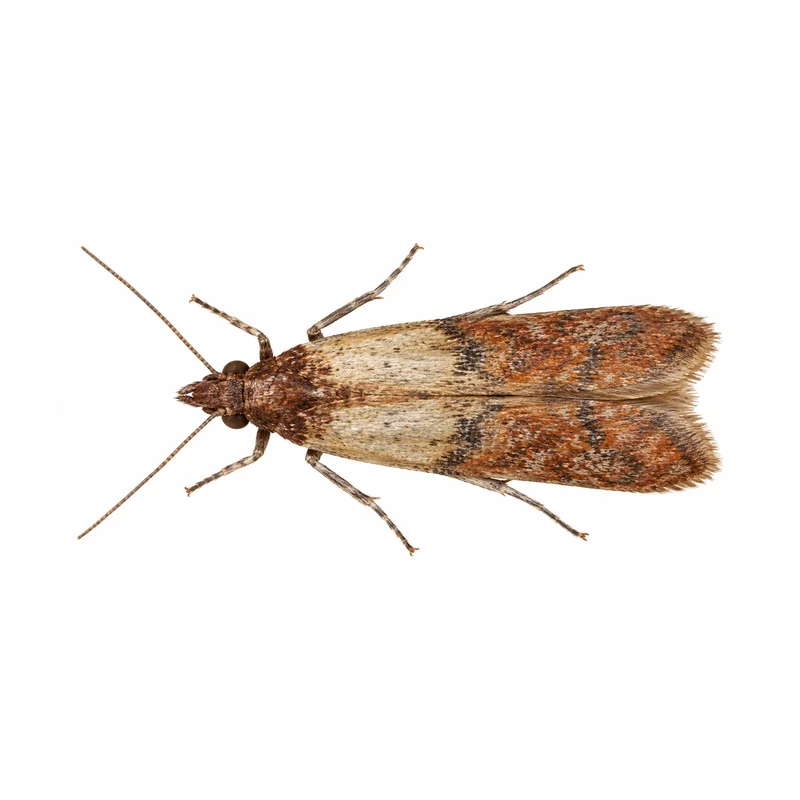
The adult is a small, slim moth about half an inch long. Its front wings are the giveaway. The University of Florida’s Featured Creatures profile describes the inner third as gray and the outer two thirds as reddish brown with a copper sheen, with a wingspan of about 16 to 20 mm. At rest the wings fold over the back like a little roof, and the moth is drawn to lights, so it often turns up in rooms far from the kitchen.
The caterpillars do the damage. Purdue Extension’s fact sheet on the Indianmeal moth describes them as white with a dark head when small, growing to about half an inch and turning yellowish, greenish or pinkish white. They leave a silk thread wherever they crawl, which binds food into clumps, and when grown most of them leave the food to find a place to spin a cocoon.
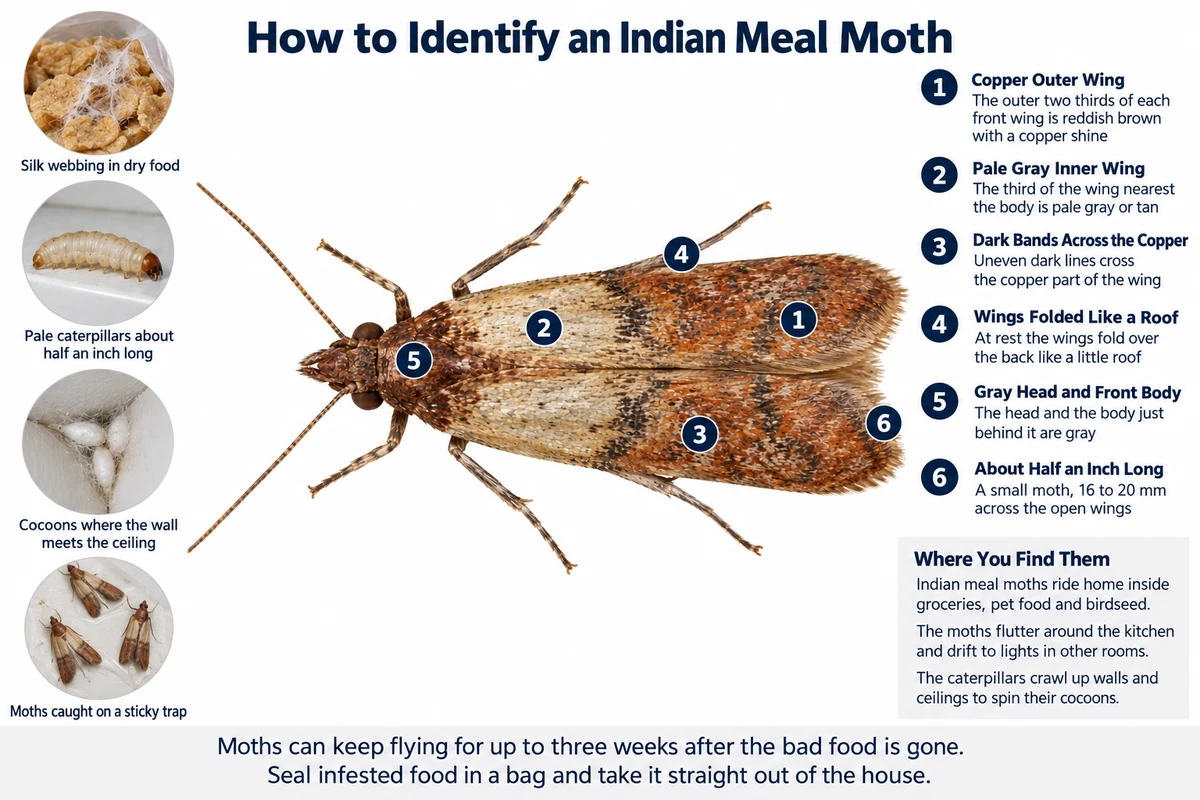
How to identify an Indian meal moth by its two-tone wings, with the webbing, caterpillars and cocoons it leaves behind
- Small moths with copper wing tips fluttering around the kitchen or near lights
- Silk webbing that clumps flour, cereal, nuts or pet food together
- Pale caterpillars up to half an inch long crawling on shelves, walls or the ceiling
- Small silk cocoons in shelf corners, peg holes and where the wall meets the ceiling
- Tiny holes in a bag or box, or webbing caught in its folds
- Moths in the garage near birdseed or a bag of dog food
Other Names for the Indian Meal Moth
The name has nothing to do with India. The University of Florida explains that the moth got its common name in the United States, where it was found feeding on meal made from Indian corn, the old name for maize. Entomologists write it as one word, Indianmeal moth, and most homeowners just call it the pantry moth.
The name that causes the most mix-ups is clothes moth. That is a different moth that eats wool, fur and feathers rather than food. The comparison below the look-alike table shows how to tell the two apart.
| Name | What it means |
|---|---|
| Pantry moth | The everyday name, for where it is found. |
| Indianmeal moth | The one-word spelling entomologists use. |
| Meal moth | For the cornmeal and flour it infests. |
| White worms | What people call the caterpillars in food. |
| Clothes moth | A different moth that eats fabric, not food. |
How to Tell an Indian Meal Moth from a Fruit Fly or Carpet Beetle
Small things flying around a kitchen and small worms crawling across a ceiling are not always pantry moths. The fix depends on what it is. Pantry moths end when the infested food is gone, fruit flies end when the overripe fruit is gone, and carpet beetles live in wool and fabric rather than food.
| Species | Size and Color | Key Feature | Where Found |
|---|---|---|---|
|
Indian Meal Moth
AKA: Pantry Moth, Indianmeal Moth
Plodia interpunctella
This species
|
About half an inch long. Wings pale gray near the body, reddish copper at the tips. | A true moth with two-tone wings. Its pale caterpillars spin silk webbing through dry food. | Pantries, kitchen cabinets and wherever pet food or birdseed is stored, with cocoons on shelves and ceilings. |
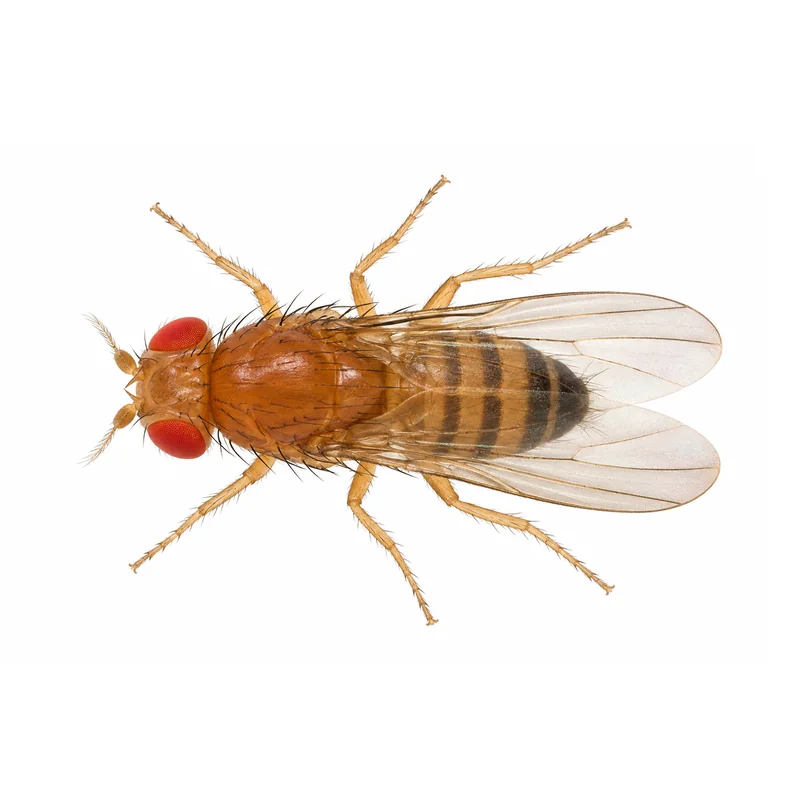
Fruit Fly
AKA: Vinegar Fly
Drosophila melanogaster
|
Far smaller, 1/12 to 1/8 inch. Brown to yellowish with red eyes. | A fly with clear wings, not a moth. No webbing and no caterpillars in dry food. | Around overripe, damaged or fermenting fruit, where its young feed. |
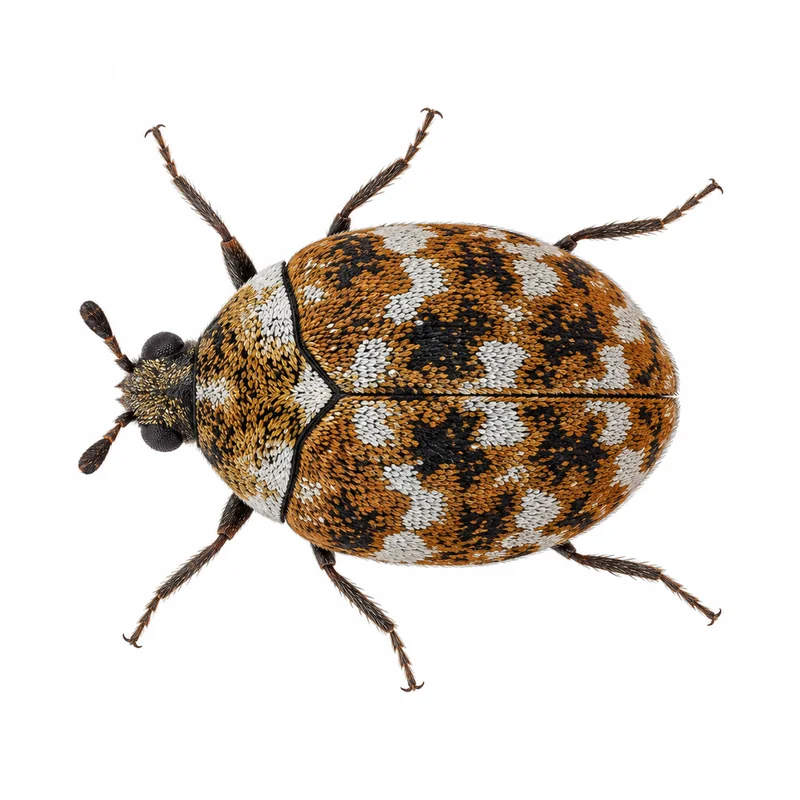
Varied Carpet Beetle
AKA: Carpet Beetle
Anthrenus verbasci
|
About 1/10 inch. A round black beetle with white, brown and yellow patches. | Its young are hairy, striped and fuzzy, not smooth caterpillars, and they spin no webbing. | Adults by windows, the young in wool rugs, clothes, closets and stored fabric. |
Indian Meal Moth vs Clothes Moth
The Indian Meal Moth in Three Numbers
52 of 102
A 2001 University of Vienna study found allergy antibodies to the Indian meal moth in 52 of 102 patients who had allergy symptoms indoors.
University of Vienna, Journal of Immunology, 2001
Up to 400
The University of Florida reports that a single female Indian meal moth can lay up to 400 eggs, generally right on the food her caterpillars will eat.
University of Florida, Featured Creatures
3 weeks
University of Minnesota Extension says Indian meal moths can keep flying for up to 3 weeks after the infested food is thrown out.
University of Minnesota Extension
Do Indian Meal Moths Bite or Sting?
No. The University of Minnesota Extension guide to pantry pests says they do not bite or sting people or pets and do not feed on or damage buildings. The adult moth does not feed. Purdue Extension notes it lives about a week, long enough to mate and lay eggs. The harm is to your food, which the same guide says pantry pests contaminate more than they eat.
Can Pantry Moths Make You Sick?
Infested food is not something to keep. The University of California’s guide to pantry pests says the caterpillars leave droppings and webbing in the food, and that pantry pests can carry in microbes that spoil it, especially in warm, humid storage. Throw out anything with webbing, caterpillars or clumps in it, sealed in a bag and taken straight out of the house.
Can You Be Allergic to Pantry Moths?
Some people are. A University of Vienna study published in the Journal of Immunology in 2001 found allergy antibodies to the Indian meal moth in 52 of 102 patients who had allergy symptoms indoors, and identified a moth protein that also cross-reacts with dust mites, cockroaches and shellfish. That was a group of people who already had indoor allergies, not the general public. If anyone at home has asthma or indoor allergies, let someone else empty and vacuum a badly infested pantry.
When Pantry Moth Activity Needs Fast Action
Wheezing or Sneezing at the Pantry
If someone with asthma or indoor allergies feels worse around the pantry, keep them away from the cleanup and tell their doctor about the moths.
Webbing in Food You Eat Often
Webbing or caterpillars in cereal, flour or snacks the family eats every day means the whole shelf needs checking today, opened and sealed packages alike.
Moths Still Flying After 3 Weeks
A few moths for a couple of weeks after a cleanout is normal. Moths after three weeks mean an infested package is still hiding somewhere.
Moths in Bedrooms and Closets
Moths far from the kitchen are drawn to lights, and caterpillars can travel a long way to spin cocoons. Check pet food and birdseed in other rooms and the garage.
Why You Have Indian Meal Moths in Your House
Almost always, they came home with the groceries. California’s university pest guide says pantry pests usually arrive in an infested package of food, and the University of Minnesota guide adds that they get into unopened paper, thin cardboard and plastic or foil packages, chewing in or crawling through the folds and seams. The University of Florida traced one of its own authors’ infestations to pistachios bought from a store’s bulk bin. A home does not have to be dirty to have them.
Once inside, they settle in whatever is opened and forgotten. Old bags of cereal, flour, nuts, dried fruit, spices and chocolate are common, and the University of Florida says dog food and birdseed are the sources people usually overlook. Ornamental corn, dried flower arrangements and rodent bait can hold pantry pests too, according to the Minnesota guide. A heated and cooled house lets them breed in every month of the year.
Where Indian Meal Moths Live in Collin County Homes
The caterpillars live in the food and the adults rest nearby. When grown, the caterpillars wander off to spin cocoons, and the University of Florida pictures one that climbed two shelves and pupated on the bottom edge of a soup can. That is why cocoons turn up in shelf peg holes, cabinet corners and where the wall meets the ceiling, well away from the bag that started it.
Pantry Moth Pressure Across Collin County
Pantry moths show up in our service notes most often in Plano, McKinney, Allen and Frisco, almost always in the kitchen pantry, and sometimes spread into nearby rooms by the time we are called.
We also find them in Prosper and Princeton. Homes that buy in bulk, feed birds or keep large bags of pet food give them the most to work with, wherever the house is.
Indian meal moths are active all year inside Collin County homes, because a heated and cooled pantry never has a winter. Our pantry moth calls come most often in April and again from August into September.
Pattern from Pest Me Off pantry moth calls, 2024 to 2026, and the indoor breeding described by the University of Florida and Purdue Extension.
Why Indian Meal Moths Keep Coming Back
How Pest Me Off Gets Rid of Indian Meal Moths
Indian meal moth control is four steps, every job. Swatting the moths you can see does nothing while the package they hatched from is still on the shelf.
Inspect and Find the Source
A free inspection. The pantry is emptied and checked package by package, sealed bags included, and we check the garage for birdseed, pet food and bulk grain.
Clear Out the Infested Food
Every infested item is sealed in a bag and taken out to the outdoor trash before any treatment goes down.
Treat the Empty Pantry
A targeted treatment worked into the shelf cracks, corners and peg holes where the caterpillars crawl off to spin cocoons. Your food and food surfaces are never sprayed.
Store Tight and Confirm
We set you up with an airtight storage plan and leave sticky traps that catch the male moths, so you can see when it is over.
& Other Companies
How to Get Rid of Indian Meal Moths Yourself
Most of the work is finding every infested package and getting it out. The University of Minnesota guide calls throwing out infested food and cleaning the cupboards the best way to get rid of pantry pests.
Why Some DIY Responses Fail for Indian Meal Moths
Most DIY pantry moth trouble comes from treating the moths instead of the food, or from trusting a trap or a home remedy to do the job of a full cleanout.
Spraying Around Your Food
The Minnesota guide says household sprays have no effect on insects inside food packages, and any food the spray touches has to be thrown out.
Hanging a Moth Trap and Waiting
The California guide says the traps catch only male moths. The females keep laying and the caterpillars keep eating, so a trap tells you when to look, not where.
Bay Leaves and Bleach
The same Minnesota guide finds no evidence that bay leaves or mint gum keep pantry pests away, and washing shelves with bleach does not stop them returning.
Common Indian Meal Moth Questions
What is an Indian meal moth?
What do pantry moths look like?
Do pantry moths bite or sting?
Are pantry moths dangerous to dogs and cats?
Where do pantry moths come from?
What are the small worms on my ceiling?
Why do I still see moths after throwing out the food?
Can pantry moths get into sealed packages?
Do pantry moths eat clothes?
Is it safe to eat food that had pantry moths in it?
Do pantry moth traps work?
How do I get rid of pantry moths?
Moths in the Pantry? We Find the Package They Came From.
We check the pantry package by package, clear out every infested item, treat the empty shelves where the cocoons hide and never spray your food. Pantry moth control across McKinney, Allen, Frisco, Plano, and all of Collin County.