
Rice Weevils in Collin County, TX | Identification and Control
The rice weevil (Sitophilus oryzae) is a tiny reddish brown to black beetle with a long snout and four pale spots on its back. Its young grow hidden inside single grains of rice, wheat and corn, so a bag can look clean and still be full of them. The Texas A&M Field Guide to Common Texas Insects says one female can lay 300 to 400 eggs, usually one in each hole she chews in a kernel.
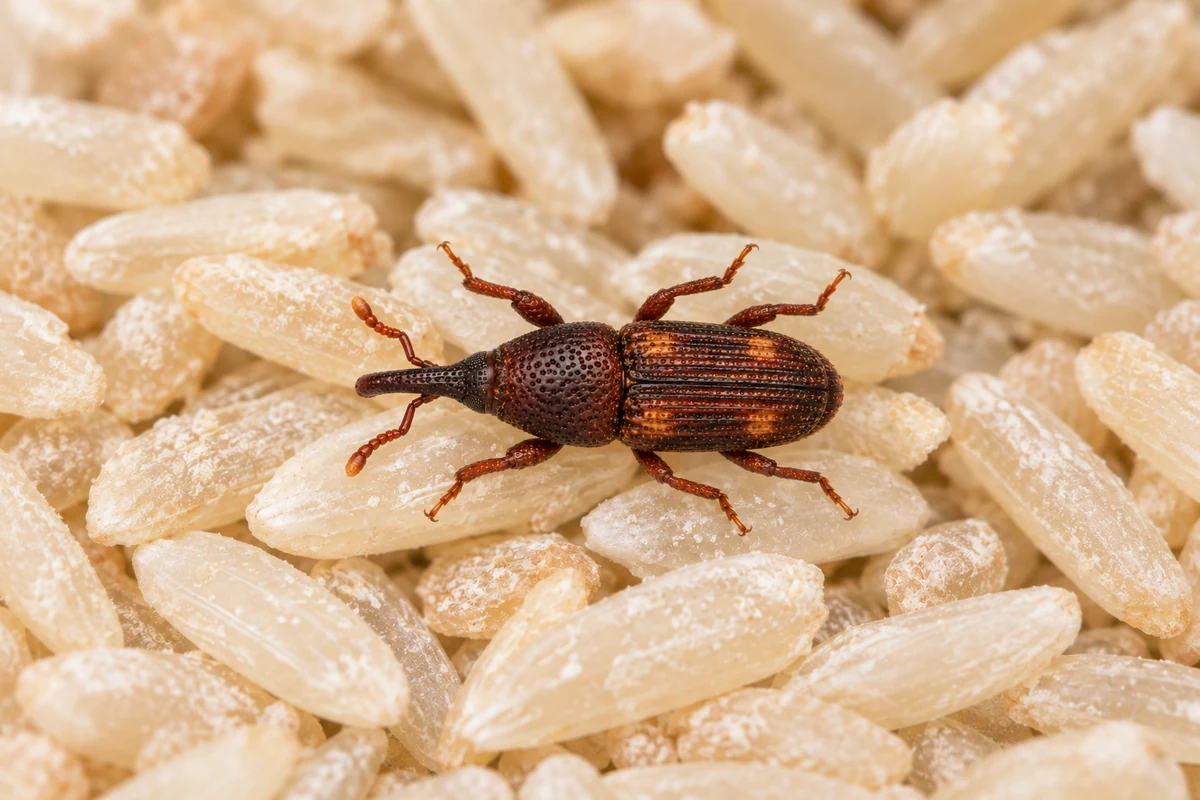
Tiny snouted beetles in your rice or bird seed? Our office sits where McKinney, Plano, Frisco and Allen meet, 5 to 10 minutes from most homes in those four cities. Call and we will find every infested bag, including the ones in the garage.
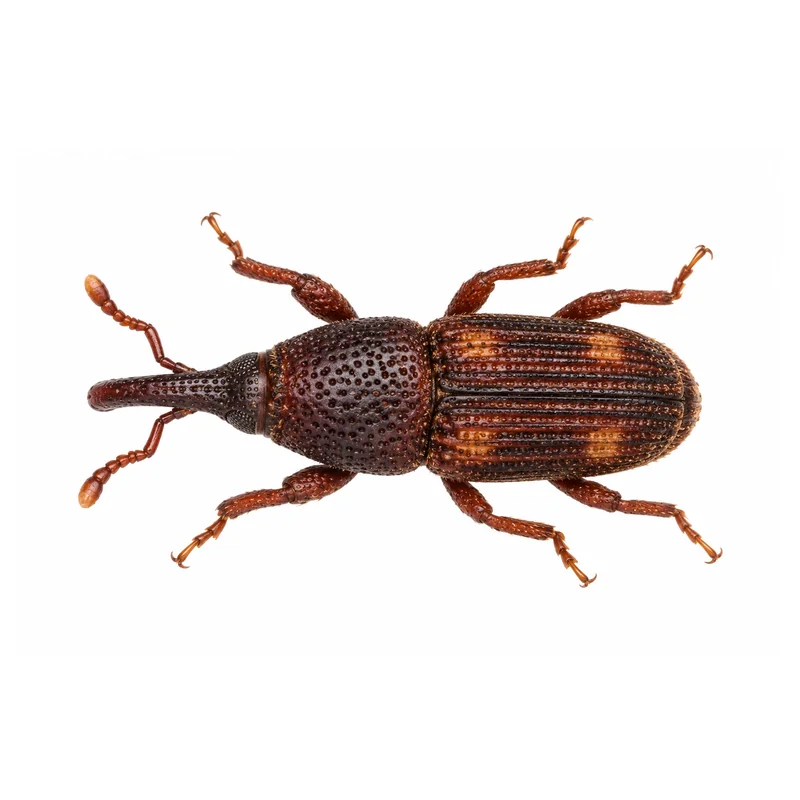
Rice Weevil
The rice weevil is a small snout beetle that spends its whole young life inside a single grain kernel and comes home in groceries. The Texas A&M Field Guide to Common Texas Insects calls it a pest of stored grain around the world and medically harmless.
Risk Assessment
Choose a row for the full detail- Color
- Reddish brown to black, with four reddish or yellowish spots
- Diet
- Whole grain such as rice, wheat, corn, oats, barley and sorghum
- Threat level
- Low
- Wings
- A good flier, so it spreads to other containers
- Where it hides
- Inside whole grain kernels, from egg to adult
- Adult lifespan
- Often 7 to 8 months
- Egg to adult
- About a month in warm conditions
- Size
- About 1/8 inch long
What Does a Rice Weevil Look Like?
A tiny dark beetle with a long, slender snout and four pale spots on its back
An adult rice weevil is about 1/8 inch long, reddish brown to black, with four reddish or yellowish spots on its wing covers. The Texas A&M Field Guide to Common Texas Insects describes a slender snout on the front of the head, coarse round pits on the shield behind the head, and deep lines along the wing covers. The snout is the quick tell. A small beetle with a snout in your rice is a weevil, and the grain beetles and drugstore beetles that also turn up in pantries have none.
You will rarely see the young. They are white, legless grubs that grow inside the grain, hollow out the kernel and turn into adults there. What you find are the adults wandering out of a bag or across the counter, and kernels with small round holes in their sides, which the same field guide says are made by adults feeding, laying eggs and chewing their way out.
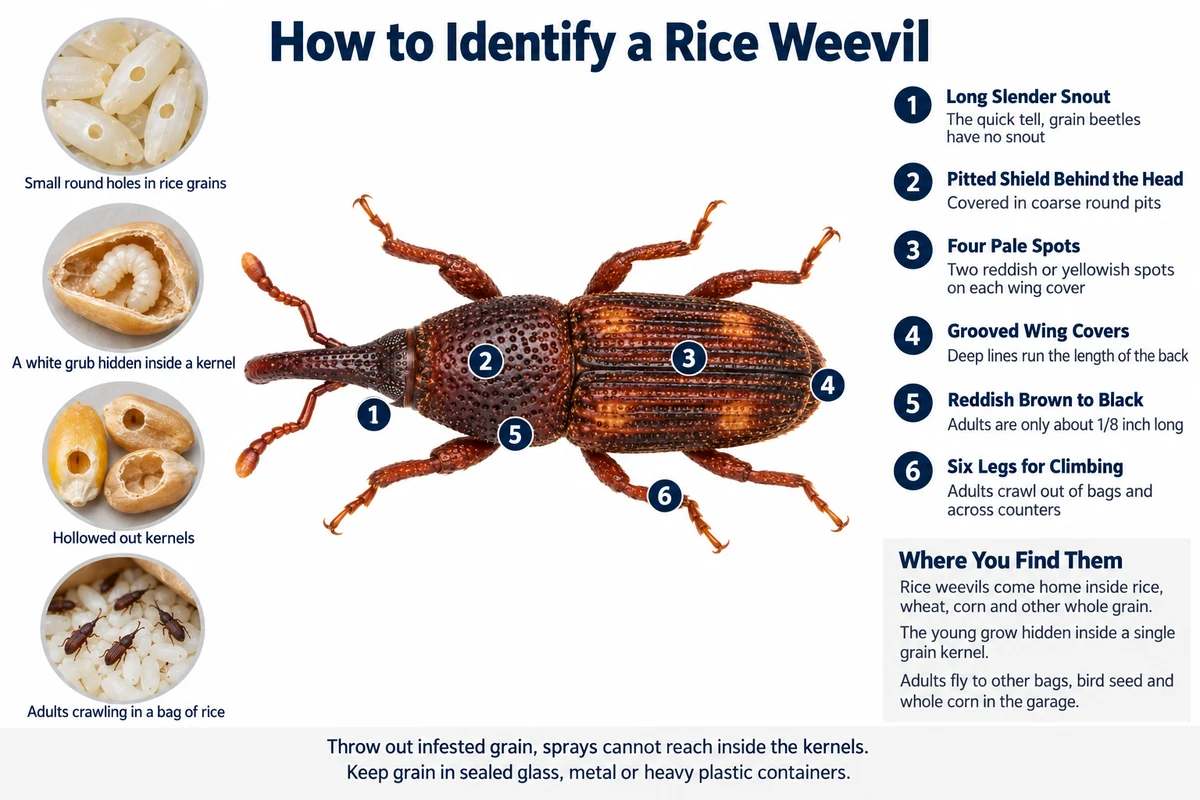
How to identify a rice weevil by its long snout and four pale spots, with the holed and hollow kernels it leaves behind
- Tiny dark beetles with a long snout in rice, grain or bird seed
- Small round holes chewed in the sides of rice, wheat or corn kernels
- Kernels that are hollow inside when you crush them
- Beetles in whole grain, while the flour and cereal are clean
- The same beetle in more than one container, or in bird seed or whole corn in the garage
- Beetles on the counter or a window sill some distance from the pantry
Other Names for the Rice Weevil
Despite the name, the rice weevil is not a rice specialist. The Texas A&M field guide finds it in stored grain of every kind, including wheat, corn, oats, barley, sorghum and macaroni. The scientific name Sitophilus oryzae means the grain lover of rice. In Spanish it is the gorgojo del arroz.
Two close cousins share the same snout and the same habit of growing inside whole kernels, the granary weevil and the maize weevil. The University of Minnesota Extension describes all three together, and the fix in a pantry is the same for each.
| Name | What it means |
|---|---|
| Snout beetle | A name for any weevil, after the long snout. |
| Grain weevil | A loose name for the weevils found in stored grain. |
| Gorgojo del arroz | The Spanish name, meaning the rice weevil. |
| Granary weevil | A close cousin that has no wings. |
| Maize weevil | A close cousin that looks much the same. |
How to Tell a Rice Weevil from a Grain Beetle or Drugstore Beetle
All three are small brown pantry beetles, and the right fix depends on which one it is. A rice weevil lives inside whole grain, while the other two feed on flour, cereal, crackers and spices, so knowing the beetle tells you which foods to check first. The snout, the shape of the body and the food it is in tell them apart.
| Species | Size and Color | Key Feature | Where Found |
|---|---|---|---|
|
Rice Weevil
AKA: Snout Beetle, Grain Weevil
Sitophilus oryzae
This species
|
About 1/8 inch. Reddish brown to black with four reddish or yellowish spots. | A long, slender snout on the front of the head. Flies well. | Inside whole kernels of rice, wheat, corn and other grain, and in bird seed. |
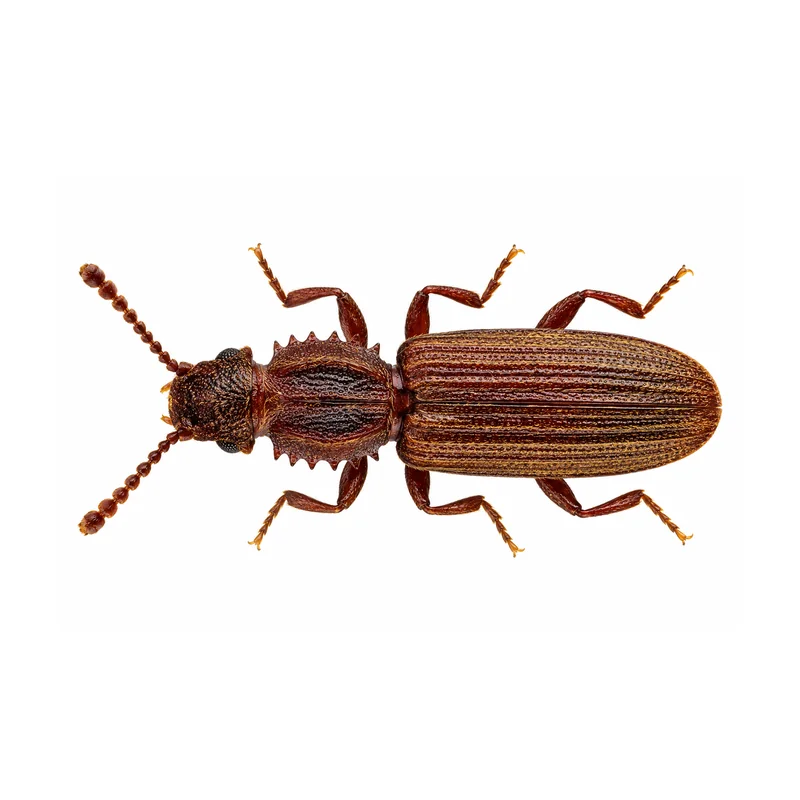
Sawtoothed Grain Beetle
AKA: Grain Beetle
Oryzaephilus surinamensis
|
About 1/10 inch. Slender, flat and brown. | No snout. Six saw-like teeth along each side of the body behind the head. | Flour, cereal, crackers, pet food and other broken or milled grain, never inside a whole kernel. |
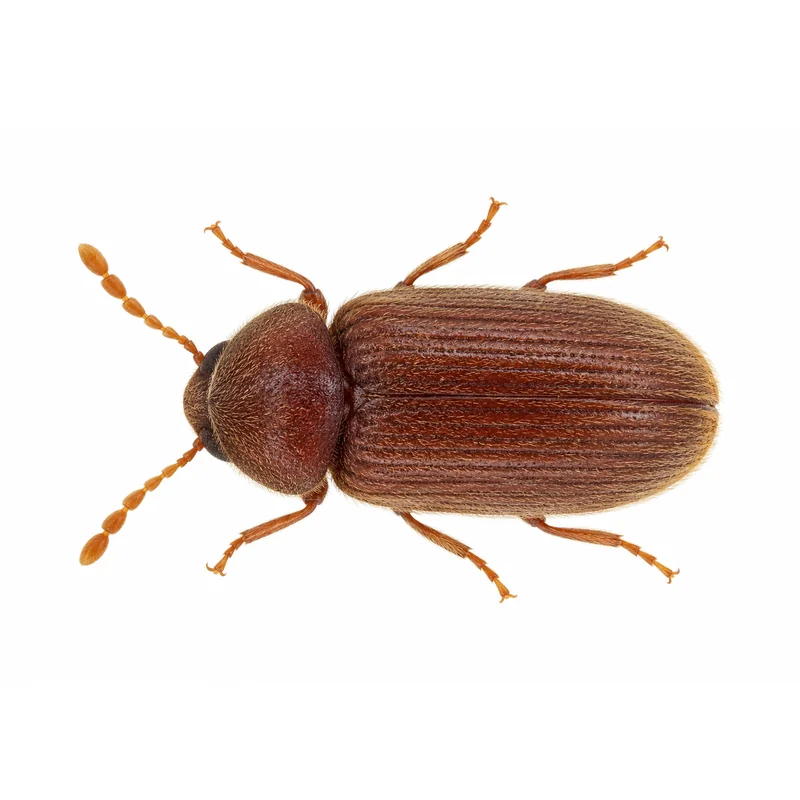
Drugstore Beetle
AKA: Bread Beetle
Stegobium paniceum
|
About 1/8 inch. Rounded and evenly light brown. | No snout. Fine lines running the length of its wing covers. | Almost any dry food, including bread, flour, cereal, pet food and spices. |
Rice Weevil vs Sawtoothed Grain Beetle
The Rice Weevil in Three Numbers
300 to 400
The Texas A&M Field Guide to Common Texas Insects says a female rice weevil can lay 300 to 400 eggs, usually one in each hole she chews in a grain kernel.
Texas A&M Field Guide to Common Texas Insects
7 to 8 months
The same field guide says adult rice weevils often live 7 to 8 months, and some have been recorded living over 2 years.
Texas A&M Field Guide to Common Texas Insects
4 days
The University of Minnesota Extension says holding food in a freezer at 0 degrees for at least 4 days kills any eggs or insects inside it, rice weevils included.
University of Minnesota Extension
Do Rice Weevils Bite?
No. Rice weevils chew grain, not skin, and the Texas A&M field guide calls them medically harmless. The University of Minnesota Extension says the insects that infest stored food do not bite or sting people or pets, and do not feed on or damage the house. A weevil crawling on your hand or the counter is a sign of infested food nearby, nothing more.
Is It Safe to Eat Rice With Weevils in It?
Swallowing a weevil by accident will not poison you, but infested grain is not worth keeping. The University of California’s pantry pest guide warns that pantry insects can bring microbes into food that may produce mycotoxins, especially when the food is kept warm and humid. Sifting out the adults also leaves the young still inside the kernels. Throw infested rice and grain away and start fresh.
When Rice Weevil Activity Needs Fast Action
Bug Spray Got on Food
Any food that touches an insecticide has to be thrown out, Minnesota’s extension service says, and dishes and containers washed before use.
Weevils in Several Containers
Adults fly from bag to bag, so check every whole grain, popcorn and bird seed container in the house and garage, not just the first one.
Still Seeing Weevils Weeks Later
A new batch means a source you have not found yet. Look at bird seed, whole corn, decorative corn and forgotten bags at the back of a shelf.
One Weevil on the Counter
Check the rice and grain nearby. If every bag is clean, keep them sealed and watch for a few weeks before doing more.
Why You Have Rice Weevils in Your Pantry
Rice weevils almost always come home in the food. The University of Minnesota Extension explains that stored food can become infested anywhere from production to your kitchen, most often in the store or the home, and the Texas A&M field guide notes that rice weevils can even infest grain in the field. Because the eggs and young are sealed inside the kernels, a bag can look perfectly clean when you buy it.
Once one bag is infested, the adults leave it to look for more grain. The Texas A&M field guide calls them good fliers, and the University of Kentucky’s pantry pest fact sheet says adults may be found some distance from the food they came from. A bag of rice forgotten at the back of the pantry, a sack of bird seed or whole corn in the garage, or a decorative corn wreath can feed a steady stream of them. It is not a sign of a dirty kitchen.
Where Rice Weevils Live in Collin County Homes
Rice weevils live wherever whole grain is stored. In a home that means the pantry, where rice, wheat berries, popcorn, oats and barley sit for months, and the garage or barn, where bird seed, whole corn and feed are kept in bags. The University of Minnesota Extension says weevils eat only whole grains or seeds and are rarely found in nuts, dried fruit or flour.
Rice Weevil Pressure Across Collin County
Pantry beetles turn up in our service notes most often in McKinney, Allen, Frisco and Plano kitchens, usually where rice, grain or flour was kept in open bags. Rice weevils arrive in groceries, so any home in the county can get them, new build or old.
The same goes for any home, in town or out in the country, that keeps whole corn, feed or bird seed in the garage or a barn, since whole grain is all a rice weevil needs. Buying grain in bulk and storing it for months gives a few weevils time to become many.
Rice weevils live indoors in heated and cooled homes, so they breed all year in Collin County. They build up fastest in the warm months, when a generation can finish in about a month, and a bag that sat through the summer is the one most likely to be full of them.
Pattern from published rice weevil biology (the Texas A&M field guide’s note that a generation can finish in a month in warm conditions) and Pest Me Off pantry pest calls, which come in all year and climb in the warm months.
Why Rice Weevils Keep Coming Back
How Pest Me Off Gets Rid of Rice Weevils
Rice weevil control is four steps, every job. Spraying the beetles you can see is not the fix, because the next batch is already growing inside the grain.
Confirm It Is a Weevil
A free inspection of the pantry and the garage. We confirm it is a rice weevil and not a grain beetle or drugstore beetle, because each one hides in different foods.
Remove Every Infested Source
We open and inspect the whole pantry, including sealed bags that look fine, and check the bird seed, whole corn and bulk grain in the garage. Every infested item is bagged and out of the house before anything else happens.
Treat the Cracks, Never the Food
With the food out, we work a targeted treatment into shelf cracks, corners and crevices. Nothing is ever sprayed across food surfaces.
Store It Sealed and Check Back
We point out the open packaging that let them spread and help you move grain into sealed containers. On a quarterly plan, every visit includes a pantry check.
& Other Companies
How to Get Rid of Rice Weevils Yourself
Most DIY weevil work is finding the food they live in. The University of Minnesota Extension puts throwing out infested food and cleaning the shelves first, ahead of any product.
Why Some DIY Responses Fail for Rice Weevils
Most DIY weevil trouble comes from spraying instead of searching, stopping at the first bag, or trusting a home remedy that has never been shown to work.
Spraying the Pantry
Household bug spray has no effect on insects inside food packages, Minnesota’s extension service says, and any food it touches has to be thrown out.
Tossing Only One Bag
By the time you see weevils, adults have often flown to other grain. Check every whole grain, popcorn, bird seed and decorative corn item, inside and in the garage.
Bay Leaves and Gum
The same extension service found no evidence that bay leaves or sticks of spearmint gum in a cupboard prevent or get rid of pantry insects.
Common Rice Weevil Questions
What is a rice weevil?
How do I know if my rice has weevils?
Do rice weevils bite?
Is it safe to eat rice with weevils in it?
Are rice weevils harmful to pets?
Where do rice weevils come from?
Can rice weevils fly?
What is the difference between a rice weevil and a grain beetle?
Does freezing rice kill weevils?
How long do rice weevils live?
How do I get rid of rice weevils?
Weevils in the Rice? We Find Every Infested Bag.
We confirm the pest, find and remove every infested bag in the pantry and garage, and treat the shelf cracks without ever spraying your food. Pantry pest control across McKinney, Allen, Frisco, Plano, and all of Collin County.