Camel Crickets in Collin County, TX | Identification and Control
The camel cricket is the silent, wingless, humpbacked cricket with very long legs that leaps out of dark garage corners, laundry rooms and crawl spaces. Those legs are why people call it a spider cricket. It cannot bite and carries no venom, but it is common. In a 2014 North Carolina State University survey of 1,719 households across the United States, 24 percent said they had seen camel crickets in their homes.
Jumping crickets in the garage or laundry room? Our office sits where McKinney, Plano, Frisco and Allen meet, 5 to 10 minutes from most homes in those four cities. Call and we will confirm which cricket it is and find where it hides.
Camel Cricket
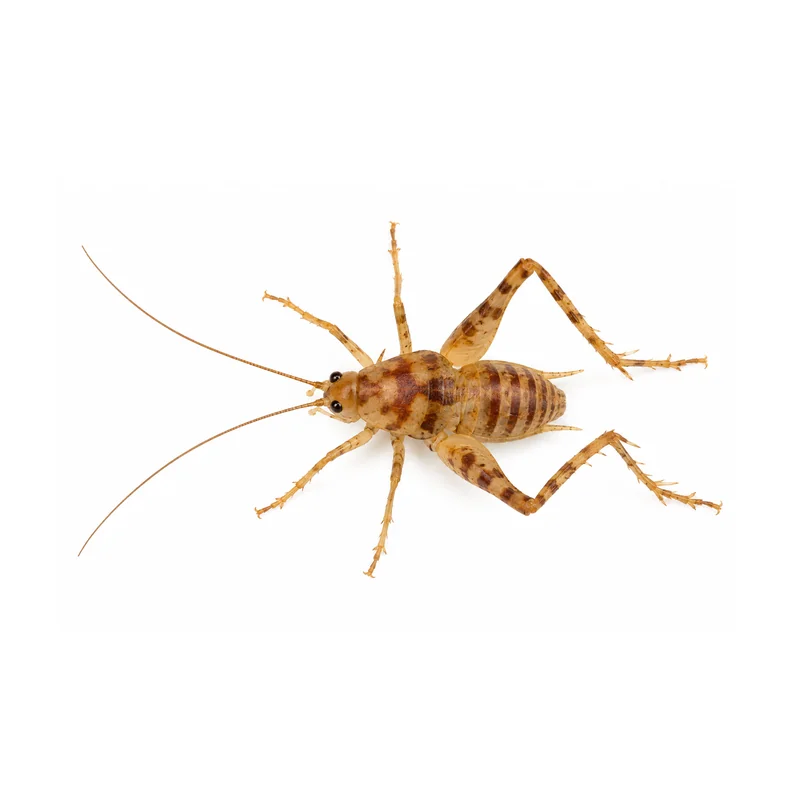
The camel cricket is a wingless, silent cricket that hides by day in cool, damp, dark places and comes out at night. NC State Extension calls it mostly a nuisance pest that moves indoors when the weather turns very wet or very hot and dry.
Risk Assessment
Choose a row for the full detail- Color
- Light tan to dark brown, often mottled with lighter and darker spots
- Diet
- Fungi, plant matter, dead insects, cardboard and fabric
- Threat level
- Low
- Defining behavior
- Silent, wingless, and leaps when startled
- Where it hides
- Damp garages, laundry rooms, crawl spaces, mulch and woodpiles
- Lifespan
- About one to two years
- Size
- 1/2 to 1 1/4 inches long, with very long antennae and hind legs
What Does a Camel Cricket Look Like?
A tan to brown humpbacked cricket with no wings, very long antennae and huge back legs
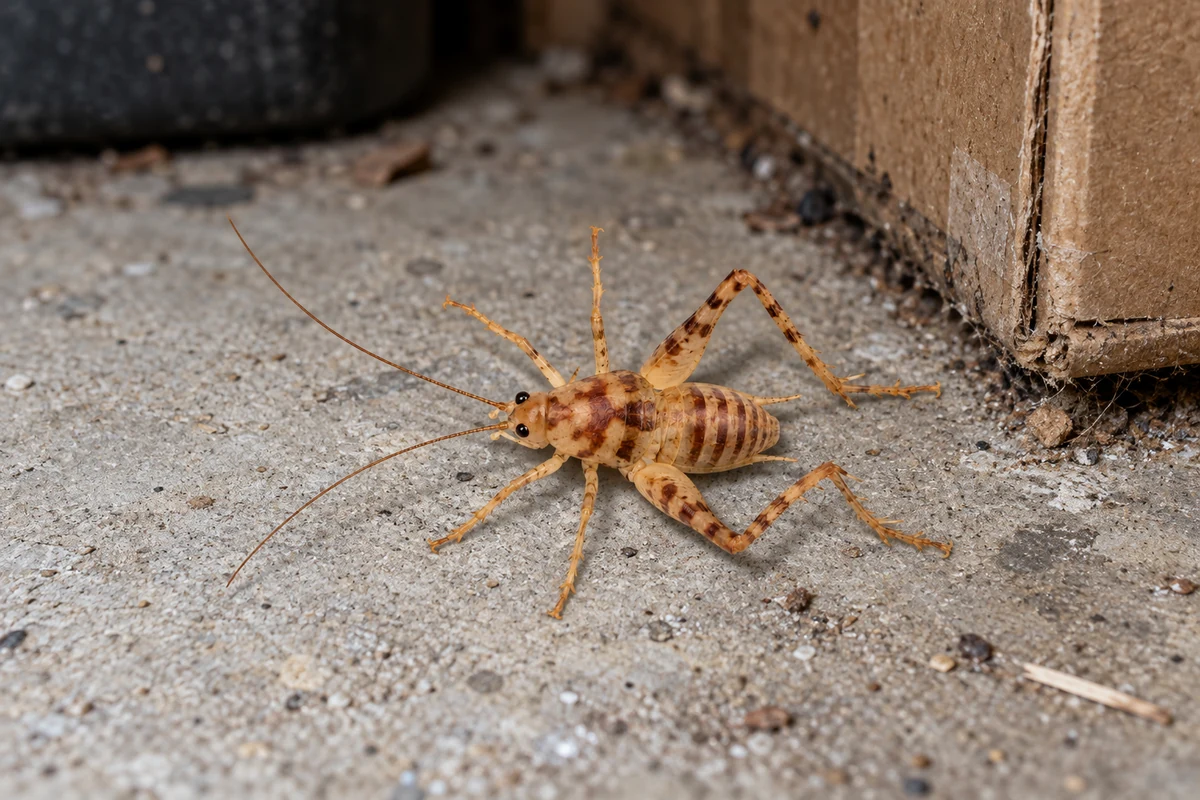
Seen from the side, a camel cricket’s back rises in a hump, which is where the camel name comes from. It has no wings as an adult, its antennae and back legs are extremely long for its body, and its color runs from light tan to dark brown. The University of Maryland Extension puts camel crickets at 1/2 to 1 1/4 inches long, about the size of a field cricket, but built very differently.
The long legs and the hunched shape are why so many people take one for a spider at first. Count the legs and look at the head. A camel cricket has six legs and a pair of long antennae, and a spider has eight legs and none. Young camel crickets look almost the same as adults, only smaller, so a mix of small and large ones in one corner is normal.
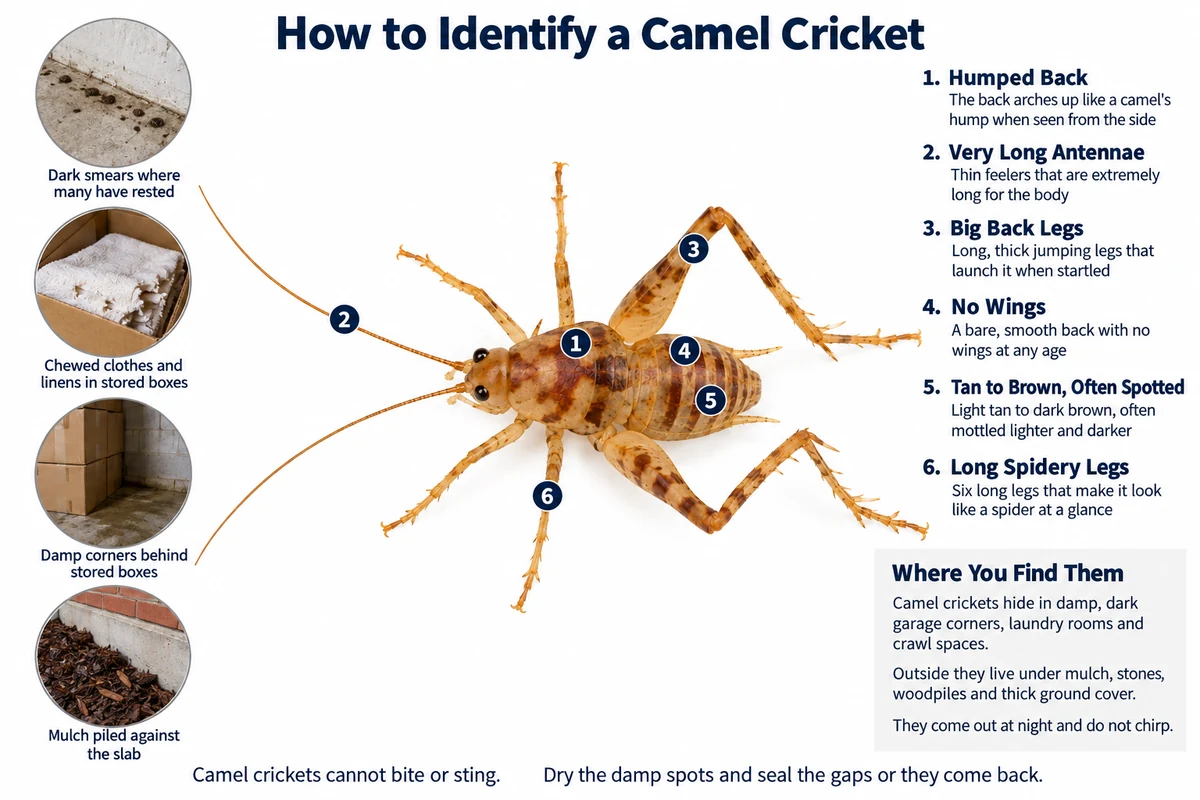
How to identify a camel cricket by its humped back, missing wings and very long antennae and legs, with the signs it leaves in a damp garage
- A humped back, seen from the side, and no wings at all
- Antennae and back legs far longer than you would expect for the body
- No chirping, even when you can see several of them
- Found in dark, damp corners rather than at the porch light
- Dark smears on floors, walls or wood where many have been resting
- Chewed edges on boxes, clothes or linens stored in the garage
Other Names for the Camel Cricket
Camel cricket is a family name rather than one insect. A 2014 North Carolina State University study counts about 150 kinds of camel cricket in North America, among them the large native group Ceuthophilus. The National Pest Management Association’s PestWorld guide notes they are also called cave crickets and spider crickets, after the caves some kinds live in and the long legs they all share.
The same study found that an Asian species, the greenhouse camel cricket, is now the one most often found in homes in the eastern United States, far more often than the native kinds. The study had only one sample from Texas, a native camel cricket, so which kind is more common in Collin County homes is not yet known. The two look and act much the same.
| Name | What it means |
|---|---|
| Spider cricket | For the long legs that make it look like a spider. |
| Cave cricket | Many kinds live in caves, the garage is its stand-in. |
| Camel cricket | For the humped back, like a camel’s. |
| Greenhouse camel cricket | The Asian species now common in eastern homes. |
How to Tell a Camel Cricket from a Field Cricket or Wolf Spider
All three turn up in Collin County garages, and the right fix depends on which one it is. Field crickets march in from the lawn toward the lights, camel crickets live in the damp, dark spots, and a wolf spider is a hunter after both of them. Wings, a chirp and the number of legs tell them apart.
| Species | Size and Color | Key Feature | Where Found |
|---|---|---|---|
|
Camel Cricket
AKA: Spider Cricket, Cave Cricket
Ceuthophilus species
This species
|
1/2 to 1 1/4 inches long. Light tan to dark brown, often mottled. | Humped back, no wings, very long antennae and back legs. Silent. | Damp, dark garage corners, laundry rooms, crawl spaces, under mulch and woodpiles. |
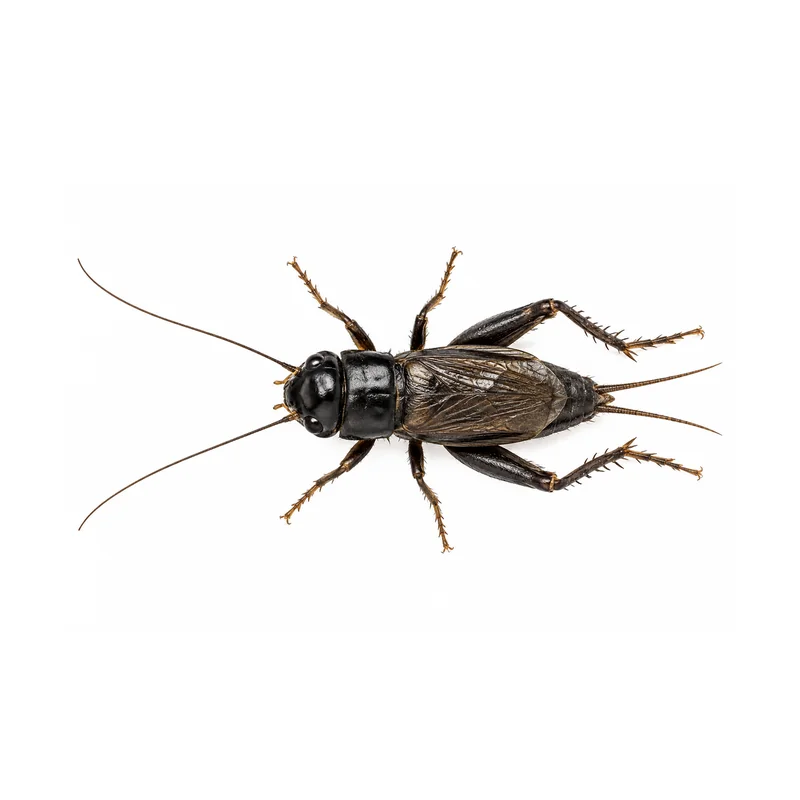
Field Cricket
AKA: Black Cricket
Gryllus species
|
About the same length, 1/2 to 1 1/4 inches. Shiny black to dark brown and stout. | Has wings, no hump, and the males chirp loudly after dark. | Lawns and beds, piling up at garage doors and lit walls on warm fall nights. |
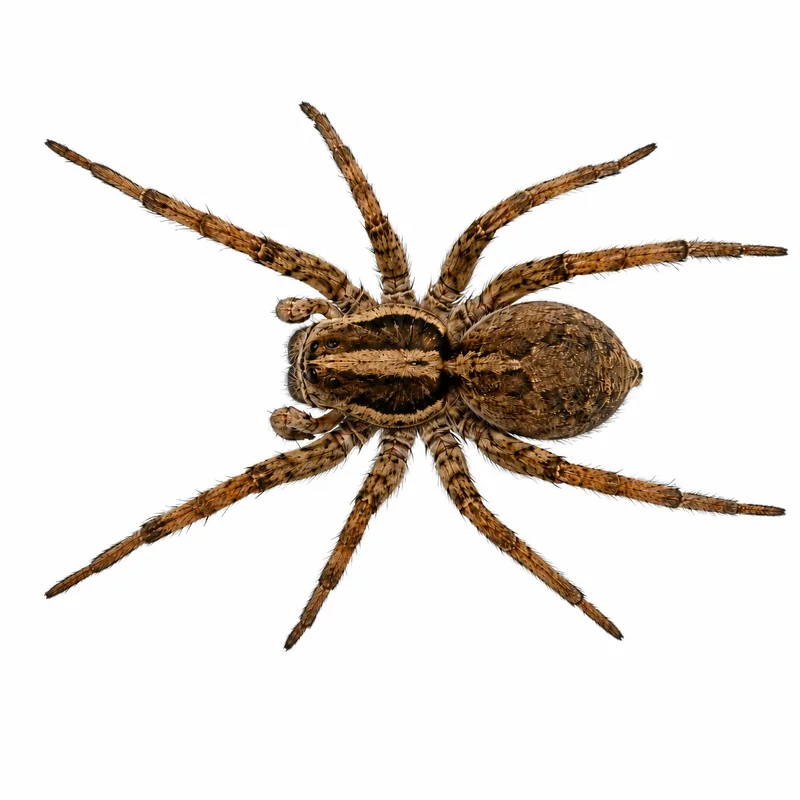
Wolf Spider
AKA: Ground Spider
Lycosidae
|
Body 1/2 to 1 1/2 inches. Mottled brown, gray and hairy. | Eight legs and no antennae. Runs fast rather than leaping. | Running across garage floors and along baseboards at night, often in fall. |
Camel Cricket vs Field Cricket
The Camel Cricket in Three Numbers
24%
In a 2014 North Carolina State University survey of 1,719 households across the United States, 24 percent said they had seen camel crickets in their homes.
North Carolina State University, PeerJ, 2014
52
In the same 2014 North Carolina State University study, traps in a single Raleigh yard caught as many as 52 greenhouse camel crickets in two days, and the traps nearest the house caught the most.
North Carolina State University, PeerJ, 2014
12 inches
NC State Extension advises keeping mulch and ground cover at least 12 inches from the foundation, so the damp places camel crickets hide stay away from the walls of the house.
NC State Extension
Do Camel Crickets Bite?
No. The National Pest Management Association’s PestWorld guide says camel crickets lack fangs and any ability to bite, are neither poisonous nor venomous, and pose no health threat to people. Picking one up or brushing it off your arm does no harm. If you are cleaning out a corner where many have lived, wear gloves and wash your hands afterward, as you would for any dirt and droppings.
Are Camel Crickets Dangerous to Pets?
The crickets themselves are not, since there is no bite or sting for a dog or cat to suffer, and pets often chase them. The bigger risk to a pet is the product used against them. Any spray or bait goes only where the label allows, and pets stay away until it has dried, as the label directs.
Why Do Camel Crickets Jump at You?
They are not attacking. According to PestWorld, leaping is the only defense a camel cricket has, so when a light comes on or a box moves, it springs off on those long back legs to startle whatever disturbed it. In a cramped garage corner the jump often lands near you, which is why it feels aimed.
When Camel Cricket Activity Needs Action
Dozens in One Corner
Many camel crickets in one garage corner or crawl space mean the spot stays damp. They will keep breeding there until it dries out.
Chewed Boxes or Clothes
Ragged edges on stored boxes, clothes or linens mean they have run short of other food. Move what you can into sealed plastic bins.
Dark Smears on Surfaces
Dark smears on floors, walls or wood are their droppings, and NC State Extension calls them a telltale sign of a heavy infestation.
One Now and Then
A single camel cricket after a hot dry spell or a heavy rain is a wanderer. Catch it, check the door sweep and watch for more.
Why You Have Camel Crickets in Your House
Camel crickets come inside looking for cool, damp air. NC State Extension says they become a problem in extremes of weather, long stretches of rain or of hot, dry heat, and that they move into garages, crawl spaces, storage buildings and the damp rooms of a house such as bathrooms and laundry rooms. PestWorld adds that they may move in when it turns hot and dry outside because they struggle to breed away from dark, damp places.
They usually live close by already. In a 2014 North Carolina State University study, traps in a single Raleigh yard caught as many as 52 greenhouse camel crickets in two days, and the traps nearest the house caught the most. Outdoors they hide under stones, logs, firewood, mulch and thick ground cover, and from there they walk in under a worn door sweep or through a gap at the foundation. It is not a sign of a dirty home. A tidy garage with a damp corner is all they need.
Where Are Camel Crickets Found?
Outdoors, camel crickets live in cool, damp, shaded places, under stones, logs, mulch, woodpiles, ivy and other ground cover, and under sheds and air conditioner units. Indoors they settle where the air stays damp and dark, in garages, crawl spaces, utility and laundry rooms, and behind appliances. NC State Extension warns that, given time and nothing better to eat, they can damage garments and linens packed in boxes in a garage.
Camel Cricket Pressure Across Collin County
Camel crickets show up in our service notes in McKinney, Melissa and Blue Ridge, mostly from early summer into early fall, in laundry rooms, behind kitchen appliances and on walls near crawl spaces. That matches the hot, dry spells and heavy rains NC State Extension says push them indoors.
Homes in Plano, Frisco and Allen with thick mulch against the slab, sprinklers wetting the foundation or boxes stored on a garage floor give them the same damp cover wherever they are.
Camel crickets can be found any month in a damp garage or crawl space. They press hardest into homes from late spring through summer, when hot, dry weather sends them looking for cool, damp air, and again after long spells of heavy rain.
Pattern from published camel cricket biology (NC State Extension and PestWorld) and Pest Me Off camel cricket calls, which come mostly in summer and early fall.
Why Camel Crickets Keep Coming Back
How Pest Me Off Gets Rid of Camel Crickets
Camel cricket control is four steps, every job. Spraying the crickets you can see is only part of the fix, because the damp corners and open gaps bring in the next ones.
Inspect and Identify
A free inspection of the garage, laundry room, crawl space and foundation. We confirm it is a camel cricket and not a field cricket, and find the damp, dark spots where they gather.
Treat Where They Gather
We treat the damp, low-light zones where the camel crickets rest, the garage corners, behind shelving and around the laundry and utility areas, by a licensed applicator.
Treat the Foundation
Outside, a treatment along the foundation and the edges of the mulch beds, with bait granules worked into the beds where a liquid cannot reach.
Seal the Way In
We seal and treat the gaps they use on a slab home, the garage door sweep gap, the brick weep holes, the slab expansion joints and the door thresholds.
& Other Companies
How to Get Rid of Camel Crickets Yourself
Most DIY camel cricket work is taking away the damp and the cover. NC State Extension puts removing hiding places, drying out damp areas and sealing gaps ahead of any spray.
Why Some DIY Responses Fail for Camel Crickets
Most DIY camel cricket trouble comes from treating them like field crickets, spraying without drying the room, or leaving the cardboard and clutter they hide in.
Changing the Outdoor Lights
Yellow bulbs and dimmer porch lights help with field crickets, which the University of Maryland Extension says are drawn to light. Camel crickets live in the dark and are not on that list.
Spraying Without Drying
NC State Extension says sprays can cut the numbers but are not a long-term fix. While the corner stays damp, new crickets move straight back in.
Boxes on the Garage Floor
Cardboard boxes against the walls hold damp, hide the crickets and feed them. Stored clothes and linens inside are what they chew when food runs short.
Common Camel Cricket Questions
What is a camel cricket?
Do camel crickets bite or sting?
Are camel crickets dangerous to dogs and cats?
Why do camel crickets jump at you?
Why do I have camel crickets in my garage or house?
Are spider crickets the same as camel crickets?
Do camel crickets chirp?
Do camel crickets damage anything?
Can camel crickets breed inside my house?
How do I get rid of camel crickets?
Crickets Jumping in the Garage? We Find Where They Hide and Shut Them Out.
We confirm it is a camel cricket, treat the damp corners where they gather and the foundation outside, and seal the gaps they walk through. Cricket control across McKinney, Allen, Frisco, Plano, and all of Collin County.