
Striped Bark Scorpions in Collin County, TX | Identification and Control
The striped bark scorpion (Centruroides vittatus) is the small, yellowish tan scorpion with two dark stripes down its back that turns up in Collin County garages, bathtubs and attics. Its sting hurts but is rarely serious. Kang and Brooks, studying poison center records in the Journal of Medical Toxicology, counted an average of 1,743 scorpion exposures a year in Texas from 2005 to 2015, and found this species only rarely causes major effects.
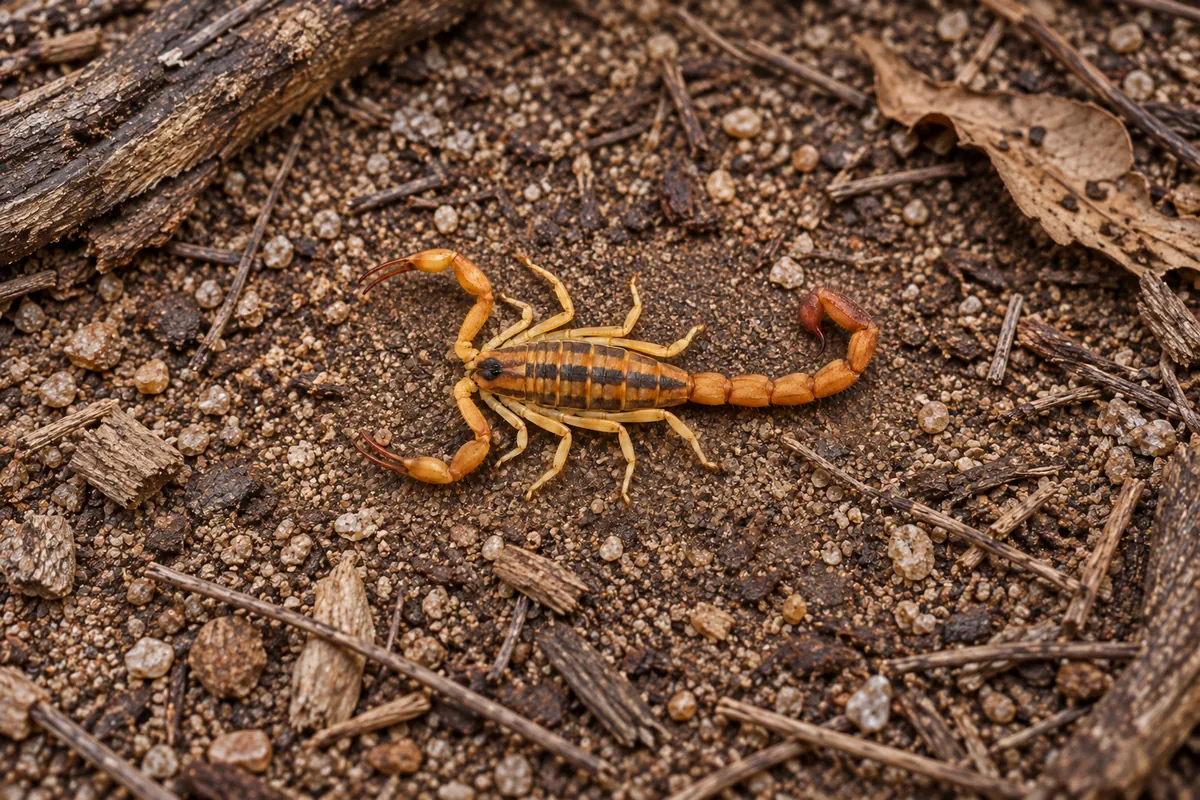
Found a scorpion in the bathtub or the garage? Our office sits where McKinney, Plano, Frisco and Allen meet, 5 to 10 minutes from most homes in those four cities. Call and we will walk the house with a UV light after dark and find how they are getting in.
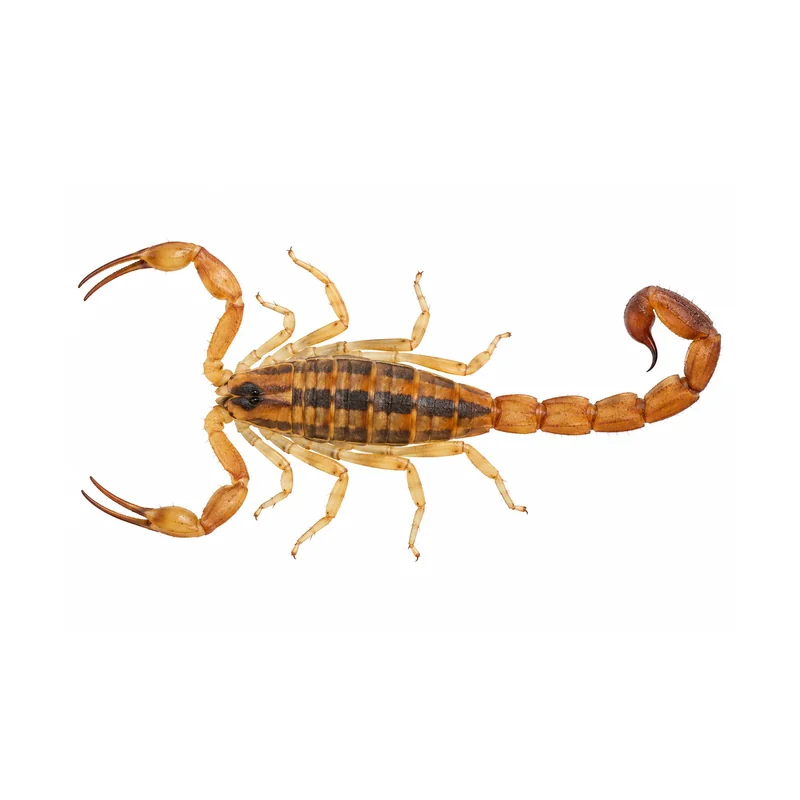
Striped Bark Scorpion
The striped bark scorpion is a night hunter that hides by day under rocks, boards and loose bark and climbs walls and trees into attics. Texas A&M’s Field Guide to Common Texas Insects calls it the most common and widespread scorpion in Texas.
Risk Assessment
Choose a row for the full detail- Color
- Yellowish tan with two broad dark stripes down the back
- Diet
- Small insects, spiders, centipedes and other scorpions
- Threat level
- Moderate, a painful sting that is rarely serious
- Where it hides
- Under rocks, boards, bark and debris, and in attics
- Lifespan
- About 4 years
- Young to adult
- About a year, after five or six molts
- Size
- About 2 1/2 inches long with the tail
What Does a Striped Bark Scorpion Look Like?
A small, yellowish tan scorpion with two dark stripes, thin pincers and a long, slender tail
An adult striped bark scorpion is about 2 1/2 inches long, tail included. Texas A&M AgriLife Extension’s scorpion fact sheet describes it as yellowish tan with two broad, dark stripes running the length of the back and a dark triangle on the front of the head above the eyes. Its pincers are slender and its tail is long and thin, longer in males than in females, and those two features are what identify it. Young ones are paler.
Most people meet one at night or first thing in the morning, because it hides by day and hunts after dark. Texas A&M’s field guide notes that a scorpion’s shell glows under ultraviolet light, so a UV flashlight after dark shows them on walls, fences and the foundation. A female carries her newborn young on her back for their first week or two.
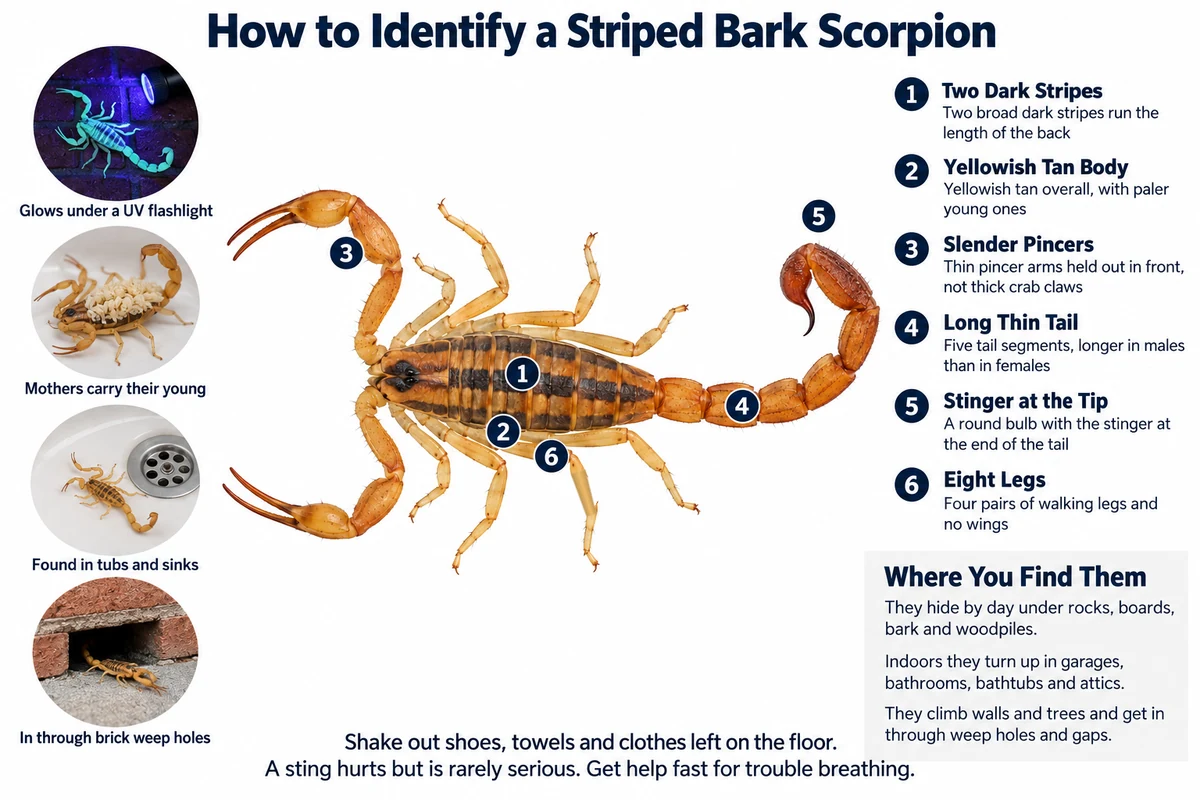
How to identify a striped bark scorpion by its two dark stripes, slender pincers and long, thin tail
- A small tan scorpion with two dark stripes in a sink, bathtub or shower in the morning
- Scorpions along the bottom of the garage door or just inside the back door
- One that turns up in the attic or drops from the ceiling
- A scorpion hiding in shoes, towels or clothes left on the floor
- Small shapes that glow on walls and fences when you shine a UV flashlight after dark
- A female carrying a cluster of pale young on her back
Other Names for the Striped Bark Scorpion
The name describes the animal. It has two stripes, and it belongs to the bark scorpions, which Texas A&M’s field guide describes as climbing scorpions that do not burrow and are tied to dead wood, fallen logs and houses. Texas A&M AgriLife Extension counts 18 scorpion species in Texas, but only 1, the striped bark scorpion, lives throughout the state, and it is the only one recorded in the eastern part of Texas. In Spanish a scorpion is an alacrán.
The name that causes the most worry is Arizona bark scorpion. That is a different species. Kang and Brooks note it is found mainly in Arizona and small nearby areas, and it is the one with a sting known for severe effects.
| Name | What it means |
|---|---|
| Bark scorpion | The group of climbing scorpions it belongs to. |
| Striped scorpion | A short form of the full name. |
| Alacrán | The Spanish word for scorpion. |
| Centruroides vittatus | Its scientific name. |
| Arizona bark scorpion | A different, more dangerous species. |
How to Tell a Striped Bark Scorpion from an Earwig
A small brown creature with pincers in the bathroom is not always a scorpion. Earwigs hide in the same places, under rocks, bark and debris, and come indoors too, and they carry pincers as well. Where the pincers sit settles it.
| Species | Size and Color | Key Feature | Where Found |
|---|---|---|---|
|
Striped Bark Scorpion
AKA: Bark Scorpion, Striped Scorpion
Centruroides vittatus
This species
|
About 2 1/2 inches with the tail. Yellowish tan with two broad, dark stripes down the back. | Eight legs, two slender pincers held out in front, and a long, thin tail with a stinger at the tip. | Under rocks, boards and bark outside, and in garages, bathrooms and attics indoors. |
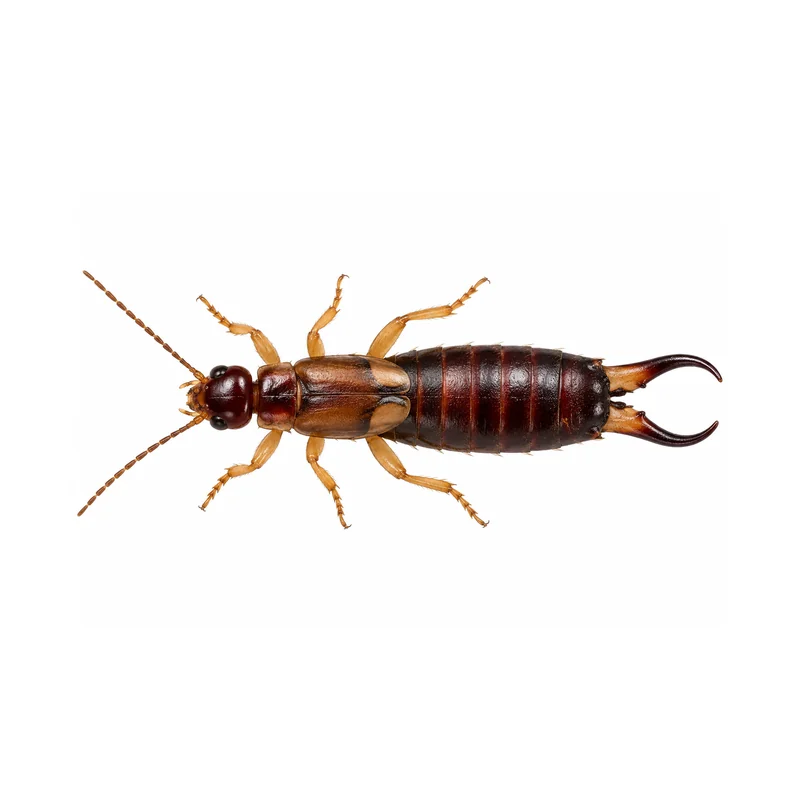
Earwig
AKA: Pincher Bug
Euborellia annulipes
|
Up to about 1 inch. Brown to black with a somewhat flattened body. | Six legs and a pair of pincers at the back end. No tail and no stinger. | Under rocks, bark and plant debris, around outdoor lights at night, and indoors in bad weather. |
Striped Bark Scorpion vs Earwig
The Striped Bark Scorpion in Three Numbers
1,743
Kang and Brooks counted an average of 1,743 scorpion exposures a year reported to poison centers from Texas between 2005 and 2015, the second most of any state after Arizona.
Kang and Brooks, Journal of Medical Toxicology, 2017
1 of 18
Texas A&M AgriLife Extension counts 18 scorpion species in Texas, and only 1 of them, the striped bark scorpion, lives throughout the state.
Texas A&M AgriLife Extension, Scorpions fact sheet
13 to 47
Texas A&M AgriLife Extension reports that a striped bark scorpion female gives birth to 13 to 47 live young at a time, an average of 31.
Texas A&M AgriLife Extension, Scorpions fact sheet
Are Striped Bark Scorpions Dangerous?
They are painful rather than dangerous for most people. Texas A&M’s field guide says the sting causes pain, local swelling and itching that can last from minutes to several days, that deaths blamed on this species are not well supported, and that no scorpion in Texas is considered lethal to people. The study by Kang and Brooks in the Journal of Medical Toxicology says it rarely causes major effects, but warns that allergic reactions can happen, even on a first sting in someone already allergic to fire ants, because the two venoms can cross-react.
What to Do If a Scorpion Stings You
Wash the sting with soap and water, put a cool compress or ice pack on it, and raise the arm or leg if you can. The Oklahoma State University scorpion fact sheet says a sting feels a little worse than a bee or wasp sting, that numbness and tingling can last 4 to 6 hours, and that it normally clears within 24 hours. It also says to get medical help at once for a young child or anyone sensitive to stings, and for anyone whose pain or swelling will not settle or who has trouble breathing.
Are Striped Bark Scorpions Dangerous to Dogs and Cats?
Rarely. The Texas A&M veterinary college says a stung pet usually starts limping, holds a leg up or moves slowly, and may cough afterward. Severe reactions are rare, and one of its emergency vets says that in more than 4 years he never saw a dangerous scorpion sting in a dog or cat. Its advice is still to bring a pet in if you suspect a sting, and not to give any over-the-counter medicine without asking the vet first.
When a Scorpion Sting Needs Fast Action
Trouble Breathing
Trouble breathing, or numbness spreading well beyond the sting, needs emergency medical care right away.
A Sting on a Young Child
Children are smaller and react more strongly. Call your doctor at once rather than waiting to see how it goes.
Hives or Swelling Away From the Sting
Hives, swelling of the face or lips, or feeling faint point to an allergic reaction, more likely in people allergic to fire ants.
A Pet That Suddenly Limps
A dog or cat that suddenly limps or holds up a paw where scorpions are about may have been stung. Call your vet.
Why You Have Scorpions in Your House
Striped bark scorpions climb. Texas A&M AgriLife Extension says they often climb trees and walls and are often found in attics, and that in hot weather they move down from the attic into the living areas to escape the heat. Tree branches touching the roof give them a path up. The Oklahoma State fact sheet adds that they are drawn to damp spots around plumbing and air conditioning units, which is why they turn up in kitchens, bathrooms and bathtubs, and that most indoor stings happen in summer, when they move into the cooler rooms.
New construction plays a part too. The same Oklahoma State fact sheet says homes in new developments can see a rush of scorpions because the building work destroyed their habitat. Their food matters as well. They eat crickets, roaches and other small insects, so a yard and garage full of insects keeps them close. A scorpion found indoors in winter is usually one that came in during summer and never left. None of this is a sign of a dirty home.
Where Striped Bark Scorpions Live Around Collin County Homes
Outside, striped bark scorpions shelter under rocks, boards, loose bark and debris, and Texas A&M AgriLife Extension notes they do not dig burrows. Their flat bodies slip into small cracks. Indoors, the Oklahoma State fact sheet lists crawl spaces, wall voids and attics first, then kitchens and bathrooms, where there is water.
Striped Bark Scorpion Pressure Across Collin County
Scorpion calls show up in our service notes most often in McKinney, with Allen, Frisco and Plano close behind, usually where homes sit against greenbelts, creeks, stone landscaping or woodpiles.
The newer subdivisions of Princeton, Melissa, Anna and Celina also call often, which fits what Oklahoma State describes, scorpions pushed out of cleared land into the homes built on it.
Striped bark scorpions can turn up in any month. Kang and Brooks found Texas stings peak in May and June, and the Texas A&M veterinary college says sightings peak in July and August, when the heat pushes them indoors. Winter finds are mostly scorpions that came in during summer.
Pattern from Texas poison center records (Kang and Brooks), the Texas A&M veterinary college and Pest Me Off scorpion calls, which run heaviest in July and August.
Why Striped Bark Scorpions Keep Coming Back
How Pest Me Off Gets Rid of Striped Bark Scorpions
Scorpion control is four steps, every job. Killing the scorpion you stepped over is only part of the fix, because the rest are hiding in the walls and the gaps they use stay open.
Inspect After Dark
A free inspection with a UV blacklight after dark, around the foundation, the garage and anywhere you have seen them indoors. We confirm it is the striped bark scorpion and see how many are really out there.
Treat Them and Their Food
We treat where scorpions hide, at the garage edges, the foundation and the wall openings, and treat the crickets and roaches that draw them in.
Barrier the Foundation
The Scorched Earth Barrier goes around the full foundation, using products chosen to cling to a scorpion’s waxy shell.
Seal the Way In
We seal and treat the brick weep holes, the garage door seal, door thresholds and the gaps around utility lines, and point out branches that let scorpions reach the roof.
& Other Companies
How to Get Rid of Striped Bark Scorpions Yourself
Both university fact sheets put changing the yard and sealing the house ahead of any spray. Texas A&M AgriLife Extension calls scorpions difficult to control with insecticides alone.
Why Some DIY Responses Fail for Striped Bark Scorpions
Most DIY scorpion trouble comes from spraying the one you saw, stopping halfway through the yard work, or reaching into their hiding places with bare hands.
Spraying Only Where One Was Seen
A spray on the baseboard by the tub does nothing for the scorpions in the walls, attic and weep holes. The Oklahoma State fact sheet calls control with insecticides alone not practical.
Clearing the Yard and Stopping There
Oklahoma State warns that after the hiding places go, scorpions may get more active for a while as they look for new ones. Seal the house and treat the foundation too.
Bare Hands in Their Hiding Places
Scorpions sting when they are handled, stepped on or pinned. Wear thick gloves to move rocks, boards and firewood, and never pick one up.
Common Striped Bark Scorpion Questions
What is a striped bark scorpion, and what does it look like?
Can a striped bark scorpion sting kill you?
What does a scorpion sting feel like, and how long does it last?
What should I do if a scorpion stings me?
Are striped bark scorpions dangerous to dogs and cats?
Why do I have scorpions in my house?
Can scorpions climb walls and fall from the ceiling?
Do scorpions really glow under a blacklight?
Is the striped bark scorpion the same as the Arizona bark scorpion?
Do scorpions carry their babies on their back?
How do I get rid of striped bark scorpions?
Scorpions in the Bathtub? We Find Them and Seal Them Out.
We walk the house with a UV light after dark, treat the scorpions and the insects feeding them, and seal the weep holes and gaps they use to get in. Scorpion control across McKinney, Allen, Frisco, Plano, and all of Collin County.